




















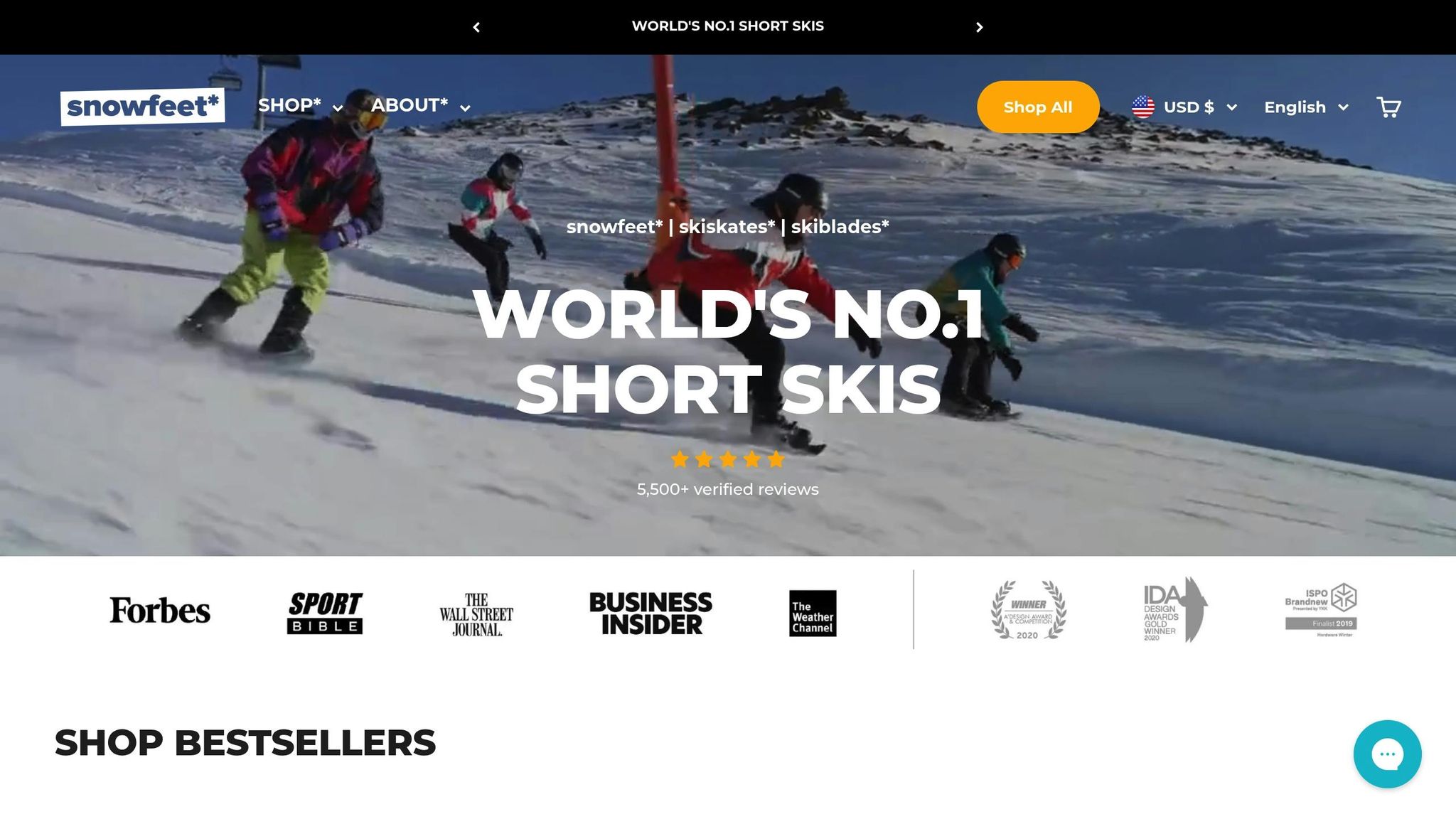
Hockey players, this one's for you: Snowfeet Skiskates are like bringing the ice rink to the slopes. At just 17 inches long, they mimic the sideways pushes and quick stops you're already used to on the ice. No clunky skis or snowboard boots required - just strap them onto your winter shoes, and you're good to go. With over 5,500 glowing reviews and a 4.9-star rating, they’re a hit with over 50,000 riders worldwide.
Here’s why they stand out:
- Familiar Motion: Move like you're skating - hockey stops and all.
- Compact & Portable: Fits in a backpack, no roof racks needed.
- Easy to Learn: If you can skate, you can master these in minutes.
At $490, they’re perfect for groomed slopes and light powder. If you’re tired of skis or snowboards feeling awkward, Snowfeet Skiskates might just be your new favorite winter gear.
1. Snowfeet* Skiskates (44 cm)
Movement Similarities
Snowfeet* Skiskates bring a bit of the ice rink to the slopes. The way you move on these is a lot like ice hockey - pushing your legs sideways to build momentum, just like skating on ice. If you're comfortable with hockey or inline skating, this motion will feel second nature.
Stopping is just as intuitive. You use a hockey stop, balancing your weight evenly across both feet and turning the edges to come to a halt. It’s similar to how you’d stop on ice skates, keeping your center of gravity steady. Unlike traditional skis, which push you to lean forward onto your toes, Skiskates let you stay balanced over the middle or even the back of your feet. This makes it easier to stay in control and sets you up for quick, precise movements.
Control and Agility
At just 17.3 inches long, these skates pack a lot of agility into a small package. Their compact size means you can make tight, sharp turns with ease - something that’s harder to pull off with traditional skis. The metal edges ensure you can carve with precision, and there’s even a built-in heel brake for extra stopping power. To stay stable when picking up speed, just keep your legs shoulder-width apart and bend your knees a little more.
Portability and Practicality
One of the standout perks of Skiskates is how easy they are to carry around. Forget about lugging heavy skis or dealing with roof racks - these are small enough to slip into a regular backpack. Plus, you don’t need clunky, uncomfortable ski boots. Just wear your waterproof winter shoes or snowboard boots, and you’re good to go. The adjustable bindings fit shoe sizes 6–13 US (38–47 EU), making them pretty versatile. Starting at $490 for the 44 cm wood core model, they’re designed to handle everything from ski slopes to hiking trails and even sledding hills.
2. Traditional Long Skis
Movement Similarities
Traditional long skis, ranging from 59 to 71 inches (150–180 cm), operate very differently from the lateral push mechanics of ice skating. Instead of skating-like movements, they rely on forward gliding and carving turns.
The weight distribution required for skiing also throws off the balanced "hockey stance." Skiing forces you to lean forward, keeping your weight over your toes, which is the opposite of what hockey players are used to. As one expert puts it, "Don't place your weight over your toes like you do when skiing, but rather distribute your weight over the middle or back of your feet to prevent falling".
For anyone used to the natural and agile motion of ice skating, traditional skis can feel bulky and awkward. This stark difference highlights why long skis don't translate well for hockey players looking for a similar experience off the ice.
Control and Agility
The size and weight of long skis significantly limit the quick, sharp movements that define ice skating. Their bulk makes the tight, responsive turns that hockey players depend on nearly impossible. As the Snowfeet Team explains, "Many people find turning with Snowfeet* or Skiskates* easier than turning with those long clunky skis". Traditional skis simply lack the nimbleness and control that hockey players rely on.
Portability and Practicality
Aside from movement, traditional skis also fall short when it comes to convenience and practicality.
Long skis are heavy and require extra equipment like roof racks or oversized bags to transport. On top of that, they usually need specialized, rigid plastic ski boots - far from the comfortable winter boots most hockey players prefer. By contrast, skiskates are lightweight, fit easily into a backpack, and work with your regular winter boots. While traditional skis may have an edge in deep powder, they’re far less practical for groomed slopes or quick mountain trips.
3. Snowboards
Movement Similarities
Snowboarding and ice skating require completely different movement styles. With snowboards, both feet are locked into a fixed, side-on position, meaning your legs move as one unit. On the other hand, Snowfeet* Skiskates allow each leg to move independently, mimicking the natural stride of ice skating. This key difference impacts how you control and maneuver on the snow.
Control and Agility
Snowboards, typically measuring between 55–65 inches (140–165 cm), are much larger than the compact 17-inch (44 cm) Snowfeet* Skiskates. That extra size makes it harder to pull off quick, sharp turns or techniques like a hockey stop. Controlling a snowboard relies on tilting the entire board from heel to toe, whereas Skiskates use independent metal edges, giving you more precise control and requiring a completely different skill set.
Portability and Practicality
Snowboards also come with their fair share of logistical challenges. They’re heavy, bulky, and usually need roof racks or oversized bags for transport. In contrast, Snowfeet* Skiskates are lightweight and small enough to fit in a regular backpack. Plus, they work with standard waterproof winter or hiking boots - no special gear required. As the Snowfeet Team puts it, their skiskates "fit your gear, your car, and your lifestyle." With a price tag of $490 for the 44 cm model, Skiskates deliver a balance of convenience and value that traditional snowboards just can’t compete with.
sbb-itb-17ade95
Hockey Player Tries Snowfeet* Skiskates | See What He Thinks | Skiboards | Short Ski | Mini Ski
Pros and Cons
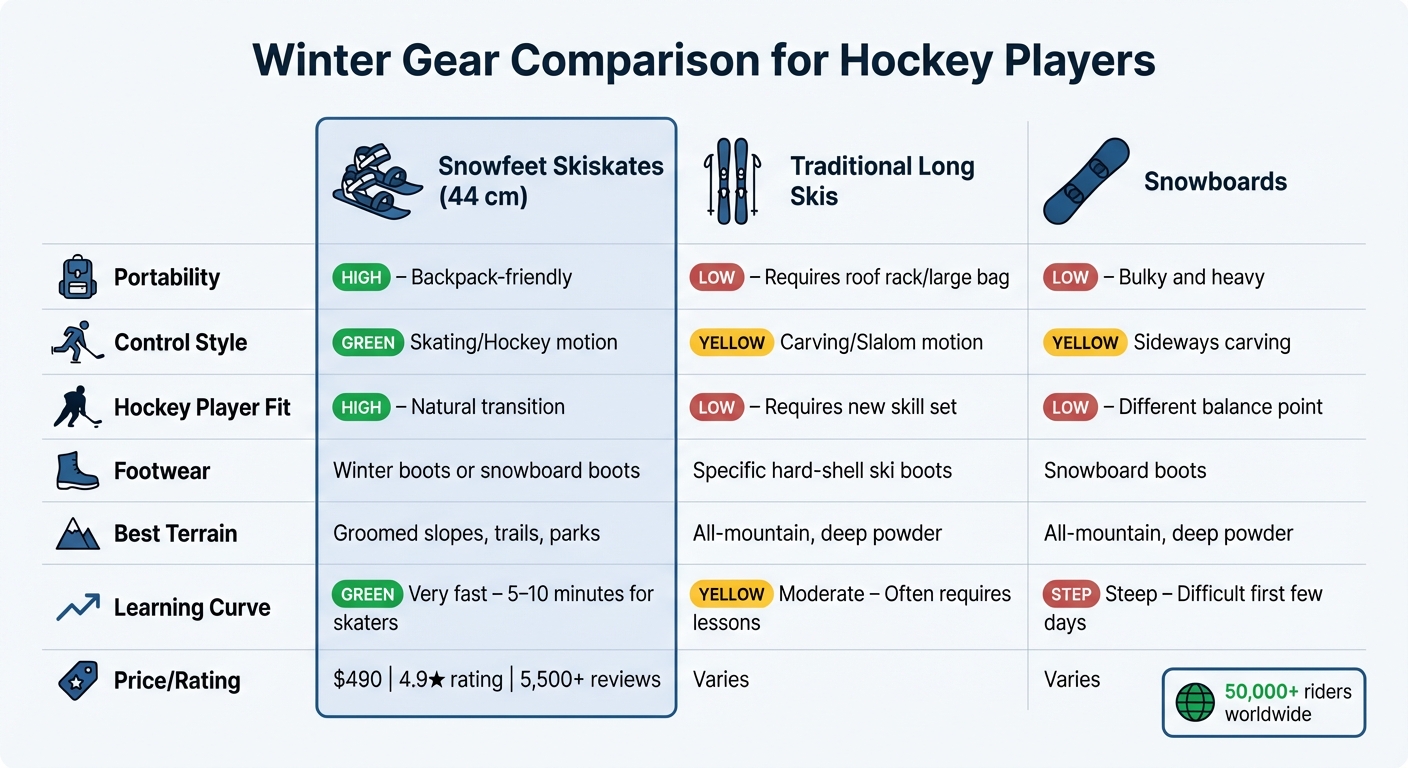
Snowfeet Skiskates vs Traditional Skis vs Snowboards Comparison for Hockey Players
Snowfeet* Skiskates, traditional long skis, and snowboards each bring their own perks and drawbacks to the slopes. Let’s break it down.
Snowfeet* Skiskates are all about convenience. They’re compact enough to fit in a backpack and work perfectly with your regular winter or snowboard boots - no extra gear needed. If you’re a hockey player, you’ll feel right at home with their skating-like motion, which makes them super easy to pick up. At $490, the 44 cm model has earned a stellar 4.9-star rating from over 5,500 verified reviews. The catch? They’re best suited for groomed slopes and light powder (up to about 4 inches/10 cm). Deep backcountry powder? Not their thing.
Traditional long skis dominate when it comes to deep powder and carving at high speeds. They’re the choice for serious all-mountain adventures. But they come with some baggage - literally. They’re heavy, need roof racks or large bags, and require dedicated ski boots. Plus, if you’re a hockey player, the movements feel completely foreign. There’s no skating stride or hockey stop, and the learning curve can be steep.
Snowboards are a solid pick for powder and offer a comfortable ride. But they lock your feet in a fixed sideways stance, which limits independent leg movement and skating motion. Stopping relies on edge control, not the quick hockey stop many are used to. Like skis, they’re bulky, tricky to transport, and require specialized boots.
Here’s a quick side-by-side comparison to make things clearer:
| Feature | Snowfeet* Skiskates (44 cm) | Traditional Long Skis | Snowboards |
|---|---|---|---|
| Portability | High – Backpack-friendly | Low – Requires roof rack/large bag | Low – Bulky and heavy |
| Control Style | Skating/Hockey motion | Carving/Slalom motion | Sideways carving |
| Hockey Player Fit | High – Natural transition | Low – Requires new skill set | Low – Different balance point |
| Footwear | Winter boots or snowboard boots | Specific hard-shell ski boots | Snowboard boots |
| Best Terrain | Groomed slopes, trails, parks | All-mountain, deep powder | All-mountain, deep powder |
| Learning Curve | Very fast – 5–10 minutes for skaters | Moderate – Often requires lessons | Steep – Difficult first few days |
Andrew B., a verified user, sums it up perfectly:
"These skiblades are so much fun and easy to control. Never going back to regular skis."
For hockey players looking for a seamless way to hit the snow without lugging around heavy gear or learning entirely new techniques, Snowfeet* Skiskates are a game-changer.
Conclusion
If you're a hockey player or ice skater wanting to bring your skills to the slopes, Snowfeet* Skiskates might be just what you're looking for. They offer that natural skating feel, allowing for quick turns and solid hockey stops - skills you already know. Plus, they’re incredibly easy to pick up. In about 5 minutes, you’ll be gliding confidently. All you need are your regular winter or snowboard boots, and you’re good to go.
Priced at $490, the 44 cm model has racked up an impressive 4.9-star rating from over 5,500 verified reviews. As one happy customer, Nathan F., puts it:
"Absolute game-changer! They're light, fast, and fun to ride."
Unlike traditional skis or snowboards, which shine in deep powder or backcountry adventures, Snowfeet* Skiskates are perfect for groomed slopes and snow parks. They’re lightweight, easy to carry, and feel like second nature for anyone with skating experience. This mix of agility and portability makes them a standout choice for hockey players looking to hit the snow without starting from scratch.
For hockey players ready to take their ice skills to the slopes, Snowfeet* Skiskates offer a fun, practical, and seamless way to make the transition.
FAQs
How are Snowfeet Skiskates better suited for hockey players than traditional skis?
Snowfeet Skiskates bring the thrill of skating to the slopes in a way that traditional skis just can’t. With their compact 17-inch design, they let you move quickly and with agility, much like ice skating. Plus, their low-center-of-gravity stance feels natural, making it easier to control your movements. Unlike skis, which require leaning forward and shifting your weight to your toes, Snowfeet let you keep your weight over your mid-foot. This makes gliding, turning, and stopping feel more intuitive - especially for hockey players used to similar motions.
Another big win? Convenience. Snowfeet are lightweight, portable enough to toss in a backpack, and way more affordable than traditional ski gear, with prices ranging from $150 to $490. Forget about lugging around bulky equipment or investing in pricey ski boots - these strap right onto your regular winter boots. And because they’re easier to learn, hockey players can smoothly transition their on-ice skills to the snow without the steep learning curve that skiing often demands.
Can you use Snowfeet Skiskates in deep powder snow?
Snowfeet Skiskates aren’t meant for deep powder snow. They shine on hard-packed snow or groomed trails, where their design gives you great control and agility. Taking them into deep powder? Not the best idea - it could affect how they perform and might limit your fun.
Stick to compact snow surfaces to get the most out of the lightweight, portable fun that Snowfeet Skiskates bring!
What kind of boots can you use with Snowfeet Skiskates?
Snowfeet Skiskates are made to pair perfectly with your regular winter boots. If your boots fit well and feel secure, you're good to go. They clip on effortlessly, giving you both comfort and control while you're out on the snow. No need to invest in special ski boots - just lace up your usual winter shoes and get ready to glide!












Leave a comment
This site is protected by hCaptcha and the hCaptcha Privacy Policy and Terms of Service apply.