



















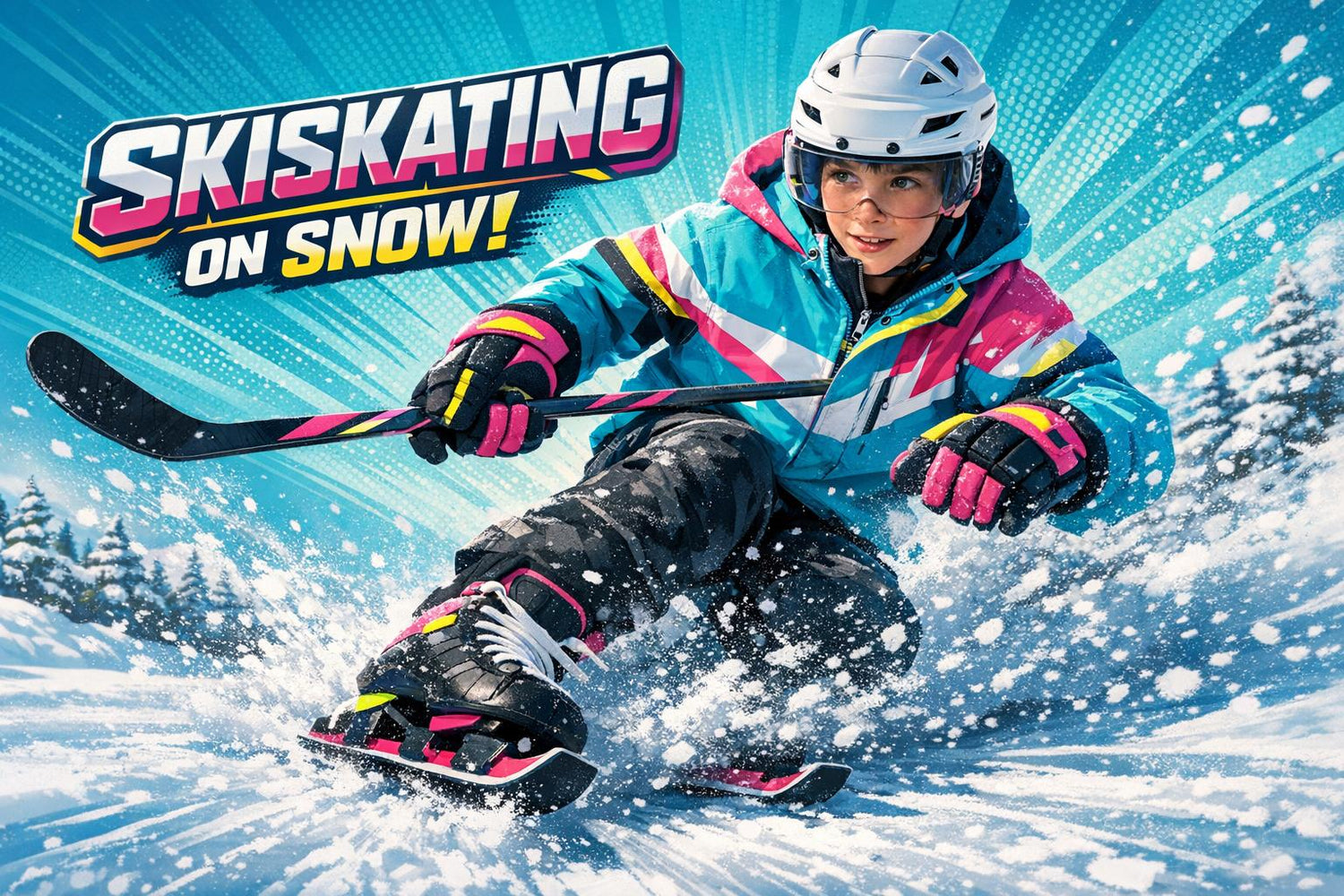
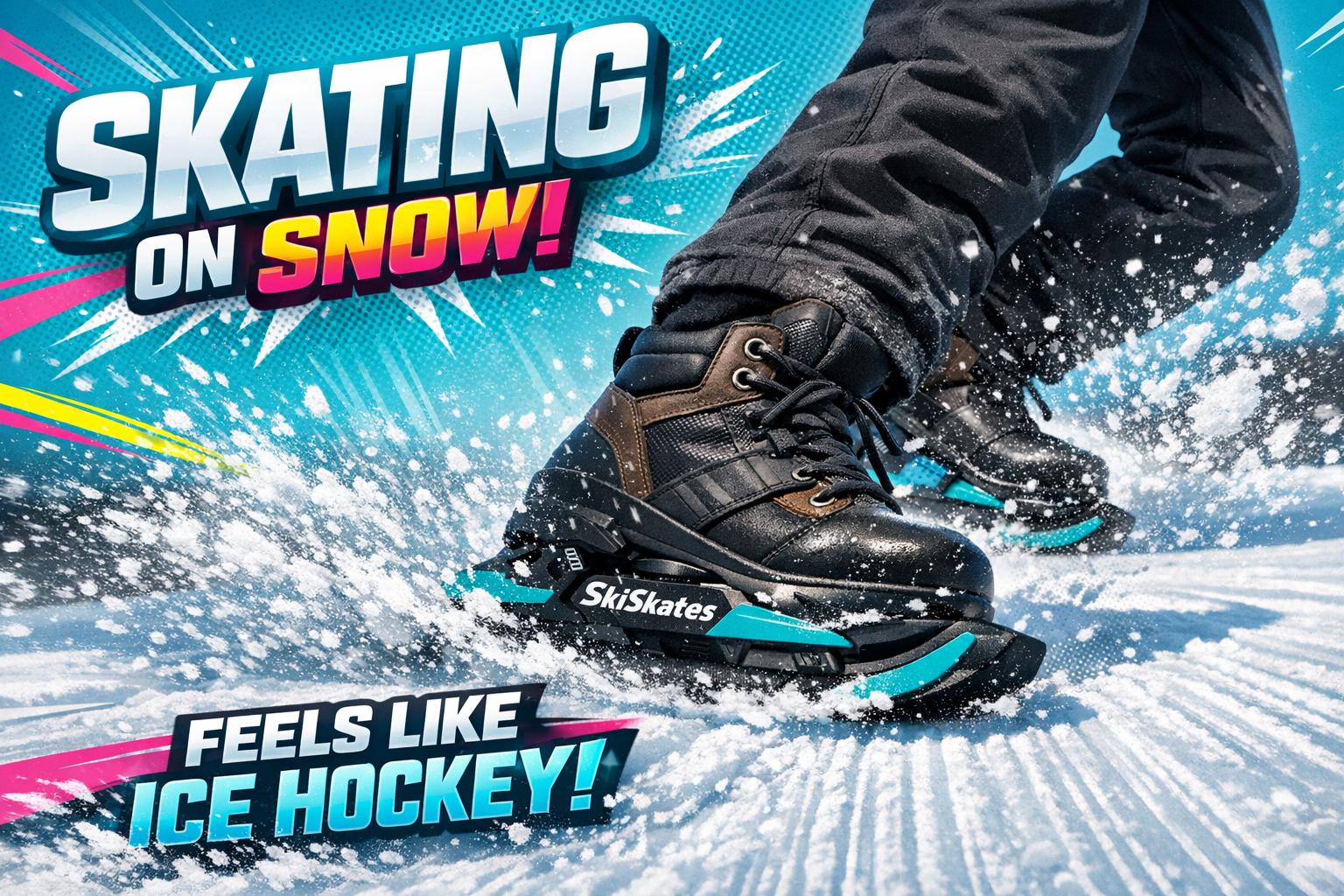
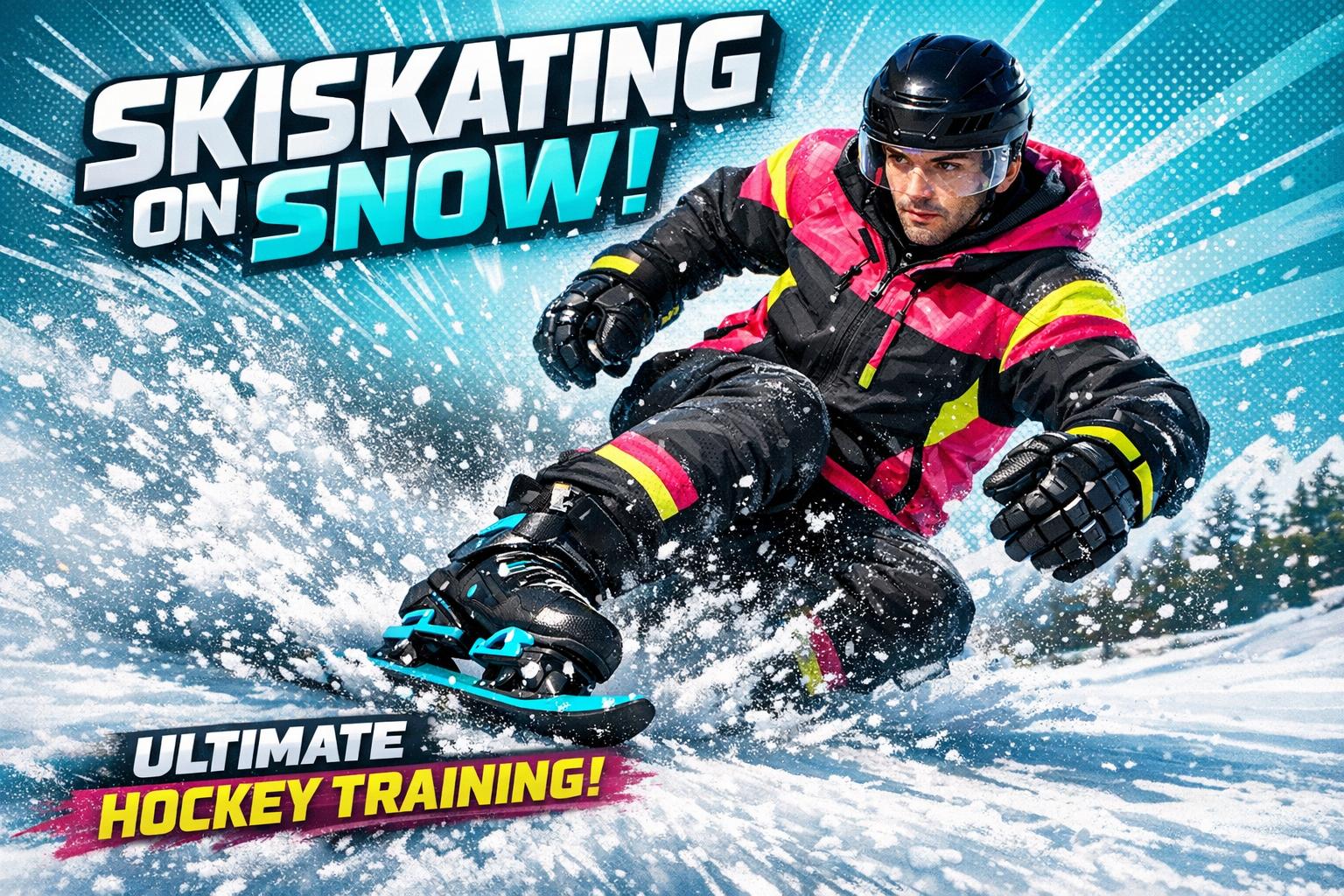
Skiskating with Snowfeet* is a game-changer for hockey players. Think of it as mini skis (about 17 inches long) that attach to your winter boots and let you skate on snow like you do on ice. The movement mirrors a hockey stride, so your balance, edge control, and muscle memory from the rink transfer instantly. Plus, they’re lightweight, portable, and way cheaper than full ski setups.
Key Takeaways:
- What it is: Mini skis that mimic ice skating, ideal for hockey players.
- Why it works: Uses the same motions as hockey, improving agility, endurance, and balance.
- Benefits: Fits in a backpack, works with regular boots, and costs $250–$575 (vs. $800+ for ski gear).
- Training: Great for off-season drills like crossovers and hockey stops, no rink or lift ticket needed.
Snowfeet* Skiskates make it easy to stay sharp off the ice while having fun on any snowy hill.
Why Snowfeet* Skiskates Work Best for Hockey Players
Snowfeet* Skiskates are a natural fit for hockey players looking to transition their skills from ice to snow. Designed with portability and performance in mind, they align perfectly with the quick, sharp movements hockey requires.
Easy to Carry and Store
Forget hauling around cumbersome skis. Snowfeet* Skiskates are under 20 inches long, making them small enough to fit in a backpack alongside your other essentials. Whether you're tossing them in your car trunk or stashing them in a locker, they take up minimal space. This compact size means you're always ready to hit a nearby hill, park, or any snowy spot for a quick session.
One user even shared that they could "sled everywhere" with Snowfeet*, emphasizing how their lightweight design allows access to terrain that traditional skis can't manage.
Designed for Hockey Movements
With a 17-inch base and integrated metal ski edges, Snowfeet* Skiskates let you perform hockey stops and mimic the balanced, lateral movements you're used to on the ice. You can push sideways to build speed, carve sharp turns, and stop on a dime - just like in a hockey game. The Snowfeet* PRO model takes it up a notch, featuring a narrower base and raised platform for even sharper turns and quicker directional changes.
Unlike traditional skis, which often require leaning forward onto your toes, Snowfeet* encourage a more neutral stance. This keeps your weight centered or slightly back, making the transition from ice to snow feel natural. Your muscle memory kicks in right away, so you can focus on perfecting your moves instead of adjusting to new gear.
Affordable and Accessible
A full ski setup can easily cost $800 to $1,200 - not to mention the added expense of specialized ski boots, which often feel stiff and uncomfortable. Snowfeet* Skiskates, on the other hand, start at around $250 for the Mini model, with premium options like the 44 CM wood core model priced up to $575. Even better, you can use your existing waterproof winter or snowboard boots, skipping the need for pricey ski boots altogether.
No lift tickets? No problem. Snowfeet* work beautifully on groomed snow, whether it's a local hill, cross-country trail, or even your neighborhood sledding spot. This means you can train more often without breaking the bank.
With these features, Snowfeet* Skiskates make it easy for hockey players to transition their skills from the rink to the slopes, all while saving time, money, and effort.
How to Move from Ice to Snow with Snowfeet* Skiskates
Switching from ice to snow is easier than you think with Snowfeet* Skiskates. Just follow these steps to get started.
Step 1: Attach Your Snowfeet* Skiskates
Snowfeet* Skiskates come with a universal binding system that works with most winter boots, including waterproof boots and snowboard boots. For the best results, pick boots that offer solid ankle support - this helps you stay in control, just like on the ice. The bindings are adjustable to fit men's sizes 6-13 US (38-47 EU), so they’re a great fit for most hockey players.
Before heading out, make all the necessary adjustments at home. Use a screwdriver to fine-tune the bindings so they fit snugly, similar to how your hockey skates feel. Once everything is secure, you’re ready to practice the basics.
Step 2: Practice Basic Skating Moves
Start on a flat, groomed area to get the hang of things. Skate the way you would on ice - push your legs out sideways to tap into your muscle memory.
"The best way to start your ride is to skate like a hockey player."
Keep your weight centered or slightly leaning back. Unlike traditional skis, where you lean forward, Snowfeet* require you to stay over the middle or back of your feet. Leaning forward too much can lead to a face-first dive into the snow - so avoid that.
Stopping is all about using the metal edges. Perform a hockey stop by distributing your weight evenly across both feet (not just one, like on ice). Need to slow down gradually? Use the built-in heel brake. When it comes to turning, tilt the skiskates onto their edges and lean your body in the direction you want to go - similar to carving on ice.
Once these basics feel natural, you can level up with hockey training drills.
Step 3: Try Hockey Training Drills
Feeling comfortable? Time to take it up a notch. Practice hockey drills like lateral crossovers, tight turns around cones, and quick stops to sharpen your agility and power.
One of the best things about Snowfeet* is their versatility. You can do endurance runs on trails or hills - no rink or lift ticket required. Longer skating sessions are great for building stamina, and research shows that off-ice agility training benefits on-ice performance for youth hockey players.
Stick to groomed terrain at first and avoid deep powder until you’re more confident. Keep your center of gravity low, and if you lose balance, lean forward slightly and spread your arms to recover. With over 5,500 verified reviews and a 4.9/5-star rating, Snowfeet* is trusted by athletes for exactly this kind of training.
Snowfeet* Skiskates vs. Traditional Winter Gear for Hockey Players
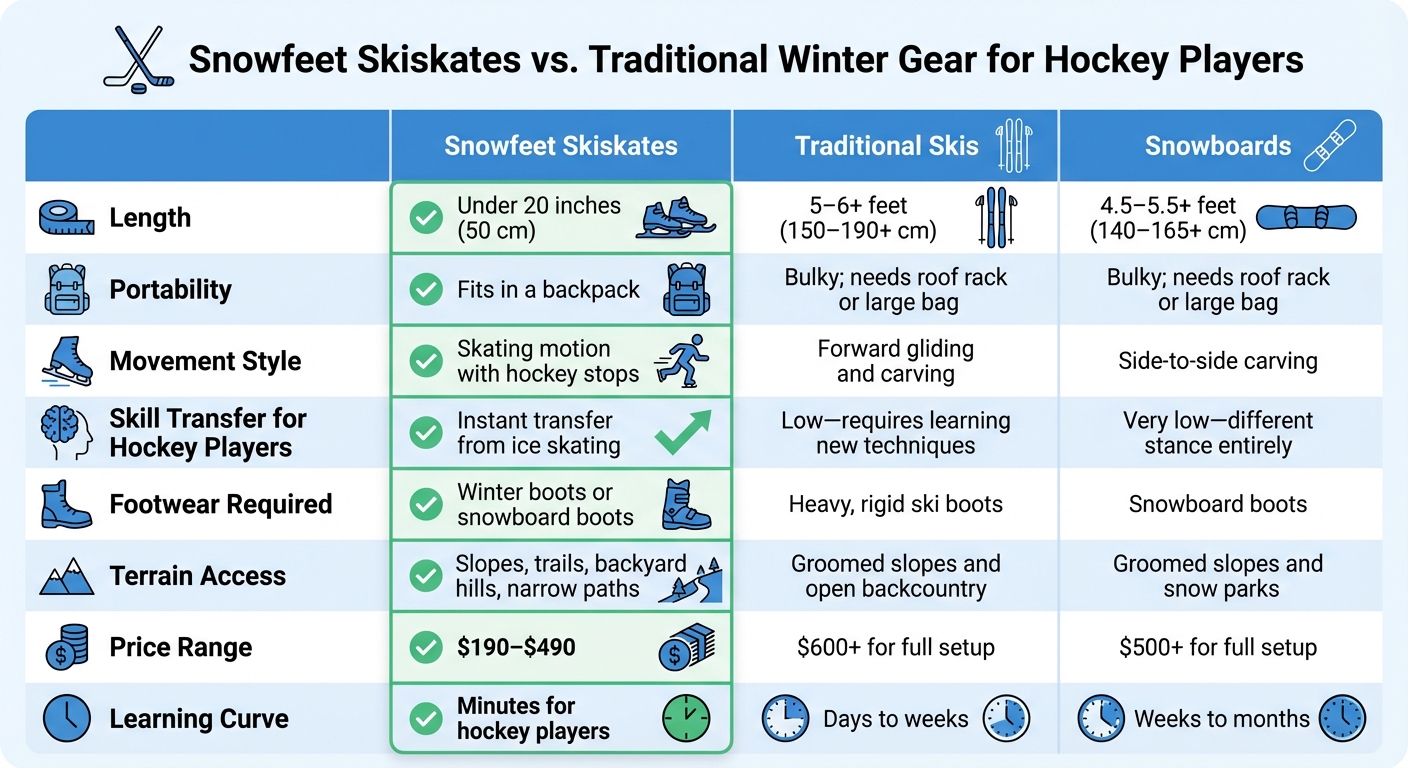
Snowfeet Skiskates vs Traditional Winter Gear Comparison for Hockey Players
Let’s take a closer look at how Snowfeet* Skiskates compare to traditional winter sports gear. For hockey players, Snowfeet* bring some serious advantages to the table. Traditional skis are typically 5 to 6+ feet long, while Snowfeet* Skiskates are under 20 inches (50 cm). That compact size means they’re incredibly easy to carry and handle, giving you a level of mobility that traditional gear just can’t match.
When it comes to movement, Snowfeet* feel like they were made for hockey players. They use a skating motion - sideways pushes and all - that’s second nature if you’re used to the ice. You can even pull off a proper hockey stop. Compare that to traditional skis or snowboards, which rely on completely different techniques that don’t translate well to hockey skills.
"Snowfeet are very easy to learn for hockey players, roller-bladers and ice-skaters since they combine skiing and skating."
– Snowfeet Team
Another huge win for Snowfeet* is their convenience. They fit neatly into a regular backpack, unlike traditional skis and snowboards that require roof racks or oversized bags. Plus, you can use them with your everyday waterproof winter boots or snowboard boots, while skiing demands heavy, stiff ski boots.
Comparison Table: Snowfeet* vs. Traditional Gear
Here’s a quick side-by-side breakdown of how Snowfeet* stack up against traditional skis and snowboards:
| Feature | Snowfeet* Skiskates | Traditional Skis | Snowboards |
|---|---|---|---|
| Length | Under 20 inches (50 cm) | 5–6+ feet (150–190+ cm) | 4.5–5.5+ feet (140–165+ cm) |
| Portability | Fits in a backpack | Bulky; needs roof rack or large bag | Bulky; needs roof rack or large bag |
| Movement Style | Skating motion with hockey stops | Forward gliding and carving | Side-to-side carving |
| Skill Transfer for Hockey Players | Instant transfer from ice skating | Low - requires learning new techniques | Very low - different stance entirely |
| Footwear Required | Winter boots or snowboard boots | Heavy, rigid ski boots | Snowboard boots |
| Terrain Access | Slopes, trails, backyard hills, narrow paths | Groomed slopes and open backcountry | Groomed slopes and snow parks |
| Price Range | $190–$490 | $600+ for full setup | $500+ for full setup |
| Learning Curve | Minutes for hockey players | Days to weeks | Weeks to months |
And let’s not ignore the price difference. Snowfeet* setups cost between $190 and $490, while traditional ski or snowboard packages often start at $600 - and that’s before you add in boots, bindings, and other extras. For hockey players looking for an affordable, portable, and easy-to-learn option, Snowfeet* are hard to beat.
sbb-itb-17ade95
What Hockey Players Gain from Skiskating
Skiskating isn’t just about fun on the slopes - it’s a game-changer for hockey players looking to sharpen their skills and stay in shape year-round.
Better Agility and Quick Turns
With a compact length of just 44 cm, Snowfeet* Skiskates allow for quick, precise movements that traditional 5–6-foot skis simply can’t match. They mimic the mechanics of skating on ice, letting you push your legs sideways with ease. Plus, their precision metal edges make carving sharp turns and pulling off hockey stops feel natural and effortless.
Stronger Balance and Stability
Using Snowfeet* Skiskates is a workout for your balance. Their short length forces you to rely on your core, hips, and stabilizer muscles instead of the built-in stability of longer skis or a snowboard's wide base. By staying low with bent knees - just like you would on the ice - you develop the core strength and hip mobility needed for better edge control and explosive skating. This training not only improves your stride but also helps correct muscle imbalances that could lead to injuries.
Off-Season Training
When the rinks are closed and the ice has melted, skiskating offers a perfect way to maintain your hockey conditioning. Studies show that off-ice agility training can directly enhance on-ice performance, boosting reactive agility and motor control - especially for younger and high school players. Snowfeet* Skiskates let you practice the same sideways push, weight shifts, and stopping mechanics you use during games. Whether you’re on groomed slopes, sledding hills, or even snowy trails, any patch of snow becomes your personal training ground. Many hockey players report better control, greater endurance, and fewer injuries after incorporating skiskating into their routine.
Conclusion: Why Skiskating with Snowfeet* Changes the Game for Hockey Players
Skiskating with Snowfeet* is a smart way for hockey players to stay sharp when they’re off the ice. These mini skis are designed to mimic on-ice movements, making it easier to carry over skills like agility, balance, and edge control.
What’s even better? Snowfeet* are incredibly portable. They’re small enough to toss in your backpack, so any snowy hill can become your personal training spot. Plus, they work with your regular winter boots or snowboard boots. That means no need to splurge on expensive ski boots that might just gather dust in your closet.
Hockey players are catching on to how skiskating can up their game. Expert Conor Colangelo backs this up, noting that off-ice snow sports can improve fitness, coordination, and speed. Research also shows that off-ice agility training can boost on-ice performance, especially for younger players and high school athletes.
All of this adds up to better performance on the ice, making off-season training a must. The 44 cm model, priced at $490, is a solid choice to keep you in top form.
Ready to step up your off-ice training? Check out the full lineup of Snowfeet* and see the difference for yourself.
FAQs
How can Snowfeet Skiskates help hockey players improve their skills on snow?
Snowfeet Skiskates bring a fresh twist to off-ice training for hockey players. These compact skiskates let you practice essential hockey movements - like maintaining a low stance, fine-tuning your weight distribution, and mastering edge control - right on the snow. The result? Improved balance, sharper agility, and smoother quick turns that translate effortlessly when you're back on the ice.
What sets Snowfeet Skiskates apart is their lightweight, compact design. They're easy to handle and ideal for hockey players looking to keep their skills sharp during the colder months. Plus, they’re a fun way to stay active while exploring the snow in a completely different way.
Why are Snowfeet Skiskates better for hockey players compared to traditional skis?
Snowfeet Skiskates are crafted to match the low, agile posture hockey players use on the ice, making the switch to snow feel natural. Unlike traditional skis - which are long, heavy, and limit side-to-side movement - these skiskates are ultra-short (just 15-17 inches) and lightweight. This design makes it easier to switch edges quickly, carve tight turns, and stay balanced.
Because they mimic the mechanics of ice skating, hockey players can keep their natural stance - knees bent, weight centered over the middle of the foot. This means smoother stops, quicker transitions, and better control, none of which bulky skis can deliver. For hockey players who want to bring their rink skills to the slopes, Snowfeet Skiskates are a game-changer.
Can I wear my regular winter boots with Snowfeet Skiskates?
Snowfeet Skiskates are made to work with most regular winter boots, so there's no need to buy special footwear. Just strap them on, and you're good to go - it’s that simple!
This ease of use makes them a standout for winter sports lovers, especially hockey players looking to bring their skills from the ice to the snow. Whether you're out for some snowy fun or working on your balance and agility, Snowfeet Skiskates let you dive into winter adventures without the extra fuss.











Leave a comment
This site is protected by hCaptcha and the hCaptcha Privacy Policy and Terms of Service apply.