



















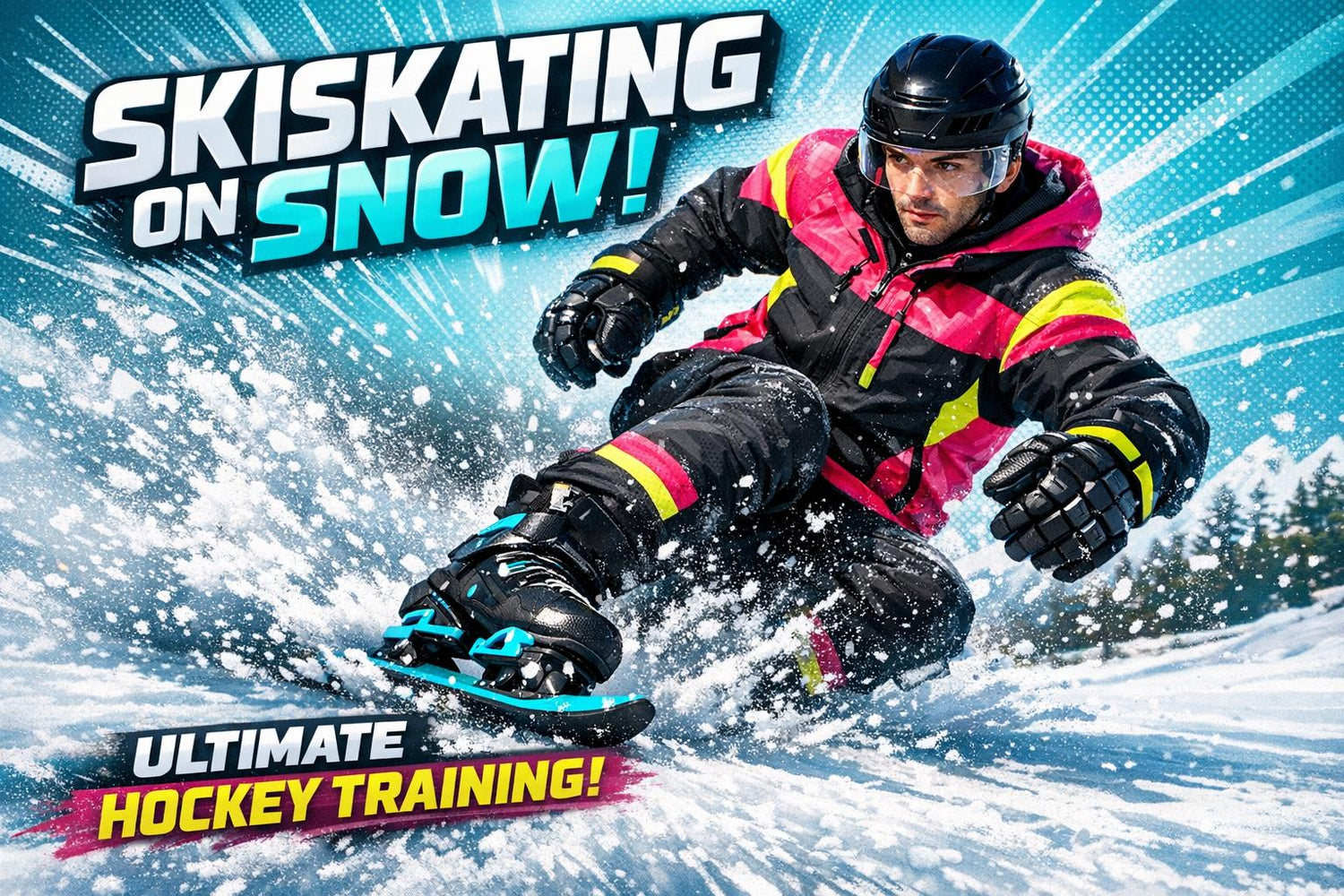
Skiskating on snow is changing the way hockey players train. Imagine combining the agility of ice skating with the freedom of skiing - sounds fun, right? That’s exactly what Snowfeet Skiskates offer. These compact, portable skates are designed to mimic hockey skating mechanics, making them perfect for off-ice training. Whether you're practicing quick stops, crossovers, or edge control, Snowfeet lets you take your hockey skills to the snow.
Why Skiskating Works for Hockey Players:
- Compact Design: At just 17–20 inches long, they’re lightweight and fit in a backpack.
- Hockey-Like Movement: Mimics skating motions, including hockey stops and sharp turns.
- Versatility: Use them on slopes, trails, or even your backyard - no ski resort needed.
- Easy Setup: Works with regular winter or snowboard boots.
Models & Pricing:
- Snowfeet Skiskates (44 cm): Precision-focused, $575.
- Snowfeet PRO (50 cm): Better balance for varied terrains, $275.
With over 50,000 users worldwide and glowing reviews (4.9/5 stars), Snowfeet is a go-to for hockey players looking to improve their game while having fun in the snow. Ready to train smarter and ditch bulky skis? Snowfeet might just be your new favorite winter gear.
Why Snowfeet* Skiskates Work for Hockey Training
Compact and Lightweight Design
Hockey players need gear that keeps up with their agility, not something that weighs them down. Snowfeet* Skiskates, measuring just 17 to 20 inches (44 cm for Snowfeet* Skiskates and 50 cm for Snowfeet PRO), are small enough to fit in a backpack. Compare that to traditional skis, which can stretch 5 to 6 feet or more - definitely not backpack-friendly. This portability makes it easy to toss them in your car and head out for a quick training session wherever there's snow.
Their lightweight design is a game-changer for long training sessions. Unlike bulky skis that can tire you out just carrying them, Snowfeet* let you focus on what really matters: refining your skills. Whether you're practicing crossovers, quick turns, or edge drills, you won’t be bogged down by heavy gear. And here's the kicker - they work with your regular winter boots or snowboard boots, making them even more convenient. This combination of portability and ease of use directly supports the edge control and agility hockey players need.
Better Edge Control and Agility
The short length of Snowfeet* Skiskates is perfect for hockey-specific drills. Traditional long skis come with extra "swing weight" at the ends, which makes quick direction changes awkward and inefficient. Snowfeet* eliminate that problem. They feature metal ski edges for grip and carving, but without the bulk that slows down tight maneuvers.
"I used to play ice hockey so Skiskates are perfect for me. It's exactly like ice skating on snow." - Giovanni, Italy
What makes Snowfeet* even better? They mimic the skating motion you’re used to on the ice. Unlike traditional skiing, which shifts your weight forward onto your toes, Snowfeet* keep your weight centered - just like you do in hockey skates. This familiar balance makes it easy to pick up, allowing you to execute hockey stops, crossovers, and sharp cuts with precision. It’s like taking your on-ice skills straight to the snow.
Works on Multiple Terrains
Snowfeet* Skiskates aren’t just about design - they're about versatility. Traditional skis are built for groomed slopes at pricey resorts, but Snowfeet* break those boundaries. Their compact size and agility make them perfect for hiking trails, forest paths, or even your own backyard - places where long skis would be a hassle.
"The compactness and portability of Snowfeet* allow users to go to places beyond the well prepared cross-country trails. When you see a forest path or a shortcut through the trees, just go for it." - Snowfeet Team
This opens up a world of training opportunities. Set up agility drills with cones in your backyard, test your edge control on a local sledding hill, or practice balance during a snow-covered hike. Snowfeet* can handle light powder up to 4 inches deep and perform beautifully on packed or groomed snow. Whether you’re training in the woods or on a neighborhood hill, these skiskates give you the flexibility to practice anywhere traditional skis can’t.
Getting Started with Snowfeet* Skiskates
Choosing the Right Snowfeet* Model
Snowfeet* offers two models designed for hockey training, each catering to different needs and skill levels.
The Snowfeet Skiskates (44 cm) are built for speed and precision, making them an excellent choice for groomed slopes. With a wood core construction, these skiskates are all about delivering a professional feel. They excel in tight turns and edge control, skills that can easily transfer to your on-ice performance. At $575, they’re a premium option for serious training.
On the other hand, the Snowfeet PRO (50 cm) is a more versatile choice, priced at $275. Featuring a fiberglass-reinforced core and a slightly longer base, this model offers better balance and stability. It's ideal if you're just starting out or planning to train on varied terrains like backyard hills or hiking trails. The extra 6 cm of length makes it easier to land jumps in snowparks and gives you more control overall.
Both models are compatible with hockey boots ranging from size 6 to 13 US. For the best experience, use boots with a stiff construction and solid ankle support. These features are essential for edge control and power transfer during hockey-specific drills. While soft recreational boots might fit, they can compromise precision and performance on the snow.
Once you’ve picked the right model, it’s time to set them up correctly for the best performance.
Setting Up Your Skiskates
Getting your Snowfeet* skiskates ready is key to unlocking their full potential. Start by adjusting the bindings at home with a screwdriver. Place your hockey boot into the binding and tighten the straps until your heel is securely locked in with about 10–15 degrees of lateral edge tilt. Your heel should stay firmly in place without any lift, while still allowing your toes to flex fully.
"To avoid hassle on the slopes, take your time and adjust the bindings at the comfort of your home, using a screwdriver and a shoe you are going to wear." - Snowfeet Team
Before hitting the snow, wax the base to prevent snow buildup and maintain speed. After each session, dry the metal edges thoroughly and apply a light oil to keep rust at bay. These small maintenance steps are essential for keeping your skiskates in top condition and ensuring a smooth transition of your on-ice skills to the snow.
Be careful not to over-tighten the straps, as this can cause blisters. At the same time, make sure your heel is secure to maintain control during quick direction changes and crossovers. A proper setup not only enhances performance but also ensures a more enjoyable training experience.
Skiskating Techniques for Hockey Players
Basic Stance and Balance
Start with an athletic stance: bend your knees to about 60° (or even deeper) and lean slightly forward. Keep your weight evenly distributed on both Snowfeet*. This position is very similar to the low, ready stance hockey players use on the ice, with your arms naturally extended for balance.
"The key is to keep the front-back balance. Keep your legs at about shoulder width and slightly bend your knees to have a better balance." - Snowfeet Team
Focus on keeping your weight centered over your feet to mimic the balance you’d have while skating on ice. For added stability during faster movements, try positioning one foot slightly ahead of the other. This staggered stance helps engage key muscles like your hip flexors, abductors, and glutes, which are crucial for skating. Plus, it builds muscle memory that translates directly to your on-ice performance. From here, you can smoothly transition into skating drills to improve your directional control.
Forward and Backward Skating
Once you’ve nailed your stance, it’s time to move. For forward skating, push off laterally using the inner edges of your Snowfeet*. This motion mimics the hip abduction and rotation that power a hockey stride. Alternate your legs in a steady rhythm, focusing on strong, controlled pushes. Snowfeet*’s responsive design makes it easy to transfer power quickly - perfect for those explosive hockey moves. The compact size of the 44 cm and 50 cm PRO models is especially great for sharpening quick-twitch muscle control, which comes in handy during breakaways.
Backward skating requires a slightly different approach. Bend your knees deeper and adjust your posture so your chest faces backward. Use short, controlled glides with your outside edges, combining them with smooth, C-shaped sculling motions for propulsion. Keep your center of gravity low by shifting your weight slightly forward, with your heels just off the ground. This technique mirrors the backward crossovers and pivots defensemen rely on, helping you boost your on-ice agility. Once you’re comfortable with this, move on to practicing stops and turns to round out your training.
Edge Control and Stopping Drills
To master edge control, start with wide carves. Lean into your turns and engage both the medial and lateral edges of your Snowfeet*, gliding at a steady pace. Shift your weight to the outside edges to make broad turns over 20–30 yards. Once you’re feeling confident, step it up by practicing sharper carving turns. Shift your weight quickly to one edge to carve tight arcs. This kind of edge work mirrors the precision of hockey skate blades, and alternating sides for 20–30 repetitions will help you fine-tune your control.
For hockey stops, approach at speed and lower your stance. Push both Snowfeet* into the snow so that the inside edges grip firmly. Unlike traditional skiing, where you might favor one ski, distribute your weight evenly across both feet to come to a stop within 5–10 feet. This drill is excellent for building the stopping power and quick directional changes you need in game situations. Research shows that off-ice drills like these can significantly improve on-ice performance for youth players. To keep your Snowfeet* performing at their best, regularly sharpen the metal edges with a sharpening stone for optimal grip.
The First Standard to DOWNHILL SKATING
sbb-itb-17ade95
Hockey-Specific Drills with Snowfeet* Skiskates
These drills are designed to sharpen your agility and balance, helping you replicate the quick, precise movements needed on the ice for hockey.
Agility Weaves and Crossovers
Set up cones 6–10 feet apart on a slope and weave through them using tight crossover turns. These mimic the lateral movements of a hockey stride, helping you build agility. The compact size of the 44 cm and 50 cm PRO Snowfeet* models makes them perfect for this drill, as their shorter length avoids the overlapping issues you’d face with longer skis. This allows for smoother, tighter turns.
Start by using a hockey stride to gain momentum, just like you would on the ice.
"The best way to start your ride is to skate like a hockey player." - Snowfeet Team
Push off with the inside edges of your Snowfeet*, alternating legs in a steady rhythm. Keep your feet shoulder-width apart, knees bent, and maintain a low, athletic stance. This drill not only improves your lateral movement but also builds the muscle memory you rely on for puck-handling and defensive positioning during games.
Quick Stops and Direction Changes
Practice quick stops to simulate game situations. Accelerate, then execute a hockey stop by pushing both Snowfeet* sideways, using the metal edges to create friction. Distribute your weight evenly, focusing on the center or rear of your feet, to stop within 5–10 feet. This movement mirrors on-ice stops, making it a great way to train your reflexes and control.
For added challenge, alternate between forward skating, quick stops, and backward transitions. The metal edges on Snowfeet* provide the grip you need for sharp pivots and sudden direction changes. Since technical skating is a major part of hockey training - 90% for beginners and 20% for pros - these drills are essential. To keep your Snowfeet* in top shape, regularly tune the metal edges and wax the base to prevent snow buildup during fast movements.
Once you’ve nailed these stopping techniques, you can up the ante by incorporating jumps and tackling varied terrain.
Freestyle Jumps and Terrain Adaptation
When you’re comfortable with the basics, add small jumps and explore different terrains to boost your confidence and balance. Start on groomed slopes, then work your way to forest paths or tree-lined shortcuts. Unlike traditional long skis, Snowfeet* are compact and portable, letting you train almost anywhere.
For uneven terrain or jumps, use a staggered stance with one foot slightly ahead and your upper body leaning forward. Practice small hops with controlled landings, keeping a low center of gravity to develop explosive power and balance. Focus your weight over the middle or back of your feet to avoid catching the tips on landing. Stick to groomed trails and moderate terrain for safety, steering clear of steep slopes and deep powder while perfecting these hockey-specific moves.
These drills not only prepare you for the ice but also make your training sessions more dynamic and fun!
Snowfeet* vs. Long Skis and Snowboards
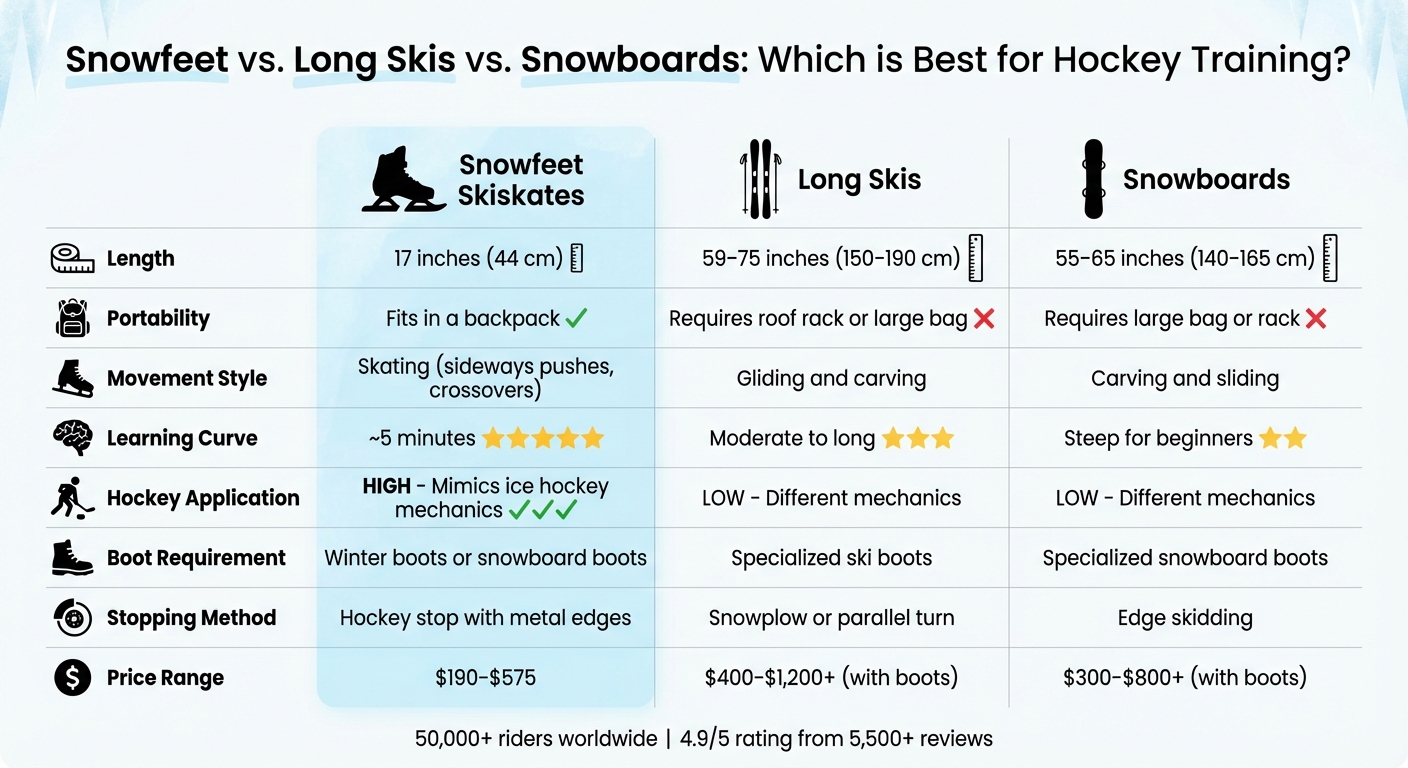
Snowfeet Skiskates vs Long Skis vs Snowboards Comparison for Hockey Training
Key Advantages of Snowfeet* for Hockey Players
If you're a hockey player looking to train on snow, Snowfeet* Skiskates might just be your secret weapon. Unlike traditional long skis or snowboards, Snowfeet* are designed to mimic the natural skating mechanics you're already used to. Long skis focus on gliding and carving, while snowboards emphasize lateral sliding. But Snowfeet*? They replicate the sideways pushes, crossovers, and quick stops that hockey players know so well. At just 17 inches long (44 cm), these Skiskates are lightweight and move like an extension of your skates - no extra bulk to slow you down.
"Snowfeet Skiskates are like bringing the ice rink to the slopes. At just 17 inches long, they mimic the sideways pushes and quick stops you're already used to." – Snowfeet Blog
Beyond their performance, Snowfeet* score big on convenience. Forget lugging around massive skis or snowboards. These skiskates fit right into your backpack, making them perfect for training on local sledding hills, narrow forest trails, or even hiking paths. No need for roof racks or oversized storage bags. Plus, they work with your regular winter boots or snowboard boots, so there's no need to invest in stiff, specialized ski boots.
And here's the kicker: there's almost no learning curve. For hockey players, mastering Snowfeet* takes just about five minutes. Compare that to the time it takes to learn skiing or snowboarding, which require entirely different mechanics and a lot more practice. With over 50,000 riders worldwide and a 4.9/5 rating from 5,500+ verified reviews, it's clear that Snowfeet* are becoming a top choice for off-ice hockey training.
Comparison Table: Snowfeet* vs. Long Skis and Snowboards
| Metric | Snowfeet* Skiskates | Long Skis | Snowboards |
|---|---|---|---|
| Length | 17 inches (44 cm) | 59–75 inches (150–190 cm) | 55–65 inches (140–165 cm) |
| Portability | Fits in a backpack | Requires a roof rack or large bag | Requires a large bag or rack |
| Movement Style | Skating (sideways pushes, crossovers) | Gliding and carving | Carving and sliding |
| Learning Curve | ~5 minutes | Moderate to long | Steep for beginners |
| Hockey Application | High (mimics ice hockey mechanics) | Low (different mechanics) | Low (different mechanics) |
| Boot Requirement | Winter boots or snowboard boots | Specialized ski boots | Specialized snowboard boots |
| Stopping Method | Hockey stop with metal edges | Snowplow or parallel turn | Edge skidding |
| Terrain Access | Slopes, trails, parks, backyards | Primarily groomed slopes | Slopes, powder, terrain parks |
| Price Range | From $190–$575 | $400–$1,200+ (with boots) | $300–$800+ (with boots) |
This table highlights why Snowfeet* are a game-changer for hockey players. They're built with skating mechanics in mind, unlike traditional skis or snowboards, which cater to entirely different styles. Whether you're hitting a sledding hill or a snowy trail, Snowfeet* make hockey-specific snow training simple and effective.
Conclusion
Hockey players looking to sharpen their skills off the ice have a solid ally in Snowfeet* Skiskates. Unlike traditional skis or snowboards, these compact skates - measuring about 17 inches long - mimic the exact skating movements used on the rink, like sideways pushes, crossovers, and hockey stops. Plus, their portability makes them perfect for training on sledding hills, snowy trails, or just about any snowy surface, all without the hassle of bulky gear or roof racks.
Snowfeet* pack a punch when it comes to performance. Premium models feature metal edges and a wood core, giving you the control and responsiveness needed for intense drills and quick turns. And the best part? Most hockey players can master the basics in just five minutes, a far cry from the steep learning curve of traditional skiing or snowboarding.
With their combination of portability, agility, and hockey-specific movement, Snowfeet* are a game-changer. Whether you opt for the 44 cm Skiskates for high-level training (starting at $575) or the 50 cm Snowfeet PRO for more versatile practice (starting at $275), you're getting gear that’s designed with hockey players in mind. Trusted by over 50,000 users worldwide and backed by a stellar 4.9 out of 5-star rating from more than 5,500 verified reviews, Snowfeet* seamlessly connect off-ice training to on-ice performance. Take your hockey skills to the next level with the precision and agility that Snowfeet* bring to the table.
FAQs
How can Snowfeet Skiskates help hockey players train on snow?
Snowfeet Skiskates are a fantastic tool for hockey players who want to sharpen their skills during the winter months. Their super-short, lightweight design (measuring just 17–20 inches) lets players replicate a natural hockey stance, shift their weight with precision, and nail those sharp, controlled turns. They’re perfect for boosting agility, balance, and edge control - all essential skills for hockey skaters.
Unlike bulky skis or snowboards, Snowfeet Skiskates are compact and easy to carry around. You can use them on groomed slopes or icy surfaces, making them incredibly versatile. Plus, they offer a fun, hockey-focused way to train, keeping players sharp and nimble even when they’re off the ice.
How are Snowfeet Skiskates different from traditional skis?
Snowfeet Skiskates bring a fresh twist to skiing, especially for hockey players looking to sharpen their skills off the rink. Unlike traditional skis, Snowfeet are much shorter - measuring about 17 inches for the standard version and 20 inches for the PRO model. Compare that to regular skis, which typically start at a hefty 59 inches or more. This smaller size makes it easier to pull off quick turns, maintain agility, and balance effortlessly - perfect for replicating the fast, sharp movements of hockey skating.
Another standout feature? Snowfeet are super lightweight and easy to carry around. Made from tough plastic, they’re compact enough to toss into a backpack or stash in your car trunk. No need for bulky ski racks or struggling with oversized gear. Plus, they’re compatible with your regular winter boots - no pricey ski boots or bindings required. Setup is simple, and your wallet will thank you.
What really sets Snowfeet apart, though, is their design. They’re built for skating-style moves, quick edge changes, and even jumps on flat or slightly sloped terrain. This makes them ideal for hockey players honing their craft. Traditional skis, on the other hand, focus on downhill speed and stability, which doesn’t translate as well to hockey-specific training. With Snowfeet, you get a fun, budget-friendly, and effective way to keep your skating skills sharp.
What is the best Snowfeet model for beginner hockey players?
For those just starting out with hockey, the 44 cm Snowfeet Skiskates are a fantastic pick. Their shorter length makes them much easier to handle, allowing beginners to work on essential skills like agility, balance, and edge control - core abilities for hockey skating.
These skiskates are lightweight, easy to carry, and built for quick learning. They’re a great way to stay active during winter while sharpening your skating abilities off the ice. Plus, they make training feel less like a chore and more like an adventure!












Leave a comment
This site is protected by hCaptcha and the hCaptcha Privacy Policy and Terms of Service apply.