



















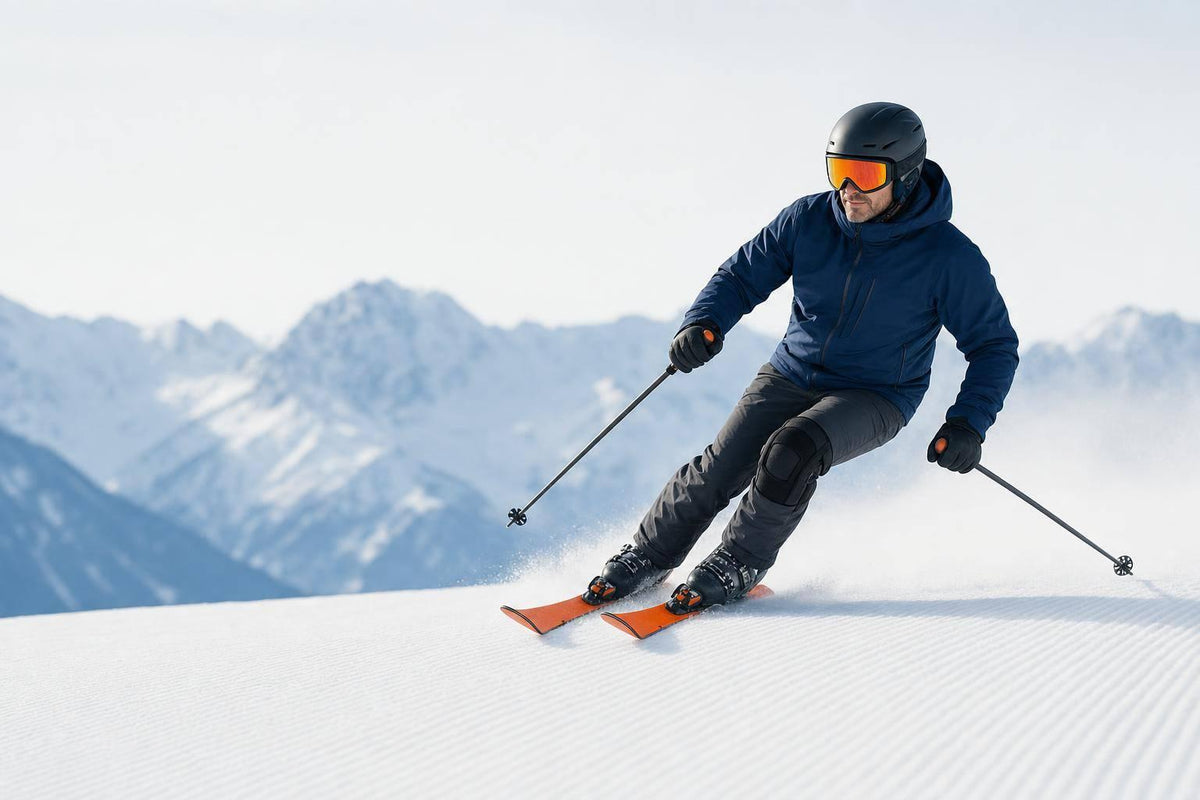
Yes - short skis can be worth it if your knees get tired or sore. They won’t heal knee pain, fix an ACL, or solve arthritis. But they can feel easier to turn, easier to stop, and less tiring than long skis, especially at slow to moderate speeds.
Here’s the short version:
- Short skis cut effort. Less ski means less weight to move in each turn.
- They help with control. Many skiers find them easier to pivot, skid, and shut down speed.
- They work best on groomers. Green and blue runs are their happy place.
- They are not a medical fix. Boot fit, binding setup, and terrain choice matter just as much - sometimes more.
- For many casual skiers, 99 cm is a smart middle ground. It gives more support than tiny skiskates but asks less from your legs than full-length skis.
If I were helping a skier in the shop who said, “My knees don’t love ski days anymore,” I’d keep it simple: go shorter if you want less work and more confidence, but don’t expect gear to cure pain.
Best Skis for the Elderly? | Are Short Skis Better for Older Skiers?
Quick Comparison
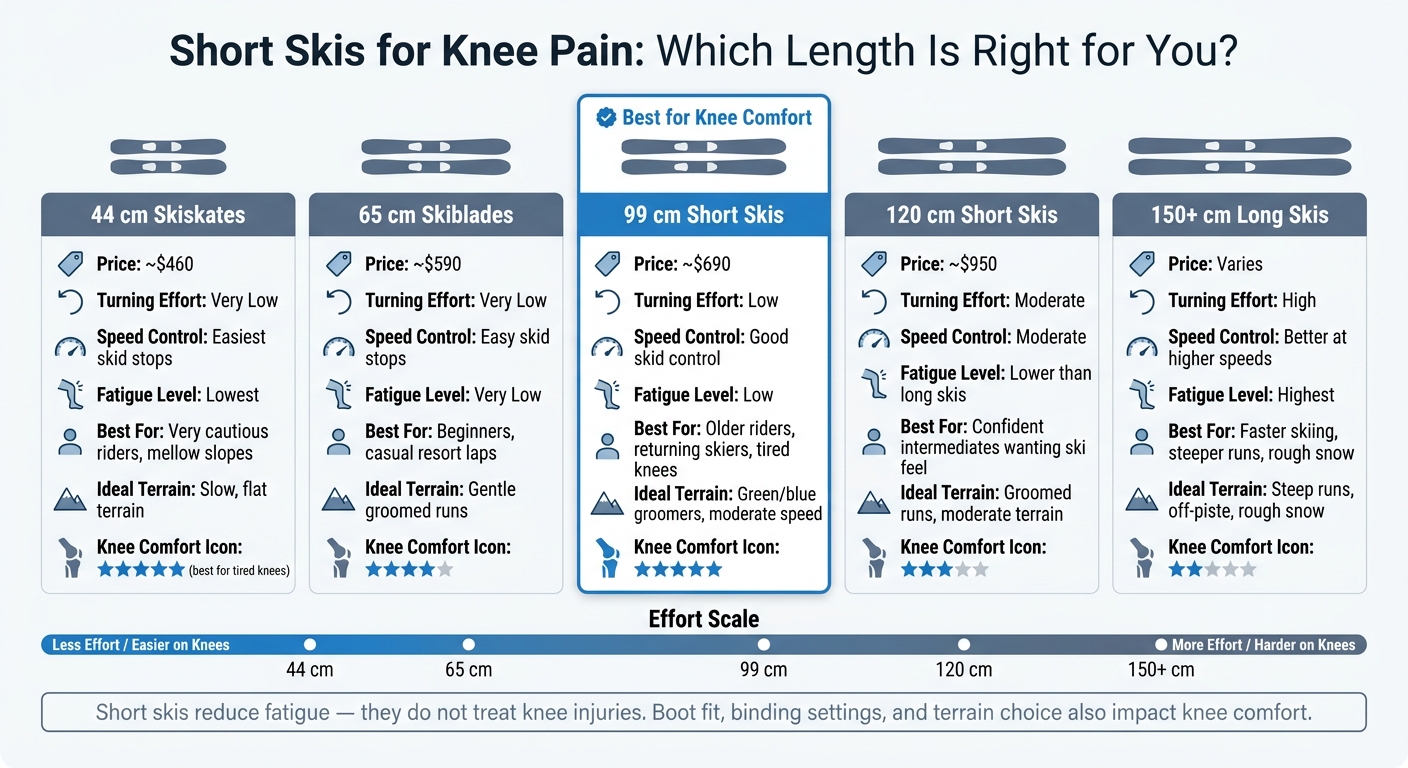
Short Skis vs Long Skis for Knee Pain: Which Length Is Right for You?
| Option | Best For | Feel on Snow | Main Tradeoff |
|---|---|---|---|
| 44 cm skiskates | Very cautious riders, very mellow slopes | Light, easy to pivot, low-speed fun | Not much stability as speed climbs |
| 65 cm skiblades | Beginners and casual resort laps | Easy turns and simple stops | Less calm in rough snow |
| 99 cm short skis | Older riders, returning skiers, tired knees | Good mix of control and support | Not built for hard charging |
| 120 cm short skis | Intermediates who want more ski feel | More support, still less work than long skis | Less nimble than shorter options |
| 150+ cm skis | Faster skiing, steeper runs, rougher snow | More stable at speed | More effort to turn and stop |
A few facts stand out from the article:
- Most adult skis run about 59–75 in. (150–190 cm).
- Snowfeet* options range from 44 cm to 120 cm.
- Price points in the piece start at about $460, $590, $690, and $950 depending on length.
- The main gain from shorter skis is lower fatigue, not knee treatment.
So, if your goal is a lighter day on the hill - not a race course, not deep powder hero turns - short skis make a lot of sense. Think of them as less wrestling, more skiing :)
If you want a fast rule of thumb:
- Go 44–65 cm for the easiest low-speed handling.
- Go 99 cm if you want the best mix for comfort and control.
- Go 120 cm if you still want something close to a ski feel.
- Stay with longer skis if you ski fast, steep, or off-piste a lot.
For a quick visual on short skis and knee comfort, this video can help:
Short skis vs long skis: turning, stopping, balance, and speed control
You feel the difference right away in how fast each ski reacts when you tell it to move.
Turning and edge control at slow to moderate speeds
Short skis turn faster because there’s less ski to swing around and less edge to control. So even small movements do more. That means it takes less effort to start a turn, guide it, and finish it cleanly.
Snowfeet’s shorter lengths make turn initiation feel easy. You don’t have to muscle the ski through the turn, which helps you stay loose instead of tense. That’s where Snowfeet’s shorter formats shine most, especially for cautious riders who want turning to feel simple, not like a leg workout.
Stopping, speed checks, and staying in control
Short skis are also easier to pivot into skids, speed checks, and hockey stops. That’s a big deal in tight spaces or crowded runs where you need to slow down NOW, not three seconds from now.
Long skis do a nice job holding an edge through long, smooth turns. But when speed starts to creep up and a tired skier needs to scrub it off fast, they can be harder to pivot. They also ask for more precision and more leg strength than tired quads usually want to give.
Control in the turn is one thing. How the ski feels when speed changes is another.
Balance at low speed vs stability at high speed
The trade-off is pretty simple. Short skis are easier to balance at low speed. Long skis feel calmer at high speed and in chopped-up snow. So if you spend a lot of time skiing faster, dealing with mixed conditions, or riding bigger mountain terrain, that extra stability can matter a lot.
| Ski Length | Turning Effort | Speed Control | Best Conditions |
|---|---|---|---|
| 44–65 cm | Very low | Easiest skid stops | Slow, flat terrain |
| 99–120 cm | Low | Good skid control | Green/blue groomers, moderate speed |
| 150+ cm | Higher | Better at higher speeds | Steeper runs, rough snow, speed |
That’s a big reason shorter skis often feel less tiring over a full run.
sbb-itb-17ade95
What short skis may change for knee comfort and fatigue
Why shorter skis can feel easier on tired legs
Shorter skis often feel easier on tired legs because they’re lighter and have less swing weight. In plain English, that means they take less effort to steer, correct, and bring through the end of each turn.
Over a full ski day, that lower effort can leave you with less end-of-day fatigue and steadier confidence on snow. That can be a big deal for older riders or cautious skiers who want control without feeling wiped out by lunch.
Shorter skis can also feel easier to turn because they need less effort and less knee-twisting motion.
But here’s the line in the snow: easier handling is not the same as treating the knee itself.
What ski length alone does not fix
Short skis do not fix cartilage wear, ACL damage, or swelling. Those are medical issues that equipment can’t solve.
Knee comfort depends more on your full setup than on ski length by itself. Boot fit matters a lot. If your boots fit poorly, they can push your legs into awkward positions. Binding release settings matter too, and those should be adjusted by a pro for fall protection. Then there’s terrain choice. Groomed runs are usually much easier on knees than moguls.
| Factor | Impact on Knee Comfort |
|---|---|
| Boot fit | High - reduces compensatory strain |
| Binding release settings | High - critical for fall protection |
| Terrain choice (groomed vs. moguls) | High - moguls are harder on knees |
| Ski length | Moderate - changes effort, not the injury |
That’s why ski length by itself matters less than choosing a short-ski length that fits your control level.
Snowfeet* short ski options vs long skis and other short skis
Snowfeet* Skiskates 44 cm and Skiblades 65 cm: easiest options for slow-speed control
The 44 cm Skiskates are the smallest Snowfeet* option. They’re built for quick pivots and easy control at very low speeds. If you want the least demanding setup, they’re a simple place to start. Pricing starts at about $460.
At 65 cm, Skiblades give you a bit more ski underfoot without feeling bulky. They still turn with very little effort, and they stay light and easy to point where you want. The next size up starts at about $590.
If you’re choosing between them, it mostly comes down to this: how much stability do you want as ski length goes up?
Snowfeet* 99 cm and 120 cm: more support without going full length
The 99 cm models - including the Skiblades 99 cm and the POWDER 99 cm - sit right in the middle. Starting at about $690, they mix easy steering with enough length to feel steady at moderate resort speeds. That makes them a strong fit for riders who want good maneuverability but also want a bit more confidence on mixed terrain.
The Short Skis 120 cm start at about $950 and feel the most like regular skis in the Snowfeet* lineup. They work well for riders who want a more familiar ski feel without dealing with the extra effort of full-length skis.
So, the lineup gives you a pretty simple tradeoff: shorter for easier control, longer for more support.
Comparison table: Snowfeet* short skis vs long skis
| Feature | Traditional Long Skis | Snowfeet* 120 cm | Snowfeet* 99 cm | Snowfeet* 44–65 cm |
|---|---|---|---|---|
| Turning effort | High | Moderate | Low | Very low |
| Stopping | Requires more space and effort | Moderate | Responsive | Quick, low-effort |
| Balance | Best at higher speeds | Good at moderate speeds | Good at resort speeds | Best at slow speeds |
| Fatigue | Higher | Lower than long skis | Low | Lowest |
| Portability | Low | Moderate | High | Very high |
| Ideal terrain | Open groomed runs, fast carving | Groomed runs, moderate terrain | Groomed runs, gentle variety | Groomed runs, gentle slopes, short sessions |
Boot choice matters too. Skiskates often work with winter boots or snowboard boots. Models at 65 cm and up usually use alpine ski boots. That changes the feel quite a bit and helps line up support and comfort with the kind of ride you want.
Who should buy short skis, and when long skis still make more sense
Matching ski length to rider type and terrain
Once you stack up turning, stopping, balance, and fatigue, the pick gets pretty simple: match the ski length to your skill level and the terrain you ride.
The 44 cm Skiskates and 65 cm Skiblades make the most sense for cautious beginners who want the easiest setup on mellow groomers. They’re simple, less intimidating, and easier to handle when you’re still getting your legs under you.
The 99 cm models hit the sweet spot for older riders and casual skiers who want more support without jumping back to full-length skis. They’re also the most practical place to start if your knees get tired fast. If you’re coming back after knee trouble, 99 cm is the best starting point.
The 120 cm Short Skis work best for confident intermediates who want more of that ski-like feel without the work that comes with longer skis. They do best on groomed runs. Once you get into steep black runs, crud, or deep powder, short skis start to run out of room.
Final verdict: are short skis worth it for comfort, confidence, and fun?
For skiers with knee pain, the main issue isn’t speed or style. It’s this: which length cuts down effort without taking away control?
For most casual riders, yes - short skis are worth it. They’re easier to control, less tiring, and can help you feel more confident on the hill. Research on aging skiers points in the same direction, with reduced fatigue and better control listed as the main reasons shorter skis work better for many older riders.
That said, short skis are not a fix for knee pain. Long skis still make more sense if you want more speed, spend time off-piste, or deal with rough snow.
If you want short-ski choices from 44 cm to 120 cm, with boot-compatible models built for easier, more comfortable skiing, Snowfeet* stands out as the stronger pick for most casual riders. If your goal is a lighter, lower-stress day on the slopes, that combo is tough to top.
FAQs
How do I choose the right short ski length for my knees?
Choose the length based on your knee sensitivity, goals, and terrain. In plain English: shorter skis put less twisting force on your knees than long, standard skis.
- 44 cm: best for major knee issues or recent surgery
- 65 cm: a good middle ground for moderate pain or stiffness
- 99 cm: the best all-around mix of comfort and stability
- 120 cm: best for strong, confident skiers who want more support at speed
Are short skis safe if I have a past knee injury?
Yes, in many cases. Short skis are often safer and more comfortable than long skis for people with a past knee injury because their smaller size can cut down on leverage and twisting force on the knee.
Snowfeet models like the 44 cm Skiskates and 65 cm Skiblades are also lighter and easier to turn. That can help reduce fatigue and lower the chance of falls. Still, talk to your doctor or physical therapist first.
What setup changes help more than ski length alone?
While ski length matters, your whole setup plays a part in knee strain too.
Lightweight ski poles can help more than most people think. They can cut stress on your knees by up to 26% because they improve stability and take some of the load off your legs. That’s a pretty nice trade, especially late in the day when your form starts to slip a bit.
Boot choice matters too. More flexible winter or snowboard boots may help with alignment when compared with rigid ski boots. And gear with a softer, more forgiving flex can soak up bumps before that force travels straight to your knees.
Your stance ties it all together. A centered, balanced position helps your body move in a more natural way and keeps each turn lower impact. In plain English: if your setup works with you instead of against you, your knees usually feel the difference :)











Leave a comment
This site is protected by hCaptcha and the hCaptcha Privacy Policy and Terms of Service apply.