



















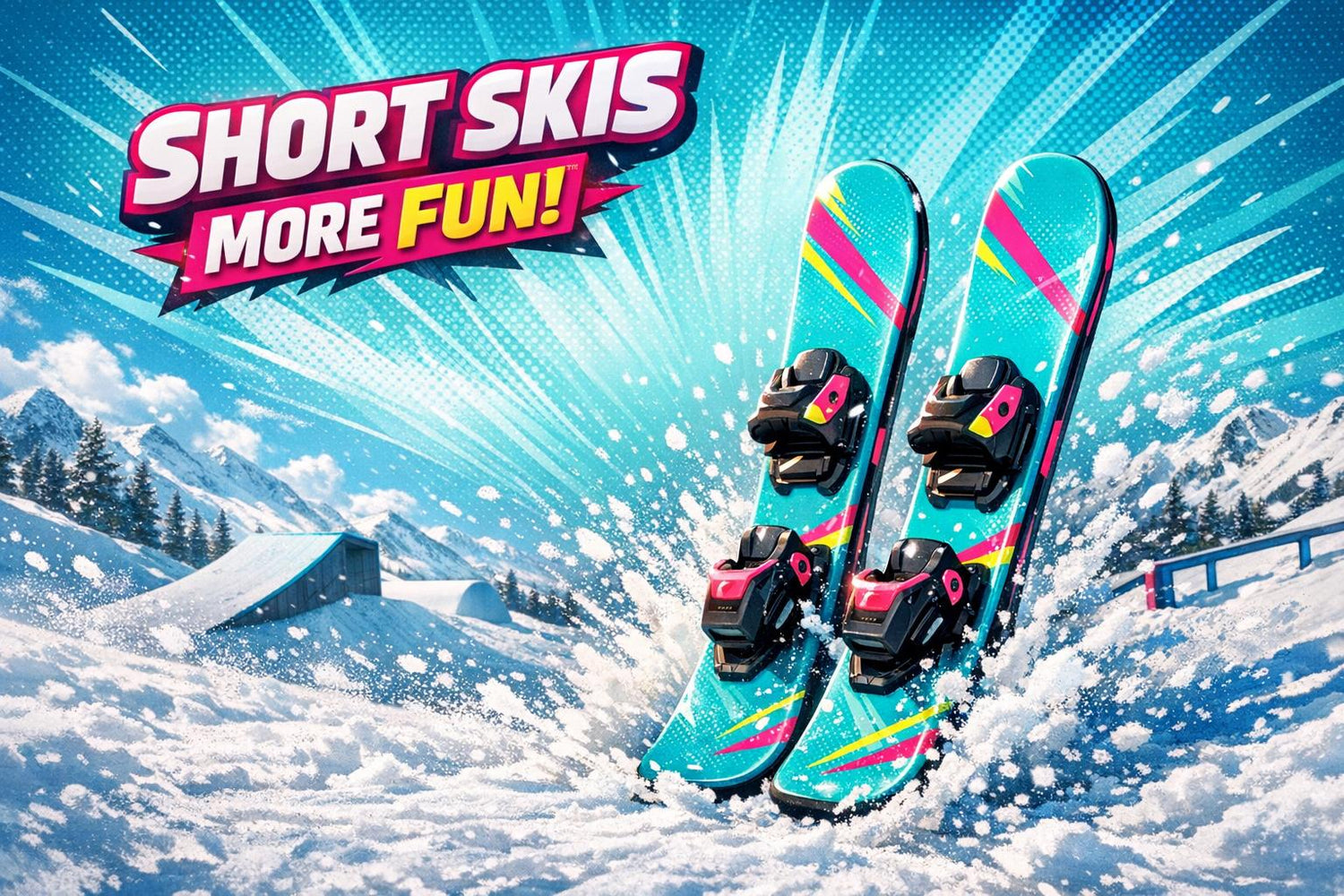
Short skis are making skiing easier, more fun, and less intimidating for beginners and park riders. They’re lightweight, easier to control, and perfect for quick turns and tricks. Unlike longer skis, which can feel bulky and hard to handle, short skis help you learn faster and enjoy the slopes without the hassle of heavy equipment. Plus, brands like Snowfeet* are leading the way with compact designs that work with regular winter boots, making skiing more accessible than ever.
Key Benefits of Short Skis:
- Easier for Beginners: Shorter length means better control and smoother turns.
- Great for Park Riders: Lightweight design makes spins, jumps, and tricks more precise.
- Portable and Convenient: Fits in a backpack and works with regular boots.
- Faster Learning Curve: Perfect for first-timers to gain confidence quickly.
If you’re new to skiing or love freestyle, short skis like Snowfeet* models (starting at $635) are a great choice. They’re forgiving, responsive, and designed to help you focus on fun instead of frustration. Let’s dive into why they’re a game-changer for 2026.
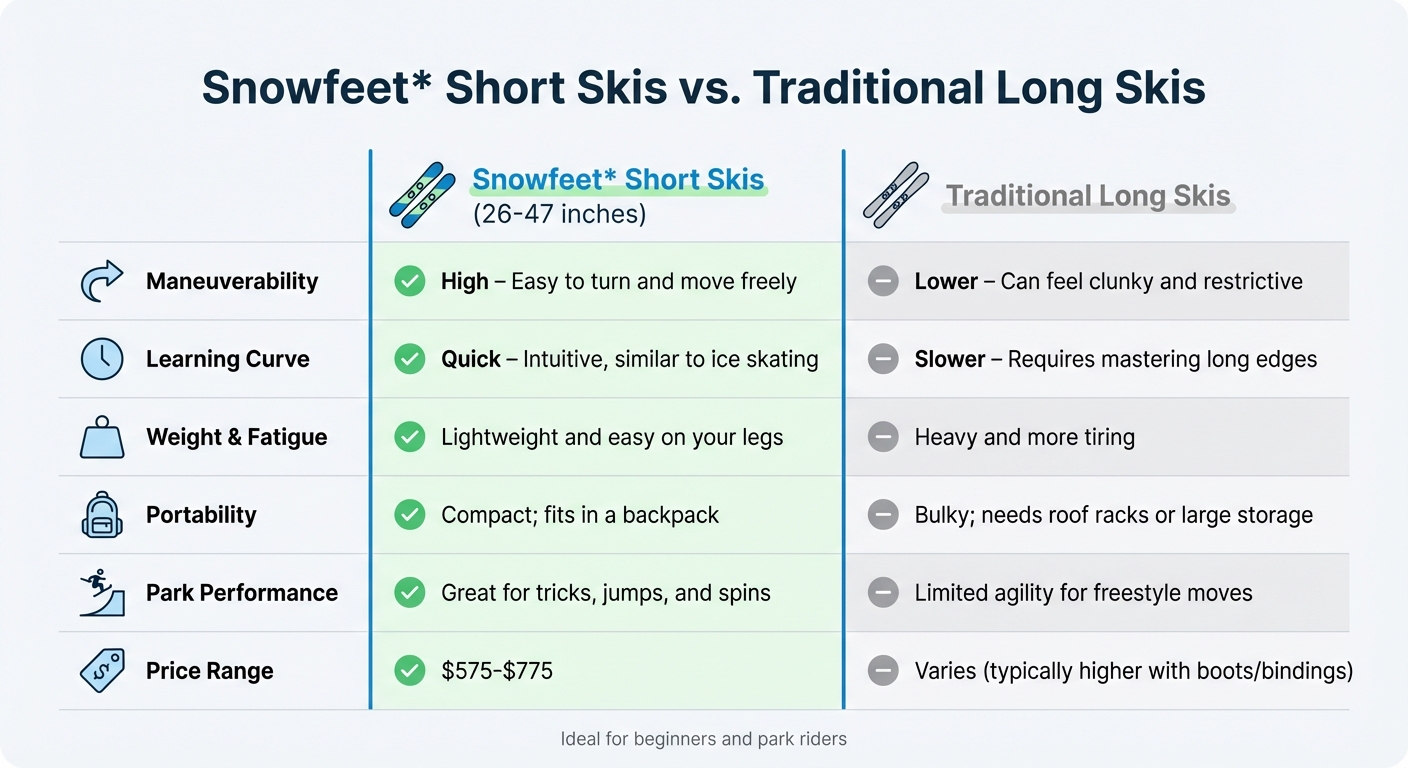
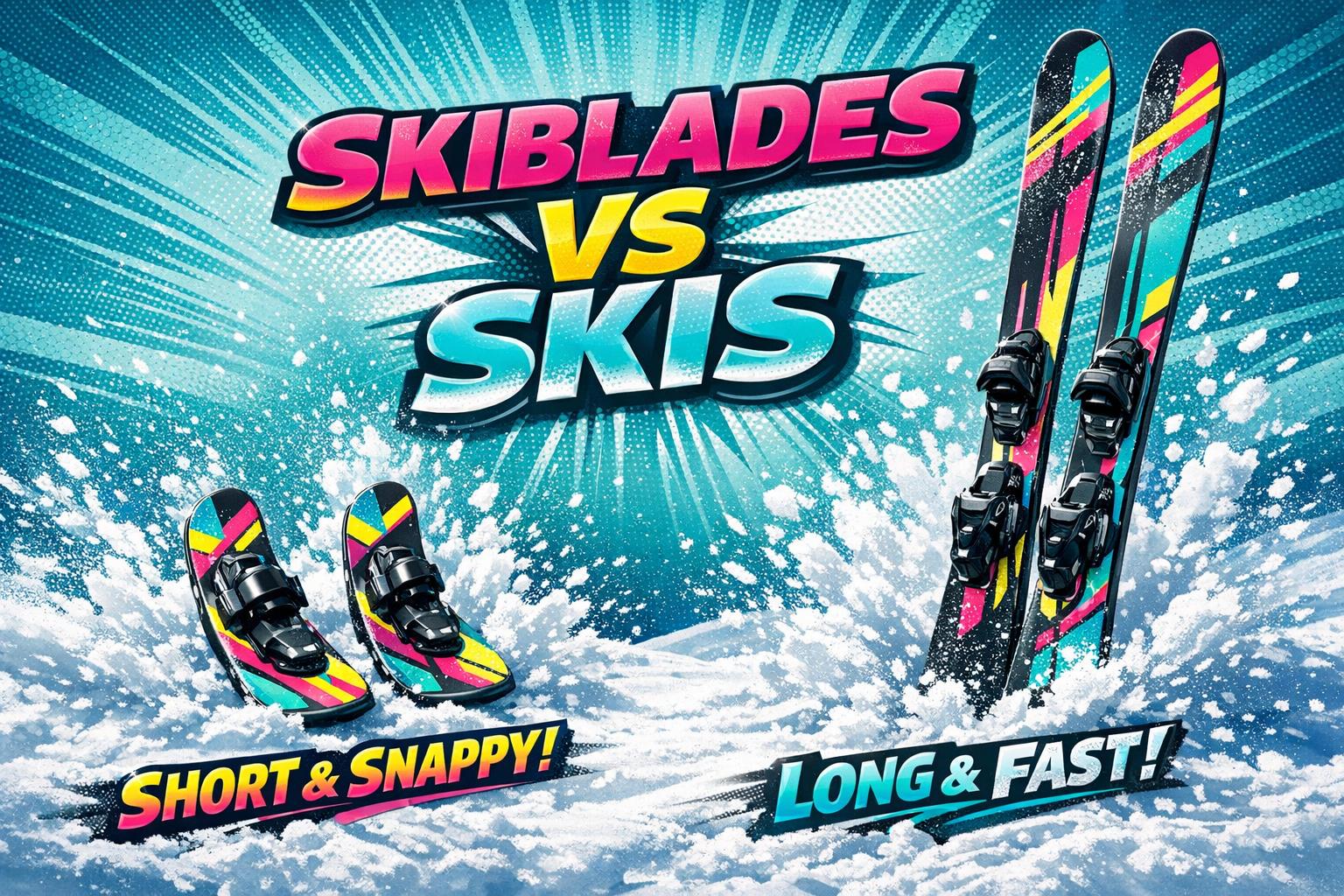
Snowfeet Short Skis vs Traditional Long Skis Comparison Chart
The Problem: Why Traditional Long Skis Don't Work for Beginners and Park Riders
Long Skis Are Tough for Beginners
For someone just starting out, traditional long skis can feel like a major hurdle. They demand precise technique and balance, which can be overwhelming for beginners, especially on varied terrains. Longer skis make turning harder because they require more force and control.
Take typical groomed runs at resorts like those in Tahoe, for example. Beginners using long skis often struggle to initiate turns, need to put in extra effort during edging, and frequently lose their balance. This can lead to more falls and slower progress on easier green and blue runs. On the other hand, shorter skis offer better control and make it easier to turn, giving new skiers a much smoother learning experience. In fact, experts often recommend that beginners pick skis about 4–6 inches (10–15 cm) shorter than their height for easier handling on groomed slopes. Many ski instructors agree that lighter, shorter skis help learners build confidence and maintain proper form, especially on those popular resort trails. Long skis, however, tend to slow down progress and increase the chances of falling.
And it’s not just beginners who face challenges with long skis - these issues carry over to freestyle skiing as well.
Long Skis Aren’t Great in Terrain Parks
When it comes to terrain parks, longer skis create even bigger problems. While they might be great for stability at high speeds or floating on powder, they fall short - literally and figuratively - when it comes to the quick maneuverability needed for tricks and park features. Their extra length gets in the way of spins, grabs, and quick landings.
Here’s why: longer skis have more surface area and weight, which makes spins slower, grabs harder to hold, and landing adjustments less precise. Think about trying to rotate 180 or 360 degrees in the air - every extra inch of ski length works against you. These limitations make it clear why shorter skis, like Snowfeet*, are a game-changer for both beginners and park riders. They’re built for better control, faster learning, and smoother tricks.
The Solution: How Snowfeet* Short Skis Solve These Problems
Smaller Size Means Easier Control and Faster Learning
For beginners and park riders, Snowfeet* short skis are a game-changer. Their compact size - ranging from 26 inches (65 cm) to 47 inches (120 cm) - makes them far easier to control than traditional long skis. This smaller design allows for more natural movement, eliminating the struggle often associated with bulky, heavy equipment. Unlike long skis that require precise technique just to make a turn, Snowfeet* short skis are lightweight and highly responsive, making them ideal for quick, confident maneuvers right from the start. Beginners can enjoy shorter, easier turns and spend less time battling fatigue, thanks to the reduced weight. Plus, when falls happen (and let’s be honest, they will), there’s less gear to get tangled up in, making the experience safer overall.
"Short skis are actually easier to learn than long skis. Skiboards / Snowblades are very responsive, lightweight on your feet, and easy to ride as opposed to cumbersome long skis."
– Snowfeet FAQ
This simplicity in control doesn’t just help beginners - it also paves the way for some serious freestyle potential.
Better Performance for Freestyle and Park Riding
Snowfeet* short skis take freestyle and park riding to the next level. Their lightweight, compact design is perfect for terrain parks, offering unmatched precision and agility. The 26-inch (65 cm) and 39-inch (99 cm) models are specially crafted with park performance in mind, making tricks, jumps, and spins feel effortless. Unlike longer skis that can feel awkward or even limit your movements, Snowfeet* short skis let you navigate rails, boxes, and tight transitions with ease.
What’s more, these skis feature snowboard boot bindings, which add a whole new level of comfort and flexibility. Instead of dealing with stiff, traditional ski boots, riders can enjoy enhanced ankle mobility for technical tricks and the convenience of walking comfortably between park runs. This thoughtful design helps you spend more time riding and less time adjusting or feeling restricted.
Comparison: Snowfeet* vs. Traditional Long Skis
Snowfeet* short skis directly address the downsides of traditional long skis. Here’s a quick comparison to show how they stack up:
| Feature | Snowfeet* Short Skis (26–47 inches) | Traditional Long Skis |
|---|---|---|
| Maneuverability | High – Easy to turn and move freely | Lower – Can feel clunky and restrictive |
| Learning Curve | Quick – Intuitive, similar to ice skating | Slower – Requires mastering long edges |
| Weight & Fatigue | Lightweight and easy on your legs | Heavy and more tiring |
| Portability | Compact; fits in a backpack | Bulky; needs roof racks or large storage |
| Park Performance | Great for tricks, jumps, and spins | Limited agility for freestyle moves |
Snowfeet* short skis are designed for skiers who want to focus on fun, freedom, and fast improvement. While traditional long skis might be the go-to for speed-focused racers, Snowfeet* is perfect for beginners and park enthusiasts looking to explore their creativity and push their boundaries.
Are Short Skis Better for Beginners?
sbb-itb-17ade95
Snowfeet* Product Guide: Which Model Should You Choose?
Picking the right Snowfeet* model can make all the difference in your snow adventures. Let’s break it down:
Snowfeet* Skiblades 65 cm and 99 cm: Ideal for Beginners
If you’re just starting out, the Snowfeet* Skiblades 65 cm (26 inches) and 99 cm (39 inches) are excellent choices. The 65 cm version is compact, easy to handle, and forgiving - perfect for learning the ropes without the hassle of managing bulky traditional skis. It’s responsive and lets you focus on mastering the basics of snow movement.
The 99 cm model, while slightly larger, still offers great control and adds a bit more surface area, making it a smooth transition as you gain confidence. Both models are designed with forgiving edge control, meaning small mistakes won’t throw you off balance. At $635 for the 65 cm and $675 for the 99 cm, they’re a solid investment compared to traditional ski setups, which often require extras like boots and bindings.
Ready to tackle more advanced tricks and park features? Let’s look at the models built for freestyle fun.
Snowfeet* Skiblades 120 cm and Skiskates: Perfect for Park Riders
For those who love hitting the park, the Snowfeet* Skiblades 120 cm (47 inches) and Skiskates (44 cm, about 17 inches) are designed with freestyle performance in mind. The 120 cm model, priced at $775, offers a sweet spot between stability and agility. It’s long enough to handle jumps and landings with ease, yet short enough for quick spins, rail slides, and tight maneuvers. Plus, its responsive feel lets you adjust mid-trick like a pro.
The Skiskates, starting at $575, are built for durability and lightweight performance thanks to their wood core. Their compact 17-inch size makes them perfect for tackling rails and boxes - areas where traditional skis might feel clunky. Both models come with snowboard boot bindings, giving you that extra ankle flexibility and comfort needed for technical tricks.
Whether you’re a beginner or a park enthusiast, there’s a Snowfeet* model designed just for you.
Common Myths About Short Skis: Stability and Speed Explained
You’ve probably heard the rumor: short skis are unstable or too slow. These misconceptions often push skiers toward traditional long skis. Let’s set the record straight.
Are Short Skis Less Stable?
The idea that short skis lack stability is often blown out of proportion. For beginners and intermediate skiers sticking to groomed trails, short skis provide plenty of stability. The difference in stability really only becomes noticeable at high speeds or in extreme conditions - places most beginners and park riders don’t venture.
What’s great about short skis, like Snowfeet* Skiblades, is how forgiving they are. Their lightweight design makes them easy to pivot and less punishing when you make a mistake. Instead of fighting against you, they adapt to your movements, giving you a smoother ride. On typical resort runs or in terrain parks, this forgiving nature can actually make short skis feel more stable than their longer counterparts.
Take the 65 cm and 99 cm Skiblades, for example. They’re designed for quick turns and help reduce the chances of catching an edge, something every skier dreads. Park riders especially love the agility of short skis, as they excel in tight, technical spaces where maneuverability is key.
Now, let’s tackle the speed myth.
What About Speed on Short Skis?
It’s true - short skis aren’t built for the breakneck speeds of racing skis. But here’s the thing: beginners and park riders aren’t chasing speed records. What they need is control and responsiveness, and that’s exactly what short skis deliver.
Snowfeet* Skiblades, including the 120 cm model and Skiskates, offer more than enough speed for jumps, park features, and groomed runs. At the same time, their lightweight design helps reduce leg fatigue, so you can practice longer without wearing out. More practice means faster progress, and that’s what really helps you enjoy your time on the slopes.
In short (pun intended), short skis like Snowfeet* Skiblades prove that you don’t have to sacrifice stability or speed to have a great time - especially when you’re just starting out.
Conclusion: Why Short Skis Are the Better Choice in 2026
If you're new to skiing or a park enthusiast aiming to make the most of your time on the slopes, short skis have a clear edge over their longer counterparts. While traditional long skis boast speed and stability, they come with a steep learning curve, quicker fatigue, and limited agility in the park. Snowfeet* short skis sidestep these issues, offering easier control, faster skill development, and the flexibility to handle tricks and varied terrain.
Here’s the game-changer: most beginners can get the hang of short skis in a single day, compared to the weeks - or even months - it often takes with traditional skis. Models like the Snowfeet* Skiblades 99 cm (rated 4.9/5) and the 65 cm version (rated 5.0/5) strike the perfect balance between stability and maneuverability, making them ideal for learning. Meanwhile, the compact 44 cm Skiskates (rated 5.0/5) are a dream for park riders, enabling all kinds of freestyle tricks. Their lightweight design doesn’t just reduce fatigue - it also helps you progress faster.
Let’s bust some myths: short skis aren’t unstable or slow when it comes to beginner and park-focused skiing. In fact, they’re forgiving, responsive, and perfectly suited to groomed runs and park features. With a natural stance and the ability to make sharper turns, they deliver a smoother, more efficient experience on the slopes.
Whether you’re strapping on skis for the first time or fine-tuning your tricks on the rails, Snowfeet* has a model that fits your needs. From the compact 65 cm Skiblades (starting at $635) to the adaptable 120 cm Short Skis ($775), this modern gear leaves traditional designs in the dust. Explore the Snowfeet* collection and take your skiing to the next level. You won’t look back.
FAQs
Why are short skis a great choice for beginners?
Short skis, like Snowfeet's Skiblades and Skiskates, are a game-changer for beginners learning to ski. Thanks to their smaller size, they make turning easier and give you quicker edge-to-edge control. This means you can feel more at ease and build confidence faster as you tackle the slopes.
Another big plus? Short skis are more forgiving, which lets beginners focus on improving their skills without feeling overwhelmed. Snowfeet’s clever designs, including the 65 cm and 99 cm Skiblades, offer better control and help you progress faster than traditional long skis.
Why are Snowfeet short skis perfect for beginners and park riders?
Snowfeet short skis are built to make skiing more enjoyable and approachable, especially for beginners and park riders. With their compact design and lightweight feel - like the 65 cm model that weighs just 5 lbs - they’re incredibly easy to handle. This means you can spin, land jumps, and hit rails with confidence and control.
Compared to traditional long skis, Snowfeet short skis are a breeze to turn and carry. They’re so compact they even fit into a backpack, making them super convenient for travel. Whether you’re just getting started or working on tricks in the terrain park, these skis strike a great balance between versatility and performance. Perfect for anyone wanting to up their skiing game!
What are the downsides of using short skis compared to traditional long skis?
Short skis, like Snowfeet Skiblades, come with a mix of perks and trade-offs when compared to traditional long skis. Because of their smaller surface area, they can feel less stable at higher speeds and don’t offer the same level of precision for fast, sharp carving. In deep powder, they tend to sink more quickly since they lack the flotation that longer skis provide. On icy or hard-packed slopes, their edge grip isn’t as strong, and the quick-turning nature of short skis can mean sacrificing some control when you’re really flying.
But here’s the thing: for most beginners and park riders, these downsides aren’t dealbreakers. The lightweight design and easy handling of Snowfeet Skiblades make them perfect for freestyle tricks, jumps, and tearing it up in terrain parks. If you’re all about having fun and exploring the mountain with versatility - and you’re not too worried about high-speed stability or deep-snow performance - short skis are a fantastic choice.












Leave a comment
This site is protected by hCaptcha and the hCaptcha Privacy Policy and Terms of Service apply.