







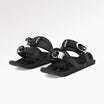












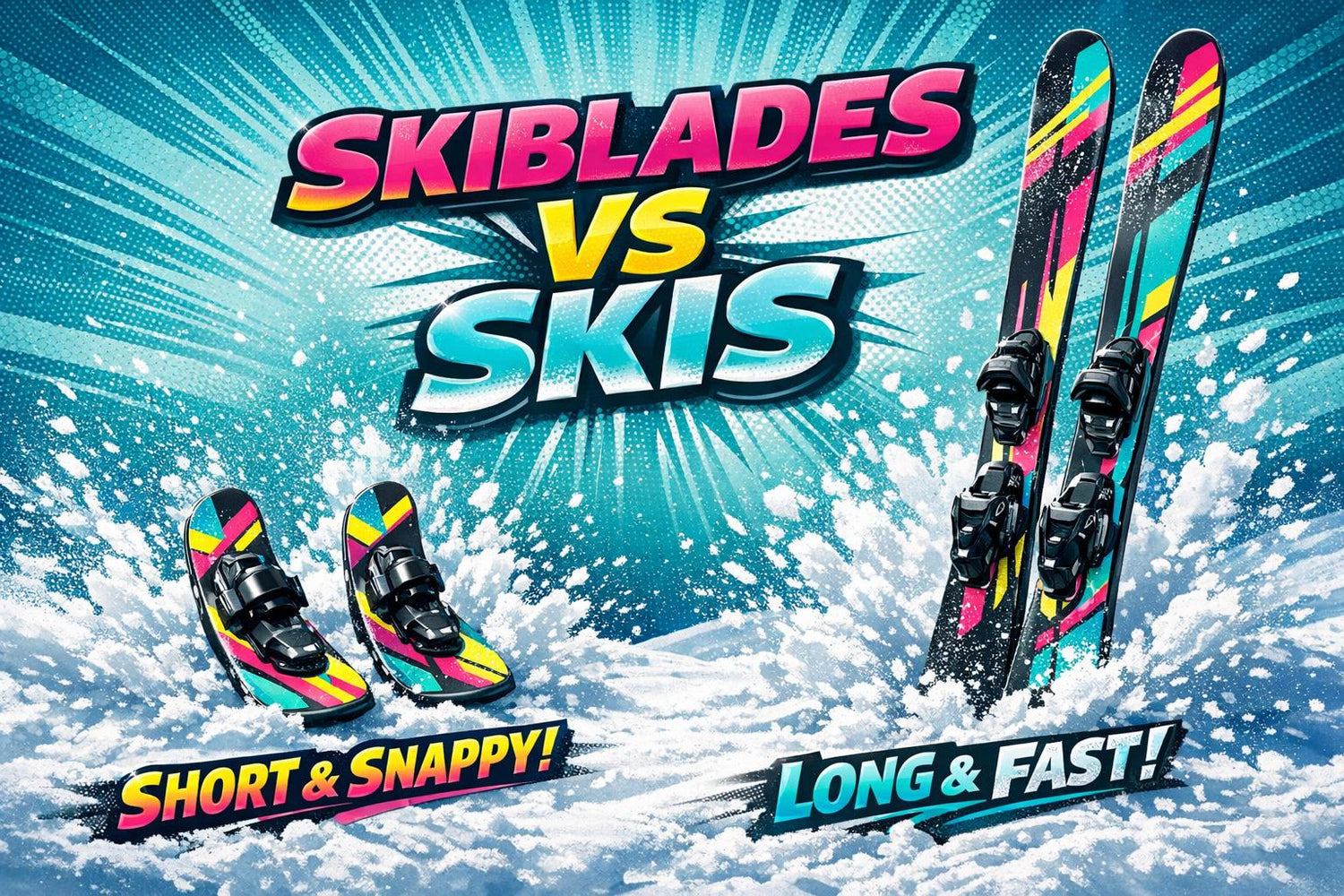
Looking for a fun, easy way to hit the slopes? Skiblades might be your new best friend. These short, lightweight skis (26–47 inches) are super easy to learn, highly portable, and perfect for tricks or tight turns. Unlike traditional skis (59–79 inches), which excel at speed and stability but can be bulky and demanding, skiblades offer a more playful and accessible experience for beginners and seasoned skiers alike.
Quick Highlights:
- Skiblades: Short, twin-tipped, work with various boots, fit in a backpack, great for tricks and tight spaces. Prices range from $550–$775.
- Traditional Skis: Longer, heavier, designed for speed and deep powder, require ski boots and carriers. Best for high-speed runs and steep terrain.
Quick Comparison:
| Feature | Skiblades | Traditional Skis |
|---|---|---|
| Length | 26–47 inches (65–120 cm) | 59–79 inches (150–200 cm) |
| Weight | Lightweight, easy to carry | Heavier, requires racks |
| Learning Curve | Easy, no lessons needed | Takes time to master |
| Terrain | Parks, trails, light powder | Groomed slopes, deep powder |
| Boots | Works with snowboard or winter shoes | Requires rigid ski boots |
If you want something portable, beginner-friendly, and fun for all terrains, skiblades are worth checking out. For speed and powder, stick with traditional skis. Keep reading to find out which is right for you!
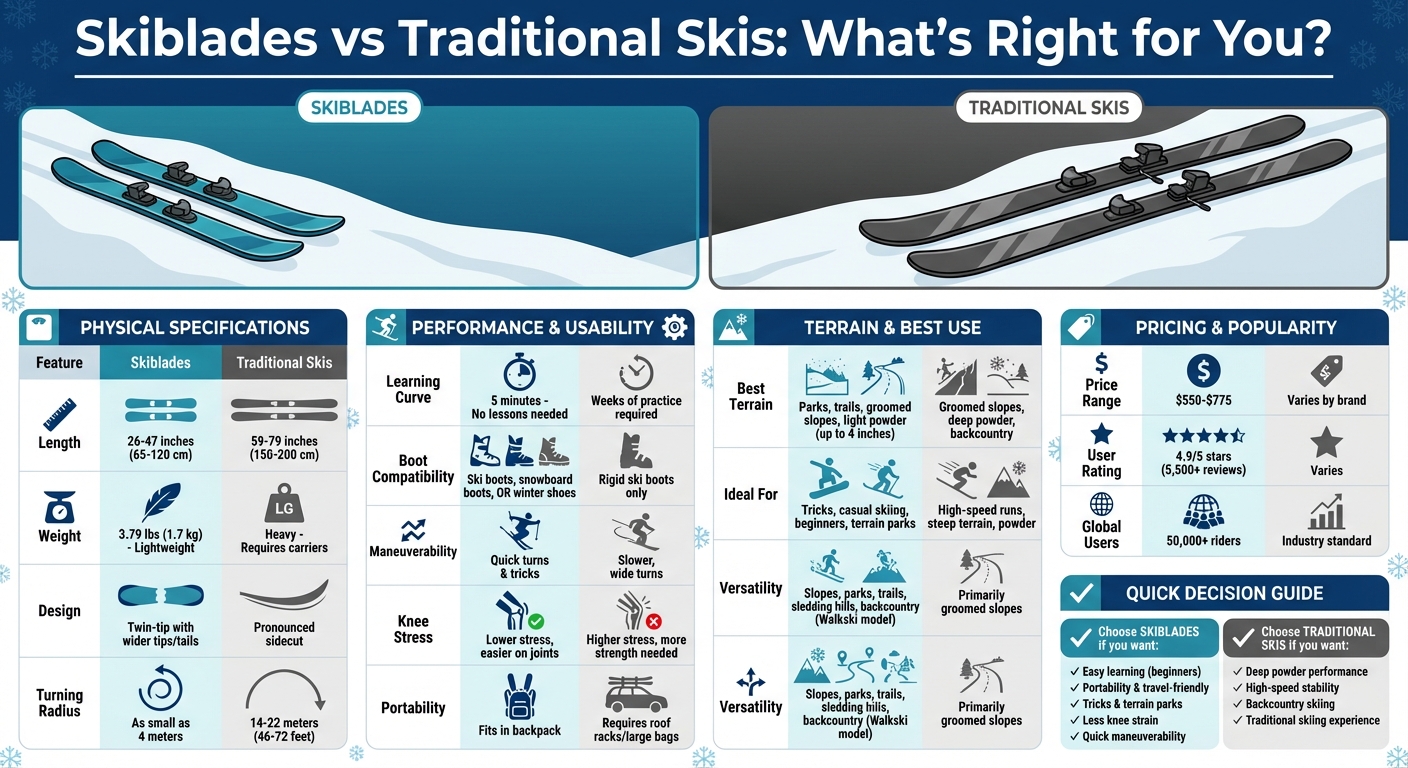
Skiblades vs Traditional Skis: Complete Comparison Chart
Snowfeet* Snowblades | Skiboards | Skiblades | Short Skis - All you need to know
What Are Skiblades?
Skiblades are short skis, typically ranging from 65 to 120 cm (about 26 to 47 inches) in length. Made with lightweight materials like wood or fiberglass cores, they feature a twin-tip design with wider tips and tails. This setup makes it easy to ride forward or backward, spin, and pull off jumps effortlessly. Unlike traditional skis that require stiff ski boots, skiblades work with regular winter shoes, snowboard boots, or ski boots, depending on the type of bindings you choose.
Their parabolic shape, with a narrower waist, allows for incredibly tight turns - think a turning radius as small as 4 meters on a 65 cm model. Snowfeet* Skiblades have already gained popularity with over 50,000 riders worldwide and boast a stellar 4.9/5 star rating from more than 5,500 verified reviews. Designed for riders of all ages, their compact design offers a mix of convenience and performance. Let’s dive into what makes them stand out.
Main Features of Skiblades
Snowfeet* offers skiblades in sizes ranging from 65 cm (priced at $550) to 120 cm ($775), catering to different riding preferences. The twin-tip design lets you land tricks backward and navigate terrain parks with ease - something traditional skis can’t always do. Portability is another big plus. A pair of 65 cm Snowfeet* Skiblades weighs just 3.79 lbs (1.7 kg), light enough to toss in your backpack. No need for roof racks or special carriers to get them to the slopes.
You can also customize your experience with different bindings:
- Non-release bindings for casual, carefree fun.
- Release bindings for a more traditional ski experience.
- Snowboard bindings if you prefer the comfort and walkability of soft boots.
Benefits of Choosing Skiblades
The practical advantages of skiblades are hard to ignore. First off, they’re incredibly beginner-friendly. Snowfeet* says you can pick up the basics in just 5 minutes - no formal lessons required. Their short length and quick responsiveness make them easy to control, perfect for beginners or older skiers who might find longer skis challenging or tough on the knees.
For more advanced riders, skiblades shine in terrain parks. Their twin-tip design and lightweight build make tricks, jumps, and spins a breeze. They’re also great for tight spaces like moguls or narrow trails, where traditional skis can feel clunky. Snowfeet* skiblades are specifically designed for snowpark action, with wood cores for solid landings and fiberglass options for added flexibility.
"Long enough to ski, short enough to skate. Easy to Learn and Use. Strap in and ride - no lessons needed." - Snowfeet*
Skiblades aren’t just for groomed slopes - they’re surprisingly versatile. While they excel on packed runs and in terrain parks, longer models like the 99 cm Powder version can handle light powder up to 4 inches (10 cm) deep. Whether you’re a beginner looking to build confidence or a seasoned skier craving a fun, skate-like experience, Snowfeet* Skiblades offer a fresh way to enjoy the slopes.
What Are Traditional Skis?
When you think of alpine skiing, traditional skis probably come to mind. These skis typically range from 150 cm to over 200 cm (59 to 79 inches) in length, with modern versions usually falling between 150–180 cm. Back in the day, though, it wasn’t uncommon to see skis stretching up to 210 cm. Designed for downhill stability and control, especially on steep or icy slopes, traditional skis are all about precision at high speeds. Brands like Head, Atomic, Elan, Blizzard, Fischer, and Dynastar have built their legacies around this classic ski design. Let’s break down what makes these skis stand out - and where they might fall short compared to modern alternatives.
These longer skis shine in deep powder and at high speeds, offering excellent stability. They’re typically constructed with wood cores and cap construction, paired with release bindings for safety. However, they require rigid ski boots for optimal control, which can feel limiting for some skiers.
Main Features of Traditional Skis
A standard 160 cm rental ski from brands like Head or Atomic usually has a turning radius between 14 m and 22 m (46 to 72 feet). This wider turning radius is ideal for smooth, sweeping turns at high speeds but can make quick, sharp maneuvers a bit of a challenge. And let’s be honest - transporting these skis isn’t exactly a breeze. Their size often means you’ll need a roof rack or a special carrier, which isn’t nearly as convenient as the lightweight, compact Snowfeet* Skiblades.
"Long skis are super clunky which can be a real pain in the leg when you are learning how to ski or when you are skiing in a more demanding terrain." – Snowfeet Team
There’s also a steep learning curve with traditional skis. It can take weeks of practice to nail basic techniques like controlling crossed tips or mastering a snowplow. Rick Paris, Technical Director at The Short Ski Shop, sums it up well:
"If you flipped the question - why use long skis? - most would say it's simply tradition. A century ago, skiers used long skis to trudge up mountains and ski down, and the trend stuck".
Drawbacks of Traditional Skis
One of the biggest downsides? Their weight. Traditional skis can tire you out faster, cutting into your time on the slopes. In contrast, lighter options like Snowfeet* Skiblades make for a much less exhausting experience. Then there are the boots - rigid ski boots are a must for traditional skis, but they’re not exactly known for comfort. Beginners or anyone used to the flexibility of snowboard boots might find them especially restrictive. Snowfeet* Skiblades, on the other hand, offer more versatile binding options, which can be a game-changer.
Traditional skis also lack versatility. Sure, they’re fantastic in deep powder or for high-speed descents, but they struggle in terrain parks, moguls, and crowded slopes where quick turns are essential. Add in the steep learning curve, and you’re looking at formal lessons and plenty of practice before you feel confident. Compare that to the intuitive ease of Snowfeet* Skiblades, and it’s easy to see why many skiers - especially beginners or those after a more playful experience - might find traditional skis a bit of a hassle.
In the next section, we’ll dive into how these design and performance differences stack up in various skiing conditions. Stay tuned!
sbb-itb-17ade95
Direct Comparison: Design, Performance, and Use
Size and Design Differences
Snowfeet* Skiblades are noticeably shorter than traditional skis, measuring between 17–47 inches (44–120 cm), compared to the 59–79 inches (150–200 cm) typical of brands like Head, Atomic, and Fischer. This compact size is paired with a twin-tip design and wider tips and tails, making them perfect for tricks and skiing backward with ease. On the other hand, traditional skis feature a pronounced sidecut, which is great for sweeping turns and maintaining stability at high speeds.
Weight is another major difference. Snowfeet* Skiblades are so lightweight they can fit in a standard backpack, whereas traditional skis require specialized carriers due to their bulk. These design contrasts directly influence how each performs on the slopes, as we’ll explore next.
Performance and Control
The smaller size and wider base of Snowfeet* Skiblades give them an edge when it comes to quick direction changes and reducing strain on your knees. This makes them especially appealing for beginners or anyone recovering from an injury. Plus, their lighter design means less fatigue, so you can stay on the slopes longer without wearing yourself out.
Traditional skis, while excellent for high-speed stability on open slopes, demand more physical effort in tighter or more challenging conditions. They’re built for power and precision, but that comes with increased stress on your legs and knees, especially during extended sessions.
Here’s a quick breakdown of the key differences:
| Feature | Snowfeet* Skiblades | Traditional Skis |
|---|---|---|
| Length | 17–47 inches (44–120 cm) | 59–79 inches (150–200 cm) |
| Design | Twin-tip with wider tips/tails for balance and tricks | Pronounced sidecut for sweeping turns |
| Weight | Lightweight, reducing fatigue | Heavier and more tiring |
| Turning Ability | Quick, highly maneuverable | Wider turning radius |
| Knee Stress | Lower stress, easier on joints | Higher stress, requiring more strength |
| Boot Compatibility | Works with ski boots, snowboard boots, or even winter shoes | Primarily designed for ski boots |
| Portability | Fits in a backpack | Requires roof racks or large bags |
Terrain Options and Portability
Snowfeet* Skiblades shine when it comes to versatility. While traditional skis perform best on groomed slopes, Snowfeet* can tackle a variety of terrains. Whether you’re hitting the slopes, exploring a snow park, hiking trails, sledding hills, or even your backyard, these skiblades have you covered. Want to ski down a small hill without a chairlift? No problem. For more rugged backcountry adventures, the Snowfeet* Walkski model is built for the challenge, with prices starting at around $690.
Portability is another standout feature. Since they fit neatly into a backpack, you’re not tied down by bulky equipment. Whether you’re hopping on a bus to the mountains or hiking to a remote snowy spot, Snowfeet* Skiblades let you go where traditional skis can’t. This freedom to explore without the hassle of oversized gear is a game-changer for winter sports enthusiasts.
Who Should Choose Snowfeet* Skiblades?
Pros and Cons: Skiblades vs Traditional Skis
Snowfeet* Skiblades are a great fit for beginners, trick skiers, and park enthusiasts. If you're just starting out, these skiblades make learning simple - no pricey lessons required. And if you’ve got experience with ice skating, hockey, or inline skating, you'll feel right at home with the familiar front-to-back balance. For trick skiers and park lovers, their shorter length opens up new possibilities for spins, jumps, and twists. With over 5,500 reviews averaging 4.9/5 stars, it’s clear that these skiblades deliver on the fun factor.
Here’s a quick comparison of Snowfeet* Skiblades and traditional skis:
| Feature | Snowfeet* Skiblades | Traditional Skis |
|---|---|---|
| Learning Curve | Easy to pick up | Often takes multiple lessons |
| Portability | Fits in a backpack | Requires roof racks or large bags |
| Boot Options | Works with ski boots, snowboard boots, or winter shoes | Limited to ski boots |
| Maneuverability | Quick turns and tricks | Slower, wide turns |
| Weight | Lightweight, less tiring | Heavy, can cause fatigue |
| Terrain Versatility | Great for slopes, parks, trails, and sledding hills | Best for groomed slopes |
| Best For | Tricks, casual skiing, travel, beginners | High-speed runs, deep powder |
Traditional skis still have the edge when it comes to floating through deep powder or tackling backcountry terrain. But for nearly everything else, Snowfeet* Skiblades stand out with their versatility and ease of use.
Best Situations for Snowfeet* Skiblades
Thanks to their thoughtful design, Snowfeet* Skiblades excel in a variety of settings. In terrain parks, their agility makes pulling off tricks and jumps far easier than with traditional skis. On crowded slopes, they’re a dream for weaving through tight spaces and avoiding collisions. Casual skiers will appreciate the reduced strain on their knees, which means less fatigue and more time enjoying the snow. Plus, the wider base provides extra stability - perfect for anyone recovering from a knee injury or just looking for a smoother ride.
If you love to travel or hike, their compact, backpack-friendly design eliminates the hassle of lugging around bulky equipment. They’re ideal for groomed runs, light to moderate powder, and even narrow trails. For more rugged backcountry adventures, the Snowfeet* Walkski model is specially built to handle tougher terrain.
Whether you're spending a few hours on the slopes or exploring remote snowy trails, Snowfeet* Skiblades offer a level of freedom and convenience that traditional skis just can’t compete with.
"These skiblades are so much fun and easy to control. Never going back to regular skis." - Andrew B.
Conclusion: Why Snowfeet* Skiblades Are the Better Choice
Snowfeet* Skiblades bring a fresh twist to the slopes, combining a sleek design with performance that leaves traditional skis in the dust. With over 50,000 riders worldwide and an impressive 4.9/5-star rating from more than 5,500 verified reviews, it's clear that these skiblades have earned their reputation.
Unlike bulky skis, Snowfeet* Skiblades offer instant fun. Beginners can quickly get the hang of them, while seasoned skiers enjoy the freedom to pull off tricks and explore creative riding styles. Their skate-like feel and reduced strain on your body mean you can spend more time carving up the snow and less time recovering.
One of the biggest perks? Portability. These skiblades are compact enough to fit in a backpack, making roof racks and extra baggage a thing of the past. Whether you're cruising down groomed runs, hitting terrain parks, tackling hiking trails, or even just playing around on your local sledding hill, Snowfeet* Skiblades fit seamlessly into your plans. With models to suit different styles and budgets, there's something for everyone.
Experts consistently praise Snowfeet* for delivering a fun, confidence-boosting ride. The wider base provides extra stability, while the shorter length makes them far more maneuverable than traditional skis. This combination opens up more terrain to explore and adds a new dimension to your winter adventures.
Check out the full range of Snowfeet* Skiblades and see for yourself why, in the world of winter sports, smaller truly can mean better.
FAQs
What makes skiblades a better choice than traditional skis?
Skiblades bring a lot to the table when it comes to making skiing more enjoyable and accessible. Their compact size - ranging from about 25 to 47 inches, compared to the 60+ inches of traditional skis - makes them lightweight and super easy to handle. This means quick turns, spins, and even tricks in the terrain park are a breeze. For beginners, they’re a dream come true. Most people can pick up the basics within a day, and the wider tips and tails add extra stability, making them a great choice for kids, seniors, or anyone just starting out.
Another perk? They’re incredibly portable. Thanks to their smaller size, they’re easy to carry, fit neatly in your car, and are hassle-free to take on a ski lift. Plus, they demand less physical effort, so you’ll feel less tired on long runs and have more energy to enjoy your time on the slopes. Whether you’re after a playful, versatile option or just want to skip the bulk of traditional skis, skiblades are a fantastic choice.
Can skiblades handle deep powder conditions?
Skiblades aren’t built for deep powder skiing. Their shorter length and smaller surface area mean they just don’t float as well in deep snow compared to traditional skis. That said, they absolutely shine on groomed trails, light powder, and in terrain parks. Their agility and ease of use in these conditions are tough to match. If your heart is set on tackling deep powder, traditional skis are likely the better choice. But for a playful, versatile ride on packed snow, skiblades bring plenty of excitement to the table.
What’s the difference between skiblades and traditional skis when it comes to learning and ease of use?
Skiblades are a fantastic option for beginners or anyone easing back into skiing. Thanks to their shorter length (usually 25–47 inches) and lightweight build, they make learning the basics a breeze. Turning and stopping feel much more intuitive compared to traditional skis, and many people can get the hang of them in just a day. Another bonus? They’re gentler on your knees and legs, so you can enjoy the slopes without feeling wiped out.
Traditional skis, by comparison, are longer - typically around 60–80 inches - and come with a steeper learning curve. Their length and stiffness require more strength, balance, and technical skill, which makes them ideal for those ready to commit to mastering advanced techniques. But if you’re after something quick, easy, and downright fun, Snowfeet Skiblades might just be your perfect match!











Leave a comment
This site is protected by hCaptcha and the hCaptcha Privacy Policy and Terms of Service apply.