




















Skiblades are taking over the slopes in 2026, and for good reason. These shorter skis (65–120 cm) deliver a fun, lightweight, and easy-to-use alternative to traditional skis. Whether you're a beginner, an older skier seeking less strain, or an experienced rider looking for more control, skiblades offer something for everyone. Here's why they’re worth checking out:
- Compact and Portable: Easy to carry, they fit in a backpack - no roof racks or oversized bags needed.
- Easier to Learn: Shorter length and wider base make them stable and beginner-friendly.
- Versatile Across Terrain: Handle groomed trails, terrain parks, and even powder with ease.
- Less Fatigue: Lightweight design reduces strain, letting you ski longer.
Snowfeet* leads the charge with three models:
- 65 cm ($550–$635): Ultra-portable, perfect for beginners and tricks.
- 99 cm ($590–$675): Balanced size for all-mountain fun.
- 120 cm ($775): Handles powder and carving like a pro.
Say goodbye to bulky gear and hello to more fun on the slopes. Skiblades are changing how we ski - lighter, simpler, and packed with thrills.
What Makes Skiblades Different from Traditional Skis
When it comes to skiing gear, size matters - a lot. Traditional skis from well-known brands like Rossignol or K2 typically measure 59 to 79+ inches (150–200+ cm) in length. In contrast, Snowfeet* Skiblades are much shorter, ranging from just 25 to 47 inches (65–120 cm). This smaller size makes them easier to handle, more versatile, and way simpler to carry around.
One of the standout features of skiblades is their maneuverability. Thanks to their shorter length, they’re perfect for pulling off quick, tight turns. This makes them a go-to choice for navigating crowded slopes or having fun in terrain parks. On the flip side, traditional skis are designed for long, sweeping turns and high-speed stability. While they’re great for advanced skiers who enjoy speed, they demand more strength and skill to control. Skiblades, however, offer a more laid-back, enjoyable experience, especially for recreational skiers.
Another big win for skiblades? They handle all kinds of terrain with ease. Unlike traditional skis, which are often specialized for specific conditions (think powder skis for deep snow or carving skis for groomed trails), Snowfeet* Skiblades are built to perform well across the board. Wider models even work surprisingly well in powder, challenging the old belief that only long skis can handle deep snow. Whether you’re cruising a groomed trail, hitting the park, or venturing off-piste, skiblades adapt effortlessly - no need to own multiple pairs of skis for different conditions.
The binding options on Snowfeet* Skiblades are another game-changer. You have the flexibility to use regular ski boots, snowboard boots, or even your everyday winter shoes. Traditional skis can’t compete with that kind of versatility. Plus, the wider base at the tips and tails gives extra balance and support, which is especially handy for anyone recovering from knee injuries or those who need a bit more stability. This adaptability makes skiblades a simpler, more accessible option for a wide range of skiers.
And let’s not forget about portability. Snowfeet* Skiblades are compact enough to fit in a backpack or your car trunk. Say goodbye to bulky roof racks and oversized ski bags. Compared to hauling around traditional skis that can stretch up to 6 feet long, skiblades are a breeze to transport. Add in the fact that they’re less physically demanding, and it’s easy to see why skiblades are becoming a popular choice heading into 2026.
1. Snowfeet* Skiblades (65 cm)
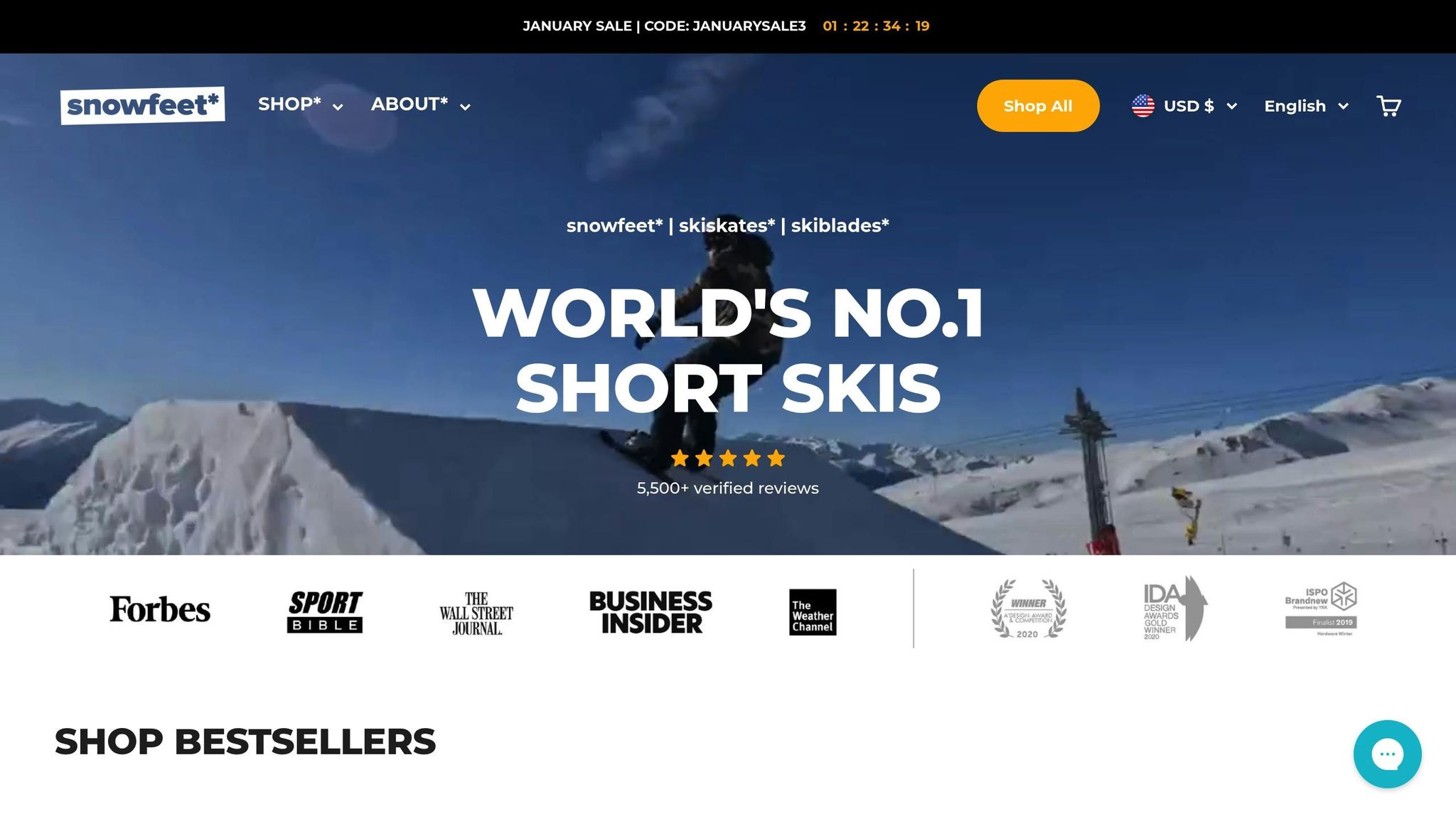
The Snowfeet* 65 cm skiblades are part of the brand's 2026 lineup, offering a compact yet thrilling way to hit the slopes.
Portability
Measuring just 26 inches (65 cm), these skiblades easily fit into a standard backpack. That means no need for bulky ski bags or pricey roof racks. Compare that to traditional skis, which are much longer and a hassle to transport. As Uncrate puts it:
"Far more portable and affordable than traditional skis or snowboards." (Uncrate)
With a January 2026 sale price of $550, these skiblades are an affordable and convenient option for on-the-go adventurers.
Maneuverability
The Snowfeet* 65 cm skiblades strike a perfect balance - they’re "long enough to ski, short enough to skate", as the brand describes them. Built with a wood core, they’re lightweight but tough, offering smooth responsiveness and sharp turns. Verified rider Nathan F. shares his experience:
"Transformative product: light, fast, and exceptionally fun." (Nathan F.)
Unlike traditional, longer skis that can be physically demanding, these skiblades make quick stops and sharp turns effortless, cutting down on strain and making your ride more enjoyable.
Learning Curve
Beginners can get the hang of these skiblades in just five minutes. Their shorter length means there’s less to manage, giving you an instant confidence boost. Plus, the wider tips and tails add extra stability, which is great for newcomers and anyone recovering from knee injuries . With over 50,000 Snowfeet* riders worldwide as of early 2026, the feedback is glowing. Verified customer Andrew B. says:
"These skiblades are so much fun and easy to control. Never going back to regular skis." (Andrew B.)
Terrain Versatility
These skiblades are built for versatility. They handle groomed slopes, terrain parks, and light powder (up to 4 inches) with ease. Their compact size is a game-changer for navigating crowded slopes and pulling off tricks in the park. You can even choose between ski boot bindings for a classic feel or snowboard boot bindings for extra comfort and flexibility.
Ready for even more performance? Check out the 99 cm Snowfeet* Skiblades next!
2. Snowfeet* Skiblades (99 cm)
The Snowfeet* 99 cm skiblades strike a perfect balance between agility and stability. They’re an excellent pick for skiers who want more control and performance than the ultra-compact 65 cm model but aren’t ready to commit to full-length skis.
Portability
Measuring 39 inches (99 cm) and starting at $590 for the wood core version as of January 2026, these skiblades are compact enough to fit in a backpack. They’re lightweight, easy to carry, and don’t require roof racks or oversized ski bags. Plus, you have binding options: go with regular ski boot bindings for a more aggressive ride or snowboard boot bindings for added comfort.
Maneuverability
The 99 cm length lives up to Snowfeet*’s motto: "long enough to ski, short enough to skate". This design makes quick turns and navigating tight spots a breeze - perfect for crowded slopes. The length offers excellent control and balance, especially for intermediate skiers, while the wider tips and tails boost stability.
Terrain Versatility
These skiblades are built to handle a variety of conditions. From groomed runs and moguls to snow parks and even powder, they’re ready for it all. Unlike the 65 cm version, the 99 cm skiblades can tackle deeper snow with ease. Whether you’re cruising through terrain parks or venturing off-piste, they deliver the stability you need without compromising on fun. For extra safety, pairing them with release ski bindings is a smart move.
Learning Curve
With a learning curve of just five minutes and a 4.9/5 star rating from over 5,500 verified reviews, these skiblades make improving your skills feel effortless. They’re more forgiving than traditional long skis, making carving and control easier - even without professional lessons. This mix of simplicity and performance makes them a great choice for intermediate skiers looking to step up their game. Up next, we’ll take a look at the 120 cm model for those seeking even more performance.
sbb-itb-17ade95
3. Snowfeet* Skiblades (120 cm)
The Snowfeet* 120 cm skiblades pack high performance into a sleek design. At 47 inches (120 cm) and priced at $775 as of January 2026, these are the longest option in the Snowfeet* lineup. Despite their length, they’re still compact compared to traditional skis.
Portability
Even at 120 cm, these skiblades are easy to transport. They fit into standard gear bags and cars, so there’s no need for roof racks. This makes them a breeze to carry and set up compared to full-length skis. Their compact design doesn’t just make travel simple - it also translates to smooth handling on the slopes.
Maneuverability
The 120 cm skiblades offer a level of control that’s hard to match. They allow for quick, sharp turns and effortless carving, making them ideal for navigating tight spots or crowded runs. Stopping is straightforward, and while maintaining front-to-back balance is key during deep carving, they’re far less cumbersome than traditional skis. Their responsive nature makes skiing feel more intuitive and fun.
Terrain Versatility
These skiblades shine across all kinds of terrain. Unlike shorter models that can struggle in deep snow, the 120 cm version is built for powder riding. Whether you’re tackling groomed runs, moguls, terrain parks, or backcountry powder, they deliver excellent performance. They offer enough flotation for deep snow while keeping agility intact. Plus, the inclusion of standard release ski bindings adds an extra layer of safety for high-speed or aggressive skiing.
Learning Curve
Seasoned skiers will find the transition to the 120 cm skiblades quick and easy. If you’ve got experience with ice hockey or skating, you’ll feel right at home with their balance requirements. These skiblades provide the stability needed for carving and pulling off tricks in snowparks, all without the steep learning curve of traditional long skis. You can also choose between ski boot bindings for a fast, dynamic ride or snowboard boot bindings for more comfort and easier walking. This versatility is just another reason why Snowfeet* continues to elevate the skiing experience in 2026.
Pros and Cons
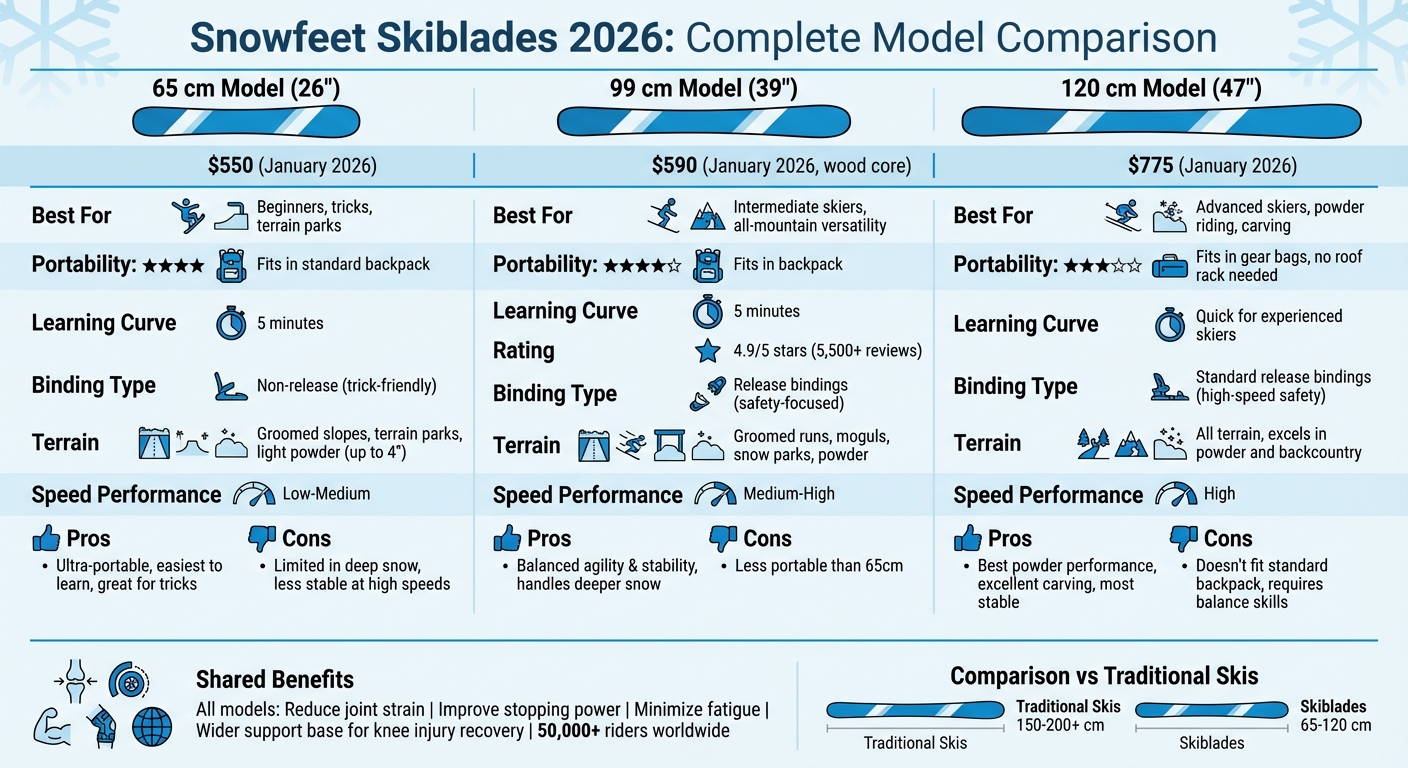
Snowfeet Skiblades Size Comparison Chart: 65cm vs 99cm vs 120cm Models
Each Snowfeet* Skiblade model brings its own flair to the slopes, catering to different needs and skill levels.
The 65 cm model is all about portability and ease of use. Its ultra-short length makes it a breeze to carry and quick to learn for beginners. However, it’s not the best choice for high speeds or deep snow, where stability can become an issue.
If you’re looking for a bit more versatility, the 99 cm model strikes a great balance. It’s still compact enough to fit in your car but offers better performance in deeper snow compared to the 65 cm version. This model is responsive, with a manageable learning curve, making it a solid upgrade for those transitioning from traditional skis.
For those who crave performance, the 120 cm model steps things up. It’s designed for varied terrain, excelling in powder and delivering sharp, aggressive carving. Standard release ski bindings enhance safety, especially at higher speeds. While it doesn’t pack into a standard backpack like the shorter models, it’s still far more portable than traditional skis and offers excellent stability, even in challenging conditions.
All three models share some common advantages: they reduce joint strain, improve stopping power, and help minimize fatigue compared to traditional skis. Their shorter lengths provide a wider support base, making them ideal for older adults or anyone recovering from knee injuries. Each model’s bindings are tailored for its purpose - non-release bindings on the 65 cm version make tricks easier, while the 99 cm and 120 cm models use release bindings for added safety during faster, more intense skiing.
Traditional skis may excel in speed and stability but often come with the drawbacks of bulky, tiring gear. Snowfeet* skiblades, on the other hand, bring fun, freedom, and simplicity to the slopes, blending ease with performance. They’re rewriting the rules of skiing, proving you don’t need to compromise to enjoy the ride.
Conclusion
Snowfeet* Skiblades are shaking up the skiing scene in 2026 with their compact size, simplicity, and thrilling performance. Whether you’re eyeing the 65 cm model for quick park laps, the 99 cm version for versatile all-mountain fun, or the 120 cm option for carving and powder days, these skiblades bring something fresh to the table that traditional skis just don’t.
They’re small enough to fit in your car trunk - or even your backpack - so no more wrestling with roof racks or oversized ski bags. Plus, they’re easier to pick up, meaning you can spend more time enjoying the slopes without wearing yourself out.
Snowfeet* has something for every skill level. If you’re a beginner, the 65 cm or 99 cm models are forgiving and easy to control. Intermediate skiers will love the 99 cm version for its versatility across different terrains. And for advanced riders, the 120 cm model, complete with release bindings, offers the stability and powder performance you crave.
With over 50,000 riders and a glowing 4.9/5 star rating, these skiblades prove that smaller gear can pack a big punch. They’re designed to reduce joint strain, turning crowded slopes into a playground for creativity instead of a test of endurance.
FAQs
Are skiblades easier to learn than traditional skis?
Yes, skiblades are much easier for beginners to pick up compared to traditional skis. Their shorter length (usually between 25 and 47 inches) and lightweight design make them far simpler to handle. You don’t need as much balance or edge control to get the hang of them. In fact, many first-timers can learn basic turns and stops with skiblades in just one day. Traditional skis? They often take several sessions before you feel that same level of confidence.
Another big plus? Skiblades don’t require poles, so you can skip the tricky coordination that comes with using them. Their compact, almost "shoe-like" feel makes gliding and turning feel more natural, especially for beginners. This makes skiblades a great choice for older adults, newcomers, or anyone who wants to enjoy the slopes without the pressure of mastering traditional skis.
Are skiblades good for skiing in deep powder snow?
Skiblades shine on groomed trails, slopes, parks, and even in light powder, but they’re not built for deep powder snow. Their shorter length makes them super agile and a blast to use on most terrains. However, when it comes to deep snow, they just don’t provide the floatation you need to glide smoothly. If you’re all about chasing fresh powder, longer traditional skis are the way to go.
What kind of boots can I use with Snowfeet skiblades?
Snowfeet skiblades work seamlessly with standard ski boots, so you don’t need any extra gear to get started. Prefer snowboard boots? No problem! They also offer optional snowboard-style bindings, giving you the freedom to use whichever boots you’re most comfortable with. This makes them a great choice for both skiers and snowboarders looking for a fun, hassle-free experience.











Leave a comment
This site is protected by hCaptcha and the hCaptcha Privacy Policy and Terms of Service apply.