



















Looking to hit the slopes in 2026 but unsure whether short skis or long skis are the better fit? Here’s the quick breakdown:
- Short Skis (Skiblades): Compact, lightweight, and easy to learn. Perfect for beginners, terrain parks, tight turns, and casual skiers. They’re portable (even fit in a backpack!) and work with regular winter boots. However, they might struggle in deep powder or at high speeds.
- Long Skis: Stable at high speeds, great for deep powder, and ideal for experienced skiers who love carving wide-open slopes. But they’re bulkier, harder to transport, and demand more physical effort and skill.
Quick Tip: If you’re new to skiing, want less hassle, or love freestyle tricks, short skis are your go-to. If you’re chasing speed and powder adventures, long skis might be worth the effort.
Here’s a quick comparison to help decide:
| Feature | Short Skis (Snowfeet*) | Long Skis (Traditional Brands) |
|---|---|---|
| Length | 15-47 inches | 59-67+ inches |
| Learning Curve | Easy for beginners | Requires practice |
| Portability | Lightweight, compact | Heavy, bulky |
| Best Terrain | Parks, tight spaces | Deep powder, high-speed runs |
| Price Range | $190-$775 | $400-$1,200+ |
Ready to dive in? Let’s unpack the details.
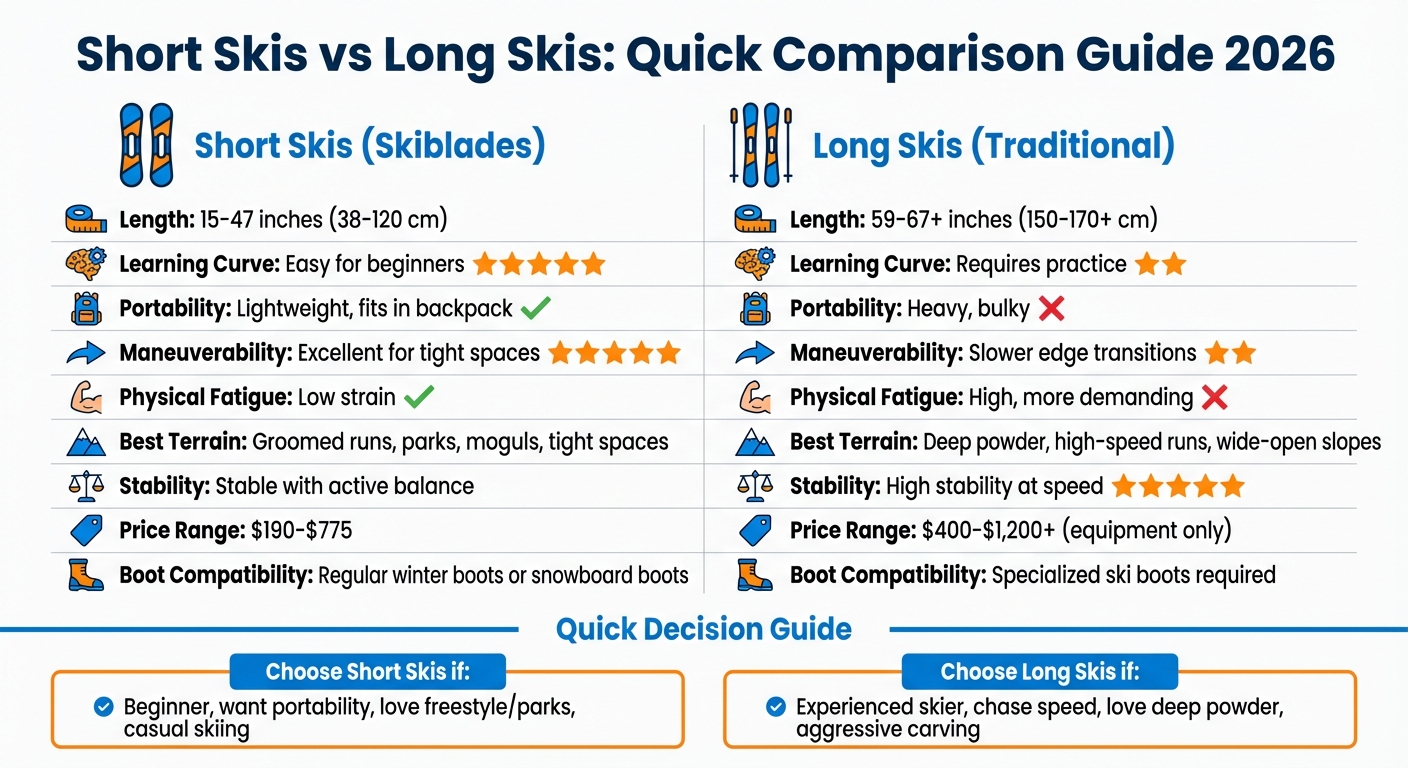
Short Skis vs Long Skis Comparison Chart 2026
Short Skis vs. Long Skis
What Are Short Skis (Skiblades)?
Short skis - also known as skiblades, snowblades, or skiboards - are compact skis that measure less than 63 inches in length. Unlike traditional skis from big names like Rossignol or Salomon, these are designed to be lighter, easier to control, and more maneuverable. They’re perfect for quick turns, navigating narrow trails, and having fun in terrain parks. Their unique design makes them stand out, with brands like Snowfeet* leading the way.
One of the biggest perks of short skis is their portability and versatility. Many models are compatible with regular winter boots or snowboard boots, so you don’t need to invest in extra gear. This also makes them easy to pack into a backpack or bring along as a backup. For beginners, they offer a smoother learning curve with better balance and control. For intermediate skiers, they add a playful twist to the slopes.
"Short skis are typically less than 160 cm in length. They are lighter, more maneuverable and easier to turn than the traditional long skis." - Snowfeet*
Snowfeet* Product Overview
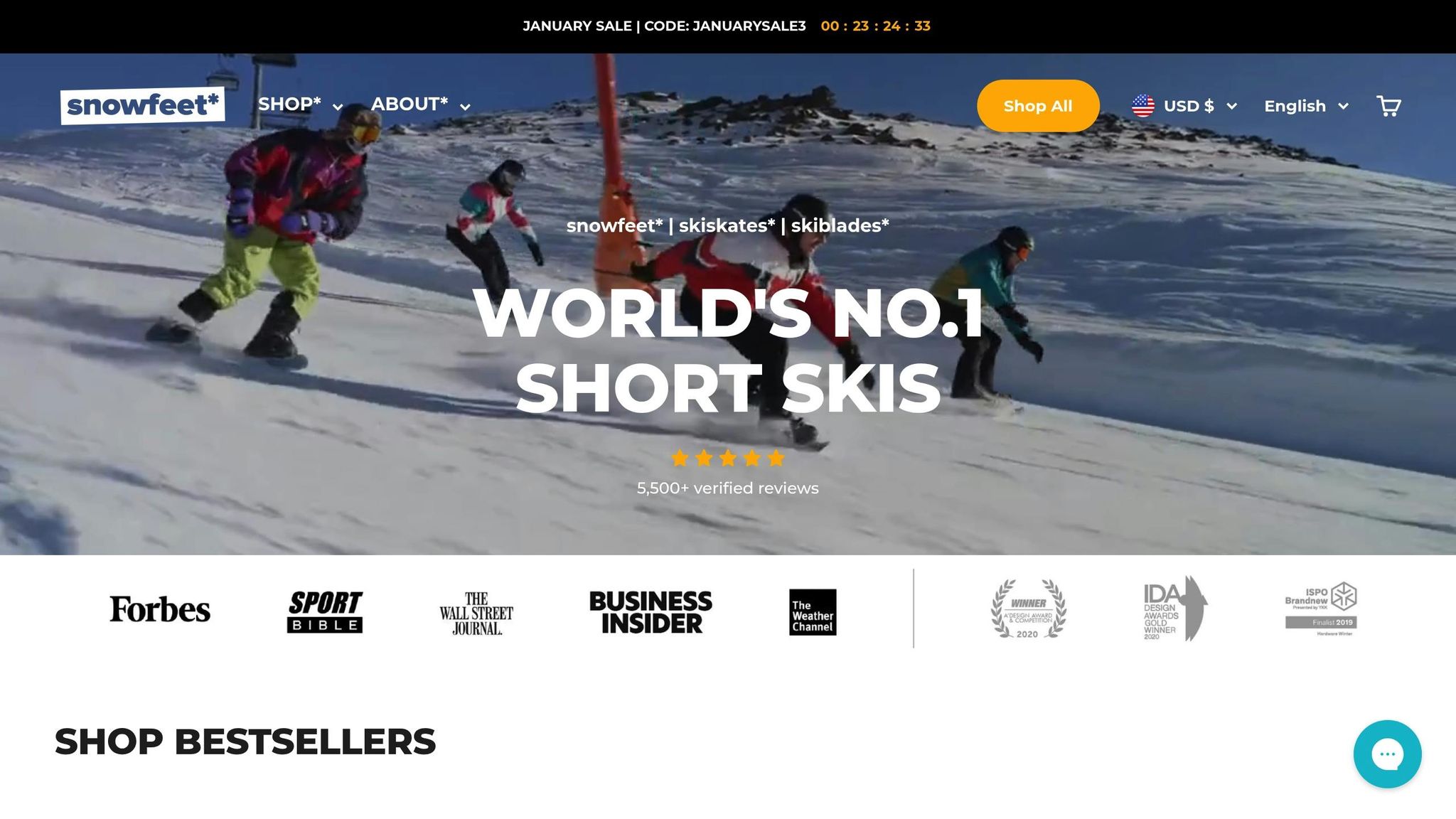
Snowfeet* takes the concept of short skis to the next level with a lineup of products designed for all kinds of snow adventures. Here’s a quick look at what they offer:
- Mini Ski Skates (15 inches / 38 cm): Ultra-compact for easy portability.
- PRO (50 cm): A blend of skating and skiing versatility.
- Skiblades (65 cm): Perfect for carving and pulling off tricks in snow parks.
- POWDER (99 cm): Built for performance in deep powder.
- Short Skis (120 cm): A full carving experience with far less bulk than traditional skis.
Prices range from $250 for the Mini Ski Skates to $775 for the 120 cm Short Skis. Most models boast a stellar 5.0/5 customer rating. A standout feature of Snowfeet* products is their compatibility with your own winter or snowboard boots. This eliminates the need for pricey, specialized ski boots, making the experience more accessible and hassle-free. It’s a big win for families or groups with mixed skill levels who want to enjoy the slopes without lugging around heaps of gear.
What Are Long Skis?
Long skis, offered by well-known brands like Salomon, Rossignol, and Atomic, are the traditional full-length option for downhill skiing. Typically ranging from 59 to 67 inches (150 to 170 cm) in length, they feature a wood core and cap construction designed to prioritize speed and stability on the slopes. While they shine in certain areas, they also highlight the contrasting advantages of shorter skis, such as Snowfeet* Skiblades.
Long skis are all about stability and performance in powder. Their extended length provides a larger edge, which helps them stay afloat in deep snow and grip firmly on hardpack or icy terrain. This makes them a go-to choice for skiers who enjoy aggressive carving or high-speed descents.
"The increased effective edge and mass of a longer ski provide a much larger platform on the snow. This dampens vibrations and translates to incredible stability and confidence when you're flying down the mountain."
However, this length comes at a cost: maneuverability. Long skis are not as agile as shorter options like Snowfeet* Skiblades. Their wider turning radius and heavier build can make them feel clunky and sluggish, especially in tight areas like moguls or dense tree runs.
"The increased length and mass require more effort and time to transition from one edge to the other. This makes them feel sluggish and cumbersome in tight spots like moguls or tree runs."
Another downside is the physical effort they demand. Long skis can be heavy and unwieldy, making quick turns or nimble movements a challenge. For skiers with knee issues or those looking for a more laid-back experience, the extra weight and effort required for carving and turning can be a drawback. Portability is another concern - lugging around long skis can be a hassle, and they may pose a risk of tip crossing, which is particularly frustrating for beginners.
While long skis excel in speed and powder flotation, their lack of agility highlights why many skiers are drawn to the compact and versatile design of Snowfeet* innovations.
Key Differences Between Short Skis and Long Skis
Choosing between Snowfeet* Skiblades and traditional long skis comes down to how they perform in different areas. Let’s break it down.
Maneuverability is a standout feature for Snowfeet*. With lengths ranging from 15 inches (38 cm) to 47 inches (120 cm), these short skis are perfect for quick turns in tight spaces, terrain parks, and moguls. On the other hand, traditional long skis, which typically measure 59 to 67 inches (150 to 170+ cm), can feel sluggish and less responsive in technical terrain.
Portability and Fatigue are major factors to consider. Snowfeet* short skis are lightweight and compact enough to fit in a backpack, making them easy to carry and less tiring to use throughout the day. Long skis, however, are heavier and bulkier, which can make transportation a hassle and lead to more physical fatigue during use.
The learning curve is another key difference. Snowfeet* products are beginner-friendly, allowing new users to pick up the basics quickly without needing advanced technical skills. In contrast, long skis often require more time and effort to master, especially for those new to skiing.
When it comes to stability, it’s not just about ski length - it’s about how you apply pressure. If you’re tired or struggling to maintain forward pressure, shorter skis like Snowfeet* can actually feel more controlled and stable. Additionally, modern rocker technology in long skis has changed the game. For example, a 62-inch (157 cm) ski with significant rocker can perform like a 59-inch (151 cm) ski, effectively shortening its feel by about 2.4 inches (6 cm).
Here’s a quick side-by-side comparison to sum it all up:
Comparison Table: Short Skis vs Long Skis
| Feature | Short Skis (Snowfeet*) | Long Skis (Traditional Brands) |
|---|---|---|
| Length | 15-47 inches (38-120 cm) | 59-67+ inches (150-170+ cm) |
| Maneuverability | Excellent for tight spaces | Slower edge transitions |
| Portability | Lightweight; fits in backpack | Heavy; harder to transport |
| Learning Curve | Quick for beginners | Steeper, requires practice |
| Physical Fatigue | Low; less strain | High; more demanding |
| Best Terrain | Groomed runs, parks, moguls | Deep powder, high-speed runs |
| Stability | Stable with active balance | High stability at speed |
| Price Range | $190-$775 | $400-$1,200+ (equipment only) |
Each option has its strengths, so which one fits your style? Up next, we’ll dive deeper into these features to help you decide.
Pros and Cons of Short Skis (Spotlight on Snowfeet*)
The Upside: Why Snowfeet* Short Skis Are Worth Considering
Snowfeet* short skis excel where traditional long skis can feel clunky. Thanks to their compact design, they make quick edge transitions and tight turns a breeze - perfect for navigating narrow trails, moguls, or terrain parks. While long skis can struggle in tight spaces or bumpy off-piste terrain, these shorter options shine. Plus, their small size makes them far easier to store and transport compared to traditional skis that can stretch over 60 inches.
Another big win? They’re beginner-friendly. Many first-time users find Snowfeet* easy to pick up, often mastering the basics within just a couple of outings. As Sawyer shared:
"This product is nothing short of exactly what you expect. FANTASTIC, for someone who has never rode skis, I happened to pick this up in two trips."
Falk, another user, added:
"I never skied before but I Inline-skate my whole life. So I hoped for something similar in snow and this absolutely nailed it."
This easy learning curve makes them a great option for families and anyone new to the slopes.
Snowfeet* short skis also perform well across a variety of terrains. From groomed runs to snow parks, moguls, and even narrow hiking trails, their versatility is impressive. But, like any gear, they’re not perfect for every situation. Let’s look at where they might fall short.
The Downside: Where Short Skis Struggle
While Snowfeet* short skis are fun and agile, they’re not built for every condition. In deep powder, their smaller surface area means less float, making them harder to manage. And on wide-open runs at high speeds, they might feel less stable compared to their longer counterparts. Stability largely depends on the skier’s technique and the ski’s design. With proper forward pressure, short skis can feel surprisingly controlled, especially when fatigue sets in and longer skis start to lose their edge.
For most recreational skiers sticking to groomed runs or moderate terrain, these limitations won’t be a big deal. Still, it’s important to know when short skis, like Snowfeet*, are the right tool for the job. Understanding these trade-offs can help you decide which type of ski best suits your needs on the slopes.
sbb-itb-17ade95
Pros and Cons of Long Skis from Traditional Brands
The Upside: Where Long Skis Excel
Long skis, typically ranging from 150 cm to over 200 cm (59–79 inches), bring some clear advantages to the table. Their standout feature? Stability at high speeds. Thanks to their extra length and weight, they do a great job of absorbing vibrations, making high-speed descents feel smooth and controlled. In fresh powder, the larger surface area helps you stay afloat, while also handling mixed terrain like crud with ease. Plus, if you’re an experienced skier who loves big, sweeping carves on wide-open slopes, you’ll appreciate the extended edge for its strong, reliable grip on hardpack and icy runs.
But, as great as they are for speed and stability, long skis do have their challenges.
The Downside: Where Long Skis Fall Short
While long skis shine in performance, they can be exhausting to handle. Their extra weight and stiffness mean you’ll need more muscle to initiate turns, which can leave you feeling wiped out halfway through the day. Steve J. Strandberg puts it perfectly:
"The increased length and mass require more effort and time to transition from one edge to the other. This makes them feel sluggish and cumbersome in tight spots."
Another drawback? They’re not very forgiving. If your technique slips - maybe you lean back or lose balance when you’re tired - long skis can be pretty unforgiving, often leading to spills. Strandberg adds:
"A longer ski... is less forgiving of poor technique, often punishing mistakes with a fall."
For beginners, this steeper learning curve can feel like a major roadblock, making the experience more frustrating than fun. And let’s not forget the practical side: long skis are bulky and heavy, making them a hassle to transport. Compared to compact options like Snowfeet*, which prioritize ease and versatility, traditional long skis may feel like more trouble than they’re worth for recreational skiers.
Busting Myths: Why Snowfeet* Short Skis Outperform Long Skis
There’s a long-standing belief that longer skis mean better stability. But here’s the truth: stability has more to do with technique than ski length. Keeping forward pressure on the ski tip is key. When skiers get tired and their weight shifts backward, longer skis can actually become harder to control. They might flap or chatter because there’s simply more ski to manage. On the other hand, shorter skis like Snowfeet* stay steady and easier to handle, even when fatigue kicks in.
Another myth? That you need long skis to go fast. Not true. Many pro skiers actually choose shorter skis - around 67 inches (170 cm) for slalom or 70 inches (177 cm) for off-piste. Why? Shorter skis are more maneuverable, and they can still deliver speeds comparable to their longer counterparts without the added bulk. In fact, tests show that intermediate and advanced skiers often can’t tell much difference in performance when comparing ski lengths side by side. Plus, advancements in ski technology are flipping these old assumptions on their head.
Modern ski designs are a game-changer. Take rocker technology, for instance. With rockered tips and tails, the effective edge - the part of the ski that actually grips the snow - is shorter than the ski’s full length. So, a 62-inch (157 cm) ski with rocker might handle more like a 59-inch (151 cm) ski. This makes Snowfeet* short skis a dream for stability and maneuverability, offering a smoother ride without sacrificing control.
Who Should Choose Snowfeet* Short Skis Over Long Skis?
If you're new to skiing or still finding your groove, beginners and intermediates will love Snowfeet* short skis. They're designed to make learning easier, reducing the chances of catching an edge and helping you progress faster. Unlike traditional bulky gear, Snowfeet* short skis are simple and approachable, perfect for anyone feeling overwhelmed by standard equipment.
For those who enjoy the thrill of the terrain park, park riders and freestyle enthusiasts will appreciate the freedom these skis offer. Their lightweight and responsive design make tricks like jumps, spins, and rail slides way more manageable. As the Snowfeet Team explains:
"For freestyle skiers who spend time in the terrain park, shorter skis open up endless possibilities".
If adding flair and creativity to your runs is your thing, Snowfeet* short skis are your go-to.
Families and casual skiers will love the portability factor. Snowfeet* short skis are compact enough to fit in a backpack, making them easy to carry and store. This convenience means you can pack them up for a last-minute trip to the slopes without the usual hassle.
For adventure seekers, these short skis shine in varied terrain. Whether you're weaving through tight forest trails, tackling moguls, or seamlessly transitioning between open runs and tricky tree lines, Snowfeet* handles it all. Think of them as the sports cars of skiing - nimble, quick, and incredibly fun. Long skis, on the other hand, can feel clunky in such conditions.
That said, long skis still have their moments, especially for deep powder and aggressive backcountry runs. But for most skiers, especially those who value agility, ease of transport, and all-around fun, Snowfeet* short skis offer an unbeatable experience.
2026 Product Recommendations: Snowfeet* Lineup
Snowfeet* short skis stand out for their unique mix of agility and portability, making them a fantastic alternative to traditional skiing gear. Whether you're a beginner, a seasoned park rider, or an advanced skier tackling deep powder, there's a Snowfeet* model designed to suit your style. Here's a look at the top picks for 2026.
Snowfeet* Mini Ski Skates
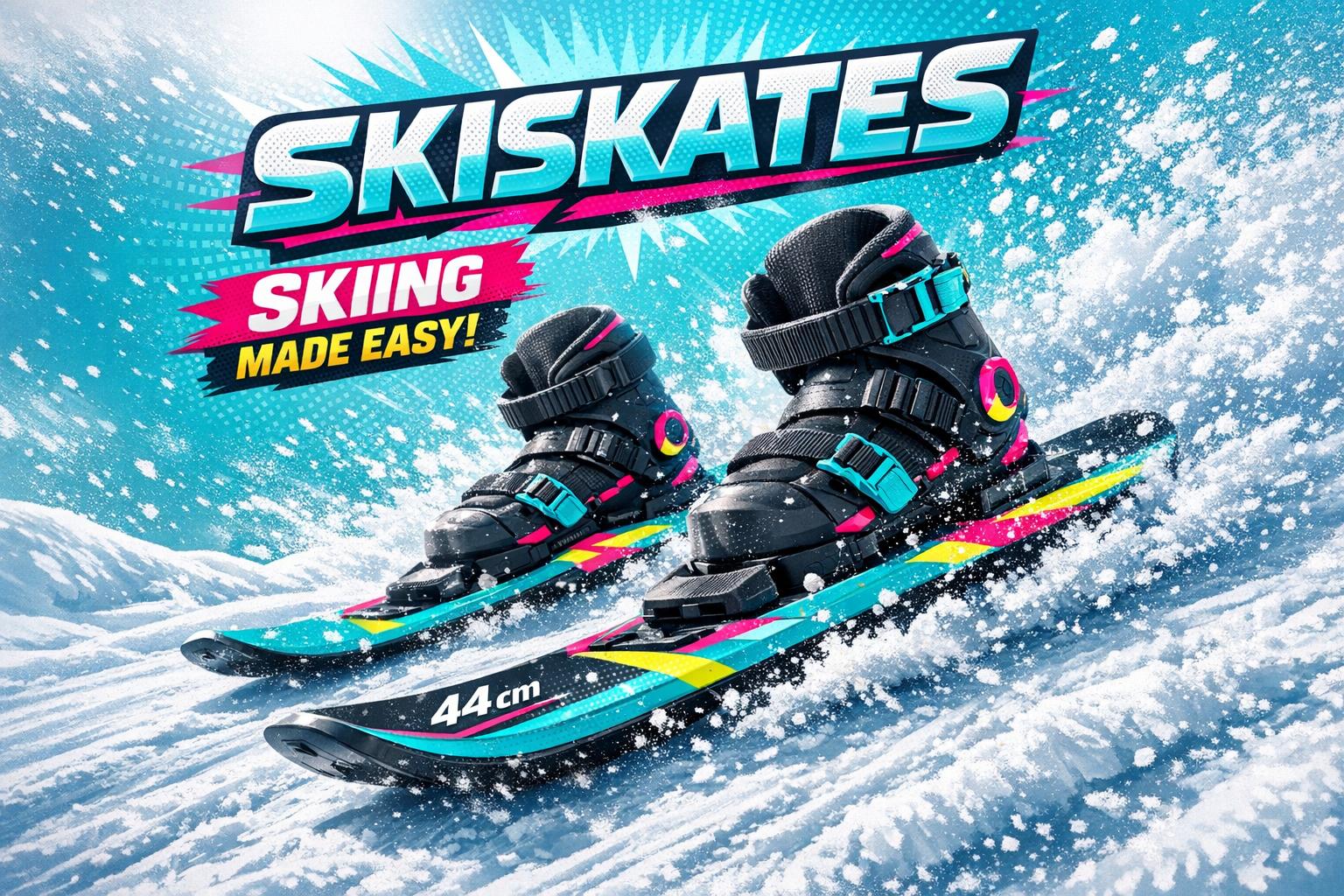
For those just starting out or anyone prioritizing portability, the Mini Ski Skates are a great choice. These compact skis come in three sizes: 15 inches (38 cm) for $190, 20 inches (50 cm) for $207, and 17 inches (44 cm) for $490. Their small size means you can easily toss them in your backpack, making them perfect for quick trips or casual outings.
If you've got a background in inline skating or ice hockey, you'll feel right at home with these. They glide smoothly on snow and are compatible with regular winter footwear - no need for expensive ski boots. Users rave about how intuitive they are, with many highlighting how easy they make learning the basics. They're also a fantastic option for teaching kids, offering a low-pressure introduction to skiing without the bulk of traditional gear.
Snowfeet* Skiblades (65-99 cm)
For skiers with more experience or those who love hitting the park, the Skiblades lineup delivers high performance and versatility.
- The 65 cm (26 inches) model, priced between $550 and $650, is perfect for sharp turns and technical tricks, offering an "ice-skating-on-snow" experience.
- The 99 cm (39 inches) version, ranging from $590 to $690, strikes a balance between stability and freedom. It’s ideal for all-around skiing, whether you're carving groomers or tackling moguls.
Both models are built with durable wood cores and come with bindings for either ski or snowboard boots. According to the Snowfeet Team:
"Skiblades of 99 cm length are the great middle ground between short skis and long skis. They have enough stability to support beginners when learning how to ski but they still have enough freedom to allow pros perform tricks."
These skiblades have earned glowing reviews, with users giving them a 5.0/5 rating, praising their adaptability across various terrains and their fun, responsive feel.
Snowfeet* POWDER (99 cm)
If you're an advanced skier looking to conquer deep snow, the POWDER 99 cm (39 inches) model is your go-to. Starting at $590, this ski is specifically designed for powder conditions, featuring a wider shape that enhances floatation. It tackles one of the main challenges of short skis - performance in backcountry snow - while keeping the portability and agility that Snowfeet* skis are known for.
For comparison, traditional long skis from brands like Rossignol or K2 typically measure 170-190 cm and cost over $700 without bindings. The Snowfeet* POWDER offers a much more compact and maneuverable option, perfect for weaving through tight tree lines or exploring off-piste terrain. It’s an excellent pick for riders who want a capable powder ski without the hassle of bulky gear.
Conclusion: Making the Right Choice for 2026
Deciding between short skis and traditional long skis really boils down to what matters most to you on the slopes. If you're all about convenience, ease of use, and maximizing fun, Snowfeet* short skis bring something to the table that bulky gear just can’t. They’re compact enough to toss in a backpack, have a fast learning curve, and make quick turns a breeze - all without the need for pricey ski boots or heavy equipment.
When it comes to stability, technique and proper stance are key. Interestingly, shorter skis often feel more manageable, especially for beginners or when you’re feeling fatigued, because there’s simply less ski to control. Plus, Snowfeet* models shine in areas like tight turns, bumpy terrain, and park riding - situations where longer skis can feel clunky and less responsive.
Whether you’re just starting out and looking for something easy to learn, an intermediate skier who loves the agility of quick turns, or a seasoned rider tackling powder with the POWDER 99 cm model, Snowfeet* has you covered. Their lineup is built for performance and designed to keep things light and enjoyable.
As we look ahead to 2026, winter sports gear is shifting toward smarter, lighter, and more fun options. Snowfeet* is leading that movement, showing that smaller skis can pack a big punch. Ready to shake up your winter adventures? Short skis might just be the way to go.
FAQs
What makes short skis like Snowfeet better than traditional long skis?
Short skis, like Snowfeet Skiblades, are a game-changer for anyone looking for a lightweight and portable alternative to traditional long skis. Thanks to their compact size, they’re incredibly easy to carry - whether you’re tossing them in a backpack, hopping on public transport, or sliding them into the trunk of your car. Try doing that with bulky long skis! Plus, they’re beginner-friendly. Learning to balance and turn is quicker, which means less time wiping out and more time cruising down the slopes.
What really sets Snowfeet short skis apart is their versatility. They’re built for fun - whether you’re zipping through quick turns, switching between groomed trails and off-piste adventures, or even hitting up urban snow parks. Without the heft and stiffness of long skis, you get more freedom to explore and play. In a nutshell, Snowfeet packs portability, simplicity, and an exciting riding experience into one compact package - offering something traditional long skis just can’t match.
How do short skis, like skiblades, compare to long skis in deep powder?
Short skis, like Snowfeet skiblades, are super light and incredibly nimble, making them a blast for quick turns and weaving through tight spots. But there’s a trade-off - their smaller size means they don’t stay on top of deep powder as well as longer skis. In heavy snow, they’re more likely to sink.
Now, long skis? They’re the champs when it comes to deep snow. Thanks to their larger surface area, they offer better stability and keep you floating nicely on powdery terrain.
Still, short skis have their perks. They’re versatile, easy to carry, and a great choice for most conditions - just not those super deep powder days. If you want something compact and simple to use, Snowfeet skiblades are a fun alternative to traditional skis.
Are Snowfeet short skis a good choice for beginners and casual skiers?
Snowfeet short skis, often called skiblades, are a great choice for beginners and casual skiers. Their compact size makes them much easier to handle than traditional long skis, which can feel overwhelming for new riders. Thanks to their lightweight build and ability to turn quickly, they’re forgiving and perfect for learning the basics - whether that’s mastering simple turns, stopping smoothly, or even experimenting with a few easy tricks.
But it’s not just about being beginner-friendly - Snowfeet short skis are super practical too. They’re small enough to slip into a backpack or car trunk, so you can take them just about anywhere. Plus, they work well on a variety of terrains, from groomed slopes and park features to light backcountry trails. Unlike traditional skis, these don’t require bulky bindings or heavy boots, making them easy to set up and ideal for casual trips to the mountain. If you’re after a fun, no-fuss way to enjoy the slopes, Snowfeet short skis are a solid alternative to long skis or snowboards.











Leave a comment
This site is protected by hCaptcha and the hCaptcha Privacy Policy and Terms of Service apply.