



















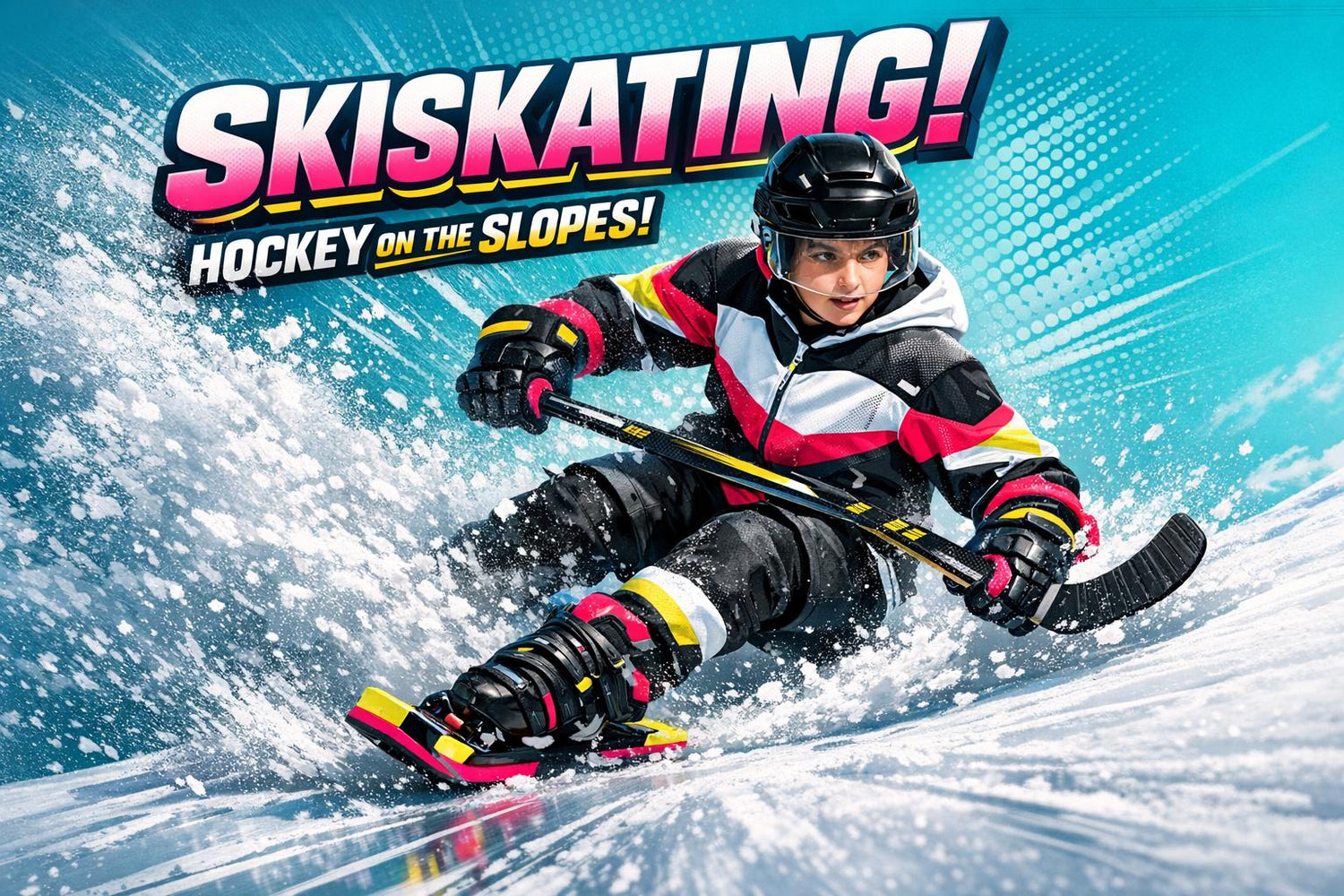
Skiskating is the perfect off-season activity for hockey players. It feels like skating on ice but happens on snow using short skis (under 20 inches) that mimic the mechanics of hockey skates. You can practice hockey stops, quick turns, and lateral strides with ease, making it an easy crossover for anyone familiar with skating or rollerblading. Plus, it’s lightweight, portable, and doesn’t require bulky gear.
Why Skiskating Works for Hockey Players:
- Natural Transition: Movements like edge control, sharp turns, and quick stops feel intuitive.
- Compact Design: Snowfeet Skiskates (44 cm) are small, light, and easy to carry.
- Skill Maintenance: Keeps agility and balance sharp during the off-season.
- No Special Gear Needed: Works with regular winter boots or snowboard boots.
Compared to traditional skis and snowboards, skiskates are easier to learn, more flexible for hockey-style moves, and much more convenient to use. Starting at $190, they’re also budget-friendly. Whether you’re hitting ski slopes, trails, or your backyard, skiskating is a fun way to stay in shape and keep your skating skills sharp all winter long.
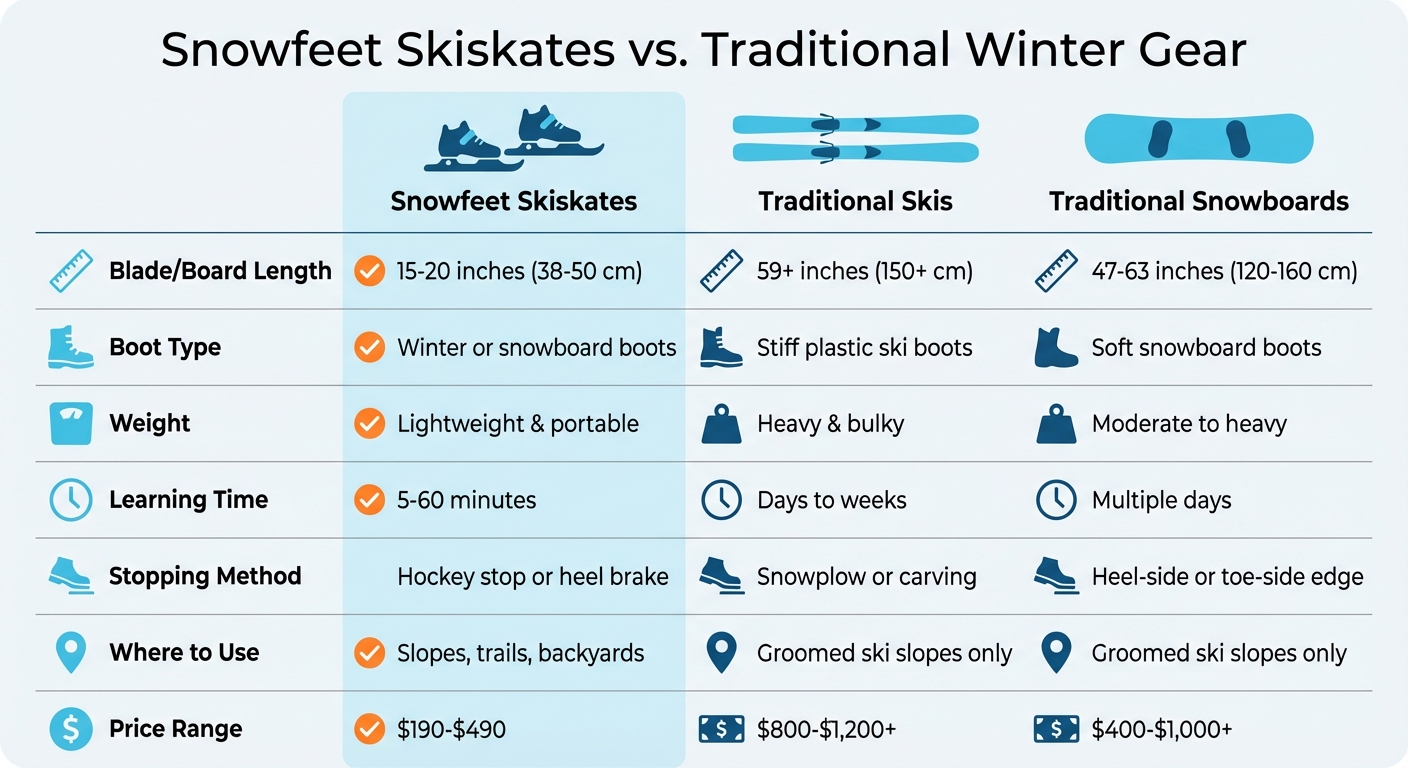
Snowfeet Skiskates vs Traditional Skis and Snowboards Comparison Chart
Problems Hockey Players Face During the Off-Season
Losing Skating Skills in Winter
Hockey players face a tough challenge during the off-season: keeping their skating skills sharp when ice time is limited. The core elements of great skating - quick lateral moves, precise edge control, and explosive strides - start to fade without regular practice. To put it into perspective, NHL players can hit speeds of around 20 miles per hour during a game, with shifts lasting an intense 45 seconds on average. Dryland exercises like sprints and box jumps can help maintain strength, but they just can’t mimic the unique mechanics of skating. Without ice-like conditions, players often experience a drop in stride frequency and reduced mobility in their hips and ankles, leaving them feeling off-balance and sluggish when they finally return to the rink.
Adding to the problem, most winter sports don’t offer much help. Activities like skiing and snowboarding involve movements that are completely different from skating. In fact, these sports can train your body in ways that conflict with hockey mechanics, making it even harder to transition back to the ice. This gap underscores why traditional winter training methods often fall short for hockey players.
Why Long Skis and Snowboards Don't Work for Hockey Players
Traditional winter gear like long skis and snowboards only makes things worse for hockey players. Long skis, for instance, are heavy and awkward. They’re built for smooth downhill gliding - not the quick, multi-directional agility that hockey demands. Trying to perform hockey-style stops or maintain balance with long skis can lead to crossed tips and frustration. Plus, the stiff plastic ski boots are a far cry from the flexible, responsive feel of hockey skates.
Snowboarding doesn’t fare much better. Its fixed-foot stance and sideways orientation feel unnatural for someone used to the forward-facing, dynamic movements of skating. The bulky setup of snowboards and long skis forces players into movements that disrupt their hockey balance and control, making them less effective tools for off-season training.
That’s where Snowfeet* comes in, designed to bridge the gap by mimicking ice skating mechanics much more closely.
How Skiskating Replicates Hockey Skating
Using the Same Skills: Edge Control, Sharp Turns, and Quick Stops
Skiskating feels a lot like hockey skating, blending the mechanics of skating with the dynamics of snow. If you’ve ever played hockey or used inline skates, the movement will feel second nature. Instead of leaning forward like you would in traditional skiing, you push off to the side, just like a hockey stride.
The metal ski edges function much like skate blades, allowing for precise carving and sharp hockey stops. By shifting your weight evenly and engaging the edges, you can stop effectively. Plus, there’s even a heel brake option for a more gradual slowdown. The balance required - front to back - is strikingly similar to what you’d need on the ice.
"You have to keep the front-back balance, so it feels very natural to those who play ice hockey, ice skate, or even use inline skates." - Snowfeet Team
For hockey players and inline skaters, the learning curve is impressively short. Many pick up skiskating in just one day because the movements transfer so seamlessly from their primary sport. This natural overlap in skills also explains why shorter skiskates, like Snowfeet*, are better suited for hockey-style movements than traditional skis.
Why Short Skis Like Snowfeet* Skiskates Work Better
The compact design of Snowfeet* Skiskates builds on those familiar hockey movements, offering unmatched agility. With lengths of just 44 cm for Snowfeet* Skiskates and 50 cm for Snowfeet PRO, these shorter skis are tailor-made for quick, multidirectional moves. Traditional skis, by comparison, are too long and heavy, making them cumbersome for the fast twists and turns hockey players are used to. The short length also eliminates the issue of crossing ski tips, a common frustration for hockey players trying to adapt to regular skis.
These compact skiskates allow for spins, jumps, and rapid lateral movements without the bulk of traditional skis. You can even skate backward or pull off tight turns - maneuvers that are nearly impossible with long skis. Both the 44 cm and 50 cm models are built with high-quality wood or fiberglass cores and cap construction, ensuring excellent edge control while keeping the weight light and manageable.
"Skiskating is similar to rollerblading and playing ice hockey. If you know how to do that, you will be a natural!" - Snowfeet Team
To get the most out of skiskating, keep your legs shoulder-width apart, knees slightly bent, and lean forward into that classic hockey stance. This posture not only improves balance but also boosts agility.
Why Snowfeet* Skiskates Beat Traditional Skis and Snowboards
Snowfeet* vs. Traditional Skis and Snowboards
Snowfeet* Skiskates bring a whole new level of convenience and adaptability to winter sports, especially for hockey players. Traditional skis and snowboards, with their bulk and rigidity, can make it tough to replicate hockey-style movements. But Snowfeet* are just 17.3 inches (44 cm) long and work seamlessly with your regular winter boots or flexible snowboard boots. This means you get the ankle mobility you're already used to.
Mastering Snowfeet* is a breeze for hockey players, often taking just 5 to 60 minutes. Compare that to traditional skis, which can take days - or even weeks - of lessons to get the hang of. Plus, with Snowfeet*, you can pull off classic hockey stops, something you just can’t do with regular skis.
| Feature | Snowfeet* Skiskates | Traditional Skis | Traditional Snowboards |
|---|---|---|---|
| Blade Length | 15–20 inches (38–50 cm) | 59+ inches (150+ cm) | 47–63 inches (120–160 cm) |
| Boot Type | Winter or snowboard boots | Stiff plastic ski boots | Soft snowboard boots |
| Weight | Lightweight and portable | Heavy and bulky | Moderate to heavy |
| Learning Time | 5–60 minutes | Days to weeks | Multiple days |
| Stopping Method | Hockey stop or heel brake | Snowplow or carving | Heel-side or toe-side edge |
| Where to Use | Slopes, trails, backyards | Groomed ski slopes only | Groomed ski slopes only |
Easy to Carry and Use Anywhere
One of the standout perks of Snowfeet* is their portability. These skiskates are lightweight, compact, and weigh less than a pair of hockey skates. Toss them into your backpack, car trunk, or even your luggage - no need for bulky ski bags or carriers. Unlike traditional skis that are limited to groomed slopes, Snowfeet* let you explore hiking trails, cross-country paths, sledding hills, or even your own backyard (as long as there’s snow). No lift ticket required.
"Far more portable and affordable than traditional skis or snowboards." - Uncrate
Better Value for Your Money
Let’s talk cost. A full traditional ski setup - think skis, bindings, boots, and poles - can easily set you back $800 to $1,200 or more. Snowfeet* Skiskates, on the other hand, are a budget-friendly alternative. Models start at just $190 for the 38 cm version, while the professional-grade 44 cm wood-core version is priced at around $490. And since they work with your existing boots, there’s no need to invest in expensive ski boots.
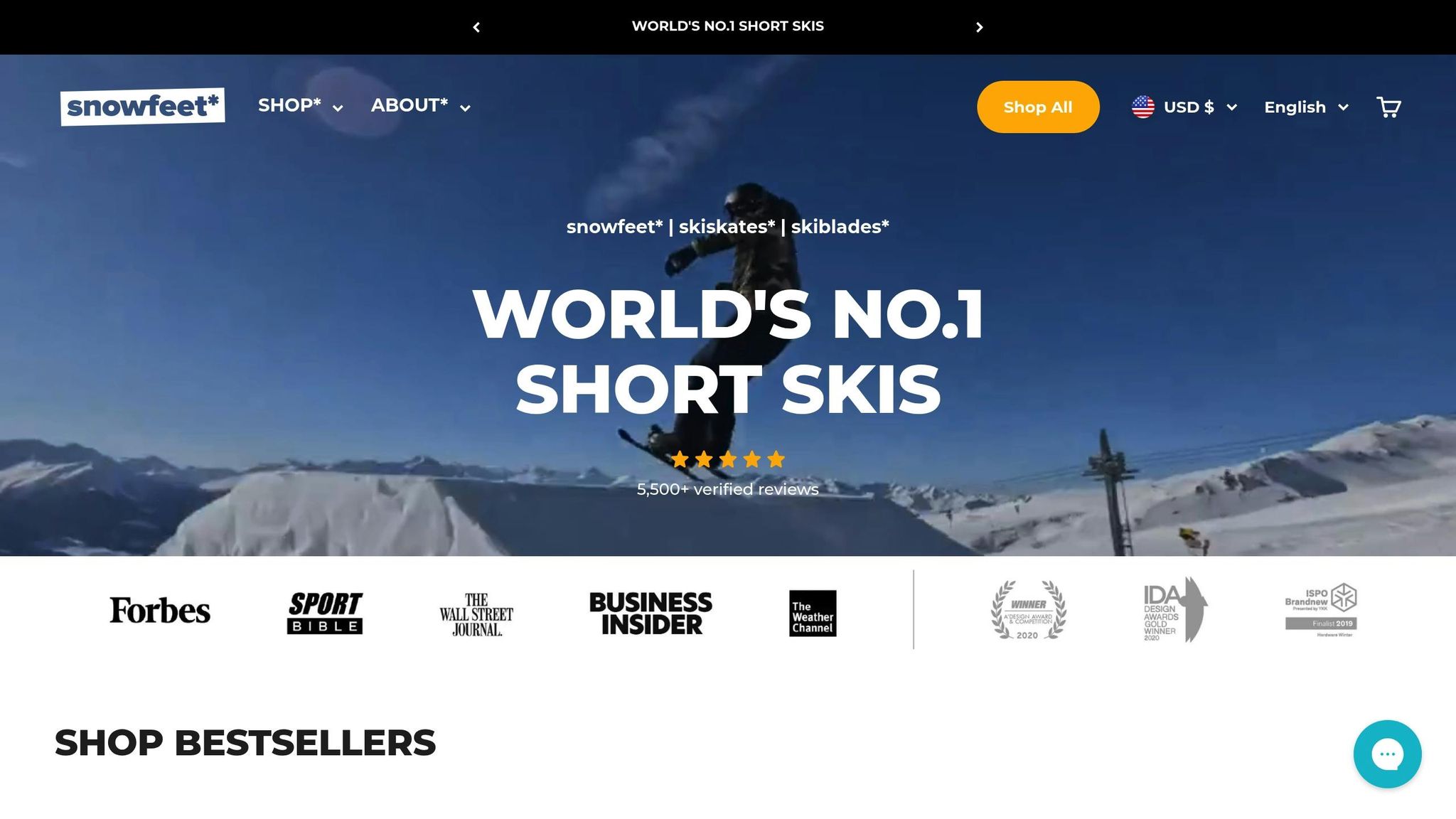
With over 5,500 verified reviews and an impressive 4.9-star average rating, plus more than 50,000 riders worldwide, Snowfeet* have proven themselves as a durable and high-performing option. The 44 cm version features a wood core and cap construction similar to pro skis - only lighter and much cheaper. Unlike traditional skis, which need regular tuning and pricey storage, Snowfeet* just require simple waxing and edge care. It’s clear why they’re the go-to choice for hockey players looking to keep their skills sharp in the off-season.
sbb-itb-17ade95
Snowfeet PRO: The Best Training Tool for Hockey Players
Features That Build Your Skills
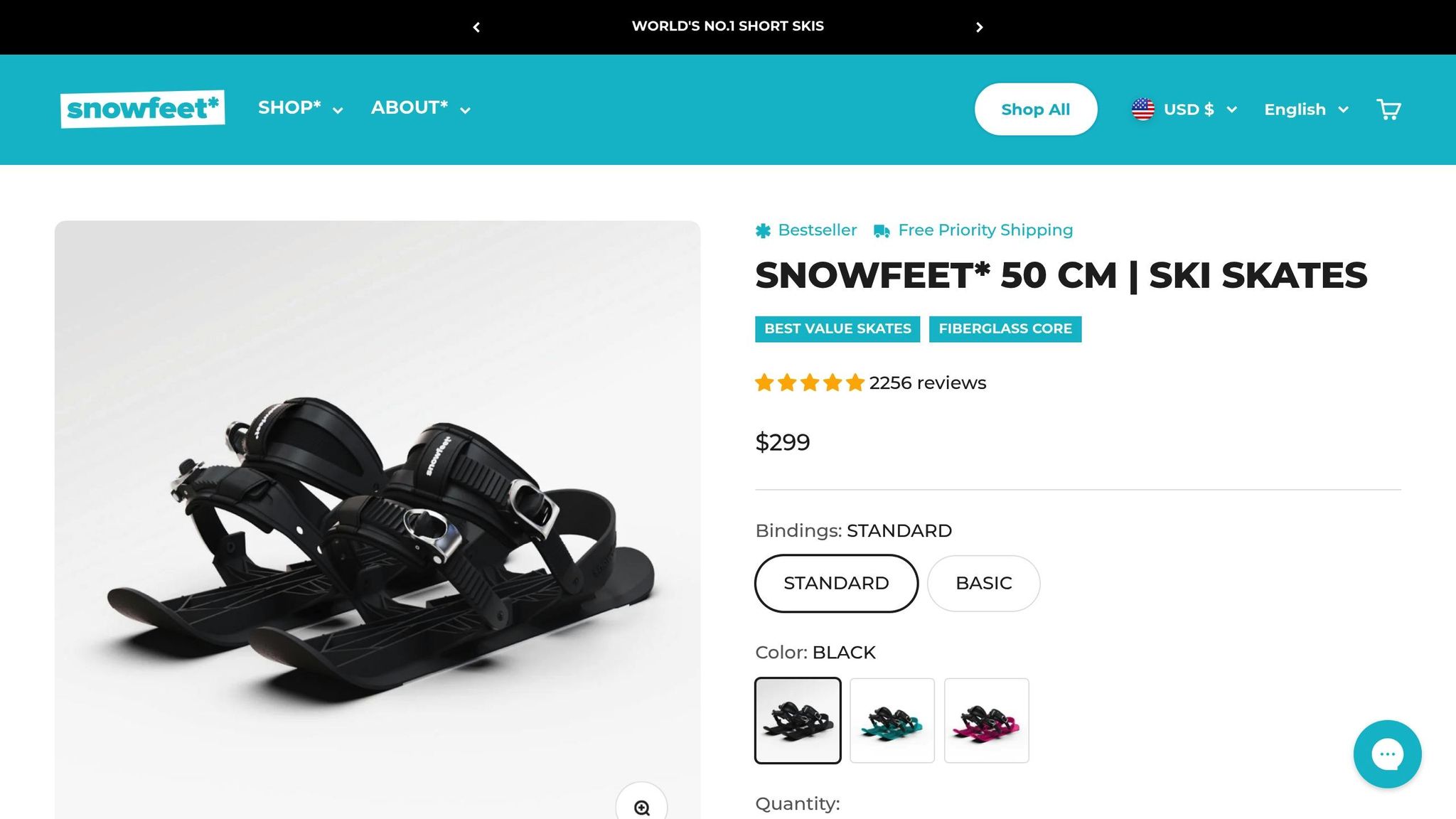
At 20 inches (50 cm) long, Snowfeet PRO deliver a skating experience that feels natural while offering extra stability for advanced moves. The narrower base and raised platform height let you dig into your edges and carve out sharp turns - similar to slicing across the ice during an intense power play.
Equipped with metal ski edges, these skiskates allow for hockey stops by creating friction. Fiberglass reinforcement keeps them lightweight yet sturdy, making them perfect for repeated slalom turns and power slides. The adjustable bindings fit US sizes 6–13, and you can pair them with your winter or snowboard boots. Just grab a screwdriver to tweak the bindings for a snug fit.
"The extra bit of length gives Snowfeet PRO more stability and makes them easier to turn and stop." – Snowfeet Team
These features make Snowfeet PRO a solid choice for honing your skills on snow-covered terrain.
Practice on Any Terrain
Thanks to their enhanced stability, Snowfeet PRO are a great off-season training tool. Unlike traditional skis, which are mostly limited to groomed resort trails, these compact skiskates perform well on groomed slopes, snow parks, hiking trails, or even in your snowy backyard. Their high-radius tip and tail design also handle ungroomed terrain and powder better than you’d expect.
For hockey players, this versatility is a game-changer. You can practice balance, edge control, and quick direction changes almost anywhere there's snow. Keeping a centered or slightly rearward stance mimics your on-ice posture. This seamless crossover helps you stay sharp year-round. At $275, Snowfeet PRO are a budget-friendly alternative to traditional ski gear, and with a 4.9-star rating from over 2,253 reviews, they’ve clearly won fans.
Conclusion: Snowfeet* Skiskates – The Future of Winter Fun for Hockey Players
Key Takeaways
Snowfeet* Skiskates are a game-changer for hockey players who want to stay sharp during the winter months. These compact skates provide the same agility and control you'd expect on the ice, but without the bulk of traditional skis or snowboards. They’re designed to feel natural, letting you practice your skills on any snowy terrain - whether it's a groomed slope or your neighborhood sledding hill.
Starting at $190 for the 38 cm Snowfeet* and $275 for the 50 cm Snowfeet PRO, both models come equipped with metal ski edges for precision carving. With over 2,250 verified users giving them a 4.9-star rating, their popularity speaks for itself. They’re portable enough to fit in a backpack and work with your regular winter boots, making them a practical and fun alternative to traditional skiing gear.
It’s easy to see why Snowfeet* Skiskates are becoming the go-to choice for off-season hockey training.
Ready to Try Snowfeet*?
Why wait? Check out the Snowfeet store and find the perfect pair for your winter adventures. Whether you go for the ultra-portable 38 cm Snowfeet* for quick backyard sessions or the performance-driven 50 cm Snowfeet PRO for hitting the slopes, you’ll be joining a community of over 50,000 riders worldwide. Plus, with their compatibility for both winter and snowboard boots, getting started is as easy as strapping in and heading out.
Don’t let the snow slow you down - grab your Snowfeet* Skiskates today and see why hockey players everywhere are making them their top choice for winter training.
The First Standard to DOWNHILL SKATING
FAQs
How can skiskating help hockey players stay sharp during the off-season?
Skiskating is a fantastic way for hockey players to keep their skills sharp during the off-season. It mirrors the skating techniques used in hockey, making it an ideal activity for players who want to stay quick, agile, and in control. With the compact design of Snowfeet* Skiskates (17 inches) and Snowfeet PRO (20 inches), you can pull off fast turns, precise maneuvers, and explosive bursts of speed - just like on the ice.
Adding skiskating to your training routine can help boost your balance, coordination, and lower-body strength, all while giving you an exciting way to hit the snow. Unlike traditional skis or snowboards, Snowfeet* products are lightweight, easy to carry, and simple to use. They're a perfect training companion for hockey players looking to stay on top of their game all year long.
Why are Snowfeet Skiskates a better choice for hockey players compared to traditional skis?
Snowfeet Skiskates are built to replicate the quick, sharp movements hockey players rely on, making them a great choice for both fun and training. Unlike traditional skis - long, heavy, and requiring entirely different skills - Snowfeet Skiskates are short and light. The standard model measures just 17 inches (44 cm), while the PRO version is slightly longer at 20 inches (50 cm). This compact design gives you better control and lets you make quick turns, much like the agility hockey players need on the ice.
The adjustable bindings work with regular winter boots, creating a snug, skate-like fit that feels similar to hockey skates. This makes it easy to transfer skills like edge control, speed, and precision from the rink to the slopes. Plus, skiskating mirrors the familiar push-and-glide motion of ice skating, offering a faster and more dynamic experience compared to the slower, stride-heavy feel of traditional skiing. Whether you're a hockey player looking for an adrenaline-packed winter activity or a way to stay sharp in the off-season, Snowfeet Skiskates are a fantastic option.
Can I use Snowfeet Skiskates with my regular winter boots?
Snowfeet Skiskates are made to pair with most standard winter boots, so there’s no need to invest in special ski boots. Just strap them on, and you're good to go! This makes them a super convenient choice for anyone - whether you're new to the slopes or a seasoned skater wanting to try something fun and different this winter.











Leave a comment
This site is protected by hCaptcha and the hCaptcha Privacy Policy and Terms of Service apply.