







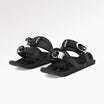












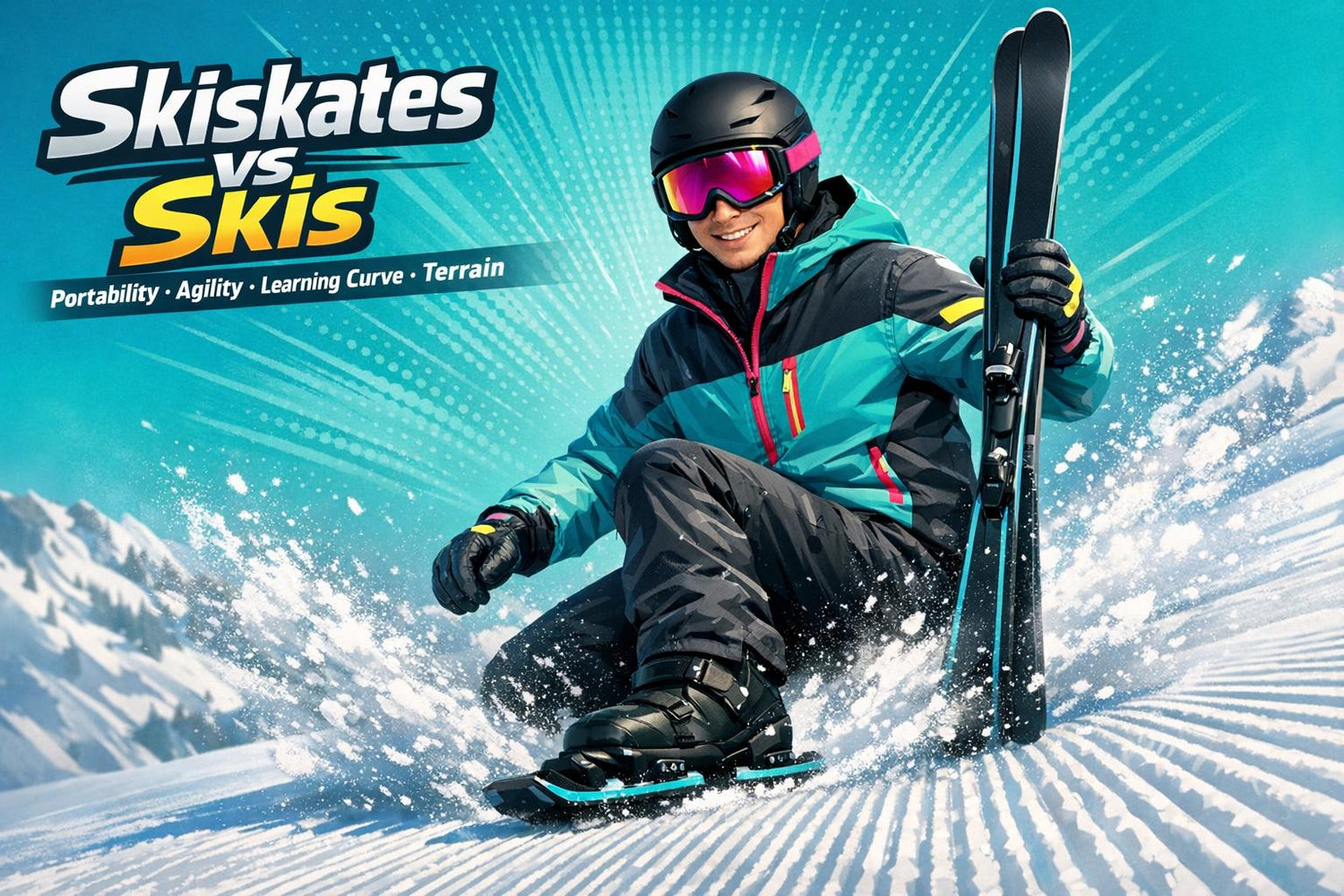
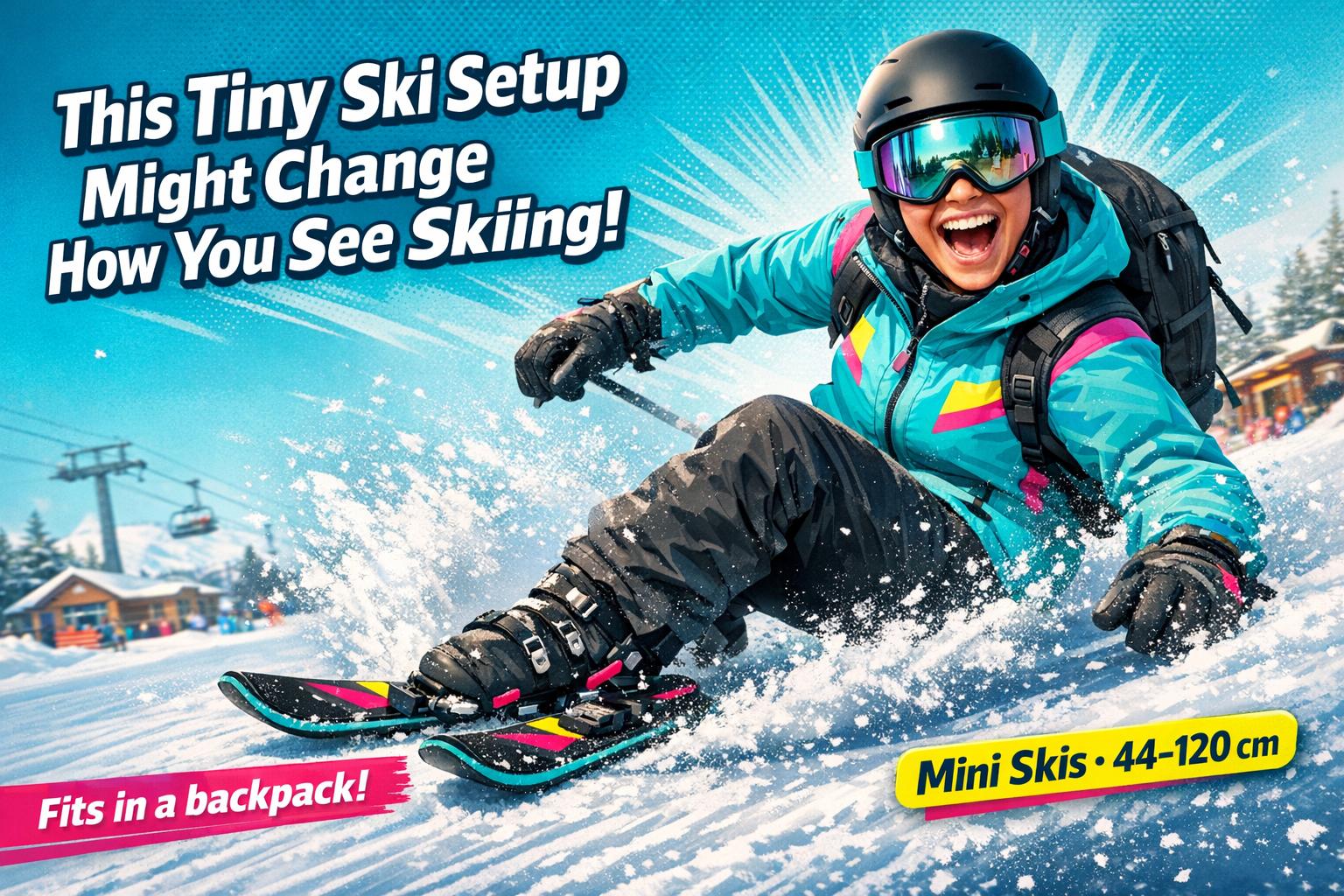
Ever wondered what ice skating on a ski slope feels like? That’s the idea behind Snowfeet* Skiskates. These 17-inch mini-skis combine the quick, responsive feel of ice skating with the thrill of skiing. They’re small, portable, and perfect for groomed slopes, offering a fun, skate-like experience at a fraction of the cost (around $575 USD) of a full ski setup.
Here’s the scoop:
- Portability: Fits in a backpack, unlike bulky skis.
- Ease of Use: Great for skaters - most get the hang of it in 5 minutes.
- Terrain: Best on groomed trails; struggles in deep powder or icy spots.
- Cost: Affordable compared to a full ski setup.
- Boot Compatibility: Works with snowboard or winter boots.
If you’re all about agility and quick turns, Snowfeet* Skiskates are a great choice. But for speed, stability, and tough conditions, standard skis still dominate. Whether you’re a casual rider or looking to mix things up, these skiskates bring a playful twist to the slopes. Let’s break it down further.
1. Snowfeet* Skiskates (44 cm)
On-Snow Feel
Snowfeet* Skiskates bring a downhill experience that feels a lot like skating. At just 17 inches long, these skates react instantly to your movements - more like ice hockey skates than traditional skis. This makes them a natural fit for anyone with a skating background. Their quick response lets you make sharp cuts and tight turns with ease, giving you confidence whether you're cruising or weaving through terrain.
"Super easy to control, quick to turn, and way more forgiving than traditional skis." - Brad Tolin, Verified Customer
Instead of carving long, sweeping arcs, you'll find yourself making short, agile movements. This keeps your speed manageable and adds a playful, fun vibe to your ride.
Performance on Terrain
Snowfeet* Skiskates shine on groomed trails. Their parabolic shape and metal edges provide solid grip, especially on blue and easier black runs. They're perfect for carving and navigating through narrow trails or busy slopes, thanks to their compact size.
That said, they aren't built for everything. Deep powder can be tricky because they don’t offer much floatation, and very icy conditions can reduce edge control.
Practicality and Portability
One of the best things about Snowfeet* Skiskates is how portable they are. You can toss them in a regular backpack, and they work with standard winter boots (U.S. men's sizes 6–13). This makes them a great option for quick trips to the slopes or after-work sessions. Plus, at around $575 USD, they’re much more affordable than a full ski setup.
Learning Curve and Skill Transfer
If you’ve got a skating background, you’ll probably get the hang of these in about five minutes. Even if you’re new to skating or skiing, Snowfeet* are easier to learn than traditional skis. With an average customer rating of 4.9 out of 5 stars across 123 reviews - and 95% of users giving them five stars - it’s clear people love how approachable they are.
Key skills like edge control and lateral balance transfer naturally from skating. Stopping feels similar to a hockey stop: dig in the edges, shift your weight, and pivot. If you’re used to skiing, the stance and pressure control will feel familiar, but you’ll need to adjust to the shorter length and faster pivots. Beginners should stick to gentle, groomed green runs to start, practicing short glides and controlled stops before tackling more challenging terrain.
Snowfeet* & Skiskates Complete Guide | All you need to know about Skiskating
2. Standard Skis
Standard skis are well-known for their stability and reliable carving, but they don't quite match the agility or portability of Snowfeet* Skiskates.
On-Snow Feel
Standard skis, which are typically 150–180 cm long, deliver a stable and controlled glide. Their length helps distribute weight evenly, making for a smooth ride, especially at higher speeds. When carving turns, they feel "locked in" rather than quick and pivoty, and their longer edges help reduce vibration on rough or uneven snow. If you're cruising at 20–30 mph on a groomed blue run, standard skis give you a sense of confidence and control. This stability makes them a dependable choice for a variety of terrain.
Performance on Terrain
Standard skis stand out with their ability to handle a range of conditions. On groomed runs, they grip edges well and are great for wide, carved turns. In powder, their length and width help keep the tips from sinking, which shorter skiskates can struggle with. On icy or firm snow, the extended edge contact provides solid grip and reliable braking. However, their size can make them feel clunky in tight spots like mogul fields or narrow, crowded trails where quick, short turns are essential. This is where the nimbleness of Snowfeet* Skiskates has the upper hand.
Practicality and Portability
Unlike the compact and easy-to-carry Snowfeet* Skiskates, standard skis are far less portable. A typical adult ski bag measures 170–200 cm, requiring a roof rack, a ski box, or a spacious trunk to transport them. If you're flying, most U.S. airlines consider ski bags as checked baggage, and you could face extra fees for oversized or overweight gear - always confirm your airline's policies before packing. At home, you'll need storage solutions like wall racks or garage space. Plus, regular maintenance like waxing and edge sharpening is necessary, which means either learning to do it yourself or making trips to a ski shop.
"A lot easier to haul around the hills & on vacation than traditional skis!" - heyjerz, Verified Customer
Learning Curve and Skill Transfer
For beginners, standard skis are often the starting point. Most people begin with a snowplow (pizza) stop and wedge turns on gentle green slopes. Progressing to basic parallel turns usually takes about 3–7 days of lessons, depending on fitness levels and how often you practice. Nearly every U.S. ski resort has a structured ski school program tailored for standard skis, with rental packages costing around $40–$70 per day for adults. This system - complete with lessons, well-fitted rentals, and a clear progression from green to blue to black runs - provides a strong foundation for long-term skill development. The techniques you learn on standard skis, like edging and pressure control, translate well to other types of alpine gear. However, they don't offer the same quick and easy adaptability that Snowfeet* Skiskates bring to the table.
sbb-itb-17ade95
Pros and Cons
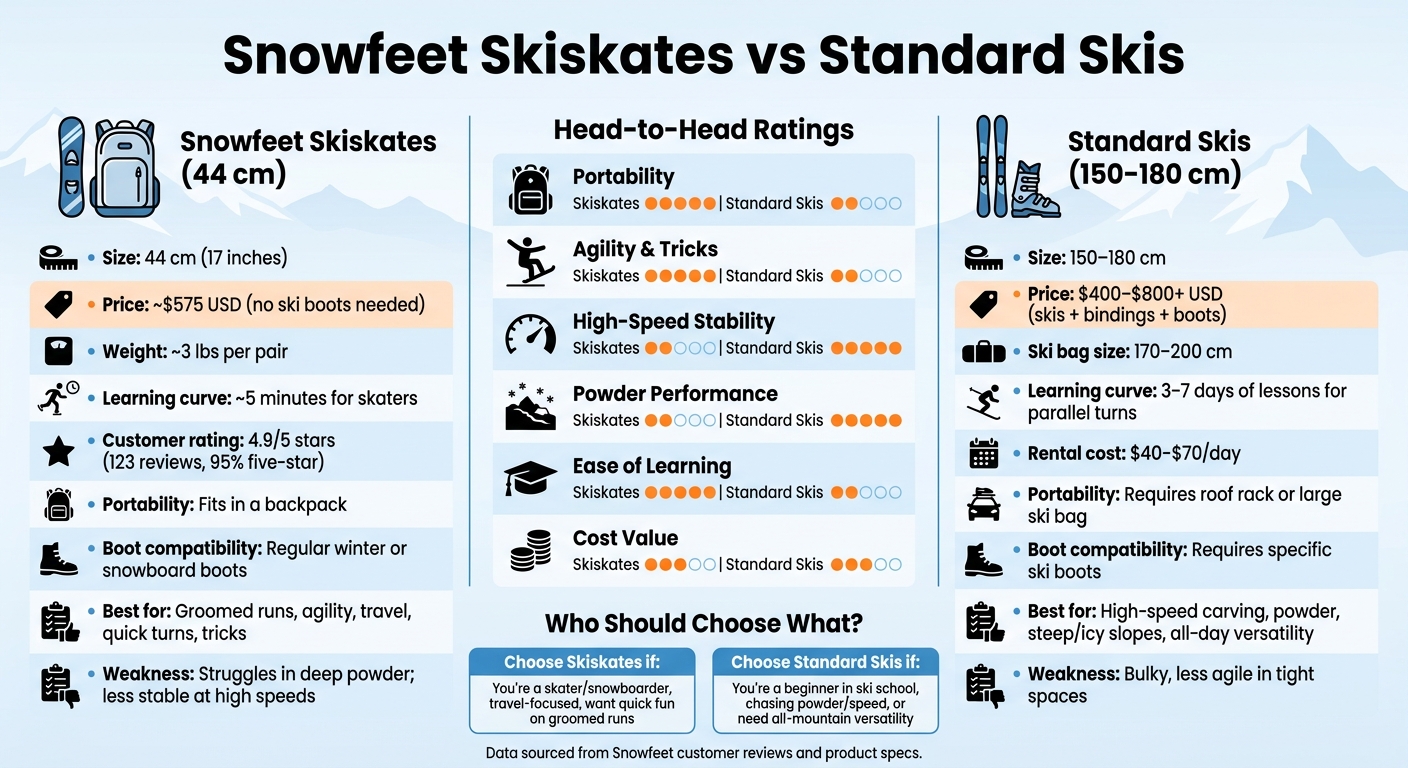
Snowfeet Skiskates vs Standard Skis: Side-by-Side Comparison
Here's a side-by-side look at how Snowfeet* Skiskates stack up against standard skis:
| Category | Snowfeet* Skiskates (44 cm) | Standard Skis (150–180 cm) |
|---|---|---|
| Portability | Compact enough to fit in a backpack (~3 lbs per pair); no oversized bag hassles | Bulky and heavy; often needs a roof rack or a large ski bag (170–200 cm) |
| Learning Curve | Quick to pick up, especially for skaters - basics mastered in ~5 minutes | Takes longer to learn, especially mastering parallel turns |
| Agility & Tricks | Great for spins, pivots, and quick turns | Decent, but tight maneuvers take more effort |
| High-Speed Stability | Less stable at high speeds due to shorter edges | Excellent stability, especially on steep or icy slopes |
| Powder Performance | Struggles in deep snow due to limited surface area | Performs well, especially with wider all-mountain skis |
| Boot Compatibility | Works with regular winter or snowboard boots | Requires specific ski boots |
| Cost (gear only) | Around $575 USD; no need for ski boots | $400–$800+ USD for skis, bindings, and boots |
| Muscle Fatigue | Requires more active balance, which can tire stabilizer muscles | Heavier but generally easier on long runs |
| Resort Acceptance | Acceptance varies - some resorts may require a leash or classify as special gear | Fully accepted everywhere with rental and lesson options |
This table highlights the key differences that can shape your time on the mountain.
Snowfeet* Skiskates stand out for their portability and ease of use. They’re perfect for travelers who want to skip the hassle of lugging bulky gear.
"Only trade-off is at higher speeds, where longer skis still feel more stable - but for overall fun and maneuverability, these are hard to beat." - Brad Tolin, Verified Customer
On the other hand, standard skis shine in areas like high-speed stability, powder performance, and all-day versatility. Their longer edges provide the grip and control needed for steep slopes and variable conditions.
If you're a skater or snowboarder looking for an agile, travel-friendly option, Snowfeet* Skiskates are a fantastic choice for groomed runs and terrain parks. But if you're starting from scratch or tackling challenging conditions like deep powder or icy steeps, traditional skis are the safer bet. Now, let’s dive deeper into which option aligns with your personal style.
Conclusion
Ice skates on a ski slope? Yep, that's exactly what Snowfeet* Skiskates deliver - fun, quick learning, and the ultimate in portability.
At just 44 cm (about 17 inches), Snowfeet* Skiskates are perfect if you're looking for a grab-and-go option that fits in a backpack. They're ideal for playful days on groomed slopes without the hassle of lugging around traditional ski gear. As Snowfeet* founder Zbyněk puts it:
"In my opinion, Skiskates is the best product for slopes we developed so far. I love how easy they are to ski and skate and how many different kinds of tricks I can perform without much effort and almost no restrictions."
That said, traditional skis still hold their ground for certain situations. If you're chasing high-speed carving or tackling deep powder in places like Colorado or Utah, the stability, control, and longer edges of standard skis are hard to beat. They're also a better fit for families doing ski-school sessions or anyone following a more traditional skiing progression.
Snowfeet* Skiskates, priced at $575 USD, offer a cost-effective alternative by eliminating the need for dedicated ski boots and bulky bags. Already have a full ski setup? Think of Skiskates as a fun, secondary option - great for short sessions, casual travel, or spicing things up on your local hill. Just remember to check resort policies and always wear a helmet.
FAQs
Do ski resorts allow Snowfeet* Skiskates?
Most ski resorts welcome the use of Snowfeet* Skiskates because they’re made to be used on ski slopes. These compact skis pair perfectly with ski boots, giving you a fun and easy-to-carry option compared to regular skis, all while working well with the terrain and amenities at the resorts.
Do I need ski boots or special bindings?
No, you don’t need special ski boots or bindings to use Snowfeet* Skiskates. They’re designed to attach directly to your regular winter shoes or snowboard boots. Thanks to their adjustable bindings, they can accommodate most shoe sizes, making them a super convenient option for anyone who loves winter sports.
Are Snowfeet* Skiskates safe for beginners?
Snowfeet* Skiskates are a great choice for beginners, offering a safe and user-friendly way to enjoy winter sports. Thanks to their lightweight and compact design, they’re easy to handle and control, even for someone trying them for the first time. Many people say they’re easier to pick up than traditional skis, and the occasional tumble tends to be less intimidating. Designed for both kids and adults, these skiskates are a fun and approachable way to dive into snowy adventures.











Leave a comment
This site is protected by hCaptcha and the hCaptcha Privacy Policy and Terms of Service apply.