



















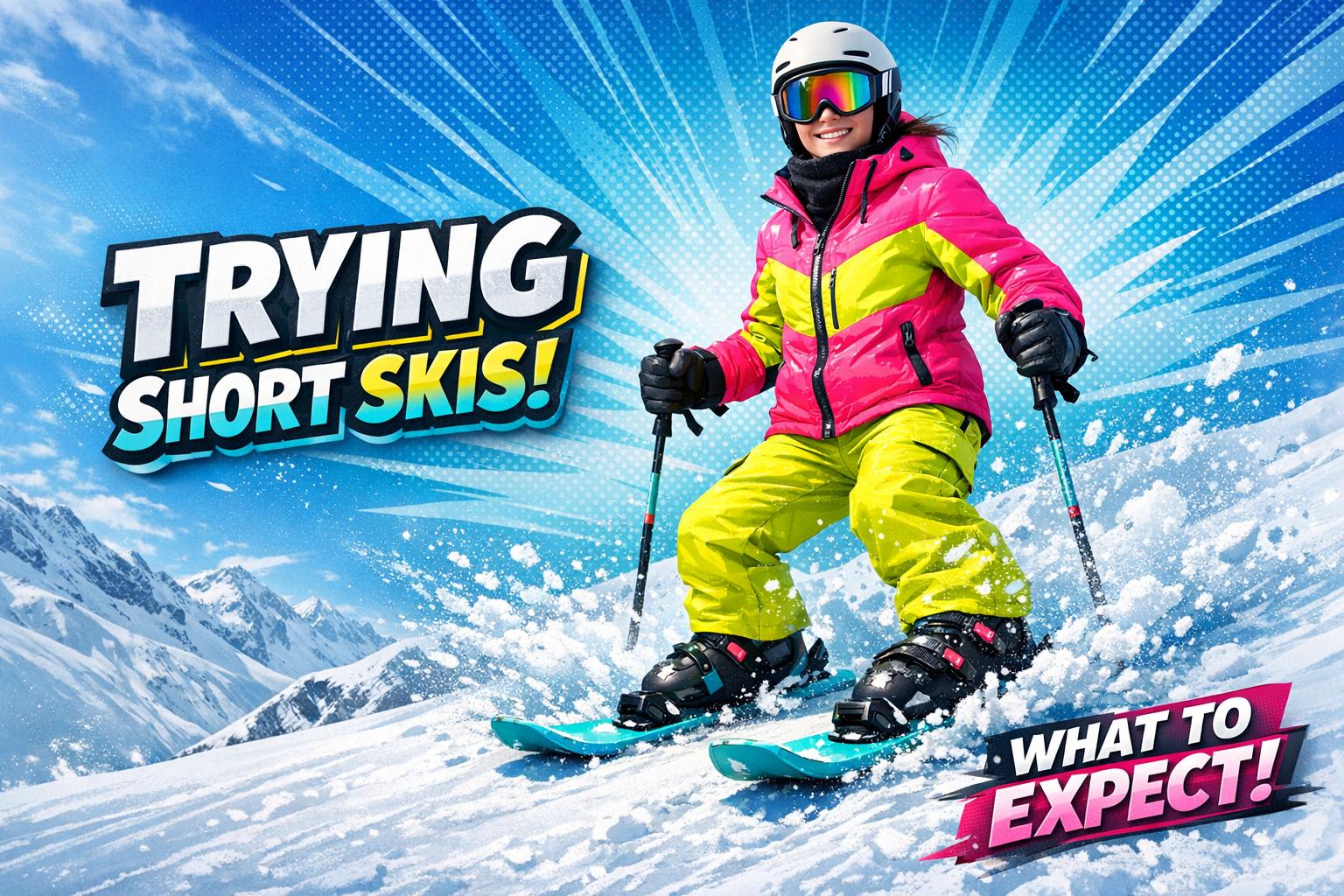
Looking to ditch bulky ski gear and hit the slopes with ease? Short skis, like Snowfeet Skiblades and Skiskates, are a game-changer. They’re lightweight, portable, and work with your regular winter boots - no need for special equipment. Plus, if you’ve ever ice skated or rollerbladed, you’ll feel right at home. In just one afternoon, you can master the basics and enjoy a fun, hassle-free skiing experience.
Key Takeaways:
- Short skis are easy to use: They’re perfect for quick turns, moguls, tree runs, and terrain parks.
- No special boots required: Use your regular waterproof winter boots or snowboard boots.
- Compact and portable: Models range from 44 to 120 cm, fitting easily in a bag.
- Beginner-friendly: Longer models (99 cm or 120 cm) offer better stability for new riders.
- Affordable options: Prices start at $575 for Skiskates (44 cm) and go up to $775 for 120 cm Skiblades.
Quick Steps to Get Started:
- Choose the right model: Beginners should opt for 99 cm or 120 cm for more balance.
- Adjust bindings: Ensure a snug fit with your boots and secure the safety leash.
- Practice balance: Start on flat ground, keeping your weight centered or slightly back.
- Learn basic moves: Use a side-push motion to skate forward and tilt edges for sharp turns.
- Hit the slopes: Begin on gentle runs, then explore parks, trails, or backcountry terrain.
Short skis offer a fun, easy way to enjoy the snow without the steep learning curve or heavy gear. Ready to try them out? Let’s dive in!
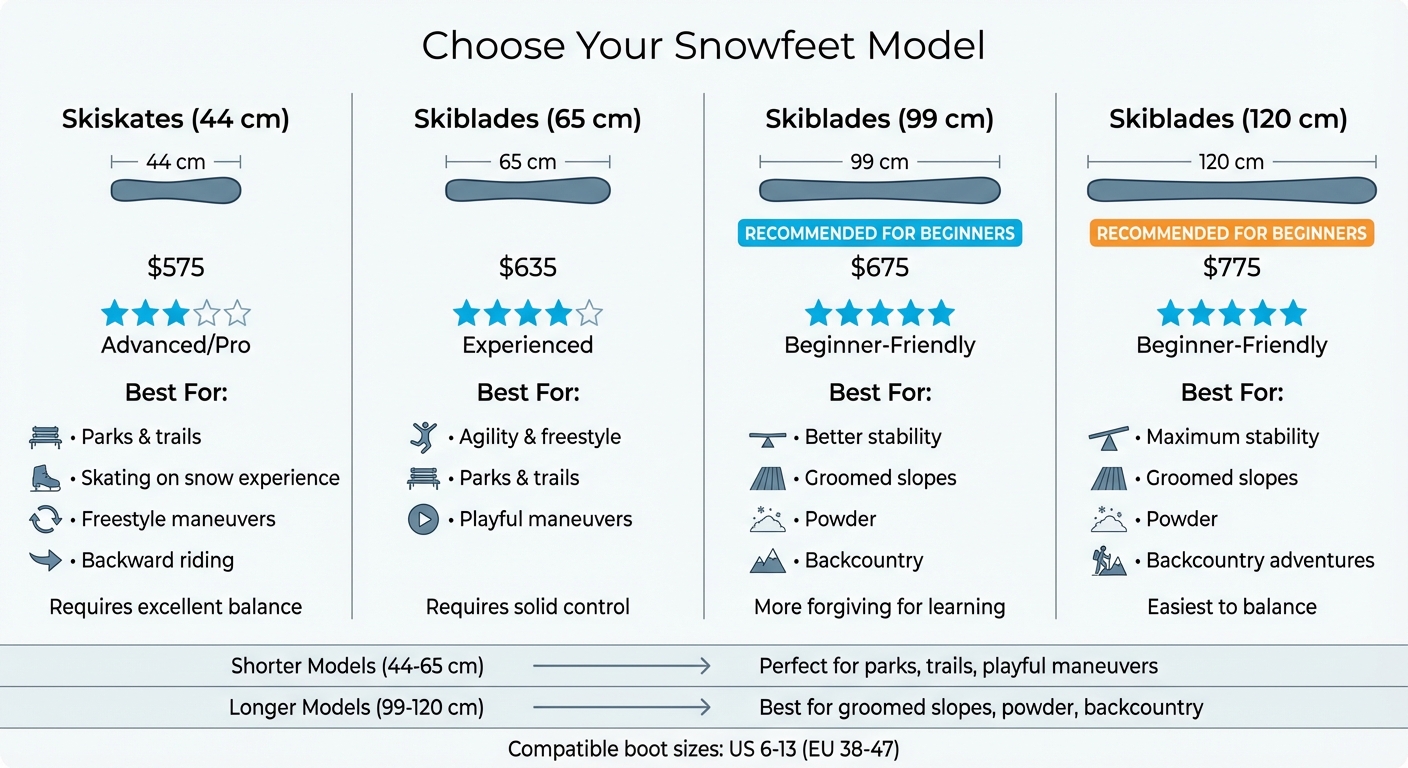
Snowfeet Short Ski Models Comparison Guide: Sizes, Prices, and Skill Levels
Step 1: Pick Your Snowfeet* Equipment
Which Snowfeet* Model Is Right for You
Choosing the right Snowfeet* model is key to getting the hang of it quickly. The length of the model you pick plays a big role in how easy it is to master. Snowfeet* offers four main options: Skiskates (44 cm), Skiblades (65 cm), Skiblades (99 cm), and Skiblades (120 cm) - each tailored for different needs.
If you’re just starting out, go for the longer models like the 99 cm or 120 cm Skiblades. These provide better stability and make balancing much easier, especially on varied terrain. They’re also more forgiving, helping you build confidence as you learn. Beginners should stick with models no shorter than 90 cm. Pricing for these models is $675 for 99 cm and $775 for 120 cm.
For experienced riders looking for agility and freestyle performance, the 65 cm Skiblades are a great pick. These shorter blades, priced at $635, are incredibly nimble but require solid control and skill. Meanwhile, the 44 cm Skiskates ($575) are designed for the pros who want that “skating on snow” experience. These are ideal for ski slopes but demand excellent balance and experience to handle.
Here’s the general breakdown:
- Shorter models (44–65 cm): Perfect for parks, trails, and playful maneuvers.
- Longer models (99–120 cm): Best for groomed slopes, powder, and backcountry adventures.
While traditional skis (usually 150 cm or longer) might offer more stability at high speeds on wide-open runs, Snowfeet* models shine when it comes to exploring tight spaces, tree runs, and technical terrain. Ready to dive in? Let’s make sure your bindings are set up correctly.
Adjusting Your Bindings for a Secure Fit
Before hitting the slopes, take a moment to adjust your bindings at home using the boots you plan to wear. Trust me, this saves you a ton of hassle later. Snowfeet* bindings are built to fit US shoe sizes 6–13 (EU 38–47) and work with waterproof winter boots, snowboard boots, or ski boots.
If you’ve got smaller shoes, all you need is a screwdriver to tweak the binding holes and trim any extra strap. For larger snowboard boots, swap out the original front toe straps with the extra straps that come in the box. The goal here? No wobbling. Once your bindings are secured, test them by shifting your boot. If it moves around, adjust the brackets until everything feels snug.
One more thing: always fasten the safety leash around your ankle if you’re using non-release bindings. This keeps your gear from sliding away if you take a tumble. Throughout the day, especially after some intense runs, double-check your bindings to make sure they’re still tight. Properly adjusted bindings mean better control, fewer hiccups, and way more fun on the snow.
Step 2: Get Your Balance and Body Position Right
The Correct Stance for Short Skis
Once your gear is ready, the next step is getting your stance just right. Start by keeping your feet shoulder-width apart, with one foot slightly ahead of the other for added stability. This small adjustment can make a big difference in maintaining balance.
Now, here's the key: don’t lean forward like you might with traditional skis. Why? As the Snowfeet Team explains, "Don't lean forward like you would do with skis, because you don't have the support of regular-length skis to hold you and with almost inevitable certainty, you would fall down". Instead, stand tall, keeping your weight centered - preferably over the middle or back of your feet. Rely on your heels for support, bend your knees slightly, and stay flexible. This posture helps you absorb any bumps and keeps your center of gravity low. Snowfeet* are designed to work best with this balanced stance, giving them an edge over traditional skis.
Remember, about 65% of your body mass is in your upper body, so even small movements there can throw off your balance. Keep your upper body steady and let your legs handle the action.
Practice Balance on Flat Ground First
Before heading to the slopes, it’s smart to practice balancing on flat ground. This helps you get a feel for how Snowfeet respond without the added pressure of downhill speed. Find a flat, snowy spot and start by simply standing on them in that shoulder-width, slightly staggered stance.
Once you’re comfortable standing, try some basic movements. Shift your weight between your feet, bend and extend your knees, and notice how the equipment reacts. To move forward, use a hockey-style skating motion, pushing your legs sideways. Keep your weight centered or slightly back - leaning forward can cause the tips to catch, and you might take an unexpected tumble. Once you’ve nailed your balance on flat terrain, you’ll be ready to take on gentle slopes with confidence.
Step 3: Learn the Basic Moves
How to Glide and Skate Forward
Getting started with Snowfeet* is all about nailing the side-push motion. Think of how hockey players skate - pushing out to the side with their legs. If you've ever ice skated or played hockey, this will feel second nature. And, honestly, it’s way easier than the clunky shuffle you’d use with long skis.
Keep your legs about shoulder-width apart and alternate your pushes sideways, making sure to keep your weight centered or slightly leaning back. Unlike traditional skis, where leaning forward works because of their length, Snowfeet* are shorter. Leaning forward too much can cause the tips to catch, and, well, nobody wants to faceplant. The good news? You can skate uphill or across flat terrain without needing poles.
Once you’ve got the hang of gliding, you’re ready to move on to turning with precision.
Making Turns Using Your Edges
This is where Snowfeet* really shine - turning. To make a turn, tilt the edges of your Snowfeet* into the snow. It’s a lot like ice skating. Thanks to their short length, these mini skis pivot almost instantly, making tight "S" turns a breeze, even for beginners.
Here’s the trick: stand tall with your weight evenly distributed over both feet. Don’t favor one side too much. As you tilt your edges, the Snowfeet* will carve smoothly through the snow, allowing you to make sharp, controlled turns. Their compact size makes them ideal for weaving through narrow trails, moguls, or tree-lined runs where traditional skis can feel bulky.
One user, Chan Saelee, shared their experience:
"Coming from a snowboarding background... once I got the hang of it, I was able to carve 'S' turns as a first-timer".
Using Heel Brakes to Stop
Turning is fun, but learning how to stop is just as important. Snowfeet* offer two main ways to control your speed: using the heel brake for slowing down gradually or the hockey stop for a full stop. When using the heel brake, keep your weight centered or slightly back. Leaning forward can cause the tips to dig in, which might send you tumbling.
For a complete stop, try the hockey stop technique. Push both edges sideways evenly to create enough friction to bring yourself to a halt. The key here is to keep your weight evenly distributed across both feet. Chan Saelee mentioned:
"Stopping, however, was a bit trickier. The 'hockey stop' technique is essential, and while I haven't perfected it yet, I'm determined to keep practicing".
Thanks to Snowfeet*’s quick response, you’ll find yourself mastering these moves in no time.
sbb-itb-17ade95
Step 4: Move to Slopes and Different Terrain
Build Confidence on Beginner Slopes
Once you’ve got the hang of the basics on flat ground, it’s time to take things up a notch and head to the slopes. Start with gentle beginner runs, where you can focus on linking your turns. One of the cool things about Snowfeet* is their short length - typically between 65 and 120 cm - which gives you nimble control without the stability challenges of longer skis. You can also practice adding short glides between turns to gradually pick up speed, using the slope’s natural contour to guide you.
Here’s a tip: don’t lean forward. Keep your stance tall, with your weight centered, and let the edges of the Snowfeet* do the hard work for you. With just a few runs, you’ll notice your turns feeling smoother and more responsive compared to traditional long skis.
Worried about controlling your speed? Snowfeet* are designed to respond quickly to your movements. Their compact design makes it easy to adjust your direction or come to a stop, whether you’re using a hockey stop or the built-in heel brake. This instant reaction time is especially handy on crowded beginner slopes, where precision matters.
Once you’re comfortable on the basic slopes, it’s time to explore new challenges and terrain.
Try Parks, Trails, and Backcountry
Feeling ready to leave the bunny hill behind? Snowfeet* open up a world of possibilities, from snowparks to narrow trails and even backcountry adventures. In snowparks, their lightweight design is ideal for pulling off tricks, jumps, and spins - moves that can feel clunky with heavier, traditional skis. The 44 cm Skiskates, in particular, offer a unique "snow skating" vibe, making backward riding and aerial maneuvers a breeze.
On narrow trails or tree-lined runs, you’ll appreciate how easily Snowfeet* handle tight spaces. Pivot turns and precise edging let you weave through obstacles effortlessly, where longer skis might feel bulky and unwieldy. Plus, they make uphill sections way less of a hassle. As one user, Sophia Kane, shared:
"My favorite part about these is that hills are not an issue anymore. I hate getting stuck on a hill in skis because they're so long and bulky. Since these are shorter, you can just skate right up."
For backcountry enthusiasts, Snowfeet* shine on uneven snow and technical terrain, like moguls or forested areas. Their lightweight build makes uphill hikes easier, and you can even toss them into a backpack for remote adventures. On mixed terrain, stay centered and use the heel brakes for quick stops. While traditional long skis might have the edge in deep powder (over 4 inches), Snowfeet* excel in tight trees, variable conditions, and playful exploration, giving you the freedom to roam wherever the snow takes you.
Conclusion: Get Out There and Enjoy Snowfeet*
You've just picked up all the essentials to feel confident on short skis in just one afternoon. Unlike those bulky, traditional skis that take forever to master, Snowfeet* use your natural skating movements to get you carving turns and cruising the slopes in no time.
Forget the myths - short skis aren't slow or limited. For most recreational skiers, Snowfeet* can hit speeds comparable to traditional skis, but with way more precision and control in tricky spots like tight trees, moguls, or crowded runs. Long skis can feel clunky in those situations, but with Snowfeet*, you can pivot on a dime, stop instantly with built-in heel brakes or a hockey stop, and even skate uphill without dragging around heavy gear.
This kind of quick responsiveness changes the game. Snowfeet* open up a whole new world of skiing possibilities. Whether you're shredding groomed runs, pulling off tricks in the park, weaving through backcountry trees, or just messing around on a sledding hill, they handle it all. They’re compact enough to fit in your backpack, work with your regular winter boots or snowboard boots, and save you the hassle of ski racks, rentals, or stiff ski boots.
So, why not embrace the ease and versatility of Snowfeet*? Grab your Snowfeet* Skiblades today and hit the slopes - learn the basics in just one afternoon and discover a whole new level of fun on any terrain! With models ranging from 44 cm Skiskates ($575) to 120 cm Skiblades ($775), there’s a size for everyone. The learning curve is short, the fun kicks in immediately, and the possibilities? They're endless.
Join over 50,000 riders worldwide who’ve swapped traditional skis for something lighter, faster, and way more exciting. Snowfeet* bring unmatched agility, effortless control, and true portability to your winter adventures. Get ready to redefine your time on the mountain!
FAQs
How do I pick the right Snowfeet length for my skill level?
Choosing the right Snowfeet length is pretty straightforward. It all comes down to your height, weight, and skill level. If you're new to the slopes, shorter models like the 44 cm (~17 in) Skiskates or 65 cm (~26 in) Skiblades are your best bet. Why? Their smaller size makes it easier to turn, improves balance, and helps you stay less fatigued. That way, you can focus on mastering the basics without feeling overwhelmed.
For those with a bit more experience, the 99 cm (~39 in) Skiblades are a great choice. They offer a sweet spot between control and speed, giving you a smooth ride while still being versatile. If you're an advanced rider who’s confident carving and transferring weight, the 120 cm (~47 in) Skiblades are the way to go. These give you a stable platform for higher speeds without sacrificing portability.
Here’s a quick breakdown:
- Beginner: 44 cm or 65 cm (easier to handle and control)
- Intermediate: 99 cm (a good mix of speed and control)
- Advanced: 120 cm (perfect for speed and stability)
One of the best parts about Snowfeet? They’re lightweight, work with regular winter shoes, and are super portable. Whether you’re just starting out or looking to level up, they’re a fun, hassle-free alternative to skis or snowboards that’ll have you improving in no time.
Can I use Snowfeet on different types of snow terrain?
Snowfeet work well on popular snow surfaces like groomed trails, gentle resort slopes, and even small backyard hills. They’re perfect for laid-back winter fun and beginner-friendly terrain.
That said, they’re not built for extreme backcountry trips or deep powder. Their compact size is designed for easy handling on firmer snow. But for your usual winter outings, they deliver a fun and unique way to enjoy the season!
How are Snowfeet different from traditional skis?
Snowfeet short skis bring a fresh twist to skiing, offering a lighter, more manageable option compared to traditional long skis. While standard skis usually start at around 59 inches (150 cm) and can stretch past 71 inches (180 cm), Snowfeet measure between 17 inches (44 cm) and 47 inches (120 cm). This compact size makes them easier to control, more agile, and perfect for smooth, effortless turns - without the unwieldy weight of long skis.
Another big win? Convenience. Snowfeet clip right onto your regular winter boots, so there’s no need to invest in pricey, specialized ski boots. Plus, they’re small enough to stash in a backpack, unlike traditional skis that require bulky storage or car racks. This portability means you can hit the slopes with minimal fuss and pick up the basics in just a few hours. Compare that to the weeks it often takes to feel confident on traditional skis!
And let’s talk affordability. Entry-level Snowfeet start at around $150, and even the top-tier models are far less expensive than a full traditional ski setup, which can easily run over $1,000. If you’re after a budget-friendly, low-maintenance way to enjoy the slopes, Snowfeet might just be your new best friend.











Leave a comment
This site is protected by hCaptcha and the hCaptcha Privacy Policy and Terms of Service apply.