



















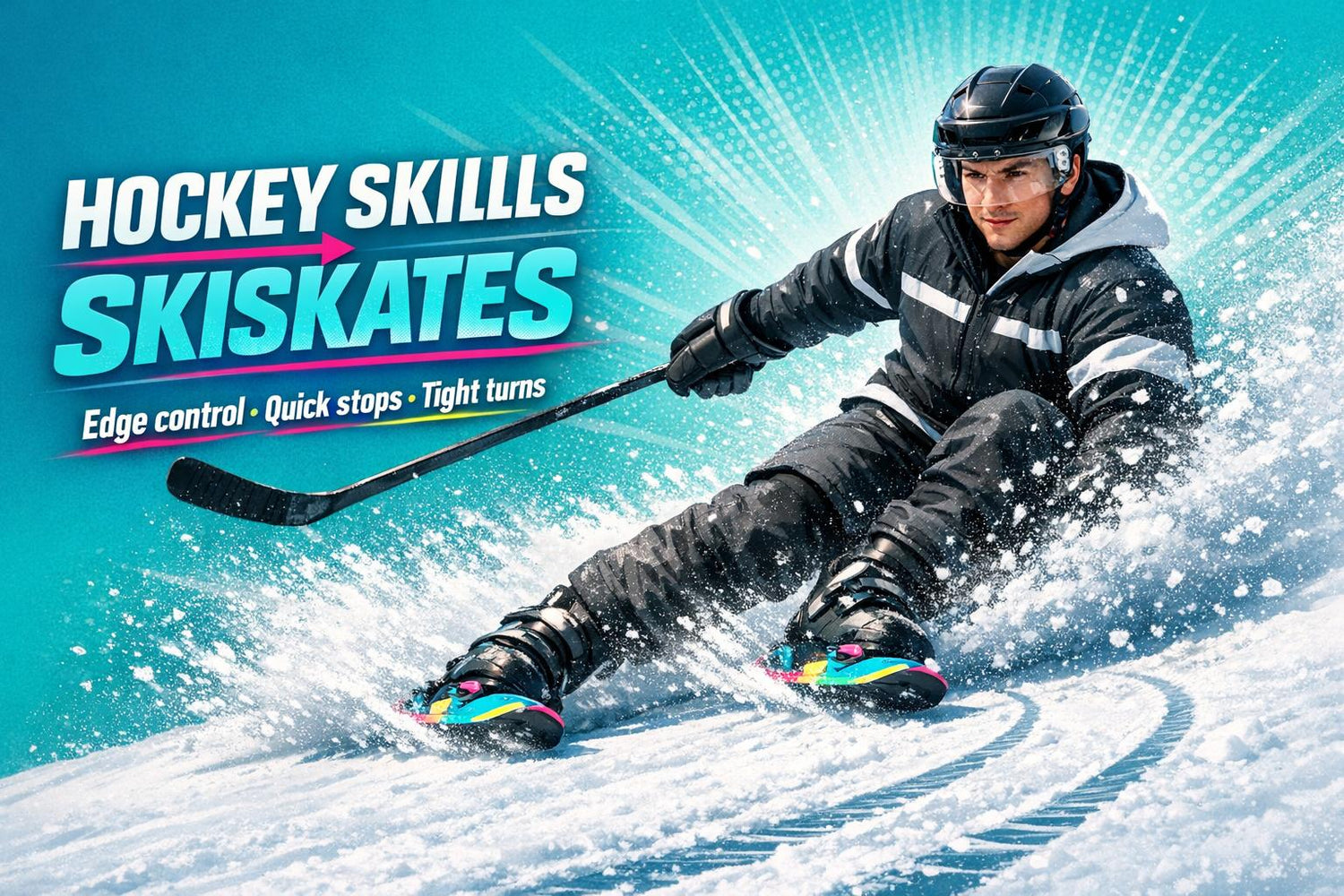
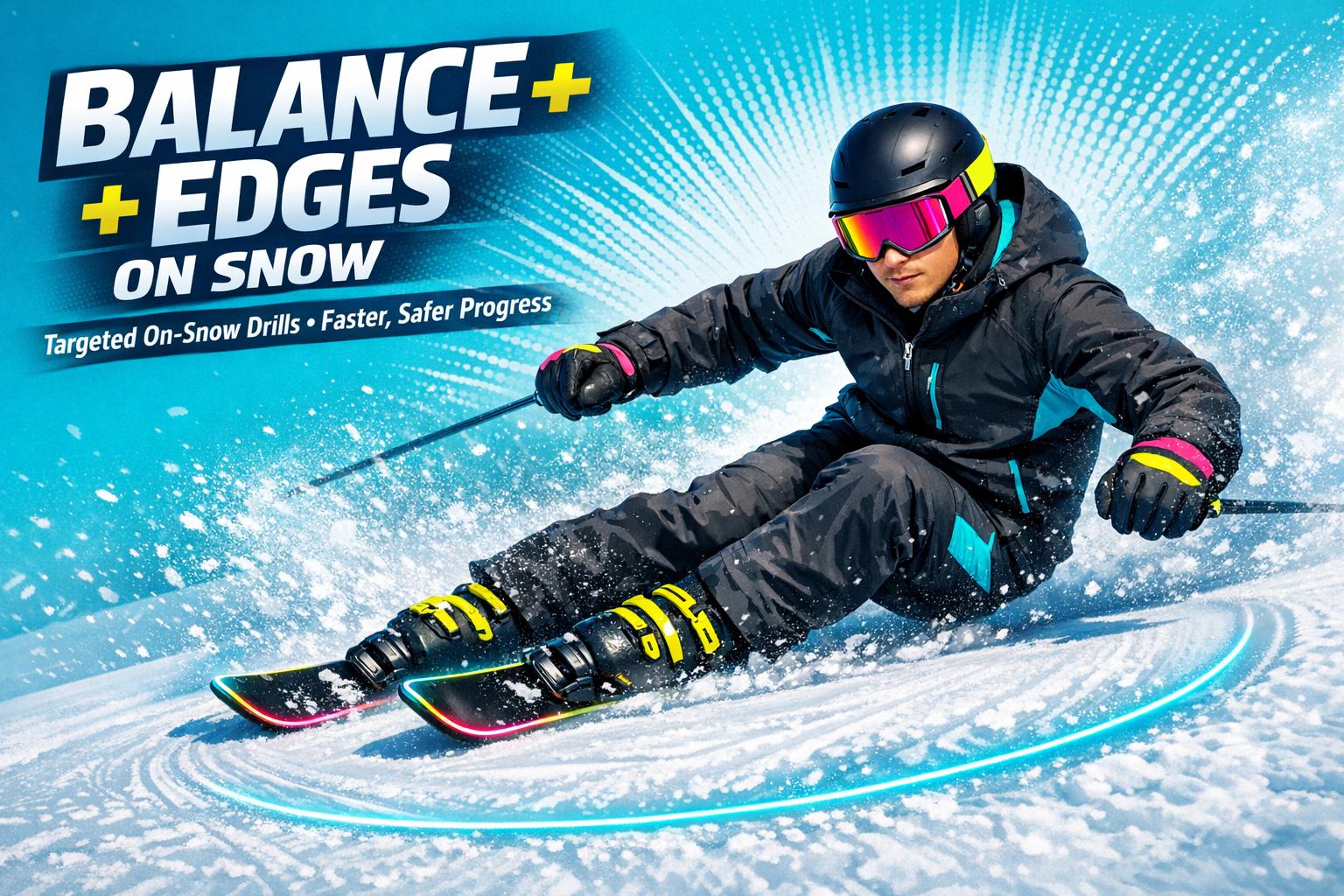
If you’re a hockey player, you’ve probably noticed skiing can feel awkward. Why? The mechanics of skiing - long arcs, forward stances, and long skis - don’t align with the quick, lateral movements you’re used to on the ice. Enter Snowfeet Skiskates, a game-changer for skaters. At just 17 inches long, these mini skis feel more like hockey skates, letting you use familiar skills like sharp stops and tight turns.
Key Takeaways:
- Skiskates are compact (44 cm), making them easier to control than skis.
- They mimic hockey skating movements: lateral pushes, quick pivots, and edge control.
- No bulky ski boots required - use regular winter or snowboard boots.
- Easier to learn: Most skaters feel comfortable in a single session.
- Cost: Around $575, cheaper than a full ski setup.
If skiing feels unnatural, Skiskates might be the perfect solution for turning your ice skills into snow fun. Let's break it down further.
Snowfeet Skiskates vs. Traditional Skis: Hockey Player's Guide
Hockey players, THIS is your new obsession 🔥
Key Differences Between Skating and Skiing Techniques
To see why Snowfeet* Skiskates work so well for hockey players, it helps to break down the differences between skating and skiing techniques.
Hockey Skating Mechanics: All About Agility and Edge Control
Hockey skating relies heavily on lateral movement. Each stride begins with a sideways push off the inside edge of the skate blade, creating side-to-side force. Hockey players maintain a low, compact stance with deeply bent knees, engaged hips, and a slightly forward torso. This posture allows for quick, multidirectional bursts.
Edge control is key here. Hockey players make constant micro-adjustments with their ankles and knees during every shift on the ice. Their blades are short - about 10–12 inches long - making them ideal for tight, responsive movements. Compare that to alpine skis, which are 60–70 inches long and built for wide, sweeping turns.
Why Skiing Feels Awkward for Hockey Players
The issue isn’t skill - it’s that skiing and skating require different movement patterns. Alpine skis are designed for smooth, forward-facing motion down the slope, emphasizing gradual edge engagement and wide, arcing turns.
Hockey players often try to bring their skating habits to the slopes. They push sideways and rotate their upper body, expecting quick feedback like they get on the ice. But longer skis don’t respond the same way. Over-rotating the upper body can cause skis to skid or cross, and the lateral push used in a hockey stop just doesn’t work with a 65-inch ski. This mismatch in mechanics highlights the need for equipment like Snowfeet* Skiskates, which are compact and designed to respond more like hockey skates.
Here’s a quick breakdown of the differences:
| Aspect | Hockey Skating | Traditional Alpine Skiing |
|---|---|---|
| Primary Movement | Lateral push with side-to-side force | Forward motion with wide, curved turns |
| Stance | Low, compact, deeply bent knees | More upright, feet hip-width apart |
| Turning | Tight pivots, crossovers, upper-body rotation | Gradual edge engagement with wide arcs |
| Stopping | Sharp edge dig, rapid pivot on short blades | Gradual wedge or parallel stops |
| Equipment Length | 10–12 inches (blade length) | 60–70 inches (adult ski length) |
These differences explain why hockey players often feel out of sync on traditional skis. Snowfeet* Skiskates, with their shorter, skate-like design, bridge that gap, allowing hockey players to transfer their ice skills to the snow seamlessly.
How Snowfeet* Skiskates Address the Problem
Design Features That Mirror Ice Skates
Snowfeet* Skiskates bridge the gap between ice skating and skiing with clever design choices tailored for hockey players.
Measuring just 44 cm (about 17 inches) in length, these skiskates are much closer in size to a hockey skate blade than a traditional ski. This compact design keeps your center of gravity directly over your feet, allowing for quick weight shifts, smooth pivots, and fast turns - without the lag you’d experience with longer skis. Plus, the metal edges grip the snow much like skate blades grip the ice, making edge control feel natural and precise.
The parabolic (hourglass) shape of the base is another key feature. It allows for tight, short-radius turns by simply rolling your ankle and knee inward, mimicking the movements used to set a deep edge on ice. And since Skiskates attach to standard winter or snowboard boots, your ankle flexion remains unrestricted, offering a feel that’s very close to wearing hockey skates.
"Long enough to ski, yet short enough to skate. Basically ice skates for ski slopes." - Snowfeet*
The 44 cm model is built with high-performance materials, including a certified sustainable wood core, cap construction, and a graphite/sintered base - materials typically found in premium alpine skis. This ensures that every layer contributes to a responsive and durable ride.
These thoughtful design elements make it easy for hockey players to transfer their skills from the rink to the slopes.
Putting Hockey Skills to Work on the Slopes
Thanks to its design, Snowfeet* Skiskates let hockey players use movements they already know. Edge control feels intuitive - rolling your knees and ankles to load an inside edge creates a carved turn that’s strikingly similar to cutting on ice.
Stopping is just as familiar. The responsive edges allow you to rotate your hips and feet, engaging the uphill edge to control speed. This motion closely resembles a classic hockey stop. In fact, many players with skating experience report nailing a hockey-style stop during their very first session on gentle slopes.
Even your hockey stance transitions seamlessly. With bent knees, hips slightly back, and weight centered over the balls of your feet - the ideal position for riding Skiskates - you’ll feel stable and in control. There’s no cumbersome ski length or heavy tail to manage, reducing the intimidation factor of learning traditional ski techniques.
"In my opinion, Skiskates is the best product for slopes we developed so far. I love how easy they are to ski and skate and how many different kinds of tricks I can perform without much effort and almost no restrictions."
For hockey players, Snowfeet* Skiskates move the way you’re already used to, making them a natural extension of your skills.
sbb-itb-17ade95
Snowfeet* Skiskates vs. Traditional Skis: A Direct Comparison
Comparison Table: Snowfeet* Skiskates vs. Traditional Skis
Snowfeet* Skiskates and traditional skis are worlds apart in terms of design, feel, and usability. For hockey players, these differences can make all the difference when transitioning from the ice to the slopes.
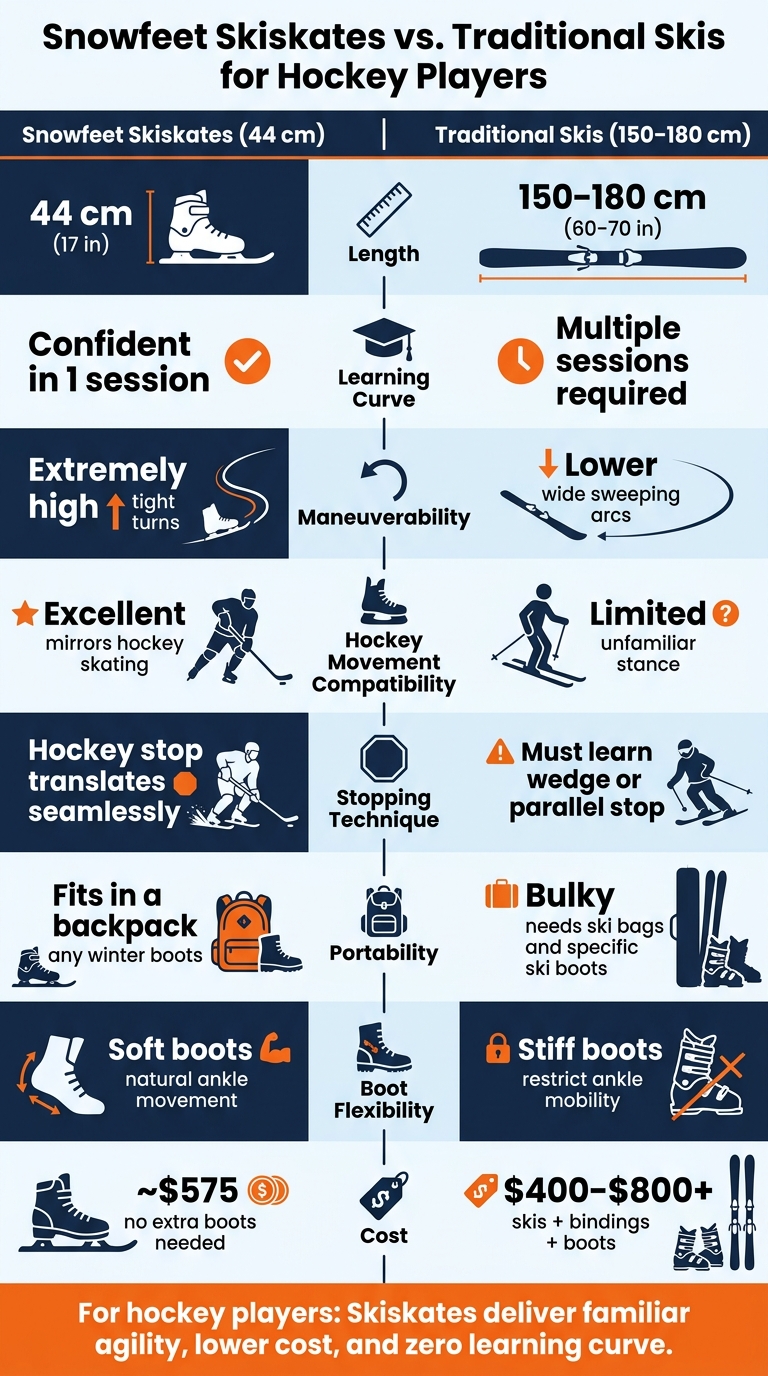
| Factor | Snowfeet* Skiskates (44 cm) | Traditional Skis (150–180 cm) |
|---|---|---|
| Learning curve | Super short - skaters often feel confident in one session | Longer - requires mastering new balance and turning techniques |
| Maneuverability | Extremely high; perfect for tight turns and quick changes | Lower; built for smooth, sweeping arcs |
| Skating movement compatibility | Excellent; mirrors hockey skating movements | Limited; forward stance and carving feel unfamiliar |
| Stopping technique | Hockey stops translate seamlessly | Requires learning wedge or parallel stops |
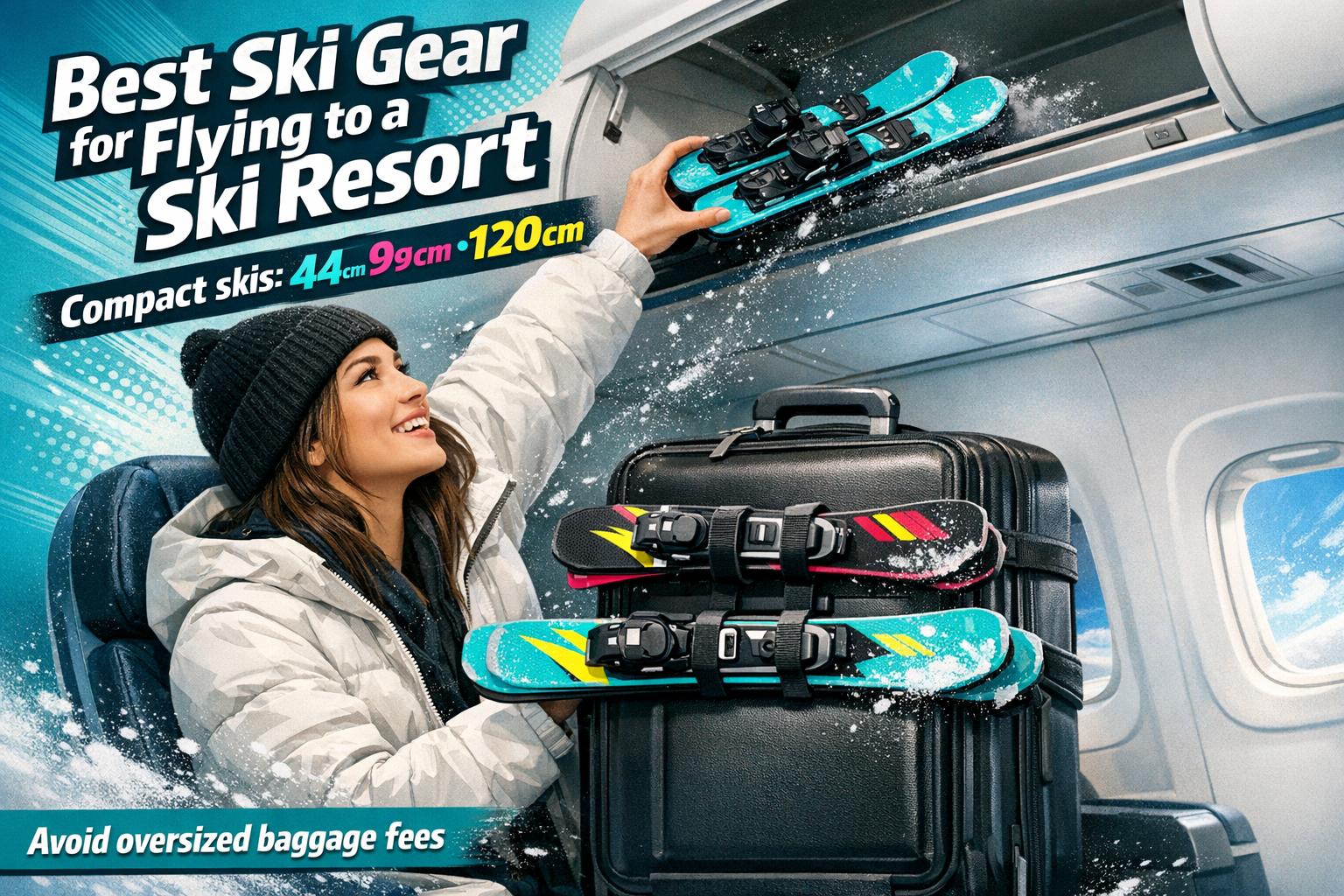
| Portability | Fits in a backpack; works with regular winter or snowboard boots | Bulky; needs roof racks or large ski bags and specific ski boots |
| Boot feel | Soft, flexible boots allow natural ankle movement | Stiff ski boots restrict ankle mobility |
| Cost (approx.) | Around $575 (no extra ski boots needed) | $400–$800+ for entry-level skis, bindings, and boots |
| Best terrain | Groomed runs, parks, narrow trails, small hills | Long groomers, high-speed carving, mixed snow conditions |
For hockey players, Snowfeet* Skiskates check nearly every box. They’re lightweight, portable, and designed for quick, agile movements. While traditional skis excel in high-speed stability and deeper snow, these aren't priorities for most recreational skaters.
Why Shorter Length Works Better for Hockey Players
The compact size of Snowfeet* Skiskates is a game-changer for hockey players. At just 17 inches long, they’re about a third of the size of traditional skis, and this difference reshapes how they perform on the slopes.
With traditional skis, the length acts like a lever. Every turn requires early weight shifts and wider arcs, which can feel awkward for hockey players who are used to quick, lateral movements. It’s no wonder many skaters find their first experience with skis frustrating - their instincts want to pivot sharply, but the skis demand smoother, slower transitions.
Snowfeet* Skiskates eliminate that struggle. Their shorter length minimizes swing weight, making edge-to-edge transitions lightning fast. The tight turn radius lets you pivot, cut, and shift weight as naturally as you would on ice. As Brad Tolin, a user, shared:
"Super easy to control, quick to turn, and way more forgiving than traditional skis."
For hockey players, this isn’t just about ease of use - it’s about feeling at home on the slopes. Snowfeet* Skiskates bring that familiar agility to a new setting, making the transition from rink to snow seamless.
Tips for Moving From Ice to Snow With Snowfeet* Skiskates
Start on Gentle Slopes and Use Familiar Drills
If you're used to the hockey stance and edge control that Snowfeet* Skiskates demand, you're already ahead of the game. Here's how to make the transition from ice to snow smoother.
Begin by spending about 15–20 minutes on flat ground. Make sure your Snowfeet* Skiskates are properly aligned and snug. Practice side-steps, controlled weight shifts, and C-cuts. These drills will help you get used to the extra friction that snow brings compared to ice. Snow conditions can vary a lot - groomed slopes feel very different from icy patches - so focus on shorter, softer strides instead of the powerful push-offs you're used to on the rink. These familiar movements will help you adapt while building confidence.
When you're ready to hit a gentle slope, start by traversing across the hill. This will help you control your speed and get comfortable with rolling your edges smoothly. Gradually shift from your inside to outside edge while keeping your knees bent, hands forward like you're holding a hockey stick, and your chest slightly tilted forward. This stance mirrors what you're already familiar with on the ice.
Progressing to Sharper Turns and Quicker Stops
Once you've nailed the basics on gentle slopes, it's time to take things up a notch with sharper turns and quicker stops.
To master turns, apply steady pressure to your edges. Start with wide turns and gradually increase your knee bend and edge angle to create smooth, controlled arcs. For stopping, begin with gentle side-slips and partial skids to get a feel for the snow's resistance. Then, work your way up to a hockey-style stop on easier terrain. The compact design and responsive metal edges of Snowfeet* Skiskates make this transition feel natural. As Zbyněk, the founder of Snowfeet*, explains:
"I love how easy they are to ski and skate and how many different kinds of tricks I can perform without much effort and almost no restrictions."
For hockey players, this progression from flat ground to green runs and advanced moves tends to happen quickly. Your balance and edge control are already second nature; you're just applying them to a new surface. By taking it step by step, you'll keep your on-ice instincts sharp while adapting seamlessly to the slopes.
Conclusion: Why Snowfeet* Skiskates Work Well for Hockey Players
Hockey players who struggle with traditional skis often face a mismatch in technique. Long skis require a completely different stance and skill set, leaving even experienced skaters feeling out of their element. It’s no wonder this disconnect can lead to frustration.
Snowfeet* Skiskates, at just 44 cm (17 in), bridge the gap by mimicking the agility and edge control of hockey skates. They’re designed for quick pivots and dynamic movement - skills hockey players already excel at. Plus, they’re incredibly practical: small enough to fit in a backpack, compatible with regular winter or snowboard boots, and priced around $575, far less than most ski setups. As Brad Tolin puts it:
"These ski blades are a blast to use. Super easy to control, quick to turn, and way more forgiving than traditional skis."
If skiing has ever felt awkward or intimidating, Snowfeet* Skiskates might just be the game-changer you need. They let you take the skating skills you’ve mastered and apply them directly to the slopes - no steep learning curve required. With Snowfeet* Skiskates, you can turn your skating expertise into an exciting snow adventure.
FAQs
Are Snowfeet* Skiskates allowed at most ski resorts?
Snowfeet* Skiskates are generally allowed at most ski resorts because they work much like mini skis and are made for snow-covered slopes. That said, it’s smart to double-check the rules at the resort you’re planning to visit before you go.
Can I use my regular winter boots, or do I need snowboard boots?
You can wear your regular winter boots with Snowfeet* Skiskates since they’re made to work with both ski and snowboard boots. This means you don’t need any special footwear, making them super convenient and versatile.
What kind of terrain is best (and worst) for Snowfeet* Skiskates?
Snowfeet* Skiskates are designed to shine on groomed snow - think ski slopes and snow parks. Their compact build and parabolic shape make them perfect for carving, pulling off tricks, and making quick, sharp turns on smooth, maintained surfaces. That said, they’re not the best choice for deep powder or rough, uneven terrain. Their shorter length and overall design are tailored more for hard-packed snow than for venturing into untracked backcountry areas.











Leave a comment
This site is protected by hCaptcha and the hCaptcha Privacy Policy and Terms of Service apply.