



















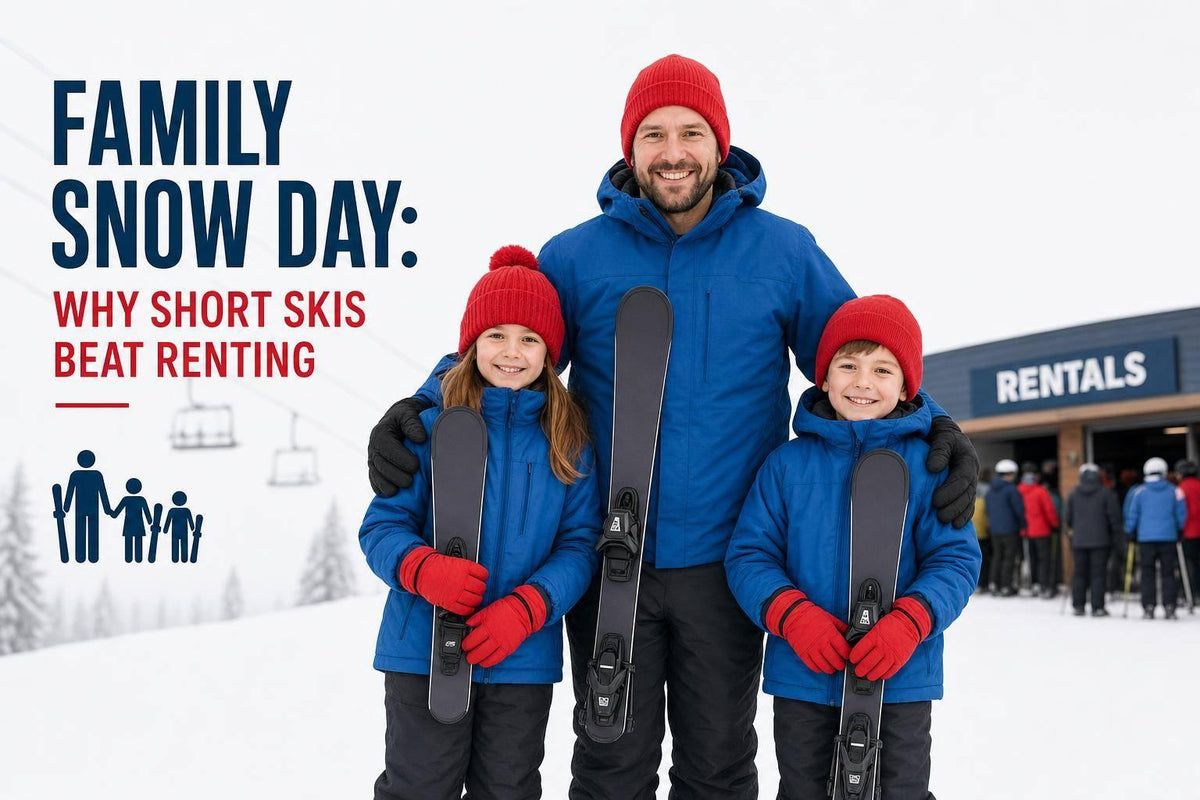
If your family skis more than a couple of days each season, short skis can save time, cut repeat rental costs, and make the whole day less of a circus. In this article, I’d boil it down like this: rentals are fine for one-off trips, long skis still win for speed and powder, but compact Snowfeet* models are often the easiest fit for casual family days, kids, and first-timers.
Here’s the core takeaway in plain English:
- Rentals often cost $130–$240 per day for a family of four
- Busy rental shops can eat up 30–90 minutes before your first run
- Short skis cut down the gear pile and are often easier for kids and beginners
- Long skis still make more sense for strong skiers who want more speed and a more ski-like ride
- The main tradeoffs are cost, time, carrying load, and ease for new riders
So if you want a low-stress snow day, I’d look at these six paths:
- Snowfeet* Skiskates 44 cm
- Snowfeet* Skiblades 65 cm
- Snowfeet* Skiblades 99 cm
- Snowfeet MINI KIDS
- Ski rentals
- Owned long skis
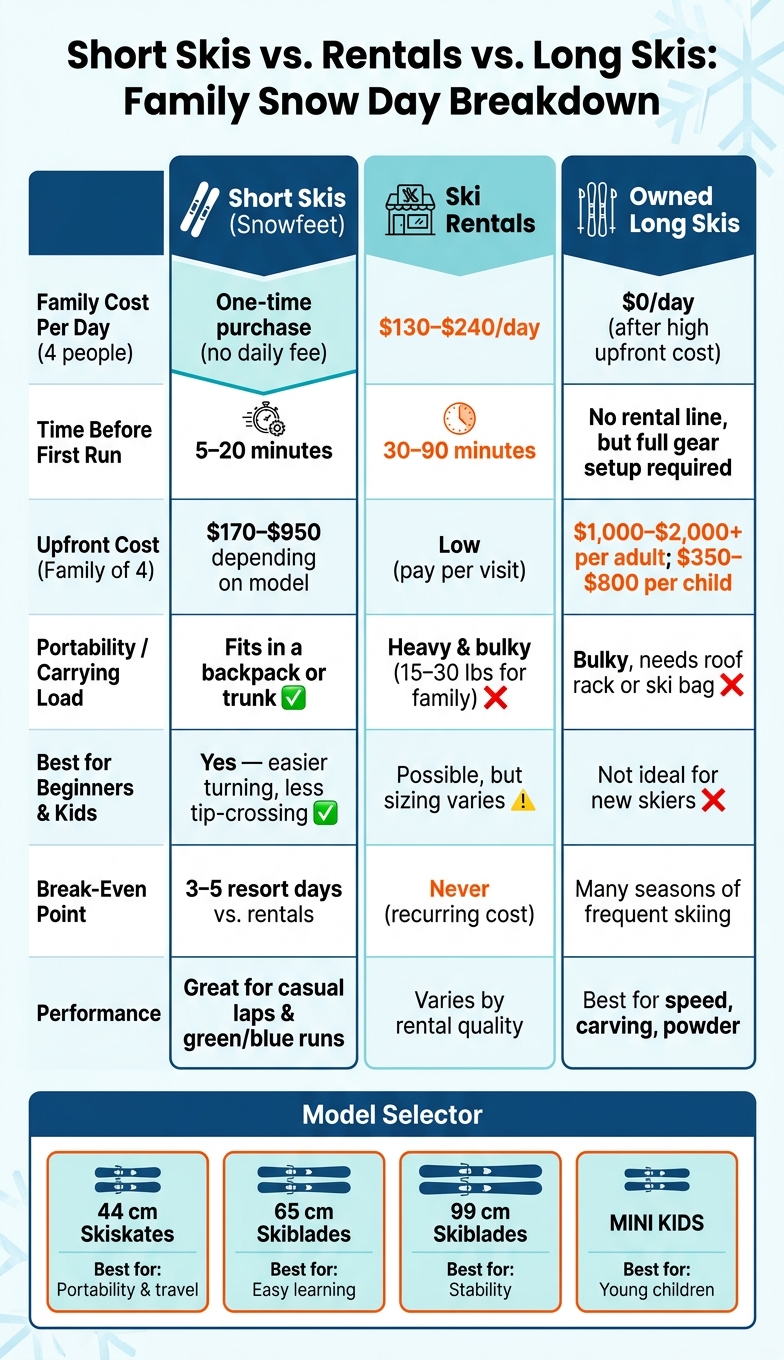
Short Skis vs. Rentals vs. Long Skis: Family Snow Day Cost & Convenience Breakdown
Snowboarder tries Snowfeet* | Which Snowfeet* Short Ski is the Best? | Snowblades 44, 65, 99 Review
Quick Comparison
| Option | Best for | Cost angle | Setup time | Carrying load | Beginner/kid fit |
|---|---|---|---|---|---|
| Skiskates 44 cm | Light travel, short outings | Higher upfront, lower cost after repeat use | About 5–10 min | Fits in a backpack | Good for teens/adults new to snow |
| Skiblades 65 cm | Families who want more balance than skiskates | Upfront cost, but can beat rentals after a few trips | About 10–20 min | Easy to fit in most trunks | Good for older kids, teens, parents |
| Skiblades 99 cm | Families who want a more planted ride | Higher upfront | Often near 1 hour saved vs. rentals on busy days | Light and easy to pack | Good for older kids and adults |
| MINI KIDS | Young kids and first snow days | Can pay off in 3–5 days | A few minutes | Small, easy to tote | Best pick for small kids |
| Ski rentals | One-time trips | Low at first, adds up fast | 30–90 min on busy days | Heavy, bulky | Fit depends on stock |
| Owned long skis | Frequent skiers, strong riders | High upfront plus tune costs | No rental line, but still lots of gear | Bulky | Less easy for new skiers |
Bottom line: if you want to spend more time on snow and less time in line, short skis are often the simple call. If you ski once a year, rent. If you chase speed and powder, long skis still have their place. For most family outings, though, compact skis are hard to beat :)
If you want a quick feel for how short skis ride, these videos help:
- Snowfeet official YouTube
- Short skis / skiblades riding clips on YouTube
- Beginner ski tips on YouTube
So, that’s the short version. The rest of the article breaks down where each option fits best.
1. Snowfeet* Skiskates 44 cm
Upfront and Day-of Cost
Snowfeet* Skiskates 44 cm cost more at the start. But if your family gets out on snow a few times each season, the math swings in their favor pretty fast.
U.S. ski rentals usually run $30–$50 per person, per day. So for a family of four, just three snow days can cost $360–$600. That adds up in a hurry. Since Skiskates can be used across multiple seasons, and sometimes sold secondhand, the cost per day drops well below repeat rentals. The more often you go, the bigger that gap gets.
There’s also the stuff that sneaks onto the bill at the resort:
- Damage waivers
- Helmet add-ons
- Late fees
For a family of four, skipping those extras can trim $60–$120 per visit.
But the best part isn’t only the money. It’s the smoother start to the day.
Time Before First Run
Skipping the rental counter can save 30–60 minutes on packed resort days. For families, that’s a big deal. Less time in line means more time on snow, and fewer chances for kids to get bored before the first run even starts.
Skiskates strap right onto winter boots or snowboard boots. So from the car to the slope, most families can be ready in 5–10 minutes. On a short day trip, that can mean 30–50 extra minutes of riding. And yeah, that can be the difference between “Why did we even come?” and “Let’s do one more run.” :)
Gear Bulk and Transport
If you want the least amount of gear to haul, this is the easy pick.
Each Skiskate weighs about 800 grams, or around 1.75 lbs per ski. Both fit in a backpack. No roof rack. No ski bag. No awkward parking-lot shuffle while carrying a pile of gear and snacks and gloves and somebody’s dropped mitten.
That small size also helps if you’re:
- Taking a shuttle bus to the base area
- Flying to a destination resort
- Trying to keep family gear simple
Compared with full-size skis, they’re just much easier to move around.
That smaller size can also feel less scary for new riders.
Beginner and Family Fit
The adjustable bindings fit U.S. shoe sizes 4.5–14.5, so one pair can work for most teens and adults in the family. For younger kids with smaller feet, the better match is the Snowfeet MINI KIDS, which comes later in this guide.
For beginners, the short length helps with one of the most annoying parts of regular skis: crossing the tips. Skiskates feel more like skating, which can make basic gliding and easy turns feel more natural on green runs. That said, speed control on steeper slopes still takes practice, so it’s smart to start on a flat learning area.
Also, check the resort rules before you go. Some mountains limit short skis and skates.
If you want a bit more stability but still want gear that’s easy to carry, the 65 cm Skiblades are the next step up.
2. Snowfeet* Skiblades 65 cm
Upfront and Day-of Cost
Snowfeet* Skiblades 65 cm start at $590 and can go up to $750 with binding upgrades. That’s not cheap, no point sugarcoating it.
But here’s the flip side: a family of four can burn through $400–$800 on rentals in just 3–5 resort days, and that’s before the extra add-ons. So the payback can show up pretty fast.
Time Before First Run
Rental lines on busy holiday weekends can eat up 30–90 minutes. That’s a big chunk of the morning.
With Skiblades packed and ready, most families can get from the car to the lift in 10–20 minutes. In plain terms, that can mean one or two more runs instead of standing around in ski boots. Not a bad trade :)
Gear Bulk and Transport
At 65 cm (26 inches), these blades are short enough to fit sideways in most car trunks. No roof rack, no awkward loading, no giant ski shuffle in the parking lot.
Parents can carry a few pairs at once and still keep one hand free for the kids. That’s the sweet spot here: still compact, but with more stability than the 44 cm Skiskates.
Beginner and Family Fit
Compared with the 44 cm Skiskates, the 65 cm version gives parents and older kids a bit more stability while still staying easy to handle. It lands in a nice middle zone. You get more support than the shorter model, but turning on gentle runs still feels simple and smooth.
The deep sidecut and camber help the turns feel natural, and the bindings fit ski or snowboard boots up to US size 14.5. Teens often like the playful, responsive feel. Parents who want a steadier ride tend to like the extra confidence, especially on busy beginner slopes where long skis can feel like a lot.
If your family wants more glide and a steadier feel, the 99 cm Skiblades are the next step up.
3. Snowfeet* Skiblades 99 cm
Upfront and Day-of Cost
For families who want a short ski that feels more planted before jumping to full-length skis, 99 cm hits a nice middle ground. Snowfeet* Skiblades 99 cm start at $690, and premium or bundled versions can reach about $950.
Yeah, the upfront price is steep. No sugarcoating that. But if your family skis more than once or twice a season, rental costs can pile up fast. At $130–$200 per day for a family of four, the math starts to shift after only a few trips. And when you own the gear, you also dodge the usual add-ons at the counter, like damage waivers, late return fees, or that last-minute boot swap when someone says, “My foot hurts” at 4:00 p.m.
This makes the 99 cm model a smart step-up for families who want more stability than the 65 cm version without moving into full-length ski territory.
Time Before First Run
If the 99 cm model is packed and ready to go, families can skip the rental line and get on snow much sooner. On a busy holiday weekend, a family renting gear may not make its first run until 10:00–10:30 a.m. With Skiblades 99 cm already in the car, that same family could be on the lift by 9:20–9:30 a.m.
That’s close to an extra hour on snow. And in ski time, that’s no small thing. These blades also feel steadier than shorter models, which helps when you’ve got a mixed-skill group and not everyone warms up at the same pace.
Gear Bulk and Transport
At 99 cm (39 in), these are longer than the 65 cm blades, but they’re still easy to pack. Most families can fit more than one pair in a regular trunk. Each ski with binding weighs about 2.79 lb (1,266 g).
That lighter load helps more than it sounds. When a parent is already hauling helmets, gloves, snack bags, and one kid who suddenly forgets how to walk in ski boots, every pound matters.
Beginner and Family Fit
The 99 cm length works best for older kids, teens, and adults. It gives riders more stability while still keeping that short-ski feel. The 6-meter turn radius and shape help the ski turn smoothly on green and blue runs.
Bindings fit ski boots from US men's 4.5 to 14.5 and snowboard boots from US 6 to 14.5. So if your family already owns boots, you can skip that part of the rental counter too.
A few things stand out here:
- Siblings with similar boot sizes may be able to share a pair if the bindings are adjusted the right way.
- Stronger skiers get quick, snappy turns.
- Newer riders get easier speed control from the shorter length.
So, you end up with less rental hassle, easier handling, and one setup that can work for most of the group. For younger kids with smaller boots, the MINI KIDS model is the better match.
4. Snowfeet MINI KIDS
Upfront and Day-of Cost
If the 99 cm Skiblades are a fit for older kids, MINI KIDS are the easy pick for the little ones. Snowfeet MINI KIDS are listed at $170–$199, depending on the storefront listing.
Yeah, the upfront cost can feel steep at first. But kids' rentals often cost $20–$40 per child, per day. That means after about 3–5 snow days, MINI KIDS can pay for themselves. And if you’ve got younger siblings coming up behind them, that same pair can keep getting used as they grow. That’s where the math starts to look a lot better.
Time Before First Run
Anyone who’s dealt with rental lines with small kids knows the drill: boots, bindings, paperwork, waiting, more waiting. On busy weekends or holidays, that can chew up 30–60 minutes before anyone even touches the snow.
MINI KIDS cut that whole process way down. Setup takes just a few minutes. Strap them on, check the fit, and head out. For families with toddlers or young kids who may only stay warm and happy for a few hours, that saved time is a big deal. Less standing around. More sliding. Fewer meltdowns. Always a win :)
Gear Bulk and Transport
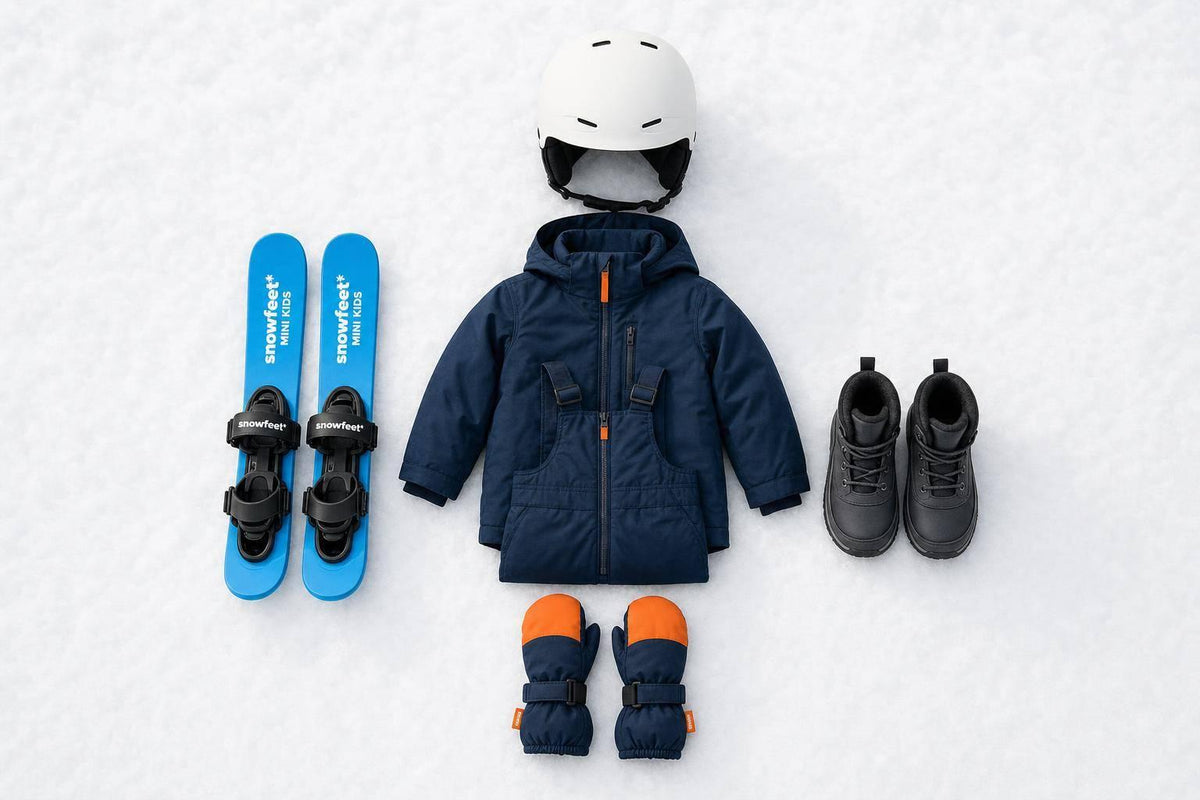
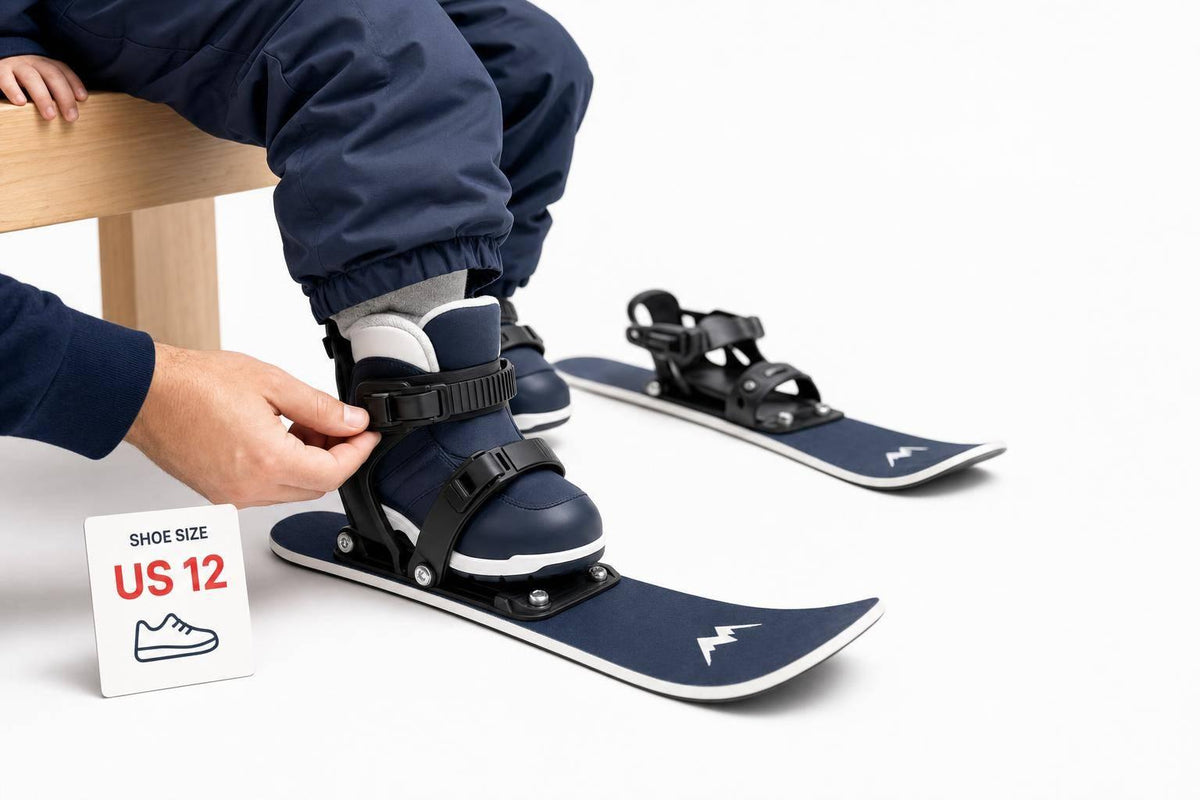
MINI KIDS fit US kids' size 10 through US adult size 6 (EU 27–38), and they’re small enough to fit in a backpack or tote bag.
That makes life a lot easier for parents. Full rental setups can turn a short walk from the parking lot into a circus. MINI KIDS keep things simple. A parent can carry two pairs without much trouble, and the compact size helps a lot when you’re dealing with shuttles, lodge doors, or a packed parking lot.
Beginner and Family Fit
This is where MINI KIDS make a lot of sense for first-timers. The ultra-short length keeps a kid’s balance centered closer to the foot, lowers the chance of crossed tips, and makes stopping on mellow slopes easier to manage.
That matters because early snow days are all about confidence. Shorter skis often help kids feel in control faster, which can make the first or second day on snow go a whole lot smoother. MINI KIDS also strap onto regular winter boots, so parents can skip the battle of squeezing tiny feet into stiff rental ski boots.
sbb-itb-17ade95
5. Ski Rentals
Upfront and Day-of Cost
Rentals seem cheap at first. Then the family math hits you.
At many U.S. resorts, adult ski rental packages often cost about $40–$70 a day, and at big destination resorts they can climb to $65–$82 a day. Kids' packages are usually $25–$50 a day. For a family of four, that can add up to $130–$240 per day just for rentals.
And here’s the catch: you pay that bill every single trip. If you own short skis, that cost doesn’t keep coming back.
Time Before First Run
Rental shops can take a big bite out of the morning.
First-time visitors at busy resorts can spend 45 to 90 minutes in the rental shop before they even touch the snow. That time goes to forms, boot fitting, and binding tweaks for each kid. It’s not hard work, but it sure isn’t fun.
For families, that delay can sting. The best part of the morning is usually those first few runs, not standing under fluorescent lights waiting for boots.
Gear Bulk and Transport
Rental gear is a lot to carry. No way around it.
Standard adult skis run 150–175 cm and usually come with heavy boots and poles. Multiply that by four people and you're moving a serious pile of stuff from the parking lot to the lodge - often 15–30 pounds of gear.
Short skis can fit in a backpack or trunk. Rental gear can’t. For a family, that extra load is often the most annoying part of the whole setup.
Beginner and Family Fit
Rental shops do offer beginner-sized gear, and good shops size equipment by height, weight, and ability. That part helps.
The issue is stock. On a packed holiday weekend, the right size for your child may already be gone. Kids can end up in boots that are too stiff or skis that are too long. That kind of change from trip to trip can slow progress because beginners spend time getting used to new gear instead of building skills.
When your family owns short skis, kids get the same setup each time. That makes learning feel a lot less choppy.
If you already own skis, the next question is whether full-length skis are worth the extra bulk.
6. Owned Long Skis
Upfront and Day-of Cost
Owning long skis gets rid of rental fees. Nice. But it doesn’t get rid of the family-day hassle.
The upfront bill is still steep. A full adult setup usually lands between $1,000 and $2,000. Kids’ gear adds $350 to $800 per child. That’s before you even click into the bindings.
And even after you buy everything, the spending doesn’t stop. You may skip the rental desk, but you still pay for tune-ups, edge sharpening, and waxing. That usually runs $30 to $60 per pair.
For casual families, that math can take a long time to work out. In plain English: owning only starts to make sense after many seasons, and mostly for people who ski a lot.
Time Before First Run
Owning skis means you can skip the rental counter. That part helps.
But you still have to drag long skis, boots, and poles from the car, then shuffle around in stiff ski boots before you even reach the lift. If you’ve ever watched a kid do the awkward boot-walk across a parking lot, you know the vibe. It’s not smooth.
Short skis change that. Since they attach to regular winter boots, kids can walk like normal all the way to the snow. That alone can make the morning feel a lot less chaotic.
Gear Bulk and Transport
Long skis are a lot to carry. Then add ski boots and poles, and family travel gets clunky fast.
By contrast, Snowfeet* Skiskates 44 cm or Snowfeet MINI KIDS fit into a trunk without eating up all the space. You’ve still got room left for jackets, snacks, and the random glove that always ends up under a seat :)
So, if your goal is a lighter, easier setup, Snowfeet* short skis trim down the bulk without making the day harder.
Beginner and Family Fit
For beginners and young kids, long skis often add length without adding control.
Sizing guides keep pointing to the same idea: new child skiers should use skis closer to shoulder height, since shorter skis are easier to turn and more forgiving at slow speeds.
That matters a lot on green runs, where skill levels are mixed and kids are still figuring things out. In that setting, long skis can add more gear to manage, with little payoff for a laid-back family day.
Long skis make more sense for performance skiing. For a low-stress day in the snow with kids, compact short skis usually fit better.
Where Renting vs. Short Skis Makes the Biggest Difference on a Family Day
After you stack both options side by side, the main question gets pretty simple: what makes the day smoother for the whole family?
Cost is a big one. Rentals can pile up fast when you're paying for a whole family, while Snowfeet* is a one-time buy. If you ski more than once or twice, that gap starts to matter.
Time is the other big swing factor. Short skis - especially the Skiskates 44 cm or Snowfeet MINI KIDS - strap onto regular winter boots. That means no boot fitting, no rental counter line, and a lot less running around before anyone touches snow. On a family day, that stuff matters. A lot. Fewer steps from the car to the slope usually means fewer mini meltdowns too :)
REI notes that shorter skis are easier for beginners to turn and manage. That lines up well with family outings, where less fear and less awkward gear can mean more time actually skiing instead of struggling.
Here’s the quick side-by-side view:
| Option | Best Use Case | Main Tradeoff |
|---|---|---|
| Skiskates 44 cm | Ultra-portable fun, spontaneous trips | Less stability at speed |
| Skiblades 65 cm | Playful resort days, park use | Shorter glide than longer skis |
| Skiblades 99 cm | Families wanting a ski-like feel | Higher upfront cost |
| Snowfeet MINI KIDS | Young children, first snow experiences | Limited to smaller boot sizes |
| Ski Rentals | Occasional skiers, no gear ownership | Varies by boot size and skill |
| Owned Long Skis | Frequent skiers, performance-focused days | Harder for beginners |
That makes the pros and cons pretty easy to see at a glance.
Pros and Cons for a Real Family Snow Day
For most family snow days, the tradeoff is pretty simple: short skis lean toward ease, rentals lean toward flexibility, and long skis lean toward performance.
Now that the model-by-model view is clear, here’s the quick family-day take.
Snowfeet* short skis are the easiest to carry, the fastest to put on, and the most forgiving for beginners. The tradeoff? Less speed and weaker performance in powder.
Rentals make sense for one-off trips and first-time skiers. But family costs can stack up fast, and the rental process can eat into the day.
Owned long skis work best for skiers with more experience who want speed and carving. But they also come with the highest upfront cost and the most gear to haul around.
| Short Skis (Snowfeet*) | Ski Rentals | Owned Long Skis | |
|---|---|---|---|
| Portability | Excellent | Shop-dependent | Bulky |
| Ease of learning | High | Depends on fit | Low |
| Cost over time | One-time purchase | Cheap for one-off, expensive if you ski often | High upfront + ongoing upkeep |
| Convenience | Strap on and go | Lines, fitting, adjustments | Full setup every trip |
| Performance | Great for casual laps | Varies by rental quality | Best for advanced skiing |
| Best for kids | Yes - MINI KIDS model available | Possible, but sizing is tricky | Not ideal |
| Storage | Minimal | None at home | Significant space needed |
So the choice comes down to three things: convenience, commitment, or performance. From there, it’s about picking the one that fits your family best.
Conclusion
For most family snow days, Snowfeet* short skis make more sense than renting. They cut down the usual hassle and help families get on the snow faster. And over time, they can cost less than paying for rentals again and again. For casual family trips, that’s a pretty easy call.
Pick based on who’s riding:
- 44 cm for portability
- 65 cm for easy learning
- 99 cm for more stability
- MINI KIDS for young children
That way, families can match the ski to the rider without changing the whole setup.
Long skis still have the edge for speed, carving, and deep powder. But for most family snow days, short skis are the simpler, easier pick.
FAQs
Are short skis allowed at all ski resorts?
Yes - short skis and compact gear like Snowfeet are allowed at most U.S. ski resorts.
Why? In many cases, they check the same basic safety boxes that mountains care about:
- Metal edges
- Heel brakes
- Safety leashes on some models
That said, rules can change from one resort to the next. One mountain may allow snowblades or snow skates with no issue, while another may have its own lift-access policy.
So, before you go, do the simple move: check the resort’s equipment policy or contact mountain management and ask if they allow snowblades or snow skates on their lifts.
How do I choose between 44 cm, 65 cm, and 99 cm short skis?
Choose based on your experience and how you want the ride to feel:
- 44 cm: the most compact and agile option. Best for confident skaters, teens, and playful laps on groomed runs.
- 65 cm: the sweet spot for a lot of riders. It gives you more stability, feels more forgiving, and is still easy to pack.
- 99 cm: the most stable of the three. It feels closest to standard skis, with better edge control for speed, carving, and light powder.
Can beginners and kids use short skis safely?
Yes. Snowfeet gear is light, easy to learn, and a lot less scary than long skis. That can help riders stay in control and avoid the classic tip-crossing mess.
For extra safety:
- The 99 cm and 120 cm Skiblades come with release bindings
- The 65 cm models use safety leashes
For the best ride, start on smooth, well-groomed slopes. And for kids, proper gear is a must: helmet on, protective gear on, good to go :)











Leave a comment
This site is protected by hCaptcha and the hCaptcha Privacy Policy and Terms of Service apply.