



















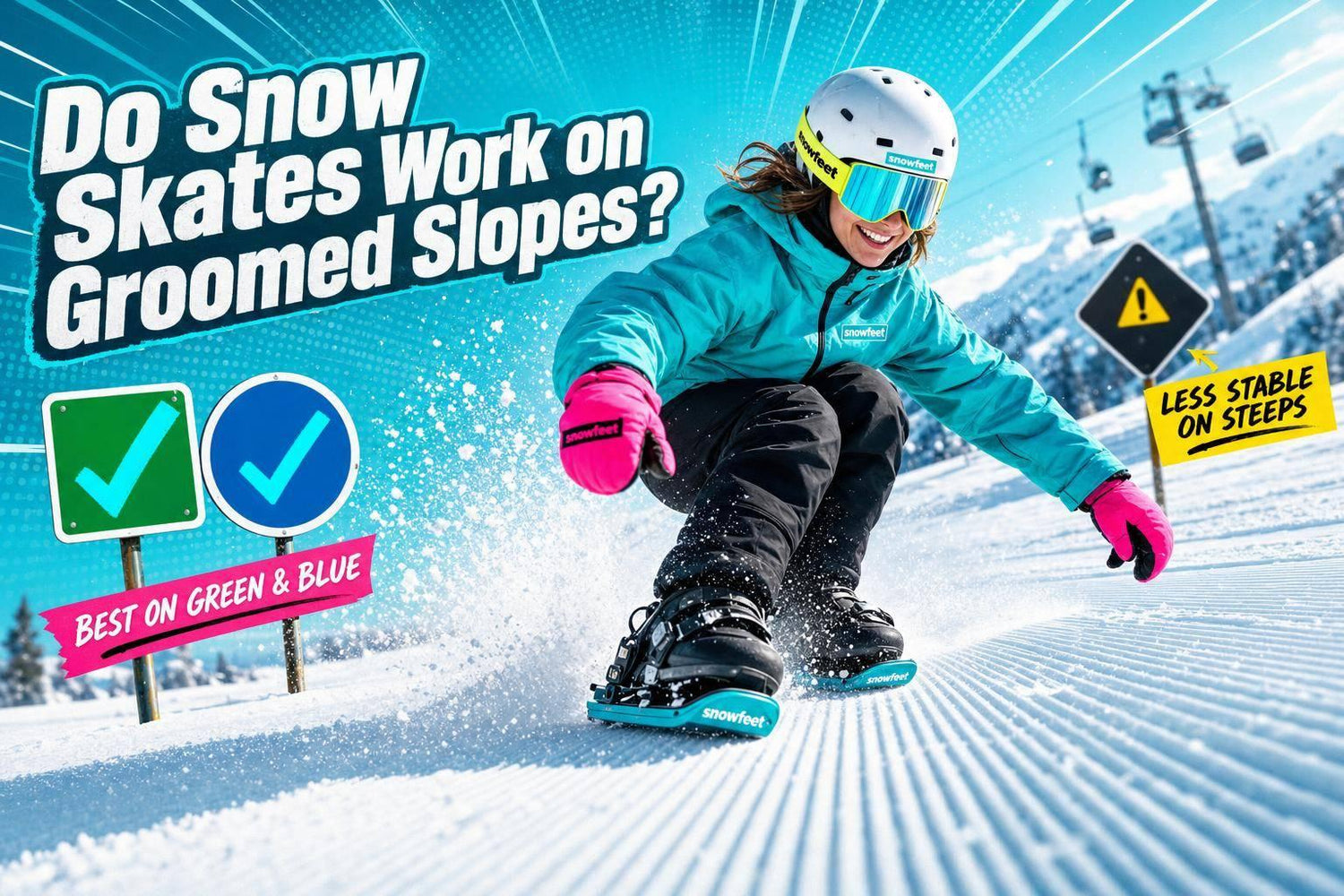
Snowfeet Skiskates (44 cm) are compact, portable, and fun for groomed slopes. They’re great for quick turns and playful maneuvers on green and blue runs, but they’re less stable at high speeds or on steep terrain. Compared to alpine skis and snowboards, they’re easier to carry, fit in a backpack, and don’t require bulky gear. Here’s a quick breakdown:
- Snowfeet Skiskates: Small (44 cm), fit in a backpack, good for moderate speeds, $575.
- Alpine Skis: Longer (150–190 cm), stable at high speeds, require specific boots, $500–$1,200+.
- Snowboards: Surf-like feel, bulky gear, $650–$1,200+.
Best for: Casual skiers, skating enthusiasts, or anyone who values portability over high-speed performance. Just check your resort’s rules first - most allow them if they have metal edges and leashes.
1. Snowfeet* Skiskates (44 cm)
Design and Portability
Measuring just 44 cm (about 17 inches) in length, Snowfeet* Skiskates hold the title of the world's shortest skis - about one-third the size of a traditional alpine ski. Built with a certified sustainable wood core, cap construction, metal edges, and a sintered graphite base, they’re designed to deliver a solid performance despite their compact size.
The bindings are tool-free and adjustable, accommodating ski boots (US sizes 4.5–14.5) and snowboard boots (US sizes 6–14.5). This eliminates the need for professional mounting, making them incredibly user-friendly compared to traditional ski setups.
Their small size is a game-changer for travel. Unlike traditional skis that require bulky roof racks or oversized bags, Snowfeet* Skiskates can fit into a standard backpack. That means no extra baggage fees and no waiting in long rental lines when you arrive at resorts in places like Colorado or Utah. These features make them a practical choice for skiers on the go.
Performance on Groomed Slopes
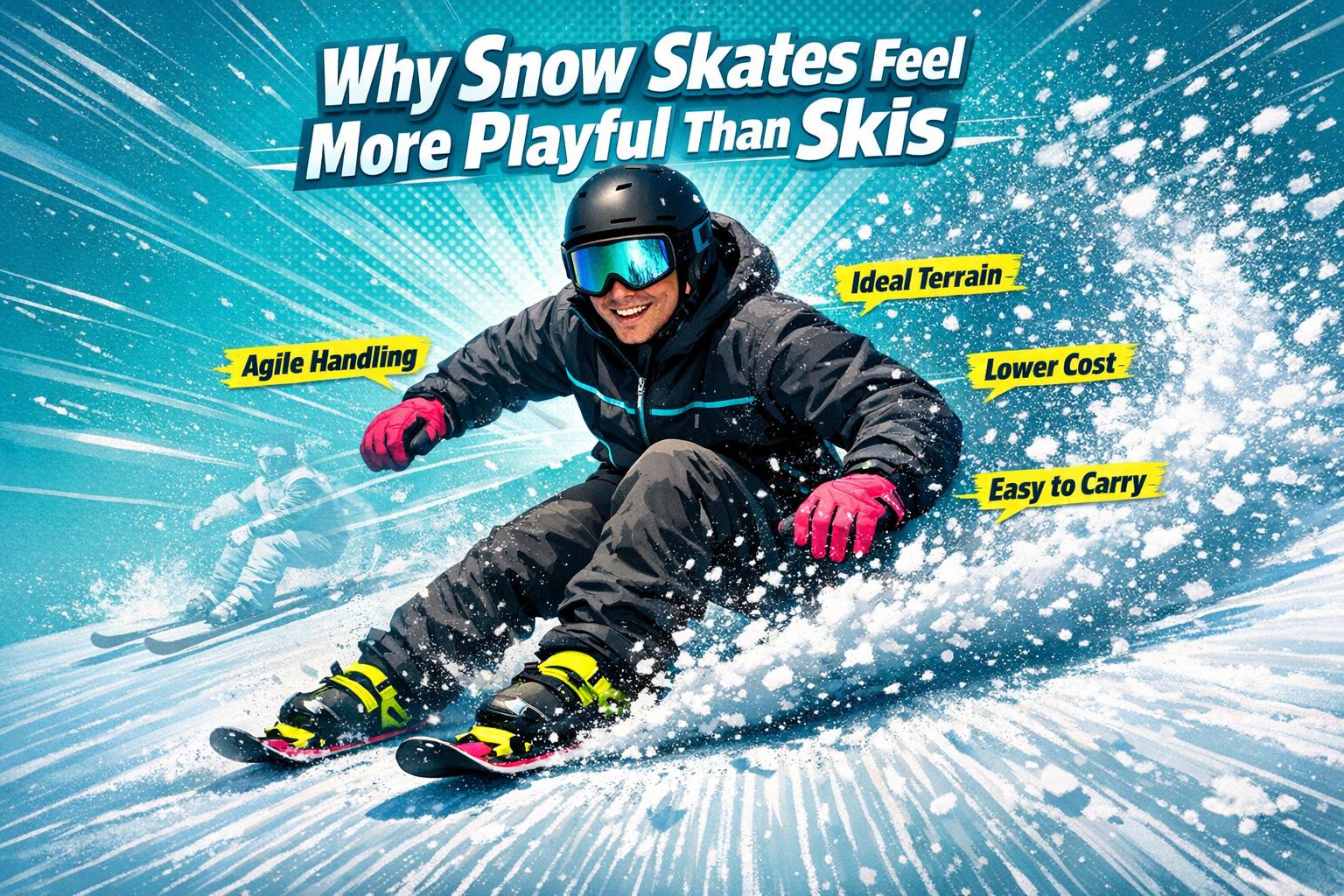
On groomed slopes, Snowfeet* Skiskates shine with a lively, responsive feel. Thanks to their parabolic shape and narrow waist, they make short, quick turns feel natural and effortless. Instead of the long arcs typical of full-length skis, you’ll find yourself making agile, fast movements that feel like a mix of ice skating and inline skating - but on snow.
The metal edges provide reliable grip on hardpack and freshly groomed runs, especially at moderate speeds. While they excel on green and blue runs, their shorter length can make high-speed stability more challenging. On steeper black runs, they’re usable but require a more active approach to balance and control.
"In my opinion, Skiskates is the best product for slopes we developed so far. I love how easy they are to ski and skate and how many different kinds of tricks I can perform without much effort and almost no restrictions." - Zbyněk, Founder, Snowfeet*
Practicality for Resort Use
At a starting price of $575, Snowfeet* Skiskates are a more affordable alternative to a full alpine ski setup, which can easily cost $600–$1,000+ for new equipment (skis, bindings, boots, and poles). For those looking to enjoy resort skiing without the commitment of a full kit, these skates make a compelling case.
Their compact design also makes them easier to manage on chairlifts and in gondolas. Most U.S. resorts allow short-ski devices as long as they have metal edges and safety leashes - both of which Snowfeet* Skiskates include. It’s always a good idea to double-check your resort’s specific rules before heading out, though. With 95% of reviewers giving them 5 stars and an average rating of 4.9/5 across 123 reviews, it’s clear these skiskates have left a strong impression on users.
2. Alpine Skis
Design and Portability
Alpine skis are the go-to choice for resort skiing in the U.S., with adult lengths typically ranging from 150–190 cm (about 59–75 inches) and a waist width of 70–90 mm for skis designed for groomed slopes. Their traditional construction makes them bulky compared to the compact build of Snowfeet*. Transporting alpine skis usually requires roof racks or a spacious trunk, and that's before you factor in the extra gear - poles, hard-shell boots, and a boot bag. Altogether, it’s a lot to manage just to get to the slopes. This bulkiness stands in stark contrast to the lightweight and portable design of Snowfeet* Skiskates.
Performance on Groomed Slopes
When it comes to groomed runs, alpine skis shine. Their long effective edge provides excellent grip on hard-packed snow and corduroy, while the sidecut geometry (with a typical turn radius of 12–18 m for recreational carving skis) allows for smooth, arcing turns at moderate to high speeds. The longer length also helps absorb vibrations, offering a stable and predictable ride even on firm snow later in the day.
But there’s a trade-off. While alpine skis thrive at higher speeds, they can feel clunky and hard to maneuver in tight spaces or at slower speeds - especially for beginners still mastering parallel turns. As Brad Tolin put it:
"Only trade-off is at higher speeds, where longer skis still feel more stable - but for overall fun and maneuverability, these are hard to beat."
This stability at speed is a major strength, but it also highlights where Snowfeet* excel: quick, agile turns and versatility across varied terrain.
Practicality for Resort Use
Alpine skis are the default choice at ski resorts across the U.S., with rental shops, ski schools, and lifts all designed with them in mind. Entry-level ski packages (including skis and bindings) generally cost $400–$600, while mid-range setups for groomed slopes can range from $600–$900. If you’re renting, expect to pay $40–$70 per day at most resorts.
However, owning alpine skis comes with additional responsibilities. Bindings must be properly adjusted to DIN standards by a certified technician, and regular maintenance - like edge tuning and base waxing - is essential for good performance on hardpack. All this adds to the time, effort, and cost of ownership.
In comparison, Snowfeet* are compact, require no special adjustments, and are virtually maintenance-free. For many modern skiers, this simplicity and ease of use make Snowfeet* an appealing alternative to traditional alpine setups.
3. Snowboards
Design and Portability
Snowboards consist of a single board, which might seem easier to handle compared to separate skis, but they’re still quite bulky. Most adult snowboards fall between 55–65 inches in length, and using one also means you’ll need specialized boots and bindings to complete your setup. Transporting all this gear usually requires a dedicated bag or extra trunk space. In comparison, Snowfeet* Skiskates are small enough to fit into a regular backpack, making them a far more convenient option for travel. Their compact size highlights just how much easier they are to carry than traditional snowboarding gear.
Performance on Groomed Slopes
Snowboards shine on groomed runs. Resorts often prepare smooth, packed trails overnight, which are perfect for carving edge to edge. A mid-flex, all-mountain snowboard handles well at moderate to high speeds, while stiffer boards with camber profiles offer better grip on hard, icy surfaces. Softer boards, on the other hand, feel playful but can struggle with precision on firmer snow.
That said, snowboards have their limitations on resort terrain. Flat sections and long traverses can be a hassle since you can’t use poles or skate like skiers. Plus, you’ll need to unstrap one foot every time you hop on a chairlift, which can slow things down - especially in crowded lift lines. With Snowfeet* Skiskates, you avoid these inconveniences. They stay securely on your feet, making quick turns and sudden direction changes much easier, and they’re perfect for navigating tight spaces or flat areas without the extra hassle.
Practicality for Resort Use
Snowboards offer a stable, surf-like experience on the slopes, but their size and gear requirements make them less convenient than Snowfeet* Skiskates. Snowboarding is widely accepted at U.S. ski resorts - by the mid-2000s, over 97% of U.S. ski areas allowed snowboarding, and today, rentals, lessons, and terrain parks are standard at nearly all major destinations. Renting a snowboard setup typically costs $40–$70 per day, while purchasing your own gear - board, bindings, and boots - can range from $650–$1,200+.
Transporting snowboarding equipment often requires a dedicated bag or a spacious vehicle, unlike Snowfeet* Skiskates, which easily fit into a backpack. For those who value convenience, portability, and quick maneuverability, Snowfeet* Skiskates stand out as the smarter choice for a hassle-free day on the slopes.
sbb-itb-17ade95
Snowboarder tries Snowfeet* | Which Snowfeet* Short Ski is the Best? | Snowblades 44, 65, 99 Review
Pros and Cons
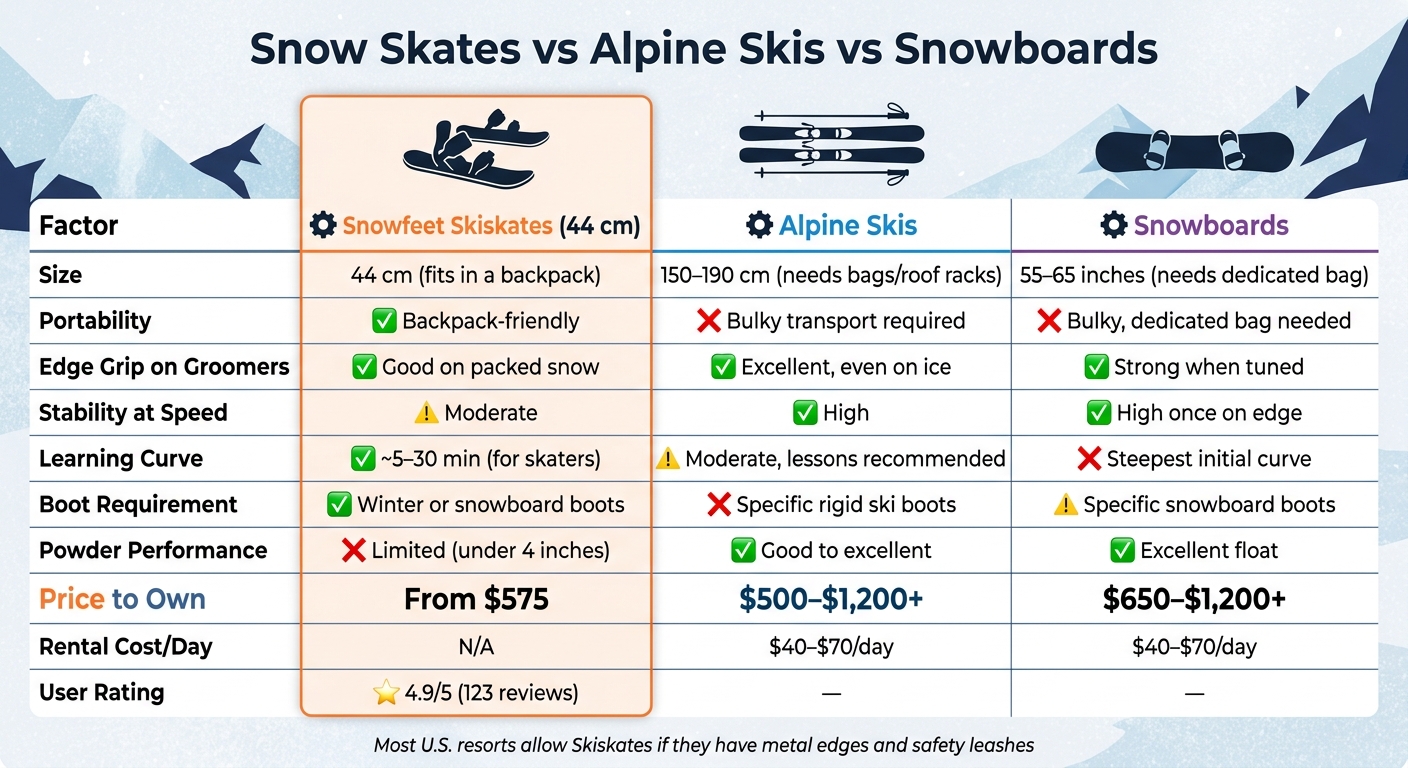
Snow Skates vs Alpine Skis vs Snowboards: Full Comparison
Breaking down the main features can help you decide which option fits your needs on the slopes. Each choice offers its own strengths, along with a few trade-offs to consider.
Snowfeet* Skiskates (44 cm) stand out for their convenience. They pair with regular winter boots or snowboard boots, and their short length makes quick pivots, tight turns, and playful maneuvers on groomed runs a breeze. The downside? Stability at higher speeds. On firm, icy terrain or steep black diamond runs, the shorter edges don’t feel as secure as longer gear. These skiskates are ideal for moderate speeds on green and blue runs but aren’t built for aggressive, high-speed carving.
Alpine skis are the go-to for groomed slope performance. Their long edges, sidecut design, and rigid boots provide excellent grip on hard-packed snow and inspire confidence at high speeds. However, they come with bulky gear, require specific boots, and often need roof racks for transport. Plus, there’s a moderate learning curve - most people need a few lessons to master parallel turns.
Snowboards offer a stable, surf-like experience once you get past the initial learning phase. They carve beautifully on typical resort groomers. That said, the learning curve is the steepest of the three. Flat sections can also be a hassle, and the gear remains bulky and challenging to carry around.
Here’s a quick comparison of the three options:
| Factor | Snowfeet* Skiskates (44 cm) | Alpine Skis | Snowboards |
|---|---|---|---|
| Portability | ✅ Fits in a backpack | ❌ Requires bags/roof racks | ❌ Bulky, needs a dedicated bag |
| Edge Grip on Groomers | ✔ Good on packed snow | ✅ Excellent, even on ice | ✅ Strong when tuned |
| Stability at Speed | ⚠ Moderate | ✅ High | ✅ High once on edge |
| Learning Curve | ✅ ~5–30 minutes (skaters) | ⚠ Moderate, lessons recommended | ❌ Steepest initial curve |
| Boot Requirement | ✅ Winter shoes or snowboard boots | ❌ Specific rigid ski boots | ⚠ Specific snowboard boots |
| Powder Performance | ❌ Limited (under 4 inches) | ✅ Good to excellent | ✅ Excellent float |
| Price to Own | From $575 | $500–$1,200+ (skis + boots) | $650–$1,200+ (board + boots) |
"Only trade-off is at higher speeds, where longer skis still feel more stable - but for overall fun and maneuverability, these are hard to beat." - Brad Tolin
Snowfeet* Skiskates shine on groomed runs for their fun factor, portability, and ease of use. If your priority is playful, low-maintenance fun, they’re a fantastic choice. But if you’re chasing high-speed carving or dream of floating through deep powder, traditional skis or a snowboard will deliver - just be prepared to lug around more gear to make it happen.
Conclusion
Snowfeet* Skiskates (44 cm) shine on groomed slopes - they're quick, nimble, and a blast to use on green and blue runs. If you've ever tried ice skating or inline skating, you'll likely get the hang of these in no time.
Each type of gear has its strengths, and the best choice depends on what you're after. Snowfeet* Skiskates are perfect for anyone looking for compact, fun gear that’s easy to carry and doesn’t require bulky transportation. Their lightweight and portable design make them a refreshing alternative to traditional skis and snowboards for resort riders. Meanwhile, alpine skis are better suited for tackling steep, icy slopes or covering lots of ground in a day. Snowboards are unbeatable for those dreamy, long carves on wide-open groomers.
To put it simply, think of Snowfeet* Skiskates as a specialized gadget for fun on groomed runs - not a full replacement for traditional setups in every scenario. Casual riders and skating enthusiasts might use them as their main gear, while seasoned skiers and snowboarders will appreciate them as a fun backup for days when you want to mix things up.
Quick tip: Check your resort's equipment rules before you go. Most ski areas allow skiskates since Snowfeet* models have metal edges that meet safety standards, but it’s always smart to double-check with a call or online lookup.
The portability and affordability of Snowfeet* Skiskates have earned them praise, like this review:
"Far more portable and affordable than traditional skis or snowboards." - Uncrate
FAQs
Are Snowfeet* Skiskates safe on crowded groomed runs?
Snowfeet* Skiskates are built for use on groomed ski slopes and can be safe even on crowded runs when used properly. They’re specifically designed and approved for ski areas, providing both fun and security. To stay safe, stick to the same precautions you’d follow with regular skis, and steer clear of extremely steep or rough terrain.
What boots and safety gear do I need for Snowfeet* Skiskates?
You can use almost any winter boots that are compatible with the bindings on Snowfeet* Skiskates. This includes options like snowboard boots or non-release ski boots. Plus, safety leashes are usually included, giving you an extra layer of security and making them simple and dependable to use.
Will my U.S. ski resort allow Snowfeet* Skiskates on lifts?
Most ski resorts in the U.S. allow Snowfeet Skiskates on their lifts, provided they're used in the same way as traditional skis. Thanks to their metal edges, which are similar to those on regular skis, they meet the requirements of most lift policies.











Leave a comment
This site is protected by hCaptcha and the hCaptcha Privacy Policy and Terms of Service apply.