




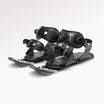
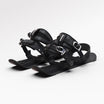
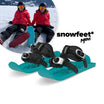
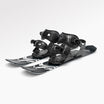
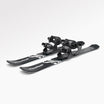
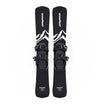
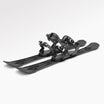
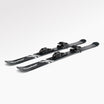
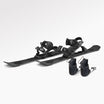
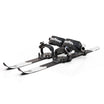
Yes - but only if you don’t go too short.
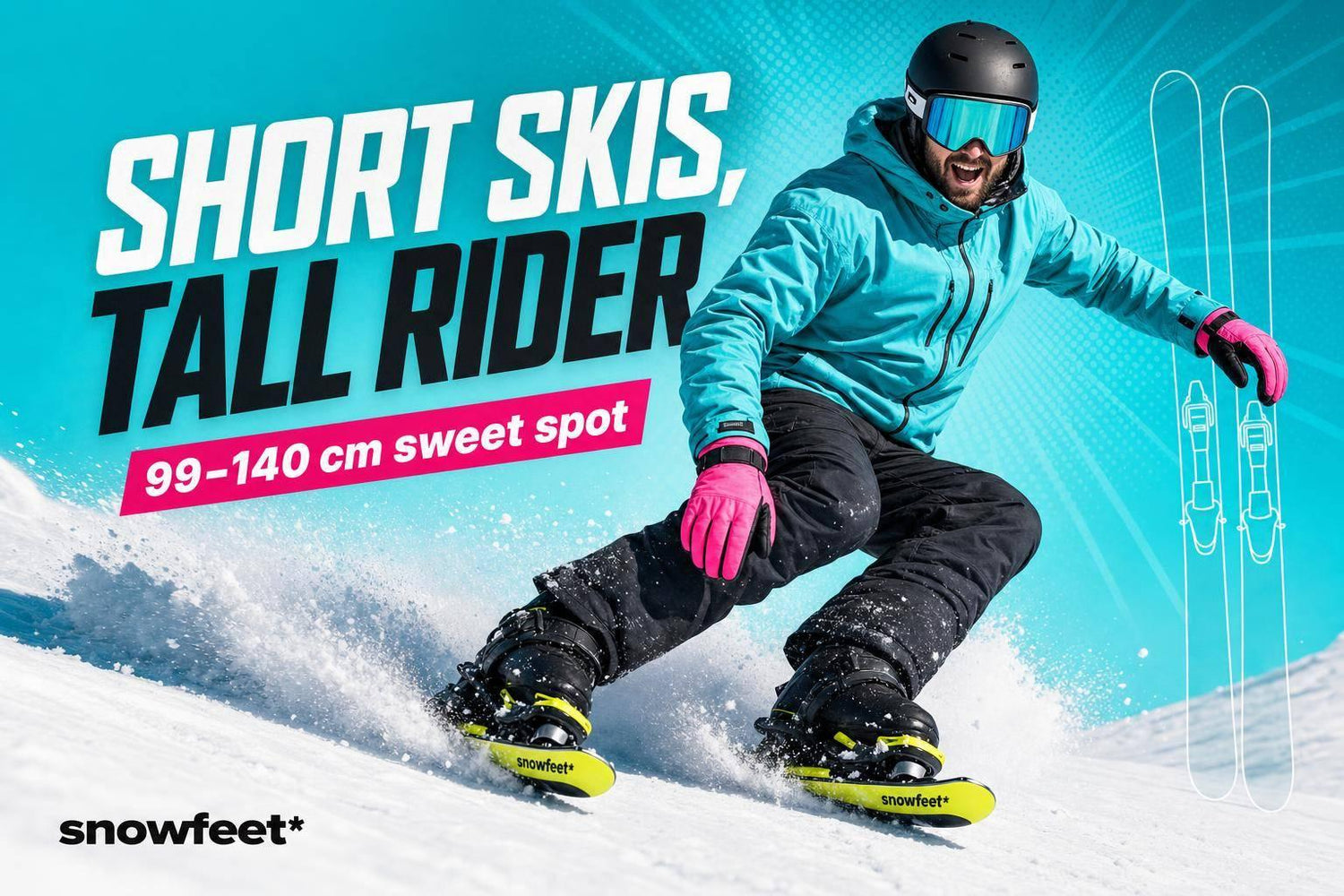
If you’re 6'0"+ and around 190–220+ lb, short skis can be a fun option for groomers, mellow resort laps, and lower-effort skiing. But once you want more speed, better grip on hardpack, or more float in soft snow, very short skis start to feel nervous.
Here’s the short version:
- Under 90–95 cm: usually too short for most big and tall riders as a main setup
- 99 cm: a solid entry point for casual resort use
- 120–140 cm: a better pick if you want more support and a ride that feels closer to full-size skis
- 100 cm backcountry models: fine for short hikes and soft snow, but not a replacement for a full powder or touring setup
So, if you’re a larger rider, the question isn’t “Can short skis work?”
It’s “How short can I go before they stop feeling planted?”
My take: if you want easy turns and less leg burn, short skis can work well. If you like bombing steep groomers, skiing ice, or chasing deep powder, stick with longer skis. No magic there - just physics and snow :)
Quick comparison
| Ski length | Best for big/tall riders | Main trade-off |
|---|---|---|
| 50–70 cm | Small play sessions, very low speed | Feels twitchy fast |
| 80–100 cm | Groomers, short turns, casual laps | Less calm at higher speed |
| 120–140 cm | Better support, more ski-like feel | Less playful than blades |
| 175–190+ cm | Speed, carving, chop, powder | More work to turn |
If I were helping a bigger rider in a ski shop, I’d point them to 99 cm skiblades for fun and ease, or 120–140 cm short skis if they want more confidence underfoot.
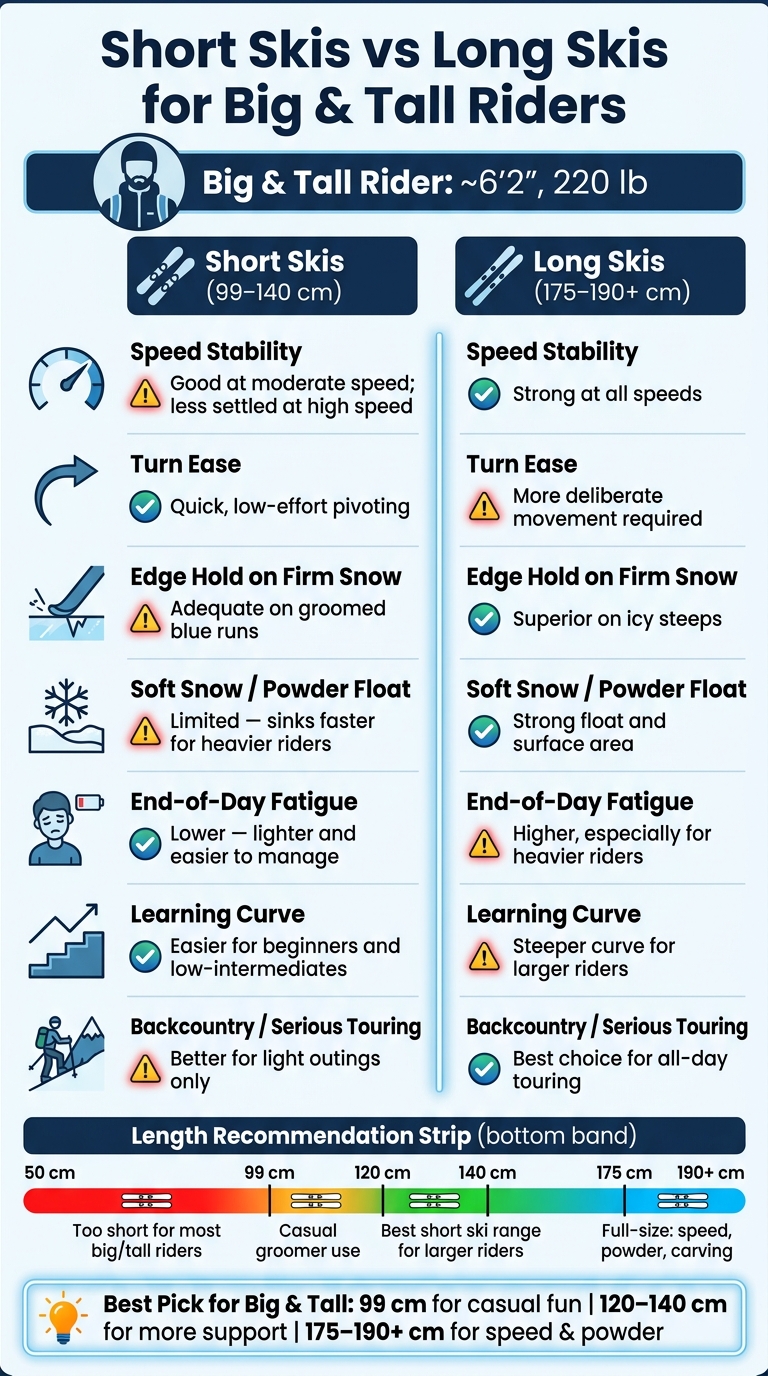
Short Skis vs Long Skis for Big & Tall Riders: Which Length Wins?
Snowfeet* Snowblades | Skiboards | Skiblades | Short Skis - Complete Guide | All you need to know
How Rider Size Affects Ski Length
For big and tall riders, the question isn’t whether short skis can work. It’s how short is too short before support and stability start to fade.
Ski sizing comes down to height, weight, skill, and terrain. But as rider size goes up, weight plays a bigger role. That’s a big deal when you’re comparing 99 cm skiblades with 120–140 cm short skis.
Why Taller and Heavier Riders Are Usually Steered Toward Longer Skis
A taller rider has more leverage, and a heavier rider puts more force into the ski. So, a very short ski can start to feel nervous once speed picks up.
Standard sizing charts usually point a rider around 6'0" to 6'4" and 190 to 220 lb toward skis in the 175–190 cm range for all-mountain use. That’s the default starting point before terrain and riding style shift the answer.
Longer skis help in a few clear ways:
- They spread body weight across more surface area
- They hold an edge better on firm snow
- They make fore-aft balance less touchy
That’s why most sizing charts lean longer for bigger riders. More ski under you usually means a calmer ride.
When Shorter Lengths Still Make Sense for Larger Riders
Short skis can still make sense for bigger riders, especially if the goal is simple: groomers, moderate speed, and easy turning without fighting the ski all day.
In that setup, a shorter ski can feel fun and low-stress. It’s easier to pivot, easier to steer, and less work lap after lap. That said, ultra-short mini-skis often feel too twitchy for riders over 200 lb, unless they’re moving at very low speed. Fun? Sure. Forgiving once things get fast? Not so much.
Comparison Table: Average-Size Rider vs Big/Tall Rider vs Big/Tall Rider on Short Skis
Here’s what that looks like on snow.
| Average-Size Rider (~5'8", 160 lb) | Big/Tall Rider (~6'2", 220 lb) on Long Skis | Big/Tall Rider (~6'2", 220 lb) on Short Skis | |
|---|---|---|---|
| Typical length range | 158–183 cm depending on skill | 175–190+ cm | about 99–140 cm |
| Speed stability | Good | Very good | Moderate - less edge contact |
| Turn ease | Moderate | More effort required | Quick and easy |
| Soft-snow float | Good | Very good | Limited - sinks faster |
| Best use | All-mountain, groomers, moderate powder | High-speed carving, powder, variable snow | Groomed runs, moderate speeds, casual resort laps |
| Fatigue | Moderate | Higher - more ski to manage | Lower - lighter and more effortless |
Next, the trade-offs get more obvious in stability, carving, and control.
Short Skis vs Long Skis for Big and Tall Riders
Stability, Speed, and Carving Grip
For bigger riders, longer skis usually feel more planted. You get more edge on the snow, better straight-line tracking, and a smoother ride when late-day chop starts knocking around your legs. Short skis have less contact length, so they turn fast and feel light on their feet. But when a bigger rider starts pushing speed, they can feel less locked in.
On blue groomers at moderate speed, Snowfeet* short skis in the 120–140 cm range can still carve cleanly and feel stable enough for plenty of bigger riders. That makes them a good match for mellow resort laps, shorter turns, and controlled cruising where ease and comfort matter more than top-end stability.
| Category | Short Skis (Snowfeet* 99–140 cm) | Long Skis (175–195 cm) |
|---|---|---|
| Speed stability | Good at low to moderate speed; less settled at high speed | Strong at all speeds, especially steep and fast |
| Edge hold on firm snow | Adequate on groomed blue runs | Superior on icy steeps and black groomers |
| Carving feel | Nimble, shorter-radius turns | Longer arcs, more committed carving |
| Confidence as speed rises | High at moderate pace; drops as speed increases | Consistently high across all speeds |
That trade-off starts to matter more once speed picks up. And that’s where control and leg burn come into play.
Control, Fatigue, Tricks, and Learning Curve
This is the part where short skis can make life a lot easier for bigger riders.
Less ski means less swing weight. So it’s easier to pivot, change direction, and save a turn that got a little weird. For riders who only ski a few days each season, that lower effort can help a ton. Your legs stay fresher, and the whole day feels less like a wrestling match.
Short skis also make the learning process less harsh. Longer skis ask for more deliberate weight shifts and cleaner edge use to keep speed in check. For larger beginners, that can feel like a lot at once, since a higher center of mass can make mistakes feel bigger too. Snowfeet* models in the 99–140 cm range are forgiving enough to help bigger riders build confidence faster, while still giving enough support for proper resort skiing.
| Category | Short Skis (Snowfeet* 99–140 cm) | Long Skis (175–195 cm) |
|---|---|---|
| Turn initiation effort | Low - quick and responsive | Higher - requires more deliberate movement |
| End-of-day fatigue | Lower for casual riders | Higher, especially for heavier riders |
| Freestyle / park use | More accessible, agile feel | Less nimble, harder to spin or hop |
| Learning difficulty | Easier for beginners and low-intermediates | Steeper curve, especially for larger riders |
For bigger riders, that lower effort is a big plus, at least until the snow turns soft, chopped up, or flat-out messy.
Powder, Crud, and Backcountry Limits
Deep powder and heavy crud still lean hard toward long skis for larger riders. A heavier skier sinks faster in soft snow, and a 99 cm ski just doesn’t have the same surface area or float as a longer freeride ski. Once you head into aggressive off-piste terrain, that gap gets pretty obvious.
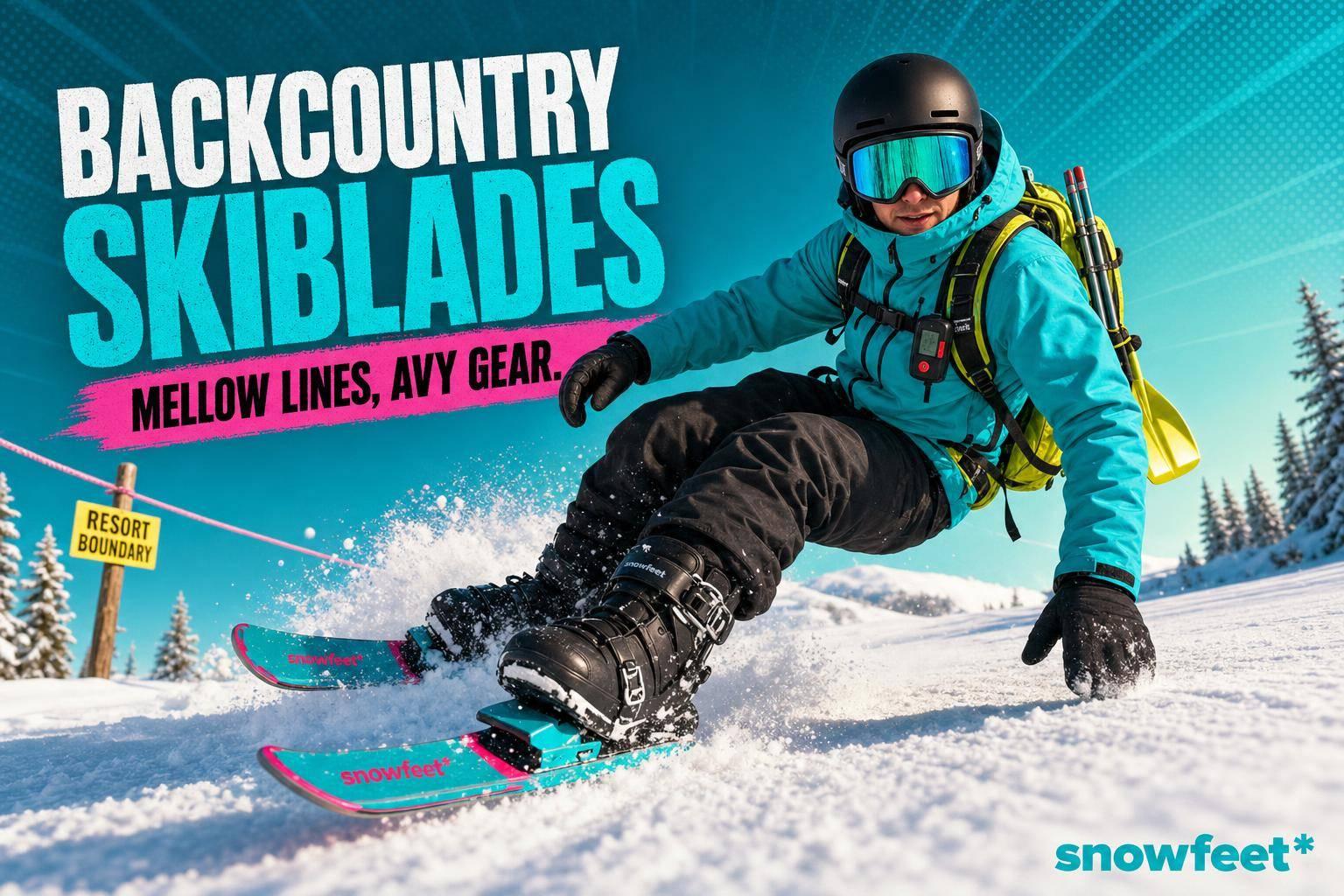
Snowfeet* POWDER 99 cm and WALKSKI Backcountry Touring 100 cm help close that gap. Their wider shape and rocker make them better in softer snow than narrow short skis. They can handle casual powder laps and short hike-access turns far better than tiny blades, which is good news if you want some off-trail fun without hauling a full setup.
Still, they don’t replace a dedicated freeride or touring ski when the snow gets deep, weird, or mixed. That’s just the truth. Short skis can stretch into those conditions a bit, but long skis still do the heavy lifting there.
| Terrain | Short Skis (Snowfeet* 99–140 cm) | Long Skis (175–195 cm) |
|---|---|---|
| Groomed blue/green runs | ✅ Strong - ideal use case | ✅ Strong |
| Park and playful features | ✅ Strong - agile and fun | ⚠️ Less nimble |
| Soft powder (casual laps) | ⚠️ Improved with POWDER / WALKSKI models | ✅ Strong |
| Heavy crud and variable snow | ⚠️ Limited - more deflection for heavier riders | ✅ Strong |
| Serious backcountry / touring | ⚠️ Better for light backcountry outings | ✅ Best choice for all-day touring |
Those trade-offs make ski length a pretty simple call once you know where and how you ride. Next: which Snowfeet* model fits bigger riders best.
sbb-itb-17ade95
Best Snowfeet* Models for Bigger Riders
Snowfeet* Skiblades 99 cm: A Strong Starting Point for Larger Casual Riders
The Skiblades 99 cm (from $690) are a good match for bigger riders who spend most of their time on groomers and keep things at moderate speeds. They’re not meant to be an all-conditions ski.
At 99 cm, with an approximate 6 m turning radius, they feel quick and easy to turn without getting all twitchy and nervous. That’s a nice sweet spot. The narrow shape and camber also give heavier riders enough support to lay down clean carves on groomed runs.
One nice bonus: they accept bindings for both ski boots and snowboard boots, with sizing that covers most adult U.S. boot sizes, roughly 4.5 to 14.5. So you don’t have to buy new boots just to get on snow.
If you want more support underfoot or a feel that’s closer to a standard ski, move up to 120–140 cm.
Snowfeet* Short Skis 120 cm, 130 cm, and 140 cm: More Support with a Ski-Like Feel
If you’re over about 200 lb or like to ski faster, the 120 cm, 130 cm, and 140 cm models make more sense.
That extra length spreads your weight better and helps cut down on chatter when the snow gets mixed up. You still get the easy-turning feel that makes short skis fun, but with more edge contact and a more planted ride when you pick up speed.
For tall or heavier riders who ski groomed runs often and want a main short-ski setup, 120–140 cm is usually the better bet. Think of it like this: same playful idea, just more ski under you when it counts.
Snowfeet* WALKSKI Backcountry Touring 100 cm and POWDER 99 cm: Picks for Hiking and Softer Snow
For touring and softer snow, these two models cover the weak spots of the standard 99 cm option.
The WALKSKI Backcountry Touring 100 cm (from $595) uses a free-heel binding that works with hiking or trekking boots. That makes it a practical pick for mellow touring days and sidecountry laps.
The POWDER 99 cm (from $690) goes a different route. Its wider shape gives heavier riders more float in soft snow and spring slush. It’s the one you grab when the snow turns soft and messy, not when you want a narrow carver.
Neither one replaces a dedicated freeride ski in deep powder. But for softer conditions, both are a better fit than narrow short skis.
Compared with older snowblades like Salomon Snowblades, Snowfeet* uses updated wood cores, graphite bases, and binding systems that work with more than one boot type. Snowfeet* also gives bigger riders more choice in length, with options from 99 cm to 140 cm. That range is the big edge over older snowblade-style setups.
Conclusion: When Short Skis Work and When Long Skis Still Win
The call comes down to where you ski and how fast you like to ride.
Short skis can work well for big and tall riders on groomed runs at moderate speeds. Long skis still come out on top for speed, icy carving, and deep powder. So, yeah, the choice is pretty simple. Go short if you want easy handling and a more nimble feel. Go long if you want more stability when you're charging hard.
Use this quick match-up as a starting point:
| Your situation | Best starting point |
|---|---|
| Larger adult, new to short skis, mostly groomers | Snowfeet* Skiblades 99 cm |
| Want more stability and carving support | Snowfeet* Short Skis 120 cm, 130 cm, or 140 cm |
| Compact backcountry access or hiking priority | Snowfeet* WALKSKI 100 cm |
| High-speed runs, steep terrain, deep powder days | Stick with traditional long skis |
One more thing: avoid ultra-short mini-skis under about 90–95 cm as your main setup if you're a larger adult. They just don’t give you enough stability. For most casual riders, the right short ski will feel easier, more playful, and a lot more fun :)
FAQs
What length is best if I’m over 200 lb?
If you weigh over 200 lb, the Snowfeet PRO (about 50 cm) is the best pick. That extra length, compared with the shorter 44 cm models, spreads your weight better, puts less strain on your legs, and gives you more stability.
It also helps keep the tips from sinking in softer snow. If you want even more support and a setup that works in more conditions, Snowfeet 99 cm Skiblades are an excellent alternative.
Are 99 cm short skis enough for daily resort use?
Yes - 99 cm short skis are a great pick for daily resort use. They hit a sweet spot between quick handling and enough stability for most recreational riders.
Models like Snowfeet Skiblades work best on groomed runs, moguls, and terrain parks, where fast turns and easy control make a big difference. They’re practical, versatile, and less tiring than bulky standard skis.
Can big riders use short skis in powder?
Yes, but it comes down to the model.
Standard short skis have less surface area. That means they can sink in deep snow, so they’re not the best pick for extreme powder.
For better float and support, Snowfeet 99 cm POWDER* or 120 cm Short Skis work best.
Traditional long skis still do a better job in deep backcountry powder. But Snowfeet* is easier to handle and much easier to travel with, which makes it a solid option for resort powder days.











Leave a comment
This site is protected by hCaptcha and the hCaptcha Privacy Policy and Terms of Service apply.