



















Yes - short skis can work for heavier riders, but only in the right lane. If you stay on groomers, keep speeds low to moderate, and want easy control, short skis can be a smart pick. If you ski fast, hit steep runs, or deal with chop, ice, or soft snow, longer skis still make more sense.
Here’s the short answer:
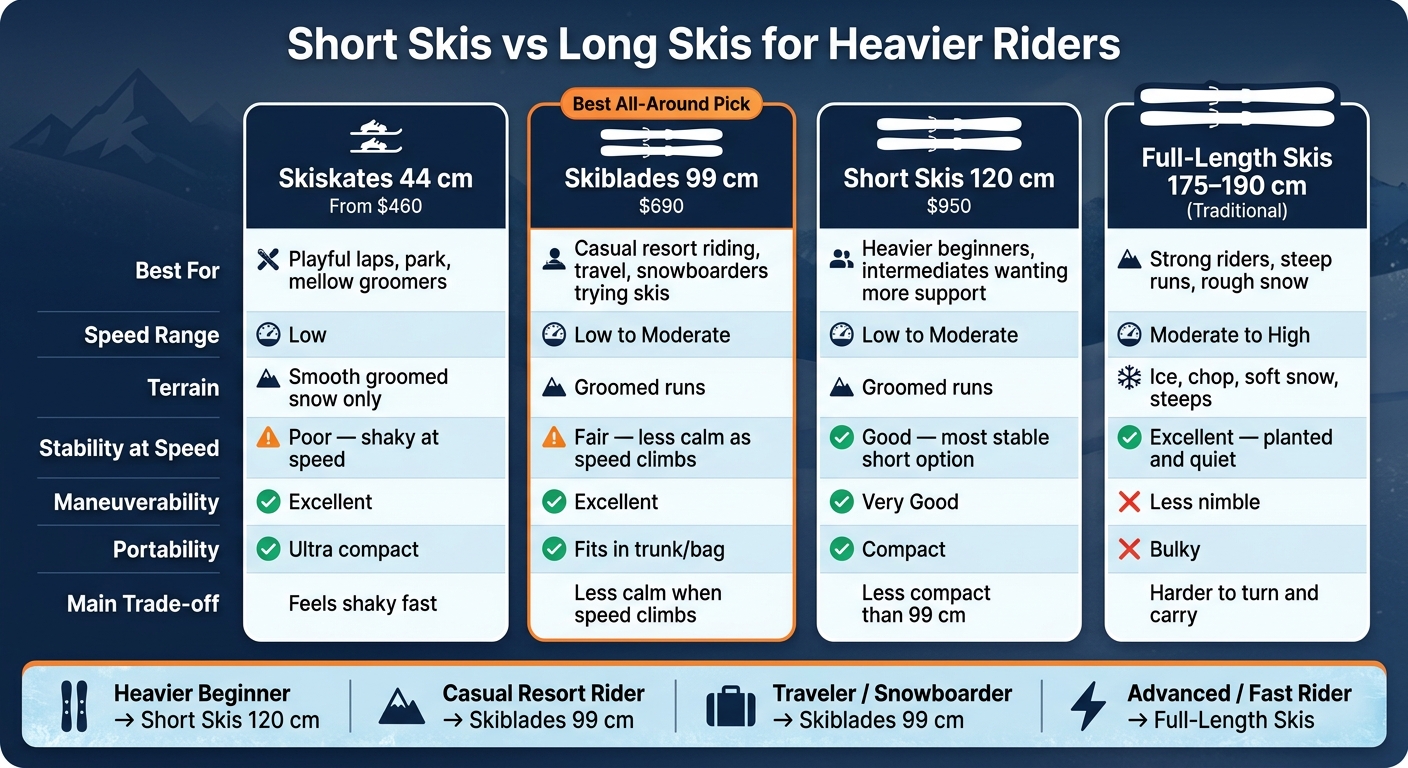
- 44 cm skiskates: fun, but best kept slow and mellow
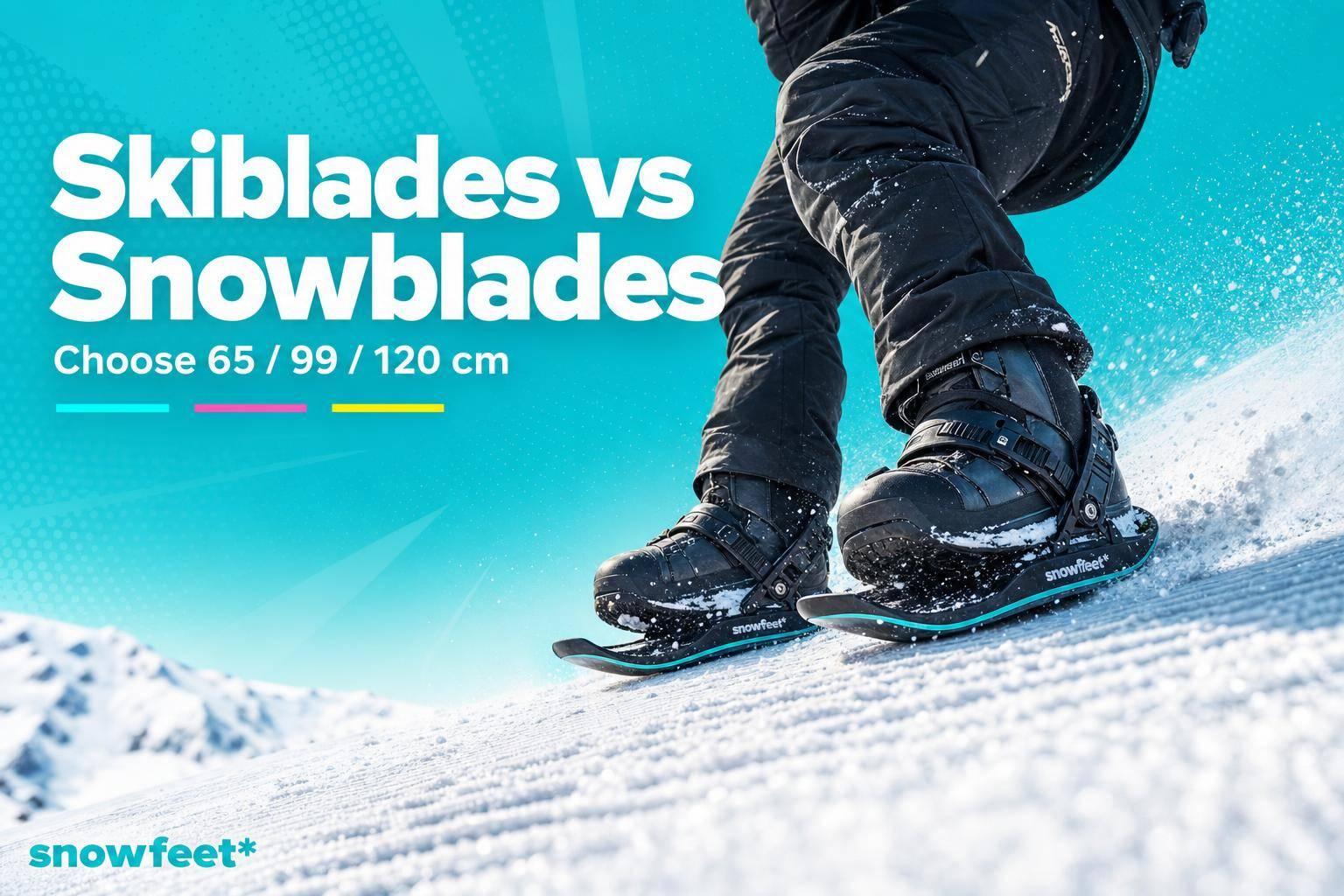
- 99 cm skiblades: the best middle ground for most heavier casual riders
- 120 cm short skis: the safer short-ski pick if you want more support
- 175–190 cm full-length skis: still the better tool for high speed, steep terrain, and mixed snow
A lot of ski charts push heavier riders toward 172–180 cm+ skis, and for good reason: more length often means more stability and edge contact. But that doesn’t mean every heavier skier needs a long setup for every day on the hill.
If I were giving quick shop-floor advice, it’d be this:
- Pick 120 cm if you’re a heavier beginner
- Pick 99 cm if you want playful groomer laps and easy packing
- Skip 44 cm unless you know you want a low-speed, skate-like ride
- Stick with longer skis if you charge hard and like speed
Short Skis vs Long Skis for Heavier Riders: Which Should You Choose?
Snowboarder tries Snowfeet* | Which Snowfeet* Short Ski is the Best? | Snowblades 44, 65, 99 Review
Quick Comparison
| Option | Best for | Speed | Snow/terrain | Main trade-off |
|---|---|---|---|---|
| 44 cm Skiskates | Playful laps, park, mellow groomers | Low | Smooth, groomed snow | Feels shaky fast |
| 99 cm Skiblades | Casual resort riding, travel, snowboarders trying skis | Low to moderate | Groomed runs | Less calm when speed climbs |
| 120 cm Short Skis | Heavier beginners, intermediates who want more support | Low to moderate | Groomed runs | Less compact than 99 cm |
| 175–190 cm Full-Length Skis | Strong riders, steep runs, rough snow | Moderate to high | Ice, chop, soft snow, steeps | Harder to turn and carry |
So, no, short skis aren’t a bad idea for heavier riders. You just need to match the ski to your speed, terrain, and style - otherwise the mountain will make that choice for you :)
For a quick visual explainer, this kind of ski-length breakdown may help:
Short Skis vs Long Skis: Stability, Edge Hold, and Support
For heavier riders, ski length mostly changes two big things: stability at speed and how much work each turn takes.
Longer skis usually feel more planted. Short skis feel quicker and easier to turn. But there’s a catch: as speed picks up or the terrain gets rougher, short skis lose some of that easygoing feel. So, when choosing between Snowfeet* 99 cm, 120 cm, and standard long skis, the main tie-breakers are speed and terrain.
Where Short Skis Work Well for Heavier Riders
On groomed runs at low to moderate speeds, Snowfeet* Skiblades 99 cm and Short Skis 120 cm work well. They turn fast, feel playful, and take less effort, which is nice when your legs are asking for a little mercy :). They’re a good match for:
- tighter spaces
- gentler slopes
- relaxed resort laps
Where Long Skis Still Have the Clear Advantage
Once speeds go up, longer skis start to pull ahead. The reason is pretty simple: a longer ski gives a heavier rider more edge contact with the snow. That helps the ski stay calmer and more stable on firm surfaces. Short skis, by contrast, can start to vibrate and feel a bit twitchy at higher speeds, especially for heavier skiers.
Soft snow and chopped-up conditions also lean toward longer skis. More surface area helps heavier riders float better and stay on line instead of getting knocked around by ruts, piles, and uneven snow. And on steep, icy groomers, a longer ski near the top end of the recommended size range gives more contact and a more secure feel for riders who like to push harder.
Comparison Table: Short Skis vs Long Skis for Heavier Riders
| Factor | Short Skis (Snowfeet* 99–120 cm) | Standard Long Skis |
|---|---|---|
| Stability at speed | Good at low to moderate speeds; can vibrate as speeds rise | More stable and quiet at higher speeds |
| Edge hold on hardpack | Solid on groomed snow at moderate speeds | Better on steep or icy terrain |
| Maneuverability | Excellent - quick pivots and easy redirection | Less nimble, especially for beginners |
| Learning curve | Easier | Steeper |
| Best terrain | Packed groomers, tighter spaces, relaxed laps | Steeper groomers, variable snow, soft or chopped-up conditions |
That tradeoff sets up the next part: which Snowfeet* length makes the most sense for heavier beginners, casual resort riders, snowboarders, and travelers.
sbb-itb-17ade95
Snowfeet* Models Compared for Heavier Riders
For heavier riders, the big question is simple: which Snowfeet* length stays stable without feeling like a chore to control? Each size lands in a different spot between quick handling and added support. The goal isn't to grab the shortest ski just because it looks fun. It's to find the shortest one that still feels planted for your weight and the kind of terrain you ride.
Here’s how those three lengths stack up in day-to-day use.
Start with the most compact option.
Snowfeet* Skiskates 44 cm: Best for Playful, Low-Speed Riding
The 44 cm Skiskates are the smallest option in the Snowfeet* lineup, starting at $460. They feel more like skates than skis, which is the whole point. They’re quick, light, and easy to swivel around. If you come from inline skating or ice skating, this model will feel familiar fast.
For heavier riders, that quick feel is the main appeal. On smooth, groomed runs at easygoing speeds, they’re a blast. But they don’t hide their limits. Once you get into steeper slopes, icy sections, mixed snow, or anything past moderate speed, that short platform starts to feel nervous in a hurry. Snowfeet* recommends this length for groomed slopes and terrain parks. For heavier riders, that’s best read as a hard ceiling, not a challenge.
Snowfeet* Skiblades 99 cm: The Best All-Around Pick
At $690, the 99 cm Skiblades are the best all-around choice for most heavier casual riders. This length hits the sweet spot for control, stability, and portability. Compared with the 44 cm model, you get more stability and better edge hold, but they still stay nimble. They also feel more usable than older snowblade-style designs.
Compared with standard all-mountain skis, they give up some calmness at higher speeds and some float in deeper snow. But for everyday groomed terrain, many casual riders will take the lighter, more playful feel every time. If you want one Snowfeet* model that covers the most ground without overthinking it, 99 cm is the pick.
Snowfeet* Short Skis 120 cm: The Safer Step Before Full-Length Skis
At $950, the 120 cm Short Skis are the most ski-like option in this group. If you want the convenience of short skis without giving up too much of that regular-ski feel, this is the safer bet. They give heavier riders the most confidence at speed and feel the closest to standard skis.
They also make sense if 99 cm sounds a bit too twitchy for your taste. This is the better move for heavier intermediates who want more calm underfoot, or for riders coming from full-length skis who don’t want the switch to feel too abrupt. Go with 99 cm if easy carrying and a smaller footprint matter more than the added stability.
| Model | Price | Best use | Main limitation |
|---|---|---|---|
| Skiskates 44 cm | From $460 | Low-speed groomers | Nervous at speed; not suited for steep or icy terrain |
| Skiblades 99 cm | $690 | Most casual resort riders | Less stable than 120 cm or full-length skis at higher speeds |
| Short Skis 120 cm | $950 | Heavier intermediates | Less compact; less playful feel than shorter options |
Next, match each length to your riding style and experience level.
Which Option Fits Your Riding Style
If you're a heavier rider, weight is only part of the story. Speed, terrain, and skill matter just as much. In most cases, the best pick is the shortest model that still feels stable. That’s the sweet spot.
Heavier Beginners and Casual Resort Riders
For most heavier beginners, the 120 cm Short Skis are the safer place to start. They’re easier to turn than full-length skis, but they give you more support than 99 cm skiblades. And when you’re still getting the hang of edge control, that extra support can make a big difference.
The 99 cm Skiblades start to make more sense when you want a faster-turning, more playful ride on groomers. They’re fun, no doubt. But as speed climbs, they ask a bit more from you. So if you want the safe default, go with 120 cm.
Snowboarders, Travelers, and Riders Who Want Compact Gear
Snowboarders often find short skis less intimidating than full-length skis. Snowfeet* snowboard-boot compatibility also keeps things simple. For heavier riders, that can mean less hassle and an easier setup from the start.
If you travel a lot, compact gear is a big plus. The 99 cm Skiblades fit easily in a car trunk or gear bag, which makes them a handy pick for road trips to local hills or smaller resorts. The 44 cm Skiskates take that even further. But for heavier riders, they make the most sense when you’re keeping it mellow and not chasing speed.
Here’s the fastest way to match your rider type to the right model.
Comparison Table: Best Snowfeet* Length by Heavier Rider Type
| Rider type | Recommended model | Typical terrain | Ideal speed | Main advantage | Main tradeoff vs. long skis |
|---|---|---|---|---|---|
| Heavier beginner | Short Skis 120 cm | Groomed resort runs | Low–moderate | More support and confidence | Less stable at high speed or on steep terrain |
| Casual resort rider | Skiblades 99 cm | Groomed runs, easy runs | Low–moderate | Quick turns and playful feel | Less edge confidence when speed increases |
| Snowboarder trying skis | Skiblades 99 cm or Short Skis 120 cm | Groomed resort runs | Low–moderate | Snowboard boot compatibility and easier transition | Less stability than long skis in variable terrain |
| Traveler / spontaneous rider | Skiblades 99 cm | Local hills, small resorts | Low–moderate | Compact and easy to pack | Not ideal for long, fast descents |
| Heavier advanced rider | Long traditional skis | Steep, variable terrain | Moderate–high | Full stability and speed control | Short skis are not the better fit for this use case |
Conclusion: Are Short Skis Worth It for Heavier Riders?
For heavier riders, the right setup comes down to how you like to ride.
Short skis make a lot of sense if your main goals are easy control, easy packing, and a fun day on groomed runs. The Snowfeet* Skiblades 99 cm and Short Skis 120 cm are small, simple to handle, and a good match for heavier beginners, casual resort riders, snowboarders, and travelers who stick to groomed terrain and moderate speeds. In that kind of setup, they do the job well without a lot of fuss.
But there’s a trade-off. If you like going fast, skiing steep lines, or dealing with chopped-up and mixed snow, longer skis still have the edge. Heavier skiers are often sized into 175–190 cm skis for more stability and edge hold. So if that’s your style, standard skis are still the better tool.
For most casual riders, Snowfeet* is the better fit.
FAQs
Do short skis have a weight limit?
Short skis don’t come with a strict weight limit like a bike rack or folding chair. But your body weight does change how they feel on snow.
Here’s the simple reason: short skis have less surface area than long skis, so your weight presses into a smaller area. For heavier riders, that can mean better edge grip on hard-packed or icy snow. In plain English, the ski can bite into the surface a bit more, which helps with control.
Snowfeet* models are built for that quick, responsive feel. They’re made to help you manage speed and make clean, precise turns with natural movement - not some stiff, awkward stance :)
Can heavier riders use snowboard boots with Snowfeet*?
Yes. Heavier riders can use snowboard boots with Snowfeet* short skis.
Snowfeet* uses a special non-release binding system made to hold the flexible, slim shape of snowboard boots in place. So the setup stays secure without needing a standard ski binding.
This works with:
- _Snowfeet Skiskates (44 cm)_*
- _Snowfeet Skiblades (65 cm and 99 cm)_*
For the best fit, Snowfeet* recommends Pro X bindings. They hold up better and are easier to adjust if your boots are larger or a bit bulkier.
How do I choose between 99 cm and 120 cm Snowfeet* skis?
Pick based on your skill level and where you’ll ride most.
The 99 cm Skiblades are the best all-around choice. They give you a nice mix of agility and stability, which makes them great for carving, jumps, and light powder.
If you want more of a ski-like feel, the 120 cm model makes more sense. It gives you more stability at higher speeds and a bit more support in deeper snow. The tradeoff is simple: you give up some maneuverability for extra surface area.











Leave a comment
This site is protected by hCaptcha and the hCaptcha Privacy Policy and Terms of Service apply.