







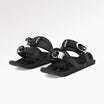












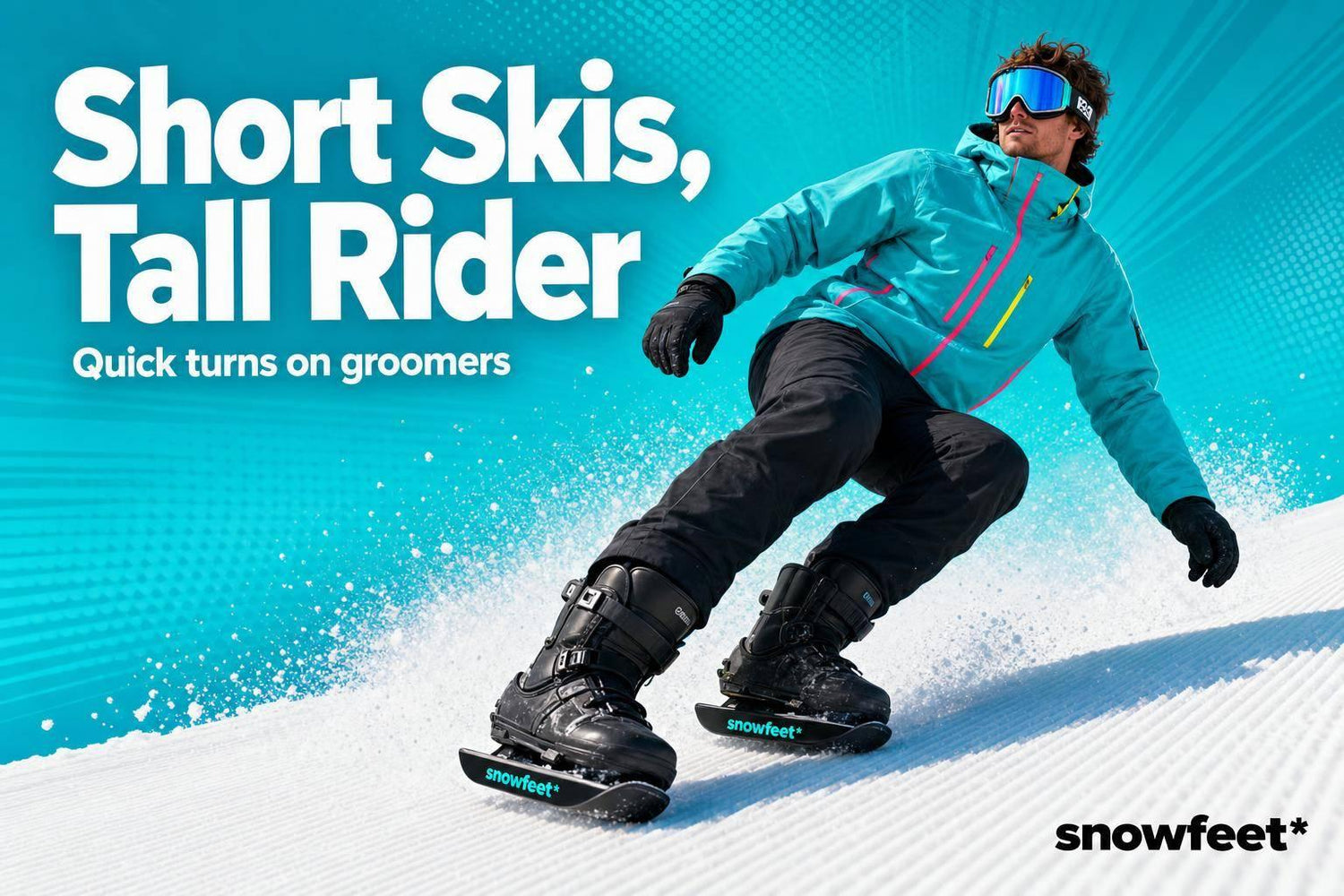
Yes - short skis can be a smart pick for tall riders if you ski groomers, want easy turns, and don’t care much about top-end speed or deep powder.
I’d put it like this: your height matters, but how you ski matters more. A tall skier often lands around 180–200 cm on standard ski charts, yet short options like 44 cm, 99 cm, and 120 cm can still work well when the goal is simple control, lighter gear, and less hassle in lift lines, parking lots, and car trunks.
Here’s the short answer:
- 44 cm Skiskates: best if you want the smallest setup and playful laps
- 99 cm Skiblades: best for most tall beginners and casual resort skiers
- 120 cm Short Skis: best if you want more calm at speed without going back to full-length skis
- Full-length skis: still the better call for powder, hard charging, and open-run speed
If you’re tall, the tradeoff is pretty clear:
- Short skis = easier turns, easier learning, easier carrying
- Long skis = more stability, more float, more support in rough snow
Snowboarder tries Snowfeet* | Which Snowfeet* Short Ski is the Best? | Snowblades 44, 65, 99 Review
Quick Comparison
| Option | Best For | Main Upside | Main Downside |
|---|---|---|---|
| 44 cm Skiskates | Travel, playful riding, short resort laps | Tiny and easy to pack | Can feel nervous when you pick up speed |
| 99 cm Skiblades | Beginners, casual resort days, all-around use | Best mix of control and support | Not the top pick for fast skiing |
| 120 cm Short Skis | Groomers, more confident tall riders | More stable feel than very short skis | Still less float than full-length skis |
| 180–200 cm Standard Skis | Speed, powder, steep terrain | Strong grip and stability | More work in tight spots and more annoying to carry |
So, if you’re a tall rider asking, “Will short skis work for me?” my answer is: yes, for a lot of resort skiers they do. You give up some calm at high speed, but you gain a lot in ease, comfort, and plain old fun. And, uh, carrying less ski through a crowded lodge is never a bad deal :)
If I had to give one simple pick, I’d start most tall riders on the 99 cm Skiblades.
Short Skis vs. Long Skis for Tall Riders
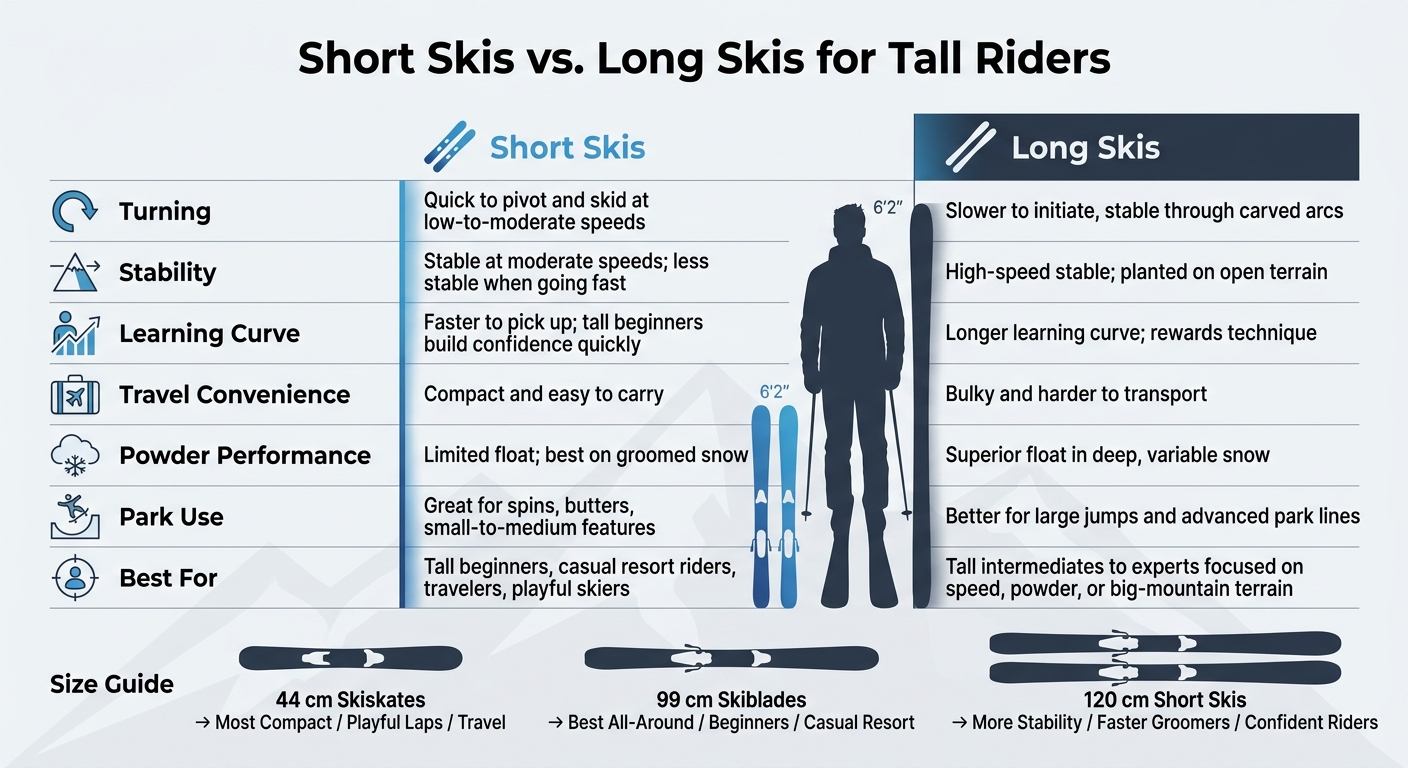
Short Skis vs Long Skis for Tall Riders: Which Should You Choose?
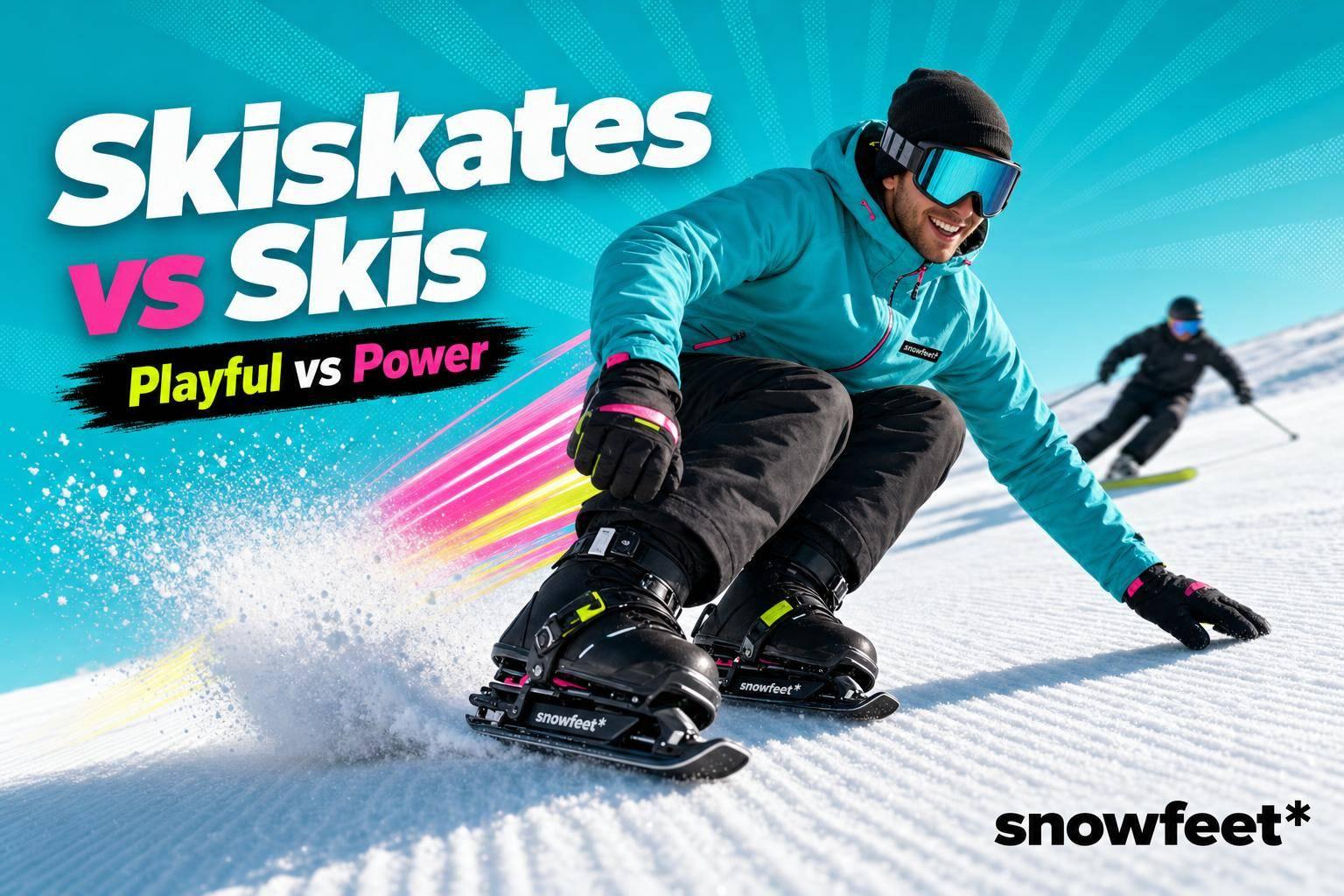
For tall riders, the tradeoff is pretty simple: short skis are easier to turn and easier to travel with, while long skis do better at speed, float, and stability.
| Category | Short Skis | Long Skis |
|---|---|---|
| Turning | Quick to pivot and skid at low-to-moderate speeds | Slower to initiate, but stable through carved arcs |
| Stability | Stable at moderate speeds; less stable when going fast or in rough snow | High-speed stable; planted on open terrain |
| Learning curve | Faster to pick up; tall beginners build confidence quickly | Longer learning curve; rewards technique and commitment |
| Travel convenience | Compact and easy to carry | Bulky and harder to transport |
| Park use | Great for spins, butters, and small-to-medium features | Better for large jumps, high-impact landings, and advanced park lines |
| Powder performance | Limited float; best on groomed and light soft snow | Superior float and tracking in deep, variable ungroomed snow |
| Who it suits best | Tall beginners, casual resort riders, travelers, playful skiers | Tall intermediates to experts focused on speed, powder, or big-mountain terrain |
That gap starts to matter once you match ski length to the kind of rider you are.
How Height Changes the Way Ski Length Feels
If you're tall, you have more leverage over the ski. That makes it easier to flex it, steer it, and redirect it. So, yes, height can actually make a shorter ski feel even more nimble. A 120 cm ski under a 6'2" rider tends to feel quick, light, and easy to spin.
For all-mountain skiing, length often lands somewhere between chin and head height, then shifts based on skill level and terrain. So if you're a tall beginner and you want more control on groomers, going shorter can make a lot of sense. It's not some fallback pick. It's a smart move if your goal is easier turns and more confidence.
Where Long Skis Still Have the Edge
Longer skis still win in a few clear spots. If you ski fast, like steep groomers, or spend a lot of time in ungroomed snow, they do the job better. More edge on the snow helps the ski track better in chopped-up conditions. More surface area also helps it stay up in deep snow. If powder days and speed are your thing, long skis are tough to beat.
Why Many Tall Casual Riders Choose Short Skis
Now flip that around. If you're not bombing runs or chasing deep powder, shorter skis start to look like the easy pick. They take less effort, feel less awkward in crowded areas, and are way less annoying to carry around. That stuff matters more than people admit.
A tall rider coming back after a few years away - or someone who skis a few days each season - will often have more fun on something compact like the Snowfeet* Skiblades 99 cm. Instead of fighting long tails in lift lines or tight spots, you can just ski and enjoy the day. On groomed blue and green runs, that playful feel goes a long way. And yeah, the fact that they fit in most car trunks doesn't hurt either :)
That’s why the 44 cm, 99 cm, and 120 cm Snowfeet* options are worth a closer look.
sbb-itb-17ade95
Snowfeet* Size Options for Tall Riders
Here’s the quick breakdown for tall riders:
| Model | Length | Best For | Watch Out For |
|---|---|---|---|
| Skiskates | 44 cm (17.3 in) | Playful resort laps, skating-style movement, ultra-compact travel | Less stable at speed for tall riders |
| Skiblades | 99 cm (39 in) | Casual resort days, beginners, all-around resort use | Less stable at higher speed |
| Short Skis | 120 cm (47 in) | Faster groomers, more confident tall riders, occasional choppy snow | Less float than full-length skis |
The key here is simple: match the length to how you ski, not just to your height.
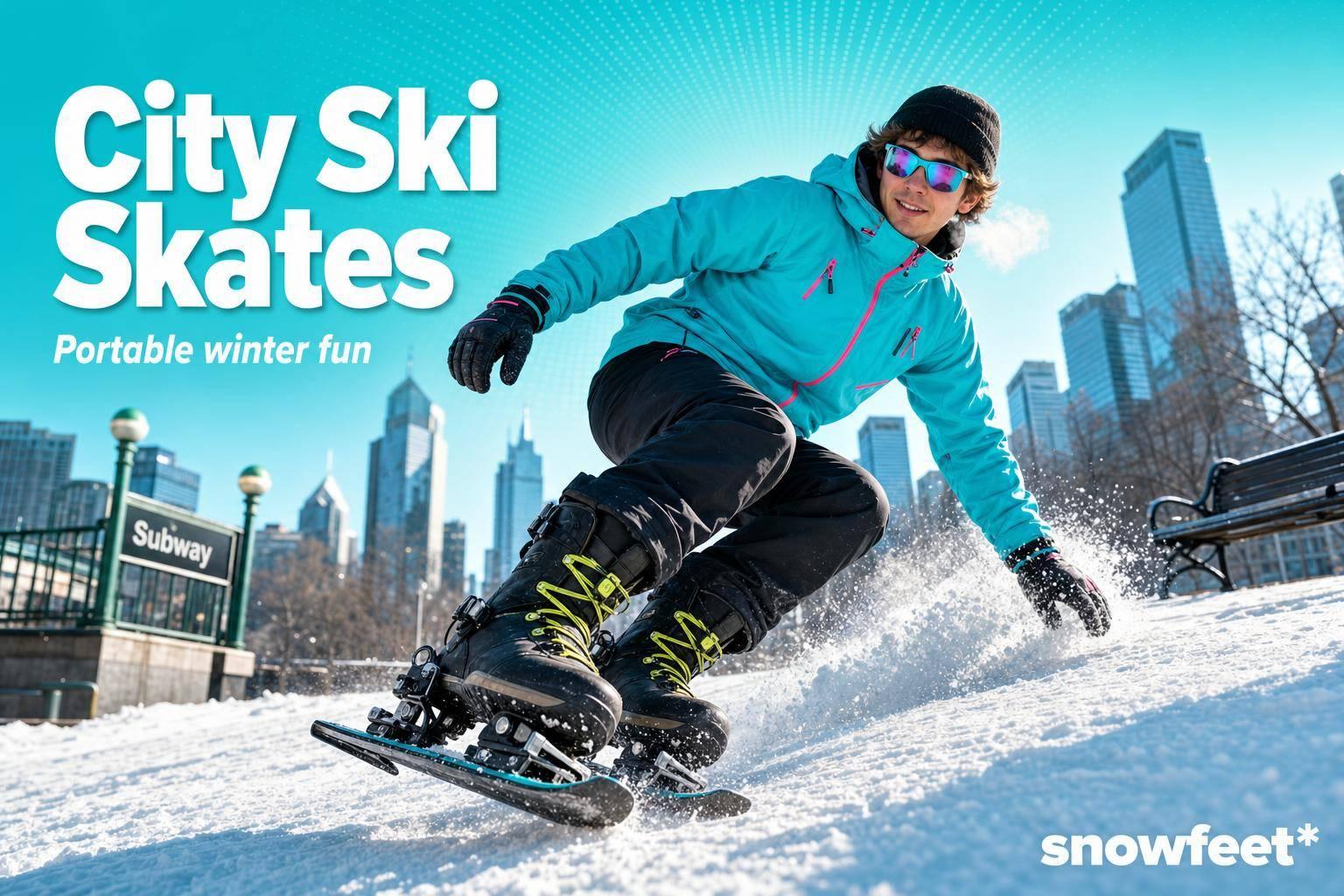
Snowfeet* Skiskates 44 cm: Most Compact
This is the most travel-friendly option, no question. You can toss them in a backpack and go. That’s a big win if you like to keep things light and easy.
But tall riders will hit the limits of the 44 cm (17.3 in) length pretty fast. A taller skier puts more leverage on a short ski, and with Skiskates, you’ll feel that right away in every turn. At slow to moderate speeds, they’re a blast. Push the pace, though, and that short platform can start to feel twitchy.
So, think of these as a playful resort tool, not your main ski.
Snowfeet* Skiblades 99 cm: The Best All-Around Pick for Most Tall Riders
For most tall riders, the 99 cm Skiblades are the sweet spot.
They stay short enough to feel quick and fun, but they give you more platform underfoot than Skiskates. That matters a lot when you’re taller. You still get that easy-to-control feel, without the ski feeling too nervous. For tall beginners or casual skiers, that lower-effort ride is often the big selling point on groomed runs.
If you want one option that works for laid-back resort days without much fuss, this is probably it.
Snowfeet* Short Skis 120 cm: Between Skiblades and Full-Length Skis
The 120 cm Short Skis are the next step for tall riders who want more confidence at speed but don’t want to go back to full-length skis.
That extra length helps on faster groomers and in light chop. You get a steadier feel, especially when the snow gets a bit rough or you want to open things up more. It’s still a short ski, but it moves closer to the feel of a standard ski.
For a tall rider, this is the Snowfeet* option that comes closest to a more familiar ski ride while still keeping the short-ski fun.
Which Option Fits Your Riding Style?
Now that the trade-offs are clear, let’s match each Snowfeet size to the kind of rider it suits best. The easiest way to choose is simple: think about whether you’re a beginner, a park rider, or someone who wants gear that’s easy to pack.
Tall Beginners and Casual Resort Riders
If you’re tall, new to skiing, and sticking to groomed runs, the 99 cm Skiblades are the easiest pick. They give you enough length underfoot to feel steady, but they still turn fast and with way less work than 160–190 cm full-length skis.
That’s the big draw. You get a stable feel without dealing with the extra bulk of longer skis. Longer options start to make more sense when your main goal is speed, carving, or powder.
That same trade-off shifts a bit once park riding or travel enters the picture.
Park Riders and Playful Skiers
For park laps and playful riding, the best length depends on how you like to move. The 44 cm Skiskates feel fast, loose, and fun. Spins, pivots, and fast direction changes come easy. They’re the kind of gear that makes you want to mess around and try stuff.
But there’s a catch. You get less stability on landings and less edge grip, so small mistakes can feel bigger.
If you want steady park laps, boxes, and medium jumps, the 99 cm Skiblades usually land in the sweet spot. They’re still short enough to spin and move around with ease, but they give you more support when it’s time to land clean.
Travelers and Riders Who Want Lighter Gear
If travel is the main thing, shorter gear wins. Pretty simple.
- The 44 cm Skiskates are the easiest to pack. They fit in a standard suitcase or duffel, which is a big plus if checked bag fees are on your mind.
- The 99 cm Skiblades are still compact enough to fit in most car trunks without needing a roof rack.
- The 120 cm Short Skis make sense if you want a middle-ground option: more stability for mixed resort use, while still being much easier to carry than full-length skis.
So, if you want the smallest and easiest setup, go short. If you want a bit more balance between control and packability, the longer compact options start to look pretty good :)
Conclusion: When Short Skis Are Worth It for Tall Riders
The bottom line is pretty simple: short skis make a lot of sense for most tall riders when the goal is easier turns, a faster learning curve, lighter gear, and more fun on groomed runs.
Of course, there’s a catch. Long skis still come out on top for speed, powder, and hard charging. Tall riders also put more leverage on short skis, so those skis can feel less planted in chopped snow and when things get fast. On most resort days, though, that downside is pretty small.
So, the main thing for tall riders isn’t whether short skis can work. It’s whether they fit the way you ski and the terrain you like most.
Here’s the quick pick for Snowfeet* length:
| Snowfeet* Option | Best For | Less Ideal If |
|---|---|---|
| Skiskates 44 cm | Travel, playful laps | You want speed or powder |
| Skiblades 99 cm | Beginners, all-around resort use | You ski fast or off-piste |
| Short Skis 120 cm | More stability, edge grip | You want a big-mountain setup |
For most tall riders, the 99 cm Skiblades are the best place to start. They’re easy to handle, forgiving, and work well across a lot of resort skiing. Go down to the 44 cm Skiskates if you care most about portability and a playful feel. Go up to the 120 cm Short Skis if you want more edge grip and something that feels closer to standard skis, without jumping to full-length gear.
If you’re a tall rider who wants a fun, easy day on the hill, Snowfeet* is the better fit. It’s compact, approachable, and built for the kind of resort skiing most people do.
FAQs
How tall is too tall for short skis?
There’s no set height where you become “too tall” for short skis. Short skis like Snowfeet* are built for easy turning, quick response, and solid edge control, so they can work well for riders of all sizes.
If you’re taller, you may lean toward the 99 cm or 120 cm models. They give you more surface area and a feel that’s a bit closer to regular skis. But ski length still comes down to a few simple things: your skill level, the terrain you ride, and whether you care more about agility or stability at higher speeds.
So, yeah, height matters a little, but it’s not the whole story :)
Can tall riders use short skis all day?
Yes. Tall riders can absolutely use short skis all day. Snowfeet* short skis, like the 99 cm and 120 cm models, give you a level of agility and control that long skis often don’t.
They’re light, quick to react, and easy on the legs. That means less fatigue than with heavy, bulky ski gear, so you can stay out longer and finish the day with more energy left in the tank :)
Which Snowfeet* size should I start with?
Choose based on your experience and goals:
- Beginners: Go with 44 cm Skiskates or 38 cm Mini Ski Skates. They’re easier to control, easy to turn, and work with regular winter boots. That makes the learning curve a lot less steep.
- Learning quick turns: 65 cm Skiblades are a good fit. They help you get the feel for short, sharp turns without feeling like too much ski.
- Experienced riders: Pick 99 cm or 120 cm models if you want more stability, more speed, and better performance in deeper snow. These feel more planted, especially when conditions get a bit rough.











Leave a comment
This site is protected by hCaptcha and the hCaptcha Privacy Policy and Terms of Service apply.