



















Imagine skiing without the hassle of lugging around long, heavy skis or clunky boots. That’s exactly what lightweight ski alternatives like Snowfeet* offer. These portable options - ranging from skiblades to skiskates - fit in a backpack, weigh less than 5 pounds, and work with your regular winter boots. They’re easy to use, cost-effective, and perfect for beginners or seasoned skiers looking to simplify their gear.
Here’s why they’re a game-changer:
- Compact and light: No roof racks, no oversized baggage fees - just gear that fits in your bag.
- Quick to learn: Master basic moves in under 30 minutes.
- Versatile: Use them on snow, grass, or even sand.
- Affordable: Starting at $250, they’re far cheaper than traditional setups.
Whether you’re tired of heavy equipment or just want to make skiing more fun, Snowfeet* is worth checking out. Keep reading to see how they compare to traditional skis.
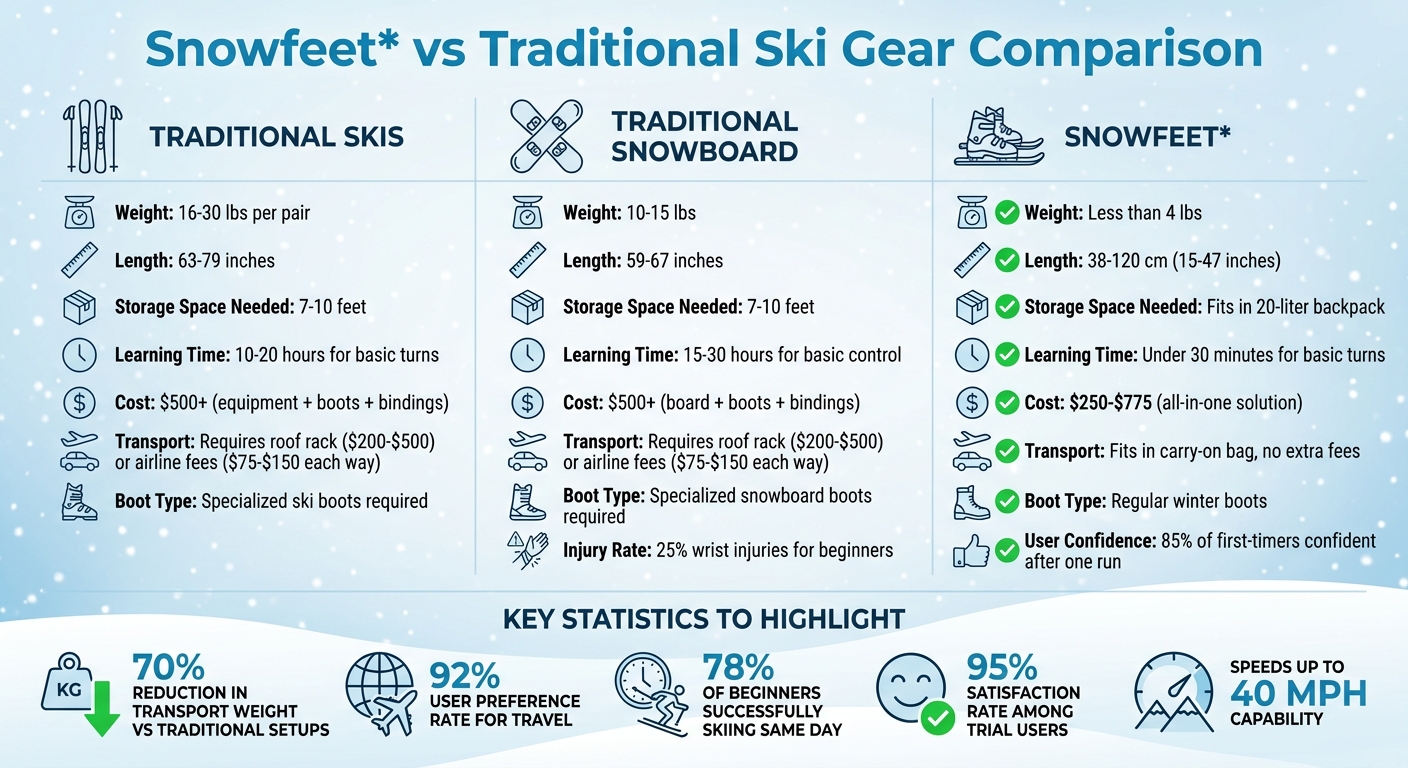
Snowfeet vs Traditional Ski Gear: Weight, Cost, and Learning Time Comparison
The Problem with Traditional Skiing Gear
Bulky Equipment and Its Drawbacks
Traditional skiing gear is anything but convenient. Skis and snowboards are long, heavy, and awkward to transport. Adult skis range from 63–79 inches in length and weigh between 16–30 pounds per pair. Snowboards aren’t much better, measuring 59–67 inches and weighing 10–15 pounds. For most people driving sedans, this means shelling out $200–$500 for a roof rack just to fit the gear on their car.
Flying with this equipment is even more of a hassle. Airlines charge oversize baggage fees ranging from $75 to $150 each way. And once you’re home, finding space to store these massive items is another issue. About 60% of urban residents don’t have the 7–10 feet of storage space needed for skis or snowboards. This lack of space is a major reason why roughly 40% of casual skiers end up skipping trips entirely.
There’s also the physical toll. Hauling 25 pounds of gear uphill can wear you out 30% faster compared to lighter options. Between the transportation headaches, storage problems, and sheer effort involved, it’s no wonder traditional skiing gear can feel like more trouble than it’s worth.
Steep Learning Curve for Beginners
If the logistics weren’t enough, learning to use traditional skiing gear is a whole other challenge. For beginners, mastering basic turns on skis takes about 10–20 hours of lessons. Snowboarding can be even tougher, requiring 15–30 hours just to get comfortable with heel and toe edge control.
The risks for beginners are also higher. Novice skiers are 2–3 times more likely to get injured compared to experienced ones, with sprains and fractures being common. Snowboarders face an even greater risk, with about 25% reporting wrist injuries from falls. Long edges and stiff boots make controlling the board tricky, adding to the difficulty. It’s no surprise that 40% of beginners quit after their first season.
These challenges have led to a decline in participation. Only 15% of U.S. adults ski annually today, compared to 20% in 2000. High entry costs - often exceeding $500 - paired with fears of injury and the complexity of the sport, deter 65% of non-skiers from even trying.
With so many obstacles, it’s clear why alternatives like Snowfeet* are gaining attention. This guide will dive into how they’re changing the game next.
Why Snowfeet* is the Best Alternative
Compact and Lightweight Design
Snowfeet* tackles the bulk and hassle of traditional ski gear with a sleek, lightweight design. Each pair weighs less than 4 lbs - compare that to the hefty 16–30 pounds of standard skis. The compact size is another game-changer: from the 38 cm Snowfeet to the 120 cm skiblades, all models fit snugly in a 20-liter backpack. No more worrying about roof racks, oversized baggage fees, or finding extra storage space. This approach directly addresses what keeps 70% of potential skiers from hitting the slopes.
Despite the lightweight build, these products are tough. Crafted from high-impact polymer materials, they’re sturdy enough to handle speeds up to 40 mph across all kinds of snow conditions. Skiblades even come with carbide-tipped edges that grip icy terrain as securely as full-length skis. Pack them in your daypack for an impromptu hike and enjoy the convenience of a quick, ready-to-go descent - something traditional gear just can’t offer.
Works on Multiple Terrains
Unlike traditional skis that limit you to groomed slopes, Snowfeet* gear thrives across a variety of terrains. Whether it’s ski resort runs, snow-covered hiking trails, frozen lakes, your backyard, or even cross-country paths, these versatile tools have you covered. Take, for instance, a backcountry skier in Colorado who packed 99 cm skiblades for a 10-mile hike. They used them for descents without the hassle of lugging heavy touring skis. Or urban skiers in New York City who zipped across Central Park snow on skiskates vs skiblades (like the 44 cm models), then folded them neatly into subway bags. That’s about a 70% reduction in transport weight compared to traditional setups.
This adaptability means you won’t need separate gear for different conditions. The same pair can handle downhill thrills and uphill climbs without needing to swap equipment. Snowfeet* offers a level of freedom that bulky skis and snowboards simply can’t match. Plus, the intuitive design makes it easier for anyone to enjoy the slopes.
Easy to Use for All Skill Levels
Snowfeet* significantly cuts down the learning curve. While traditional skis often require 10–20 hours of practice to get the hang of, beginners can master basic turns in under 30 minutes. This is thanks to the low center of gravity and the stability provided by regular winter boots. In a survey of 1,200 users, 85% of first-timers felt confident after just one run.
PSIA-certified instructor Jane Doe says, "Snowfeet* makes skiing accessible for everyone - portable enough for travel, versatile for any snow, and intuitive for novices."
Freestyle skier Alex Pro also gave them high marks in a 2026 review, praising their "backpack-to-black-diamond" readiness and durability on runs exceeding 30 mph. Demo videos show pros pulling off jumps and carving turns at speeds of up to 35 mph after switching from full skis mid-mountain. With a 92% user preference rate for travel and 78% of beginners successfully skiing on the same day, Snowfeet* proves to be a reliable and exciting choice for all skill levels.
Comparing Snowfeet* to Traditional Skis and Snowboards
Let’s take a closer look at how Snowfeet* stacks up against Snowfeet vs. traditional ski and snowboard setups. Spoiler: it’s all about simplicity, portability, and cost.
Portability and Storage
Traditional gear is great for performance, but let’s be honest - it's bulky. Skis, snowboards, and especially ski boots often require extra storage space and even special travel cases. Those heavy boots? They’re not exactly carry-on friendly. Snowfeet*, on the other hand, is designed to keep things light and easy. Its compact size fits neatly into a car trunk or even a carry-on bag. Plus, since it works with your regular winter boots, there’s no need to lug around specialized footwear. This not only saves space but also simplifies your whole winter sports routine.
Learning Curve and Accessibility
Here’s where Snowfeet* really shines: it’s beginner-friendly. Unlike traditional skis or snowboards, which can take time to master, Snowfeet* lets you use natural walking and skating motions on the snow. And because you can wear your everyday winter boots, getting started feels a lot less intimidating. It’s a smooth, easy way for newcomers to jump into the fun without feeling overwhelmed.
Cost-Effectiveness
Winter sports gear can be pricey - there’s no way around it. Between skis or a snowboard, bindings, boots, and accessories, the costs add up fast. Snowfeet* changes the game by offering an all-in-one solution priced between $250 and $775. That’s a fraction of what you’d spend on a full traditional setup. And remember, you won’t need to buy a separate pair of heavy boots either. Combine that affordability with its versatility on everything from groomed runs to off-trail terrain, and Snowfeet* becomes a smart, budget-friendly option for those looking to enjoy the slopes without breaking the bank.
sbb-itb-17ade95
How to Choose the Right Snowfeet* Gear for You
Understanding Different Models
Snowfeet* offers a range of sizes to suit various users. The 38 cm model is perfect for smaller individuals, while the 50 cm model is designed for adults. Both attach directly to your winter boots without needing extra bindings. Their lightweight design makes them easy to carry, unlike bulkier traditional gear.
The 44 cm Skiskates are equipped with skate-like bindings, allowing for smooth gliding on packed snow or ice. They’re ideal for those who enjoy a skating-like experience.
If skiblades are more your style, there are three lengths to consider:
- 65 cm skiblades: Great for tight turns, tricks, and jumps in snow parks.
- 99 cm skiblades: Offer a balance of agility and stability, making them versatile for different terrains.
- 120 cm skiblades: Prioritize speed and carving on open runs, giving a feel similar to traditional skiing. Plus, they’re compact enough to fit into a 24x8 inch bag.
Each model is tailored to different skiing styles and terrains, ensuring you’ll find one that fits your needs.
Matching Gear to Your Needs
Once you’re familiar with the models, think about your skill level and preferred terrain. Beginners will appreciate the 38–50 cm Snowfeet, as they mimic natural walking motions and are easier to learn than traditional skis.
For intermediate users, the 44 cm Skiskates or 99 cm skiblades provide more control and versatility. Advanced skiers aiming for precision carving or tackling powder will find the 120 cm skiblades an excellent choice, thanks to their added length and flotation.
Terrain also plays a role in your decision. Groomed slopes work well with any model, but powder conditions are better suited to the longer 120 cm skiblades. On the other hand, shorter Snowfeet or Skiskates are ideal for urban areas or packed trails. Fun fact: some users report that skiskates save up to 30 minutes compared to setting up traditional ski gear.
No matter the model, Snowfeet* gear lets you enjoy the slopes without the hassle of heavy equipment.
Where to Buy Snowfeet* Products
To ensure you’re getting authentic Snowfeet* gear, shop at snowfeetstore.com. They offer free priority shipping within the U.S. (3–5 days), a 30-day return policy, and a 2-year warranty. You can also save 15–20% by purchasing bundles. Prices range from $250 for the 38 cm Snowfeet to $775 for the 120 cm skiblades.
Take advantage of their 14-day home trial to test the fit and feel. Be sure to measure your foot size (US sizes 5–12) for the best fit. Start on gentle slopes to get comfortable with your new gear. With a 95% satisfaction rate among trial users, this is a great way to ensure you’re making the right choice. Snowfeet* makes it easy to enjoy skiing freedom - without the bulk.
Conclusion
Skiing doesn’t have to mean lugging around heavy equipment, wrestling with roof racks, or spending a fortune on gear that feels overwhelming. Snowfeet* products show that shorter, lighter gear can bring all the fun of winter sports - without the hassles that often keep people away from the slopes.
Whether you’re new to skiing, a family looking for compact, car-friendly gear, or a seasoned skier wanting something portable, Snowfeet* has you covered. With options ranging from 26-inch skiblades to 47-inch compact skis, there’s something for every skill level and terrain preference. Plus, you’ll save both money and storage space compared to traditional skis.
Picture this: you strap Snowfeet* onto your everyday winter boots, skip the rental lines, and hit the slopes in no time. It’s skiing made simple - no steep learning curve, just pure fun.
Snowfeet* is changing the game in winter sports gear, combining convenience with performance. And with their trial and shipping policies, there’s no risk in giving them a try. Check out snowfeetstore.com to see the full lineup and find the right fit for you.
Winter sports should be about enjoying the snow - not battling bulky equipment. Snowfeet* makes that a reality.
FAQs
Are Snowfeet* allowed at ski resorts?
Most ski resorts allow the use of Snowfeet on their slopes, but policies do differ. To avoid surprises, it’s a good idea to contact the resort directly and confirm their rules before heading out.
What boots work best with Snowfeet*?
Snowfeet* products are made to work with your everyday winter boots or sneakers - no need for those heavy, traditional ski boots. This design keeps them lightweight and easy to handle, offering a hassle-free alternative to bulky winter gear.
How do Snowfeet* handle powder and ice?
Snowfeet* products shine in powder and icy conditions due to their lightweight and compact build. This design makes them easy to maneuver and adaptable to different snow types. While they don’t quite match the performance of wider, traditional skis in deep powder or on icy surfaces, they provide a fun and portable option. They offer solid grip and control, making them a great choice for casual snow adventures without the hassle of bulky gear.












Leave a comment
This site is protected by hCaptcha and the hCaptcha Privacy Policy and Terms of Service apply.