



















If you’re someone who skis just once a year, spending thousands on gear you barely use doesn’t make much sense. That’s where Snowfeet* comes in. They offer compact, easy-to-use alternatives like Skiblades and Skiskates, designed for convenience and fun. These products are lightweight, work with your regular winter boots, and are beginner-friendly, making them perfect for occasional skiers. Plus, they’re small enough to fit in your luggage - no bulky bags or expensive storage needed.
Here’s a quick rundown of the options:
- Skiskates (44 cm): Super portable, easy to learn, great for groomed trails. $575.
- Skiblades (65 cm): Compact with good control, ideal for beginners. $635.
- Skiblades (99 cm): Offers more stability and speed, perfect for resort trails. $675.
- Skiblades (120 cm): Best for varied terrain and powder, closer to ski performance. $775.
Snowfeet* gear saves you time, money, and hassle - just grab your boots, hit the slopes, and enjoy the ride. Forget long rental lines or bulky traditional setups; these are built for simplicity and fun.
How to choose Snowfeet* Snowblades | Skiblades | Skiboards | Short Ski
1. Snowfeet* Skiblades (65 cm)
The 65 cm Skiblades are a great option for casual skiers who want the thrill of skiing without the hassle of bulky gear. At just over two feet long, these skiblades offer a compact alternative to traditional skis, which are typically much longer - around 65–71 inches.
Portability
One of the standout features of the 65 cm Skiblades is how easy they are to transport. Unlike traditional skis, which often require heavy bags or even pricey rooftop cargo boxes (costing $200–$400), these skiblades fit neatly into your car trunk or can be carried on public transit. Their compact size is perfect for skiers with limited storage space or those who prefer a hassle-free setup.
Learning Curve
Thanks to their shorter length, these skiblades strike a balance between stability and maneuverability. They’re designed to feel intuitive, almost like skating, which means you can get the hang of them quickly - even on your first run. Compare that to beginner skis like the Salomon Stance 88 W, which cost around $650 and often require a longer adjustment period. With Snowfeet* Skiblades, you can skip the steep learning curve and dive straight into enjoying the slopes.
Performance on Slopes
These skiblades perform well on groomed runs and light powder, making them a versatile choice for occasional skiers. While traditional all-mountain skis can handle a wider range of terrains, they also demand more skill and effort - features that might not be necessary if you’re only skiing once or twice a year.
Affordability
At $635, the 65 cm Skiblades are a wallet-friendly alternative to traditional ski setups. Entry-level skis typically cost around $650, and boots add another $430. With these skiblades, you can use your regular winter boots, saving money and avoiding gear that might sit unused in storage. For once-a-year skiers, this is a practical and cost-effective choice.
2. Snowfeet* Skiblades (99 cm)
The 99 cm Skiblades are a great option for casual skiers looking for a bit more performance without fully committing to traditional skis. At just under 3.3 feet long, they’re much shorter than standard skis, offering a nice balance for those who want something easy to handle but still capable on the slopes.
Portability
Say goodbye to the hassle of lugging around bulky ski gear. These skiblades are longer than the 65 cm, 99 cm, or 120 cm versions, but they’re still compact enough to fit into most car trunks. No need for oversized equipment bags that might only see the light of day once a year - these are simple to store and travel with.
Learning Curve
One of the best things about the 99 cm skiblades is how user-friendly they are. They provide more stability compared to the shorter models while still offering that smooth, skate-like feel. Their lightweight design makes turning and stopping feel natural, so you can get the hang of them much faster than traditional skis.
Performance on Slopes
These skiblades shine on groomed runs and light powder, making them perfect for recreational skiers sticking to resort trails. Sure, longer skis might handle deep powder or extreme conditions better, but if you’re only skiing a couple of times a year, these are a solid choice for versatility and fun.
And here’s the kicker - they’re budget-friendly too.
Affordability
At $675, these skiblades save you serious cash by cutting out the need for dedicated ski boots. Traditional setups often require boots costing $400–$430 on top of the skis. With these, you can use your regular winter or snowboard boots, keeping your wallet happy and avoiding gear that might just collect dust in the offseason.
3. Snowfeet* Skiblades (120 cm)
The 120 cm skiblades take the convenience of shorter models and add extra versatility, making them a great choice for recreational skiers. They’re lightweight, portable, and easy to use - perfect for anyone who hits the slopes occasionally but still wants a fun, capable ride. Unlike traditional skis, these skiblades strike a balance between performance and portability compared to traditional long skis.
Portability
At just 120 cm, these skiblades are much shorter than traditional skis, which typically range from 150 to 180 cm. This compact size means they’re easier to carry, even fitting into a backpack. No need for roof racks or oversized ski bags - just grab and go.
Learning Curve
These skiblades are compatible with standard release ski bindings, ensuring safety while being far easier to master than traditional skis. Most users can get the hang of them in just 5 minutes, making them ideal for beginners or casual skiers. If you're curious about the mechanics, here is a simple explanation of how skiblades work. As one satisfied user put it, "These skiblades are so much fun and easy to control. Never going back to regular skis." – Andrew B.
Performance on Slopes
When it comes to performance, the 120 cm model stands out. While the shorter 65 cm and 99 cm versions excel on groomed trails, this longer model is built for powder and backcountry adventures. It offers great maneuverability and stability on varied terrain. While traditional long skis have the edge for high-speed expert runs, these skiblades provide plenty of control for moderate-speed recreational skiing.
Affordability
Priced at $775, these skiblades are a budget-friendly option compared to traditional ski setups. They’re designed to work with your regular snowboard or winter boots, so there’s no need to spend extra on specialized footwear. With a 4.9/5 rating from over 5,500 verified reviews, they’re a solid choice for anyone prioritizing fun, ease, and convenience over high-performance racing gear.
sbb-itb-17ade95
4. Snowfeet* Skiskates (44 cm)
If you're an occasional skier who values convenience and simplicity, the 44 cm Snowfeet* Skiskates might just be your new go-to. Priced at $575, they combine portability, ease of use, and affordability into one compact package.
Portability
These skiskates are only 44 cm long, making them incredibly easy to carry around. Toss them in your backpack or slide them into your car trunk - no need for bulky ski bags or tricky transport logistics. For comparison, traditional skis range from 150 to 180 cm and can be a real hassle to lug around. With skiskates, you can leave the heavy lifting behind.
Learning Curve
Their small size doesn’t just make them portable - it also makes them beginner-friendly. Choosing beginner-friendly ski gear with a lightweight design allows for better control and easier maneuverability compared to traditional skis. Quick turns? Smooth adjustments? No problem. You’ll spend less time figuring out how to use them and more time having fun on the slopes. Plus, they’re compatible with your existing winter or snowboard boots, so there’s no need to invest in special footwear.
Performance on Slopes
When it comes to groomed trails, these skiskates shine. They’re perfect for moderate speeds and offer excellent control for nimble turns. While they’re not designed for tackling all types of terrain like traditional all-mountain skis, they’re a great fit for once-a-year skiers who stick to maintained runs and want to prioritize fun and ease.
Affordability
At $575, these skiskates are a budget-friendly alternative to a full ski setup. By using your current boots, you save even more, making them an appealing choice for those looking to hit the slopes without breaking the bank.
Pros and Cons
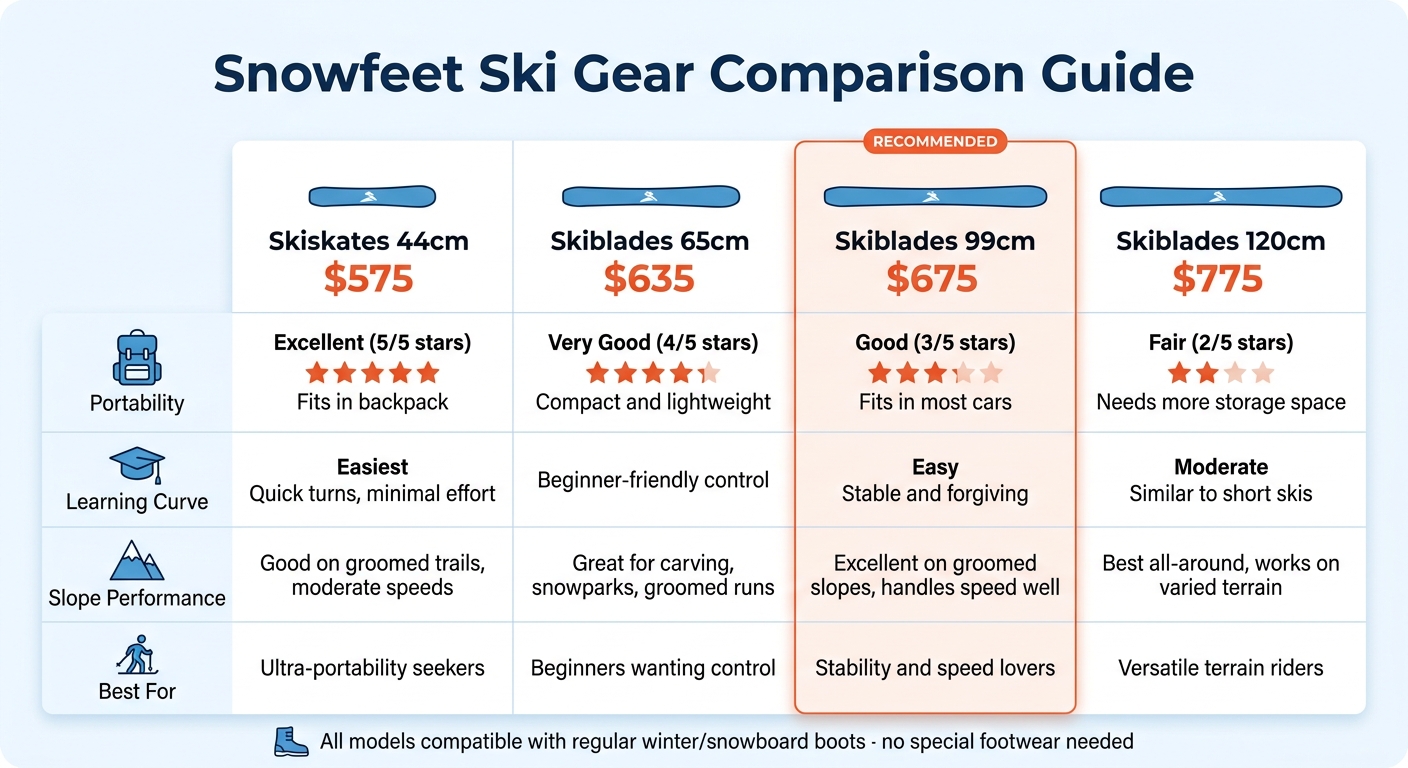
Snowfeet Ski Gear Comparison: Features, Performance and Prices
For casual skiers, Snowfeet* products bring some clear advantages over traditional skiing gear. Choosing the right option between skiskates and skiblades depends on what you're looking for - whether it's ultra-portability, better control, or a versatile ride. Each model has its own strengths, so let’s break it down.
The 44 cm Skiskates are all about portability and ease of use. These are great if you want something simple and compact. The 65 cm Skiblades strike a balance between portability and performance, making them a solid choice for beginners who want a bit more control. If you're after stability and speed, the 99 cm Skiblades offer a smoother, more forgiving ride on groomed trails. And for those who want something close to traditional skiing without the hassle of full-sized skis, the 120 cm Skiblades are your best bet for tackling a variety of terrains.
Here’s a quick comparison of their key features:
| Product | Portability | Learning Curve | Slope Performance | Price |
|---|---|---|---|---|
| Skiskates (44 cm) | Excellent – fits in a backpack | Easiest – quick turns, minimal effort | Good on groomed trails, moderate speeds | $575 |
| Skiblades (65 cm) | Very Good – compact and lightweight | Beginner-friendly control | Great for carving, snowparks, and groomed runs | $635 |
| Skiblades (99 cm) | Good – manageable, fits in most cars | Easy – stable and forgiving | Excellent on groomed slopes, handles speed well | $675 |
| Skiblades (120 cm) | Fair – needs more storage space | Moderate – similar to short skis | Best all-around performance, works on varied terrain | $775 |
Now, let’s talk about why Snowfeet* stands out compared to traditional skis. First off, they’re much easier to store and transport. Standard skis are typically 150 to 180 cm long, making them a pain to carry around. You usually need roof racks or bulky ski bags. Snowfeet* products solve this problem - they’re compact enough to store in a backpack or car without hassle. Plus, they work seamlessly with your existing winter or snowboard boots, saving you from buying extra gear. Simple, right?
Conclusion
For those who only hit the slopes once a year, traditional ski gear can feel like more trouble than it’s worth. Between the $1,100 to $1,980 price tag and the fact that it often sits collecting dust, it’s not exactly a practical investment.
That’s where Snowfeet* products come in. Their 99 cm Skiblades are a game-changer for casual skiers. At just $675, they’re not only more affordable but also incredibly convenient. These compact blades fit easily in your car, so you can skip the hassle of roof racks. Even better, they work with your regular snowboard or winter boots - no need to splurge on pricey specialty boots. It’s all about keeping things simple without sacrificing performance.
Snowfeet* tackles the usual headaches of ski gear - storage, transport, and cost. And let’s be real, rentals aren’t much better with their long lines and outdated equipment. With Snowfeet*, you get modern, high-quality gear that’s yours to keep, without the hefty price tag of a full traditional setup. For once-a-year skiers, buying your own compact gear is the obvious choice.
FAQs
Which Snowfeet* size should I choose (44, 65, 99, or 120 cm)?
For those who ski occasionally, the 44 cm Snowfeet Skiskates* are a great choice. They’re beginner-friendly and super easy to handle. If you’ve got a bit more experience, the 65 cm, 99 cm, and 120 cm Snowfeet Skiblades* provide better stability and faster speeds. Go with the 44 cm for relaxed skiing, or pick a longer size if you’re after more control and flexibility.
Do Snowfeet* work with my regular winter or snowboard boots?
Snowfeet* aren’t made to be used with regular winter or snowboard boots. For the best performance, you should pair them with footwear that fits snugly and offers solid support. Sturdy winter boots or ski boots, depending on the specific model, are your best bet.
Are Snowfeet* allowed at most U.S. ski resorts?
It’s unclear if Snowfeet* are allowed at most U.S. ski resorts. Policies can vary, so it’s a good idea to contact the specific resort you plan to visit and confirm whether they permit Snowfeet* on their slopes.











Leave a comment
This site is protected by hCaptcha and the hCaptcha Privacy Policy and Terms of Service apply.