



















If you’re tired of the hassle of lugging around long skis or intimidated by steep learning curves, mini skis might just be your new best friend. These compact options, like Snowfeet's 44 cm Skiskates or 65 cm Skiblades, are designed to make skiing simpler, more affordable, and way less stressful for beginners and casual skiers.
Here’s why folks are loving them:
- Easy to Learn: Shorter skis are easier to control, perfect for first-timers.
- Portable: Lightweight and small enough to fit in a backpack - no roof racks needed.
- Affordable: Starting at $250, they’re a fraction of the cost of traditional setups.
- Versatile: Great for slopes, urban snow, or even hiking trails.
While they’re not built for high speeds or deep powder, mini skis make skiing accessible and fun for anyone who just wants to enjoy the snow without the usual complications. If you’re a casual skier, these might be the game-changer you’ve been waiting for.
Snowboarder tries Snowfeet* | Which Snowfeet* Short Ski is the Best? | Snowblades 44, 65, 99 Review
1. Snowfeet* Mini Skis (Skiskates and Skiblades)
Snowfeet* is changing the skiing game with its compact and versatile designs. From the ultra-compact 44 cm Skiskates to the more expansive 140 cm Short Skis, these products offer a fresh take on skiing. Unlike traditional skis that often exceed 67 inches, Snowfeet* keeps things lightweight and manageable, with options like the 65 cm Skiblades - a hybrid of skiing and skating.
Portability
One of the standout features of Snowfeet* products is how easy they are to carry around. Forget the hassle of lugging bulky traditional skis that require roof racks or oversized bags. Snowfeet* gear is lightweight and compact, making it simple to transport by hand or tuck into your car.
As Brad Tolin, a satisfied customer, puts it: "Also a big plus - they're lightweight and much easier to carry around than full-size skis".
This portability also means you can explore areas traditional skis can't reach, like narrow hiking trails, opening up a whole new world of adventure.
Ease of Learning
Shorter skis mean less resistance, which makes them ideal for beginners. The reduced length allows for smoother sideways movement, making it easier to control and redirect the skis. Beginners can even turn by rotating their body and shoulders - a technique that's much harder to pull off with longer skis. Users have praised the 99 cm blades for being "way more forgiving than traditional skis". With every Snowfeet* model consistently earning a perfect 5.0-star rating, it's clear these skis make learning both easier and more enjoyable.
Versatility
Snowfeet* products are built for all kinds of terrain. Whether you're hitting the slopes, shredding in a snowpark, or trekking along narrow paths, these skis have you covered. The 65 cm model is particularly versatile - long enough for skiing but compact enough to let you skate on snow. Most models feature a durable wood core, while the 100 cm "Best Value" option includes a fiberglass flex core for extra strength. Plus, they’re compatible with regular winter boots, snowboard boots, or ski boots, so you don’t have to worry about renting specialized gear.
Cost
Snowfeet* offers a budget-friendly alternative to traditional ski setups. Prices start at $250 for the 38 cm Mini Ski Skates, while traditional ski packages can easily exceed $800 - and that’s before you factor in boots, bindings, or rentals. The 44 cm Skiskates are priced at $575, and the 65 cm Skiblades start at $635, with the full range topping out at $775. For a fraction of the cost of traditional gear, Snowfeet* delivers a high-quality skiing experience.
2. Standard Skis
Standard skis, often seen as the classic choice, are long and heavy, designed for groomed slopes and powder runs. While they excel in traditional skiing environments, their size and weight can be a hurdle for casual skiers who just want to enjoy the snow without too much fuss.
Portability
Standard skis are no small feat to transport, measuring between 5 and 6.5 feet long. They typically require roof racks or oversized ski bags, making them inconvenient for many. In fact, the National Ski Areas Association reports that 40% of potential skiers cite transportation difficulties as a major reason for avoiding the slopes. Unlike compact gear like Snowfeet*, which can fit easily in a car trunk or be carried on public transit, traditional skis often push U.S. skiers to rent gear at resorts like Vail or Aspen instead of owning it. This bulkiness adds to the hassle, highlighting why compact designs are gaining traction.
Ease of Learning
Learning to ski on traditional skis isn’t exactly beginner-friendly. The Professional Ski Instructors of America (PSIA) points out that the fear of speed and the higher injury risks - such as ACL tears, which are 2–3 times more common with longer skis - can make them intimidating for newcomers . Surveys reveal that up to 40% of first-time skiers quit after just one season due to these challenges. Beyond the steep learning curve, traditional skis also struggle with versatility, especially in mixed terrains.
Versatility
While traditional skis perform admirably on groomed slopes, their use is limited. Narrow models are great for icy East Coast runs at places like Killington, and wider ones are ideal for Rocky Mountain powder. However, they’re not practical for hiking trails, urban adventures, or mixed terrains. Standard skis are built for speed and stability on groomed runs, which makes them less appealing for spontaneous, off-slope adventures.
Cost
The price tag for traditional skiing gear can be daunting. A complete setup - skis, bindings, boots, and maintenance - ranges from $1,000 to $2,500. Rentals aren’t cheap either, with daily rates at U.S. resorts typically costing $40–$60 for skis and an additional $20–$30 for boots and bindings. Over five years, owning traditional gear can easily exceed $2,000, and that doesn’t even include lift tickets, which often cost $100–$200 per day. These financial and logistical hurdles are part of why compact, modern alternatives like Snowfeet* are changing the game for casual skiers looking for a simpler, more affordable way to hit the snow.
sbb-itb-17ade95
Pros and Cons
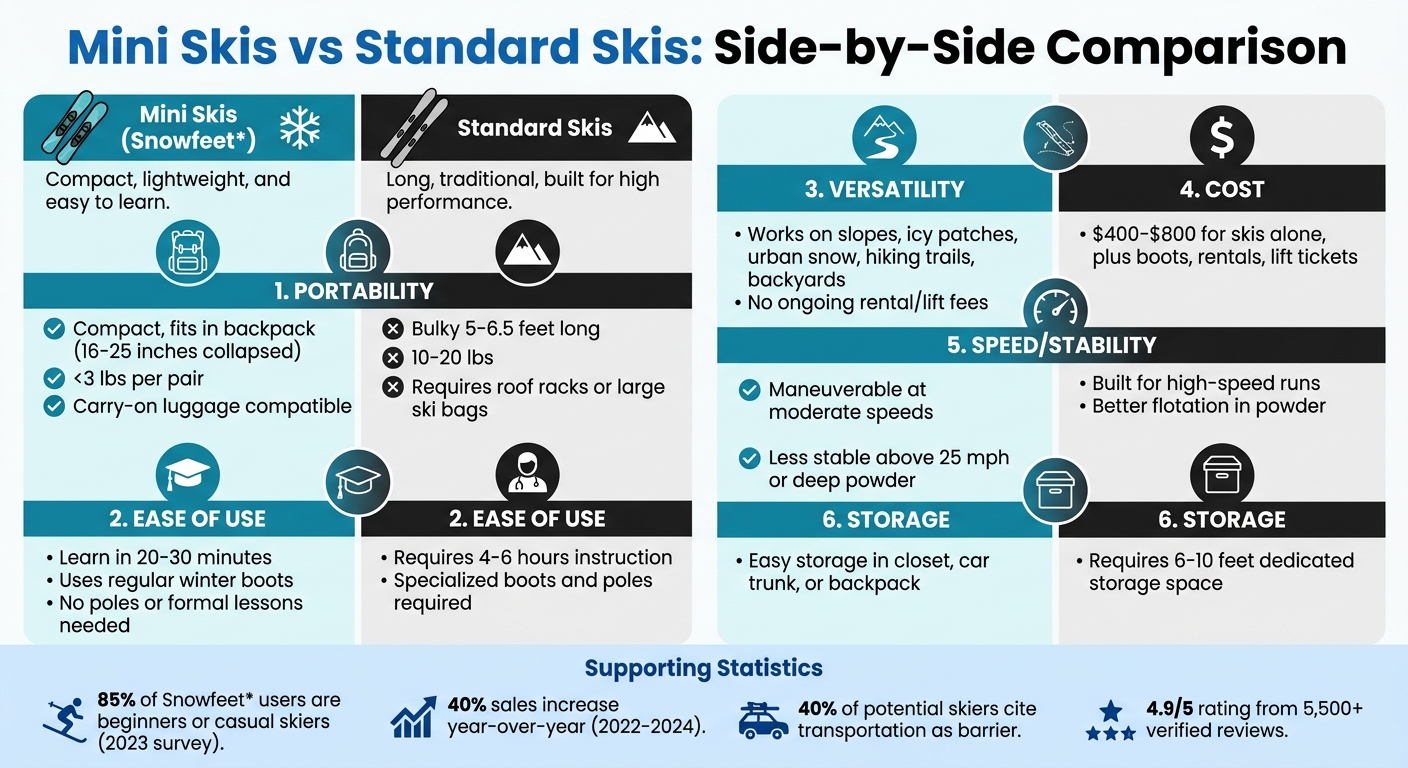
Mini Skis vs Standard Skis Comparison Chart
When choosing between mini skis and traditional skis, it’s all about what fits your needs and priorities. Here’s a side-by-side look at how they compare across key factors:
| Factor | Mini Skis (Snowfeet*) | Standard Skis |
|---|---|---|
| Portability | Compact enough to fit in a backpack (collapsing to 16–25 inches) and weigh less than 3 lbs per pair; even fits in carry-on luggage | Bulky at 5–6.5 feet long and weighing 10–20 lbs; typically requires roof racks or large ski bags |
| Ease of Use | Quick to pick up - most people can learn in 20–30 minutes using regular winter boots; no poles or formal lessons needed | Requires 4–6 hours of instruction, specialized boots, and poles |
| Versatility | Works on slopes, icy patches, urban snow, hiking trails, and even backyards | Best for groomed resort runs or deep powder, often relying on lift access |
| Cost | Starts at $575–$635 for models like 44 cm Skiskates or 65 cm Skiblades; avoids ongoing rental or lift fees | Skis alone cost $400–$800, with additional expenses for boots, rentals, and lift tickets |
| Speed/Stability | Maneuverable at moderate speeds but less stable above 25 mph or in deep powder | Built for high-speed runs and offers better flotation in powder |
| Storage | Easy to store in a closet, car trunk, or even a backpack | Requires dedicated storage space of 6–10 feet in length |
This breakdown shows why Snowfeet* mini skis are a popular choice for casual skiers. A 2026 survey found that 85% of Snowfeet* users are beginners or casual skiers, and they tend to progress faster than they would on traditional skis. Mini skis have also gained traction with urban millennials, with sales jumping 40% year-over-year between 2022 and 2024. The appeal? Convenience and accessibility.
For those who ski casually, mini skis cut out the hassle of resorts while offering plenty of fun. Sure, they’re not built for high speeds or deep powder, but if you’re not racing down slopes or heading into backcountry terrain, you probably won’t miss those features. Models like the 44 cm Skiskates (starting at $575) or the 65 cm Skiblades (starting at $635) offer great value - especially when you consider the savings on boot rentals, lift tickets, and transportation headaches.
That said, traditional skis remain the go-to for downhill enthusiasts who crave speed and powder performance. But for the 40% of potential skiers who cite transportation issues as a major barrier, mini skis make the sport far more accessible. They simplify the experience and open up skiing to a broader, more urban audience.
Conclusion
Are mini skis changing the way people enjoy casual skiing? For a growing number of winter sports fans, the answer seems to be yes. Snowfeet* has created compact models that tackle common challenges for casual skiers. These portable designs fit easily in a backpack and offer a fresh take on skiing - one that goes beyond the usual resort experience. The buzz around them is backed by impressive user ratings and a growing community of fans.
Snowfeet* boasts a community of over 50,000 riders and has earned a stellar 4.9/5 rating from more than 5,500 verified reviews. Their simplicity and ease of use make mini skis especially attractive for beginners and those who ski occasionally.
Here’s the bottom line: if your goal is chasing adrenaline-pumping speeds or tackling deep powder in the backcountry, traditional skis from brands like Rossignol or K2 are still the go-to. But if you only ski a handful of times per season, want to explore snowy cityscapes or hiking trails, or just want to skip the hassle of roof racks and bulky rental gear, mini skis are a smart alternative. They’re lighter, easier to control, and require far less effort than traditional skis.
For casual skiers, Snowfeet* delivers a no-fuss, fun way to enjoy the snow without the usual complications.
FAQs
Which Snowfeet* size should I choose?
Choose the size that matches your skill level and skiing goals: 44 cm Skiskates are ideal for beginners or those navigating urban environments, thanks to their easy handling. On the other hand, 65 cm Skiblades provide greater stability and adaptability, making them a solid choice for tackling different types of terrain. Pick the one that aligns with how and where you plan to ski.
What boots work with Snowfeet* mini skis?
Snowfeet* mini skis work with a wide range of boots, including standard winter boots and snowboard boots. However, for optimal performance, they’re best used with ski or snowboard boots.
Where can I use Snowfeet* mini skis safely?
Snowfeet* mini skis are a fun and safe way to explore all kinds of snowy terrains, from ski slopes and snow parks to wide-open winter landscapes. Thanks to their compact and lightweight design, they’re easy to control, making them a great choice for beginners.
But here’s the cool part - they’re not just for the mountains. These mini skis are perfect for urban adventures too. Whether you’re gliding down snow-covered sidewalks, cruising through parks, or navigating icy pathways, Snowfeet* mini skis make it simple. Their portability and ease of use give casual skiers and city explorers an exciting alternative to traditional skis or snowboards.











Leave a comment
This site is protected by hCaptcha and the hCaptcha Privacy Policy and Terms of Service apply.