



















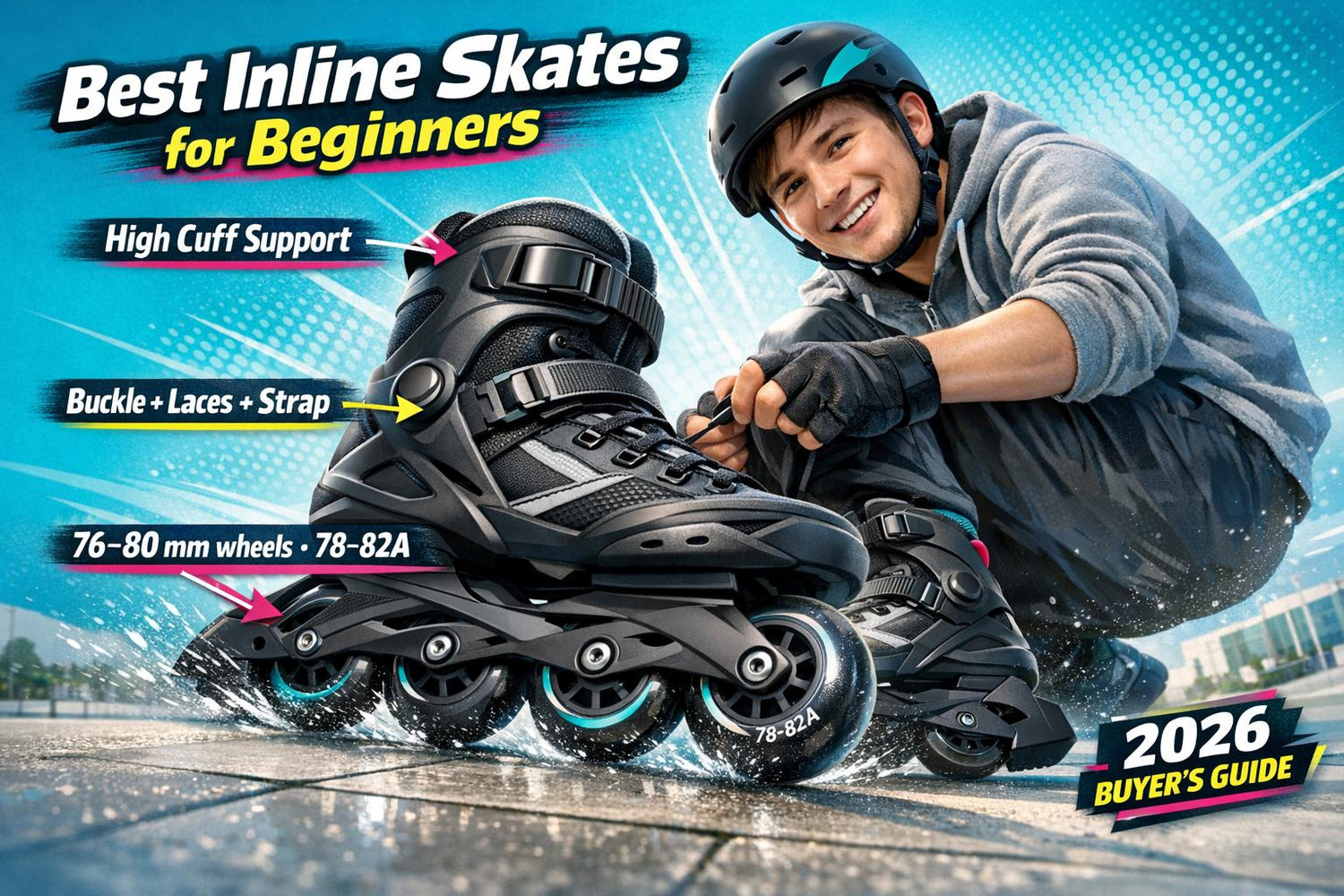
Inline skating is booming in 2026, and picking the right skates as a beginner can make all the difference. The wrong pair (like flimsy "toy" skates) can ruin the experience, but the right ones will help you learn quickly and safely. Here’s what you need to know:
Key Features for Beginners:
- Boot Support: Hard-shell boots with high cuffs for ankle stability.
- Wheel Size: Stick with 76mm to 80mm for better balance.
- Wheel Hardness: Look for 78A–82A for grip and shock absorption.
- Closure System: A triple system (laces, 45° strap, top buckle) keeps your foot secure.
- Braking: A heel brake is a must for safe stopping.
Best Types of Skates:
- Recreational Skates: Ideal for casual paths; prices range $179–$230.
- Adjustable Skates: Great for kids or growing feet; budget options start at $30.
- Fitness Skates: For longer rides but trickier for beginners; $209–$279.
- Urban Skates: Stable and maneuverable but pricier; $339–$359.
Quick Tip:
Avoid cheap $40 skates - they’re unstable and unsafe. A good beginner pair costs $150–$250 and includes durable wheels, proper support, and a reliable brake.
Whether you're cruising on sidewalks or exploring winter sports with Snowfeet Mini Ski Skates ($250+), investing in quality gear ensures a safer and more enjoyable start to your skating journey.
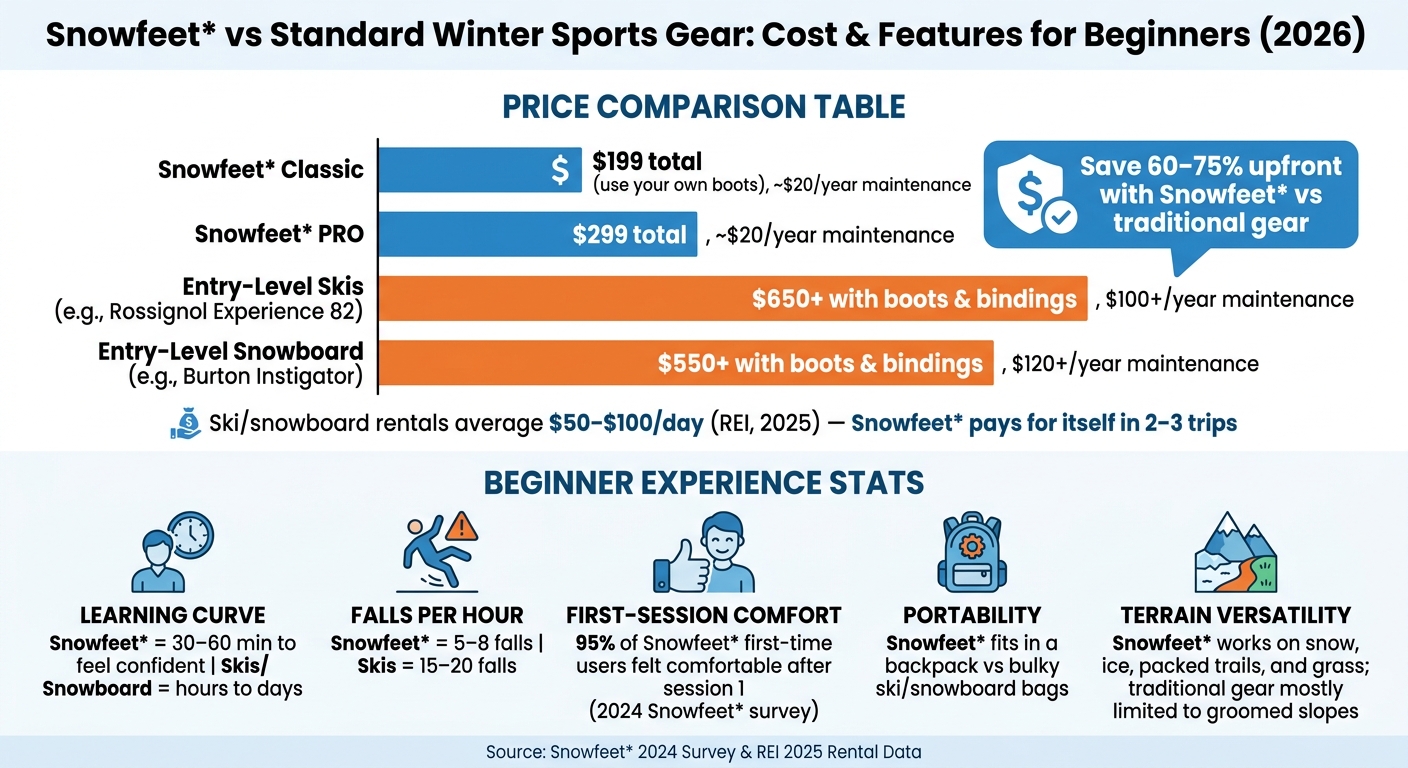
Beginner Inline Skates vs Winter Gear: Cost & Feature Comparison 2026
Types of Inline Skates for Beginners
Not all inline skates are created equal, especially when it comes to beginners. Let’s break down the main types and what makes each one stand out.
Recreational Inline Skates
If you’re just starting out, recreational skates are your best bet. They’re designed with comfort in mind, featuring soft, cushioned boots and smaller wheels - usually 72mm to 80mm - which help you stay closer to the ground for better balance. This lower center of gravity makes it easier to control your speed and stop safely, which is a big plus for new skaters. Entry-level models like the Rollerblade RB 80 start at around $179, while higher-end options can go up to $230.
Adjustable Inline Skates
Adjustable skates are a fantastic option for kids or anyone expecting size changes. These skates can expand across 4 to 5 shoe sizes using a push-button or dial system. Budget-friendly models like the Nattork Adjustable are priced under $30, while brands like K2 and Rollerblade offer mid-range options between $89 and $130. As Jan Welch from Big Wheel Blading explains, adjustable skates are a smart, long-term investment because they grow with your child.
In 2026, 2-in-1 convertible designs are gaining traction. For example, the Roller Derby Switch includes a rear stabilizer bar to help toddlers avoid backward falls, while the Roller Derby Falcon easily switches from quad to inline skates without tools. These flexible designs allow beginners to build confidence at their own pace.
Fitness and Urban Inline Skates
For beginners looking to level up, fitness and urban skates offer more advanced features. Fitness skates are ideal for longer rides and cardio workouts. They’re equipped with larger wheels (84mm to 100mm or more) and longer frames for better speed, but this added height can make balancing tricky for absolute beginners. These are better suited for skaters who’ve already mastered the basics.
Urban skates, on the other hand, are built for maneuverability. They come with hard-shell boots that provide excellent ankle support - a big help for beginners who struggle with wobbling. Their shorter frames make tight turns on city streets a breeze. According to Shop Task Inline Skate Shop, these skates’ supportive design and low ride height can help beginners feel more stable. Urban models like the Rollerblade Twister XT are priced between $339 and $359, making them a pricier choice, but the added stability is worth it.
| Feature | Recreational | Adjustable | Fitness | Urban |
|---|---|---|---|---|
| Boot Type | Soft, padded | Telescoping shell | Hybrid/soft | Hard-shell |
| Wheel Size | 72mm – 80mm | 72mm – 76mm | 84mm – 100mm+ | 80mm – 90mm |
| Best For | Casual paths | Kids & growing feet | Long-distance cardio | City streets |
| Price Range | $179 – $230 | $30 – $160 | $209 – $279 | $339 – $359 |
Up next, we’ll cover the essential features beginners should look for when choosing inline skates in 2026.
Key Features to Check When Buying Inline Skates in 2026
Now that you're familiar with the different types of skates, it's time to focus on three essential features: boot fit, wheel performance, and reliable braking. These factors are especially important for beginners, as they ensure safety and help build confidence while learning.
Boot Comfort and Closure Systems
For first-timers, comfort is key. Softboot designs are a top choice because they’re lightweight, breathable, and provide immediate comfort - unlike the stiffer hard-shell boots.
Equally important is the closure system. In 2026, most beginner skates come with a triple closure system: laces for the lower foot, a 45-degree Velcro strap to secure the heel, and a top buckle for ankle support. The 2PM SPORTS Torinx, for example, uses this setup. As Joseph E. Bogle, Founder of SkateToScoot.com, explains:
"Adjustable sizing ensures a secure and comfortable fit, preventing blisters and improving control."
Before buying, make sure your heel stays firmly in place within the boot. Excess heel movement can mess with your stability and control.
Wheel Size and Hardness
Wheels play a huge role in how stable and smooth your ride feels. For beginners, smaller wheels - usually between 72mm and 80mm - are ideal. They keep your center of gravity low, making it easier to balance and turn. Larger wheels, while faster, can feel unstable for those just starting out.
Wheel hardness, measured on the durometer scale (in "A" units), is another important factor. Softer wheels, rated between 74A and 82A, grip better and absorb shocks from uneven surfaces. On the other hand, harder wheels (84A and above) are faster but don’t offer as much grip. For most beginners, an 82A polyurethane wheel strikes the perfect balance between durability and traction on various surfaces.
"Softer wheels (lower A rating, like 76mm or 82A) provide more grip and are suitable for rougher surfaces or beginners who prioritize stability." - Joseph E. Bogle, Certified Skating Coach
Brake Options and Adjustability
A good heel brake is a must for safe and controlled stops. Most beginner skates include a rubber heel brake at the rear, which makes stopping straightforward. However, brake placement matters - if the pad is too high or too low, it can be tough to engage properly.
"A reliable brake is crucial for controlled stops."
When shopping, look for skates with adjustable brakes and ensure replacement pads are easy to find. Brake pads wear out over time, so being able to replace them easily is a safety must-have.
Best Inline Skates for Beginners in 2026
Here are three excellent beginner-friendly inline skate models for 2026, each offering unique benefits depending on your needs.
Roller Derby Girl's 5.2 Stinger Adjustable
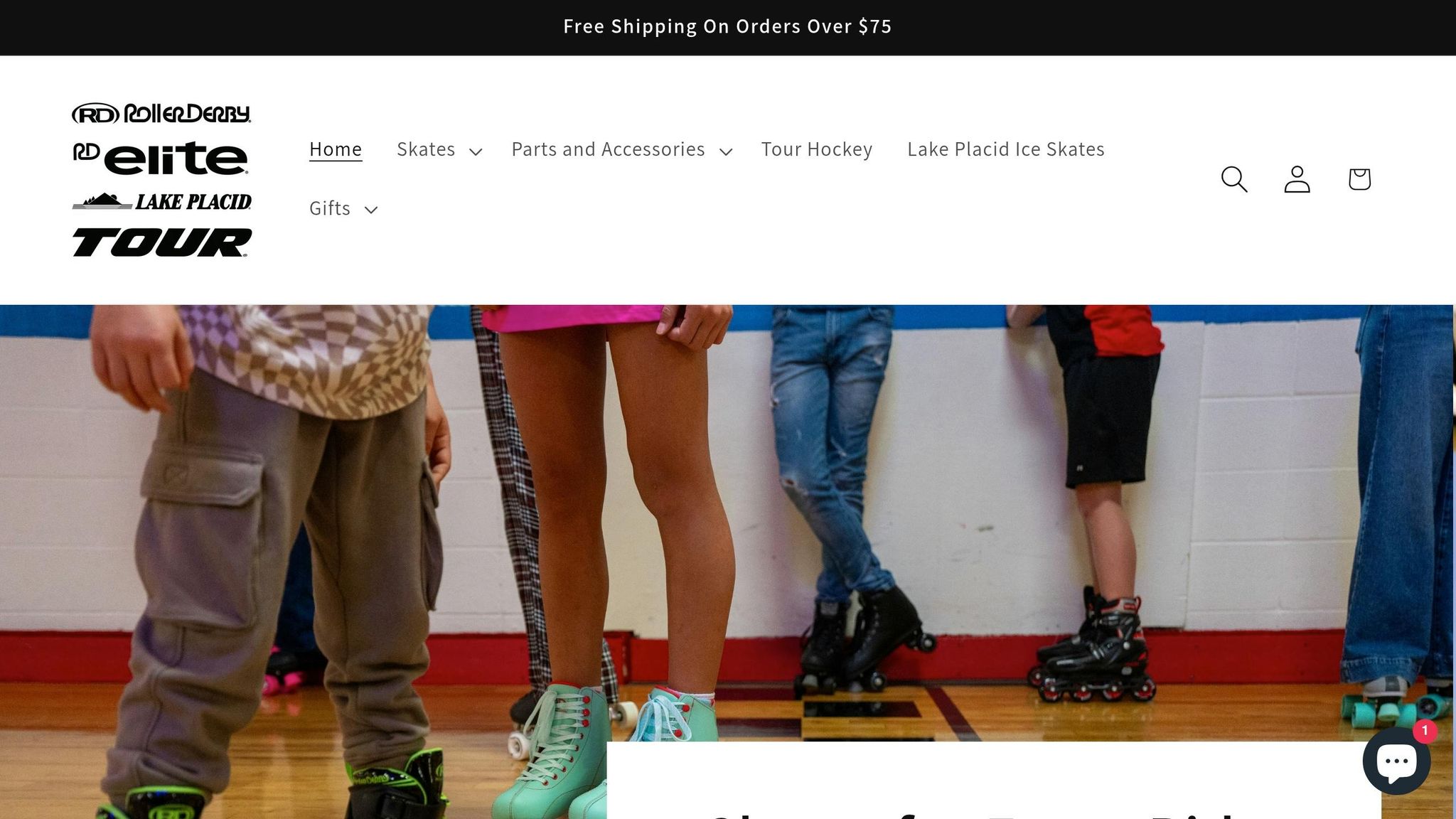
The Roller Derby Girl's 5.2 Stinger is a solid choice for young skaters or those on a budget. Its adjustable design spans four full sizes, so kids won't outgrow them too quickly. The reinforced frame provides the right amount of support without feeling heavy, and the built-in heel brake ensures safer stopping. With high-quality urethane wheels, these skates offer great grip on pavement, all at an affordable price. This model is all about stability and value, making it a great starting point.
Riedell Beginner Roller Skates
Riedell skates are known for their durable materials and excellent ankle support, standing out from cheaper, toy-like alternatives.
"Riedell skates feature reinforced counters and genuine materials that provide real ankle support, unlike plastic toy-store alternatives." - LowPriceSkates.com
Their beginner models, like the Riedell Angel, are a popular pick for 2026. Priced between $169 and $249, they strike a nice balance between quality and affordability. The soft boot design prioritizes comfort and breathability, while models like the Riedell R3, with their low-cut design, help new skaters build agility and improve their footwork.
If you're looking for something a bit unconventional, there’s another option worth considering.
Snowfeet* Mini Ski Skates as an Alternative
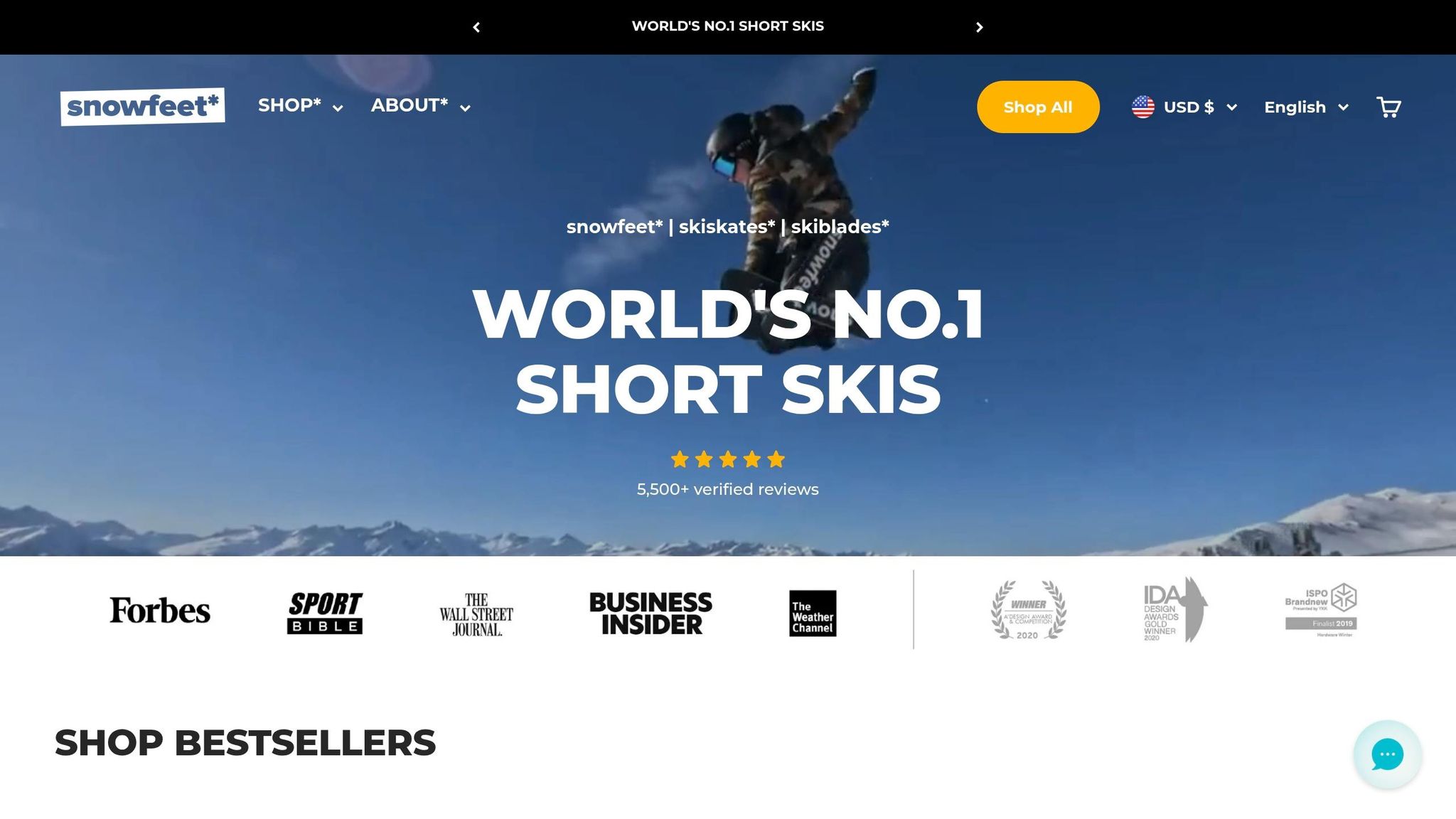
While the other models focus on traditional skating essentials like comfort and control, Snowfeet* Mini Ski Skates bring a unique twist by combining winter sports with inline-style performance.
These compact skates attach directly to your winter boots, so there’s no need to find a specific skate boot. Starting at $250 (available at snowfeetstore.com), they’re small enough to fit in a backpack and work well on slopes, packed snow, and icy trails. They’re easier to learn compared to full-length skis, making them a fun option for beginners who enjoy both skating and winter activities. Plus, their compact size and versatility make them a great alternative to bulky ski or snowboard gear.
| Model | Boot Type | Price (Approx.) | Best For |
|---|---|---|---|
| Roller Derby 5.2 Stinger | Hard Shell (Adjustable) | Budget-friendly | Kids / First-timers |
| Riedell Angel | Soft Boot | $169–$249 | Comfort-focused beginners |
| Snowfeet* Mini Ski Skates | Uses your own winter boots | From $250 | Snow & ice beginners |
sbb-itb-17ade95
Snowfeet* vs Standard Winter Sports Gear
Why Snowfeet* Works Better for Beginners
For anyone new to winter sports, Snowfeet* offer a much simpler and friendlier alternative to traditional gear. Let’s face it - starting out with skis or snowboards can feel like a lot. They’re heavy, bulky, and require specialized boots, bindings, and often rentals. Snowfeet*, on the other hand, strap directly onto your regular winter boots, cutting out the need for all that extra equipment.
The best part? They’re much easier to pick up. While traditional skiing or snowboarding can take hours (or even days) to get the hang of, most beginners using Snowfeet* feel confident within just 30–60 minutes. In fact, a 2024 survey conducted by Snowfeet* found that 95% of first-time users felt comfortable after their very first session.
And here’s another bonus: fewer falls. Beginners using Snowfeet* report an average of 5–8 falls per hour, compared to 15–20 with skis. That’s a big difference when it comes to avoiding frustration and building confidence faster. Plus, this ease of use translates into real savings, as seen in the cost breakdown below.
Price Comparison: Snowfeet* vs Standard Gear
When it comes to cost, Snowfeet* are a clear winner. Traditional skis and snowboards require not only the equipment itself but also specialized boots and bindings, which can really add up. Check out the comparison:
| Gear | Equipment Cost | With Boots & Bindings | Annual Maintenance |
|---|---|---|---|
| Snowfeet* Classic | $199 | $199 (use your own boots) | ~$20 |
| Snowfeet* PRO | $299 | $299 | ~$20 |
| Entry-Level Skis (e.g., Rossignol Experience 82) | $300–$450 | $650+ | $100+ |
| Entry-Level Snowboard (e.g., Burton Instigator) | $350–$500 | $550+ | $120+ |
With Snowfeet*, you’re looking at saving 60–75% upfront compared to a full setup with skis or a snowboard. And if you’re not ready to buy, consider this: ski and snowboard rentals in the U.S. average $50–$100 per day (according to REI, 2025). That means Snowfeet* can pay for themselves after just a couple of trips.
But it’s not just about cost - Snowfeet* are also incredibly versatile. Unlike traditional gear that’s mostly limited to groomed slopes, Snowfeet* work on snow, ice, packed trails, and even grass. This flexibility makes them perfect for beginners looking to practice and build confidence without needing to head to a mountain resort.
Buying Tips and Mistakes to Avoid
Setting a Budget
For beginners, a budget of $150 to $250 is a great starting point. Skates in this range - like the Roller Derby V-Tech 500 or Moxi Beach Bunny - are built to last, with quality urethane wheels and ABEC-5 bearings for a smoother, safer ride.
Steer clear of $40 toy skates. Their flimsy construction compromises both stability and safety. If $150 feels like a stretch, consider spending at least $50–$100 more to get the essential features. Focus on urethane wheels and a reinforced frame instead of flashy designs or unnecessary extras.
"That $40 pair of skates from the toy aisle is just a one-way ticket to a bruised tailbone." - Low Price Skates
While many brands cater to beginners, Snowfeet* stands out with durable designs and long-term performance, making them worth the slightly higher price tag. Once your budget is sorted, decide whether to shop online or in-store to find the best fit.
Buying Online vs. In-Store
After setting your budget, the next step is choosing where to shop - online or in-store. Both have their perks, but knowing the trade-offs helps you make the right call.
In-store shopping is perfect if you're unsure about sizing. You can try the skates on, get advice from staff, and avoid the hassle of returns. Inline skates usually fit within one size of your regular shoe size, but sizing can vary by brand, so trying them on in person removes a lot of guesswork.
Online shopping offers a much broader selection and often better prices. If you go this route, measure your foot in millimeters and compare it directly to the manufacturer’s sizing chart. Don’t rely on your sneaker size - it’s not always accurate. Also, check user reviews for comments about sizing. Many reviewers will highlight whether a model runs large or small. This is especially important for designs like Snowfeet*, where a precise fit ensures better stability.
Regardless of where you shop, always do a "heel lock" test: lace up the skates and check if your heel lifts more than a few millimeters. If it does, the skates are too big. Your toes should lightly touch the front without feeling cramped or curled.
"A skate that's too loose will offer poor support, increasing the risk of ankle injuries, while a skate that's too tight will be uncomfortable and restrict movement." - Joseph E. Bogle, Founder, SkateToScoot.com
Basic Skate Maintenance
Once you’ve found the perfect skates, taking care of them is essential to keep them performing well and lasting longer. Start by rotating your wheels every few weeks. Wheels tend to wear down faster on the inside edge, so swapping their positions will help them last longer.
Keep an eye on your heel brake pad. If it looks worn or sits at an odd angle, replace it before your next skating session. A worn brake pad is a common - and easily avoidable - cause of accidents for beginners.
For bearings, clean and lightly lubricate them every one to three months under normal conditions. If you’ve been skating in wet or dusty areas, do this more often. Dirty bearings slow you down and wear out quickly.
Lastly, store your skates in a cool, dry place. Avoid leaving them in a hot car or a damp garage - heat can warp plastic frames, and moisture speeds up bearing corrosion. A little care goes a long way!
Conclusion
Choosing the right inline skates as a beginner boils down to a few essentials: good support, durable wheels, and a snug fit. Skates in the $150–$250 range, like the Roller Derby V-Tech 500 or Riedell options, offer the stability and durability that beginners need. Look for models with proper sizing, sturdy wheels, and secure closures to avoid falling for cheap, toy-like skates.
While inline skates are perfect for cruising on pavement, there’s a whole other world waiting for winter sports fans.
For those drawn to snowy adventures, Snowfeet* Mini Ski Skates are a game-changer. Starting at $250, they’re lightweight, easy to carry, and skip the steep learning curve of traditional skiing or snowboarding. Forget the bulky gear and hefty price tags - Snowfeet* lets you hit the slopes with just a pair of these mini ski skates, your regular winter boots, and a love for adventure.
Whether you’re lacing up inline skates or strapping on Snowfeet*, focus on quality, fit, and regular maintenance. The right gear makes all the difference in starting your journey safely and with confidence.
FAQs
How do I know my skates fit right?
To get the perfect fit for your skates, they should feel snug - just enough to hold your foot securely without pinching. Your toes should have a bit of wiggle room, but there shouldn’t be too much pressure. Ideally, you’re looking for about a thumb’s width of space at the toe area. Also, make sure your heel stays locked in place without slipping around. Snowfeet gear is built with comfort and stability in mind, making them a great option for beginners. This contrasts with traditional skis or snowboards, which also demand a precise fit to ensure safety.
Should beginners choose soft boots or hard-shell boots?
For those just starting out, soft boots are often the way to go. They’re comfier, more flexible, and easier to get used to, which helps boost confidence early on. On the other hand, hard-shell boots are better for experienced or aggressive skaters, offering more support and stability for advanced moves. Beginners usually find soft boots more forgiving and fun to use. Snowfeet focuses on comfort that’s perfect for newcomers, setting them apart from traditional ski or snowboard boots designed for other types of activities.
When should I upgrade to bigger wheels?
Once you've gained confidence and control with smaller wheels (around 80mm), you can consider upgrading to larger ones. Bigger wheels offer better stability and help you maintain momentum over longer distances. However, they can be trickier to handle if you're still new to skating. Take your time, and only make the switch when you feel completely comfortable and ready. Safety and enjoyment should always come first!











Leave a comment
This site is protected by hCaptcha and the hCaptcha Privacy Policy and Terms of Service apply.