



















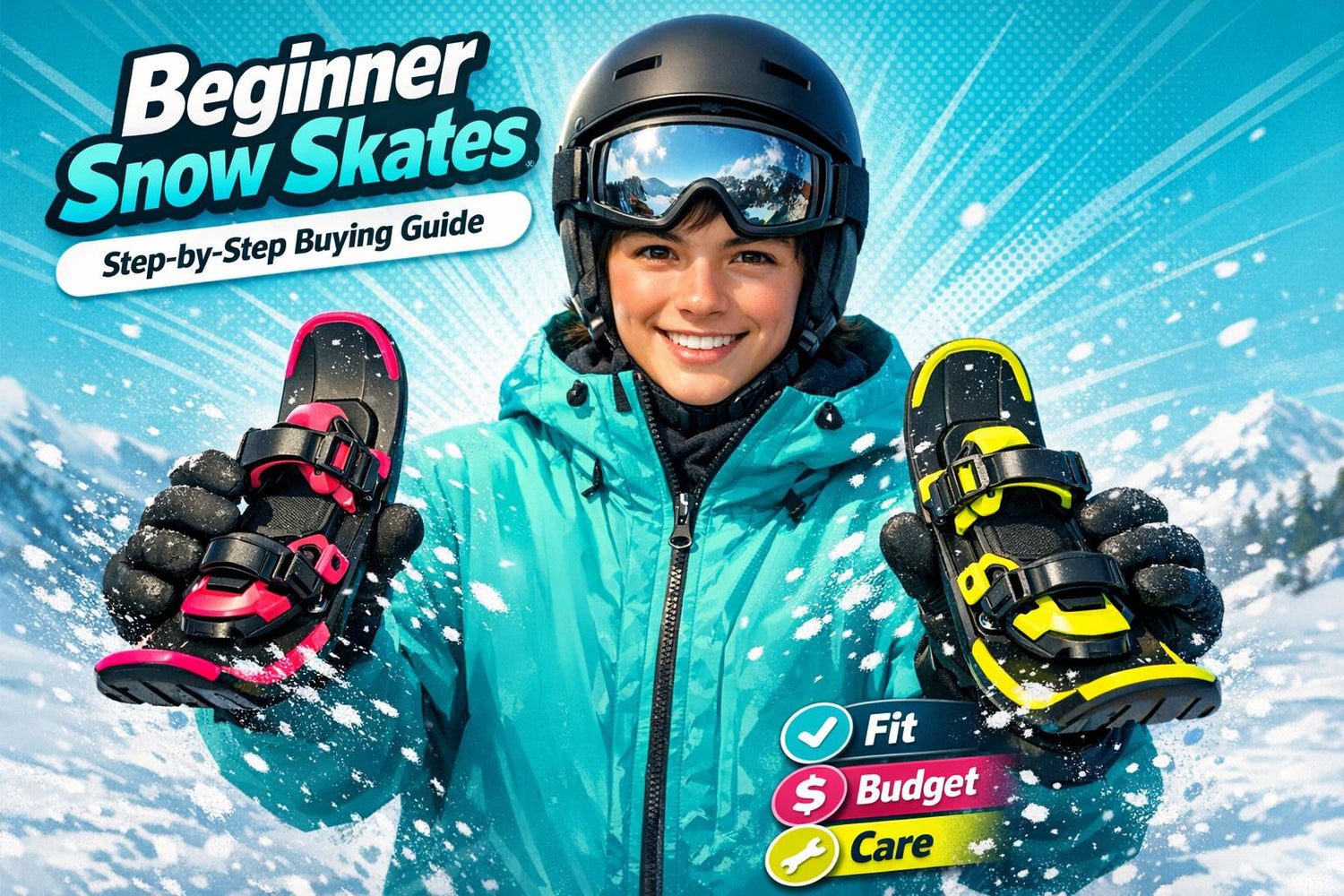
If you’re new to snow skating, here’s the short answer: Go for the Snowfeet PRO (50 cm). It’s stable, easy to use, and works with your regular winter boots. Plus, it’s affordable at $275 compared to the $600+ you’d spend on ski or snowboard gear.
Here’s why Snowfeet PRO is a solid pick for beginners:
- Short length (50 cm): Easier to control than skis or snowboards.
- No special boots needed: Use your regular winter boots.
- Quick to learn: Most people get the hang of it in about 5 minutes.
- Portable: Fits in a backpack - no bulky gear required.
Want something smaller or more advanced? Mini Ski Skates (38 cm) are ultra-compact but trickier to balance on, while Skiskates (44 cm) offer better performance but cost $575.
Keep reading for tips on choosing the right model, finding the perfect fit, and maintaining your gear.
Snowfeet vs Traditional Skis: Beginner Gear Comparison 2024
Snowfeet* & Skiskates Complete Guide | All you need to know about Skiskating
Step 1: Know Your Skating Goals and Terrain
Before you buy, take a moment to think about where you’ll skate. This decision affects everything - the type of gear you need, your budget, and even how quickly you’ll improve. Skipping this step could leave you with equipment that just doesn’t fit your needs.
Are you dreaming of gliding down a groomed ski slope, exploring snowy trails, or simply having fun in your backyard or at a local park? This is where Snowfeet* shines. Their gear is designed to handle a variety of terrains, giving you the freedom to enjoy winter almost anywhere.
Snowfeet* vs. Traditional Skis and Snowboards
When you consider the terrain, it’s easy to see why Snowfeet*’s compact design is so practical compared to traditional skis or snowboards. Traditional skis are usually 150–180 cm (about 5–6 feet) long, and snowboards aren’t much shorter. Plus, they require specialized boots, lift tickets, and trips to ski resorts.
Snowfeet* takes a different approach. Their Skiskates and Snowfeet PRO work with your regular winter boots - no need for special footwear. You don’t have to plan a full resort trip or pay for expensive lessons. As soon as the snow falls, you can grab your gear and head outside.
Which Terrain Works Best for Snowfeet*
One of the biggest perks of Snowfeet* gear is its versatility. You can use it anywhere there’s snow: your backyard, local hills, wooded trails, or even hiking paths. This flexibility is perfect for beginners who don’t live near ski resorts or want to enjoy snow skating more often.
That said, if you’re planning to hit a ski resort, there are some things to keep in mind. Single-deck snow skates often aren’t allowed because they lack the metal edges and bindings many resorts require for safety. However, bi-level skates - like some models in the Snowfeet* lineup - are accepted at many resorts as long as you use a safety leash attached to your belt. If resort skiing is on your agenda, double-check these details before making your purchase.
Snowfeet*’s adaptability makes it a standout choice for almost any snowy adventure.
Step 2: Key Features to Look for in Beginner Snow Skates
Now that you’ve figured out where you'll be skating, let’s talk about what to look for in your first pair of snow skates. The right features can make a big difference in how quickly you pick up the sport and how much fun you’ll have. From length to portability, these details are key to making your first experience smooth and enjoyable.
Length and Weight: Why Shorter Skates Are Better for Beginners
Length plays a big role, especially for those just starting out. Traditional skis are typically 170–190 cm long, which can feel overwhelming for beginners. In contrast, Snowfeet* skates are compact, measuring just 38–50 cm (15–20 inches). This shorter length makes them much easier to handle and control. As Skiis & Biikes explains:
"Beginner skiers will tend to want a shorter ski for easier turn initiation and stability, whereas an advanced skier will want longer skis."
This compact design is perfect for building confidence as you learn.
Portability and Convenience
One standout feature of Snowfeet* skates is how portable they are. At just 50 cm (about 20 inches), they easily fit into a regular backpack - no need for bulky ski bags or roof racks. Verified user Michele shares:
"I loved how easy they are to carry in a backpack with their handy waterproof bag! Highly recommended for fun for experts and beginners alike!"
Their portability makes them ideal for exploring places traditional skis can’t go, like narrow trails, small hills, or even your backyard.
Bindings and Shoe Compatibility
Unlike traditional skis that require expensive, specialized boots, Snowfeet* skates come with adjustable bindings. These bindings work with regular waterproof winter shoes or snowboard boots, accommodating US sizes 6–13 (EU sizes 38–47). If you’ve got a sturdy pair of winter boots, you’re good to go - no extra purchases needed.
Here’s a quick comparison to highlight how Snowfeet* skates stack up against traditional beginner skis:
| Feature | Snowfeet* (38–50 cm) | Traditional Beginner Skis |
|---|---|---|
| Length | 38–50 cm (15–20 in) | 130–190 cm (51–75 in) |
| Portability | Fits in a backpack | Requires a roof rack or large ski bag |
| Footwear Required | Regular winter shoes or snowboard boots | Specialized ski boots only |
| Turn Initiation | Very easy | Requires technique |
| Learning Curve | ~5 minutes | Days to weeks |
Step 3: Compare Snowfeet* Models for Beginners
Now that we’ve outlined the key features, let’s figure out which Snowfeet* model works best for beginners. If you’re just starting out, you’ll want something portable, easy to maneuver, and simple to learn. Keep these in mind as we break down the options.
Here’s a quick rundown of the three main beginner-friendly models:
- Mini Ski Skates (38 cm): Ultra-compact and great for casual use.
- Skiskates (44 cm): Offers better responsiveness with a wood core.
- Snowfeet PRO (50 cm): The most beginner-friendly choice with added stability.
Best Snowfeet* Models for Beginners
The Mini Ski Skates (38 cm) are the smallest and lightest option in the lineup. At just 38 cm, they’re perfect for casual fun on small hills or even hiking trails. Thanks to their compact design, they’re easy to carry and handle. However, they do require a bit more balance, so they’re better suited for those who are comfortable with quick, sharp movements.
- Key benefit: Ultra-portable and ideal for low-commitment snow adventures.
The Skiskates (44 cm) are a step up in performance. With a wood core similar to traditional skis, they’re faster and more responsive, which is great for groomed slopes. However, they come with a higher price tag of $575 and are better for those with some prior experience in skating or skiing. They’re still portable enough to fit in a backpack, making them a solid option for slope enthusiasts who don’t want to lug around traditional skis.
- Key benefit: A performance-focused choice for those with a bit of experience.
The Snowfeet PRO (50 cm) is the standout option for beginners. Priced at $275, it’s affordable and packed with features that make learning easier. The fiberglass core, narrowed base, and raised platform height make it simple to turn and carve. Its length of nearly 20 inches adds stability without feeling bulky. Snowfeet* highlights this advantage:
"The extra bit of length gives Snowfeet PRO more stability and makes them easier to turn and stop."
The PRO is versatile enough to handle both groomed and ungroomed terrain, making it a go-to for first-timers. It’s also earned rave reviews - a 5.0/5 rating from 2,296 verified buyers, with 90% giving it 5 stars. Unlike traditional skis, which can take days of lessons and special boots, most beginners can get the hang of the PRO in about five minutes.
- Key benefit: Combines stability, versatility, and value, making it the best pick for new riders.
Comparison Table: Snowfeet* Models vs. Traditional Skis
Here’s a side-by-side look at how the Snowfeet* models compare to traditional skis:
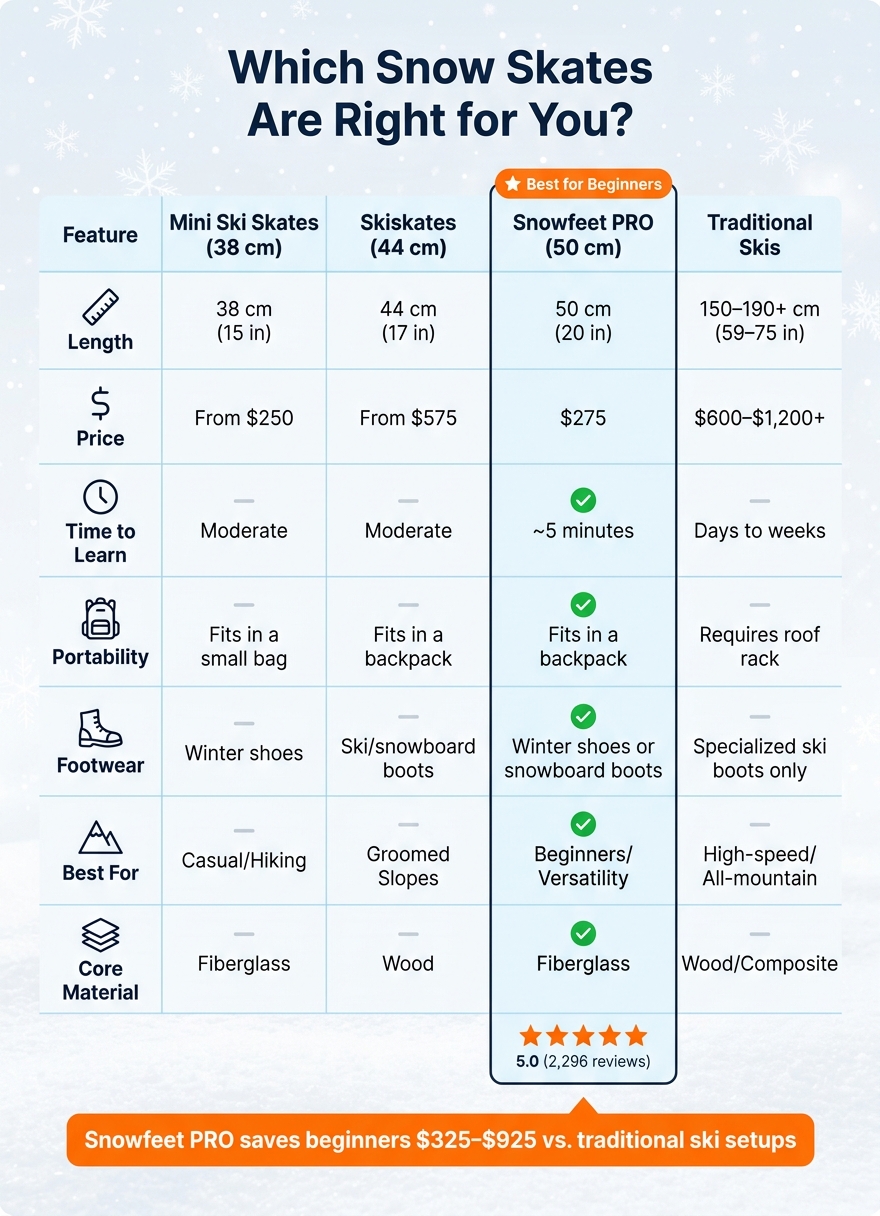
| Feature | Mini Ski Skates (38 cm) | Skiskates (44 cm) | Snowfeet PRO (50 cm) | Traditional Skis |
|---|---|---|---|---|
| Length | 38 cm (15 in) | 44 cm (17 in) | 50 cm (20 in) | 150–190+ cm (59–75 in) |
| Core Material | Fiberglass | Wood | Fiberglass | Wood/Composite |
| Best For | Casual/Hiking | Groomed Slopes | Beginners/Versatility | High-speed/All-mountain |
| Time to Learn | Moderate | Moderate | ~5 minutes | Days to weeks |
| Portability | Fits in a small bag | Fits in a backpack | Fits in a backpack | Requires roof rack or large bag |
| Price | From $250 | From $575 | $275 | $500–$1,000+ (gear only) |
| Footwear | Winter shoes | Ski/snowboard boots | Winter shoes or snowboard boots | Specialized ski boots only |
For most beginners, the Snowfeet PRO is the clear winner. It’s affordable, stable, and versatile enough to handle various snow conditions. Next, we’ll explore how to get the perfect fit and test these models to find the one that suits you best.
sbb-itb-17ade95
Step 4: How to Get the Right Fit and Test Your Skates
Once you've compared models, the next step is nailing the fit. A proper fit is key to keeping control on the slopes. With Snowfeet* skates, a snug fit ensures better responsiveness, helping you avoid the frustration of sloppy turns or poor edge control. Simply put, the closer the connection between your boot and the skate, the smoother your ride will be - especially if you're just starting out.
How to Measure Your Foot and Match the Right Size
Start by measuring your foot in inches while wearing your snow socks or boot liners. Most Snowfeet* models are designed to fit US sizes 6–13 (EU 38–47), but always double-check the sizing chart for the specific model you're interested in. Snowfeet* emphasizes the importance of a snug and supportive fit:
"Make sure [boots] fit snugly and comfortably, providing good support."
The type of footwear you pair with your skates matters too. Snowfeet PRO (50 cm / 20 in) and Mini Ski Skates (38 cm / 15 in) work well with regular winter boots. Skiskates (44 cm / 17 in), on the other hand, can also be paired with snowboard boots, depending on the binding option you choose. Whichever you go with, make sure your boots fit well and offer solid ankle support - this directly impacts how well your skates perform. Once you've got the size figured out, it's time to test for comfort and support.
How to Test for Comfort and Support
Before hitting the snow, do a quick shake test. Strap on your skates, lift your foot, and move it side to side and front to back. If your heel lifts when you lean forward or if there's any side-to-side wiggle, tighten the straps and adjust the heel cup until the skate feels like it's part of your boot.
Next, stand flat and lean side to side. If your ankles collapse easily, your boots might not have enough support for snow skating. In this case, consider switching to boots with better ankle stability. Also, pay attention to any pressure points across the top of your foot. Snowfeet* skates come with adjustable ratchet bindings, allowing you to tweak the boot position on the fly - a big plus compared to traditional ski bindings that require professional adjustments every time you change your setup.
"Beginners should choose bindings with softer flexibility because they're easier to handle and reduce the risk of getting hurt if they make mistakes." - Snowfeet*
Tighten the straps until they're snug, but not so tight that they cut off circulation. The goal is a secure fit that feels like an extension of your foot. When your skates fit just right, you'll move with confidence and control on the snow.
Step 5: Budget, Maintenance, and Buying Your First Pair
What to Expect to Spend as a Beginner
Snowfeet* models range in price from $250 to $575, making them a budget-friendly option for getting into winter sports. For example, the Snowfeet PRO (50 cm / 20 in) starts at $275, while the Skiskates (44 cm / 17 in), with their wood-core construction and advanced design, are priced at $575.
Now, compare that to a traditional beginner ski or snowboard setup. When you add up skis or a snowboard, boots, and bindings, you're looking at $600 to $1,200+ for new gear. And that's before adding extras like poles, helmets, or lift tickets. With Snowfeet*, you skip the need for specialized boots entirely, which slashes your overall cost.
| Gear Type | Approx. Cost | Boots |
|---|---|---|
| Snowfeet PRO (50 cm) | $275 | No specialized boots needed |
| Skiskates (44 cm) | $575 | No specialized boots needed |
| Beginner Ski Setup | $600–$1,200+ | Requires separate purchase |
| Beginner Snowboard Setup | $600–$1,000+ | Requires separate purchase |
Snowfeet* offers a clear cost advantage, saving you money both upfront and in the long term.
Basic Maintenance Tips
Caring for your Snowfeet* is simple and doesn’t require much effort. Here’s how to keep them in top shape:
- Dry the edges and bindings after each use to prevent rust.
- Apply a liquid rub-on wax to the base - no need for an iron. A basic waxing kit costs between $15 and $40.
- Check binding screws every few uses, especially early on, as the hardware may need slight adjustments.
- Store them in a cool, dry place, away from sunlight and moisture.
You can find all the necessary accessories, like wax or tuning kits, directly in the Snowfeet* store.
Why Snowfeet* Is the Right Choice for Beginners
Snowfeet* stands out as an excellent choice for beginners because of its affordability, ease of use, and low-maintenance design. Unlike traditional setups, Snowfeet* eliminates the need for bulky gear like roof racks, ski bags, or even checked luggage when you’re flying to a resort. They’re compact enough to fit in a backpack!
Plus, they’re versatile. Whether you’re gliding down groomed slopes, exploring packed trails, or just having fun in your snowy backyard, Snowfeet* adapts to a variety of winter conditions. Whether you’re hitting a Colorado resort or playing on a hill in the Midwest, they make it easy to enjoy the snow from day one without the hassle or high costs of traditional gear.
Conclusion: How to Pick the Right Beginner Skates
Choosing beginner skates boils down to three key things: stability, comfort, and an easy learning curve. The right setup should make your experience enjoyable and stress-free, allowing you to focus on the fun instead of struggling with your gear. That’s where Snowfeet* shines.
Snowfeet* offers options that hit all the marks. For $275, the Snowfeet PRO (50 cm / 20 in) provides a lightweight, stable option that works seamlessly with your existing winter boots. If you're after something with a bit more performance, the Skiskates (44 cm / 17 in), priced at $575, feature a wood-core design for enhanced performance - still far more affordable than the $600–$1,200+ you'd typically spend on traditional skiing or snowboarding gear.
Shorter skates are a great pick for beginners because they’re easier to control and help you learn faster. Their compact design means you can skip the hassle of extra gear like roof racks, ski bags, or specialized boots. Instead, you get precise control, a quicker learning process, and the convenience of portability.
Whether you’re headed to a Colorado resort or making the most of a snowy hill in your neighborhood, Snowfeet* offers an affordable, practical way to dive into winter sports. With none of the bulky gear or high costs of traditional setups, Snowfeet* makes it easy for beginners to start having fun right away. It’s a no-brainer choice for anyone looking to embrace the snow this season.
FAQs
Can I use Snowfeet PRO at a ski resort?
Yes, Snowfeet PRO works at ski resorts! They're great for downhill skiing on slopes, exploring snowparks, or even tackling hiking trails. Built to be lightweight and easy to maneuver, they’re a fun, portable option compared to traditional skis or snowboards. Ideal for beginners or anyone looking for a different kind of winter adventure.
What winter boots work best with Snowfeet?
When choosing winter boots to pair with Snowfeet, you’ll want something that checks a few key boxes: support, stability, and comfort. Opt for boots that are insulated to keep your feet warm, waterproof to handle snow and slush, and provide solid ankle support for added security. Non-slip soles are a must to maintain traction and ensure safety while gliding around.
Since Snowfeet are lightweight and geared toward beginners, a snug-fitting boot will help you stay stable and make your experience on snow or ice much smoother.
How do I stop and turn on Snowfeet as a beginner?
To stop while using Snowfeet skates, lean back slightly and press down on the tail to slow yourself down gradually. When it comes to turning, shift your weight gently to the side you want to turn toward. Use your hips and shoulders to steer, keeping your movements smooth and steady. Thanks to their lightweight design, Snowfeet are easier to maneuver than skis or snowboards, making them a great choice for beginners looking to gain confidence and improve control.











Leave a comment
This site is protected by hCaptcha and the hCaptcha Privacy Policy and Terms of Service apply.