



















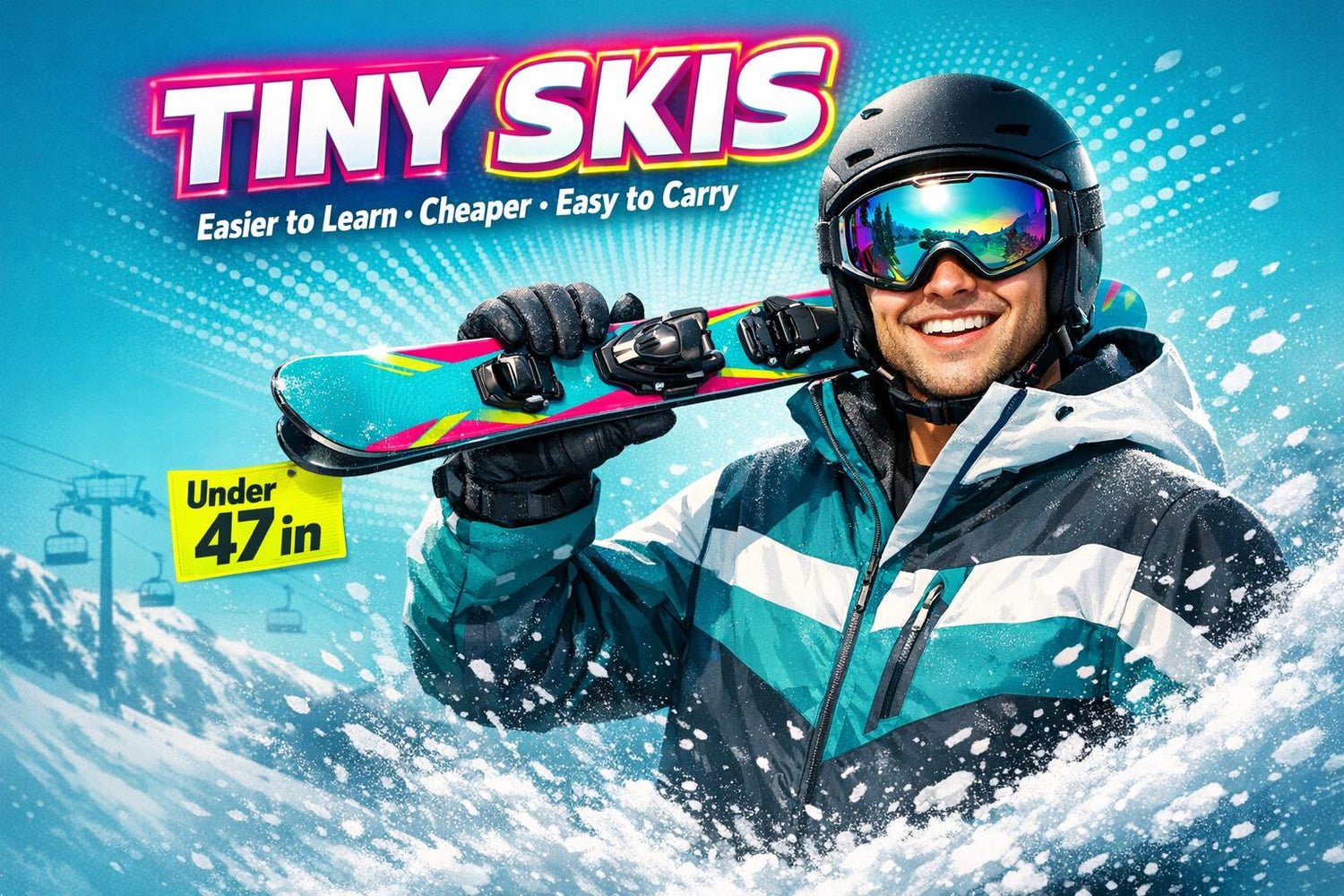
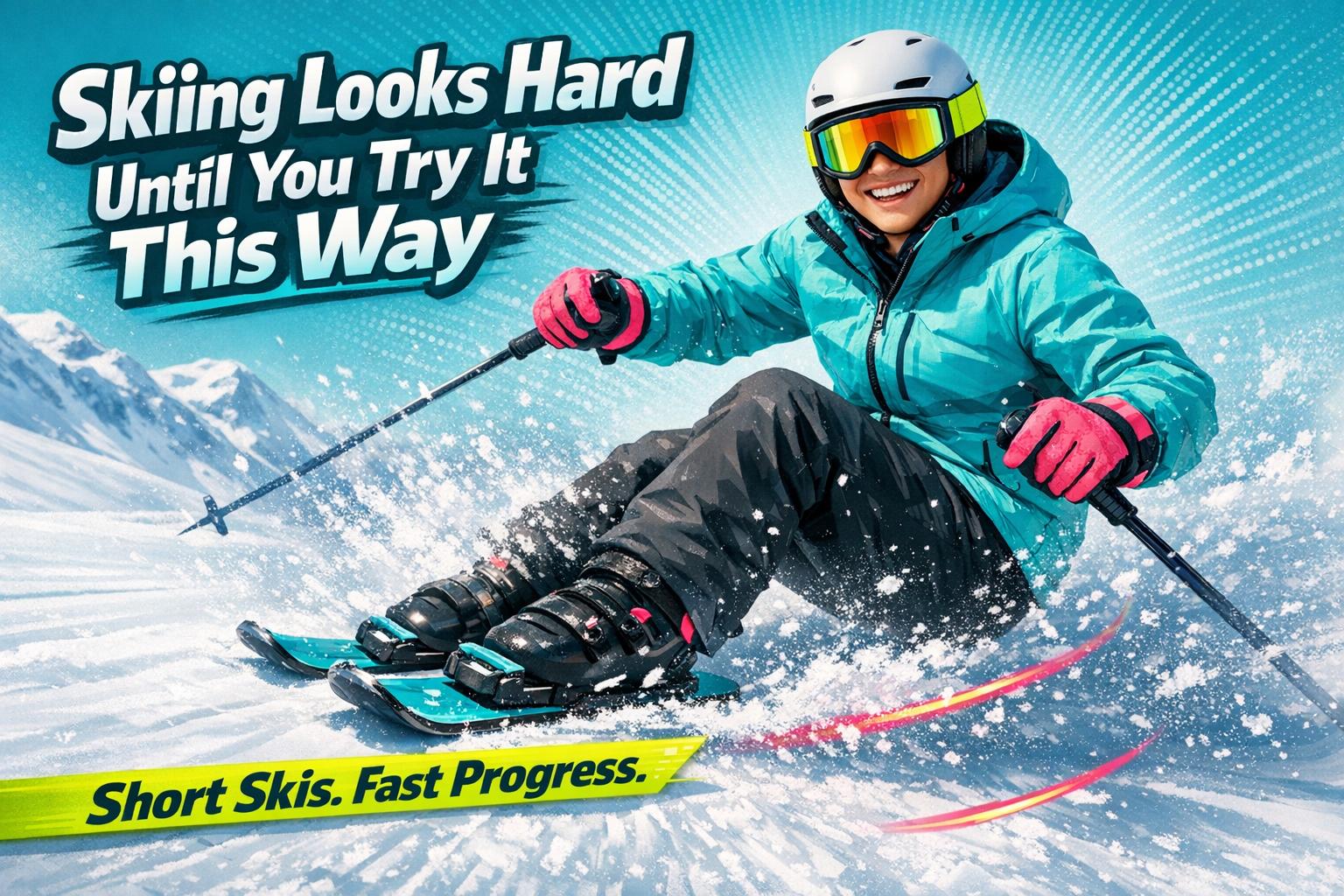
Tiny skis are shaking up the slopes, and here’s why: they’re shorter (17–47 inches), easier to carry, cheaper, and beginner-friendly compared to traditional long skis. Brands like Snowfeet offer models that work with regular winter boots, fit in a backpack, and feel more like skating than skiing. Perfect for casual riders or those tackling smaller hills, they’re a fun, affordable alternative for people who find bulky, expensive gear intimidating. Whether you’re hitting groomed runs, terrain parks, or even your local sledding hill, these pint-sized skis are worth checking out.
Snowboarder tries Snowfeet* | Which Snowfeet* Short Ski is the Best? | Snowblades 44, 65, 99 Review
The Problems With Long Skis And Snowboards
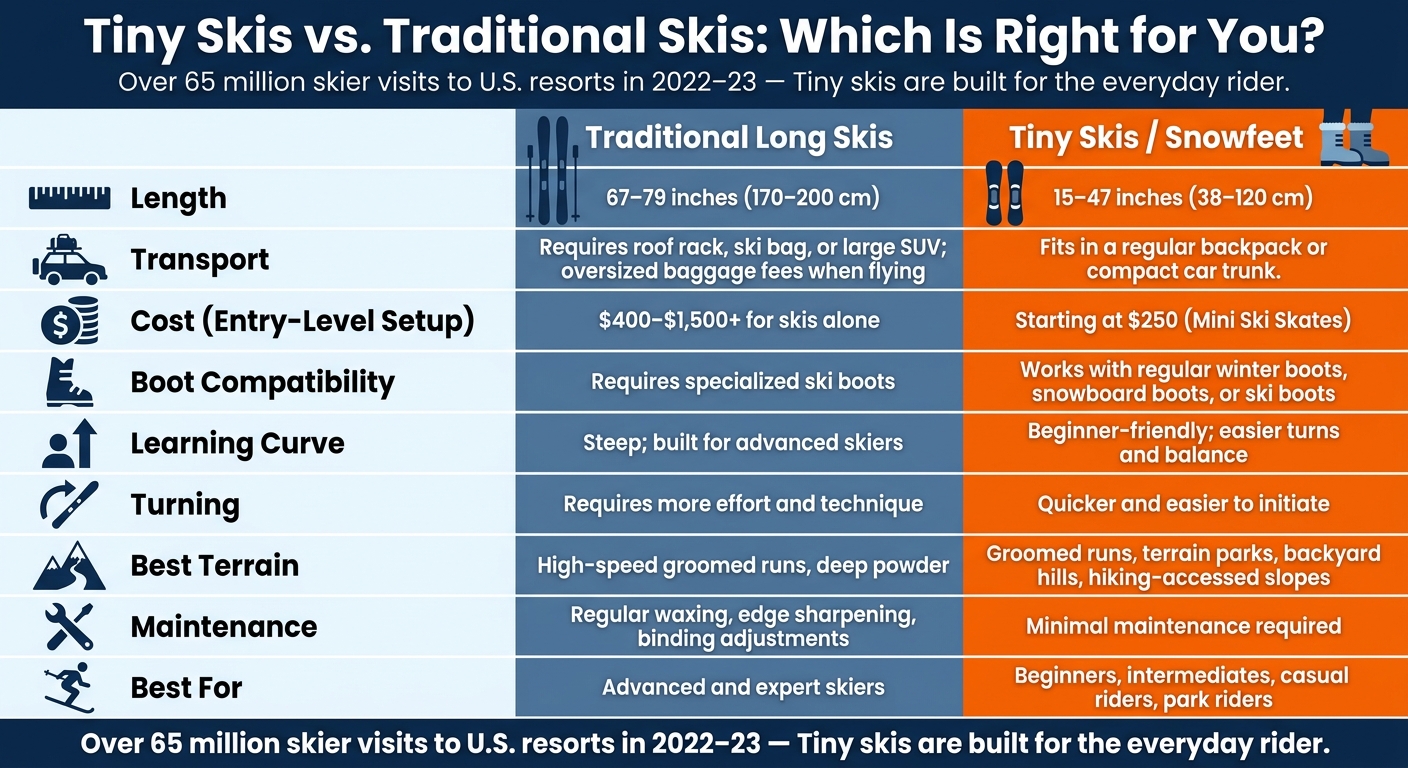
Tiny Skis vs Traditional Skis: Full Comparison Guide
Skiing and snowboarding are undeniably fun, but let’s be honest - traditional gear can feel like more trouble than it’s worth. Before you even hit the slopes, there are several hurdles to overcome.
Hard To Carry And Transport
Traditional skis are long. We’re talking 67–79 inches, which makes hauling them through a crowded parking lot a workout in itself. They’re not fitting into a regular trunk or bag either. You’ll need a roof rack, a ski bag, or maybe even a large SUV just to get them to the mountain. And if you’re flying? Expect to pay oversized baggage fees.
"Also a big plus - they're lightweight and much easier to carry around than full-size skis." - Brad Tolin
On top of that, navigating crowded spaces with nearly 6-foot-long skis isn’t just inconvenient - it can be downright hazardous.
High Upfront Costs And Ongoing Maintenance
Skiing isn’t cheap. A mid-range setup will set you back about $1,500. Even entry-level alpine skis start at $400, and high-end models can easily surpass $1,000. And that’s just the gear. Add lift tickets, lessons, and apparel, and the costs pile up fast.
Rentals might seem like a cheaper option, but they add up quickly. Ski ten days in a season at $40 per day, and you’ve spent $400 - almost the cost of a beginner setup - but you’re left with nothing to show for it.
Owning skis isn’t just a one-time expense, either. There’s ongoing maintenance: sharpening edges, waxing bases, adjusting bindings, and storing them properly. High-end skis, with their carbon fiber and titanium layers, make repairs trickier and pricier. Compare that to something like Snowfeet*, which keeps maintenance costs to a minimum.
Too Difficult For Beginners
Long skis are built for speed and stability, which is great if you’re a seasoned racer. But for beginners? Not so much. Balancing on skis that stretch well past your height is tough, and that extra length becomes a liability when you’re trying to make quick adjustments or slow down.
Shorter skis, on the other hand, are much easier to manage. They let beginners focus on gaining confidence instead of struggling with unwieldy gear.
| Feature | Traditional Long Skis | Short Skis |
|---|---|---|
| Turning | Requires more effort and technique | Quicker and easier to initiate |
| Learning Curve | Steeper; built for advanced skiers | More forgiving for beginners |
| Control | Harder to control for beginners | Easier to stop and steer |
| Best for | Advanced and expert skiers | Beginners, intermediates, park riders |
For casual skiers who just want to enjoy a few days on the slopes each winter, the high costs, tricky transport, and steep learning curve make traditional skis a tough choice. That’s where Snowfeet* tiny skis shine, offering a simpler, more approachable alternative to traditional gear.
How Snowfeet* Tiny Skis Fix These Problems
Snowfeet* tackles the challenges of traditional ski gear - bulk, cost, and complexity - with clever, practical solutions.
Small Enough to Fit in a Backpack
The standout feature? Their size. Snowfeet* Skiskates are just 17 inches long. That’s small enough to fit in a regular backpack or even a compact car trunk. This design is perfect for urban dwellers, college students, or anyone who wants to skip the hassle of hauling oversized gear. Compare that to traditional skis, which are usually 60–70 inches long and anything but portable. The compact size doesn’t just make travel easier - it also helps beginners learn faster.
Easier to Learn Than Long Skis
Because of their short length, Snowfeet* are easier to control, especially at lower speeds. Turns feel natural, and balancing is less intimidating for beginners. Plus, many models work with regular snowboard boots or winter hiking boots, so there’s no need to invest in specialized ski boots.
"These ski blades are a blast to use. Super easy to control, quick to turn, and way more forgiving than traditional skis. I felt comfortable on them within just a few runs." - Brad Tolin, Verified Customer
Works on More Types of Terrain
Snowfeet* isn’t just about portability or ease of use - it’s also versatile. While traditional skis are mostly built for high-speed groomed runs, Snowfeet* handles a mix of terrains. They carve well on groomed slopes, excel in terrain parks for tricks and jumps, and are perfect for smaller, local hills where full-length skis might feel clunky.
If you’re someone who hikes to find the perfect line, you’ll appreciate how easily Snowfeet* straps to a backpack. Once you’re at the top, just clip them on and go. They also allow for independent leg movement, which can help reduce muscle fatigue compared to snowboarding.
| Terrain Type | Traditional Long Skis | Snowfeet* Tiny Skis |
|---|---|---|
| Groomed resort runs | Stable at high speeds | Agile, quick turns |
| Terrain parks | Limited maneuverability | Easy spins and tricks |
| Backyard/local hills | Impractical | Works great |
| Hiking-accessed slopes | Heavy to carry | Packs into a backpack |
| Deep powder | Superior flotation | Less ideal |
sbb-itb-17ade95
Why Snowfeet* Stands Out In The Tiny Ski Market
Snowfeet* has carved out a unique spot in the tiny ski market, building on the simplicity and versatility we’ve already touched on. Let’s take a closer look at what makes them a standout choice.
A Diverse Model Lineup For Every Rider
Snowfeet* has designed a lineup that grows with your skills, skipping the traditional beginner-versus-advanced split most brands rely on. Whether you’re just starting out or looking to push your limits, there’s a model to match your style:
- Mini Ski Skates (38 cm): At $250, these strap onto regular winter boots, making them perfect for beginners or casual rides on small hills.
- Skiskates (44 cm): Priced at $575, these feature a wood core and metal edges, ideal for carving or pulling off tricks on groomed slopes.
- Skiblades (65–99 cm): Ranging from $635 to $675, these add stability for intermediate riders tackling moguls or carving harder turns.
- Short Skis (120 cm): At $775, these are geared for advanced, all-mountain riders looking for a compact yet high-performing option.
| Model | Length | Starting Price | Best For |
|---|---|---|---|
| Mini Ski Skates | 38 cm (~15 in) | $250 | Beginners, local hills, casual rides |
| Skiskates | 44 cm (~17 in) | $575 | Tricks, terrain parks, groomed runs |
| Skiblades | 65–99 cm (~26–39 in) | $635–$675 | Carving, moguls, intermediate riders |
| Short Skis | 120 cm (~47 in) | $775 | All-mountain, advanced riders |
This variety ensures that no matter your experience level or the type of terrain you enjoy, there’s a Snowfeet* model that fits your needs.
Built For Fun, Not Just Performance
Unlike traditional ski brands that push the idea of "longer is better", Snowfeet* takes a different approach. Most U.S. skiers stick to groomed green and blue runs at moderate speeds, so a 170 cm ski isn’t always necessary. Snowfeet*’s shorter designs make skiing more accessible and, frankly, more fun.
Shorter skis offer quicker turns at slower speeds, fewer edges to snag, and an overall forgiving ride. Founder Zbyněk summed it up perfectly:
"In my opinion, Skiskates is the best product for slopes we developed so far. I love how easy they are to ski and skate and how many different kinds of tricks I can perform without much effort and almost no restrictions."
This playful spirit is woven into every model, making them confidence-boosting and enjoyable, rather than overly technical or intimidating.
A Good Fit For How Americans Use Snow Gear
Snowfeet* also understands how most Americans actually use their winter gear. Not everyone spends their weekends at big-name ski resorts. Many are hitting up local hills, community ski areas, or even snowy parks after a storm. Snowfeet* caters to these everyday scenarios better than a traditional $1,000 ski setup.
And let’s talk cost. With a price point comparable to just two or three days of resort rentals (which typically run $40–$70 per adult per day in the U.S.), owning a pair of Snowfeet* makes financial sense for those who only ski a handful of times each winter. It’s a practical, budget-friendly way to enjoy the slopes without overcommitting.
How To Pick The Right Snowfeet* Model
Choosing the right Snowfeet* comes down to three simple questions: What’s your skill level? Where do you ride? And what boots do you have?
Matching Models To Your Skill Level
Your experience on the slopes plays a big role in picking the right model:
- Mini Ski Skates (15 in, starting at $250): Perfect for beginners or casual fun on backyard hills. They’re easy to use with adjustable strap bindings that fit regular winter boots.
- Skiskates (17 in, starting at $575): A great step up for intermediate riders. These strike a balance between control and playfulness, ideal for groomed green and blue runs.
- Skiblades (26–39 in, starting at $635) and Short Skis (47 in, at $775): Designed for advanced riders tackling steeper terrain. They offer sharper turns, better edge grip, and added stability.
Once you’ve nailed down your skill level, it’s time to think about the terrain you’ll be riding.
Choosing Based On Where You Ride
Different Snowfeet* models shine on different types of terrain. Here’s a quick guide:
| Where You Ride Most | Best Snowfeet* Pick | Why It Works |
|---|---|---|
| Backyard hills, local sledding slopes | Mini Ski Skates (38 cm) | Quick to strap on, works with regular winter boots |
| Groomed green/blue resort runs | Skiskates (44 cm) | Stable and playful on packed snow |
| Steeper blues and blacks | Skiblades (65–99 cm) | Offers more edge grip and control at higher speeds |
| Terrain parks and tricks | Skiskates or short Skiblades | Short length makes spins, jumps, and tricks easier |
| Light powder and side hits | Skiblades (99 cm) | Extra surface area for better float |
Boot And Gear Compatibility
After narrowing down your skill level and terrain, double-check your boots. The good news? You might not need to buy new ones.
- Mini Ski Skates: Use adjustable strap bindings that fit standard winter boots. Great for casual riders who want simplicity.
- Skiskates: Available with bindings for either snowboard or ski boots, making them a versatile choice for snowboarders or skiers.
- Skiblades and Short Skis: Use traditional ski bindings. Ski boot bindings fit US sizes 4.5–14.5, while snowboard boot bindings cover US sizes 6–14.5.
Here’s the trick: match your boots to the model. If you have winter boots, go for Mini Ski Skates. Snowboard boots? Skiskates or Skiblades with snowboard bindings are your best bet. Ski boots? You’re ready for the full lineup, including the high-performance Short Skis.
This compatibility makes Snowfeet* a game-changer, offering convenience and performance that traditional ski setups just can’t match.
Conclusion: What Tiny Skis Mean For Winter Sports Going Forward
Long skis and snowboards can feel like a hassle - they're bulky, expensive, and intimidating for newcomers. These factors often discourage many Americans from diving into snow sports as often as they’d like. That’s where tiny skis step in, offering a simpler and more approachable option.
Their compact size makes them perfect for small SUVs, tight apartment storage, or quick trips to local slopes. And with over 65 million skier and snowboarder visits to U.S. resorts in the 2022–23 season - according to the National Ski Areas Association - there’s a growing audience of casual riders looking for gear that fits their lifestyle. Tiny skis are tailor-made for this crowd.
Snowfeet* has carved out a niche by offering something for everyone. Whether you're a beginner trying out Mini Ski Skates or an experienced rider pushing boundaries with Skiblades, their lineup is all about fun, accessibility, and compatibility with standard boots. As Sunshine Straiges from Denver shared after making the switch from her snowboard:
"I won't be getting much use out of my snowboard anymore, I like these so much. I'm 59 so if I love these, anyone will!"
While tiny skis won’t replace traditional gear for high-speed runs or deep powder days, they’re a game-changer for everyday riders. For those who want equipment that's easier to carry, quicker to learn, and more fun on regular terrain, tiny skis are a standout choice. By making snow sports less intimidating and more accessible, they’re opening up the slopes to a whole new group of enthusiasts.
FAQs
Are tiny skis allowed at most ski resorts?
Tiny skis, such as Snowfeet*, are usually allowed at most ski resorts, provided they comply with safety standards and adhere to the resort's policies. Resorts generally expect all gear to be used responsibly and in line with their posted rules.
How do you stop and control speed on Snowfeet*?
To control your speed or come to a stop while using Snowfeet*, you’ll rely on techniques similar to those used in skiing or skating. One effective way is the hockey stop - make a sharp turn and press firmly on the edges to bring yourself to a quick halt. Another option is the heel brake, which allows for a slower, more controlled stop. For the best results, make sure to evenly distribute your weight across both Snowfeet* when stopping. This helps maintain balance and control.
What Snowfeet* model should I buy first?
The 99 cm Skiblades are the top pick for anyone starting with Snowfeet*. They strike a great balance between control, maneuverability, and fun. Perfect for beginners but still enjoyable for seasoned users, these short skis are lightweight and super easy to handle. They’re a fantastic way to dive into the Snowfeet* experience!











Leave a comment
This site is protected by hCaptcha and the hCaptcha Privacy Policy and Terms of Service apply.