



















Trying short skis for the first time is like discovering a new way to enjoy the slopes. They’re lighter, easier to handle, and make learning so much faster than their longer counterparts. Whether you’re using Snowfeet Skiblades (65–120 cm) or Skiskates (44 cm), here’s what you’ll notice right away:
- Quick learning curve: Most people get the hang of it in just 5 minutes.
- Easier turning and control: Short skis are super responsive, making turns feel natural.
- No special boots needed: Use your regular winter or snowboard boots.
- Portable and hassle-free: They fit in a backpack - no more lugging heavy gear.
- Beginner-friendly: Perfect for flat terrain, gentle slopes, and even snowparks.
If you’re tired of struggling with bulky gear or long lessons, short skis might be your new favorite winter sport. They’re simple, fun, and let you focus on enjoying the ride.
Preparing for Your First Run with Snowfeet*
Equipment Setup and Boot Compatibility
Getting your Snowfeet* ready is a breeze. Unlike traditional skis that demand specialized boots, Snowfeet* Skiblades and Skiskates work seamlessly with regular waterproof winter shoes, snowboard boots, or ski boots. Thanks to their universal binding system, they accommodate most US adult sizes 6–13 (EU 38–47). Plus, there’s a Mini Kids model for EU sizes 27–38.
The setup process takes less than a minute. Simply step into the bindings, secure the straps or clips, and you’re good to go. For the best fit, adjust the bindings at home using your actual boots and a screwdriver - this way, you’re not struggling in the cold. If you have smaller feet, you can tighten the strap by using a different hole, and for larger snowboard boots, you can replace the front-toe straps with extra-long ones. Each pair weighs under 4.4 lbs (2 kg), significantly lighter than traditional skis, which can weigh anywhere from 9–15 lbs (4–7 kg). This lightweight design makes your first run hassle-free and enjoyable.
Waxing and Binding Adjustments
If you’ve got a wood-core Snowfeet* model, like the 44 cm Skiskates or 65–120 cm Skiblades, good news - they’re pre-waxed at the factory. For fiberglass-reinforced models, you’ll need to wax them to ensure a smooth glide and prevent snow buildup. To wax, use a low-temperature iron (212–248°F/100–120°C), scrape off the excess, and polish with a brush. Plan to wax every 3–5 runs or whenever the base feels dry. On longer trips, waxing daily keeps performance sharp.
Don’t forget the metal edges! Keep them in top shape by using a handheld tuner or sharpening stone, or have them serviced at a ski shop. After each use, dry the edges thoroughly and apply a thin layer of oil before storing them long-term to prevent rust. With these simple steps, your gear will stay in excellent condition, ensuring smooth rides every time.
Easy Transport Compared to Traditional Skis
One of the biggest perks of Snowfeet* is how portable they are. Traditional skis, like those from Rossignol or K2, can be 63–75 inches (160–190 cm) long, requiring roof racks, bulky ski bags, or awkward trips through crowded lodges. Snowfeet*, on the other hand, range from just 17 to 47 inches (44–120 cm) in length. They fit easily into a standard backpack, making transport a non-issue. You can carry them like rollerblades, toss them in your car’s backseat, or even pack them for air travel without worrying about extra fees.
This compact design means no wrestling with oversized gear before you hit the slopes. It’s all about keeping things simple so you can focus on the fun of your Snowfeet* adventure.
Snowfeet* Skiblades First Ride: Smooth or Bumpy? | Short Ski | Skiboards | Snowblades | Mini Ski
What Short Skis Feel Like on Your First Run
Sliding into Snowfeet* for the first time is like stepping into a whole new world of snow sports. It’s lighter, freer, and honestly, a bit like skating on snow. Unlike the stiff, heavy feel of traditional skis or snowboards, Snowfeet* give you an unrestricted experience. The trick is to maintain a front-to-back balance, similar to what you’d do when ice skating or inline skating. This natural motion makes it easier to stay steady, especially on flat terrain.
Balance and Stability on Flat Terrain
Standing still on Snowfeet* feels surprisingly solid. Beginner-friendly models are designed with a wider waist, giving you more surface area to work with, which helps with balance. Unlike long skis that can feel awkward when you’re not moving, Snowfeet* let you shift your weight easily. If you feel a bit wobbly at first, try leaning slightly forward - it helps. And here’s something cool: on flat ground, you can skate forward by pushing off with one foot, something you just can’t do with traditional skis.
Turning and Maneuverability
Turning on Snowfeet*? It’s a breeze. With lengths ranging from about 17 inches (Skiskates) to 47 inches (Skiblades), these short skis are incredibly responsive. You can pivot, carve, or change direction with almost no effort compared to the clunky feel of traditional gear. The longer Skiblades models (99–120 cm) are perfect if you love carving smooth turns, while the smaller Skiskates (44 cm) are all about agility - ideal for quick spins and tricks. With over 50,000 riders worldwide and a stellar 4.9/5-star rating from more than 5,500 verified reviews, it’s clear these short skis are delivering on their promise of easy maneuverability.
Speed Control and Movement
When it comes to speed, Snowfeet* keep things simple. Their lightweight design makes it easy to adjust your stance to slow down or stop, whether you’re using a hockey stop or the built-in heel brake. Many beginners say they feel more in control during their first runs compared to traditional long skis.
As Sophia Kane puts it: "I hate getting stuck on a hill in skis because they're so long and bulky. Since these are shorter, you can just skate right up".
The learning curve is quick - most people get the hang of it in just five minutes. Keep your knees loose, stay low to the ground, and if you ever feel unsteady, lean your upper body forward and spread your arms for balance. It’s that simple.
sbb-itb-17ade95
Snowfeet* vs. Traditional Skis and Snowboards
Snowfeet vs Traditional Skis and Snowboards Comparison Chart
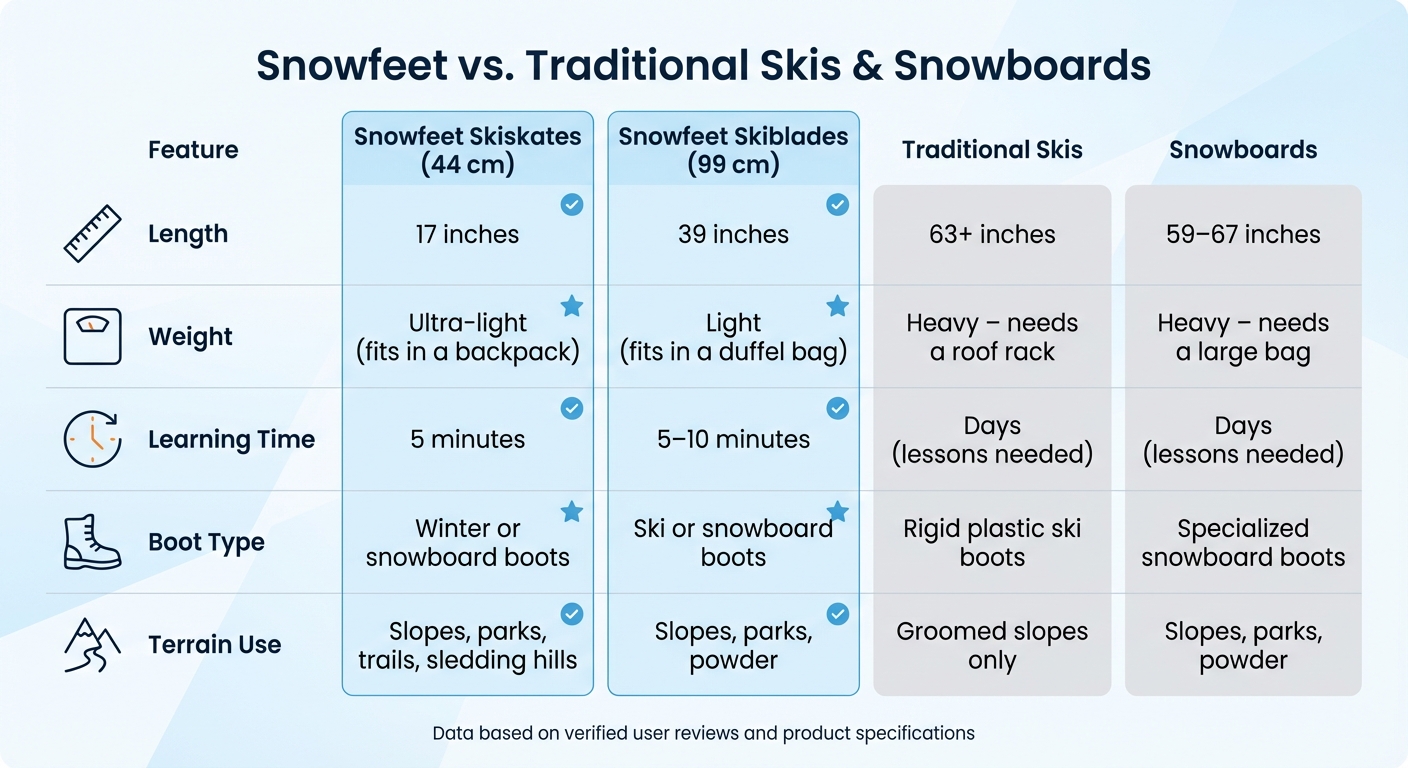
Let’s dive into how Snowfeet* stack up against traditional skis and snowboards. With their shorter, lightweight design, Snowfeet* offer a level of portability and ease that traditional gear just can’t match. While traditional skis are typically over 63 inches long, Snowfeet* range from just 17 to 39 inches. This compact size makes them easier to carry, quicker to learn, and a whole lot more fun right out of the gate.
Comparison Table: Snowfeet* vs. Traditional Equipment
| Feature | Snowfeet* Skiskates (44 cm) | Snowfeet* Skiblades (99 cm) | Traditional Skis | Snowboards |
|---|---|---|---|---|
| Length | 17 inches | 39 inches | 63+ inches | 59–67 inches |
| Weight | Ultra-light (fits in a backpack) | Light (fits in a duffel bag) | Heavy – needs a roof rack | Heavy – needs a large bag |
| Learning Time | 5 minutes | 5–10 minutes | Days (lessons needed) | Days (lessons needed) |
| Boot Type | Winter or snowboard boots | Ski or snowboard boots | Rigid plastic ski boots | Specialized snowboard boots |
| Terrain Use | Slopes, parks, trails, sledding hills | Slopes, parks, powder | Groomed slopes only | Slopes, parks, powder |
This table highlights how Snowfeet* simplify skiing compared to traditional gear.
Benefits for Beginners and Casual Skiers
Snowfeet* make skiing accessible and fun from the very first run. Unlike traditional skis, which often require stiff, uncomfortable boots and a steep learning curve, Snowfeet* let you use your regular winter shoes or snowboard boots. That means no need for pricey rentals or hours of lessons. With traditional skis, beginners often spend their first day just figuring out how to stand up. In contrast, Snowfeet* users can start carving turns in just minutes. They maintain the familiar stance of skiing but add more control and agility, making your first ride smooth and enjoyable.
Lower Cost and Better Portability
Snowfeet* are a budget-friendly alternative to traditional ski setups. Prices start at $250 for the Mini Ski Skates, $575 for Skiskates, and $635–$675 for Skiblades. Compare that to the higher costs of traditional skis or snowboards, which also require specialized boots and other gear. As Uncrate aptly puts it:
"Significantly more portable and affordable than traditional skis or snowboards".
Another win for Snowfeet*? They’re super portable. These compact skates fit easily into a backpack or small duffel bag, so you can skip the hassle of roof racks or oversized luggage. Whether you’re packing your car, hopping on a bus, or heading to a remote trail, Snowfeet* make it all much simpler.
Tips for Your First Run with Snowfeet*
Start with Basic Movements
Before hitting the slopes, take some time to get comfortable with the basics on flat terrain. Try skating movements, similar to how a hockey player moves - push off with one foot while gliding on the other. This helps you get a feel for how Snowfeet* respond to your movements. You can also practice sidestepping up a small incline to get used to edge control. Another great drill is scooting forward by alternating your pushes. These exercises only take about 5–10 minutes but can make a big difference when you're ready to tackle the slopes. Unlike traditional skis, which can feel clunky and heavy during practice, Snowfeet* are light and responsive, making the learning process much smoother. Once you’ve nailed these basics, you’ll be ready to work on your stance.
Body Position and Balance
Your stance is everything when it comes to using Snowfeet*. Start with your feet shoulder-width apart in a staggered stance for better stability. Unlike traditional skiing, where you lean forward, Snowfeet* require a more upright posture. Keep your weight centered over the middle to back of your feet. As the Snowfeet team puts it:
"Don't lean forward like you would do with skis, because you don't have the support of regular-length skis to hold you... stand up straight and place your weight over the middle and back of your feet."
Keep your knees bent and flexible to absorb small bumps and maintain a low center of gravity. If you feel like you’re losing balance, lean your upper body forward slightly and spread your arms for extra stability. For those moments when you start wobbling at higher speeds, shifting your weight toward your toes can help you regain control. Once you’ve got your balance dialed in, you can start exploring different types of terrain.
Move from Gentle Slopes to Parks
After getting comfortable with basic movements and balance, it’s time to take things up a notch. Start on gentle, groomed slopes where you can practice turning and stopping without worrying about too much speed. Snowfeet* perform best on groomed snow at ski resorts, snowparks, or even sledding hills. Avoid deep powder (anything over 4 inches) and steep terrain at first. Once you’re confident with controlled turns and stopping, you can gradually try more challenging runs. One of the best things about Snowfeet* is how quickly you can build confidence - many beginners feel ready to tackle snowparks on their very first day. That’s a big contrast to traditional skis, which often take weeks to master. Thanks to their compact design, Snowfeet* make it easy to progress at your own pace.
Conclusion
Your first ride with Snowfeet* could be the start of a whole new winter adventure. They’re easy to pick up right away, giving you more time to enjoy the slopes and less time worrying about mastering complicated gear. Unlike traditional skiing, which often comes with a steep learning curve and pricey equipment, Snowfeet* make it simple to dive right in and have fun.
Experts have highlighted how Snowfeet* Skiblades are perfect for beginners thanks to their lightweight design and intuitive turning. Their compact size makes them incredibly responsive, allowing your skills to grow naturally with every run. This combination of performance and ease has earned Snowfeet* a loyal following among riders around the world.
Another big plus? Snowfeet* are a budget-friendly and hassle-free alternative to traditional ski gear. They’re lighter, easier to learn, and versatile enough to handle groomed trails, mellow hills, or even parks - all without needing a gear swap.
If you’re ready to shake up your winter routine, Snowfeet* might just be the ticket. Their sleek, compact design offers the kind of freedom and control that makes every ride a blast, whether you’re just starting out or looking to try something new on the snow.
FAQs
How easy is it to learn with Snowfeet compared to traditional skis?
Snowfeet make getting the hang of skiing way easier than the traditional long ski route. With their compact and lightweight design (measuring anywhere from 15 to 47 inches), beginners can find their balance and start making turns in just minutes. Compare that to classic skis, which often come with a steep learning curve, taking days - or even weeks - of practice. With Snowfeet, many people feel comfortable and confident after just a few hours on the slopes.
What’s also great is how simple they are to use. Snowfeet strap directly onto your regular winter boots, so there’s no need to invest in heavy, clunky ski boots or bindings. That not only saves you some cash but also spares you from the stiff, awkward stance that can make traditional skis tough for newbies. The result? A smoother, more natural experience that’s fun from the very first run.
What kind of terrain is best for using Snowfeet?
Snowfeet’s short skis and skiskates are a great match for gentle slopes and compact terrain, where having control and quick movements matters most. If you’re just starting out, you’ll feel right at home on easy, low-angle resort slopes - think bunny hills. Their shorter length (17–47 inches) makes it simple to practice turning and stopping, so you can build confidence quickly. They’re also perfect for backyard hills, local sledding spots, or small park slopes, turning any snowy area into your personal playground.
For those who crave a bit more excitement, Snowfeet shines on hiking trails and snow parks. Their lightweight, portable design means you can toss them in a backpack, strap them onto your regular winter boots, and be ready for action in no time. Whether you’re zipping downhill on a trail or trying out freestyle tricks on rails and boxes, these little skis bring big fun. Unlike traditional skis or snowboards, they ditch the bulky gear, making them a fantastic option for casual riders and beginners who want an easy, no-fuss way to enjoy the snow.
Do Snowfeet need special maintenance compared to regular skis?
Snowfeet are a breeze to take care of, much like regular skis. They need the same basic maintenance - waxing and edge-tuning - but here’s the kicker: their shorter length makes the whole process way faster. Waxing, for example, takes just about two minutes. That’s it! So, instead of spending ages on upkeep, you can focus on what really matters - hitting the slopes and having fun.












Leave a comment
This site is protected by hCaptcha and the hCaptcha Privacy Policy and Terms of Service apply.