




❄️ In Short
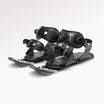
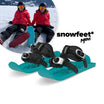
⚡ Short answer: Yes, you can use both snowboard boots and ski boots with Snowfeet* Skiskates (44 cm)*. The best choice depends on your riding style and priorities.
- 🏂 Snowboard boots are flexible, comfy, and great for tricks or casual cruising. They feel more natural for skating-like movements and are easier to walk in off the slopes.
- ⛷️Ski boots offer top-notch stability and control, making them ideal for fast carving and precision on groomed trails. However, they’re stiff and less comfortable for walking or freestyle moves.
Quick Overview:
- 🏂 Snowboard Boots: Tricks, jumps, all‑day comfort.
- ⛷️ Ski Boots: Speed, sharp turns, stability.
If you want freestyle fun, choose snowboard boots. If you want speed and control, go ski boots. Either way, Snowfeet* Skiskates’ bindings* are designed to work seamlessly with both options, so you’re covered no matter what!⭐
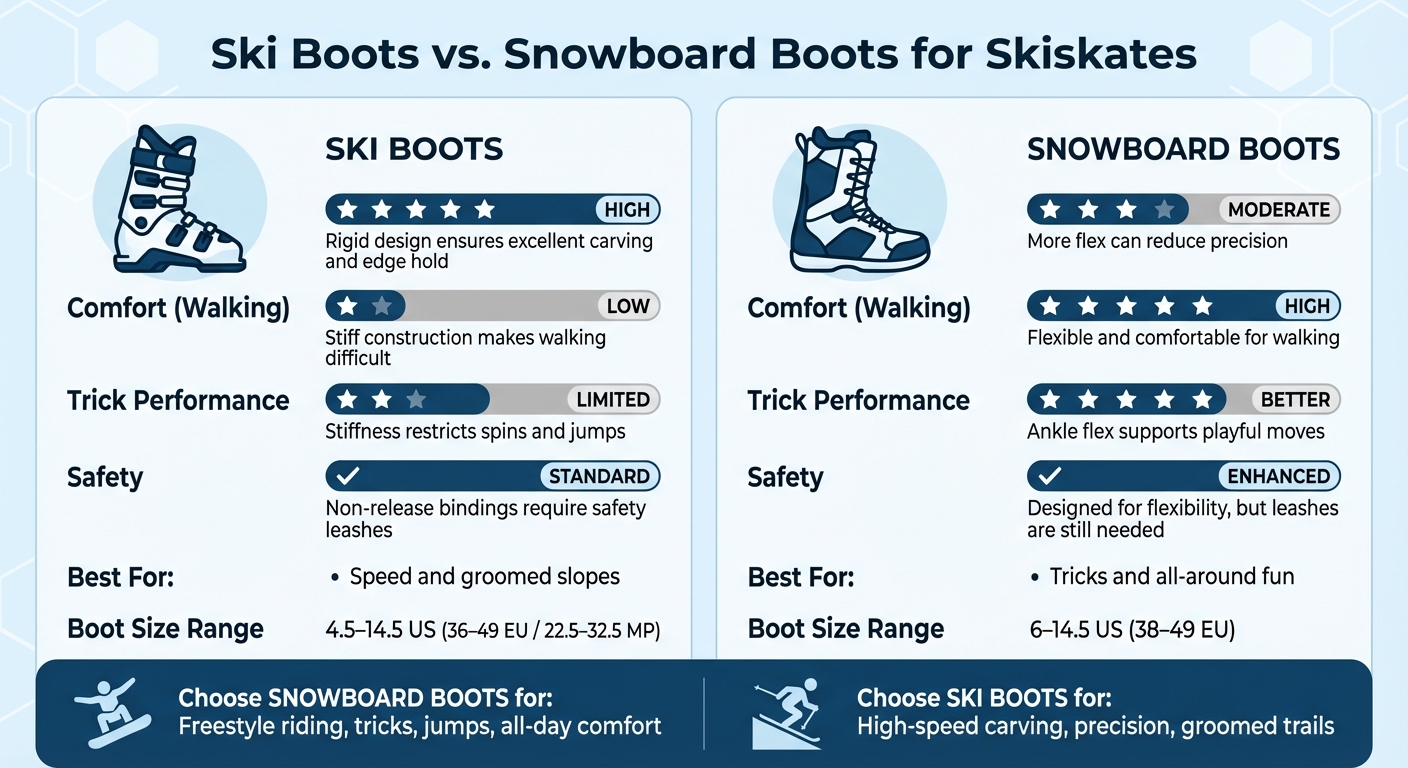
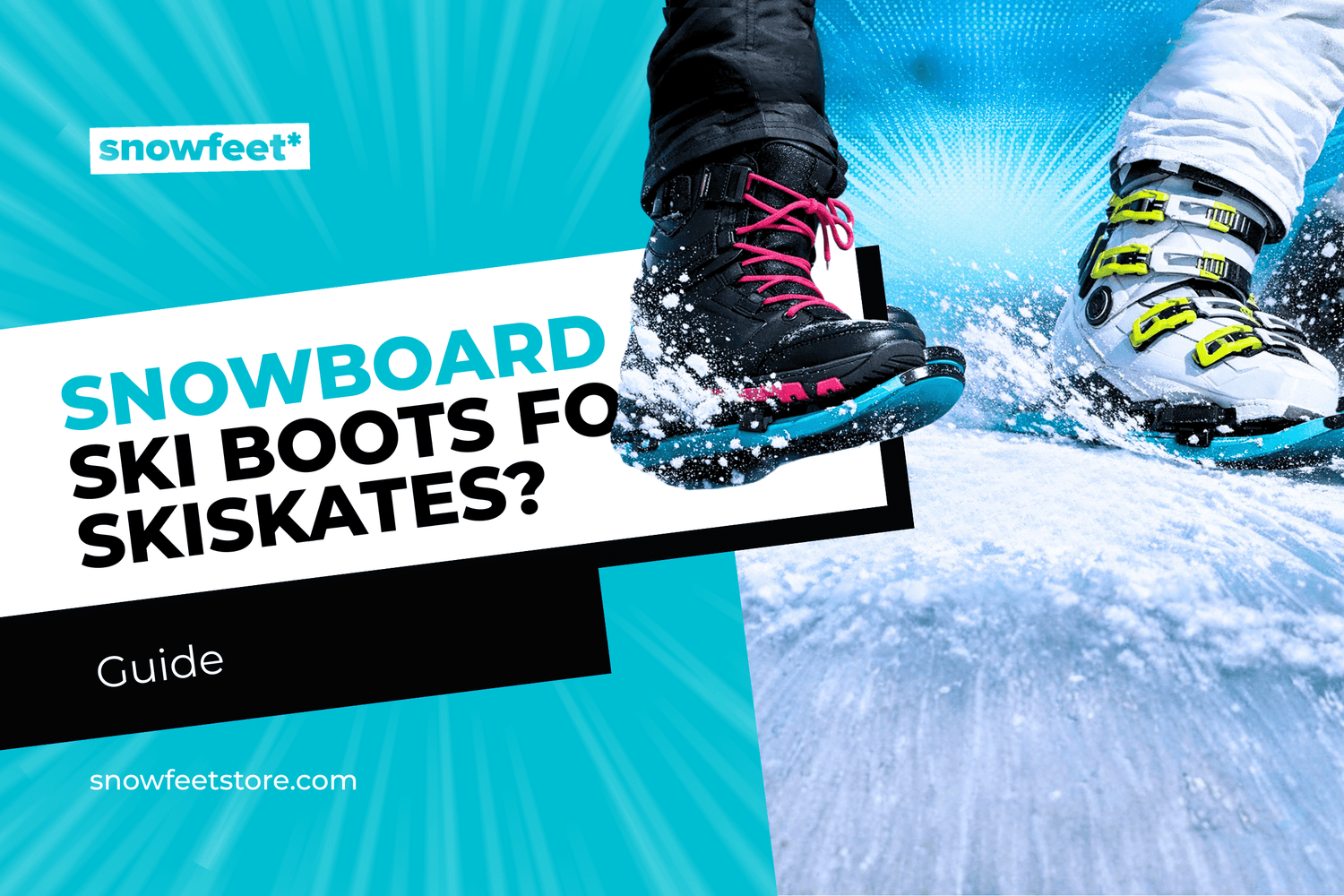
Ski Boots vs Snowboard Boots for Skiskates Comparison
Snowfeet* & Skiskates Complete Guide | All you need to know about Skiskating
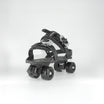
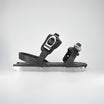
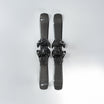
Snowfeet* Skiskates (44 cm) Binding System Explained
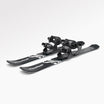
Snowfeet* Skiskates come in two binding options: one tailored for ski boots and another for snowboard boots. Picking the right version for your footwear is key since each model is designed to work seamlessly with its corresponding boot type. Let’s break down how these bindings work and what adjustments are available.
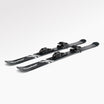
Both binding systems feature a tool-free, non-release design that adjusts to fit a range of boot sizes. The ski boot model accommodates sizes 4.5–14.5 US (36–49 EU / 22.5–32.5 MP), while the snowboard boot version fits sizes 6–14.5 US (38–49 EU).
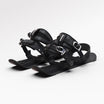
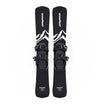
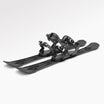
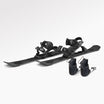
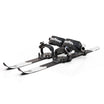
The snowboard boot bindings use a two-strap system — ankle and toe straps — similar to traditional snowboard bindings but modified to suit the compact, 17-inch skiskate profile. For smaller boots, you can tweak the fit by moving the straps to a different hole with a screwdriver. If you’re using bulkier snowboard boots, you might need extra-long straps to ensure everything stays secure.
Unlike the heavy, pricey release bindings found on standard skis, Snowfeet* Skiskates rely on a non-release mechanism. This keeps the skiskates securely attached even during falls, which is ideal for equipment under 39 inches (100 cm). Both binding types also include safety leashes and an anti-slip surface to keep your boots firmly in place.
"Snowfeet* developed snowboard bindings for skiskates that are affordable, easily adjustable for any snowboard boot, and feature an anti-slip surface for superior grip." – Snowfeet Team
Portability is another big win for Snowfeet*. At just 17 inches long, these skiskates can easily slide into a regular backpack_. Forget about lugging around bulky ski racks or heavy cases —_Snowfeet* Skiskates simplify transport and storage without compromising on quality. Despite their compact size, they still feature a wood core, steel edges, and sintered bases, just like full-length skis.
Ski Boots with Snowfeet* Skiskates
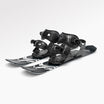
Ski boots are designed to work seamlessly with Snowfeet* Skiskates*, thanks to their non-release, tool-free binding system. These bindings are compatible with standard ski boot sizes, so chances are, your current ski boots will fit just fine. If you're already familiar with traditional ski setups, you'll find the transition to skiskates smooth and intuitive. Let’s dive into how ski boots perform when paired with skiskates.
Ski boots are designed to work seamlessly with Snowfeet* Skiskates*, thanks to their non-release, tool-free binding system. These bindings are compatible with standard ski boot sizes, so chances are, your current ski boots will fit just fine. If you're already familiar with traditional ski setups, you'll find the transition to skiskates smooth and intuitive. Let’s dive into how ski boots perform when paired with skiskates.
The rigid structure of ski boots provides top-notch stability and edge control, especially on groomed slopes. This stiffness gives you a fast, responsive ride that feels similar to traditional skis — but in a compact 17-inch format. They're perfect for packed snow and terrain parks, making them a go-to choice if you value speed and precision over flexibility.
Ski Boots: Pros and Cons
Advantages:
Ski boots shine when it comes to stability and control. Their stiff design keeps your ankles firmly supported, allowing for sharp turns and high-speed runs on groomed trails. Plus, they’re fully compatible with Snowfeet*Standard and Pro X bindings*, so you can use the boots you already own.
Drawbacks:
That same stiffness that helps on the slopes can be a pain off them. Walking around the resort or hiking between runs can feel awkward and uncomfortable due to the hard plastic construction. Additionally, the rigidity limits flexibility, making tricks like spins, jumps, or riding backward more challenging. Over time, this lack of flexibility might even interfere with the bindings during extended use.
Ski Boots vs. Snowboard Boots: Comparison Table
Here’s a quick comparison to highlight the key differences between ski boots and snowboard boots:
| Feature | Ski Boots | Snowboard Boots |
|---|---|---|
| Stability & Control | High – rigid design ensures excellent carving and edge hold | Moderate – more flex can reduce precision |
| Comfort (Walking) | Low – stiff construction makes walking difficult | High – flexible and comfortable for walking |
| Trick Performance | Limited – stiffness restricts spins and jumps | Better – ankle flex supports playful moves |
| Safety | Standard – non-release bindings require safety leashes | Enhanced – designed for flexibility, but leashes are still needed |
| Best For | Speed and groomed slopes | Tricks and all-around fun |
Snowboard Boots with Snowfeet* Skiskates
Snowboard boots are a great match for Snowfeet*Skiskates (44 cm)*, thanks to their dedicated two-strap binding system. This setup uses ankle and toe straps — similar to snowboard bindings — but adjusted to fit the slim profile of skiskates. They’re designed to accommodate sizes 6–14.5 US and feature a simple, tool-free adjustment for convenience.
The flexibility of snowboard boots allows your ankles to move naturally, making them ideal for spins, jumps, and even backward riding. If you’ve got experience in hockey, ice skating, or rollerblading, this smooth, skating-like motion will feel second nature.
"Snowboard boots are more flexible and comfy, great for doing tricks or just having fun." - Snowfeet Team
Another bonus? They’re comfortable off the slopes too. Unlike ski boots, you won’t have to endure that stiff-legged shuffle when walking between runs. For casual riders who prioritize comfort over speed, this adds up to a more relaxed and enjoyable day out. With that said, let’s dive into the pros and cons of using snowboard boots with Snowfeet* Skiskates.*
Snowboard Boots: Pros and Cons
Advantages:
- Comfort and Flexibility: Snowboard boots are much more forgiving than ski boots, offering excellent freedom of movement. This makes them perfect for freestyle riding, especially if you’re hitting jumps or trying tricks.
- Skating-Like Feel: Their natural flexibility pairs well with Snowfeet* Skiskates, creating a smooth, intuitive experience, especially for those familiar with skating or rollerblading. Convenience for Smaller Feet: For riders with smaller shoe sizes, snowboard boots provide a snug, secure fit within the bindings, which helps with control and precision.
- Convenience for Smaller Feet: For riders with smaller shoe sizes, snowboard boots provide a snug, secure fit within the bindings, which helps with control and precision.
Drawbacks:
- Less Stability at High Speeds: The same flexibility that’s great for tricks can feel less supportive during high-speed carving, especially on icy or groomed trails.
- Fit Issues for Larger Sizes: If you wear larger boots (US 12–13), you might run into sizing challenges. Wider models could require longer straps to ensure a proper fit.
Snowboard boots bring a lot to the table for skiskating, especially if you value comfort and versatility. But their trade-offs are worth considering, especially if you’re aiming for high-speed, aggressive runs.
sbb-itb-17ade95
Snowfeet* Skiskates vs. Traditional Ski and Snowboard Equipment
For decades, traditional skis and snowboards have ruled the slopes, but they come with their fair share of challenges. Skis, which typically measure 5–6 feet in length, demand bulky racks, extra storage, and often higher travel costs. Enter Snowfeet\ Skiskates_. At just_ 17 inches (44 cm) long, these compact skates fit snugly into a standard backpack — right alongside your lunch and an extra jacket. This small size doesn’t just make them easier to carry; it opens up a whole new world of riding possibilities. And thanks to Snowfeet\’s clever non-release binding system, convenience is taken to the next level.
Unlike traditional ski boots that make walking awkward, Snowfeet\ Skiskates* let you move naturally. You can pair them with snowboard boots or even regular winter shoes, depending on the model. This means you’re free to stroll through the lodge, hike to hidden trails, and enjoy the entire day — not just the downhill moments.
Another major win? Maneuverability. Long skis can feel clunky, especially in tight spaces, but Skiskates offer an intuitive skating motion. If you’ve ever tried ice skating, hockey, or rollerblading, you’ll feel right at home. Sharp turns, quick pivots, and freestyle tricks are suddenly within reach, minus the steep learning curve of traditional gear. Plus, their lightweight design is easier on your knees, which helps when recovering from falls.
Why Snowfeet* Skiskates Are Better
Let’s break down why Snowfeet\ Skiskates* outperform traditional ski and snowboard setups.
Portability is a game-changer. Measuring just 44 cm (17 inches), Skiskates eliminate the need for roof racks, oversized ski bags, or special storage solutions. Toss them in your backpack, and you’re ready to go — whether you’re taking the bus, hiking to remote trails, or boarding a plane. Over 50,000 riders worldwide have already embraced this convenience.
Versatility across different terrains is another standout feature. While traditional skis are mostly designed for groomed slopes or deep powder, Skiskates excel on packed snow, in snow parks, along narrow hiking trails, and even in your own backyard. Their small size lets you explore forest paths and tight spaces that would be impossible with long skis.
Ease of use makes Skiskates perfect for beginners and pros alike. Learning to ski traditionally can take weeks, but Skiskates feel natural almost immediately — especially if you’ve got any experience with skating. The minimal learning curve keeps things fun and frustration-free. As Zbyněk, Snowfeet’s founder, puts it:
"In my opinion, Skiskates is the best product for slopes we developed so far. I love how easy they are to ski and skate and how many different kinds of tricks I can perform without much effort and almost no restrictions."
Affordability and quality seal the deal. Priced between $480–$490, Snowfeet\ Skiskates* are on par with mid-range traditional skis. But unlike traditional setups, you won’t need to invest in specialized boots, oversized bags, or expensive transport solutions. With a 5.0/5 star rating from 113 reviews, users rave about their lightweight design and reduced strain on the knees. As one verified user, Def Acres, put it:
"Super easy, super light; don't need to lug my skis around and you can wear them pretty much all day."
Snowfeet\ Skiskates* are redefining what it means to hit the slopes — light, compact, and ready for adventure.
Best Boots for Snowfeet* Skiskates (44 cm)
Picking the right boots for your Snowfeet\ Skiskates (44 cm)* can make a world of difference in your experience. Let’s break it down.
Snowboard boots are the top choice for these skiskates. Why? They’re super comfy, flexible, and perfect for tricks, jumps, or just cruising around for hours. Unlike stiff ski boots, snowboard boots let your ankles move naturally — kind of like ice skating or rollerblading. Plus, they’re way easier to walk in when you’re off the slopes. The Snowfeet\* team sums it up perfectly:
"Snowboard bindings give you more flexibility while performing all kinds of tricks, they're super comfortable and you can walk with them anywhere without a problem."
When choosing snowboard boots, go for ones with solid ankle support and a waterproof design. This keeps your feet stable and dry, even during quick balance shifts. These boots fit sizes 6–14.5 US (38–49 EU). If you’ve got smaller feet, you’ll find the fit snug and secure. On the other hand, if you’re rocking larger boots (sizes 12–13 US), keep in mind that bulkier models might need longer binding straps.
Ski boots are another option, especially if you already own a pair. They fit sizes 4.5–14.5 US (36–49 EU / 22.5–32.5 MP). However, they’re much stiffer, limiting your ability to walk or pull off freestyle moves. For all-day comfort and versatility, snowboard boots are the better pick for most riders.
One thing to avoid: boots with overly flexible soles. They can mess with your stability and control. Your choice of boots directly affects how well you perform on Snowfeet\ Skiskates*, so choose wisely for the best experience on any terrain.
Conclusion
Snowfeet\ Skiskates* are designed to work seamlessly with both snowboard and ski boots, giving you the flexibility to choose what suits your riding style and comfort best.
If you're all about freestyle riding or spending long, laid-back days on the slopes, snowboard boots are the way to go. They’re built for all-day comfort and make tricks, jumps, and smooth cruising feel effortless. On the other hand, ski boots deliver a stiffer, more aggressive ride with excellent stability. If you already own ski boots or prefer a more performance-driven feel, they’re a solid choice.
This flexibility pairs perfectly with Snowfeet\’s thoughtful design_. Their_ lightweight bindings are tailor-made for skiskates and come with an anti-slip surface to keep your boots secure. Unlike traditional ski bindings that need a professional setup, Snowfeet\ bindings are easy to adjust at home with just a screwdriver.
With a stellar 4.89/5 rating from 2,265 reviews and recognition as an ISPO innovation finalist, , Snowfeet\ Skiskates* redefine how you can enjoy winter sports. The combination of the right boots and Snowfeet\ bindings* delivers unmatched control, comfort, and freedom — something you won’t find with traditional skis or snowboards.
So, grab your boots, tweak those bindings, and hit the slopes with a whole new kind of ride.
FAQs
Can you use snowboard or ski boots with skiskates, and which is better?
You can pair skiskates with either snowboard boots or ski boots, but snowboard boots tend to be the better choice for most folks. Why? They’re softer, more flexible, and built for side-to-side movement, which perfectly matches the agile, skate-like vibe of skiskates like Snowfeet*. Plus, they’re super comfortable and easy to use - making them a fantastic option for beginners or anyone just out for some casual fun.
Ski boots, on the other hand, are much stiffer and provide solid ankle support, which is awesome for traditional skiing but can feel a bit restrictive when used with skiskates. While they’ll get the job done, they don’t quite match the free-flowing, playful style that skiskates are all about. If you want the best mix of performance and comfort with Snowfeet* skiskates, snowboard boots - or even just regular winter boots - are your best bet.
Are snowboard or ski boots compatible with Snowfeet* Skiskates?
Snowfeet* Skiskates are built to work with a range of footwear, giving you some freedom in what you wear. They’re compatible with regular winter shoes and even snowboard boots. However, ski boots are a no-go. Their stiff and bulky design just doesn’t match up with the lightweight, flexible feel that skiskates are all about.
If you’re leaning toward snowboard boots, they’re a solid choice. They offer great ankle support and are super comfy, which is perfect for longer sessions. That said, many people stick with regular winter shoes because they’re so convenient and easy to use. Whichever you choose, just make sure they fit snugly and securely in the skiskate bindings. This versatility is what makes Snowfeet* such a fun and portable alternative to traditional ski gear - without losing any of the excitement!
Can I use regular winter boots with Snowfeet* Skiskates, or do I need special footwear?
When it comes to Snowfeet* Skiskates, regular winter boots just won’t cut it. These skiskates are specially crafted to pair with ski boots or snowboard boots, which provide the right mix of support, stability, and a snug fit. This combo is key for staying safe and getting the most out of your time on the slopes.
By using proper ski or snowboard boots, you’ll enjoy better control and comfort, making the unique experience of Snowfeet* Skiskates even more fun. To get the best performance, stick with boots that meet these specific needs.












Leave a comment
This site is protected by hCaptcha and the hCaptcha Privacy Policy and Terms of Service apply.