




















Touring skis are an awesome way for trail runners to stay fit during winter without the pounding impact of running on icy trails. They’re lightweight, portable, and combine cardio and strength training into one workout. Plus, they’re perfect for building endurance, strengthening key muscles, and improving balance - all while giving your joints a much-needed break.
Key Takeaways:
- Low-impact cardio: Skiing spares your joints while building aerobic fitness.
- Full-body workout: Engages legs, core, and upper body, unlike running alone.
- Compact gear option: The Snowfeet* WALKSKI is beginner-friendly, affordable ($690–$750), and works with regular winter boots.
- Easy to use: Master in minutes; great for tight trails and steep climbs.
Whether you’re looking to maintain fitness or prep for summer races, touring skis like Snowfeet* make winter training simple, effective, and fun. Let’s dive into how they work and how to add them to your routine!
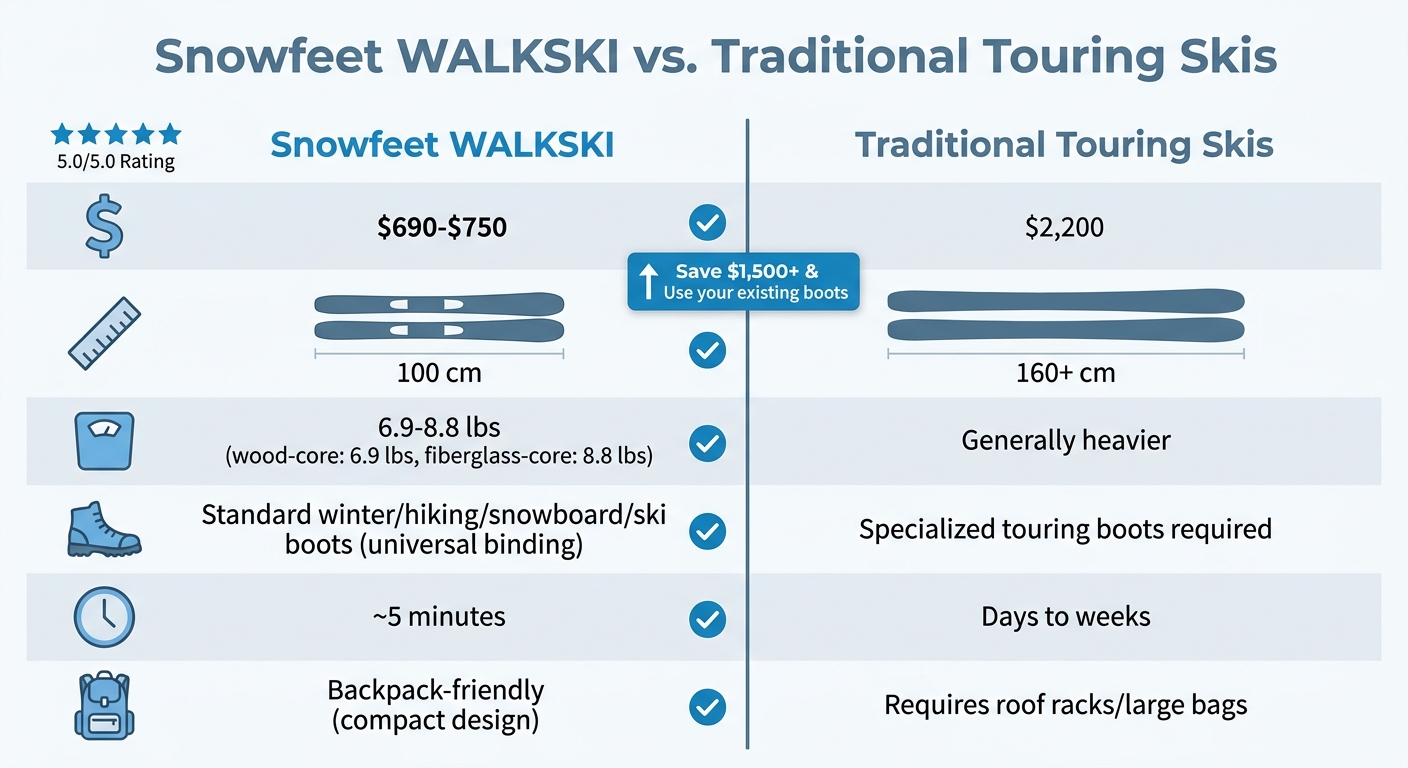
Snowfeet WALKSKI vs Traditional Touring Skis Comparison
Benefits of Touring Skis for Trail Runners
Building Endurance with Low-Impact Cardio
Touring skis are a game-changer for runners looking to build endurance without the wear and tear on their joints. Running can put 2–3 times your body weight's impact on your joints with every step. In contrast, skiing offers a smooth, gliding motion that spares your knees and hips from that pounding.
The cardio benefits? They’re huge. An hour of Nordic-style skiing provides the same training boost as 75 to 80 minutes of running. Plus, you’re working in the 70 to 85% max heart rate zone, which is ideal for improving VO₂ max and building a solid aerobic foundation. And depending on your effort, you can torch 400 to 800+ calories per hour.
"Cross-country skiing activates more of the body's skeletal muscles, thereby giving more stimulation and work for your cardiovascular system."
- Ingrid Kristiansen, Former World Champion Runner and Elite Skier
This combination of cardio and full-body resistance training lays the groundwork for serious strength gains.
Strengthening Key Muscle Groups
Touring skis don’t just target your legs - they turn your winter workouts into a full-body effort. Skinning uphill works your quads, hamstrings, glutes, and calves, much like hill running. But here’s the bonus: every pole push activates your triceps, shoulders, biceps, lats, and upper back. It’s like sneaking in a resistance workout while doing cardio, which is perfect for building the arm strength you’ll need for trekking poles during summer ultras.
The downhill sections? They’re all about eccentric quad strength, which helps you handle the pounding of steep, technical descents on the trails.
"The strength you develop in the posterior chain, and eccentric strength in the quads, translates very well to being more stable and handling the impact forces of downhill running better."
- TJ David, Professional Coach and Dynafit Athlete
And don’t forget your core. Skiing keeps your stabilizer muscles engaged as you balance on uneven snow, improving your running form and efficiency when fatigue sets in.
Improving Balance and Agility
Touring skis also sharpen your balance and agility. Tackling varied snow conditions - whether it’s soft powder or hard-packed crust - forces your body to adapt quickly. That kind of agility is gold when you’re trail running and the terrain shifts from smooth dirt to rocky scrambles without warning. Downhill skiing, in particular, trains you to make split-second decisions about the best line to take, a skill that directly translates to technical descents.
The Snowfeet* WALKSKI shines in this department. Its compact design makes it much more maneuverable than traditional long skis, which can feel awkward on narrow forest trails. At just 6.9 pounds per pair for the wood-core version, they’re light enough to carry on your pack when the trail gets too steep.
"Downhill skiing requires acute focus, quick decision making, choosing an efficient line, surrendering to gravity, and can be very playful in nature. All great qualities to incorporate into your running as well!"
- Mike Foote, Professional Runner, The North Face
How to Add Touring Skis to Your Winter Training Plan
Zone 2 Training: Aerobic Base Building
Touring skis are a fantastic way to build your aerobic base with steady Zone 2 training. These sessions are all about maintaining a consistent, low-intensity effort that minimizes impact. Aim to train 4–7 times a week, with sessions ranging from 30 minutes to over 6 hours, depending on your goals. The key is to keep it easy - think of a Rate of Perceived Exertion (RPE) of 5 or 6 out of 10, where you can comfortably hold a conversation.
To find your Zone 2 heart rate, try the MAF (Maximum Aerobic Function) method: subtract your age from 180 to calculate your maximum aerobic threshold heart rate. For instance, if you're 35 years old, your Zone 2 heart rate cap would be around 145 beats per minute. Staying below this limit helps improve mitochondrial efficiency and boosts your body's ability to burn fat - key benefits that will make you a stronger runner when spring rolls around.
"A big aerobic base lays the foundation to tolerate harder training sessions and the long days of touring that will come later this winter."
- Jimmy Picard, Physical Therapist and Performance Coach
One of the best things about skiing is that it’s much easier on your joints compared to running. This low-impact nature allows you to handle higher training volumes without the same risk of injury. For example, you could aim for about 2,000 feet of climbing over 2–3 hours once or twice a week. That’s a lot of vertical gain without putting unnecessary strain on your knees!
Once your aerobic base is solid, it’s time to crank up the intensity.
Interval Training for Anaerobic Fitness
After laying the groundwork with Zone 2 training, adding high-intensity intervals will help you build speed and uphill power. Try workouts like 5×3-minute hill repeats or 15–20-minute uphill tempos to push your anaerobic limits. For technique improvement, include 8×30-second fast strides with 60–90 seconds of recovery. These not only boost gliding efficiency but also refine your uphill pulling technique, making those climbs feel smoother.
The Snowfeet* WALKSKI is an excellent choice for these workouts. Its compact design makes it easier to handle tight switchbacks and navigate technical terrain - situations where traditional long skis might feel cumbersome.
Don’t forget to fuel up! Consume 200–300 calories of carbohydrates per hour to keep your energy levels steady. In freezing temperatures, liquid fuel or hot electrolyte drinks in a thermos can prevent your nutrition from freezing solid.
Balancing Skiing with Running During Transition Periods
As winter winds down, you’ll want to ease back into running while maintaining the strength and endurance you’ve built through skiing. A smart way to do this is by keeping at least one short run per week in your routine during winter. Even a quick 20–30-minute treadmill run can keep your neuromuscular patterns sharp and help you avoid that dreaded "dead legs" feeling when you return to the trails.
Toward the end of winter, start incorporating plyometric strength exercises like reverse lunges and step-ups. These moves prepare your legs for the impact of running. Gradually increase your running mileage while still including 2–3 ski sessions a week. This balanced approach ensures you get the cardiovascular benefits of skiing while also building the running-specific adaptations you’ll need when the snow melts.
"You are working with the season, not against it when you incorporate skiing into your winter training program. If you keep your long-term development in mind instead of your running mileage on any given week, it makes it so much easier to switch things up."
- Mike Foote, Professional Runner
Is Nordic Skiing great for Trail Runners? // Nordic Ski day at Bois du Bouchet, Chamonix
sbb-itb-17ade95
Why Snowfeet* Touring Skis Beat Traditional Skiing Equipment
For trail runners, these skis aren’t just about fun on the slopes - they also double as an effective tool for winter cross-training.
Portability and Convenience
Traditional touring skis are over 160 cm long and can be a hassle to transport. Snowfeet*, on the other hand, measures just 100 cm, making it compact enough to fit in a backpack. Plus, it’s available in two lightweight options: a wood-core version at 6.9 lbs and a fiberglass-core version at 8.8 lbs, both much lighter than conventional setups.
Another bonus? Snowfeet* features a universal binding system, so you can use your regular winter hiking, ski, or snowboard boots - no need to invest in pricey, specialized touring boots.
"They're lightweight and much easier to carry around than full-size skis." - Brad Tolin
This design makes Snowfeet* incredibly versatile for tackling different terrains with ease.
Ease of Use and Multi-Terrain Capability
Long, traditional skis can be tricky to master, often requiring weeks or months of practice. Snowfeet* WALKSKI, with its shorter and more forgiving design, is perfect for navigating narrow trails or dense brush. It’s built for simplicity, featuring a patented four-mode binding system that lets you switch between uphill and downhill modes without fiddling with skins.
Here’s how it works:
- Walk Mode (free heel): Ideal for flat terrain.
- Climb Modes 1 and 2: Use low or high risers for steep ascents.
- Ski Mode: Provides control for descents.
"Very short learning curve, easy to use. Extremely responsive, lightweight on your feet, and easy to ski as opposed to cumbersome long backcountry skis." - Jan, Snowfeet*
This user-friendly design makes Snowfeet* a game-changer, whether you’re a beginner or a seasoned skier.
Cost-Effectiveness and Accessibility
Snowfeet* is not only easy to use but also easy on your wallet. A complete Snowfeet* setup costs between $690 and $750, compared to the $2,200 average for traditional touring ski systems. And since you can use your existing winter boots, you save even more by skipping the need for expensive Alpine Touring footwear.
The feedback speaks for itself: Snowfeet* boasts a 5.0 out of 5-star rating from verified reviewers.
| Feature | Snowfeet* WALKSKI | Traditional Touring Skis |
|---|---|---|
| Average Cost | $690 | $2,200 |
| Length | 100 cm | 160+ cm |
| Weight (Pair) | 6.9–8.8 lbs | Generally heavier |
| Boot Requirement | Standard winter/hiking/snowboard/ski boots | Specialized touring boots |
| Learning Curve | ~5 minutes | Days to weeks |
| Portability | Backpack-friendly | Requires roof racks/large bags |
Data referenced from.
Sample Winter Training Plan for Trail Runners
Crafting a winter training plan that incorporates touring skis can be both simple and effective. The goal is to find a balance between building your aerobic base and allowing for proper recovery, all while keeping your routine enjoyable and manageable. Below is a sample week designed to help you get the most out of your off-season training with Snowfeet* touring skis.
Full Ski-Focused Training Week
If you're in the middle of winter and focused on building endurance, aim for 4–7 skiing sessions per week. This plan works best between December and February, when snow is more predictable, and you're not in the middle of race season.
The main focus should be on Zone 1 and Zone 2 training - essentially, a pace where you can still chat comfortably. To find your Zone 2 limit, use the MAF method: subtract your age from 180.
"The more hours you spend at a low or medium heart rate (Zone 1 or Zone 2...), the stronger your aerobic base will be, and the faster you'll be able to acclimatize to big running volume in the spring and summer." - Mead Binhammer, GRP Trail Runner
Here’s how a typical week might look:
- Monday: Rest or mobility work
- Tuesday: 45–60 minutes of Zone 2 skiing, followed by a strength session
- Wednesday: 60–90 minutes of steady skiing
- Thursday: 45 minutes of recovery skiing paired with strength training
- Friday: 8×30-second fast strides with 60–90 seconds of recovery to improve uphill power
- Saturday: A long touring session lasting 2–3 hours
- Sunday: 60 minutes of active recovery skiing
Snowfeet* touring skis, with their 100 cm lightweight build, are perfect for varied terrains. At under 9 lbs, they’re easy to carry, whether in your car or backpack, making it simple to explore different locations throughout the week.
Mixed Training Week with Skiing and Running
As spring approaches in late February or March, it’s time to mix things up. Combine 3–4 skiing sessions with 2–3 running sessions each week. This strategy helps maintain your aerobic base while preparing your body for the impact of running.
Here’s an example of a balanced week:
- Monday: Rest or mobility work
- Tuesday: 45 minutes of an easy run, followed by strength training
- Wednesday: Ski intervals - 4 × 5 minutes uphill, aiming for about 2,000 feet of vertical gain
- Thursday: Tempo run with strength training
- Friday: 30–45 minutes of easy skiing
- Saturday: Long run (75–90 minutes)
- Sunday: 60 minutes of Zone 2 skiing
This combination lets you keep the cardiovascular benefits of skiing while preparing for the physical demands of trail running. Adding plyometric exercises to your strength training can also help build tolerance for the impacts of running. Adjust your schedule based on recovery needs and weather conditions to stay on track.
Adjusting for Weather and Recovery Needs
Winter weather can be unpredictable, so flexibility is essential. Snowfeet* skis are portable and perform well in various conditions, making them a reliable choice. Stick to the 80/20 rule: spend 80% of your training at an easy pace and only 20% at moderate or high intensity. This approach helps prevent burnout and reduces the risk of injury.
For extremely cold days, such as when the windchill dips to -10°F, consider prioritizing indoor strength work or shortening your outdoor sessions. If snow conditions are poor or trails are icy, switch to treadmill running or stationary biking instead of forcing a ski session. On hardpack ice, adding metal traction devices to your gear can improve safety and performance.
Use the Rate of Perceived Exertion (RPE) to measure your effort, as snow depth, wind, and terrain can make pace less reliable. If any exercise feels painful, modify it - like doing shallower lunges - or skip it altogether.
And here’s a pro tip: don’t leave your Snowfeet* or boots in the car overnight when temperatures are below freezing. EVA foam midsoles can harden, making them feel like bricks for the first few miles. Bring them inside, and you’ll be ready to go the next morning.
| Day | Full Ski-Focused Week | Mixed Training Week |
|---|---|---|
| Monday | Rest or Mobility Work | Rest or Mobility Work |
| Tuesday | 45–60 min Skiing (Zone 2) + Strength | 45 min Run (Easy) + Strength |
| Wednesday | 60–90 min Skiing (Steady State) | 60 min Skiing (Intervals: 4×5 min uphill) |
| Thursday | 45 min Skiing (Recovery) + Strength | 45 min Run (Tempo) + Strength |
| Friday | 60 min Skiing (Intervals) | 30–45 min Skiing (Easy) |
| Saturday | Long Skiing Session (2–3 hours) | Long Run (75–90 min) or Long Ski |
| Sunday | 60 min Skiing (Active Recovery) | 60 min Skiing (Zone 2) |
Conclusion
Integrating touring skis into your winter training routine can completely change how you approach the off-season. Winter doesn’t have to mean losing the fitness you’ve built from trail running. By using touring skis, you can maintain a strong aerobic base while giving your joints a much-needed break from the impact of running. Plus, it’s a great way to get full-body conditioning - working your arms, shoulders, core, and legs all at once.
Touring skis offer benefits that traditional training methods just can’t match. Snowfeet* WALKSKI touring skis, with their compact design and universal bindings, make winter workouts straightforward and accessible. Unlike traditional ski setups, which can cost around $2,200 and require specialized boots, Snowfeet* comes in at $690–$750 and works with the winter boots you already own.
"Skiing is a nice way to mostly embrace the winter and really enjoy it rather than look at it as an off-season that you have to get through." - Logan Greydanus, U.S. National Skimo Team Athlete
Whether you’re focusing on Zone 2 training to build endurance or throwing in uphill intervals to maintain power, Snowfeet* gives you a flexible and effective way to train during the colder months.
Make winter your strongest training season. Check out the Snowfeet* WALKSKI lineup and see how these compact, budget-friendly touring skis can turn your off-season into a powerhouse of progress. Hit the spring trails stronger than ever!
FAQs
What snow conditions work best for Snowfeet* WALKSKI?
Snowfeet* WALKSKI works best on firm or packed snow. These conditions offer the right mix of stability and grip, making your touring experience smoother and more enjoyable.
How do I choose the right boots for Snowfeet* bindings?
When picking boots for your Snowfeet*, go for something lightweight and flexible that attaches securely to the bindings while still being comfortable enough for walking or hiking. Since Snowfeet* are geared toward backcountry touring and cross-training, it’s smart to choose footwear that matches those activities. To get the best fit and performance, check out Snowfeet*'s sizing guides or their recommended options. This ensures everything works smoothly and keeps things portable and easy to use.
How do I stay safe on steep descents with short touring skis?
To stay safe while tackling steep descents with short touring skis like Snowfeet*, it’s all about technique, control, and staying aware of your surroundings. Focus on making controlled turns, use proper edging to grip the snow, and lean on your poles for added stability. The compact and lightweight design of Snowfeet* makes them easy to maneuver, but don’t skip the essentials - always check snow conditions and ensure you have the right avalanche safety gear before heading down. Keeping your balance and being well-prepared will help you stay in control on those challenging slopes.













Leave a comment
This site is protected by hCaptcha and the hCaptcha Privacy Policy and Terms of Service apply.