







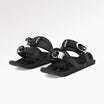













Skiskating is shaking up winter sports in 2026, offering a simple, fun way to glide on snow. Think of it as ice skating meets skiing, with short, compact skis (under 20 inches) that strap onto your regular winter or snowboard boots. It’s affordable, easy to learn (just 5 minutes for most), and works on everything from resort slopes to your backyard. Prices start at $190, making it a budget-friendly option compared to traditional ski gear.
Why it’s trending:
- Affordable: Gear costs $190–$275, much cheaper than full ski setups.
- Portable: Small enough to fit in a backpack - no bulky equipment needed.
- Beginner-Friendly: Quick learning curve, especially for skaters.
- Versatile: Works on groomed slopes, sledding hills, and even light powder.
Snowfeet, the leading brand, has grown a community of 50,000+ riders worldwide. Their skiskates combine metal edges for control, a wood core for performance, and options for both casual and pro-level riders. Whether you're craving quick turns, tricks, or just fun in the snow, skiskating is here to stay.
How Skiskating Works
Snowfeet* Skiskates: Compact Gear for Snow
The Snowfeet* Skiskates, measuring just 17 inches (44 cm), pack a punch with their smart design. They feature a wood core, cap construction, metal edges, and graphite bases, making them fast, easy to control, and small enough to fit in your backpack.
These skiskates work with both ski and snowboard boots. Ski boots give you precision for carving on groomed runs, while snowboard boots offer more ankle flexibility, perfect for tricks and park riding.
Using them feels a lot like ice or inline skating. You push off and glide side-to-side, shifting your weight to the middle or back of your foot. If you've ever skated on a rink or played hockey, the motion will feel second nature. Plus, the short length of the skates makes it easier to spin, ride backward, and take tight turns - things that can be tricky on longer skis. This compact design is key to their performance on different types of snow.
Best Snow Conditions and Terrain for Skiskating
Thanks to their thoughtful design, Snowfeet* Skiskates shine in certain conditions. They’re at their best on groomed slopes, snow parks, and moderate terrain, making them ideal for blue and green runs at your favorite resort. They perform particularly well on packed snow and can handle up to 4 inches (10 cm) of powder. If you’re dealing with deeper snow or tougher conditions, you might want to consider longer options like the 65 cm Skiblades ($635) or the 99 cm Short Skis ($675), which offer better float and stability.
That said, the 44 cm Skiskates are surprisingly adaptable. You can use them on sledding hills, hiking trails, or even your backyard when there’s a light layer of snow. Unlike traditional skis, which depend heavily on groomed slopes, these skiskates give you more freedom to explore.
Using Skiskates at U.S. Ski Resorts
Good news: most U.S. ski resorts allow Snowfeet* Skiskates. They meet the requirements with their metal edges and proper bindings, so you can use the lifts and enjoy groomed runs or terrain parks. If anyone questions them, just point out that the skiskates have the same metal edges as standard skis.
"Our experience is that if you act as if you were skiing with your regular skis, no one will bother you [at resorts]. Argue that Snowfeet* base is made of the exact same metal ski edges as all the other skis." - Snowfeet* FAQ
Before heading out, it’s always a good idea to check the resort’s equipment policies. When it comes to stopping, you’ve got options: a hockey stop works great, or you can use an integrated heel brake if your skates have one. While balancing front-to-back takes a little practice, most people get the hang of it in just five minutes. Once you do, these skiskates are incredibly responsive and a blast to use on resort terrain.
Snowfeet* Skiskates and Gear Options
Snowfeet* Product Line for Skiskating
Snowfeet* has created a range of skiskating gear designed to suit different riders and terrains. Whether you're a beginner or a seasoned pro, there's something in their lineup for you.
Starting with the Mini Ski Skates (38 cm), priced at $250, these are compact and work with regular winter boots - perfect for a variety of snow conditions. If you're looking for something slightly larger, the Ski Skates (50 cm) are available for $250 to $299. These come with a fiberglass core, striking a balance between performance and cost.
For those hitting alpine slopes, the Skiskates (44 cm) are a professional-grade option at $575. They’re compatible with both ski and snowboard boots, making them ideal for carving groomed runs or exploring terrain parks. For trick enthusiasts, the Skiblades (65 cm) at $635 offer greater agility, while the Skiblades (99 cm) at $675 bring added stability for light powder and all-mountain adventures. At the top of the range, the Short Skis (120 cm), priced at $775, deliver a feel closer to traditional skiing but with far more maneuverability than standard long skis.
Premium models feature a wood core with metal edges, similar to traditional skis, while entry-level versions use durable fiberglass-reinforced polyamide for a sturdy yet cost-effective build.
Why Choose Snowfeet* Over Other Brands
What makes Snowfeet* stand out? Portability and price. Unlike traditional ski brands like Rossignol, K2, or Burton, Snowfeet* gear is compact enough to fit in your backpack. Plus, with prices ranging from $250 to $775, they’re a more affordable option compared to traditional setups that can cost $900–$1,200. And here's the kicker: most models work with the winter boots you already own - no need for specialized footwear.
With over 50,000 riders around the world and an impressive 4.9/5 rating from 5,500+ verified reviews, Snowfeet* has proven its gear can handle real mountain conditions. As Uncrate aptly put it: "Far more portable and affordable than traditional skis or snowboards". These compact designs don’t just perform - they make winter sports more convenient than ever.
Snowfeet* Product Comparison
Here’s a quick breakdown of the key features and pricing for each model:
| Model | Length | Core Material | Best Terrain | Skill Level | Price |
|---|---|---|---|---|---|
| Mini Ski Skates | 38 cm (15") | Fiberglass | Backyard, hiking trails | Beginner | $250 |
| Skiskates | 44 cm (17") | Wood | Slopes, snow parks | Intermediate/Pro | $575 |
| Ski Skates | 50 cm (20") | Fiberglass | Groomed slopes | Beginner/Intermediate | $250–$299 |
| Skiblades | 65 cm (26") | Wood | Slopes, carving | All levels | $635 |
| Skiblades | 99 cm (39") | Wood | All-mountain, powder | All levels | $675 |
| Short Skis | 120 cm (47") | Wood | All-mountain | All levels | $775 |
Each model has its strengths. The 44 cm Skiskates are a top pick for resort riders, the 38 cm Mini Ski Skates are perfect for portability, and the models ranging from 65 cm to 120 cm offer increasing stability for various conditions. Whether you're looking to carve slopes, explore powder, or just have some fun in the backyard, Snowfeet* has you covered.
Skiskating Techniques and Learning Curve
Basic Techniques for Beginners
To get started, stand with your feet shoulder-width apart, knees slightly bent, and your weight centered or just a bit back. Avoid leaning too much on your toes - that can throw off your balance.
If you’ve ever skated before, moving on Snowfeet* will feel pretty natural. Use a skating-style stride, pushing your legs out to the sides to build momentum on flat terrain. The metal edges on all Snowfeet* models give you solid grip for turning. To turn, tilt the skates onto their edges and lean in the direction you want to go. Start with easy wedge turns on gentle slopes, and once you’re comfortable, work your way up to parallel turns. Thanks to their compact size - Skiskates measure about 17 inches (44 cm), while the PRO model is slightly longer at 20 inches (50 cm) - turning is much simpler compared to traditional skis.
Once you’ve nailed these basics, you’ll be surprised at how quickly you can pick up skiskating.
Learning Curve Compared to Skiing and Snowboarding
If you’ve got experience with ice skating or inline skating, you’ll probably feel right at home on Snowfeet*. The movements are very similar, and for many, it’s almost second nature. Of course, your progress will vary based on your athletic background, but overall, skiskating is much quicker to learn than traditional winter sports.
Take skiing, for example - it often takes days or even weeks of lessons to feel confident controlling your speed and linking turns. Snowboarding can be even tougher for beginners, especially with that sideways stance and the inevitable tumbles (and bruises) that come with it. Skiskating skips a lot of those early frustrations. With its forward-facing stance and independent foot movement, many people find themselves carving down groomed runs on their very first try.
Once you’ve got the hang of it, make sure to prioritize safety for an enjoyable experience.
Safety Tips and Resort Rules
Safety first! Always wear a helmet when skiskating, and think about adding wrist guards. The freestyle nature of skiskating means falls can happen, and your hands are often the first to hit the snow.
Stick to groomed, packed slopes while you’re learning, and steer clear of deep powder (anything over 4 inches), steep inclines, or bumpy terrain until you’re more confident. At most U.S. ski resorts, Snowfeet* Skiskates are treated just like standard skis or snowboards because they have metal edges. That means you can use the lifts and stick to marked runs. Just remember to follow the Responsibility Code: stay in control, give the right of way to those downhill, stop in visible spots, and obey all posted signs. If a lift operator questions your gear, let them know that Snowfeet* meet the same metal-edge requirements as traditional ski equipment.
sbb-itb-17ade95
Snowfeet* & Skiskates Complete Guide | All you need to know about Skiskating
Skiskating vs. Traditional Skis and Snowboards
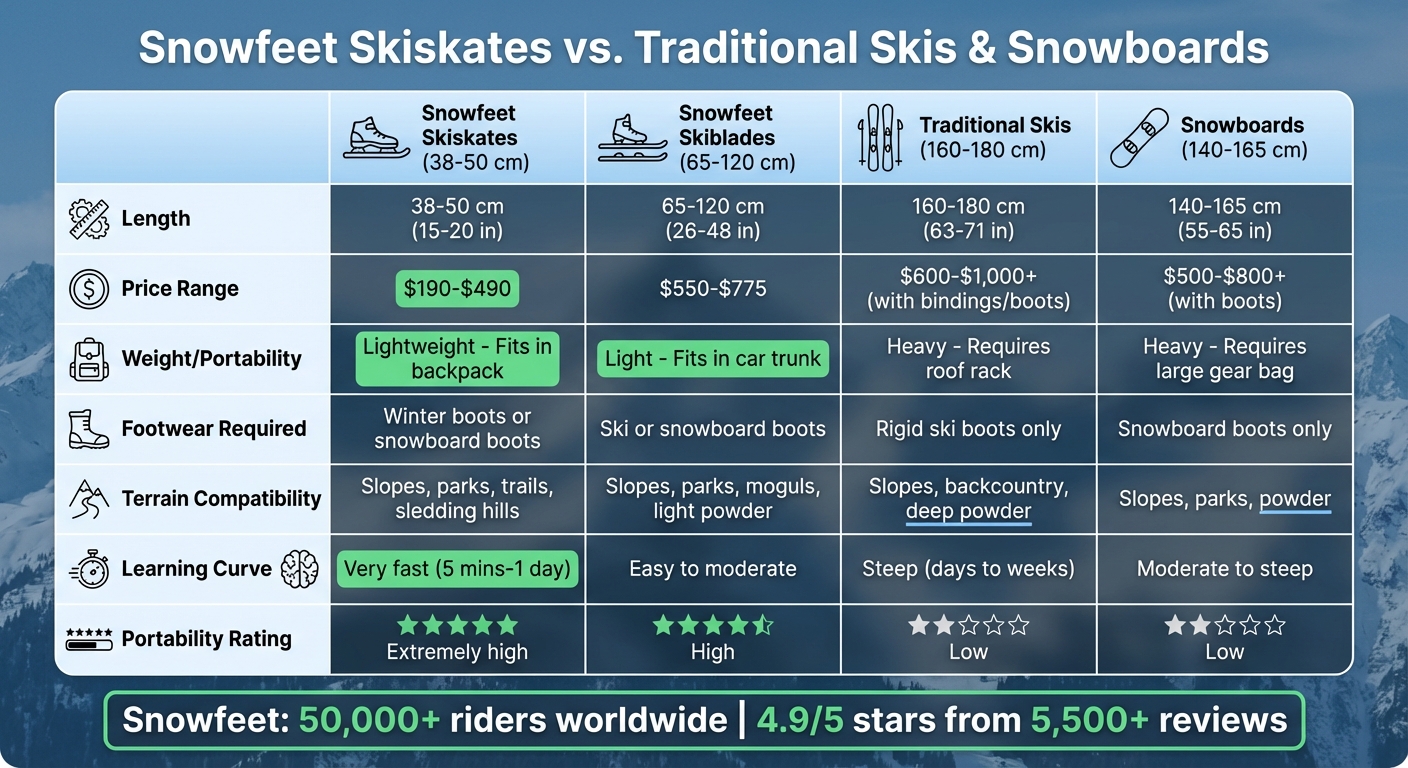
Snowfeet Skiskates vs Traditional Skis and Snowboards Comparison
Portability and Convenience
One of the standout features of Snowfeet* gear is how portable it is compared to traditional skis and snowboards. Let’s break it down: traditional skis are typically 160–180 cm long (about 63–71 inches), and snowboards range from 140–165 cm (55–65 inches). Now, compare that to Snowfeet* Skiskates, which are just 44 cm (17 inches) - about the length of your forearm. That compact size means you don’t need a massive storage solution. In fact, they fit right into a standard backpack. Imagine tossing your Snowfeet* into your bag and heading out for a spontaneous day on the slopes - no bulky gear required.
Even better, most Snowfeet* models are compatible with regular waterproof winter boots or snowboard boots. This means you can skip the hassle (and extra weight) of carrying heavy ski boots.
"Far more portable and affordable than traditional skis or snowboards." - Uncrate
For quick trips, local sledding hills, or last-minute adventures, this convenience is a game-changer.
Performance Across Different Terrains
Snowfeet* are often called the "world's most versatile skiing equipment", and for good reason. While traditional skis and snowboards are designed for specific conditions - like groomed resort runs or deep powder - Snowfeet* open up more possibilities. They work well on groomed slopes, terrain parks, and light powder, as long as the snow is packed or groomed. Their shorter length makes them incredibly agile, allowing for quick turns, easy tricks in the park, and smooth navigation through narrow trails. In contrast, full-length skis can feel awkward in tight spaces, and snowboards often require unstrapping to walk on flat terrain.
That said, traditional skis and snowboards still dominate when it comes to deep powder and high-speed runs. Snowfeet* are best suited for powder up to 4 inches (10 cm) deep, making them perfect for playful rides, park sessions, quick resort trips, and exploring smaller hills.
Comparison Table: Snowfeet* vs. Traditional Gear
Here’s a quick look at how Snowfeet* stack up against traditional skis and snowboards:
| Feature | Snowfeet* Skiskates | Snowfeet* Skiblades | Traditional Skis | Snowboards |
|---|---|---|---|---|
| Length | 38–50 cm (15–20 in) | 65–120 cm (26–48 in) | 160–180 cm (63–71 in) | 140–165 cm (55–65 in) |
| Price Range | $190–$490 | $550–$775 | $600–$1,000+ (with bindings/boots) | $500–$800+ (with boots) |
| Weight | Lightweight (fits in backpack) | Light (fits in car trunk) | Heavy (requires rack) | Heavy (requires large bag) |
| Storage Needs | Backpack | Car trunk | Roof rack or large closet | Large gear bag or rack |
| Footwear | Winter boots or snowboard boots | Ski or snowboard boots | Rigid ski boots only | Snowboard boots only |
| Terrain Compatibility | Slopes, parks, trails, sledding hills | Slopes, parks, moguls, light powder | Slopes, backcountry, deep powder | Slopes, parks, powder |
| Learning Curve | Very fast (5 mins–1 day) | Easy to moderate | Steep (days to weeks) | Moderate to steep |
| Portability | Extremely high | High | Low | Low |
If portability, ease of use, and versatility across different terrains are your priorities, Snowfeet* gear checks all the boxes. While traditional skis and snowboards remain the go-to for deep powder and high-speed carving, Snowfeet* offer a simpler, more flexible option for beginners, casual riders, and anyone looking to try something new off the beaten path.
Conclusion: Why Skiskating is the Future of Winter Sports
Skiskating with Snowfeet* is shaking up winter sports in the U.S., offering a fresh approach that combines portability, affordability, and simplicity. Measuring just 17 inches and starting at $190, Snowfeet* are easy to carry and even easier to use - just strap them onto your own winter boots. This gear breaks down barriers, making snowy adventures accessible to just about anyone. With more than 50,000 riders worldwide and a stellar 4.9/5 star rating from over 5,500 verified reviews, it’s clear that Snowfeet* is leading the charge in reimagining what winter sports can be.
The real game-changer here is flexibility. Unlike traditional skis or snowboards that often demand pricey resort trips and specific conditions, Snowfeet* thrive on a variety of terrains. Whether it’s groomed slopes, terrain parks, sledding hills, hiking trails, or even your backyard, these mini skis handle it all. They’re perfect for everything from tricks and skating to exploring on snow as thin as 4 inches. This versatility means you can enjoy local hills or smaller resorts without the hassle of lugging around bulky gear.
For those in the U.S. who love spur-of-the-moment winter fun, the convenience is unbeatable. Forget roof racks, clunky ski boots, or complicated bindings. Just toss your Snowfeet* into a backpack, lace up your regular waterproof boots, and you’re good to go.
"Far more portable and affordable than traditional skis or snowboards." – Uncrate
Snowfeet* isn’t just gear - it’s a new way to experience winter. Whether you’re a beginner dipping your toes into winter sports, a park enthusiast craving agility, or a family looking for versatile equipment everyone can use, Snowfeet* has you covered. This isn’t about sticking with the old, cumbersome ways of hitting the slopes. It’s about embracing a fun, flexible, and accessible way to enjoy the snow. The future of winter sports? It’s lighter, simpler, and a whole lot more exciting with Snowfeet*.
FAQs
How are Snowfeet Skiskates more portable and convenient compared to traditional skis?
Snowfeet Skiskates are a game-changer when it comes to portability and convenience compared to traditional skis. At just 15–20 inches long (about 38–44 cm) and weighing a mere 3.5 pounds, they’re compact enough to fit into an ordinary backpack. No need for those long, cumbersome skis (typically 5–6.5 feet) or the extra hassle of poles, bindings, and a dedicated ski bag. Instead, Snowfeet Skiskates strap directly onto your regular winter boots - no extra gear required.
Their small size makes them ideal for quick getaways, hopping on public transportation, or tossing in your car trunk without taking up much space. On the slopes, they’re just as handy. You can slip them on or off in seconds, and they’re versatile enough to handle groomed trails, ski slopes, or even the snow in your backyard. And with prices between $140 and $330, they’re a budget-friendly, no-fuss alternative to the traditional ski setup.
What are the best snow conditions for using Snowfeet Skiskates?
Snowfeet Skiskates (44 cm) are at their best on groomed slopes, packed snow, and icy trails. Thanks to their compact size, they deliver great edge control and precision, making them perfect for resort runs or pulling off park-style tricks. Plus, they’re lighter and more nimble than traditional skis, which makes carving and skating on well-maintained trails feel effortless.
That said, they’re not built for deep powder or very steep terrain. Their shorter length just doesn’t provide the stability needed for those conditions. For the best experience, stick to moderately sloped, compact surfaces. Whether you’re new to the slopes or love showing off tricks, these skiskates really shine on hard-packed, prepared snow.
Can I use Snowfeet Skiskates with my regular winter boots?
Yes, you can use Snowfeet Skiskates with most regular winter boots. These skates are built to work with a variety of boots, so you don’t need anything fancy. Just make sure your boots fit snugly and offer good ankle support - this helps keep you comfortable and in control while gliding over the snow.
What’s great about Snowfeet Skiskates is how they simplify things. Unlike traditional skis or snowboards that require special boots, Snowfeet let you strap them onto your go-to winter boots. No bulky, expensive gear - just strap in and you’re ready to enjoy the slopes.













Leave a comment
This site is protected by hCaptcha and the hCaptcha Privacy Policy and Terms of Service apply.