



















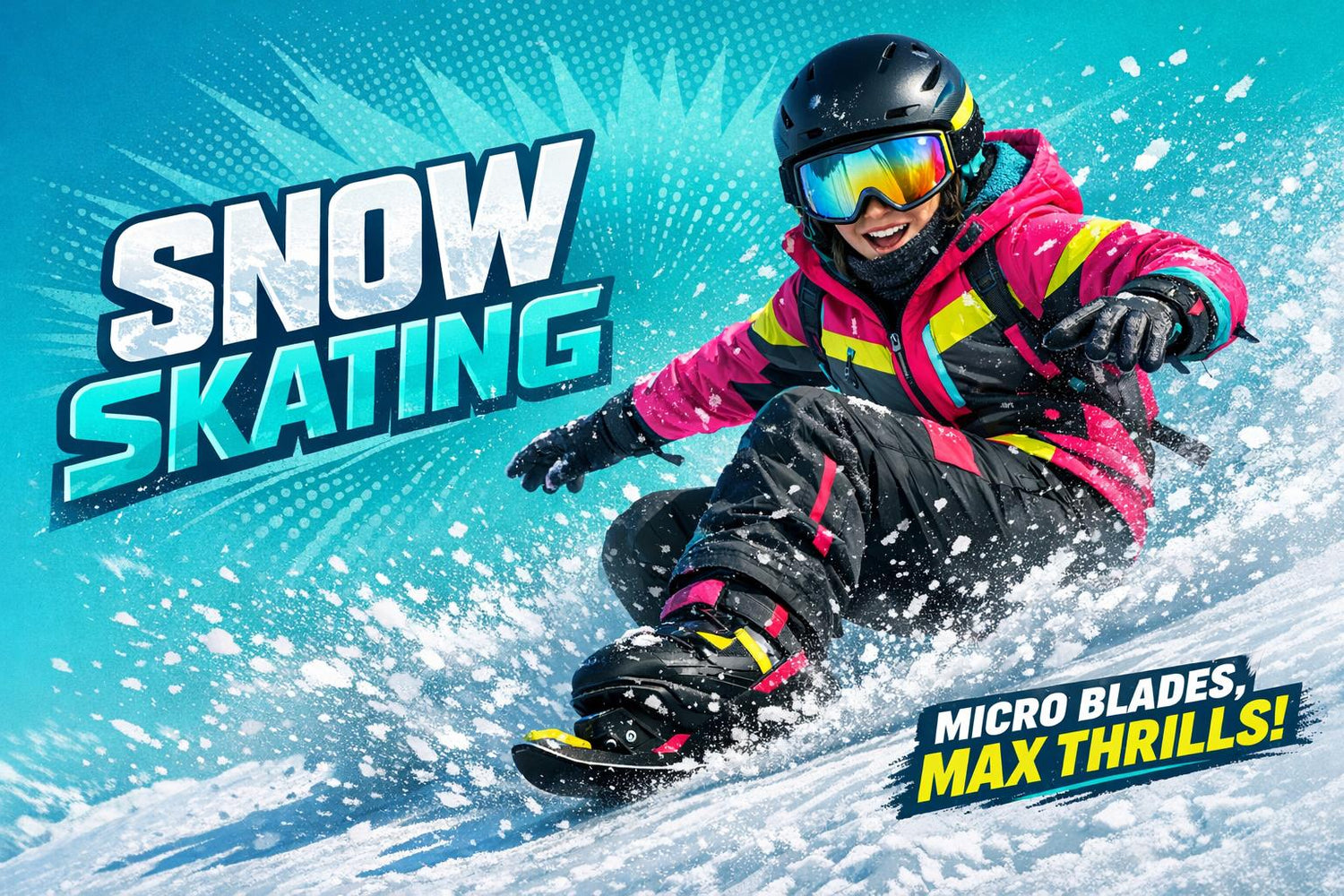
Ever wondered what it’s like to skate on snow? Snowfeet* has made it possible. Think of the speed of ice skating combined with the control of skiing - all while wearing your regular winter boots. In 2026, snow skating has become a go-to winter activity for over 50,000 riders worldwide, thanks to its simplicity, compact design, and affordability.
Here’s what makes Snowfeet* a game-changer:
- Easy to learn: If you can skate, you can snow skate - most people get the hang of it in 5 minutes.
- Portable gear: Fits in a backpack and weighs just a few pounds.
- Affordable: Starting at $190, no need for pricey ski boots or bulky equipment.
- Versatile: Works on sledding hills, trails, ski slopes, and even in your backyard.
With models like the Snowfeet PRO featuring upgraded fiberglass-reinforced construction and metal edges, snow skating offers precise control, quick turns, and a smooth ride on hard-packed snow or light powder. Ready to try something new this winter? Snowfeet* might just be the easiest way to hit the slopes.

Snowfeet vs Traditional Skis vs Snowboards Comparison Chart
The Physical Experience of Skating on Snow
Body Position and Balance
With Snowfeet*, you can stand naturally and comfortably, unlike the rigid forward-leaning position typical of traditional skiing. Your stance is upright, with knees slightly bent and legs about shoulder-width apart. This relaxed posture feels intuitive, almost like walking or skating, making it easy to adjust and move freely.
Balance, however, has its own twist. Snowfeet* come in sizes ranging from about 15 inches for mini ski skates to 39 inches for larger models. This means you’ll need to focus more on front-to-back stability rather than just side-to-side balance. The trick? Keep your weight centered or slightly back on your feet - not leaning forward on your toes, as you might with traditional skis. For added stability, stagger your feet a little, especially on uneven terrain. Beginners often find this movement easy to pick up since it closely resembles the motions of ice or inline skating.
This natural stance and balance lay the groundwork for the sharp edge control Snowfeet* are known for.
Edge Control and Turning
Snowfeet* are equipped with metal ski edges that grip hard-packed snow, making carving, turning, and stopping precise and responsive. Turning is straightforward - just shift your weight across the edges. Thanks to their shorter length, Snowfeet* deliver quick, snappy turns, a refreshing contrast to the long, sweeping arcs you’d typically make with traditional skis.
Carving feels immediate and controlled. Unlike traditional skis, which require gradual edging over a longer surface, or snowboards, where both feet are locked in, Snowfeet* give you the freedom to make micro-adjustments. Each foot moves independently, allowing split-second corrections, tight-radius turns in crowded areas, or even sharp hockey stops. The 2026 Snowfeet PRO models take this to another level with features like a narrower base, raised platforms, and fiberglass-reinforced construction for even sharper turns and better handling.
This level of control pairs perfectly with Snowfeet*’s ability to adapt to different speeds and terrains.
Speed and Terrain Performance
Snowfeet* are all about agility and responsiveness. While they won’t hit the top speeds of 180-cm downhill skis, they shine in areas where quick bursts of speed and rapid direction changes are key. On groomed runs, they glide smoothly, letting you carve with precision. In snow parks, their compact size makes it easier to handle side hits, small jumps, and rails.
What really sets Snowfeet* apart is their versatility on different terrains. Whether it’s hiking trails, sledding hills, or cross-country paths, these compact skates turn places where traditional skis feel bulky into your personal playground. They handle hard-packed snow with ease, and models like the 39-inch Skiblades or POWDER versions can even manage light powder up to about 4 inches deep. While deeper powder might call for longer skis, Snowfeet* perform exceptionally well in most U.S. winter conditions, from the Midwest to the Rockies. They’re perfect for chopped snow, soft groomers, and just about everything in between.
Snowfeet* offer a fun, adaptable way to explore winter terrain without the bulk of traditional ski gear.
Snowboarder tries Snowfeet* | Which Snowfeet* Short Ski is the Best? | Snowblades 44, 65, 99 Review
Choosing the Right Snowfeet* Model
Snowfeet* products are all about transforming your winter adventures, but picking the right model is key to getting the most out of your experience. The right choice depends on your skill level, the terrain you’ll tackle, and even the footwear you plan to use.
Snowfeet Mini Ski Skates vs. Snowfeet PRO
Let’s start with the basics: the 38-cm Snowfeet Mini Ski Skates, priced at $250, are perfect for beginners and casual riders. They’re versatile enough for various terrains, like hiking trails, sledding hills, and local slopes. If you’re just starting out, the carbon fiber edition offers extra stability to help you feel more confident on your ride.
If you’re looking for more speed and precision, the 50-cm Snowfeet PRO, priced at $275, might be your match. It’s designed for sharper carving, better balance, and smoother rides on groomed slopes and light powder (up to 4 inches deep). This model is ideal for those with some experience in inline skating or ice hockey who want to boost their agility and control. With its fiberglass-reinforced construction, it offers quick turns and responsive edge control, making it a step up from the Mini.
Skiskates, Skiblades, and Powder Models
For riders ready to level up, Snowfeet has more advanced options. The Skiskates (44 cm, starting at $575) feature a wood core, making them great for tricks, jumps, and park features. On the other hand, Skiblades - available in lengths from 65 cm to 99 cm - offer a ride closer to traditional short skis. They’re excellent for carving on groomed trails and in snow parks.
If deep powder or backcountry adventures are your thing, the 99-cm Snowfeet POWDER model, priced at $675, is built for ungroomed terrain and snow deeper than 10 cm. While the standard Snowfeet models handle packed snow and groomed slopes with ease, the POWDER model gives you the extra surface area you need for fresh, fluffy powder. It’s a game-changer for tackling untouched winter landscapes.
Matching Snowfeet* to Your Footwear
Your footwear plays a big role in your Snowfeet* experience. Both the Mini and PRO models are compatible with waterproof winter shoes and snowboard boots, fitting sizes 6 to 13 US (38–47 EU). If you already own snowboard boots, consider upgrading to the PRO X bindings for $290. These bindings are specifically designed to accommodate the bulkier fit of snowboard boots, giving you secure ankle support - especially handy for those with smaller feet.
For Skiskates and Skiblades, you’ll need dedicated bindings. These are available for ski boots (sizes 4.5–14.5 US) or snowboard boots (sizes 6–14.5 US), making it easy to pair them with your existing gear.
Pro skater Logan (@xskyskaterx) shares, "Using a snowboard boot gives me great comfortable ankle support and a comfortable and casual way to walk around."
Whatever model you choose, make sure your footwear provides solid ankle support. Loose shoes can lead to injuries, especially on steeper terrain. Your safety and comfort should always come first!
sbb-itb-17ade95
Getting Started with Snow Skating
Preparing for Your First Ride
Before you hit the snow, make sure your bindings are properly adjusted. Grab a screwdriver and your riding boots to fine-tune them at home. If you’re rocking larger snowboard boots, consider swapping the original front toe straps for extra-long ones to ensure a snug, secure fit - this setup is tailored specifically for Snowfeet* use. For footwear, go with something that offers solid ankle support. Waterproof winter shoes work great for casual trails and sledding hills, while snowboard boots are your best bet for tackling ski slopes.
When it’s time to practice, stick to beginner-friendly spots like groomed slopes, trails, or even your local sledding hill. Avoid deep powder (anything over 4 inches) and steer clear of steep terrain until you’ve nailed the basics. Don’t underestimate the fun of learning in your own backyard or at a nearby hill - it’s just as exciting as a resort when you’re starting out. And here’s a bonus: most ski resorts allow Snowfeet* because they’re equipped with standard metal ski edges.
Once your gear is ready, dive into the basic movements to build your confidence and skills.
Learning Basic Techniques
Getting into your Snowfeet* is super straightforward - just clip in and you’re good to go. Stand with your feet shoulder-width apart, keep your knees slightly bent, and position one foot slightly ahead of the other for better balance. Unlike skiing, you’ll want to shift your weight toward the middle or back of your feet, rather than leaning forward on your toes. If you hit a rough patch, lean back a bit and lift your toes to avoid tripping.
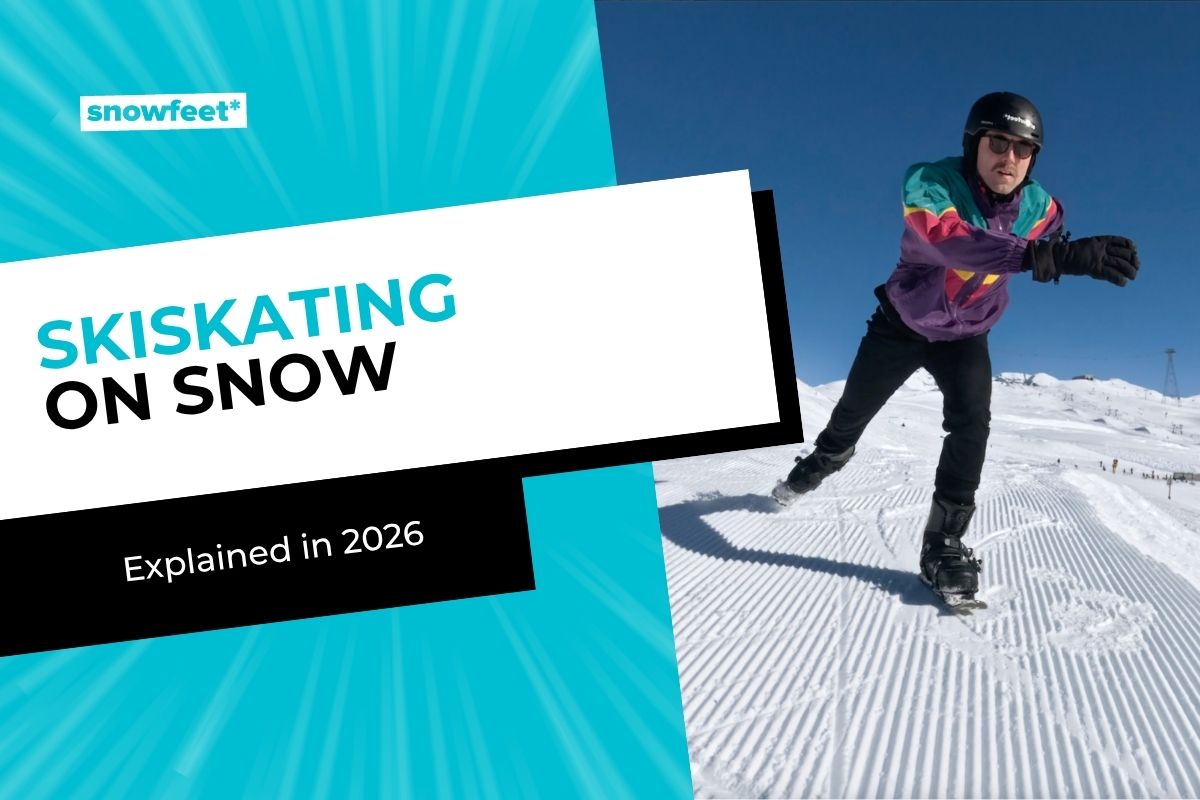
To start moving, push off sideways, similar to how you would on hockey skates or ice skates. It’s a natural and easy way to get gliding. Stopping is just as simple - use a “hockey stop” by pushing the edges of your skates sideways while keeping your weight evenly distributed. If you need to slow down gradually, the built-in heel brake is your friend. For turning, tilt your skates onto their metal edges and shift your body in the direction you want to go.
"It is the same as learning to ski or skate. It takes some time but you will definitely have a lot of fun." – Snowfeet Team
Once you’ve got these basics down, you’ll be ready to take your skills to the next level.
Moving to Advanced Skills
Feeling confident with the basics? Time to step it up! Start linking turns by smoothly shifting your weight from one edge to the other. Want to mix things up? Try riding switch - put your opposite foot forward to improve your versatility and control. When you’re ready for more excitement, head to snow parks and test out small jumps, rails, and other features. The compact design of Snowfeet* makes them ideal for tricks and playful riding.
To keep your gear in top shape, don’t forget regular maintenance. Wax the base to prevent snow from sticking and to keep your speed up. After each session, dry off the metal edges to avoid rust. With a little care, your Snowfeet* will stay in great condition for many adventures to come.
Why Snowfeet* Beat Traditional Skis and Snowboards
Comparison Table: Snowfeet* vs. Skis vs. Snowboards
Here’s a quick breakdown of how Snowfeet* stack up against traditional skis and snowboards:
| Feature | Snowfeet* | Traditional Skis | Snowboards |
|---|---|---|---|
| Portability | Fits in a backpack; weighs just a few pounds | 59–71 inches long; needs roof racks or large ski bags | 55–65 inches; bulky and heavy to carry |
| Learning Curve | 5–10 minutes for basic movement; great for skaters | Steep; requires lessons and practice days | Steep; high fall rate and adjusting to sideways stance |
| Required Footwear | Works with winter shoes or snowboard boots you already own | Specialized rigid ski boots ($200–$600) | Specialized snowboard boots ($150–$400) |
| Terrain Access | Ski slopes, hiking trails, sledding hills, backyards, narrow forest paths | Mostly groomed ski resort slopes | Groomed resort slopes and snow parks |
| Gear Setup Time | Clip in and go in seconds | Boot fitting, binding adjustments, pole setup | Boot-binding compatibility checks |
| Maneuverability | Extremely high; allows skating motions and quick pivots | Moderate; limited by longer lengths | Moderate; fixed sideways stance |
These features, backed by user ratings and growing popularity worldwide, highlight why Snowfeet* are a game-changer.
Portability and Convenience
Forget the hassle of hauling around bulky skis or snowboards. Snowfeet* are lightweight - just a few pounds - and compact enough to fit in a standard backpack. That means no need for roof racks, oversized ski bags, or struggling through crowded resort lobbies. Whether you're tossing them in your car trunk, hopping on public transit, or hiking to a remote trail, Snowfeet* make it all effortless.
The convenience doesn’t stop there. Snowfeet* work with the winter boots or snowboard boots you already own, saving you from spending hundreds on specialized ski or snowboard boots. Plus, you can skip the rental lines at resorts - just clip in and hit the slopes.
Take it from Nathan F., a verified rider, who said:
"Absolute game-changer! They're light, fast, and fun to ride".
Even seasoned snowboarders are impressed. Chan Saelee shared:
"Getting on and off the chairlift with Snowfeet was simple and stress-free - way easier than snowboarding or skiing".
Not only are they easy to carry, but Snowfeet* also open up a whole new world of terrain.
More Terrain Options
Snowfeet* let you explore places that traditional skis and snowboards can’t. While skis and snowboards thrive on wide, groomed resort runs, Snowfeet* excel on narrow hiking trails, sledding hills, backyards, and even tight forest paths. Thanks to their metal edges, they’re accepted at ski resorts, but their compact size makes them perfect for off-piste adventures where larger gear struggles.
Measuring just 38–50 cm, Snowfeet* are incredibly agile. They’re ideal for tight spaces and terrain parks, where quick turns and creative tricks are key. Inline skaters and hockey players often find the transition to Snowfeet* smooth and intuitive. And unlike 59–71 inch skis, these compact marvels let you explore spots that would otherwise be awkward - or downright impossible - with traditional gear.
Conclusion: The Future of Winter Sports
Why Snowfeet* Stands Out
Snowfeet* is proof that big things can come in small packages. Its compact design, combined with portability, ease of use, and versatility, makes it a standout choice for today’s winter sports enthusiasts. With over 50,000 riders singing its praises and a stellar 4.9-star average rating, it’s clear why Snowfeet* has become a favorite. Whether you’re a beginner, an experienced skier, or a snowboarder looking for something new, Snowfeet* offers simplicity, freedom, and convenience.
Crafted with fiberglass reinforcement and metal edges, Snowfeet* delivers the control and safety you’d expect from traditional skis, but in a much lighter and more portable package. Plus, it’s an affordable alternative to bulky ski gear, saving you both money and the hassle of lugging around heavy equipment. This isn’t just another winter sports gadget - it’s a fresh way to experience the slopes.
Ready to Snow Skate?
Pick the Snowfeet* model that matches your style and skill. For those who love portability and an "ice skating on snow" vibe, the Snowfeet Mini Ski Skates (38 cm) start at $190. If you’re after more stability and better performance in powder, the Snowfeet PRO (50 cm) is a great option at $275. Advanced riders who want the carving feel of skis with the agility of shorter blades should check out the 99 cm Skiblades, starting at $590.
Good news: most U.S. ski resorts welcome Snowfeet* thanks to their metal edges. And with free fast shipping and delivery in about three business days, you could be gliding through the snow by next week. From groomed slopes to sledding hills and snowy trails, Snowfeet* turns any winter setting into your personal playground.
FAQs
How does learning to use Snowfeet compare to traditional skis and snowboards?
Snowfeet make sliding around on snow a breeze, especially when compared to traditional skis or snowboards. These compact and lightweight mini skis (measuring between 15 and 47 inches) strap right onto your regular winter boots. That’s right - no need for special boots or complicated bindings. This straightforward setup means beginners can quickly gain confidence and start having fun after just a few tries.
On the flip side, learning to use traditional skis or snowboards takes a lot more effort. You’ve got longer boards, specific boots, and tricky edge-control techniques that can take weeks - or even months - to get the hang of. Snowfeet skip all that hassle. Their simple, user-friendly design makes them a great choice for anyone who wants to hit the slopes without a steep learning curve. With Snowfeet, you’ll be gliding across the snow in no time!
What kind of shoes work best with Snowfeet?
When it comes to getting the most out of your Snowfeet, the right footwear makes all the difference. Go for sturdy winter boots or durable winter shoes that fit snugly and clip securely into the Snowfeet bindings. Boots with solid ankle support are key - they'll give you better control and keep you comfortable while you're gliding across the snow.
Steer clear of bulky or overly stiff boots. They might not fit the bindings properly and could restrict your movement, which would take away from the fun. With the right pair of boots, you'll be ready to enjoy the lightweight and portable thrill of Snowfeet - an exciting twist on winter sports compared to skis or snowboards!
Can you use Snowfeet in deep snow, or are they only for groomed trails?
Yes, you can use Snowfeet on both deep snow and groomed trails! The 99 cm Skiblades 99 POWDER model is built to perform in powder, offering solid floatation in snow up to about 4 inches deep. On groomed slopes, their lightweight design and impressive maneuverability make them a great option for all kinds of winter fun.
Whether you're new to skiing or a seasoned pro, Snowfeet offer a fresh and exciting alternative to traditional skis or snowboards. They let you tackle different terrains with ease and add a whole new twist to your snowy adventures.












Leave a comment
This site is protected by hCaptcha and the hCaptcha Privacy Policy and Terms of Service apply.