



















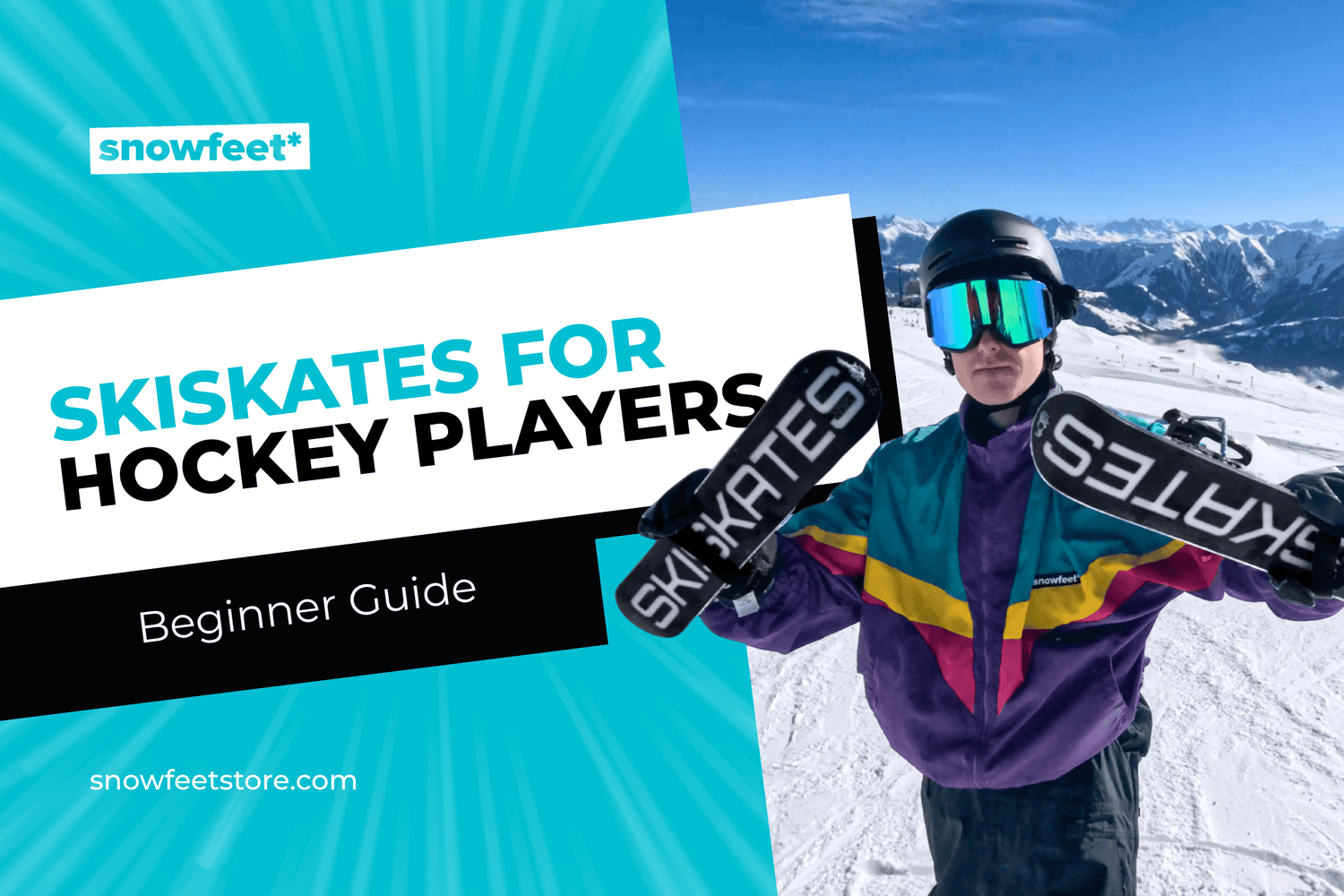
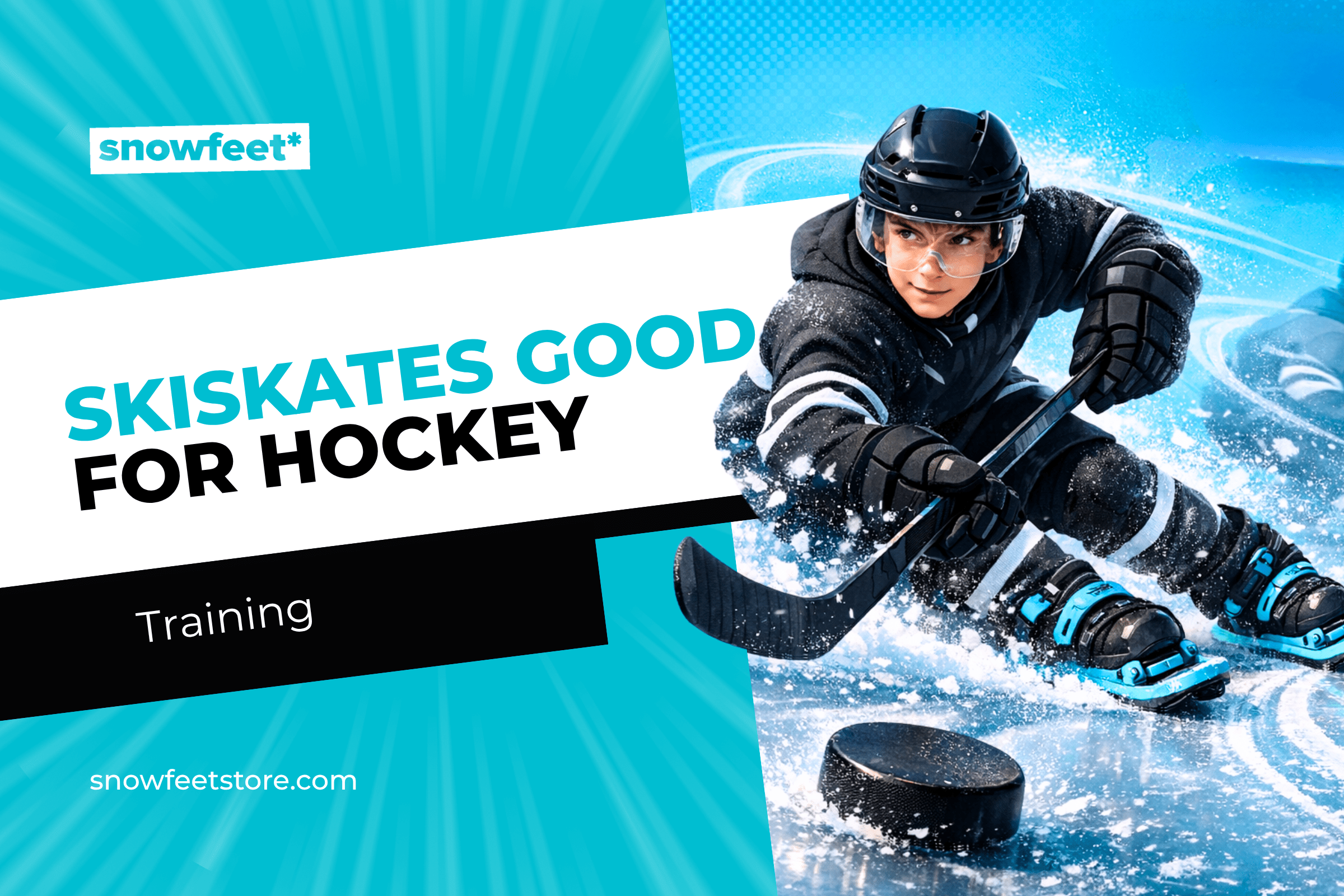
Want to skate on snow like you do on ice? Skiskates are the answer. These compact, 17.3-inch "skates for snow" let hockey players use their skating skills on snowy terrain. Lightweight, easy to carry, and designed for quick movements, they’re perfect for tight turns, fast stops, and even jumps. No lessons needed - just strap them on and go.
Why choose Skiskates?
- Portability: Weigh under 5 lbs and fit in a backpack.
- Ease of Use: Master them in about 5 minutes if you can skate.
- Performance: Mimic hockey-style movements for sharp turns and stops.
- Cost: Starting at $340, they’re a budget-friendly alternative to skis.
From groomed slopes to backyard fun, Skiskates bring your hockey moves to the snow. Ready to try? Let’s break it down.
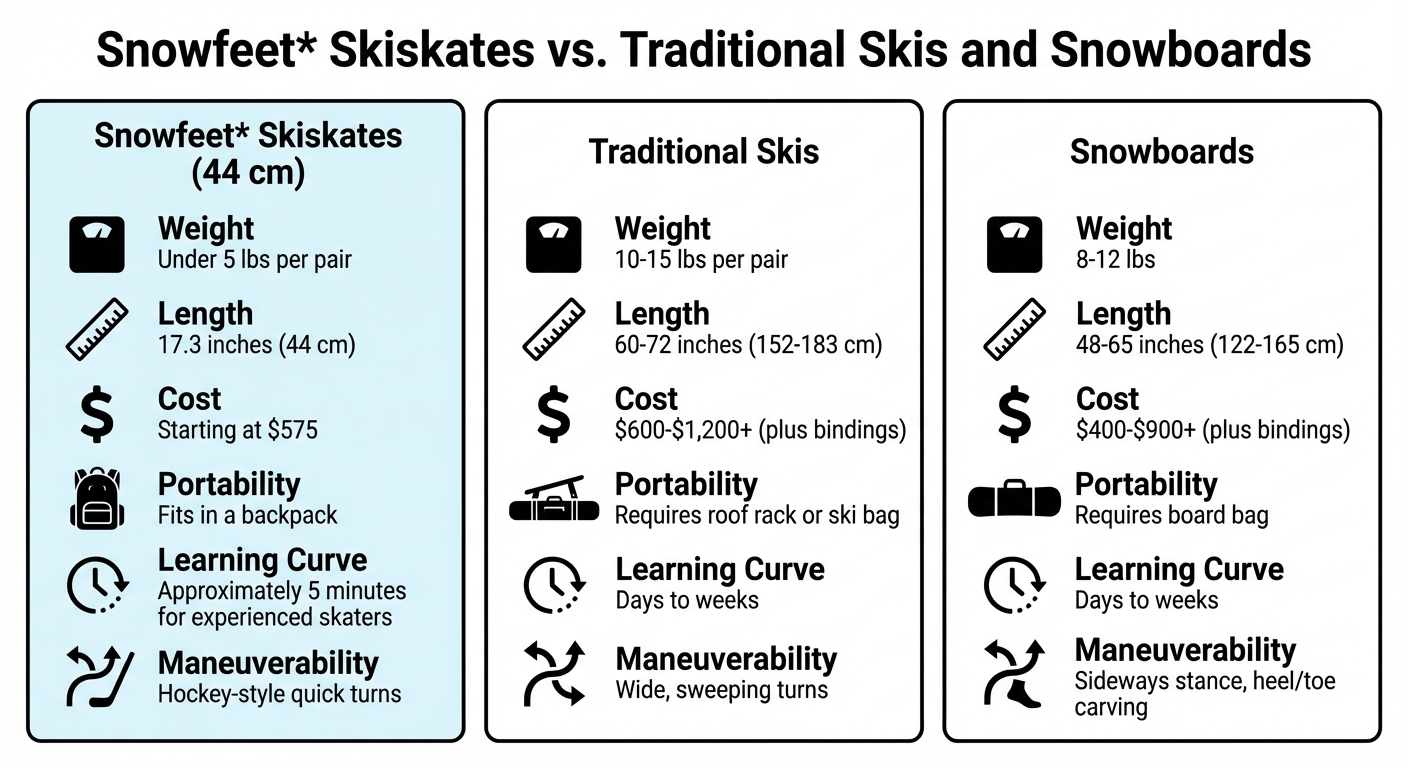
Snowfeet Skiskates vs Traditional Skis and Snowboards Comparison
Why Hockey Players Should Choose Snowfeet* Skiskates
Lightweight and Easy to Carry
Let’s face it: traditional skis and snowboards can be a pain to lug around. Skis can stretch over 5 feet (152 cm) long and weigh between 10 to 15 lbs per pair. Add in boots, poles, and bindings, and you’ve got yourself a mini workout just carrying them. Snowboards aren’t much better, tipping the scales at 8 to 12 lbs and being equally awkward to manage.
Now, compare that to Snowfeet* Skiskates. These little wonders weigh under 5 lbs per pair and are just 17.3 inches (44 cm) long. They’re compact enough to fit in your backpack. For hockey players accustomed to the grab-and-go lifestyle, this portability is a game-changer. Toss them in your car, carry them onto the chairlift without a struggle, or hike to a remote spot without feeling like a pack mule. No need for roof racks or bulky gear - just grab your skiskates and go.
Quick Turns and Better Control
Hockey players are all about agility - quick cuts, sharp turns, and precise movements. Snowfeet* Skiskates are designed to mimic that same on-ice control. Thanks to their compact 44 cm length, they let you pivot and carve with ease, just like you would on skates. Unlike traditional skis that require wide, sweeping turns, these skiskates keep your feet close together, preserving your natural hockey stance and muscle memory.
The best part? There’s almost no learning curve. You can zip through trees, tackle tight trails, or even practice crossovers without having to relearn how to move. It’s like taking your hockey skills straight to the slopes. The compact design and ease of use make Snowfeet* Skiskates a standout choice for any hockey player looking to hit the snow.
Snowfeet* Skiskates vs. Traditional Skis and Snowboards
Here’s how Snowfeet* Skiskates stack up against the competition:
| Feature | Snowfeet* Skiskates (44 cm) | Traditional Skis | Snowboards |
|---|---|---|---|
| Weight | Under 5 lbs per pair | 10-15 lbs per pair | 8-12 lbs |
| Length | 17.3 inches (44 cm) | 60-72 inches (152-183 cm) | 48-65 inches (122-165 cm) |
| Cost | Starting at $575 | $600-$1,200+ (plus bindings) | $400-$900+ (plus bindings) |
| Portability | Fits in a backpack | Requires roof rack or ski bag | Requires board bag |
| Learning Curve | Approximately 5 minutes for experienced skaters | Days to weeks | Days to weeks |
| Maneuverability | Hockey-style quick turns | Wide, sweeping turns | Sideways stance, heel/toe carving |
The table says it all. Traditional skis and snowboards come with extra baggage - literally and figuratively. They’re heavier, pricier, and harder to master. Snowfeet* Skiskates, on the other hand, work with the skills you already have. Instead of starting from scratch, you’re simply transferring your hockey moves to the snow. This seamless transition sets the stage for the skiskating techniques we’ll dive into next.
How to Set Up Your Snowfeet* Skiskates
Attaching Bindings to Your Boots
Getting your Snowfeet* Skiskates ready is quick and easy - no tools required. The 44 cm model comes with durable, non-release bindings that work with most winter, snowboard, and hockey boots. Just slide your boot into the binding and tighten the straps until they’re snug and secure. The bindings feature an anti-slip surface to keep your boots firmly in place, and the included safety leashes ensure your skiskates stay attached even if you take a spill. They’re designed to fit shoe sizes ranging from 6–13 US (38–47 EU).
Once your boots are locked in, you’re just a few steps away from your first ride.
Getting Ready for Your First Time
With your boots secured, take a moment to do a quick pre-run check. Give each strap a firm tug to make sure they’re tight, and inspect the metal edges and base for any visible damage. For your first outing, stick to groomed snow, hiking paths, or sledding hills. Avoid powder deeper than 4 inches or steep, ungroomed slopes.
If you’ve got hockey-edge skills, you’ll find these skiskates feel familiar. Many hockey players find their muscle memory kicks in fast, and they’re gliding confidently within about 5 minutes. This means you can focus on mastering edge control and side pushes instead of worrying about balance.
Basic Skiskating Techniques for Hockey Players
Using Hockey Strides on Snow
Transitioning your hockey stride to snow takes a bit of adjustment. On ice, that quick, sharp push-off is key, but on snow with Snowfeet* Skiskates, you’ll want to go for a longer, more deliberate push. This helps compress the snow and gives you the power you need. Keep an athletic stance - knees bent, weight balanced - and focus on smooth, edge-to-edge weight transfers. Thanks to the compact 44 cm (about 17 in) design of Snowfeet* Skiskates, your edges respond quickly to even slight ankle movements. For the best results, push outward at roughly a 45-degree angle, extending through your hip and knee before pulling your foot back under your body. Once you’ve got this motion down, you can build your skills with some simple drills.
Beginner Drills to Build Skills
These drills are a great way to improve your balance and get comfortable with your edges:
- One-Foot Glides: Find a gentle slope and build up a little speed. Lift one skiskate off the snow and hold it for 3–5 seconds, then switch to the other foot. This helps with balance and control.
- Waddle Skating: On flat ground, take quick, short strides side-to-side, keeping both skiskates on the snow. This drill helps you practice a smooth, rhythmic weight transfer between your inside edges.
- Figure Eights: Set two markers about 15 feet apart and carve loops around them. Focus on leaning into your turns and using the metal edges of your skiskates. Unlike snowboards, which need full-body movement, or traditional skis, which require wider arcs, Snowfeet* Skiskates let you carve tight circles with movements that feel natural for hockey players.
Once you’re comfortable with these basics, you’re ready to try the advanced hockey stop.
How to Do Hockey Stops on Snow
The hockey stop is a game-changer for stopping quickly and smoothly on your Snowfeet* Skiskates. To pull it off, you’ll need to turn your skiskates almost 90° to your direction of travel and dig the edges into the snow to create friction. Start practicing at slower speeds where you feel in control. As you glide, drop into a half-crouch with your knees about shoulder-width apart. This helps un-weight the skiskates, making it easier to rotate them sideways. Lean your body weight back and away from your direction of motion, shifting the pressure to the side of your feet opposite to the movement. Ease into the stop by gradually applying pressure to avoid catching an edge.
Make sure your boots are tightly secured for proper ankle support. If you’re just starting out, practice near a fence or rail by gently pushing your skiskates sideways to get a feel for the edge grip. The short 44 cm length and responsive metal edges of Snowfeet* Skiskates make the hockey stop feel more intuitive compared to traditional skis.
sbb-itb-17ade95
Advanced Tricks and How to Maintain Your Skiskates
Advanced Moves for Experienced Skaters
Once you've nailed the basics, it's time to level up with some advanced moves like jumps, sharp carving, and tackling steep slopes. Let’s start with jumps. When approaching small terrain features, keep a moderate speed. Bend your knees as you prepare to jump, then drive upward while keeping your skiskates parallel. Thanks to their compact size, landing is much easier compared to traditional skis.
Now, let’s talk about carving turns on steep slopes. This is where your agility really shines. Lean into your edges, flex your knees aggressively, and adopt a low, stable stance - similar to a hockey position. Unlike snowboards that require full-body rotation, Snowfeet* Skiskates respond to small weight shifts, letting you quickly link turns as you descend. On those steeper runs, keep your hands forward and stay in control by maintaining an assertive stance. This helps you avoid mishaps and keeps your ride smooth.
Once you’ve pushed your skills to the limit, it’s important to ensure your skiskates are in top shape for your next adventure.
Caring for Your Snowfeet* Skiskates
Keeping your skiskates in great condition doesn’t take much effort, but it makes a big difference. After each session, wipe down the edges and base to remove moisture, and clear any snow from the bindings. Every 5–7 uses, apply a thin layer of ski wax to the base. This reduces friction and keeps your glide smooth. You can grab Snowfeet* wax from the accessories page for as little as $6.
Don’t forget to check the straps and buckles, especially after intense runs. If you notice any wear, replacement straps are easy to find and cost only $6–$10 - a fraction of what you’d spend repairing traditional ski bindings, which can run you $50 or more. Lastly, store your skiskates in a dry spot away from direct heat. Avoid leaving them in your car trunk, as temperature swings can damage the materials over time.
A little care goes a long way in keeping your Snowfeet* Skiskates ready for action!
Hockey Player Tries Snowfeet* Skiskates | See What He Thinks | Skiboards | Short Ski | Mini Ski
Conclusion
Hockey players, imagine taking your skills from the rink to the slopes with Snowfeet* Skiskates. At just 44 cm long, these compact skiskates fit right into a backpack - no need to lug around heavy, awkward gear. Unlike traditional skis, which require extra equipment and storage, these make hitting the mountain a breeze.
What sets them apart is how easy they are to use. If you’ve ever skated before, you’ll find the transition to skiskates smooth and natural. Unlike snowboards that force you into a wide stance or long skis that feel clunky, these skiskates let you move with the tight, controlled agility hockey players are used to.
Performance? They’ve got that covered too. Snowfeet* Skiskates let you execute sharp turns and quick stops, just like you would on the ice. And the price? At $340 for ski boot bindings and $380 for snowboard boot bindings, they’re a budget-friendly alternative to traditional setups, which can easily run over $1,000.
Built with a cap and wood core construction, these skiskates are versatile enough for groomed slopes, terrain parks, backyards, or even hiking trails. Maintenance is a breeze - wax costs just $6, and replacement straps are between $6 and $10. Compare that to the high repair costs of traditional skis, and you’ve got yourself a winner.
With their portability, easy learning curve, and agile performance, Snowfeet* Skiskates let you enjoy winter on your terms. They’re a fun, dynamic, and hassle-free way to bring your hockey skills to the snow, proving that big things really do come in small packages. Snowfeet* Skiskates are the perfect blend of simplicity, performance, and affordability for hockey players looking to dominate the slopes.
FAQs
Are Snowfeet* Skiskates allowed at ski resorts?
Snowfeet* Skiskates are generally accepted at most ski resorts since they're built for snowy terrain, much like skis or snowboards. That said, it's always a good idea to double-check the resort's specific rules before you go to make sure skiskates are allowed.
What boots work best with Snowfeet* Skiskates?
The best boots to pair with Snowfeet* Skiskates are snowboard or ski boots that work with compatible bindings. These provide a snug fit and help you get the best performance out on the snow.
How safe are Snowfeet* Skiskates for beginners?
Snowfeet* Skiskates are built with beginners in mind, particularly hockey players looking to try out snow sports. Their compact 44 cm length makes them stable and easy to control, giving first-timers a confidence boost on the slopes.
Unlike traditional skiing or snowboarding, these skiskates make balancing and maneuvering simpler, which can help cut down on falls. For hockey players, the design feels familiar, adding an extra layer of comfort and safety. Plus, they're lightweight and portable, making them a fun and approachable option for anyone new to snow sports.











Leave a comment
This site is protected by hCaptcha and the hCaptcha Privacy Policy and Terms of Service apply.