



















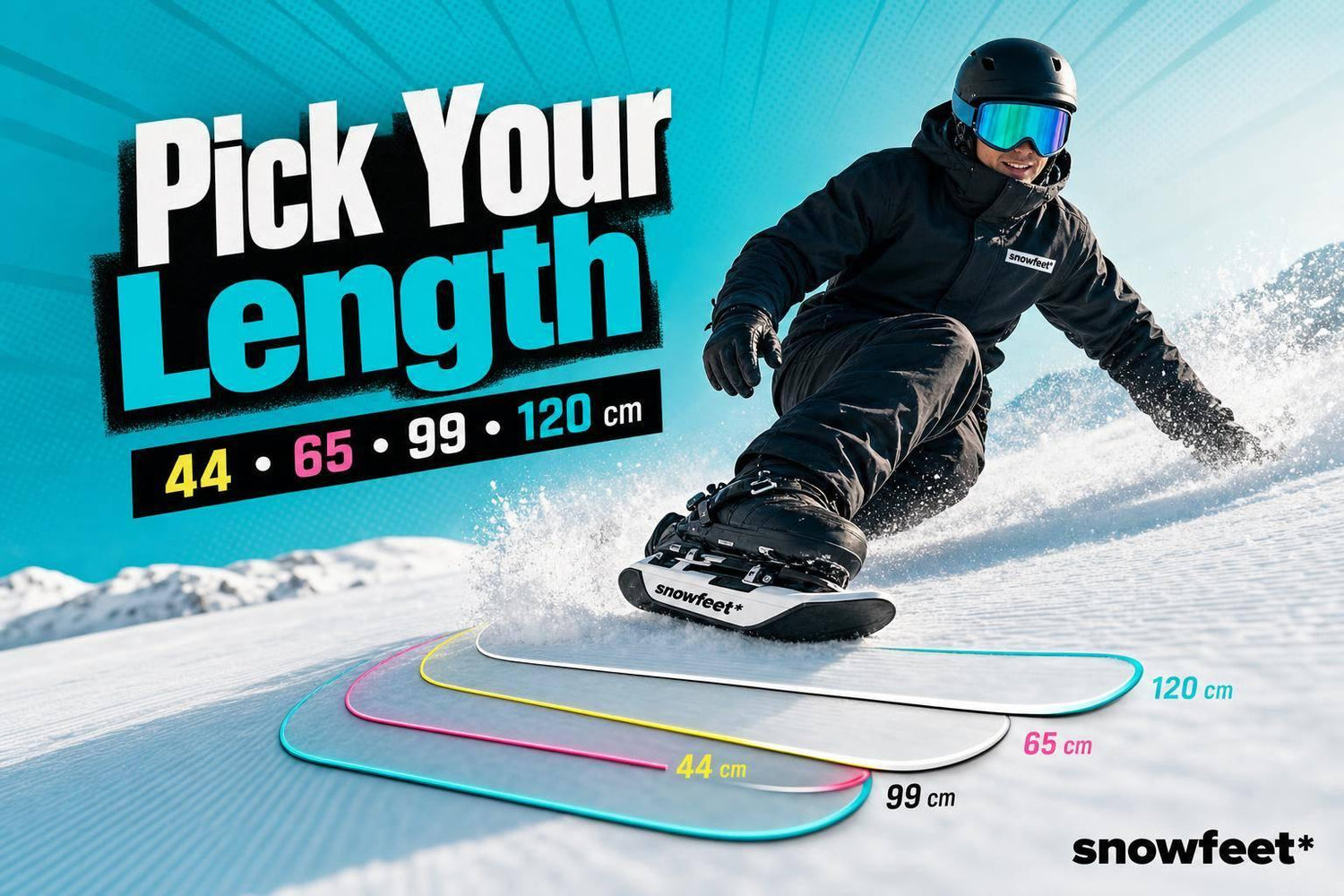
If you want the short answer: 44 cm is for play and travel, 65 cm is the safest first pick, 99 cm fits skiers who want more grip, and 120 cm feels closest to full skis.
I’d choose by how fast you ski, where you ride, and what boots you want to use. In this lineup, the jump from 44 cm to 120 cm changes four big things: turn speed, stability, edge hold, and packing ease. Shorter lengths feel loose and nimble. Longer lengths feel calmer when speed builds.
Here’s the whole article in one glance:
- 44 cm Skiskates: best for skaters, snowboarders, park laps, and carry-on-style travel
- 65 cm Skiblades: best for first-timers, families, and casual resort days
- 99 cm Skiblades: best for intermediate skiers on groomers who want more control
- 120 cm Skiblades: best for faster skiers who want a feel closer to full skis
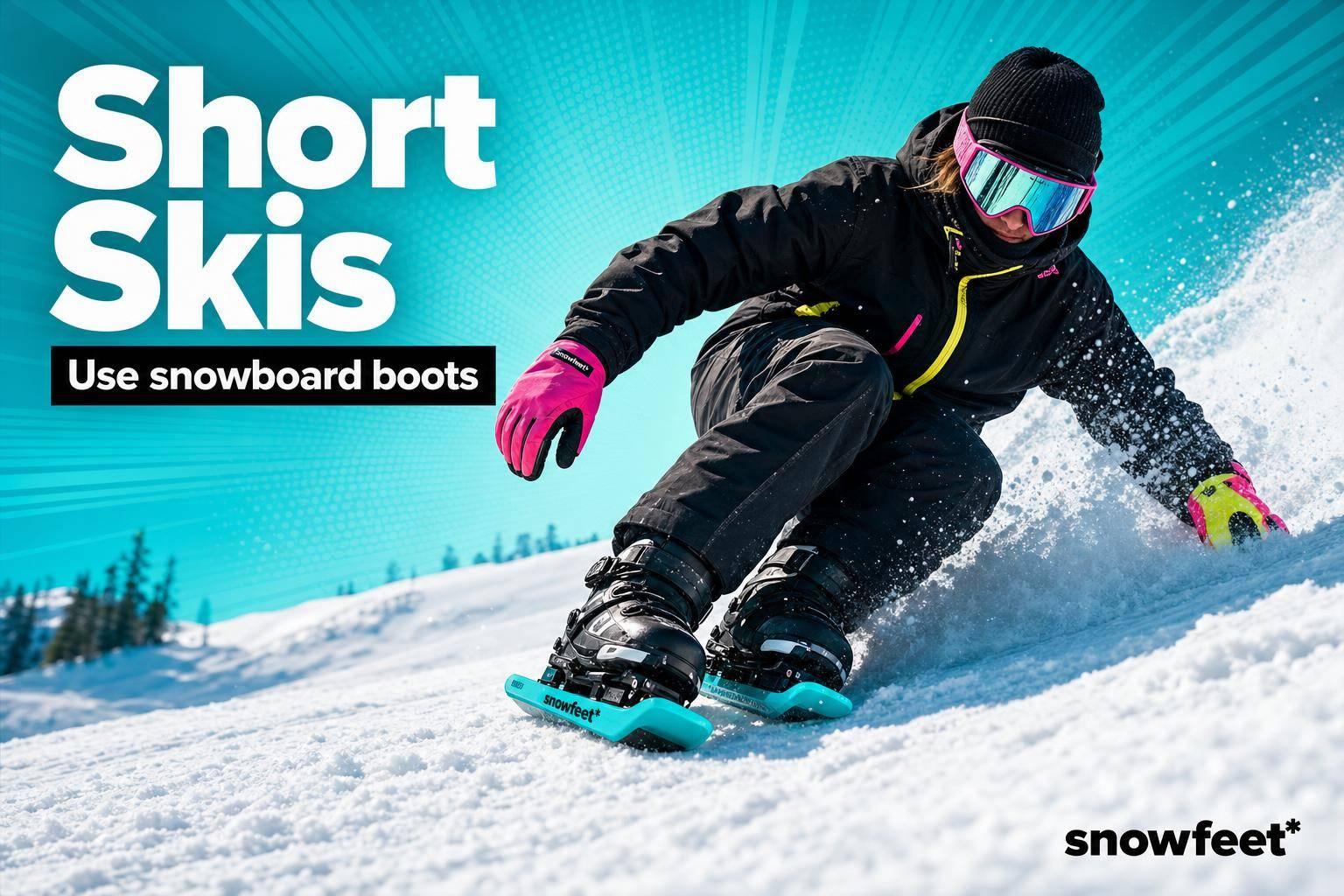
- 44 cm and 65 cm can work with winter boots or snowboard boots
- 99 cm and 120 cm use ski boots with standard bindings
- Deep powder and very high speeds still favor full-length skis
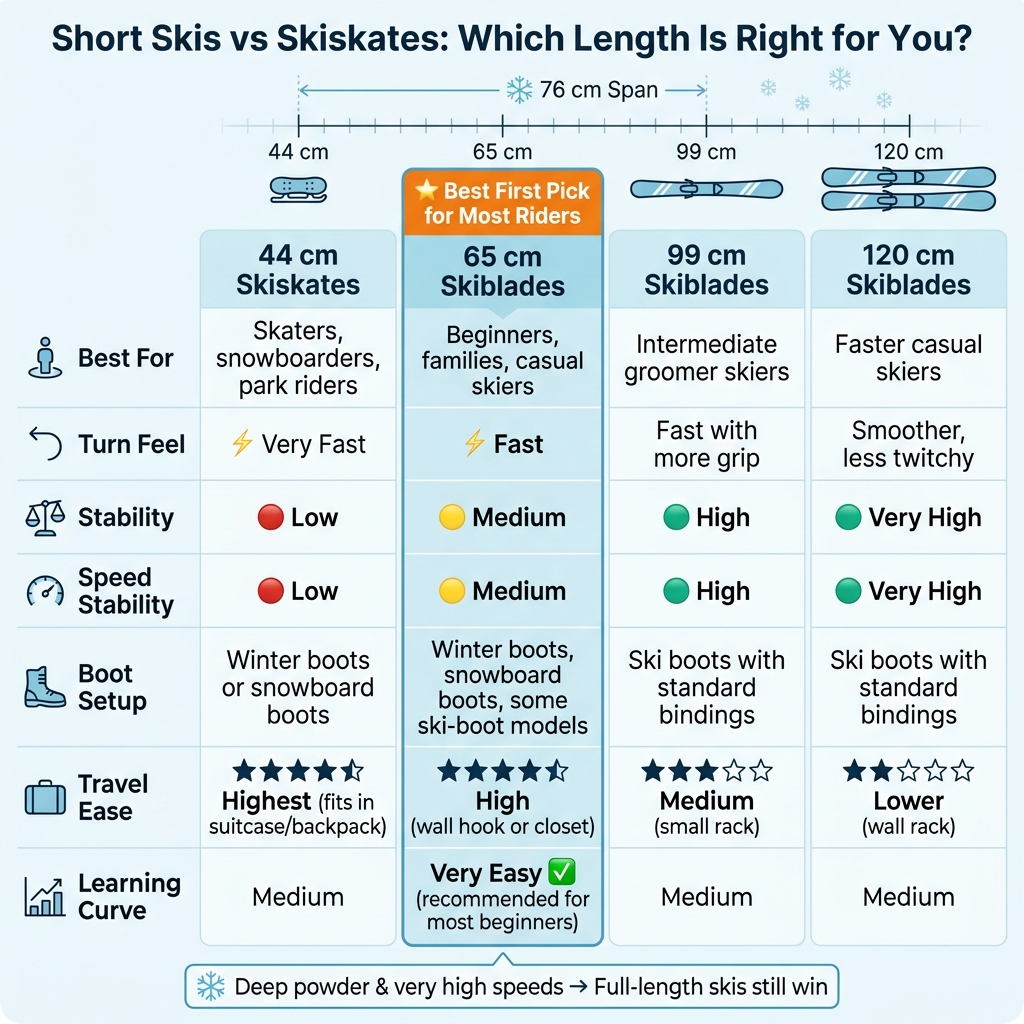
Short Skis vs Skiskates: Which Length Is Right for You?
Snowboarder tries Snowfeet* | Which Snowfeet* Short Ski is the Best? | Snowblades 44, 65, 99 Review
Quick Comparison
| Length | Best for | Turn feel | Stability | Boot setup | Travel ease |
|---|---|---|---|---|---|
| 44 cm | Skaters, snowboarders, park riders | Very fast | Low | Winter boots or snowboard boots | Highest |
| 65 cm | Beginners, families, casual skiers | Fast | Medium | Winter boots, snowboard boots, some ski-boot models | High |
| 99 cm | Intermediate groomer skiers | Fast with more grip | High | Ski boots | Medium |
| 120 cm | Faster casual skiers | Smoother, less twitchy | Very high | Ski boots | Lower |
One stat jumps out at me: the article covers a length span of 76 cm, from 44 cm to 120 cm. That’s a huge shift in feel for such small gear. So if you’re stuck, I’d keep it simple: most people should start at 65 cm and go shorter or longer from there.
How each length rides: learning curve, turning, stability, and speed
Shorter lengths turn in a snap. Longer lengths feel calmer under you. If you're stuck between skiskates and skiblades, this is the fastest way to sort it out. Ride feel tells you a lot.
Here’s how each length stacks up on groomers, park laps, and faster runs:
| Length | Learning Curve | Turning | Stability | Speed Stability |
|---|---|---|---|---|
| 44 cm | Medium | Very High | Low | Low |
| 65 cm | Very High | High | Medium | Medium |
| 99 cm | Medium | High | High | High |
| 120 cm | Medium | Medium | Very High | Very High |
Full-length skis still win in deep powder and at top speed. But for most casual resort riders, Snowfeet* gear is easier to handle and more fun to jump into.
Snowfeet* Skiskates 44 cm: fast turns, lower speed ceiling
The 44 cm skiskates feel the most like skating on snow. They flip edge to edge fast. You can change direction with almost no effort, and the short platform makes spins and playful moves feel natural.
If you’ve done inline skating, ice skating, or snowboarding, this setup tends to click fast. The balance and footwork carry over well. Ski instructors like short gear like this too because it’s so nimble. The compact length makes backward skiing and face-to-face coaching with kids much easier than longer skis do.
The trade-off is simple: less front-to-back stability. Once you pick up speed or hit rough snow, you’ll feel the limit pretty fast. On groomed runs and park features, though, these things are a riot :)
Snowfeet* Skiblades 65 cm: the easiest all-around starting point
For most casual riders, 65 cm is the easiest all-around choice. It gives you more platform underfoot, so things feel steadier, but it keeps the easy steering that makes Snowfeet* gear so approachable.
Short turns come easy. Light carving feels within reach. And the ride still has that playful, loose feel. If you’re new to this stuff, or you just want something simple and fun, this length is the sweet spot between skiskates and longer skiblades.
Snowfeet* Skiblades 99 cm and 120 cm: more stability and ski-like control
These lengths make more sense for riders who want better edge grip and more control as speed picks up.
The 99 cm keeps the perks of a short ski but feels more settled on firm snow and during faster groomer laps. It’s still compact, but it gives you a more planted feel underfoot.
The 120 cm feels the closest to a standard ski. It gives you the best stability and speed stability of the four lengths, while still being shorter and easier to deal with than a full ski setup. It fits stronger riders who want a familiar ski feel without giving up the portability and easy handling that come with a shorter build.
If portability or boot setup matters, that’s the next thing to look at.
sbb-itb-17ade95
Boot compatibility, portability, and where each length works best
If two lengths feel close on snow, travel ease and boot setup usually make the choice a lot simpler.
Portability: 44 cm leads for travel, 65 cm stays convenient, 99–120 cm favor performance
The 44 cm skiskates are the easiest to bring along. They fit in many suitcases or backpacks and can sit on a shelf or hang from a hook. Size-wise, they’re close to a skateboard. That small footprint can also help at the airport, since you may dodge oversize bag fees.
The 65 cm skiblades are still easy to stash in a closet or on a wall hook. They travel much better than full skis, without feeling tiny on snow.
The 99 cm and 120 cm options are still easier to haul than standard skis, but this is where the tradeoff shifts. You get more on-snow performance, but less grab-and-go convenience.
| Length | Portability | Storage ease | Boot setup | Best use |
|---|---|---|---|---|
| 44 cm | Ultra-compact; fits in many suitcases and backpacks | Shelf, hook, or storage bin | Sturdy winter boots or snowboard boots | Small hills, mellow groomers, resort walkways |
| 65 cm | Short and light; easy to travel with | Wall hook or closet | Sturdy winter boots or snowboard boots; some 65 cm models also accept ski boots | Green/blue groomers, family days, easy park laps |
| 99 cm | Compact vs. full skis; better for road trips than flights | Small rack or corner space | Ski boots with standard bindings | Longer groomers, moderate speeds, mixed resort snow |
| 120 cm | Still compact vs. traditional skis, but less travel-friendly than 44 or 65 cm | Wall rack or gear-room corner | Ski boots with standard bindings | Wider groomers, faster runs, intermediate carving |
Boot setup: from casual footwear to more locked-in control
Portability matters. But once you’re riding, boot choice changes the feel in a big way.
One of the biggest perks of Snowfeet* gear is that you don’t always need ski boots. The 44 cm skiskates and 65 cm skiblades work with sturdy winter boots or snowboard boots, which is nice because you may already own a pair. The 99 cm and 120 cm lengths, on the other hand, are made for ski boots and standard bindings.
Here’s the simple version:
- Softer boots feel more relaxed and casual
- Ski boots give you more precise control
So, if you want a low-fuss setup, the shorter lengths have a clear edge. If you want a more locked-in ride, the longer models with ski boots make more sense.
Next comes the easy part: matching each length to the kind of rider who’ll have the most fun on it.
Which length fits your riding style
The right length depends on what you actually do on the mountain, not just what looks nice in a spec chart.
Best picks for beginners, families, kids, and casual holiday skiers
If you're new, rusty, or only ski on vacation, 65 cm Skiblades are the easiest place to start. They give you enough stability to build confidence on green and blue runs, but they’re still short enough to turn with little effort. And when your legs start to fade, they’re a lot more forgiving.
Want something that feels looser and more like skating? Go with 44 cm.
For kids or smaller riders, 44 cm Skiskates feel light and less intimidating. They also keep speeds lower by nature, so the ride feels more like skating than skiing. For families with mixed skill levels, a split setup works well: parents on 65 cm for more control, kids on 44 cm for easy fun near the base area.
Best picks for snowboarders, skaters, park riders, and travelers
That smoother learning curve is a big reason why 44 cm works so well for riders who already move side to side.
If you come from snowboarding, skating, or inline skating, you’ll likely click fastest with 44 cm Skiskates. They make 180s, small spins, and snappy direction changes feel easy. If you want more stability on landings and a smoother step toward ski-style carving, move up to 65 cm.
For travel, 44 cm is the easiest to pack. 65 cm is still compact, but it gives you more range across resort terrain.
Best picks for intermediate and advanced casual skiers
Once you move past the beginner stage, the choice gets simpler: 99 cm for balance or 120 cm for the most stability.
| Rider Type | Typical Terrain | Best Speed Range | Best Length | Alternative |
|---|---|---|---|---|
| Intermediate casual skier | Groomed blues, occasional steeper runs | Moderate to fast | 99 cm | 120 cm |
| Advanced casual skier | Long groomers, steeper runs, firm snow | Fast | 120 cm | 99 cm |
If you ski a few times each season and want real carving support without going back to full-length skis, 99 cm Skiblades often hit the sweet spot. They’re long enough for solid turns at moderate speed, but still short enough to pivot with ease on crowded slopes.
If you like to ski faster, head onto steeper terrain, and want a feel that’s closer to a standard ski, 120 cm gives you more edge hold and more stability at speed. At the same time, it still feels shorter and more playful than classic long skis.
If you’re still stuck between 44, 65, 99, or 120 cm, the final recap breaks it down fast.
Conclusion: How to choose between 44 cm, 65 cm, 99 cm, and 120 cm
Pick the length that fits how you ski most often: your speed, the terrain you like, and how easy you want it to be to pack and carry.
44 cm Skiskates lean hard into agility and travel.
65 cm Skiblades are the easiest all-around choice.
99 cm gives you more stability and better edge grip.
120 cm feels the closest to a ski.
There’s one clear tradeoff. Traditional skis still win in deep powder and at very high speeds on steep terrain, where flotation and stability matter most. But for most other people, like casual resort riders, holiday skiers, families, and travelers, Snowfeet* gear is easier to learn, easier to carry, and more fun in day-to-day conditions.
If you want the short version, use this table:
| Your situation | Best length |
|---|---|
| First-time on snow, or very occasional skier | 65 cm |
| Skater or snowboarder wanting something playful | 44 cm |
| Intermediate rider on mixed groomed terrain | 99 cm |
| Faster skier wanting closer to traditional ski carving | 120 cm |
| Traveling light or with carry-on luggage | 44 cm or 65 cm |
If you’re still stuck between sizes, go with 65 cm. For most people, it’s the best first pick. It hits the sweet spot between ease, stability, and portability for learning and everyday resort use.
FAQs
How do I choose between 65 cm and 99 cm?
Choose based on your experience and what matters most to you. The 65 cm Skiblades sit right in the sweet spot for beginners. They feel less intimidating, turn fast, and pack up with almost no fuss.
The 99 cm Skiblades give you more stability and better support as your speed picks up. That makes them a better fit for intermediate skiers who want more range across most resort terrain and a feel that’s closer to regular carving skis.
Can I use my regular winter boots with Snowfeet*?
Yes - that’s one of the best things about Snowfeet*.
You can use your regular winter boots, which means you can skip those stiff, pricey ski boots that come with old-school skis.
For easy rides or light trails, waterproof winter boots do the job just fine. If you’re heading to the slopes or spending time in the terrain park, snowboard boots are a great pick. And if you already own ski boots and like them, Snowfeet* models can work with those too.
So, you’ve got options. That makes getting started a lot simpler - and a lot less painful for your feet :)
Are skiskates or short skis better for beginners?
Yes. For beginners, skiskates and short skis are often easier than long, standard skis.
Snowfeet’s compact designs, from 38 cm to 120 cm, tend to feel simpler to control. They’re easier to balance on, easier to turn, and often help new riders progress with less of that awkward “baby giraffe on ice” feeling :)
The shorter length also helps prevent crossed tips, which is a common beginner problem on longer skis. And there’s another plus: using winter boots or snowboard boots instead of stiff ski boots can make that first day on snow feel more natural and a lot more fun.











Leave a comment
This site is protected by hCaptcha and the hCaptcha Privacy Policy and Terms of Service apply.