



















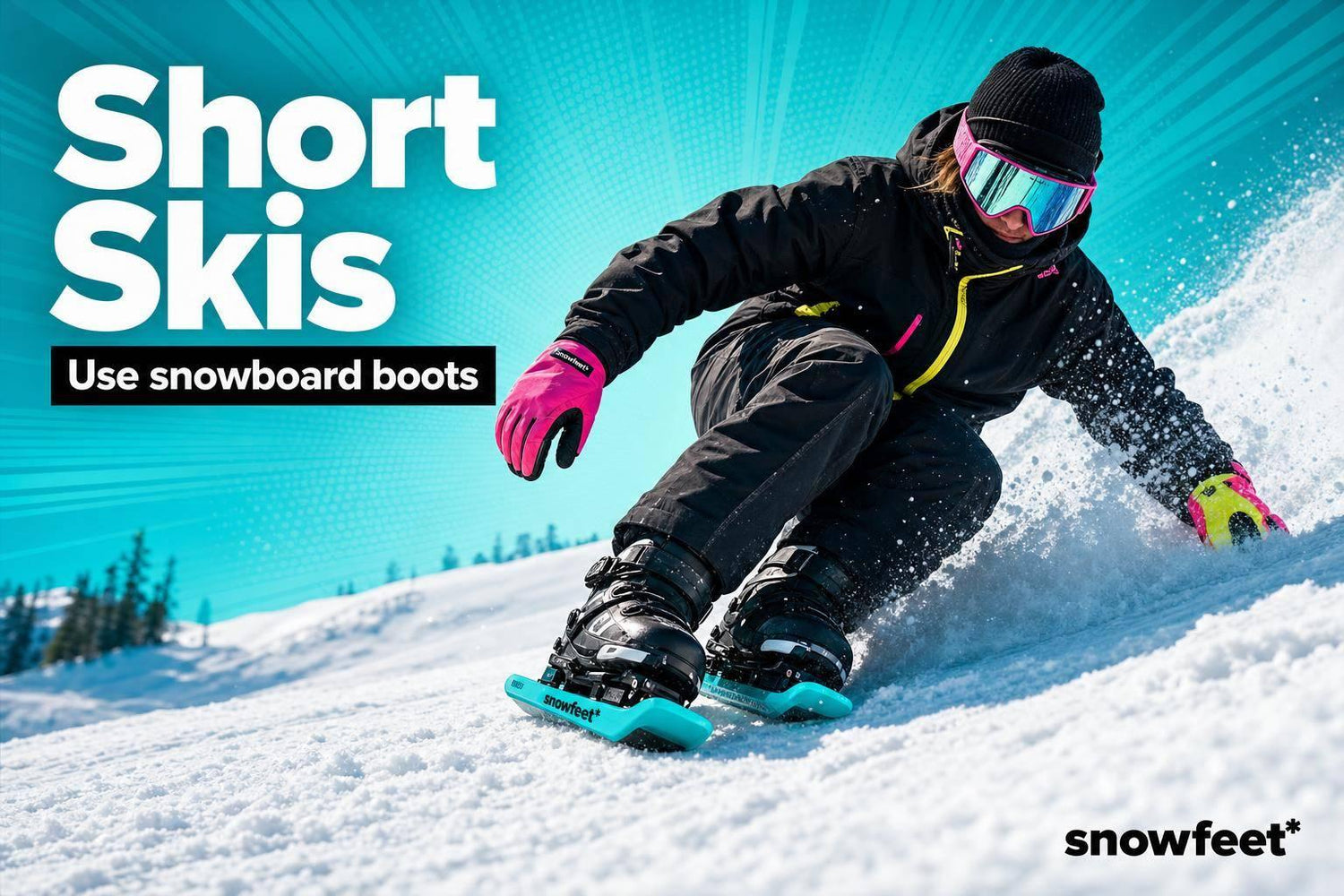
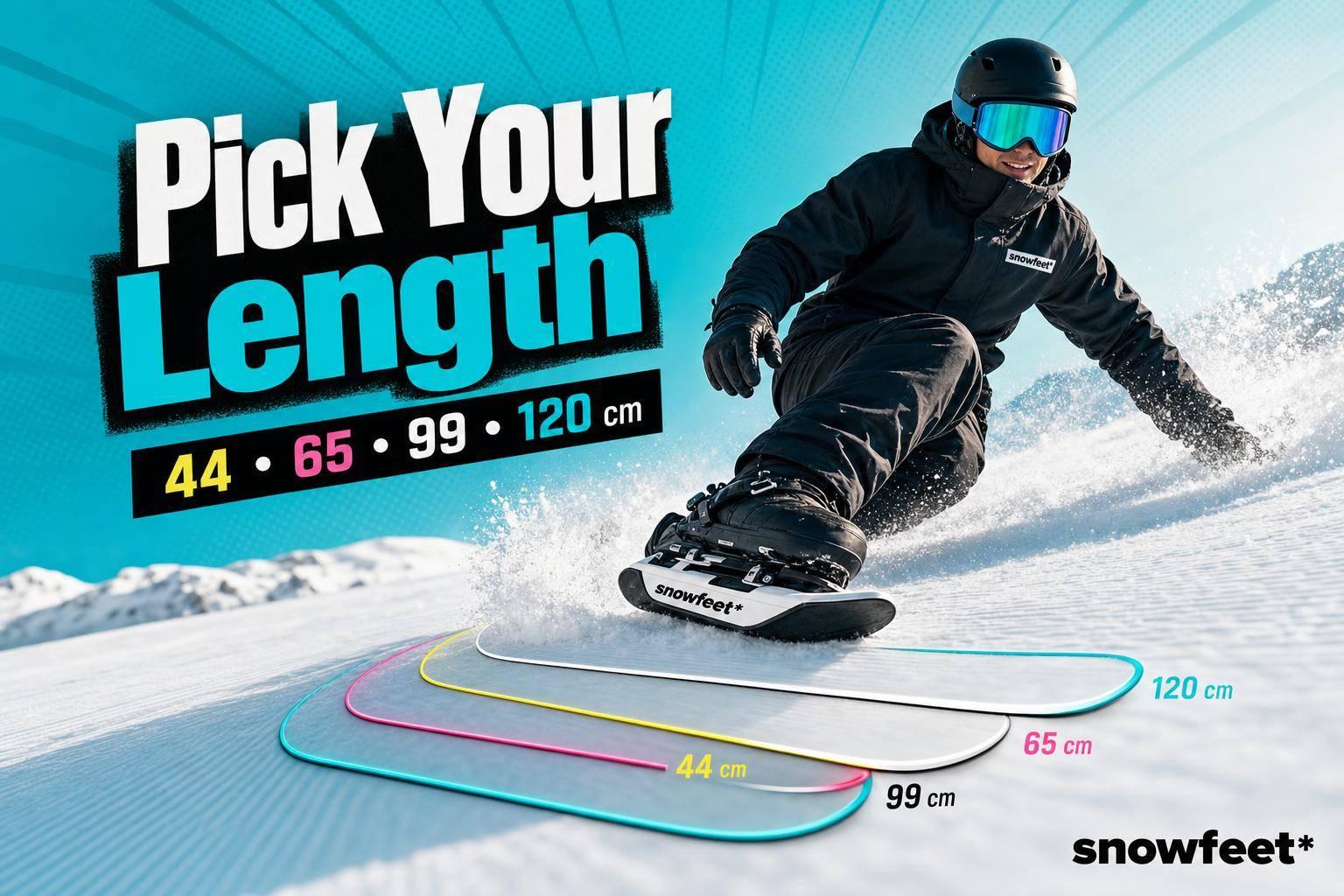
Yes - you can ski in your snowboard boots, and the best pick depends on one thing: how much stability you want. If I want the simplest setup, I’d look at 44 cm, 50 cm, or 65 cm. If I want more control for longer resort laps, I’d move to 99 cm. If I want the most ski-like ride, I’d go 120 cm - but that setup usually means ski boots unless I add a snowboard-binding option.
Here’s the short version:
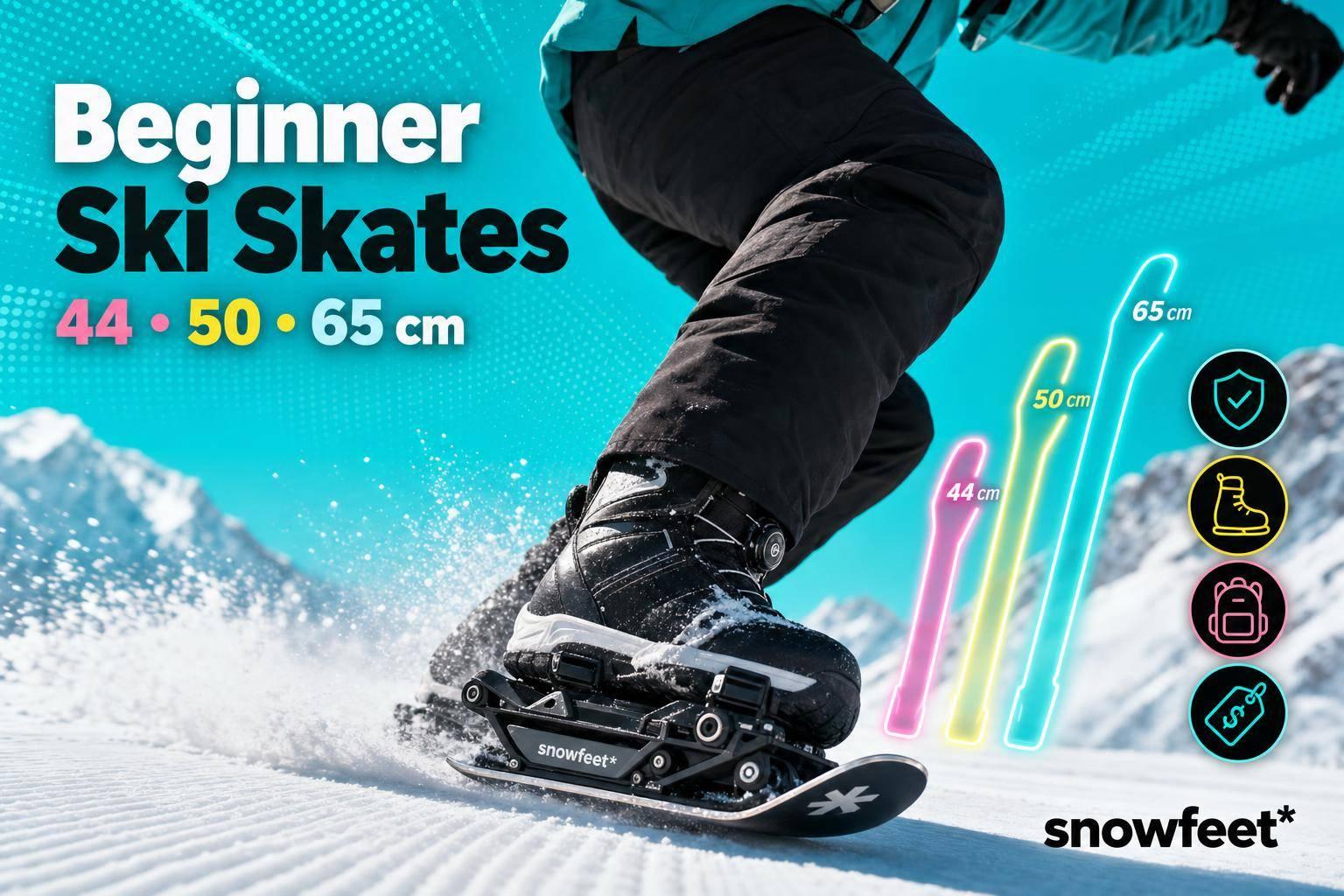
- 44 cm Skiskates: best for tight turns, park messing around, and backpack-size carry
- 50 cm PRO: lowest starting price at $299, easy for mellow runs and travel
- 65 cm Skiblades: best middle ground for snowboarders who want more edge grip
- 99 cm Skiblades: better for faster groomers, longer turns, and full resort days
- 120 cm Short Skis: most stable of the five, priced at $950, and closest to a ski feel
A few things stood out to me right away:
- 3 of the 5 models are direct, easy picks for snowboard boots: 44 cm, 50 cm, and 65 cm
- The 44 cm model fits about US men's 6–14.5
- The 50 cm PRO works with winter shoes or snowboard boots
- The 99 cm and 120 cm models can use snowboard-boot bindings, but that may depend on the setup you choose
- Snowfeet says it has a 4.9/5 rating from 5,500+ reviews
So, if you hate extra gear, don’t want ski boots, and just want to get on snow fast, this lineup makes a lot of sense. You give up some high-speed calm and deep-powder float, sure - but for green runs, blue runs, park laps, and fun resort days, that trade can be worth it. Think less “full ski race mode,” more “grab your boots and go” :)
Snowboarder tries Snowfeet* | Which Snowfeet* Short Ski is the Best? | Snowblades 44, 65, 99 Review
Quick Comparison
| Model | Length | Starts At | Best Use | Snowboard Boot Use |
|---|---|---|---|---|
| Snowfeet* Skiskates | 44 cm / 17 in | $460 | Tight turns, park, short laps | Yes |
| Snowfeet* PRO | 50 cm / 20 in | $299 | Travel, mellow slopes, first try | Yes |
| Snowfeet* Skiblades | 65 cm / 26 in | $590 | Easy resort cruising, learning, light park | Yes |
| Snowfeet* Skiblades | 99 cm / 39 in | $690 | Groomers, mixed resort terrain, more speed | Yes, with binding option |
| Snowfeet* Short Skis | 120 cm / 47 in | $950 | Most ski-like ride, steeper runs, mixed snow | Yes, with binding option / often sold with ski-boot setup |
If I had to boil it down to one line, it’s this: go shorter for ease and portability, go longer for stability and a more ski-like feel.
1. Snowfeet* Skiskates 44 cm
Boot Compatibility
The 44 cm model is the smallest setup in the line. It uses tool-free bindings built for snowboard boots, plus safety leashes and an anti-slip grip surface.
Boot size range is about US 6–14.5 (EU 38–49). That’s a big span. And yes, snowboard boots matter here. They give the ankle support these non-release bindings need.
Length and Stability
At 44 cm (about 17.3 in), this is the shortest option Snowfeet* makes. On snow, it feels much closer to a quick edge-to-edge tool than a normal ski. So if you come from snowboarding, it may feel more familiar right away.
Snowfeet describes Skiskates as ski-skates with a forward stance and quick, independent foot control, with both feet pointed forward and each leg working more independently. In plain English: you’re making fast moves with each foot, not leaning into long, high-speed carves like you would on bigger skis.
Best Terrain
The 44 cm Skiskates do best on groomed runs and in snowparks. They’re a solid pick for:
- beginners on mellow terrain
- riders who want fast, short turns
- people who like a skate-like feel more than classic ski technique
Portability
This is where the 44 cm length gets fun. They fit in a backpack. That makes them easy to carry, easy to stash, and easy to use with the snowboard boots you already ride in.
If you want a bit more stability but still want to stick with snowboard boots, the 50 cm PRO is the next move.
2. Snowfeet* PRO 50 cm
Boot Compatibility
The PRO 50 cm is the next move up from the 44 cm Skiskates for snowboarders who want a bit more stability without switching boots. If the 44 cm model feels twitchy, this one smooths things out.
Tighten both straps so your heel stays locked in. If you wear larger boots, longer toe straps are available.
Length and Stability
At 50 cm (about 19.7 in), the added length gives you more stability and better edge control than the 44 cm model, but it still feels quick and easy to handle. That’s the sweet spot here.
For snowboarders, the 50 cm size keeps that familiar low-hassle setup while giving you more control on edge. You get a steadier ride without losing the easygoing feel of a short ski.
Best Terrain
The PRO 50 cm is a strong pick for beginner laps and mellow resort cruising. It’s built for easy, fun runs where you want control without a lot of fuss.
Skip steep, fast, or chopped-up runs. At 50 cm, it doesn’t have the stability for that kind of terrain.
Portability
It packs easily and costs about $275–$299, which is far less than a full ski-boot setup. Nice bonus if you want to keep things simple and your bag light :)
If you want something that feels more like a ski, move up to the 65 cm Skiblades.
3. Snowfeet* Skiblades 65 cm
Boot Compatibility
The 65 cm Skiblades fit EU 38–49 / US 6–14.5 snowboard boots and work best with medium-volume boots. For the best ride, center your boot and snug down the ankle strap. That helps keep edge pressure even, which makes turns feel smoother and more controlled.
Length and Stability
The 65 cm length sits in a sweet spot. It keeps that skate-like, playful feel, but adds real ski control. This is the first model in the lineup that brings more stability without giving up the quick, easy turn-in that snowboarders tend to like.
It also has a wood core and metal edges, which give it a more ski-like feel on snow.
Best Terrain
Go with the 65 cm model if you want the easiest next step up from the 44 cm and 50 cm versions. It works best for:
- Groomed runs
- Resort laps
- Light park use
Longer skis still do better at higher speed and in deep snow.
Portability
These are easy to pack, easy to carry, and easy to stash at home.
If you want more speed and a longer, more ski-like feel, the 99 cm model is the next move.
sbb-itb-17ade95
4. Snowfeet* Skiblades 99 cm
Boot Compatibility
If the 65 cm model feels a bit too loose and playful, the 99 cm Skiblades are the next move. They come with snowboard-boot bindings, so you can ride in the boots you already have. That means no ski boots, no extra gear, and less hassle.
Length and Stability
The 99 cm Skiblades are a smart step up for snowboarders who want more speed and a steadier ride without giving up snowboard boots. At 99 cm, they feel much closer to skis than the 65 cm version. You get more edge hold, better grip on firm snow, and a smoother feel once you pick up speed.
There’s also a Powder 99 version at the same length. It’s wider, so it floats better in deeper snow.
Best Terrain
This 99 cm model handles higher speeds, steeper groomers, and light off-piste terrain better than the shorter options. It works well for full days at the resort. If you ride in deeper snow, the wider Powder 99 makes more sense for extra float.
Portability
Starting at $690, they’re still easier to travel with than full skis, and you skip the need for ski boots. If you want more stability and a longer ride that feels even closer to skiing, the 120 cm Short Skis are the next step.
5. Snowfeet* Short Skis 120 cm
If you want more stability and don’t mind switching out of snowboard boots, the 120 cm model is the next step. This is the performance-first pick in the Snowfeet lineup, and it’s also the only one that puts you in ski boots.
Boot Compatibility
The 120 cm Short Skis use standard release bindings, so you’ll need ski boots. They fit about US 4.5–14.5 (EU 36–49).
Length and Stability
At 120 cm, these feel much closer to regular skis than the shorter Snowfeet models. That means better edge hold, more control when your speed picks up, and a smoother feel on firm or mixed snow.
The tip and tail rise - about 5.5 cm at the tip and 4.5 cm at the tail - gives the ski an all-mountain shape that works well across different snow conditions without feeling harsh or hard to handle.
Best Terrain
This model is made for full resort days. Think:
- Groomed runs
- Moderate steeps
- Light off-piste
It handles speed better than the shorter models and fits snowboarders who want more room to roam across the mountain. It’s not built for deep powder, but it does well on packed snow and light chop.
Portability
At $950, the 120 cm Short Skis are the premium option in the Snowfeet lineup. They’re still shorter than standard skis, but they’re also the least portable pair in the line. So, if you want the most on-snow performance and can live with a bit less grab-and-go convenience, this is the one :)
How the 5 Models Compare
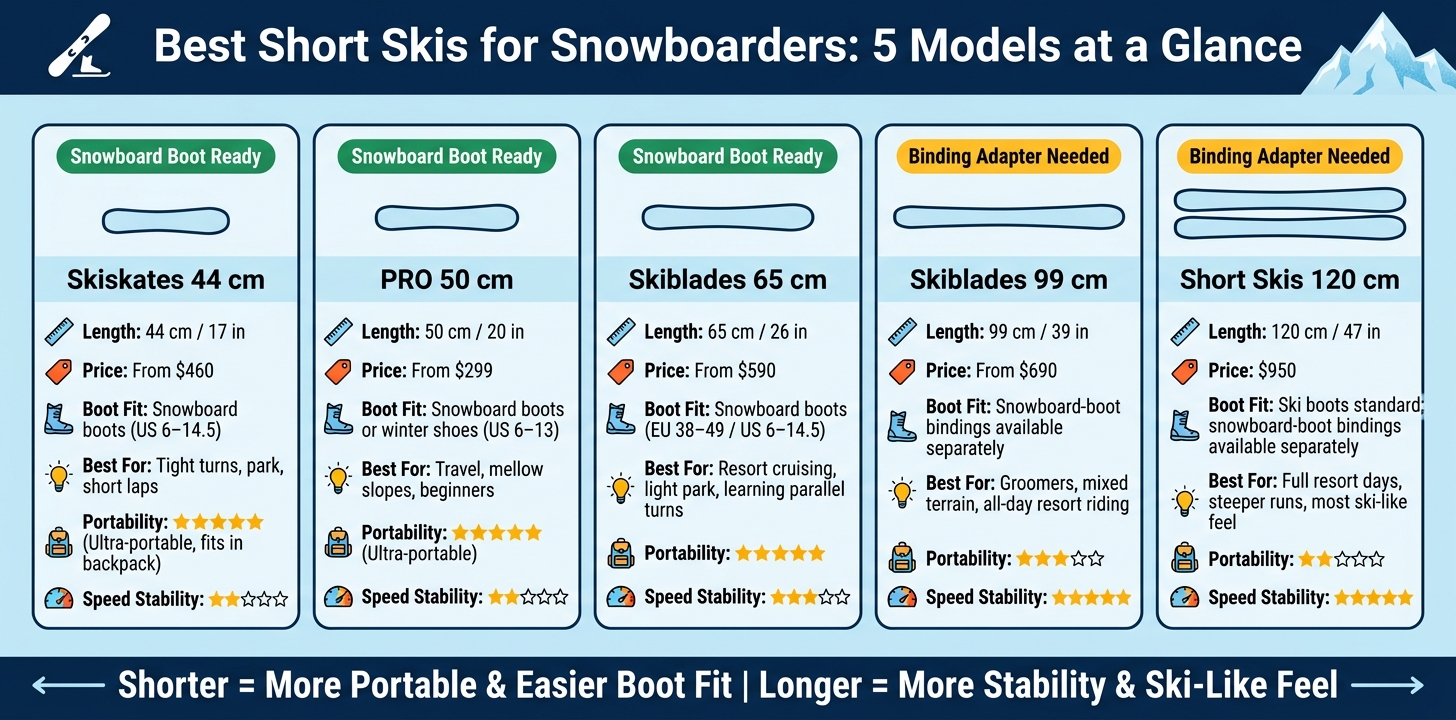
Best Short Skis for Snowboarders: 5 Models Compared by Length, Price & Boot Fit
Here’s the side-by-side view. If you’re picking between these five, the big stuff is pretty simple: boot setup, terrain, and how easy they are to carry around.
| Model | Length | Boot Compatibility | Best Terrain | Portability | Price |
|---|---|---|---|---|---|
| Snowfeet* Skiskates | 44 cm | Snowboard boots (US men's 6–14.5) | Mellow slopes, park features, casual resort laps | Highly portable | From $460 |
| Snowfeet* PRO | 50 cm | Any winter shoe or snowboard boot (US 6–13) | Beginner-friendly slopes, resort cruising, travel | Ultra-portable | From $299 |
| Snowfeet* Skiblades | 65 cm | Snowboard boots or ski boots | Park, jumps, carving, creative lines | Easy to pack | From $590 |
| Snowfeet* Skiblades | 99 cm | Ski boots by default; Snowfeet snowboard bindings available separately | All-mountain cruising, groomed runs, mixed conditions | Compact for storage and travel | From $690 |
| Snowfeet* Short Skis | 120 cm | Ski boots by default; Snowfeet snowboard bindings available separately | Full resort days, moderate steeps, mixed snow | Less portable than the shorter models | $950 |
The main takeaway: the 44 cm, 50 cm, and 65 cm models are the easiest picks for snowboard boots.
That’s a big deal. You can skip the whole “new boot system” headache and get on snow with gear that already feels familiar. For snowboarders, that lowers the barrier a lot.
The 99 cm and 120 cm options lean more ski-like right out of the box. Still, Snowfeet offers snowboard-boot bindings for both, so you’re not locked into ski boots.
So, if you want the cleanest entry point, the shorter models make the most sense. If you want more of a ski feel, the longer options move in that direction.
Here’s how Snowfeet* stacks up against long skis:
| Criteria | Snowfeet* Short Skis | Traditional Long Skis |
|---|---|---|
| Boot setup | Snowboard boots on 44/50/65 cm; snowboard-boot bindings also available for 99/120 cm | Requires dedicated ski boots |
| Learning curve | Fast - snowboarders adapt quickly | Steeper, especially for edge control |
| Portability | More compact to store and travel with | Needs a ski bag or rack |
| Top-speed stability | Best at moderate speeds | More stable at high speeds |
| Powder performance | Less ideal in deep powder | Better flotation in soft snow |
| Fun factor | Playful, creative, low-pressure | More technical and rigid |
This table tells the story pretty well.
Traditional long skis still do better when you’re charging hard at speed or dealing with deep powder. That’s their lane, and they do it well. But for a lot of snowboarders, Snowfeet* will feel like the easier and more fun option. They’re lighter, simpler, and work with snowboard boots.
That combo matters more than people think. Less gear drama. Less bulk. More “grab them and go.”
Next, here’s a quick breakdown of the pros and cons of each model.
Pros and Cons of Each Model
You’ve seen the specs. Now here’s the fast trade-off view: what each model gives you, and what you give up in return.
If you’re picking between boot-compatible short skis, this is the quick filter.
| Model | Key Pros | Key Cons | Snowboard Boot Fit |
|---|---|---|---|
| Skiskates 44 cm ($460+) | Ultra-portable; quickest edge changes; great for small features and tight spaces | Least stable at speed; short edge struggles on icy or steep terrain | Snowboard-boot compatible |
| PRO 50 cm ($299+) | Fits in a backpack; fiberglass-reinforced; playful and light | Not built for fast groomer runs; limited on hardpack or variable snow | Snowboard-boot compatible |
| Skiblades 65 cm ($590+) | Best balance of maneuverability and edge hold; 7.8 cm waist delivers a strong carving feel; good for learning parallel turns | Slightly less compact than the 44–50 cm options; can feel unstable at higher speeds | Snowboard-boot compatible |
| Skiblades 99 cm ($690+) | Strong speed stability; handles all-day resort riding and mixed conditions well; great for carving longer turns on groomers | Less spin-quick than shorter models; slightly heavier to carry | Snowboard-boot bindings available separately |
| Short Skis 120 cm ($950) | Closest to traditional ski feel; best stability on steeps and variable snow; most predictable at speed | Bulkiest of the five; less nimble for tight park tricks; more swing weight | Snowboard-boot bindings available separately |
Here’s the simple version:
- Go with 44 cm or 50 cm if you want the most portable, lowest-effort setup. These work best on mellow terrain and at moderate speeds.
- Pick 65 cm if you want the best mix of maneuverability and edge hold. It’s a nice middle ground for learning the basics and taking casual resort laps.
- Choose 99 cm or 120 cm if speed and stability matter more to you, or if you want something closer to a standard ski feel.
Snowfeet positions the 99 cm and 120 cm models as the better picks for steeper terrain and deeper snow.
With those trade-offs laid out, the last step is matching the right model to how you ride.
Conclusion
Here’s the simplest way to choose: match the length to your terrain and how fast you like to ride. If you snowboard, boot fit matters just as much as ski length. Go with 44 cm or 50 cm for travel and easy laps, 65 cm for park days and playful resort riding, 99 cm for the best all-around mix, and 120 cm if you want the most ski-like stability.
That’s the give-and-take across the lineup. Shorter skis give up some powder float and top-end stability, but they make boot fit easier, the learning curve smoother, and green and blue runs feel a lot more in control.
That practical fit is a big reason Snowfeet* stands out. Snowfeet* is the easiest entry point for snowboarders who want to ski without changing boots. Snowfeet* reports a 4.9/5 rating from 5,500+ verified reviews.
Use your snowboard boots. Ride the setup you already know. Pick the length that fits your terrain.
FAQs
Can I really ski in snowboard boots?
Yes. Snowfeet* short skis and skiblades are made to work with snowboard boots, so you can use the boots you already own and keep that comfort and natural range of motion.
Compared with stiff ski boots, snowboard boots are easier to walk in and feel way more familiar if you already ride a snowboard. Pair that with adjustable strap bindings, and Snowfeet* setups feel smoother and easier to get into.
That makes them a nice fit for:
- casual resort laps
- park runs
- riders moving over from a snowboard
So, instead of learning in hard plastic boots that can feel like moon boots, you get a setup that feels more natural from the start :)
Which length is best for beginners?
For beginners, Snowfeet Mini Ski Skates (38 cm) are the best pick. They’re light, easy to carry, and a great way to learn the basics in just one to two runs. That’s a pretty sweet deal if you want to get the hang of things fast :)
If you want a bit more length under your feet, 65 cm Skiblades are also a strong beginner-friendly option. They still feel nimble for rail slides, small jumps, and spins, but they come with an easier learning curve than old-school ski gear.
Are short skis good for a full resort day?
Yes - Snowfeet short skis and skiblades can work for a full resort day.
A big reason is the boot setup. When you pair them with comfortable, flexible snowboard boots instead of stiff ski boots, the whole day tends to feel a lot less taxing. Your feet and lower legs usually stay happier, which matters a lot after a few hours on the mountain.
On the snow, they’re easy to turn and control on groomed runs and in terrain parks. That easy handling can also help cut down on fatigue. You’re not fighting long, heavy skis all day, and that makes the experience feel more relaxed.
There is one main catch: they’re best in snow depths under 4 inches. So if the resort gets a deep powder day, they may not be the best tool for the job.
For most casual resort riders, though, they’re a convenient, low-stress option for spending the day on the mountain.











Leave a comment
This site is protected by hCaptcha and the hCaptcha Privacy Policy and Terms of Service apply.