



















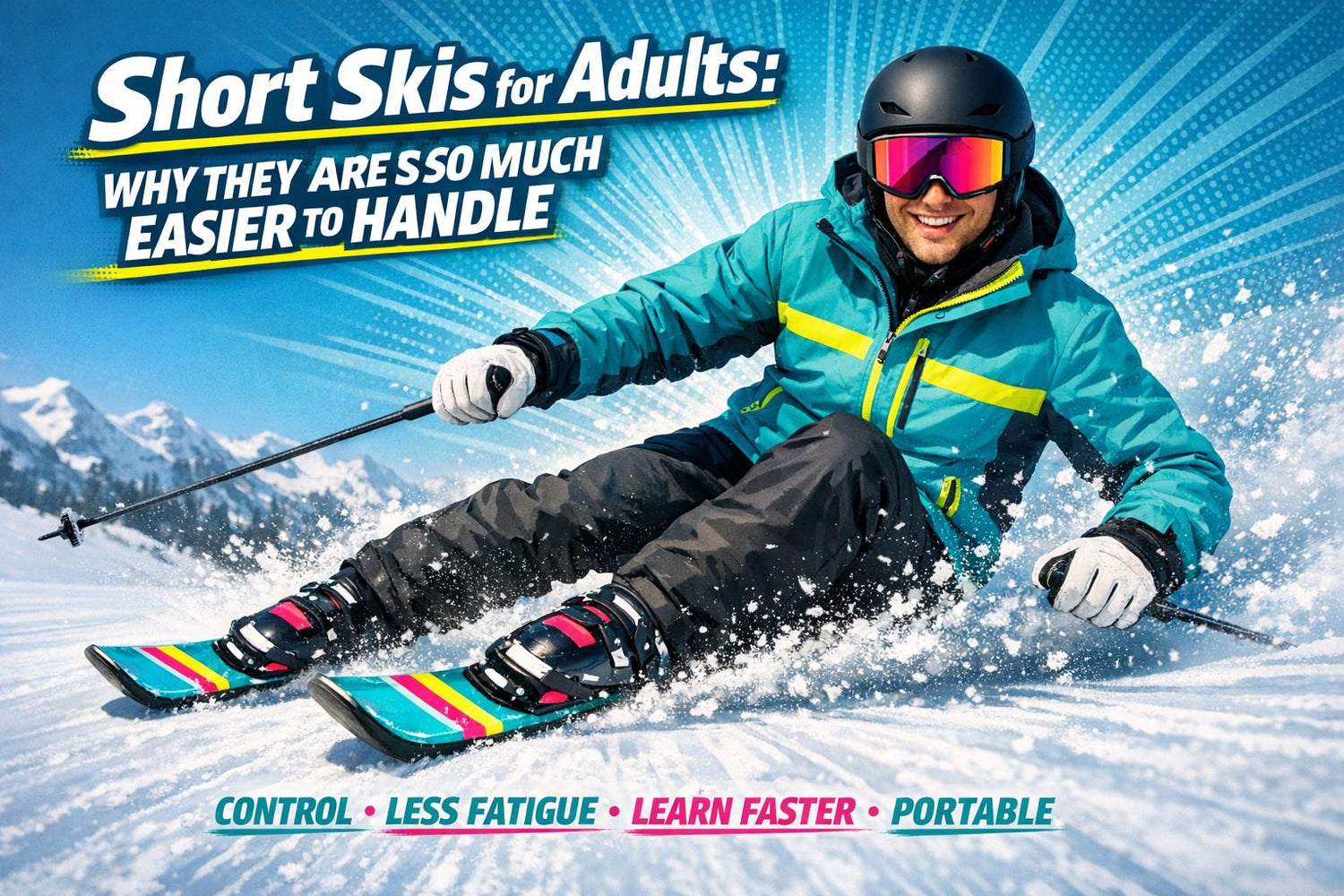
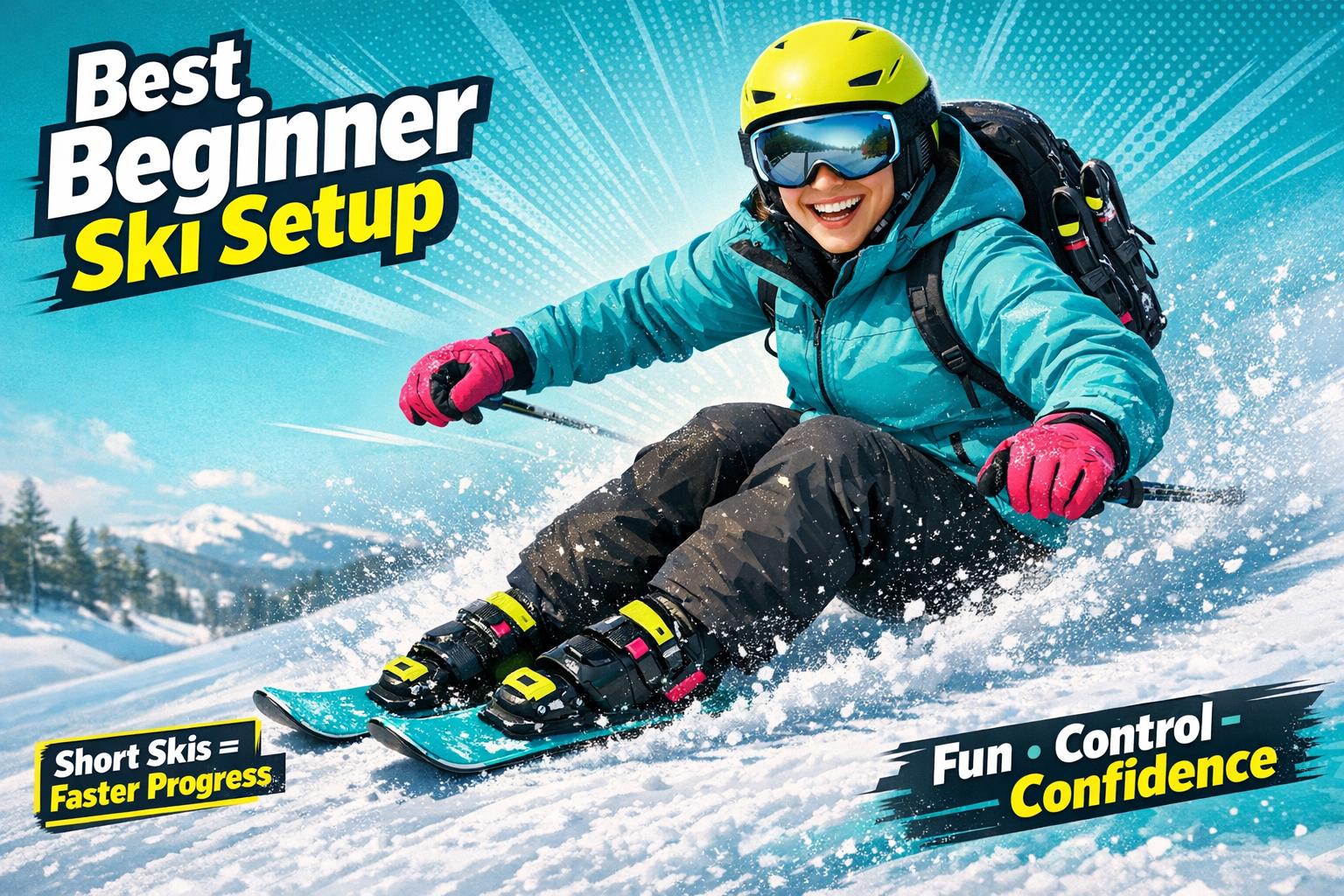
Short skis are a game-changer for adult skiers who want more control, less hassle, and an easier time on the slopes. Unlike longer skis (150–180 cm), which can feel heavy, sluggish, and hard to manage - especially for beginners or occasional skiers - short skis are lightweight, responsive, and forgiving. They let you turn quickly, reduce strain on your legs, and make skiing more fun and accessible.
Key Benefits of Short Skis:
- Easier to Control: Short skis respond instantly to your movements, making turns and stops feel natural.
- Less Fatigue: They’re lighter, so you can ski longer without tiring out your legs.
- Beginner-Friendly: Short skis make learning faster and less intimidating.
- Portable: Compact designs fit in a backpack, perfect for travel.
Snowfeet’s short ski lineup includes models like Skiskates (44 cm) for a skating-like experience, Skiblades (65 cm and 99 cm) for agility and carving, and Short Skis (120 cm) for stability at higher speeds. Whether you ski a few weekends a year or want to try something new, short skis make hitting the slopes easier and more enjoyable.
Are Short Skis Better for Beginners?
Why Long Skis Are Hard to Handle
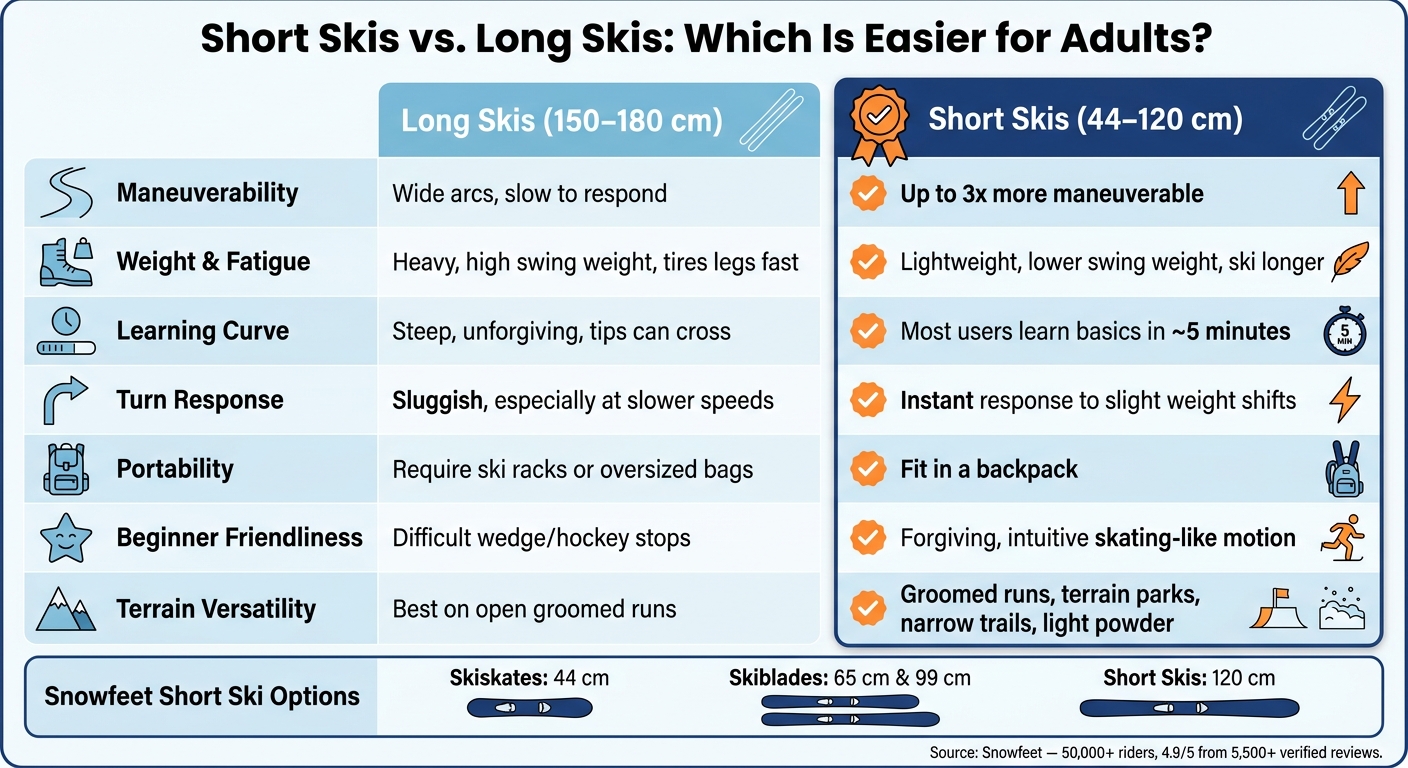
Short Skis vs Long Skis: Which Is Easier for Adults?
Most U.S. height charts suggest adult skis should fall between 150–180 cm (60–70 inches), but this one-size-fits-all approach doesn’t account for skill level, skiing frequency, or confidence. For someone who only skis a few weekends a year, managing that much ski can quickly become frustrating. That’s where shorter, more agile options like Snowfeet* come into play. Long skis often create challenges that casual skiers just don’t need.
Slow and Unresponsive Turns
Long skis naturally carve wider arcs, which can feel sluggish for someone skiing at a relaxed pace. You shift your weight, expecting a quick reaction, but the ski takes its time - especially at slower speeds. Beginners and casual skiers, who spend most of their time cruising, often find long skis resist the tight, controlled turns they need.
"Longer skis give more stability and speed... But they can be harder to control and turn, especially for beginners."
– Snowfeet
This delay in response makes skiing feel less intuitive and more like a battle to stay in control.
More Physical Effort and Faster Fatigue
Long skis are heavier, requiring more energy to maneuver. Every turn demands effort from your hips, thighs, and core, and that effort adds up fast. If you only ski a few times a season, you’ve probably felt the burn in your thighs after just a couple of runs. As fatigue sets in, your form starts to slip, which makes falls more likely.
Shorter skis, like Snowfeet*, have a lower swing weight, meaning they’re easier to handle and less taxing on your legs. This helps you stay in control and enjoy skiing longer without feeling wiped out.
A Steep Learning Curve for New Skiers
Long skis don’t leave much room for error. A slight imbalance can cause your tips to cross or your tails to skid out. Nervous beginners often lean back instinctively, which makes steering and stopping even harder. The result? A slow, frustrating learning process where every mistake feels magnified.
Stopping is another hurdle. Long skis are built for wide, sweeping turns to reduce speed, but beginners rely on quick wedge stops or hockey stops - techniques that are far easier with shorter skis. For adults who are new to skiing or coming back after years away, these challenges can feel overwhelming, especially when combined with reduced flexibility or a natural caution around falling.
These difficulties highlight why shorter, more responsive skis like Snowfeet* are a game-changer for beginners and occasional skiers alike. They’re easier to control, less tiring to use, and far more forgiving when you’re still finding your groove.
The Benefits of Snowfeet* Short Skis
Snowfeet* short skis bring a fresh approach for adult skiers who’ve struggled with the bulk and limitations of traditional long skis. Designed to reduce resistance and weight, these compact skis offer a more natural and agile experience on the slopes. With over 50,000 riders worldwide and an impressive 4.9 out of 5 rating from more than 5,500 verified reviews, Snowfeet* has become a favorite for those seeking a fun, hassle-free alternative.
Lightweight and Easy to Carry
Let’s face it - lugging around traditional skis can be a pain. They’re heavy, awkward, and often require extra equipment like ski racks or oversized bags. Snowfeet* Skiblades and Skiskates solve this problem with their compact, portable design. They’re small enough to fit in a backpack, making them perfect for quick weekend trips or flights to your favorite ski destination. Plus, this lightweight design doesn’t just make travel easier; it also enhances your agility on the slopes.
Quick and Precise Turns
Short skis mean faster, sharper turns. Unlike long skis that require wide arcs, Snowfeet* Skiblades respond instantly to even slight weight shifts. This makes them ideal for navigating crowded slopes, weaving through tight runs, or handling any terrain that demands quick reflexes.
"These ski blades are a blast to use. Super easy to control, quick to turn, and way more forgiving than traditional skis."
- Brad Tolin, Snowfeet* User
In fact, testing shows that shorter skis can be up to three times more maneuverable in varying conditions compared to traditional long skis. That’s a game-changer for anyone looking to up their control and confidence on the mountain.
Easier to Learn Than Long Skis
If you’re new to skiing or just want an easier learning curve, Snowfeet* has you covered. Most users pick up the basics in just five minutes. Their skating-like motion makes them intuitive, and the shorter length - available in 65 cm and 99 cm options - means fewer missteps and more forgiving control.
"These skiblades are so much fun and easy to control. Never going back to regular skis."
- Andrew B., Snowfeet* User
Versatile Across Different Terrain
One of the standout perks of Snowfeet* short skis is their adaptability. Whether you’re carving on groomed runs, gliding through powder, or tackling tight tree lines, there’s a model for you. The 99 cm Skiblades shine on groomed slopes and powder alike, while the 65 cm versions excel in terrain parks and narrow trails. Even the 44 cm Skiskates deliver a smooth ride on packed snow and light powder. With this kind of versatility, you’re free to explore a variety of terrains without switching gear.
"They perform reliably across groomed runs, powder, and tight tree lines."
- Lucy Higgins, Seasoned Editor and Former Editor-in-Chief at Backcountry Magazine
sbb-itb-17ade95
Which Snowfeet* Model Is Right for You
Snowfeet* short skis are all about control and agility, but which model suits your skiing style best? Here’s a quick breakdown to help you decide:
| Model | Length | Best For | Starting Price |
|---|---|---|---|
| Skiskates | 44 cm | Casual fun, skating feel, minimal gear | From $575 |
| Skiblades | 65 cm | Tricks, jumps, terrain parks | From $635 |
| Skiblades | 99 cm | Carving, versatility, light powder | From $675 |
| Short Skis | 120 cm | High-speed carving and enhanced stability | $775 |
Let’s dive into the details of each model to find your perfect match.
Snowfeet* Skiskates (44 cm): Small and Fun
If you're all about compact and portable gear, the 44 cm Skiskates are your go-to. These tiny skis fit easily into a backpack and attach to snowboard bindings, offering a skating-like experience on the slopes. Perfect for those who want to keep it light and simple, these are a favorite for skiers who want to skip the bulk. They’ve even earned a stellar 5.0 rating.
Snowfeet* Skiblades (65 cm and 99 cm): Control Meets Agility
The 65 cm Skiblades are built for fun in the terrain park. They’re agile enough for tricks and jumps while still providing stability for smooth carving. If you’re looking for something a bit more versatile, the 99 cm Skiblades are a great choice. They’re designed for deeper carving and handle light powder with ease. Both sizes work with ski and snowboard bindings, so you can pair them with your existing boots without any hassle.
Snowfeet* Short Skis (120 cm): More Stability for Experienced Skiers
For those who crave speed and precision, the 120 cm Short Skis are a solid pick. These are perfect for experienced skiers who want the feel of traditional skis but in a more compact, maneuverable size. With a wood core for performance and pro ski bindings, they’re made for high-speed carving and serious control - without the extra length of standard skis.
Whether you're after portability, tricks, or high-speed stability, Snowfeet* has a model tailored to your style.
Where Short Skis Perform Best
Short skis, particularly Snowfeet* models, excel in many everyday skiing situations. They bring unmatched versatility and are designed to handle a variety of conditions that most skiers face regularly. Here's a breakdown of where they truly stand out.
Groomed Slopes and Terrain Parks
Short skis are a dream on groomed runs. Snowfeet* skis, for example, make edge-to-edge transitions incredibly quick, letting you carve and turn effortlessly. Unlike longer skis, which can feel sluggish when changing direction, short skis respond instantly to your movements. They go exactly where you want them to, making them perfect for packed groomers.
If tricks and jumps are your thing, the 65 cm Skiblades are your go-to. Their compact design gives you the control and freedom to hit terrain park features without worrying about extra length getting in the way. That same agility also makes them ideal for navigating tighter trails and mixed snow conditions.
Narrow Trails and Mixed Snow Conditions
Short skis continue to shine when the terrain gets tricky. On narrow, tree-lined trails or crowded resort runs, long skis can feel cumbersome, catching edges and making quick pivots harder. Snowfeet* short skis, on the other hand, give you the nimbleness to navigate these situations with ease.
When it comes to mixed snow - those patchy, unpredictable surfaces you often encounter - models like the 99 cm and 120 cm skis are a smart choice. They can handle light powder up to about 4 inches (10 cm) while still offering excellent control on firmer sections. For skiers sticking to groomed terrain, the ultra-compact 44 cm Skiskates are a fun option. But if you’re looking to explore a variety of snow types, the longer Snowfeet* models are the better bet.
Conclusion: Why Short Skis Work Better for Adults
Short skis bring a fresh perspective to skiing for adults, offering a smoother and more enjoyable experience. Unlike long skis, which demand advanced skills, constant pressure, and significant physical effort, short skis flip the script, making skiing more accessible and less demanding.
Snowfeet* provides a variety of options, from the fun and nimble Skiskates to the stable and easy-to-control Short Skis. These models consistently earn top marks - 5.0/5.0 - for their fun factor and user-friendly design compared to traditional ski gear. Whether you prefer a compact, skating-inspired ride or crave more stability at higher speeds, Snowfeet* has something tailored for you.
Even the largest Snowfeet* skis stay under four feet long, making them a breeze to carry and store when compared to standard alpine skis that can exceed 170 cm. This compact design means less hassle, less fatigue, and more time to enjoy the slopes.
For adults who’ve found traditional ski equipment too challenging or exhausting, short skis offer a game-changing alternative. They make skiing easier, reduce physical strain, and open up the mountain for everyone to explore with confidence and ease.
FAQs
Are short skis safe at higher speeds?
Short skis, such as Snowfeet, are typically safe at higher speeds due to their quick maneuverability and easy handling. That said, when compared to traditional longer skis, they can demand a bit more skill to control at very high speeds, particularly for advanced skiers. For beginners and intermediate users, though, they’re much easier to manage, making them an excellent option for building confidence on the slopes.
What boots and bindings are compatible with Snowfeet* models?
Snowfeet* models work seamlessly with standard ski boots and bindings, just like the ones you'd find on traditional skis or snowboards. This compatibility makes them easy to pair with most adult ski boots and adjustable bindings, offering a hassle-free and straightforward setup.
Can short skis handle powder and icy snow?
Short skis, like the models from Snowfeet, are excellent for both powder and icy snow. Their smaller size gives them an edge - literally. They offer better grip, sharper edge control, and make quick turns and smooth stops a breeze. While traditional long skis and snowboards have their strengths, Snowfeet's compact skis shine when it comes to control and responsiveness. They’re a great option for adult skiers looking for a more manageable and adaptable way to tackle tricky terrain.











Leave a comment
This site is protected by hCaptcha and the hCaptcha Privacy Policy and Terms of Service apply.