



















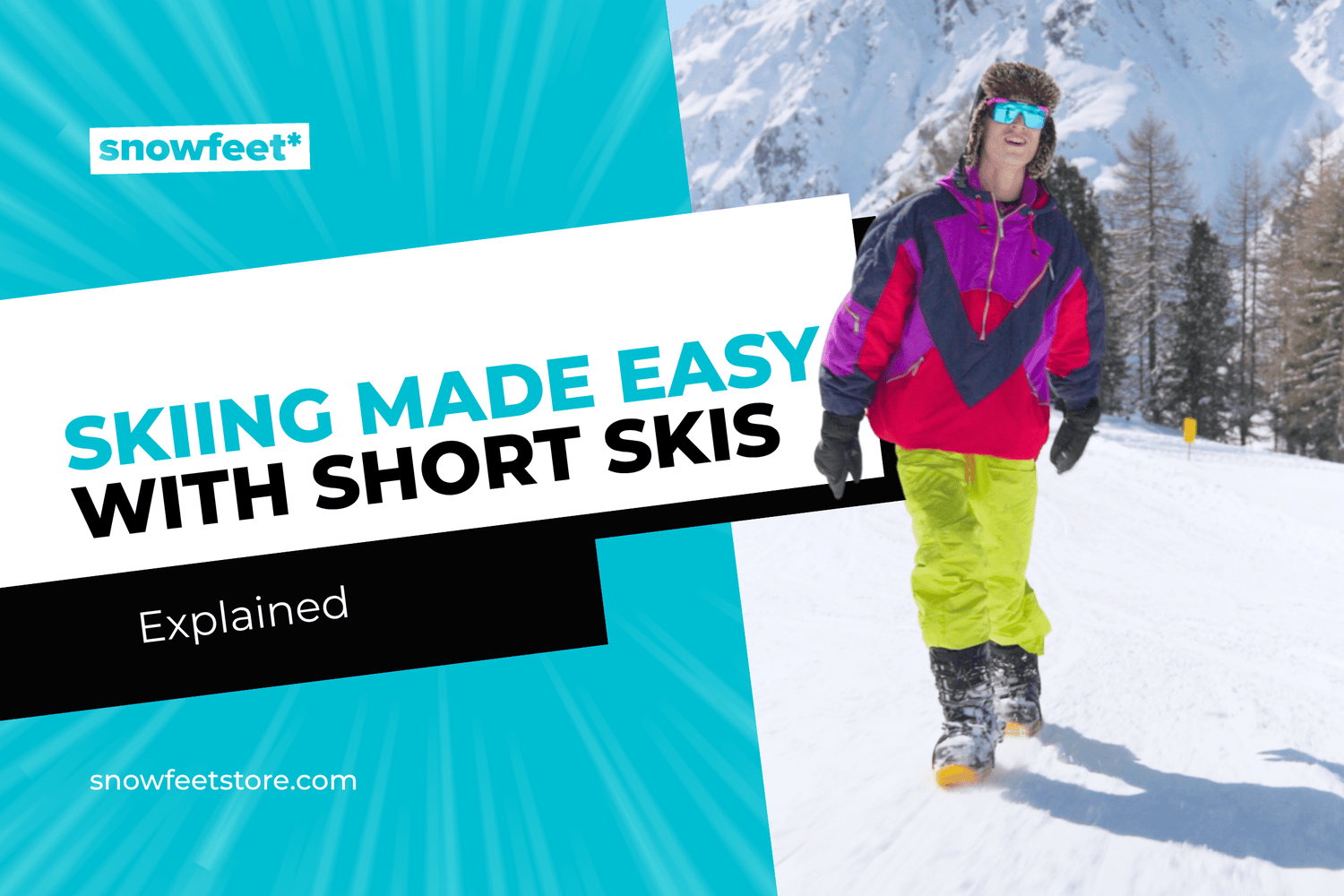
Skiing doesn’t have to be hard or intimidating. Snowfeet’s short skis are a game-changer for beginners and casual skiers who want more control, less effort, and gear that’s easy to carry. Whether you’re tackling tight trails, moguls, or just learning the ropes, these compact skis make the experience smoother and more fun.
Why Short Skis Work:
- Easier Turns: Shorter length = quicker, smoother turns.
- Lightweight & Portable: Fits in a backpack - no more lugging heavy gear.
- Beginner-Friendly: Less tiring and easier to control, even when you’re tired.
- Works with Regular Boots: No need for expensive ski boots - use your winter or snowboard footwear.
Snowfeet offers options like Skiblades (25.6"-47.2") and Skiskates (17.3") to suit different skiing styles. They’re perfect for carving, snowparks, or even light powder, and they cost less than most ski setups. If you’re looking for a simpler, more enjoyable way to hit the slopes, short skis might just be your best bet.
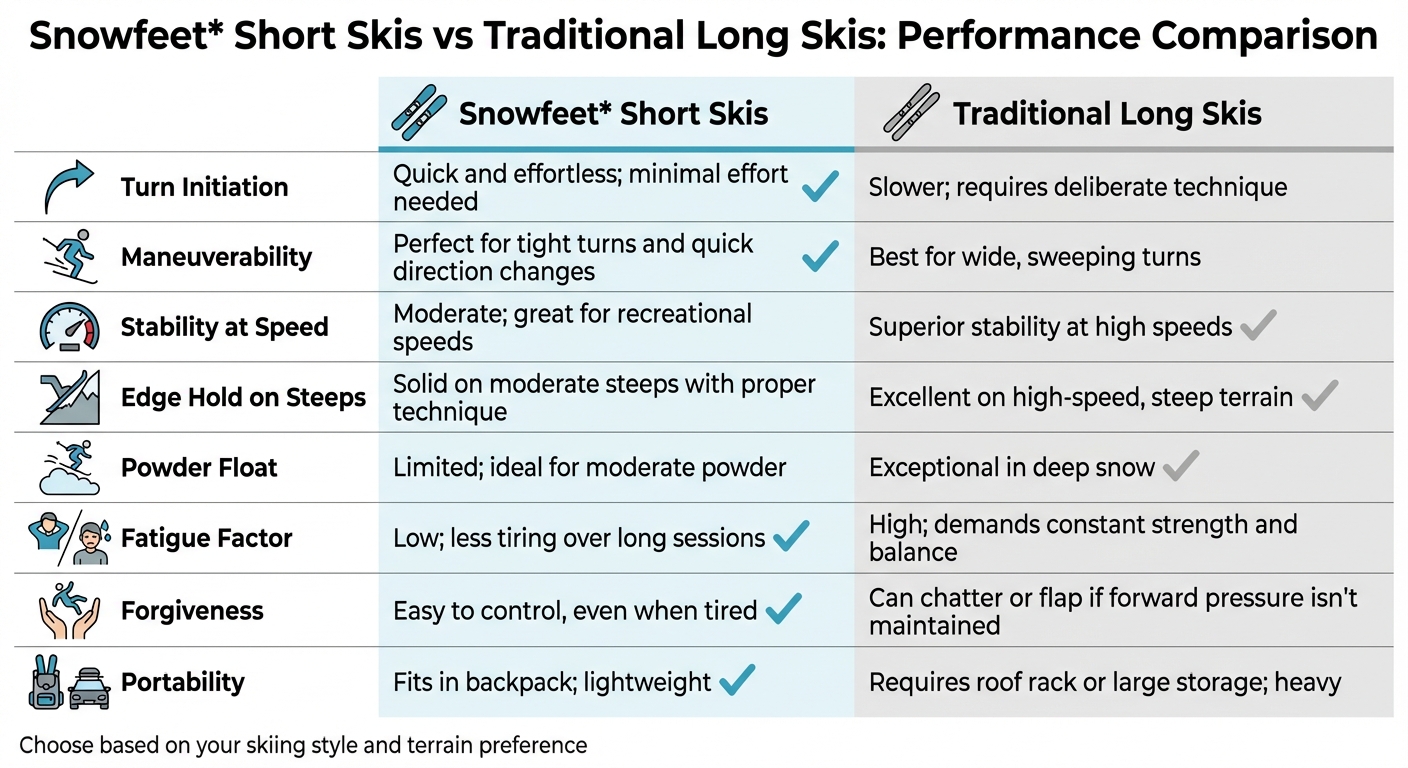
Snowfeet Short Skis vs Traditional Long Skis Performance Comparison
Why Short Skis Beat Traditional Long Skis
If you're new to skiing and want a smoother, less demanding experience, Snowfeet* short skis are a game-changer. Unlike traditional long skis from brands like Rossignol and K2, which require consistent effort and precise technique, Snowfeet* short skis make skiing more accessible and less tiring. Here’s why they stand out.
Better Control and Easier Turns
Short skis are incredibly responsive, making them easier to control compared to standard long skis. Their smaller size allows for quick pivots and smooth carving, which is especially handy in tricky spots like mogul fields, tight tree runs, or narrow trails. Imagine weaving through a dense forest or tackling sharp switchbacks - Snowfeet* Skiblades let you turn quickly and accurately.
Another big plus? They’re forgiving when fatigue sets in. Unlike long skis that force you to stay forward and focused to maintain control, the compact size of Snowfeet* short skis keeps them stable even when you're tired. This feature can help beginners advance to intermediate levels in no time, often within a single day. The combination of control and ease makes these skis perfect for skiers looking to build confidence.
Lightweight and Easy to Carry
Transporting traditional skis can feel like a workout on its own. In contrast, Snowfeet* short skis are lightweight and compact enough to fit in a backpack or the trunk of a small car. Whether it’s the 17.3-inch Skiskates or the 47.2-inch Skiblades, these skis eliminate the hassle of bulky roof boxes or crowded ski racks. You’ll breeze through parking lots, shuttles, and storage without lugging around heavy gear.
Even better, Snowfeet* skis work with most standard footwear, so you don’t need to invest in pricey, specialized boots. It’s a convenient, budget-friendly way to hit the slopes.
Works on Multiple Terrains
Traditional long skis shine on groomed trails and deep powder - but they demand expert skills to handle them well. Snowfeet* short skis, on the other hand, are versatile enough for slopes, terrain parks, and even hiking trails. They’re especially fun in snowparks, where long skis can feel cumbersome, and they adapt easily to varied trails without requiring constant high-speed precision.
For those who want a bit more stability without giving up the benefits of shorter skis, the 39-inch and 47.2-inch Snowfeet* models strike a perfect balance. They offer added confidence at higher speeds while keeping things maneuverable. Whether you're exploring trails or hitting jumps in the park, these skis deliver flexibility and fun in equal measure.
How to Use Snowfeet* Short Skis
Snowfeet* makes hitting the slopes easy and fun, even for beginners. Unlike traditional ski setups that might take hours (or even days) to master, Snowfeet* promises you can get the hang of it in just 5 minutes. With over 50,000 riders backing this claim, it’s clear that simplicity is their game. Here’s how you can get started with Snowfeet* in three straightforward steps.
Step 1: Choose the Right Snowfeet* Model
Picking the right model depends on your style and what kind of experience you’re after. Are you into skating-like movements? Then the Skiskates might be your go-to. These are perfect if you’ve got a background in ice hockey or inline skating. They come in two sizes: 44 cm (17.3 in) and 50 cm (19.7 in). If you’re after a more traditional skiing vibe with better balance and carving capabilities, the Skiblades are what you need. They’re available in lengths of 65 cm (25.6 in), 99 cm (39 in), and 120 cm (47.2 in), catering to everyone from beginners to powder enthusiasts.
Here’s a quick guide to help you decide:
| Model | Length | Price Range | Best For | Compatible Footwear |
|---|---|---|---|---|
| Skiskates | 17.3 in (44 cm) | $460–$490 | Tricks, jumps, skating feel | Winter shoes, snowboard boots |
| Skiskates | 19.7 in (50 cm) | $207–$250 | Budget-friendly skating | Winter shoes, snowboard boots |
| Skiblades | 25.6 in (65 cm) | From $550 | Carving, short turns | Snowboard boots |
| Skiblades | 39 in (99 cm) | From $590 | Powder, snowparks, versatility | Ski boots or snowboard boots |
| Short Skis | 47.2 in (120 cm) | $775 | Stability, traditional skiing feel | Ski boots |
If you’re planning to hit powdery slopes, the longer Skiblades (99 cm or 120 cm) are ideal. Shorter models work best in light powder, around 4 inches or less. And if comfort’s a priority, models with snowboard bindings can save you from the discomfort of stiff ski boots. Once you’ve picked your model, it’s time to get them on your feet.
Step 2: Attach Snowfeet* to Your Footwear
Forget about renting clunky ski boots! Snowfeet* works with most standard winter shoes or snowboard boots, covering US sizes 6–13 (EU 38–47). Attaching them is a breeze - just strap in or click into the bindings, depending on the model. If you’re using non-release bindings on shorter models, make sure to secure the safety leashes properly.
"I was nervous about the boots not being stiff enough for skis but it was not an issue at all. SUPER comfortable, easy to control, very agile." - Mike E.
One of the best things is how easy it is to walk around in them. Whether you’re heading to the lift, grabbing a hot chocolate at the lodge, or trekking across the parking lot, you won’t have to deal with that awkward, heavy-footed shuffle that comes with traditional setups.
Step 3: Master the Basics
Start slow on a gentle slope to get the feel of things. To turn, shift your weight to the edges - much like ice skating. Need to stop? Try a "hockey stop" by evenly distributing your weight or use the heel brake. The compact size of Snowfeet* means you won’t need to make those wide, sweeping turns required by longer skis.
Once you’re comfortable, you can take it up a notch. Try steeper slopes, freestyle parks, or even light backcountry trails. These short skis are incredibly versatile, but it’s a good idea to stick to groomed runs or light powder until you’re fully confident.
Advanced Techniques for Snowfeet* Short Skis
Once you've got the basics down, it's time to take things up a notch. Advanced techniques with Snowfeet* let you push their limits, offering incredible control and adaptability on terrain parks, steep slopes, and tight, tricky runs. Thanks to their compact design, you can explore new challenges - whether that's nailing tricks in the terrain park, gliding through powder, or carving with precision on groomed trails. These advanced moves show exactly why Snowfeet* stands out when tackling dynamic and demanding conditions.
Freestyle Tricks and Terrain Parks
Snowfeet* are a dream for terrain park enthusiasts. Think of them as the "Park Skis" of the short ski world, perfectly tuned for jumps, rails, and boxes. Their twin-tip design and low swing weight make switch skiing feel natural and allow for quick, smooth rotations. Tricks like 360s and 540s? Way easier with these compared to traditional skis. The reduced weight makes aerial spins feel more controlled and less effort-intensive.
Powder and Off-Piste Skiing
If you're into powder, the Snowfeet* 99 cm model strikes a balance between agility and float. Sure, traditional long skis have the upper hand in deep snow due to their larger surface area, but they also require more muscle to maneuver. Snowfeet* short skis, on the other hand, excel in moderate powder while giving you the ability to make precise weight shifts. The key here is staying centered and using quick, rhythmic movements. This technique not only reduces fatigue but also helps you weave through tight tree lines and navigate narrow chutes like a pro.
Snowfeet* vs. Traditional Skis: Performance Comparison
| Performance Metric | Snowfeet* Short Skis | Traditional Long Skis |
|---|---|---|
| Turn Initiation | Quick and effortless; minimal effort needed | Slower; requires deliberate technique |
| Maneuverability | Perfect for tight turns and quick direction changes | Best for wide, sweeping turns |
| Stability at Speed | Moderate; great for recreational speeds | Superior stability at high speeds |
| Edge Hold on Steeps | Solid on moderate steeps with proper technique | Excellent on high-speed, steep terrain |
| Powder Float | Limited; ideal for moderate powder | Exceptional in deep snow |
| Fatigue Factor | Low; less tiring over long sessions | High; demands constant strength and balance |
| Forgiveness | Easy to control, even when tired | Can chatter or flap if forward pressure isn’t maintained |
One of Snowfeet*’s standout features is how forgiving they are. Long skis can be demanding - if you’re tired and slip into a "backseat" position, they can become unstable, chattering and flapping as you lose control. Snowfeet*, however, stay composed even when fatigue sets in, making them a great choice for long days on the mountain or when you’re pushing your limits.
sbb-itb-17ade95
Snowfeet* Sizing and Pricing Guide
Snowfeet* models stand out for their excellent control and portability. The right choice depends on your riding style and budget. Each option is designed to be more affordable and easier to use than traditional ski setups. Whether you're after ultra-portable mini skis or something closer to the feel of short skis, there's a Snowfeet* model for you. Let's dig into the sizing and pricing details to see why Snowfeet* offers such a compelling option.
Snowfeet* Models and Features
Snowfeet* offers a variety of models tailored to different needs and skill levels:
- Mini Ski Skates (38 cm): Starting at $250, these are perfect for kids or anyone looking for a lightweight, backpack-friendly option.
- Snowfeet PRO (50 cm): Priced at $275, this model offers enhanced performance while staying highly portable.
- Skiskates (44 cm): At $575, these provide a full skiskating experience with a premium wood core for top-tier performance, compatible with winter shoes or snowboard boots.
For those who want something closer to traditional skiing, the Skiblades line delivers:
- 65 cm Skiblades: Starting at $635, these are great for carving and basic terrain park tricks.
- 99 cm Skiblades: At $675, they’re a solid all-mountain option for groomed runs and moderate powder.
- 120 cm Short Skis: Priced at $775, these offer stability at speed while staying much more maneuverable than standard long skis.
The premium models feature a wood core for better performance, while the more budget-friendly options use fiberglass-reinforced polyamide. Want to go faster? Wax them up for extra speed.
Sizing Note: Most Snowfeet* models fit US sizes 6–13 (EU 38–47), while the Mini version accommodates EU sizes 27–38. Binding options vary, with choices like snowboard bindings, lightweight non-release bindings, or regular ski release bindings - available on the 99 cm and 120 cm models for added safety.
Snowfeet* vs. Traditional Beginner Skis: Price Comparison
When you compare costs and portability, Snowfeet* clearly outshines traditional ski setups. A standard ski package - including skis, bindings, boots, and poles - typically costs anywhere from $600 to over $1,200. These setups are also bulky and harder to transport. Snowfeet*, on the other hand, works with your existing winter boots, saving you money and making it easier to hit the slopes.
| Equipment Type | Cost | What's Included | Portability |
|---|---|---|---|
| Snowfeet* Mini Ski Skates (38 cm) | $250 | Fully integrated setup | High |
| Snowfeet* Skiskates (44 cm) | From $575 | Fully integrated setup | High |
| Snowfeet* Skiblades (99 cm) | From $675 | Fully integrated setup | High |
| Traditional Beginner Ski Package | $600–$1,200+ | Skis, bindings, boots, poles | Low |
With over 50,000 riders and a 4.9/5 star rating from 5,500+ verified reviews, Snowfeet* has earned its reputation as a game-changer. As Uncrate aptly said:
"Far more portable and affordable than traditional skis or snowboards."
This mix of affordability, portability, and performance makes Snowfeet* a standout choice for riders of all levels. Every detail, from sizing to pricing, showcases their commitment to making skiing accessible and fun for everyone.
Conclusion
Short skis make skiing less intimidating and way more approachable. Snowfeet* products like the 44 cm Skiskates and 99 cm Skiblades deliver agility and simplicity that bulky long skis just can’t match. They’re compact enough to toss in your car, attach easily to your winter or snowboard boots, and keep you closer to the snow for better balance and control.
Whether you’re just starting out or a seasoned skier looking for versatility in the terrain park, Snowfeet* has something for you. Beginners can progress faster, and advanced riders will appreciate the freedom these shorter skis provide. The 65 cm Skiblades are perfect for carving, while the 120 cm Short Skis balance speed and stability without the heavy, awkward feel of traditional skis. Plus, shorter skis are easier on your legs when fatigue sets in, making them ideal for casual skiers who hit the slopes a few times a season.
Short skis aren’t just about performance - they’re also about convenience and savings. Snowfeet* models start at $250, offering great value without the need for bulky boots, poles, or extra storage space.
Say goodbye to the hassle of traditional long skis. Pick a Snowfeet* model - whether it’s the ultra-portable Skiskates or the all-mountain-ready Skiblades - strap them on, and get ready for some serious fun on the slopes.
FAQs
Are short skis safe for beginners?
Short skis are a great option for beginners. Why? They’re easier to control, making it simpler to navigate slopes without feeling overwhelmed. Plus, they allow for quicker turns, which can boost confidence and help new skiers get the hang of proper technique faster. Their smaller size takes some of the intimidation out of learning, making the whole experience more enjoyable for those just starting out.
Can I use my own boots with Snowfeet*?
The search results don’t clarify if you can use your own boots with Snowfeet*. To get accurate details, check the product guidelines or reach out to Snowfeet* customer support directly.
Which Snowfeet* length should I choose?
The best length for Snowfeet* depends on your height and skill level. If you're a beginner or a younger skier, shorter options like 65 cm Skiblades or 44 cm Skiskates are ideal. They’re easier to control and super portable. For more experienced skiers who want stability and speed, longer lengths like 99 cm or 120 cm Skiblades are a better fit. Pick the size that matches your skills and goals for a fun time on the slopes.











Leave a comment
This site is protected by hCaptcha and the hCaptcha Privacy Policy and Terms of Service apply.