



















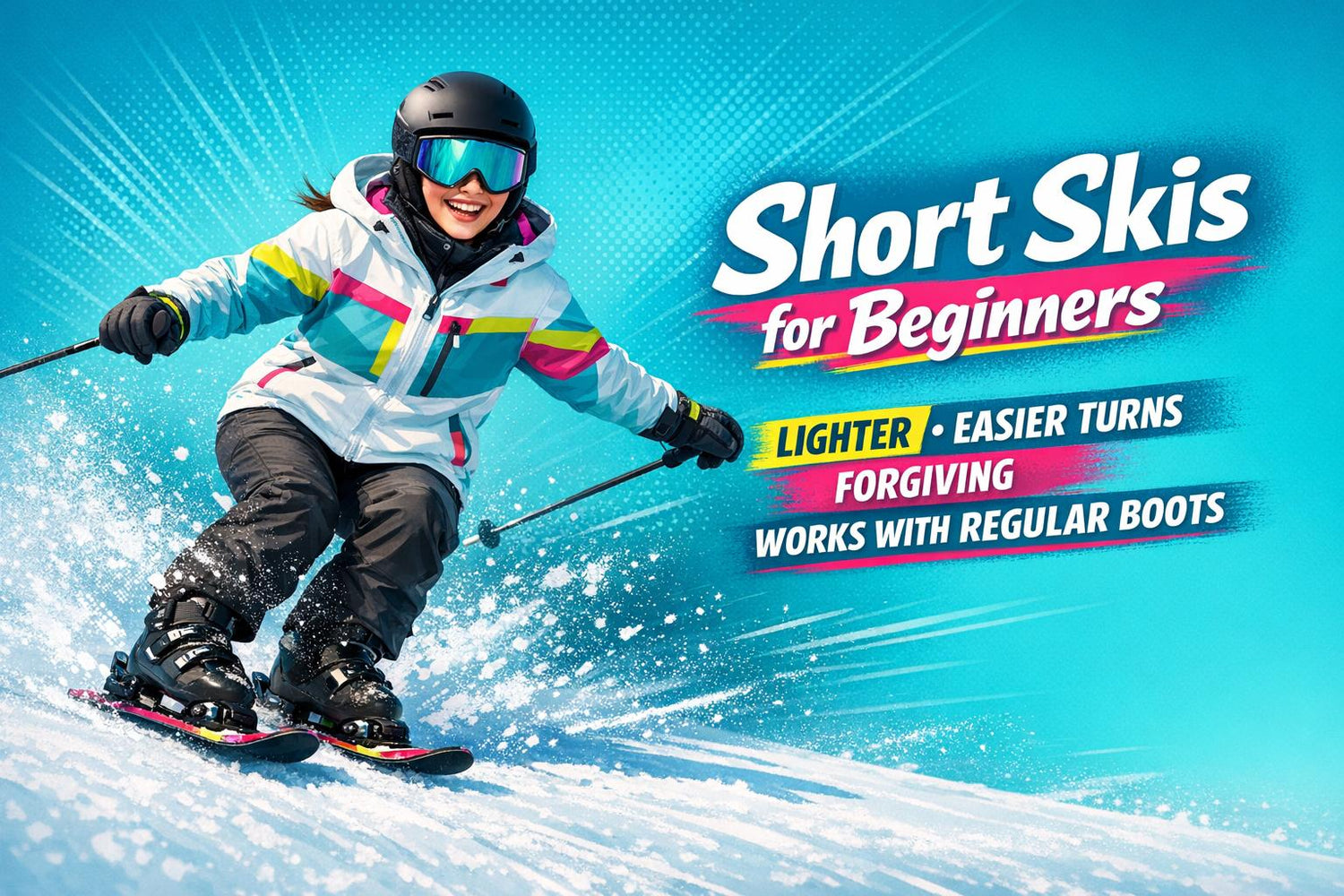
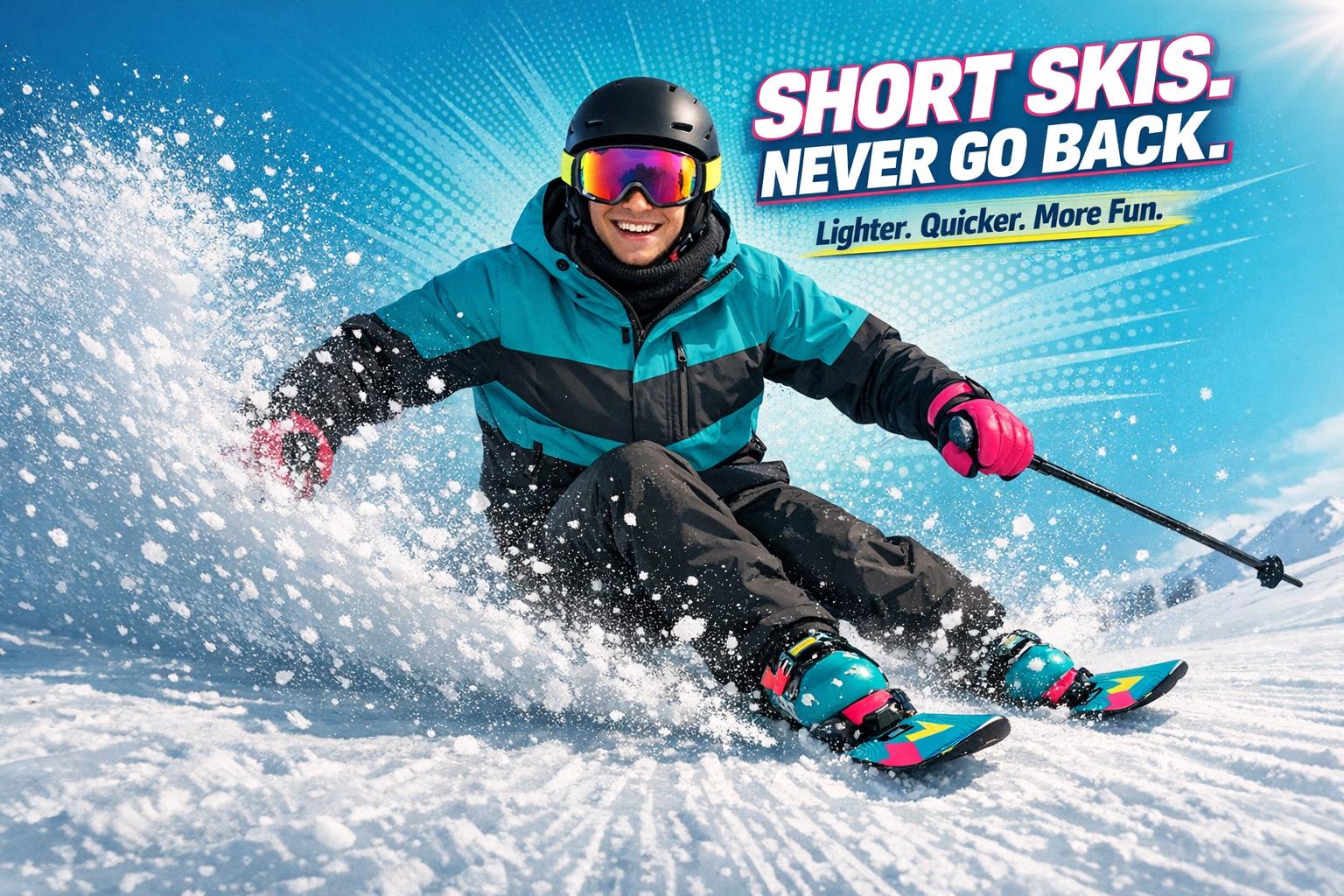
Short skis are a game-changer for beginners. Why? They're shorter, lighter, and easier to control than long skis. This makes learning faster and less intimidating. Models like Snowfeet Skiblades (65 cm to 99 cm) are forgiving, easy to turn, and help you recover from small mistakes - perfect for building confidence on the slopes. Plus, they work with regular boots and are more affordable than standard ski setups.
Here’s the quick takeaway:
- Easier Control: Short skis require less effort to turn and navigate tight spaces.
- Lightweight Design: Less strain, more energy for skiing.
- Faster Progress: Learn the basics in just a day.
- Cost-Effective: Prices start at $635, with no need for special boots.
If you’re new to skiing, short skis like Snowfeet Skiblades make it simple, fun, and stress-free to hit the slopes. Let’s dive into why they’re such a great option.
Problems Beginners Face with Standard Long Skis
Understanding the struggles that come with traditional long skis sheds light on why short skis - like Snowfeet* Skiblades - are a game-changer for beginners.
Difficulty Controlling and Turning
Long skis, often over 67 inches (170 cm), can be tough to manage, especially for those just starting out. Their length and weight make quick, precise turns a challenge, and even small mistakes can spiral into bigger issues. As the Snowfeet Team puts it:
"Long skis are for most of skiers too clunky and heavy." - Snowfeet Team
On groomed runs or tricky terrain like moguls and trees, long skis force wide, awkward turns due to their larger turning radius. This can lead to catching edges or even collisions. While brands like Rossignol and Salomon design these skis for stability at high speeds, that stability often comes at the cost of maneuverability - something beginners desperately need for tight, controlled environments.
Overwhelming Size for First-Time Skiers
The sheer size of traditional skis can feel daunting before you even step onto them. Their oversized design complicates everything from navigating lift lines to handling narrow trails. Beginners often find their skis tangling or snagging on trees in dense areas. On mogul fields, the length makes quick adjustments nearly impossible, turning what should be a fun learning experience into a nerve-wracking one. This intimidation factor can make skiing feel more like a chore than an enjoyable activity.
Longer Time to Learn Basic Skills
These control and size issues make the learning curve for long skis much steeper. They require more strength, precision, and patience, which slows down progress. As the Snowfeet Team explains:
"In general, they [long skis] are less forgiving than the short skis." - Snowfeet Team
Short skis, on the other hand, are far more forgiving and easier to maneuver. This allows beginners to gain confidence and move from rookie to intermediate levels in just a day. Traditional long skis are often designed with advanced skiers in mind, which means they don’t cater to the needs of beginners, leading to unnecessary frustration and slower development.
| Aspect | Long Skis (Standard) | Short Skis (Beginner-Friendly) |
|---|---|---|
| Maneuverability | Cumbersome in tight spaces | Quick pivots, ideal for trees/moguls |
| Physical Effort | Strenuous and draining | Light and easy to handle |
| Forgiveness | Hard to recover from mistakes | Easy to correct errors |
How Short Skis Make Learning Easier
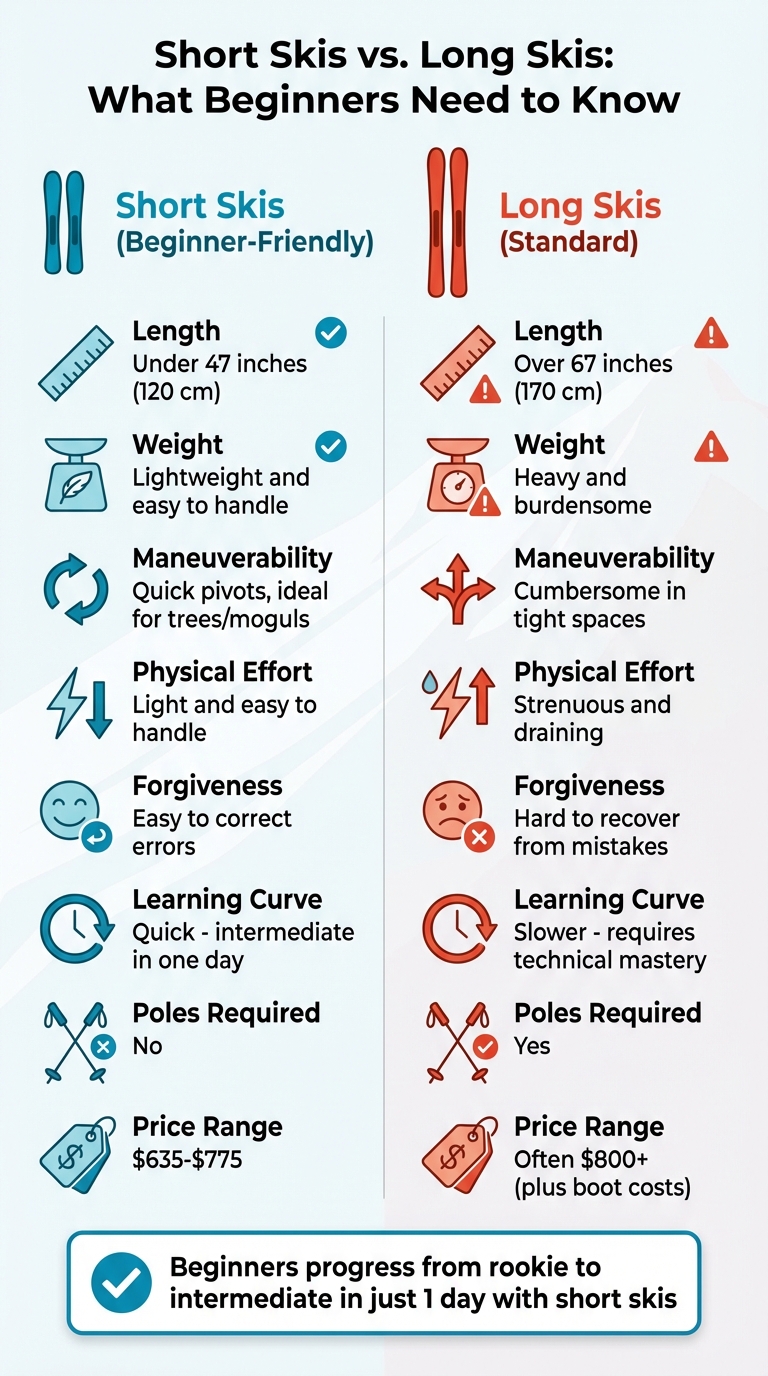
Short Skis vs Long Skis Comparison for Beginners
If traditional long skis feel like a challenge, short skis might just be the perfect solution. Their design tackles many of the common frustrations beginners face, making skiing feel less intimidating and more enjoyable. Let’s break down why short skis are a game-changer.
Better Turning and Control
Short skis - usually under 47 inches (120 cm) long - make turning a breeze. Unlike traditional long skis from brands like Rossignol or Salomon that demand wide, sweeping arcs, short skis let you pivot with ease. Thanks to their shorter effective edge, they require far less effort to maneuver. This added responsiveness means you can handle tight spaces more confidently, whether you’re navigating moguls, steering around trees, or dodging other skiers.
Lighter Weight for Easier Handling
One of the biggest advantages of short skis is how light they are. They take less energy to move and steer, so you can enjoy longer sessions without feeling wiped out. In contrast, heavier traditional skis from brands like K2 or Atomic can leave you drained. Short skis feel almost like an extension of your body, improving balance and making it easier to stay in control as you learn. Plus, their compact size makes packing and transporting them much simpler, saving your energy for the slopes.
Quicker Skill Development
Short skis are incredibly beginner-friendly, helping many new skiers progress faster than they would on traditional skis. Their forgiving design and versatility across different terrains mean you can build confidence without needing to swap equipment. Experts suggest that beginner piste skis should be 4–6 inches (10–15 cm) shorter than your height to make turning and skill-building more manageable.
The Snowfeet Team sums it up perfectly:
"Short skis are the right way to get confident on the slope very fast." - Snowfeet Team
Because they’re so forgiving, short skis allow you to recover from small mistakes without much trouble. This gives you the freedom to experiment and learn without constantly worrying about falling. Take Snowfeet* Skiblades, for example - their design makes early progress feel both achievable and rewarding. It’s all about building confidence and having fun while you learn.
Snowfeet* Skiblades: The Best Short Skis for Beginners
Snowfeet* Skiblades aren’t just smaller versions of traditional skis - they’re designed to help you build confidence on the slopes fast. Here’s what makes them stand out.
Main Features of Snowfeet* Skiblades
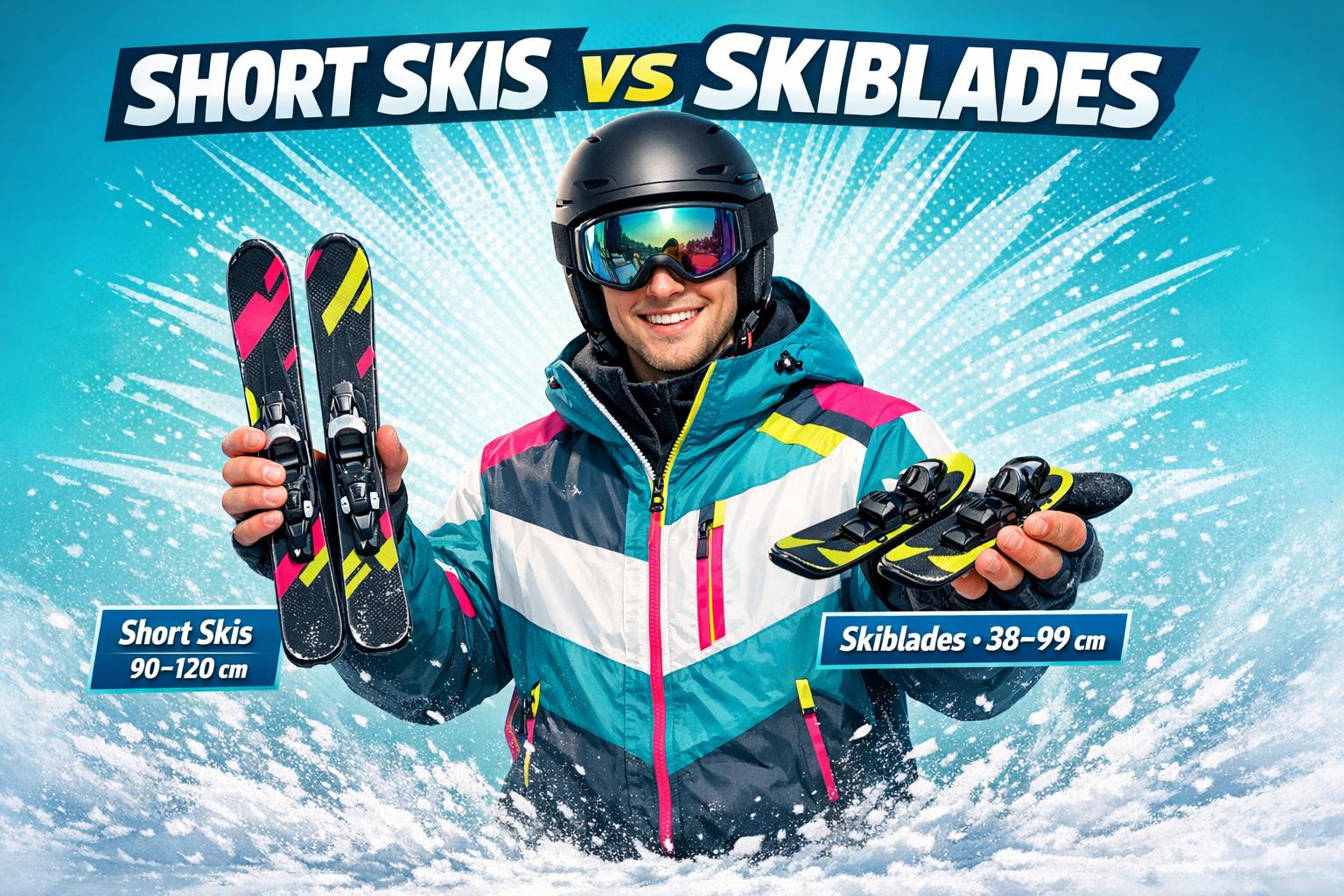
Snowfeet* offers skiblades ranging from 26 inches (65 cm) to 47 inches (120 cm), all tailored for beginners. The 65 cm Skiblades are ideal for sharp, quick turns, while the 99 cm model balances agility with stability. Unlike traditional skis from brands like Rossignol or K2, which require stiff ski boots, the 65 cm model pairs with snowboard boots, offering a more comfortable experience.
Higher-end models feature wood cores for added durability and responsiveness, while budget options use fiberglass cores without compromising performance. Adjustable bindings fit various boot sizes, and you can ditch the poles - these skiblades are all about focusing on balance and turning.
"Skiblades are incredibly suitable for beginners... Unlike traditional skis that require more technical skills and experience, skiblades offer a more forgiving and accessible way to learn skiing."
Their compact size makes them easy to transport - no more struggling to fit long skis in your car or lugging them through parking lots. Pricing starts at $675 for the 99 cm model and $635 for the 65 cm model, making them a more affordable option compared to traditional ski setups, which often exceed $800 plus the cost of boots.
Here’s a side-by-side comparison to show how Snowfeet* Skiblades stack up against standard long skis.
Snowfeet* Skiblades vs. Standard Long Skis
| Feature | Snowfeet* Skiblades | Standard Long Skis |
|---|---|---|
| Length | 26–47 inches (65–120 cm) | Typically over 67 inches (170 cm) |
| Weight | Lightweight and portable | Heavy and cumbersome |
| Learning Curve | Quick; intermediate in one day | Slower; requires technical mastery |
| Maneuverability | High; easy to turn in tight spaces | Lower; wide turns required |
| Poles Required | No | Yes |
| Boot Compatibility | Adjustable; some use snowboard boots | Requires alpine ski boots |
| Price Range | $635–$775 | Often $800+ (plus boot costs) |
While traditional skis from brands like Atomic or Salomon might keep you on the bunny slope for days, Snowfeet* Skiblades help most users progress from beginner to intermediate in just one day. Their forgiving and responsive design makes all the difference.
Why Snowfeet* Beats Other Short Ski Brands
Snowfeet* goes beyond simply shortening skis - they’ve rethought the entire beginner skiing experience. Their focus on comfort and adjustability sets them apart from other short ski brands.
For example, the 44 cm Skiskates are rated 5.0/5, the 50 cm Ski Skates score 4.9/5, and the 99 cm Skiblades also boast a perfect 5.0/5. Users rave about how easy they are on moguls and how much gentler they are on the knees compared to traditional skis. That’s a big deal when you’re spending hours learning and want to keep coming back.
What truly makes Snowfeet* different is their approach. They’re not just trying to imitate traditional skis - they’re creating something entirely new:
"For the purpose of the recreational skiing, short skis are a better choice. They are easier to pack and carry around, you can choose what footwear do you prefer and finally, they are easy to ride."
These skiblades grow with you. Start as a beginner, move to intermediate, and even tackle advanced tricks - all on the same gear. That means you won’t need to upgrade equipment as you improve, saving you money and keeping you comfortable with the gear you know. Up next, we’ll help you choose the right model and get started with Snowfeet* Skiblades.
sbb-itb-17ade95
Getting Started with Snowfeet* Skiblades
You've decided to give Snowfeet* Skiblades a try - let's dive into the basics to help you get started.
Picking the Right Snowfeet* Model
Choosing the right model is key to enjoying your Snowfeet* experience. If you're just starting out, the 120 cm model is a great choice. It offers excellent support and stability, making it easier to get the hang of things while still being lightweight enough for comfort. For a more dynamic and agile ride, the 99 cm model is perfect. It’s designed for those who are starting to advance their skills and want a little extra carving action. If you're after a mix of skiing and skating, go for the 65 cm model. It’s incredibly maneuverable but requires a bit more balance, so it’s better suited for those who are confident on their feet.
Adjusting the bindings on any Snowfeet* model is a breeze and can be done right at home. Price-wise, the 120 cm model comes in at $775, the 99 cm at $675, and the 65 cm at $635. Unlike traditional ski setups that often mean spending extra on boots and other gear, Snowfeet* offers an all-in-one solution that’s not only convenient but also cost-effective.
Once you’ve picked your model, it’s time to talk about boots.
Using Snowfeet* Skiblades with Regular Boots
One of the coolest things about Snowfeet* is how flexible they are when it comes to footwear. Unlike traditional ski bindings that require stiff, specialized boots, Snowfeet* works with your regular winter shoes. The 65 cm model pairs especially well with snowboard boots, but the other models also accommodate standard winter footwear. Just make sure your shoes fit within the US size range of 4.5 to 14.5 for a snug and secure fit.
With the right skiblades and boots ready, you’re all set to hit the slopes and start learning.
Basic Techniques for Fast Progress
Begin your practice on gentle slopes to get comfortable with the skiblades. Keep your weight centered over the skis to maintain balance. To control your speed and make turns, tilt the skiblades slightly to engage the edges. Stopping is straightforward with the snowplow (or pizza) technique: point the tips of the skiblades together, keep the tails apart, and apply even pressure. This method is particularly effective with short skis like these.
Follow these steps, and you'll be zipping down the slopes with confidence in no time!
Conclusion
Short skis, like Snowfeet* Skiblades, take the hassle out of traditional skiing. Their lightweight, easy-to-handle design makes it possible for beginners to pick up the basics in just a day.
Snowfeet* offers three options to suit different needs: the 120 cm model ($775) for extra stability, the 99 cm version ($675) for smooth carving, and the 65 cm option ($635) for a unique skating-skiing combo. Plus, they all work with regular winter boots - no special gear required.
These features highlight how Snowfeet* is changing the game for beginner skiers. Instead of the long, heavy skis most brands stick with, Snowfeet* focuses on making skiing approachable and fun. You’ll enjoy similar speeds, better control, and way less exhaustion. By swapping out bulky skis for these compact alternatives, your first time on the slopes becomes a lot more enjoyable.
Snowfeet* Skiblades offer exactly what you need to start skiing: gear that’s portable, forgiving, and versatile. Give them a try and see how they can change your winter adventures!
FAQs
Why are short skis easier for beginners to learn on compared to traditional long skis?
Short skis are a great option for beginners because they’re lighter, easier to maneuver, and simpler to control compared to traditional long skis. Measuring about 47 inches (120 cm) or less, their compact size makes turning and balancing feel much more manageable. This added ease helps new skiers build confidence right from the start.
Unlike traditional long skis, which can feel bulky and tricky to handle, short skis - like Snowfeet's Skiblades and Skiskates - are built for agility and user-friendliness. They make the learning process smoother and more enjoyable, letting beginners focus on improving their skills and having fun. If you’re just starting out, short skis are a fantastic way to get comfortable on the slopes and master the basics of skiing.
Can I use Snowfeet Skiblades with regular winter boots?
Yes, Snowfeet Skiblades are made to work perfectly with regular winter boots, like snow boots or hiking boots. That’s right - you won’t need specialized ski boots to hit the slopes!
Their clever binding system keeps things simple and beginner-friendly. It’s an easy, no-fuss way to enjoy skiing-like movement without dealing with the bulky or complicated gear that traditional skiing often requires. This makes them a great option for beginners and casual skiers who want a fun, low-pressure way to try out the sport.
Why are Snowfeet Skiblades more affordable than traditional ski gear?
Snowfeet Skiblades are a wallet-friendly alternative to traditional ski gear. For starters, they’re way cheaper upfront - prices kick off at around $150, compared to the $400 or more you'd typically shell out for standard skis. And here’s the kicker: you can use them with your regular winter boots, meaning you can skip the extra expense of specialized ski boots and bindings.
Their small size is another win. They’re super easy to carry and store, which can save you money on travel fees and storage space. Plus, if you’re new to skiing, Snowfeet Skiblades are easier to pick up, often cutting down the need for pricey lessons or extra gear. In short, they’re a smart, cost-effective way to dive into skiing without breaking the bank.











Leave a comment
This site is protected by hCaptcha and the hCaptcha Privacy Policy and Terms of Service apply.