




















Teaching kids to stop on skis doesn’t have to be a headache. The snowplow stop (aka the "pizza" shape) is the go-to move for beginners, but bulky, long skis can make the process frustrating. Enter Snowfeet Mini Ski Skates - a compact, 15-inch alternative that’s easier for kids to control. These skates eliminate problems like crossing tips and reduce the effort needed to form a wedge shape. Plus, they work with regular winter boots, making them lightweight and simple to use.
Here’s the deal: shorter skis help kids learn faster by improving balance, reducing swing weight, and allowing natural movements. They’re also super portable (fits in a backpack!) and cost less than traditional setups. Whether you’re starting on flat terrain or moving to bunny slopes, this guide covers everything you need to know - from forming the wedge to advanced stops like hockey stops.
Key Highlights:
- Snowfeet Mini Ski Skates: 15-inch design, works with winter boots, costs $129–$159.
- Easier to stop and steer compared to longer skis.
- Lightweight and portable - no need for heavy ski boots or car racks.
- Helps kids progress quickly from basic stops to advanced techniques.
Ready to make ski lessons smoother and more fun for your kids? Let’s break it down step by step.
Snowfeet Mini Ski Skates vs Traditional Kids Skis Comparison
Why Snowfeet* Gear Works Better for Young Skiers
Snowfeet* Mini Ski Skates vs. Traditional Skis
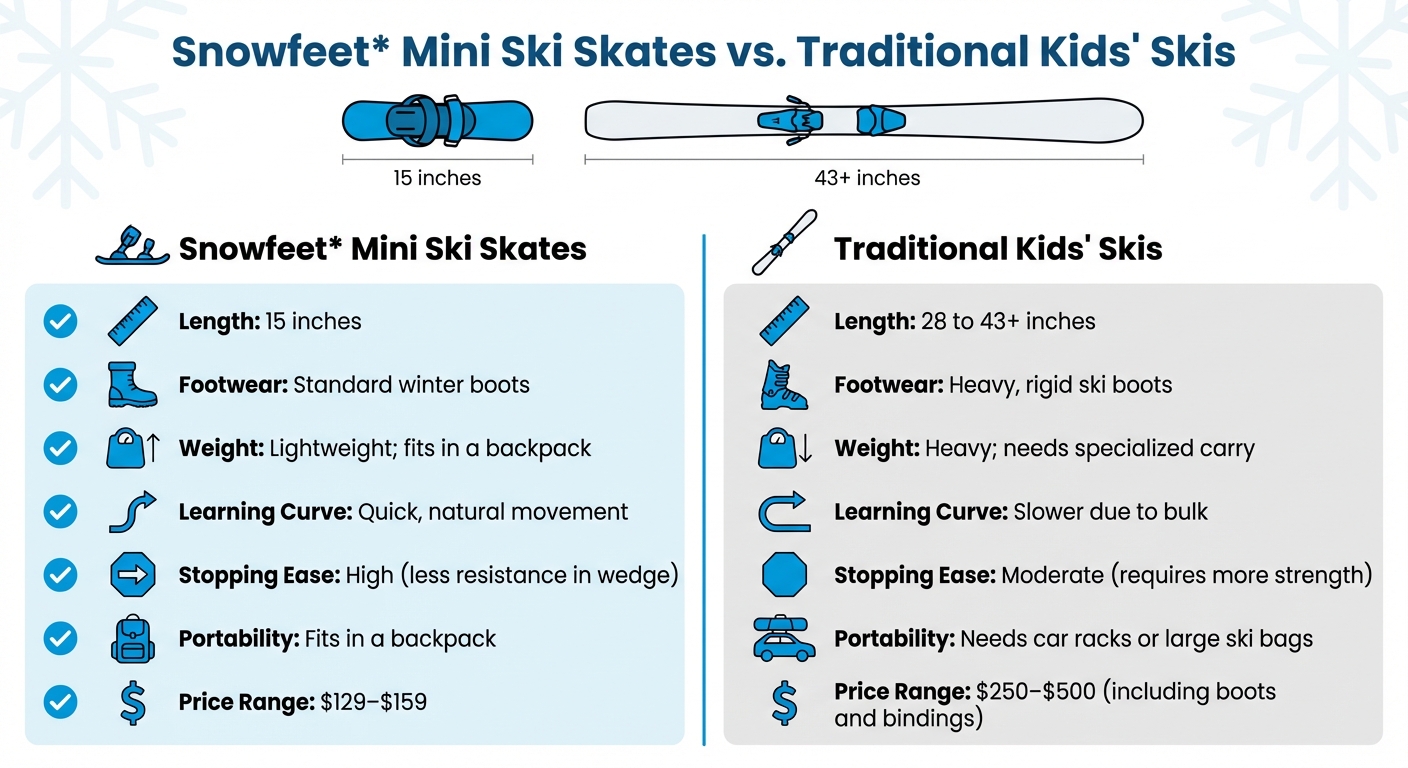
When comparing Snowfeet* Mini Ski Skates to traditional skis, the key difference lies in performance and ease of use. At just 15 inches long, Snowfeet* Mini Ski Skates demand far less physical effort for kids to push into a wedge position. Traditional skis for children, which range from 28 to 43 inches, act like long levers, putting extra stress on small leg muscles and making stopping more challenging.
Traditional skis often overlap and tangle when kids try to form a wedge, causing frustration. Snowfeet* eliminates this issue because their shorter length simply doesn’t allow the tips to cross. This lets kids focus on balance and edge control without being bogged down by unwieldy equipment.
| Feature | Snowfeet* Mini Ski Skates | Traditional Kids' Skis |
|---|---|---|
| Length | 15 inches | 28 to 43+ inches |
| Footwear | Standard winter boots | Heavy, rigid ski boots |
| Weight | Lightweight; fits in a backpack | Heavy; needs specialized carry |
| Learning Curve | Quick, natural movement | Slower due to bulk |
| Stopping Ease | High (less resistance in wedge) | Moderate (requires more strength) |
| Portability | Fits in a backpack | Needs car racks or large ski bags |
| Price Range | $129–$159 | $250–$500 (including boots and bindings) |
Another big advantage? Snowfeet* work with regular winter boots instead of stiff, heavy ski boots. This keeps kids’ ankles more mobile, giving them a natural skating-like feel. They can sense the snow beneath them and adjust their edges with ease - something that’s nearly impossible in rigid plastic boots. These features make Snowfeet* not only more effective for stopping but also a lot more practical for busy families.
Easy to Carry and Store
Snowfeet* Mini Ski Skates are a game-changer when it comes to portability. They fit neatly into a standard backpack, freeing up parents’ hands to help with their child’s balance, carry snacks, or hold hands on the way to the slope. Say goodbye to roof racks, bulky equipment bags, and wrestling with oversized gear in crowded parking lots.
The lightweight design also prevents kids from getting tired too quickly. No more "heavy leg" syndrome leading to early meltdowns! Kids can even carry their own gear, making the walk from the car to the slope much easier and less stressful. And when the day’s over, storing Snowfeet* is a breeze - they take up minimal space on a shelf or in a trunk. Plus, they’re perfect for backyard hills, local parks, or sledding slopes, so you don’t even need a ski resort to get started.
Kids Learn Faster with Shorter Skis
Snowfeet* Mini Ski Skates help keep a child’s center of gravity stable, which reduces the wobbling that often makes beginners nervous. Their compact size gives kids better control and allows for natural movements, making it easier to steer, stop, and avoid obstacles. The high maneuverability means kids can make quick adjustments, which is crucial for building confidence on the snow.
Once they’ve mastered the wedge stop, the shorter design makes it easier to move on to advanced techniques like edging and hockey stops. Both feet can turn sideways simultaneously, giving kids a solid foundation for more complex skills. The result? Faster progress with less frustration, helping young skiers feel accomplished and excited to keep learning. This sets them up perfectly for the stopping techniques covered in the next section.
Getting Ready for Stopping Practice
Pick the Right Equipment
When it comes to teaching kids how to stop on the slopes, having the right gear can make all the difference. Snowfeet* Mini Ski Skates (measuring 38 cm or 15 inches) are a fantastic choice. Their compact size makes it easier for kids to form a wedge shape quickly, which is key for stopping. Unlike longer skis, these skates allow for faster, more precise control.
Snowfeet* gear also stands out for its portability and ease of use. They’re lightweight, reducing fatigue, and fit snugly with your child’s existing winter boots. This means no need for extra equipment, and your child gets a stable base that’s perfect for maintaining balance and control.
Once the gear is sorted, the next step is finding the right spot for practice, which is a key part of any first ski trip.
Find a Safe Practice Spot
Start with flat terrain. This gives kids the chance to practice forming a wedge shape and shifting their weight without worrying about picking up speed. Once they’re comfortable, move to beginner-friendly areas, often called "bunny slopes." These spots usually have gentle slopes and natural run-out zones, making them ideal for learning.
Safety is key, so look for open, low-traffic areas. Many ski resorts have "Slow Zones" or "Family Areas" specifically designed for beginners. Avoid crowded intersections or trails with icy patches. Instead, stick to groomed, packed snow, which offers better control and predictability.
Now, let’s talk about ensuring a proper fit and building balance.
Check Fit and Teach Balance
Before hitting the slopes, do a quick stomp test to check the fit of the Snowfeet* bindings. Your child should stomp their feet to confirm there’s no movement between their boots and the skates. A snug fit ensures proper weight transfer, which is crucial for forming a good wedge stop.
Balance is just as important as fit. Start with simple exercises on flat ground. Have your child lift one foot at a time and gently shift their weight forward and backward. These movements help them find their center of gravity and build the muscle memory they’ll need for turning and stopping. The shorter length of Snowfeet* skates also helps kids maintain a natural, balanced posture, giving them the confidence to progress faster than they might with traditional skis.
How to Teach the Snowplow Stop
Step 1: Make the Wedge Shape
Start on completely flat ground where there's no chance of sliding. Have your child stand with their feet about hip-width apart. Then, ask them to push their heels outward while bringing the tips of their Snowfeet* Mini Ski Skates together. The goal? Form a "pizza slice" shape with the skates.
Unlike traditional skis, which can be long and awkward for kids to manage, these shorter skates let them see their feet and adjust the angle quickly without frustration. Repeat this step until forming the wedge feels natural. You can make it fun by using cues like "make a pizza" or "point your toes toward each other."
Once the wedge is consistent on flat ground, it's time to move to a gentle slope for some real practice.
Step 2: Practice on Gentle Slopes
When the wedge shape is solid, find a gentle slope with just a slight incline. Have your child glide forward slowly, then encourage them to widen the wedge by pushing their heels farther apart. The wider the wedge, the more they'll slow down.
The shorter length of Snowfeet* skates gives quick feedback, making it easier for kids to feel the edges gripping the snow. When comparing skiblades vs traditional skis, engaging the edges on longer equipment often takes more strength and pressure, which can overwhelm beginners. Practice this several times, gradually increasing the slope's steepness as their confidence grows.
Step 3: Add Weight Shifting for Turns
Next, introduce weight shifting to help with steering and more precise stopping. While holding the wedge position, ask your child to press harder on one foot and then the other. Pressing on the right foot will steer them left, while pressing on the left foot will steer them right.
The compact, lightweight design of Snowfeet* skates makes this step much easier. Kids can shift their weight without struggling against long, heavy equipment, and they'll notice the direction changes right away. This quick feedback builds confidence and sets the stage for learning controlled stops.
Step 4: Practice Full Stops
Now it's time to combine all the skills. Have your child ski down a gentle slope, widen their wedge, and apply firm, even pressure on both feet to come to a complete stop. Remind them to keep their knees bent and their weight slightly forward - leaning back makes stopping much harder.
Always practice stopping in open, safe areas away from other skiers. To make it more engaging, set a target marker and challenge your child to stop right at it. The compact design of the skates makes stopping easier compared to traditional skis, giving kids a sense of accomplishment. Celebrate every successful stop to keep their spirits high!
sbb-itb-17ade95
Moving to Advanced Stopping Skills
Learn Edging and Hockey Stops
Once your child has nailed the snowplow, it’s time to step up to edging and hockey stops - essential for stopping quickly at higher speeds. This is where the Snowfeet* PRO (50 cm) really shines compared to traditional skis.
The hockey stop involves pivoting both feet about 90 degrees while engaging the edges into the snow. With regular skis, this move can be tough for kids because it requires swinging long, heavy boards, which takes a lot of leg strength. The compact 50 cm length of the Snowfeet* PRO makes this much easier. The shorter design reduces the swing weight, so kids can pivot their feet with less effort. It feels more like ice skating than skiing.
Start with a side-slip drill on a gentle slope. Have your child stand sideways on the hill and practice tilting their ankles to release and re-engage the edges. They’ll slide a few inches down the slope, then grip the snow again. This builds the muscle memory they’ll need for edge control. Next, on flat ground, try a "hockey snap" drill - quick 90-degree pivots of both feet. It’s a great way to build confidence before adding speed.
The Snowfeet* PRO’s binding system gives an edge here, too. It places your child’s center of gravity right over the edges, making sharp, clean stops easier. Traditional skis often require a tricky weight-shifting technique and a "knees-in" posture, which can be overwhelming for beginners. With Snowfeet*, kids just flex their ankles to engage the edges, stopping smoothly and efficiently. Many kids pick up parallel stops within just a few days - much faster than the time it often takes with traditional skis.
Build Confidence with Practice
Once the basics are in place, regular practice is key to making these stops second nature. Set up a practice area on a gentle slope, away from busy trails, where your child can try out their moves without feeling pressured. To keep it fun, play a game of "follow the leader" - you perform a hockey stop, and they try to copy it.
Thanks to the lightweight design of Snowfeet*, kids can practice longer without getting tired. Encourage them to shift their weight toward the downhill foot during stops for smooth, consistent deceleration.
Stopping Progress: Snowfeet* vs. Traditional Skis
Snowfeet* gear doesn’t just simplify stopping for beginners - it also speeds up their progression to advanced techniques. Here’s how the learning curve stacks up:
| Skill Progression | Snowfeet* PRO (50 cm) | Traditional Kids' Skis |
|---|---|---|
| Hockey Stop | Feels natural, similar to ice skating or rollerblading | Requires more leg strength to pivot long skis |
| Edge Control | Immediate feedback; snow feels closer to the feet | Feedback is less direct due to long boards and stiff boots |
| Risk of Falling | Lower; no long tips to catch or cross | Higher; long tips can overlap during abrupt stops |
| Learning Curve | Faster; advanced stops often mastered in days | Slower; may take multiple sessions or even seasons beyond the snowplow |
With a price range of $159–$179, the Snowfeet* PRO is a smart and affordable way to speed up your child’s learning. Its skate-like feel helps kids naturally pick up edging techniques just by tilting their ankles - skipping the complicated mechanics that often come with traditional skis.
Learn to Ski (with kids) - Lesson 3: Stopping
Conclusion
Teaching kids to stop safely on skis doesn’t have to be complicated - especially with the right gear. The Snowfeet Mini Ski Skates (38 cm) and the Snowfeet PRO (50 cm) make learning quicker and safer compared to traditional skis. Their ultra-short design improves edge control and balance, helping kids progress faster from basic wedge stops to advanced hockey stops. Plus, they’re lightweight, so kids can carry their own gear and practice longer without getting worn out.
Traditional skis often force kids into awkward snowplow positions, which can lead to bad habits and even increase the risk of knee injuries from crossed tips. Snowfeet, on the other hand, focuses on proper edge control from the start. This builds skills that work on all kinds of terrain. The compact size also reduces swing weight, makes pivoting easier, and introduces a natural skating motion that feels intuitive.
With prices ranging from $129–$159 for the Mini Ski Skates and $159–$179 for the PRO, this gear offers a faster learning curve and easy storage - all of it fitting neatly into a backpack. It’s a smart investment for parents who want their kids to learn skiing the right way.
Want to check it out? Head over to snowfeetstore.com to see the full lineup designed for young skiers.
FAQs
What age can kids start using Snowfeet*?
Snowfeet* products, like the Snowfeet MINI KIDS (38 cm), are made with young beginners in mind. Although there’s no exact age range specified, they typically work well for kids around 3 to 6 years old or older, depending on their size and coordination. Thanks to their lightweight and portable design, these are a great option for helping children learn basic skiing techniques in a safe and simple way.
Are Snowfeet* allowed at ski resorts?
It’s unclear if Snowfeet* are allowed at ski resorts, as policies can vary. To avoid any surprises, it’s a good idea to contact the resort directly and ask about their specific rules regarding Snowfeet* before heading out.
What boots work best with Snowfeet*?
Snowfeet* gear pairs perfectly with lightweight, flexible boots that fit snugly and feel comfortable. Many Snowfeet* products are designed to work with standard snow boots for kids. For the best experience, always refer to Snowfeet*’s sizing guidelines to ensure your boots are compatible with their bindings. A proper fit not only boosts performance but also makes learning safer and more enjoyable for kids.













Leave a comment
This site is protected by hCaptcha and the hCaptcha Privacy Policy and Terms of Service apply.