



















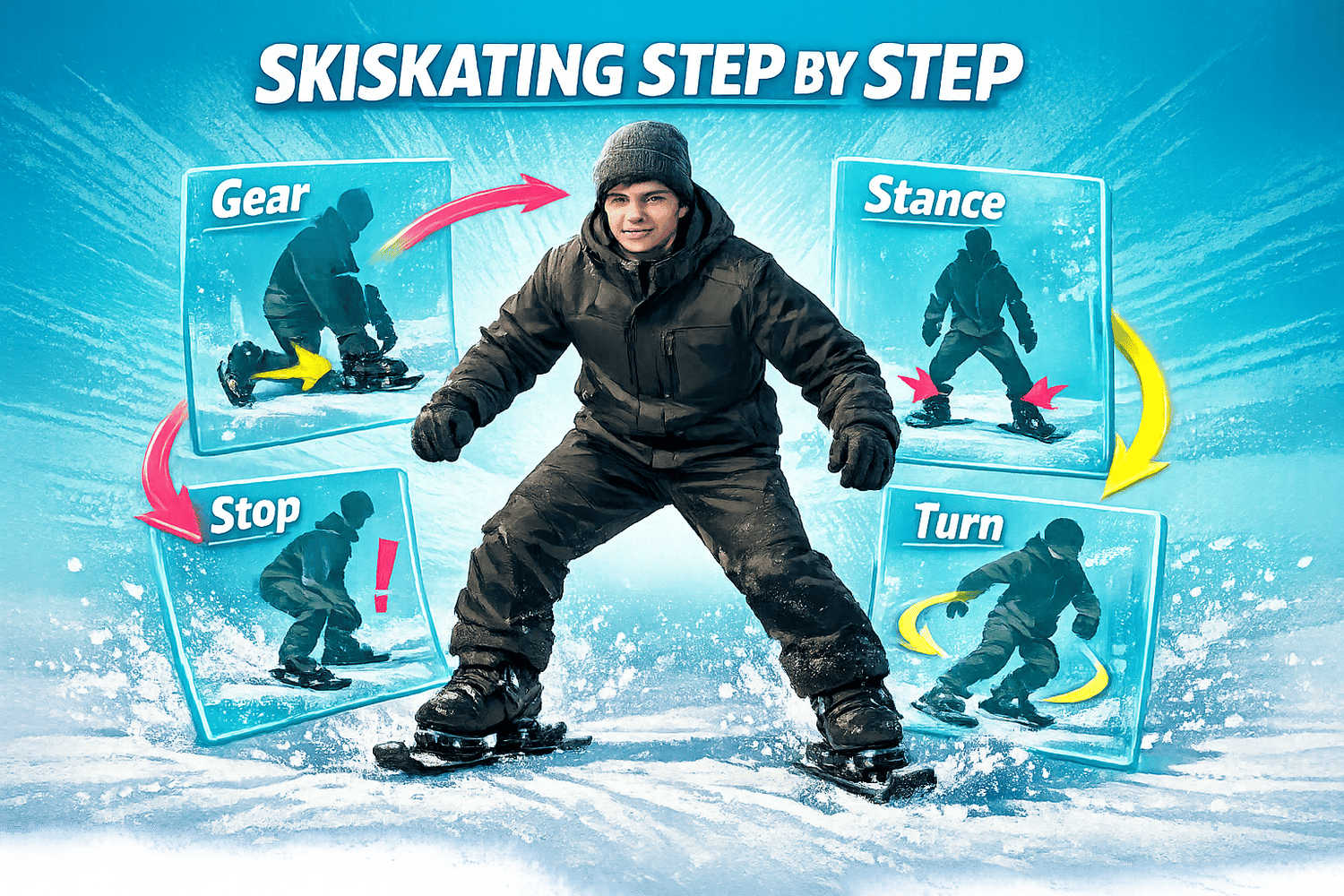
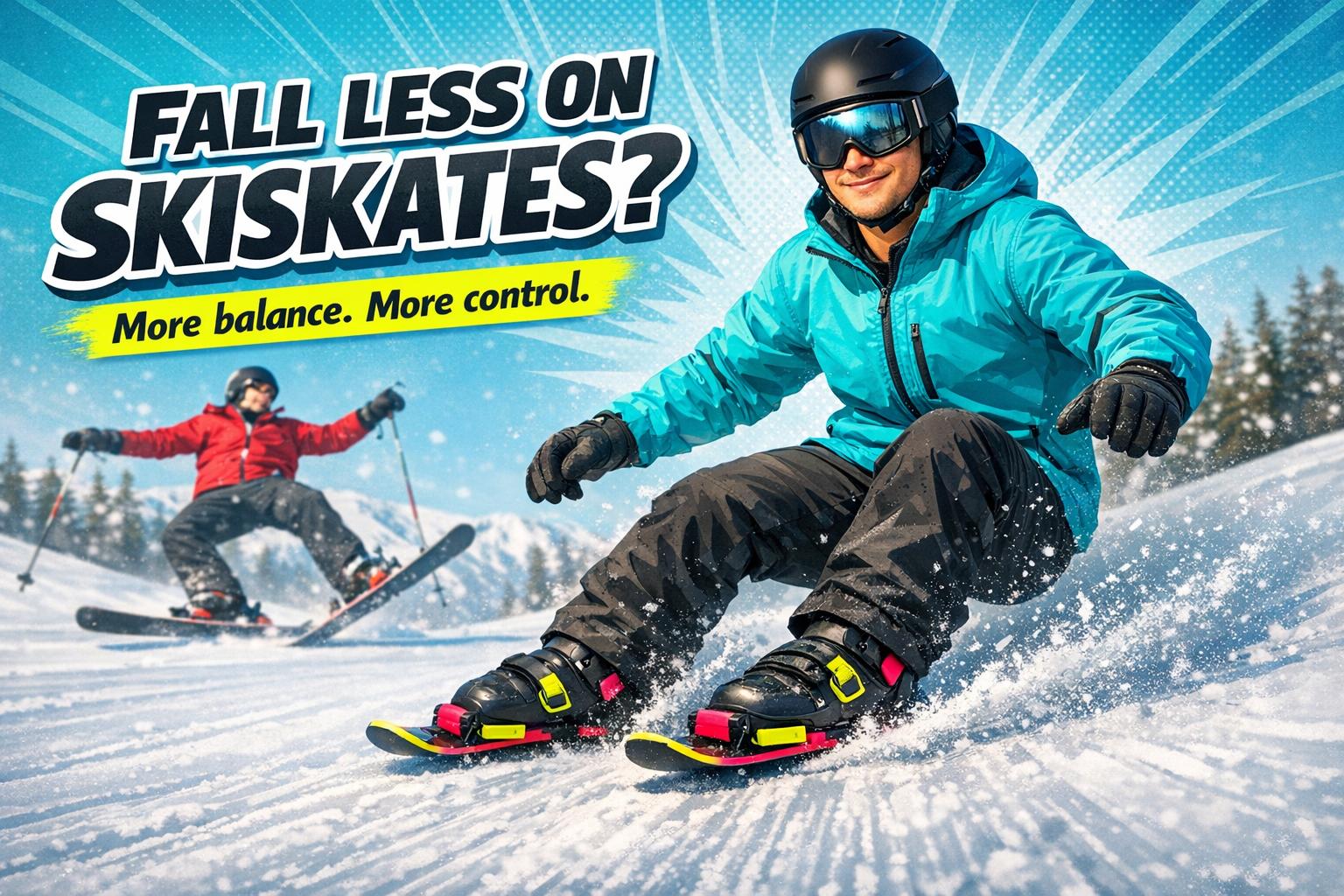
Skiskating is the perfect winter sport for beginners. It’s like combining ice skating and skiing, but with shorter, lighter gear that’s easier to control. You can learn the basics in just a day, avoid bulky equipment, and even use your regular winter boots. Here’s the quick rundown:
- Why It's Beginner-Friendly: Compact gear like Snowfeet Skiskates (17.3 inches) or Skiblades (25.6-47.2 inches) makes balancing and turning easier. Plus, the shorter length helps you avoid crossing tips - a classic rookie mistake.
- What You Need: Skiskates, waterproof boots, warm clothes, and optional accessories like liquid wax or sharpening tools.
- How to Learn: Start on flat ground to practice balance, then move to skating motions, turning, and stopping. Once confident, tackle gentle slopes and work your way up to tricks or deeper snow with longer models.
- Why Choose Snowfeet Gear: Lightweight, portable, and compatible with regular boots, Snowfeet gear is a hassle-free way to enjoy the slopes without the steep learning curve of skiing or snowboarding.
Ready to hit the snow? Let’s break it down step by step so you can start gliding like a pro.
How to Skate your Skis
Getting Started: What You Need for Skiskating
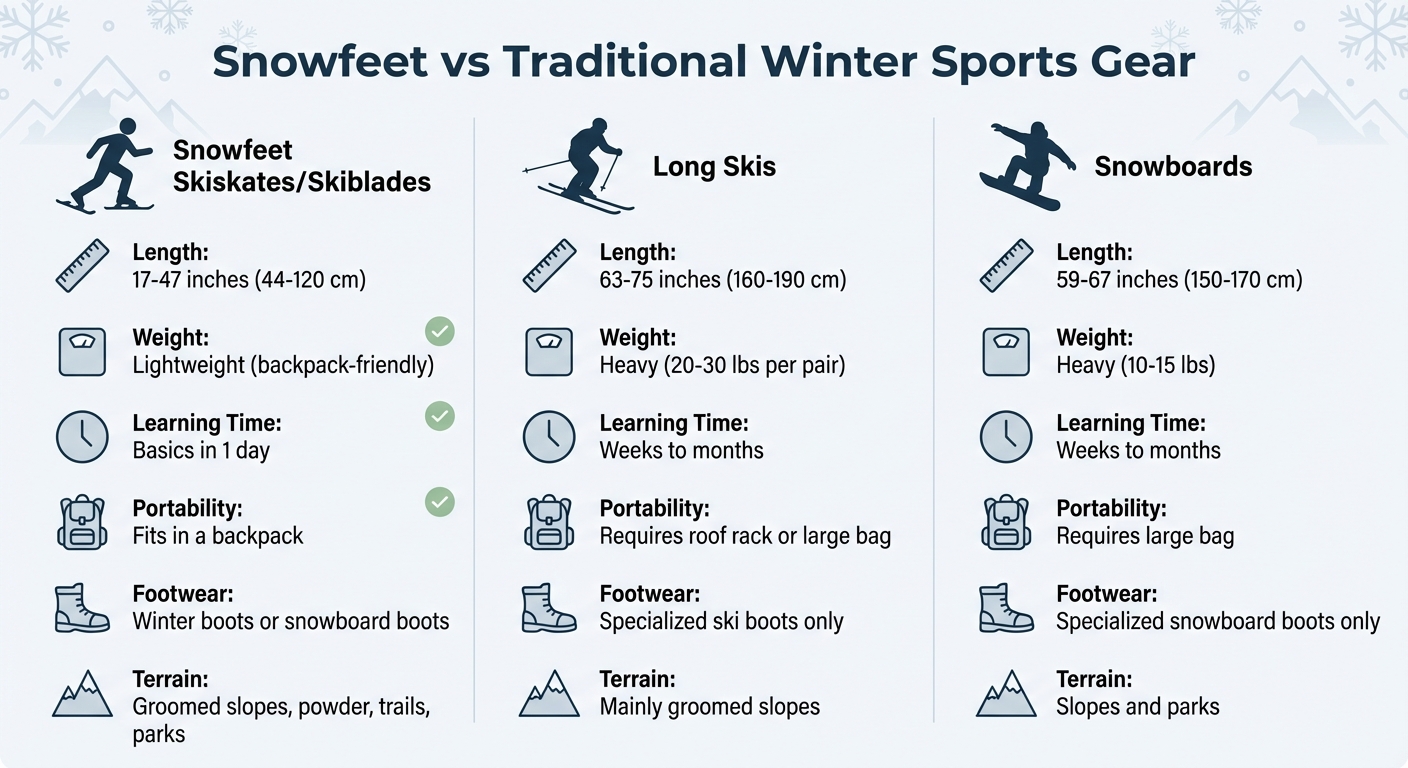
Snowfeet Skiskates vs Traditional Long Skis vs Snowboards Comparison
Skiskating is pretty straightforward. All you need is a pair of Snowfeet* Skiskates or Skiblades, waterproof boots (or snowboard boots), and some warm clothing to keep you cozy.
Why Choose Snowfeet* Skiskates and Skiblades
Snowfeet* has a variety of models tailored to different skill levels and preferences:
- 44 cm Skiskates (17.3 inches): These are the shortest option, ideal for anyone with ice skating or inline skating experience. They feel just like skates, making it super easy to transition from rink to snow. Starting at $490, they feature a wood core construction similar to professional skis.
- 99 cm Skiblades: If you're new and want more stability, these are a great pick. They offer better balance and control than traditional skis. Priced at $590, they’re a top choice for beginners and consistently receive 5-star reviews.
- 65 cm Skiblades (25.6 inches): Perfect for intermediate skiers, these strike a balance between control and agility. They’re available for $550.
One big perk? Most Snowfeet* models work with your regular waterproof winter boots. No need to deal with stiff, rental ski boots or spend on pricey specialized footwear. The bindings are adjustable with just a screwdriver, accommodating shoe sizes ranging from 6-13 US (38-47 EU) for basic models, and up to 14.5 US (49 EU) for models designed for ski or snowboard boots.
Snowfeet* vs Long Skis and Snowboards
Here’s how Snowfeet* compares to traditional long skis and snowboards:
| Feature | Snowfeet* Skiskates/Skiblades | Long Skis | Snowboards |
|---|---|---|---|
| Length | 17-47 inches (44-120 cm) | 63-75 inches (160-190 cm) | 59-67 inches (150-170 cm) |
| Weight | Lightweight (backpack-friendly) | Heavy (20-30 lbs per pair) | Heavy (10-15 lbs) |
| Learning Time | Basics in 1 day | Weeks to months | Weeks to months |
| Portability | Fits in a backpack | Requires roof rack or large bag | Requires large bag |
| Footwear | Winter boots or snowboard boots | Specialized ski boots only | Specialized snowboard boots only |
| Terrain | Groomed slopes, powder, trails, parks | Mainly groomed slopes | Slopes and parks |
Thanks to their shorter length, Snowfeet* Skiskates and Skiblades are easier on your knees and help you recover balance quicker when you stumble.
Accessories That Help Beginners
While Snowfeet* products are ready to use straight out of the box, a few extras can make your experience even better:
- Liquid wax ($6): Apply before each session to prevent snow from sticking.
- Sharpening stone or handy tuner: Keeps the metal edges sharp for gripping icy surfaces and making smooth stops.
- Replacement straps: If you have very large snowboard boots or smaller feet, these ensure a snug fit.
To keep your gear in good shape, wipe the metal edges and apply maintenance oil after each session to avoid rust. And don’t forget to adjust your bindings at home before hitting the slopes - it’s way easier than fumbling with a screwdriver in freezing weather.
Once you’ve got your gear and accessories ready, you’re all set to dive into skiskating step by step.
How to Learn Skiskating Step by Step
Step 1: Nail Your Stance and Balance
Start on flat, groomed snow to get comfortable with your body position before tackling slopes. Keep your legs about shoulder-width apart, with your knees slightly bent. This helps with balance and absorbs any shocks. Unlike traditional skiing, your weight should stay centered or even slightly back. As the Snowfeet Team explains, "Don't lean forward like you would do with skis, because you don't have the support of regular-length skis to hold you and you risk a fall."
For extra stability, try placing one foot slightly ahead of the other and lean your upper body forward. If you're skating backward, shift your weight onto your toes and lift your heels a little. Practice this basic hockey-style motion on flat ground until it feels second nature.
Once you're steady and balanced, you're ready to turn this stance into smooth, dynamic movement.
Step 2: Master Skating, Turning, and Stopping
When you’re confident with your stance, it’s time to move. Use a skating motion to push off and build momentum. The 44 cm Skiskates make this transition easy since they mimic the familiar feel of skating. For turning, tilt the edges of your skiskates in the direction you want to go. Thanks to their compact design, quick direction changes are a breeze, and there’s less risk of catching an edge.
Stopping takes a bit more practice. Push the edges of your skiskates sideways to create friction, similar to stopping on ice skates. The Snowfeet Team advises, "Stopping is a little bit more difficult with Snowfeet so distribute your weight evenly over both feet to make you stop easier and slower."
Once you’ve got movement and stopping locked down on flat terrain, you’re ready to tackle gentle slopes.
Step 3: Transition to Slopes and Parks
Now that you’ve built a solid foundation, it’s time to try a gentle, groomed slope. Stick with your staggered stance - one foot slightly ahead - and keep your weight over your heels. Avoid leaning forward, especially as the slope steepens. If you’re using a ski lift, no worries - it works just like it does with regular skis.
As your skills and confidence grow, you can move on to steeper slopes and even snowparks. Snowfeet’s lightweight design makes small jumps and tricks easier to pull off. Start with tiny hops on flat ground, then work your way up to small park features. If you’re looking for more stability while keeping that maneuverable feel, the 99 cm Skiblades are a great next step. Stick to groomed trails and slopes while you’re learning, and steer clear of steep drops or deep powder until you’re fully in control.
sbb-itb-17ade95
Advanced Skills: Tricks and Challenging Terrain
Simple Tricks You Can Learn with Snowfeet*
Once you’re comfortable cruising down the slopes, Snowfeet* Skiskates open up a whole new world of tricks. From basic 180-degree spins to full 360s, these compact skis let you pull off moves that are tricky - if not impossible - with traditional long skis. As the Snowfeet Team puts it:
"Skiskating is a sport combining skiing and skating... you can move similarly to ice hockey or rollerblading and explore new possibilities in winter fun."
Start with spins, then challenge yourself to ride backward. Shift your weight onto your toes while keeping your heels slightly lifted to prevent the tails from catching. Feeling adventurous? Try one-foot riding or ice skating-inspired moves like crossovers, the Eagle, or the Grapevine. These tricks not only look cool but also help improve your balance and agility. And thanks to the design of Snowfeet*, they feel surprisingly natural.
Want to tackle jumps? Focus on keeping your weight centered when you land for better control. Snowfeet* make snowpark sessions a breeze - you can quickly hike back up the hill and try again without waiting for a lift. This lets you practice tricks repeatedly, speeding up your progress and boosting your confidence.
Once you’ve nailed these basics, you’ll be ready to take on more challenging terrain.
Riding Powder Snow with Snowfeet* POWDER
After mastering tricks on groomed slopes, it’s time to level up and conquer deep powder. While the standard Snowfeet* (44 cm) work great on groomed trails and light powder (up to about 4 inches), they aren’t built for deeper snow. That’s where the Snowfeet* POWDER comes in. These 99 cm Ultimate Short Skis are designed specifically for backcountry adventures and deeper snow conditions. With a wood core construction, they provide the stability and float you need to glide through powder like a pro. Starting at $675, they offer just the right mix of maneuverability and surface area for off-trail fun.
The added length (99 cm) gives you a larger footprint to stay on top of the snow without losing the quick, responsive feel that makes skiskating so enjoyable. Riders love how these skis handle rough terrain while still feeling light and nimble compared to traditional long skis. If you’re ready to venture beyond groomed runs and explore untouched snow, Snowfeet* POWDER is your go-to gear.
Conclusion: Why Snowfeet* Is the Best Choice for Learning Skiskating
Skiskating feels effortless and safe with Snowfeet* Skiskates and Skiblades. Thanks to their compact design, they’re easier to handle, making it quicker to pick up the basics while also lowering the chance of injuries compared to traditional long skis or snowboards.
What sets Snowfeet* apart is their flexibility. You can take them just about anywhere - groomed slopes, snow parks, hiking trails, or even your backyard. They’re lightweight enough to toss into a backpack, work with standard winter or snowboard boots, and are an affordable way to dive into winter sports.
The numbers back it up. With over 50,000 riders worldwide and more than 5,500 glowing reviews (averaging 4.9 out of 5 stars), it’s clear that Snowfeet* has built a loyal following.
You’ve got options too. Whether it’s the ultra-compact 44 cm Skiskates (starting at $490), the all-around 65 cm Skiblades (from $550), or the 99 cm powder-ready models (from $590), you’re investing in durable, high-quality gear made in Europe.
Riders everywhere rave about the experience. Andrew B. sums it up perfectly:
"These skiblades are so much fun and easy to control. Never going back to regular skis."
Ready to give it a try? Your skiskating adventure starts with Snowfeet*.
FAQs
Why are Snowfeet Skiskates easier for beginners than traditional skis?
Snowfeet Skiskates are an awesome choice for beginners because they’re small, lightweight, and super easy to handle. Unlike traditional skis that can feel clunky and demand advanced skills like carving or edge control, these skiskates keep things simple and fun. At just 17 inches long, they make turning, stopping, and balancing way more manageable, helping newcomers gain confidence in no time.
One of the best parts? You don’t need any special boots or bindings. You can strap them right onto your regular winter shoes, making the whole setup quick, easy, and budget-friendly. Their straightforward design lets beginners focus on the basics - like movement and balance - without getting bogged down by complicated equipment. Whether you’re dipping your toes into a new winter activity or just want a fun way to play in the snow, Snowfeet Skiskates keep the learning curve smooth and the experience enjoyable!
Can I use my regular winter boots with Snowfeet Skiskates, or do I need special gear?
You can definitely wear your regular winter boots with Snowfeet Skiskates! These skiskates are made to work with most winter or snowboard boots, so there's no need to buy special footwear. It’s a hassle-free option, especially for beginners, letting you enjoy the slopes without needing extra gear.
Can you use Snowfeet Skiskates in deep snow or powder?
Snowfeet Skiskates work best on packed or groomed snow, where their agility and ease of use really stand out. That said, they’re not built for deep powder or soft snow. Their compact size just doesn’t offer the floatation you’d need in those conditions.
If you’re planning to stick to ski slopes, trails, or hard-packed snow, Snowfeet Skiskates are a super fun and versatile option. But if you’re heading into deeper snow, traditional skis or snowboards are probably the better tools for the job.











Leave a comment
This site is protected by hCaptcha and the hCaptcha Privacy Policy and Terms of Service apply.