




















Falling on the slopes happens to everyone, but getting back up doesn’t have to be a hassle - especially with skiblades like Snowfeet*. Unlike long, heavy skis, skiblades are shorter (38–120 cm) and lightweight, making it much easier to recover after a tumble. Here’s the gist:
- Shorter Length: Less awkward to reposition than 150+ cm skis.
- Lightweight Design: Easier to handle when you’re down.
- Flexible Footwear: Works with winter shoes or snowboard boots, so you can move naturally.
- Safer Falls: Less risk of tangling or twisting your legs.
To get back up, just position your feet downhill, roll to your stomach, push up with your hands, and stand. Whether you're on the 65 cm model for tricks, the 99 cm for all-mountain use, or the 120 cm for longer runs, recovery is smooth and simple. Snowfeet* skiblades are designed to keep you riding, not wrestling with your gear. Ready to spend more time carving and less time struggling? Let’s dive in!
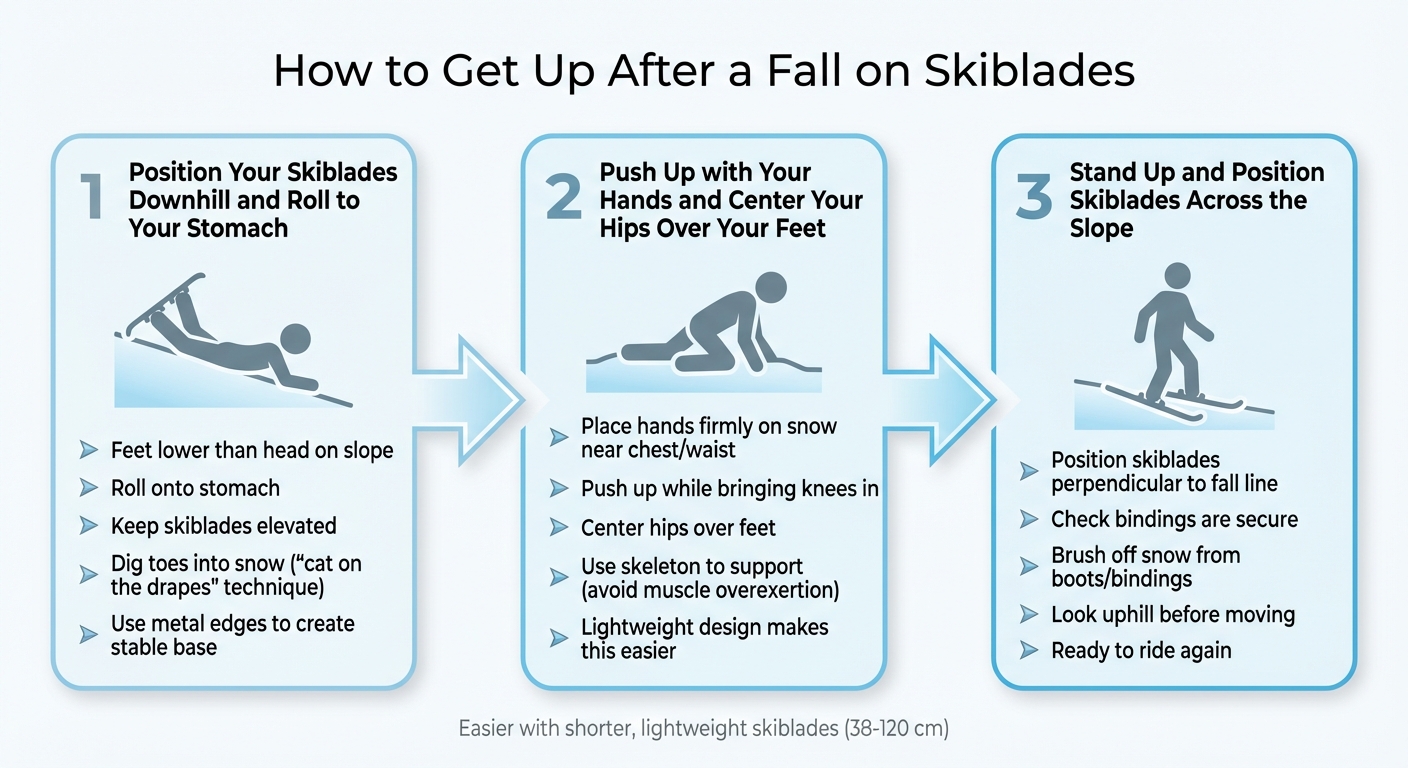
3-Step Recovery Process for Getting Up After Falling on Skiblades
3 Ways to Stand Up After Falling on Skis || REI

Why Recovery is Easier with Snowfeet* Skiblades Than Traditional Skis
The difference in recovery between Snowfeet* Skiblades and traditional skis comes down to three key factors: length, weight, and footwear. Let’s break it down.
Traditional skis are long - typically 150 cm or more - while Snowfeet* Skiblades range from just 38 cm to 120 cm. That shorter length makes a big difference when you take a tumble. With less leverage pulling on your legs, it’s easier to regain control. But length isn’t the only factor; weight plays a huge role, too.
Traditional skis are heavy and cumbersome. They often need roof racks or large bags just to get them to the slopes. Snowfeet* Skiblades, on the other hand, are ultra-light and compact enough to fit in a backpack. If you’re sprawled out in the snow, repositioning these lighter skiblades takes way less effort. You’re not stuck wrestling with long, rigid skis; instead, you can move your feet freely and get back on track faster.
Footwear is another game-changer. Traditional skis require stiff, plastic boots that restrict ankle movement. Snowfeet* Skiblades? They work with regular winter shoes or snowboard boots, giving you the flexibility to push off the ground naturally and even take a few steps to steady yourself. And if you’re completely wiped out, you can pack up your Snowfeet* and walk off the slope - something you can’t do with traditional ski gear. These advantages make recovery not only easier but also way less stressful.
Snowfeet* Skiblades vs. Traditional Skis: Comparison Table
| Feature | Snowfeet* Skiblades | Traditional Skis |
|---|---|---|
| Length | 38 cm – 120 cm | 150 cm – 190+ cm |
| Weight | Ultra-light; fits in a backpack | Heavy and bulky; needs roof racks or large bags |
| Recovery Effort | Low; easy to reposition | High; requires careful maneuvering |
| Boot Type | Winter shoes or snowboard boots | Rigid plastic ski boots |
| Ankle Mobility | High flexibility | Restricted |
| Risk of Tangling | Minimal due to short length | Higher risk of legs getting twisted |
| Portability After Fall | Can pack and walk off slope | Must ski down or call for help |
How to Get Up After a Fall on Snowfeet* Skiblades
Thanks to the compact design of Snowfeet* Skiblades (ranging from 65–120 cm), getting back on your feet after a tumble is way simpler compared to traditional skis. Here’s a quick guide to help you bounce back and keep cruising.
Step 1: Position Your Skiblades Downhill and Roll to Your Stomach
Start by making sure your skiblades are downhill from your body - that means your feet should be lower on the slope than your head. This way, gravity works with you, not against you.
Next, roll onto your stomach while keeping your skiblades elevated. Their shorter length helps prevent them from catching on the snow. Ski instructor Kevin Jordan from Aspen Snowmass offers this tip:
"When you fall on firm snow, get your feet downhill of your head... Turn onto your stomach and dig your toes in. Think about a 'cat on the drapes'; claw your feet and hands into the snow".
Before you move to stand, use the metal edges of your skiblades to create a stable base. This helps keep you from sliding while you prepare to get up.
Step 2: Push Up with Your Hands and Center Your Hips Over Your Feet
Place your hands firmly on the snow near your chest or waist. Push yourself up while bringing your knees in, aiming to center your hips over your feet.
One major perk of Snowfeet* is their lightweight design, which makes this step much easier than trying to maneuver heavy ski equipment. Brian Righter, a ski instructor from Deer Valley, advises:
"Use your skeleton to support you and recenter your hips over your feet to prevent overexertion and muscle fatigue".
This approach not only saves energy but also makes the recovery process smoother.
Step 3: Stand Up and Position Skiblades Across the Slope
Once you’re upright, position your skiblades perpendicular to the slope - across the fall line. This helps you stay stable and prevents any unwanted sliding.
Snowfeet* bindings, whether you’re using the non-release type or snowboard-compatible options, are designed to lock in securely. Make sure you’ve adjusted them properly before heading out to avoid any surprises during your ride.
Before you take off again, brush off any snow that might have built up on your boots or bindings. And don’t forget to check uphill to ensure the coast is clear before you start moving.
With these steps, you’ll be back on track in no time, ready to carve your way down the mountain again!
sbb-itb-17ade95
Recovery Techniques for Different Snowfeet* Skiblade Lengths and Terrains
Building on the recovery steps mentioned earlier, your approach should match your Snowfeet* model and the terrain you're tackling. Each skiblade length brings unique advantages. For example, the 65 cm model is great for parks, the 99 cm model shines with all-mountain stability, and the 120 cm model is perfect for long slopes.
65 cm Skiblades: Quick Recovery for Parks and Tricks
The ultra-compact 65 cm skiblades are all about speed and agility in terrain parks. Their shorter length makes them incredibly responsive, allowing for fast recovery with minimal hassle. Whether you're landing tricks or navigating tight spaces, these skiblades are designed to get you back on your feet quickly.
However, shorter blades do come with reduced stability compared to longer models. When standing back up, it's crucial to center your weight to avoid tipping forward or backward. On packed or groomed snow - typical in terrain parks - this design is a major advantage. But in deeper powder (over 4 inches), these skiblades may sink, making it essential to adjust your weight carefully. If you're looking for a balance of agility and support across varied terrains, the 99 cm model might be a better fit.
99 cm Skiblades: Balanced Recovery on Slopes and Powder
The 99 cm skiblades hit the sweet spot between agility and stability. Their added length provides better front-to-back stability, which makes standing up from a fall noticeably easier. Plus, the increased surface area helps keep you afloat in powder up to 10 inches deep.
Thanks to their parabolic shape, these skiblades evenly distribute weight, making recovery smooth and reliable on groomed slopes or light powder. They're a solid choice for all-mountain riders, whether you're cruising down a blue run or venturing into off-piste areas.
120 cm Skiblades: Smooth Recovery on Long Runs
If you're looking for maximum stability, the 120 cm skiblades are your go-to. These longer blades feel more familiar to those transitioning from traditional skis, offering excellent support when recovering from falls on steep terrain or in deep powder.
On long slopes, you'll appreciate how easy it is to reposition these skiblades across the fall line. Their responsive wood core and reduced weight help minimize fatigue, even after multiple recoveries. These skiblades are ideal for backcountry adventures and extended runs, where their stability and support make recovery far less of a challenge. They prove why Snowfeet* skiblades are a step ahead of traditional skis, delivering a smoother ride and easier recovery every time.
Conclusion
Snowfeet* Skiblades make getting back up after a fall much easier than traditional skis. Thanks to their lightweight design, they help reduce fatigue and get you back on your feet faster. Whether you're zipping around the terrain park on the nimble 65 cm model, cruising groomed slopes with the 99 cm Skiblades, or enjoying the stability of the 120 cm version on longer runs, recovery feels like a breeze.
These skiblades also bring a fresh approach to on-slope safety. Their smart design supports a simple three-step recovery process, giving you the freedom to rebound quickly. This is a game-changer, especially when you're learning the ropes or tackling more challenging terrain.
And let’s not forget the fun factor. As Andrew B. put it, “These skiblades are so much fun and easy to control. Never going back to regular skis.” With safer falls and quicker recoveries, Snowfeet* Skiblades are the go-to choice for anyone who wants to spend more time riding and less time struggling to get back up.
Curious to see the difference? Check out the full range at www.snowfeetstore.com and discover how effortless recovery can be.
FAQs
Why is it easier to get up after a fall with Snowfeet skiblades compared to traditional skis?
Snowfeet skiblades make getting back up after a fall a breeze, all thanks to their small size and lightweight build. Unlike traditional skis that can stretch over 5 feet long and feel awkward to handle, Snowfeet skiblades are much shorter (ranging from 15 to 47 inches) and weigh far less. This compact design means they’re easier to lift and reposition, which is especially helpful for beginners.
The shorter length also makes it simple to swing the skiblades into a steady V-shape, letting you push yourself up with little effort. Another bonus? Snowfeet skiblades strap onto regular winter boots, so you don’t need to deal with the bulk and stiffness of traditional ski bindings that can limit your movement. On the other hand, traditional skis, with their length and weight, often take more energy to handle, making the recovery process slower and more exhausting. With Snowfeet, you’ll be back on the slopes in no time, ready to keep the fun going!
What are the advantages of using different Snowfeet skiblade lengths for various terrains?
Choosing the right Snowfeet skiblade length can make a big difference in how you tackle various terrains. If you’re into tight, technical spots like tree runs, moguls, or park features, the 44 cm and 65 cm skiblades are your go-to. Their compact size and lightweight build let you whip through quick turns and edge changes with ease. Plus, if you take a tumble, recovering is way simpler compared to traditional skis.
For those who prefer groomed trails or wide-open runs, the 99 cm skiblades bring a little extra length for added stability and a smoother glide. They strike a great balance between speed and control, while still staying lightweight and easy to maneuver. No matter the size, Snowfeet skiblades shine with their compact design, low center of gravity, and straightforward setup - making them a great choice for beginners and a versatile alternative to traditional skis or snowboards.
Can I wear regular winter shoes with Snowfeet skiblades instead of ski boots?
Yes, you can absolutely use your regular winter shoes with Snowfeet skiblades! One of the coolest things about Snowfeet is that they’re designed to work with standard winter footwear. Unlike traditional skis that demand those clunky, expensive ski boots, Snowfeet skiblades are compatible with most sturdy winter shoes - as long as they provide good ankle support and have firm soles. This makes hitting the slopes way more convenient and easier on your wallet.
For the best ride, go for waterproof winter shoes that fit snugly. This ensures you stay comfy and in control while cruising down the slopes. Plus, thanks to their lightweight and compact design, Snowfeet skiblades are easier to manage and make recovering from a fall a breeze. You’ll be back up and gliding in no time!













Leave a comment
This site is protected by hCaptcha and the hCaptcha Privacy Policy and Terms of Service apply.