



















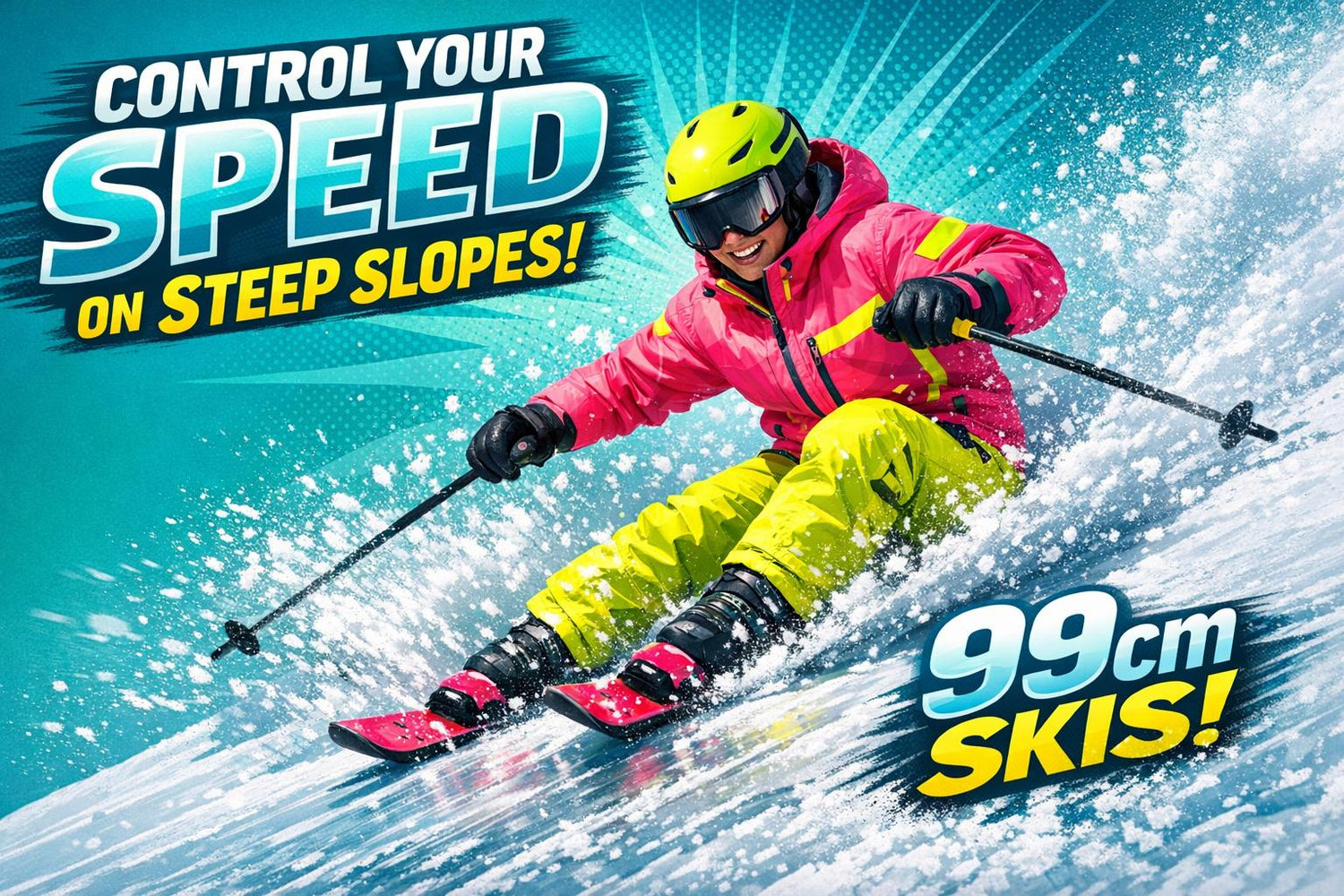
Want to master steep slopes without feeling out of control? 99cm skis, like the Snowfeet* Skiblades 99, are the perfect tool for quick, precise movements on challenging terrain. Their compact size makes tight turns, fast stops, and speed control easier than ever - ideal for black diamond runs or icy descents.
Why 99cm Skis Are a Game-Changer:
- Lightweight: Less fatigue, more fun.
- Easier Turns: Tight 6-meter turning radius for sharp, controlled movements.
- Quick Stops: Simple braking techniques like hockey stops and sideslips.
- Portable: Fits in a backpack - no roof rack needed.
With features like metal edges for grip and a wood core for stability, these skis are designed for steep, technical terrain. Whether you're skidding, carving, or stopping, they give you the control you need to stay confident on the slopes.
Let’s break down how to use them effectively and why they’re a smarter option than long skis or snowboards.
How to ski steep slopes using short turns | How to ski steep slopes in control | Hockey Stops
Speed Control Techniques for 99cm Skis on Steep Slopes
Tackling steep slopes with 99cm skis can be a thrilling challenge. Their shorter length makes them super responsive, but that also means you need to master specific techniques to stay in control. Here’s how to do it.
Braking Methods for Short Skis
When you need to stop quickly, the hockey stop is your best friend. To pull it off, turn your skis 90° sideways, bend your knees, and keep your weight centered. This will bring you to a smooth and controlled halt.
For tight or steep sections, the sideslip is a lifesaver. Simply keep your skis parallel and slide sideways down the slope. This method is great for managing speed without losing control.
"The sideslip is one of the most effective ways to manage your speed... allowing you to maintain control during your descent." – Ski School Saas Fee
If you’re newer to skiing, the snowplow (or wedge) technique is a solid option. Create a V shape by bringing your ski tips together, then press the inside edges into the snow to slow down. On steeper slopes, you can modify this into a reverse wedge stop by leaning back slightly, pressing your shins into the boots, and engaging your ski edges for extra resistance.
Once you’ve got braking down, carving is another tool you can use to control your speed dynamically.
Using Carving to Control Your Speed
Carving isn’t just about looking cool - it’s a smart way to manage your speed. The trick? Finish your turns. Instead of cutting them short and heading straight downhill, follow through until your skis point slightly uphill. This naturally slows you down by creating a longer, more controlled line.
On steeper terrain, shorter and quicker turns are the way to go. This is where 99cm skis shine. Their compact size lets you pivot and redirect with ease, making them perfect for tight turns.
"The steeper the slope is or the slower you want to go, you'll angle your skis more uphill as you pull out of the turn, to slow yourself down." – Danielle, Skiing Technique Expert
Pair these techniques with the right body positioning, and you’ll have full control even on the trickiest descents.
Body Position and Weight Distribution for Better Control
Your stance can make or break your skiing experience on steep slopes. With the compact design of 99cm skis, balancing your weight becomes even more crucial. Keep your weight centered over the middle of your feet - or slightly on your heels - rather than leaning too far forward like you might with longer skis.
Stay flexible by bending your knees and keeping a low center of gravity. Widen your stance slightly, and stagger your feet so one is just ahead of the other for added stability. To maintain leverage over these short skis, press your shins against the front of your boots and keep your eyes focused downhill to anticipate changes in the terrain.
The compact design of Snowfeet* Skiblades 99 works perfectly with these techniques, giving you precise control even on steep, challenging slopes.
"Distributing my weight on my toes, I controlled every turn and stop at high speeds." – Daniel Siouffi
How 99cm Ski Design Improves Speed Control
The 99cm ski design takes agility and control to a new level, giving you the tools to manage your speed with precision on steep slopes. Every detail, from the shorter length to the sharp metal edges, is engineered to help you stay in charge of your descent.
Shorter Length Makes Handling a Breeze
At just 99cm, these skis are much shorter than traditional models, which usually measure between 67–71 inches. This compact size makes them incredibly responsive, especially on steep or narrow terrain. You can pivot and redirect with ease, making tight mountain chutes feel less daunting. Plus, their lightweight build reduces leg fatigue, so you can keep making sharp turns and quick edge changes even when your legs are feeling the burn. That’s a game-changer for staying in control during aggressive descents.
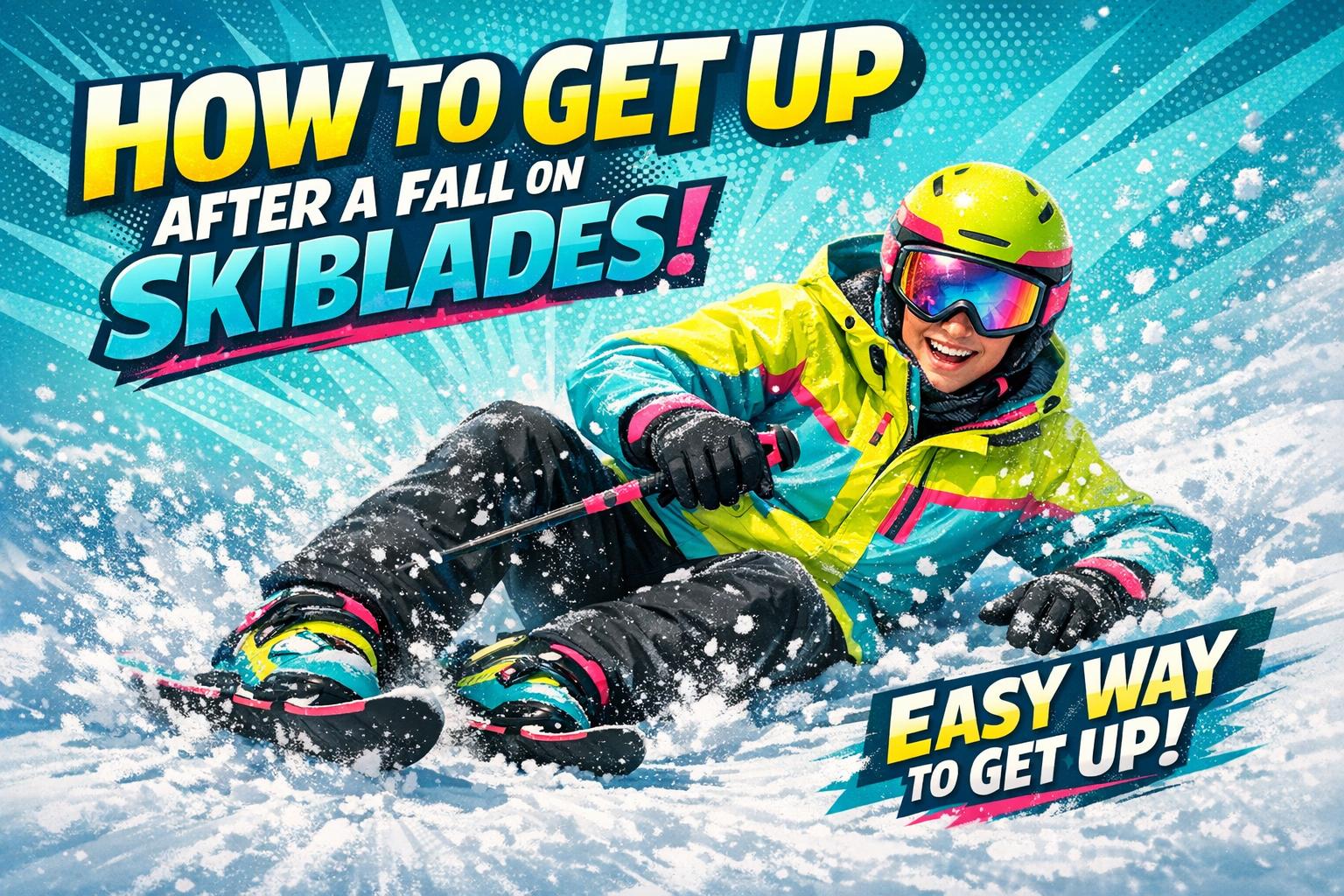
Another perk? If you take a tumble, the shorter length makes it easier to recover quickly, helping you maintain your momentum instead of breaking your flow. With over 50,000 riders and a flawless 5.0/5 rating for the 99cm model, Snowfeet* has proven that shorter skis offer unmatched control. As one rider, Daniel Siouffi, put it:
"Going fast I was in complete control of every move, turns, and stops." – Daniel Siouffi, Verified User
This compact design doesn’t just make handling easier - it also sets the foundation for better edge grip when the slopes get tricky.
Superior Edge Grip on Steep, Icy Terrain
Thanks to their shorter turning radius, 99cm skis allow for more frequent, precise turns without the need for the wide arcs required by longer skis. Snowfeet* Skiblades 99 are equipped with high-quality metal edges, which, combined with their compact length, give you an edge (pun intended) on steep and icy surfaces. You can engage and release your edges quickly, improving your ability to control skidding and speed-checking - two critical skills for navigating challenging terrain.
The wood core construction adds stability and responsiveness, giving you the confidence to lean into your turns even on hard-packed or icy slopes. Unlike cheaper fiberglass options, this design enhances edge engagement during aggressive carving. Riders often highlight how these skis make it easier to "scrub speed" effectively, thanks to their swift edge engagement. Many users praise them for being "easy to control" and "fast", even in tough conditions.
With their thoughtful design, 99cm skis are a reliable choice for anyone looking to master speed control on steep and technical terrain.
sbb-itb-17ade95
99cm Skis vs. Traditional Skis and Snowboards
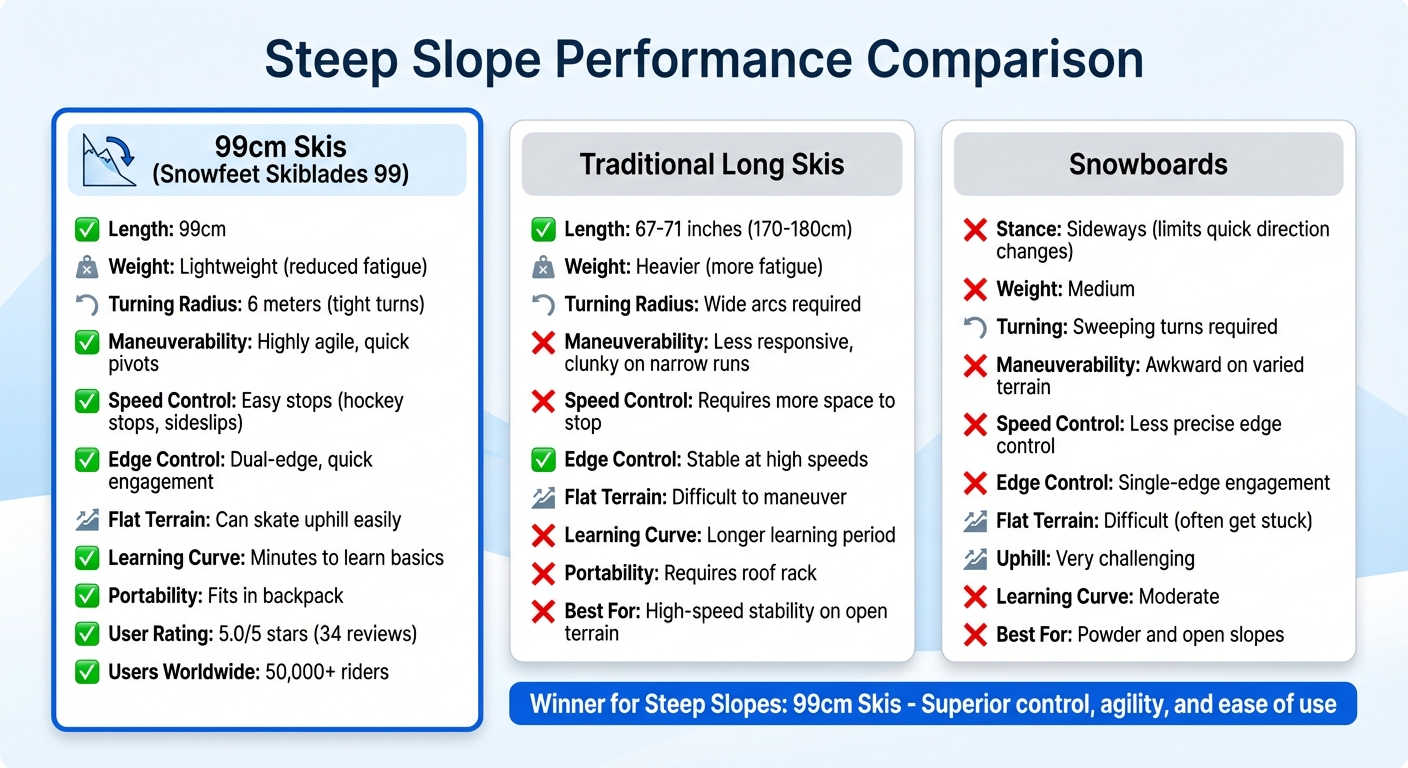
99cm Skis vs Traditional Long Skis vs Snowboards: Speed Control Comparison
When it comes to handling steep slopes, your choice of equipment can make or break your experience. The design of your gear plays a huge role in speed control and maneuverability. Let’s dive into how 99cm skis stack up against traditional long skis and snowboards - and why their shorter length often gives them the edge when it comes to control.
99cm Skis vs. Traditional Long Skis
Traditional skis, usually measuring between 67–71 inches, are known for their stability at higher speeds. But that stability comes at a cost - they’re heavier, harder to maneuver, and require wide turning arcs. On narrow or steep runs, this can make them feel clunky and less responsive.
Now, compare that to 99cm skis. They’re lighter, more agile, and far easier to stop. Their compact size doesn’t just make them portable; it also allows for quick, tight turns, which are essential for controlling speed on steep terrain. According to the Snowfeet* team:
"Short skis are lighter, more fun, and easier to control - long skis are heavier and less playful."
Because they’re so light, 99cm skis reduce fatigue and make turning almost effortless. The reduced swing weight means you can initiate turns quickly, giving recreational skiers a level of control that’s harder to achieve with traditional long skis. Plus, many riders pick up the basics in just a few minutes, making these skis a great option for those who want to hit the slopes without a steep learning curve.
99cm Skis vs. Snowboards
Snowboards have their loyal fans, but they’re not always the best choice for steep or varied terrain. The sideways stance can make quick directional changes feel awkward, and flat sections often leave snowboarders struggling to maintain momentum. Heading uphill? That’s even trickier with a board strapped to your feet.
This is where 99cm skis shine. Their dual-edge control and ability to "skate" uphill or across flat areas give them a clear advantage. You can glide through tricky spots without missing a beat. As one happy user, Sophia Kane, explains:
"I hate getting stuck on a hill in skis because they're so long and bulky. Since these are shorter, you can just skate right up."
For snowboard enthusiasts, there’s even an option to equip Snowfeet* Skiblades 99 with snowboard bindings. This setup combines the comfort of snowboard boots with the precision and independent edge control of skis. On steep slopes, where quick edge changes are crucial, this dual-edge control lets you fine-tune your speed with precision - no need for the sweeping turns that snowboards rely on.
In short, whether you’re navigating tight trails or tackling steep pitches, 99cm skis offer a nimble, versatile alternative to both traditional long skis and snowboards.
Conclusion: Why Snowfeet* Skiblades 99 Are Your Best Option for Steep Slopes
When you're staring down a steep slope, the right gear isn't just helpful - it’s essential. Snowfeet* Skiblades 99 are designed to handle steep terrain like a pro. Their 99cm length, sharp metal edges, and parabolic side cut give you the precision and quick turns you need to feel confident and in control.
Don't just take our word for it. With a perfect 5.0 out of 5 stars from 34 verified reviews and over 50,000 riders worldwide trusting Snowfeet* products, these skiblades are clearly a hit. Riders rave about their performance, praising their ability to carve effortlessly, maintain control at high speeds, and reduce knee strain. One happy skier, Daniel Siouffi, put it best:
"Going fast I was in complete control of every move turns and stops. Your product is indeed the best and thank you for allowing me to rediscover the joy and happiness of skiing with such ease and with so much control." – Daniel Siouffi
These skiblades don’t just perform - they’re practical, too. With a sustainable wood core, a graphite base for smooth gliding, and compatibility with both ski boots and snowboard boots, they're versatile enough for any adventure. Plus, their compact size means they fit right in your backpack - no need to fuss with roof racks.
Whether you're weaving through moguls, tackling icy steeps, or making sharp stops on tight trails, the Snowfeet* Skiblades 99 deliver the agility and grip that traditional long skis just can't. For steep slopes, they’re a game-changer.
FAQs
How do 99cm skis provide better control on steep slopes compared to traditional skis?
The compact 99 cm length of Snowfeet’s Skiblades concentrates your weight on a smaller edge, giving you sharper grip and precise control. This design makes it easier to carve and brake, especially on steep or icy terrain, while also allowing for quicker, lighter turns and smoother weight shifts.
Compared to traditional skis, which can be bulky and tricky to handle in tight spots, Snowfeet Skiblades are lightweight and super responsive. Their shorter length boosts agility, making them a great option for skiers who want to confidently take on steep slopes without sacrificing speed control or stability.
What are the most effective ways to stop quickly on steep slopes with 99cm skis?
Stopping on steep slopes with 99cm skis, like the Snowfeet Skiblades 99, is a breeze thanks to their compact size and nimble handling. Here are some techniques you can use to stop effectively:
- Edge Control: Press firmly into the inside edges of your skiblades to dig into the snow and slow yourself down quickly. The shorter length of these skiblades means you can engage the edges faster than you would with traditional skis.
- Sharp Turns: Pivot your skiblades so they’re perpendicular to the slope. This helps you come to a controlled stop. Because of their lightweight and compact design, Snowfeet Skiblades allow for tighter, quicker turns compared to longer skis.
- Hockey Stop: Twist your hips and apply pressure to the edges to slide sideways into a stop. Thanks to their lightweight build, skiblades make this classic move much easier than attempting it with heavier alpine skis or snowboards.
These moves feel smoother and more precise with Snowfeet Skiblades. Their short length, feather-light design, and sharp edge control give you confidence and stopping power, even on steep terrain.
Can I use snowboard bindings with 99cm Snowfeet Skiblades for better control?
Nope, the 99cm Snowfeet Skiblades aren’t made to work with snowboard bindings. Instead, they’re designed to pair with regular winter boots using their unique mounting system. Trying to combine them with snowboard bindings won’t improve your control or how well you can maneuver.
Their compact design already delivers impressive control, agility, and precision, especially on steep slopes. That makes them a great option for anyone wanting a fun, versatile alternative to traditional skis or snowboards.












Leave a comment
This site is protected by hCaptcha and the hCaptcha Privacy Policy and Terms of Service apply.