




















Cross-country skiing with your dog is a great way to stay active during winter while giving your pup the exercise they need. But before you hit the trails, you’ll need the right gear, some training, and an understanding of trail etiquette. Here’s the quick rundown:
- Yes, you can ski with your dog! It’s suitable for active breeds like Huskies, Labs, and Retrievers. Smaller dogs can join too, but they might not be ideal for pulling.
- Choose the right gear: Use compact skis like Snowfeet* NORDIC (90 cm), a pulling harness, bungee towline, and paw protection (booties or wax). Avoid skis with sharp steel edges to keep your dog safe.
- Train your dog: Teach commands like "Hike" (go), "Whoa" (stop), and "Line out" (stand still). Start slow and build their stamina.
- Follow trail rules: Stick to dog-friendly trails, keep your dog leashed or under control, and always clean up after them.
- Safety first: Watch for signs of fatigue (panting, slowing down) or cold stress (shivering, paw lifting). Bring water, snacks, and a first aid kit.
Whether you’re skiing casually or trying skijoring (dog-powered skiing), preparation is key for a fun and safe outing. Let’s dive into the details to make your next snowy adventure unforgettable!
Dog SKIJORING | Dog Skiing Gear | How to Ski with my Dog | Best Winter Dog Sport
Can You Cross-Country Ski With Your Dog?
Absolutely, you can cross-country ski with your dog! But whether it's a good fit depends on your dog's breed, age, fitness, and temperament. Not every dog is cut out for snowy trails, so knowing what to look for can make the experience safer and more enjoyable for both of you.
Which Dog Breeds Are Best?
Some breeds are practically made for snowy adventures. Working and sporting breeds like Siberian Huskies, Alaskan Malamutes, Samoyeds, Border Collies, Labradors, German Shepherds, Golden Retrievers, and Pointers tend to excel. These dogs have the energy, build, and cold tolerance to thrive in winter conditions.
If you're interested in skijoring (where your dog pulls you), size becomes a key factor. As Kelly Hughes, a former Ruffwear Pack Member, explains:
"If you want your dog to pull you from the front, I would only attach to a dog that's at least 30 pounds. If you just want to do a sport tethered to your dog but they aren't pulling you, size isn't as important."
Smaller or short-legged dogs can still enjoy casual skiing, though they might not be ideal for pulling. Keep in mind that a well-conditioned dog can pull three to four times its own weight. For example, a 35-pound dog can comfortably handle pulling duties. Once you've found a breed that's a good match for snowy outings, make sure your dog is healthy and mature enough for the activity.
Health and Safety Considerations
Before hitting the trails, check that your dog is physically ready. Kadee Mardule from Ruffwear emphasizes:
"Let the dog get old enough that their joints are fully developed. That can vary with size or breed though is usually around eighteen months."
Most dogs reach full skeletal maturity between 18 months and 2 years. Starting too early can harm their developing joints and lead to long-term issues like hip dysplasia. A vet checkup is always a good idea to confirm your dog has healthy joints, a strong gait, and enough stamina for the adventure.
Also, consider your dog's tolerance for cold. Breeds with thick coats are better equipped for freezing weather, while short-haired dogs might need an insulated jacket to stay warm.
Casual Skiing vs. Skijoring
There are two main ways to ski with your dog:
- Casual skiing: Your dog runs alongside or behind you, either off-leash or on a loose lead, while you handle the skiing. This style works for most breeds and sizes.
- Skijoring: This is a dog-powered sport where your pup actively pulls you. It requires specialized gear, including a harness and a bungee towline (usually about 9 feet long). Skijoring suits dogs weighing at least 30–35 pounds. Fast breeds like hounds and pointers often shine in this activity, while slower or smaller dogs may be better suited to casual skiing.
Both styles offer excellent exercise and a chance to bond with your dog. Pick the one that matches your dog's abilities and your skiing goals.
Gear You'll Need for Skiing With Your Dog
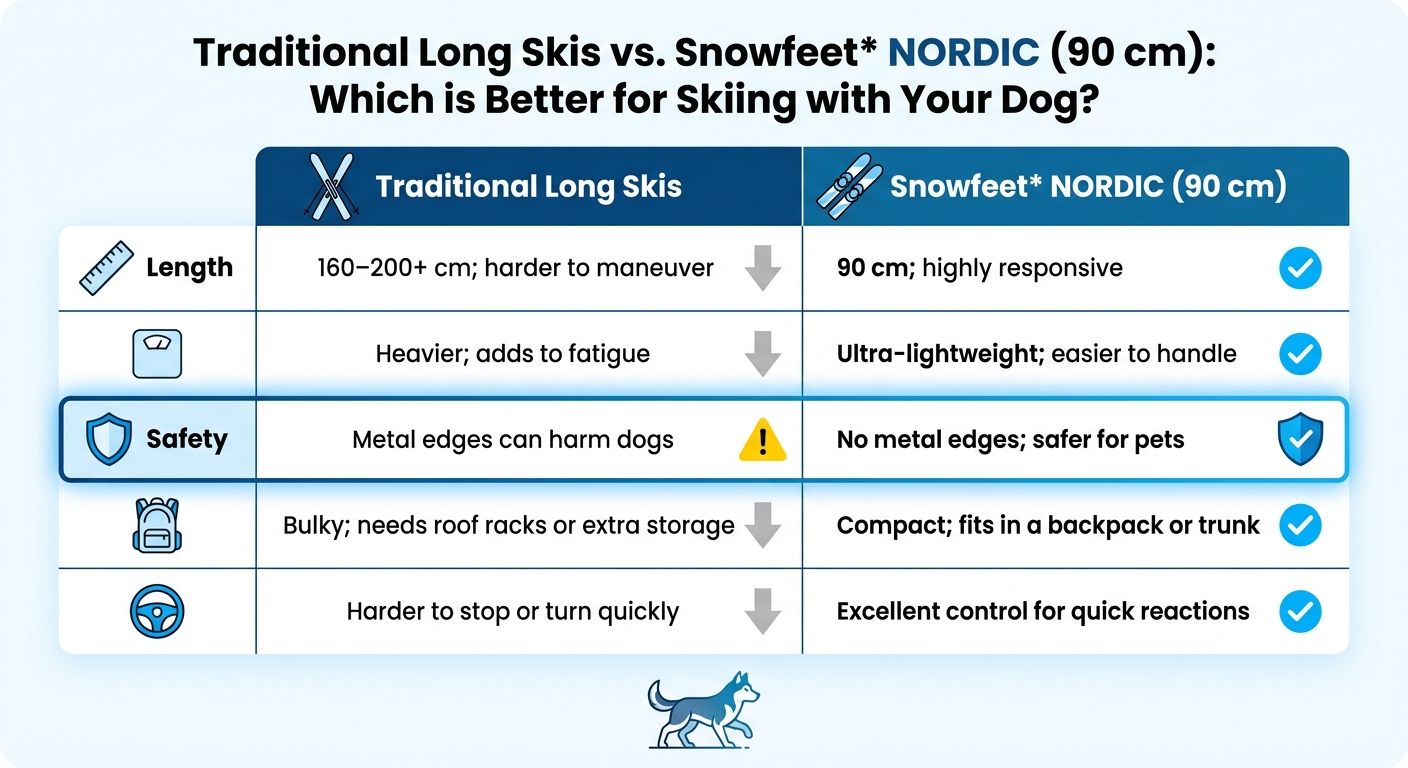
Traditional Long Skis vs Snowfeet NORDIC Skis for Dog Skiing Comparison
Having the right gear is key to keeping both you and your dog safe and comfortable while skiing together.
Skier Equipment
When it comes to your own gear, Snowfeet* NORDIC Cross-Country Skate Skis (90 cm) are a standout option. Unlike traditional skis that are 160–200+ cm long, these shorter skis offer better control and reduce the risk of tangling with your dog. Plus, they’re safer. As Seleverkstedet points out, "Steel edges cause ugly and serious injuries to dogs every year and can cut right through both muscles and tendons if you are unlucky". Snowfeet* skis eliminate this risk because they don’t have metal edges, and their lightweight design helps reduce fatigue on longer outings.
To complete your setup, wear moisture-wicking layers, use poles, and invest in a padded skijoring belt with a quick-release mechanism. This belt allows you to keep your hands free while maintaining safety. Now, let’s talk about what your dog needs for the adventure.
Dog Equipment
Your dog will need gear designed specifically for pulling. A pulling-specific harness is a must - regular walking harnesses won’t cut it. As Kadee Mardule from Ruffwear explains:
The strongest point on a dog is their sternum, and the Omnijore™ is designed to focus pressure there when the dog is pulling.
Some top-rated options include the Ruffwear Front Range® Dog Harness ($59.99) and the Ruffwear Flagline™ Dog Harness ($69.99), both boasting a 4.8 out of 5-star rating.
You’ll also need a bungee towline about 9 feet long. This helps absorb sudden pulls and keeps a safe distance between your dog and your skis. Protect your dog’s paws with booties or paw wax like Musher's Secret to prevent ice buildup between their toes. Finally, don’t forget essential extras like a GPS collar with ID tags, a safety light for dim conditions, and a collapsible water bowl. Keep in mind that dogs shouldn’t rely on eating snow for hydration - it takes too much energy to process.
Snowfeet* vs. Traditional Long Skis

Here’s a quick comparison of Snowfeet* NORDIC skis and traditional long skis for skiing with a dog:
| Feature | Traditional Long Skis | Snowfeet* NORDIC (90 cm) |
|---|---|---|
| Length | 160–200+ cm; harder to maneuver | 90 cm; highly responsive |
| Weight | Heavier; adds to fatigue | Ultra-lightweight; easier to handle |
| Safety | Metal edges can harm dogs | No metal edges; safer for pets |
| Portability | Bulky; needs roof racks or extra storage | Compact; fits in a backpack or trunk |
| Control | Harder to stop or turn quickly | Excellent control for quick reactions |
The Snowfeet* NORDIC skis clearly offer better control, safety, and convenience, making them a smart choice for skiing with your dog. They help ensure a smoother, safer, and more enjoyable experience for both of you on the trails.
How to Prepare Your Dog for Skiing
Start preparing your dog at least a month before your first trip. This gives them time to adjust to the gear and build the stamina they’ll need for the adventure.
Getting Your Dog Used to the Gear
Introduce your dog to your skiing equipment in a low-pressure way. Lay your skis and poles on the floor at home and let your dog sniff and explore them. This helps reduce any fear of unfamiliar objects. Once they’re comfortable with the gear, have them wear their pulling harness during everyday activities. This helps them get used to the feel of wearing it. As Kadee Mardule from Ruffwear explains:
"For the first month before I went out with Sturgill, I helped him get used to the skis. I also had him wear the harness around the house or while doing our regular activities and gave him lots of treats".
When introducing the harness, use treats to encourage your dog to put their head through the opening instead of forcing it on. Make it fun - play games like tug or fetch while they’re wearing the harness to build positive associations.
To prepare them for the sight and sound of ski poles, carry the poles on walks. This way, your dog becomes familiar with how they move and sound. Before heading to the snow, practice pulling on dry land. Start with slow jogging or walking, applying light tension to the lead. You can also wear your skis around your dog while they’re off-leash or on a long line. This lets them observe and retreat if they feel uneasy. Compact skis like the 35-inch Snowfeet* NORDIC can make this process easier, as their size offers better control and less intimidation compared to traditional long skis.
Once your dog is comfortable with the gear, it’s time to focus on stamina and commands.
Building Stamina and Teaching Commands
Wait until your dog is at least 18 months old before starting any intense pulling activities. This ensures their joints are fully developed. Dogs should also weigh at least 30 pounds to safely participate. Start small - short sessions with light loads - and gradually increase the intensity as your dog builds strength and endurance.
Before adding skis to the mix, teach key commands on foot. Focus on basics like:
- "Hike" to start
- "Whoa" to stop
- "Gee" to turn right
- "Haw" to turn left
Another useful command is “line out.” This tells your dog to stand still with the lead taut while you put on your skis, preventing tangles or early starts. Incorporate these commands into your regular walks and dry land training. Always warm up your dog before skiing and cool them down afterward to avoid muscle strain. Don’t forget paw care - booties or wax like Musher’s Wax can protect against ice buildup. As Kadee Mardule points out:
"Every winter we have to gear up and use Musher's Wax and booties so we can slowly ease into it".
With your dog trained and physically ready, it’s important to keep an eye on their well-being during your outings.
Spotting Signs of Fatigue or Stress
Dogs are incredibly loyal and will often push themselves too hard to keep up. John Reller, an avalanche rescue dog trainer with Colorado Rapid Avalanche Deployment, emphasizes this:
"Because [they're] such a loyal pack animal, dogs are willing to follow us until they drop over from exhaustion".
Keep an eye out for these signs of fatigue or stress:
- Heavy panting
- Slowing down or "post-holing" (sinking into the snow), which can lead to injuries like sprained shoulders or torn ACLs
- Shivering or a tucked tail, which may indicate they’re too cold
- Limping or frequent stops to clear ice from between their paw pads
If your dog seems to be struggling - whether it’s deep snow or tricky terrain - slow down, take a break, or turn back. To avoid overexertion, consider keeping high-energy dogs leashed on uphill sections. Always pack essentials like a dog-specific first aid kit, a jacket for rest stops, and extra water with a collapsible bowl. Reller sums it up well:
"I always try to be mindful and respectful of [my dogs'] capabilities and limitations, and making sure I'm putting them in positions to have a great time and not get injured".
sbb-itb-17ade95
Trail Etiquette and Safety Rules
Skiing with your dog can be a blast, but there are some important guidelines to keep things safe and fun for everyone. Compact skis like Snowfeet* NORDIC make it easier to navigate crowded trails compared to traditional long skis, which can be a bit harder to maneuver.
Finding Trails That Allow Dogs
Before heading out, make sure you know which trails allow dogs. Check the official websites of Nordic centers or look for dog-friendly markers on trail maps. Some places might even require a dog pass. For instance, Crested Butte Nordic in Colorado has free dog access on trails like Town Ranch, Riverbend Trail, and the Rec Path (leash required). However, trails like Pooch's Paradise, Beaver Trail, and Mike's Mile come with a fee. As Crested Butte Nordic states:
"Please be sure to understand where you can go and what rules you need to follow with your dog so that we can all get along out there!"
Many Nordic centers also limit skiers to two dogs at a time. So, double-check leash rules and pass requirements before you hit the snow. Once you're on a dog-friendly trail, keeping control of your dog is key to a smooth experience.
Controlling Your Dog on the Trail
Keep your dog to the side of the trail, away from the groomed classic tracks. Why? Because, as Nordic Ski Lab puts it, "Skating over classic tracks ruins the experience for classic skiers". Let your dog walk on the trail surface while you stick to skis or snowshoes to avoid damaging the groomed snow. When other skiers approach, shorten your leash to prevent any accidents or interference. Always give downhill skiers the right of way - step aside and do a quick shoulder check before crossing paths. The Craftsbury Outdoor Center advises:
"Dogs are to be leashed or on e-collar (with a leash at the ready) for their own safety and the safety of other dogs and skiers"
If your dog tends to nip at moving skis, try having someone ski ahead and call the dog over to keep things under control. Following these steps ensures everyone on the trail has a good time.
Leave No Trace With Your Dog
Keeping the trails clean is essential. Always pick up after your dog - bag their waste or move it off the trail. Taking your dog for a short walk before skiing can also help avoid unexpected stops or messes during your outing. By sticking to these habits, you help protect the trails and ensure a smooth experience for everyone, whether they're using traditional skis, Snowfeet* NORDIC skis, or snowshoes. A little effort goes a long way in keeping the trails enjoyable for all.
Terrain and Weather Considerations
Getting ready for a ski outing isn’t just about packing the right gear or brushing up on trail etiquette - it’s also about being prepared for the terrain and weather. These factors can make or break your experience, so let’s break them down.
Groomed trails provide a predictable, packed surface, making them a great choice for beginners and for dogs wearing booties. But before you head out, check local regulations - many Nordic centers don’t allow dogs or may have seasonal restrictions. On the other hand, backcountry terrain is a whole different game. It demands advanced skills like skinning, transitioning, and avalanche safety know-how. Deep powder in the backcountry is also much tougher for dogs to navigate compared to packed trails. If you’re new to this type of skiing, it’s best to leave your dog at home until you’ve mastered the basics. As Treeline Review aptly puts it:
"If you're a beginner backcountry skier, don't take your dog with you. Take a few practice runs alone to make sure you know how to skin, transition, and ski confidently before you're responsible for a furry lifeform out there."
Groomed Trails vs. Backcountry Areas
Groomed trails are perfect for building your dog’s stamina and helping them get used to skiing. Their packed, level surfaces make it easier for dogs to get traction, especially if they’re wearing booties. However, these trails can get icy or crowded with other skiers, so stay alert. For tight, groomed trails, Snowfeet* NORDIC’s compact 90 cm skis are a great choice - they’re easier to maneuver and reduce some of the risks that come with traditional long skis.
Backcountry areas, on the other hand, present a more rugged, natural environment. Deep snow challenges your dog’s strength and endurance, but it also comes with risks like avalanches, wildlife encounters, and getting lost. While dogs are less likely than humans to trigger avalanches, the danger is still there. If your dog isn’t great at responding to recall, it’s safer to keep them on a leash. Snowfeet* NORDIC skis shine here too - their shorter length makes it easier to navigate tight spots or quickly adjust to changing conditions, unlike longer skis that need more space to turn.
These differences highlight the importance of adapting your approach to the terrain.
How Snow and Weather Affect Your Trip
Pairing responsive Snowfeet* skis with a sharp eye on weather conditions can help keep your outing safe. Snow plays a big role in your experience - and your dog’s. Powder snow is fun for dogs to romp in, but deep powder can wear out short-legged breeds quickly. Icy or packed snow can lead to “snowballing” between your dog’s toes, reducing traction and potentially injuring their paw pads if the crust is sharp. Be sure to check their paws often for ice buildup, cuts, or frostbite (look for pale or bluish skin). Slushy or hard snow isn’t ideal, but as Kadee Mardule from Ruffwear explains:
"Even if it's slushy or the snow is hard, it just means we both get tired faster!"
Temperature is another key factor. While some well-conditioned dogs can handle temperatures as low as -10°F to -25°F with proper gear like puffy jackets and booties, these conditions demand constant vigilance. Bring essentials like a collapsible water bowl, fresh water, and maybe even a lightweight synthetic blanket or extra jacket to help your dog warm up during breaks.
When to Leave Your Dog at Home
Sometimes, it’s just not safe to bring your dog along, no matter how much they love the snow. Extreme cold, especially below -10°F with strong winds, can quickly chill your dog’s chest and underside. If your dog starts shivering nonstop despite your efforts to warm them, it’s time to seek veterinary care. Similarly, severe avalanche risks or unfamiliar, challenging terrain are clear signs to leave your dog at home.
Keep an eye out for signs of frostbite or distress, like tenderness, swelling, lethargy, or your dog lifting their paws repeatedly off the snow. If the weather forecast looks rough - conditions that would make even a well-equipped human uncomfortable - it’s probably best to skip bringing your dog. Start with shorter trips to help build their stamina. After all, “blasting through a foot of snow” is just as exhausting for them as it is for you. The compact design of Snowfeet* NORDIC skis can help you adapt quickly to deteriorating conditions, making them a reliable choice for tricky situations.
Conclusion
From training tips to gear choices and trail safety, cross-country skiing with your dog can be an incredible way to embrace winter together. But it takes preparation and the right approach to make it a fun and safe experience. Training is key - teaching your dog to avoid ski edges and respond to directional commands like "Gee" (right) and "Haw" (left) helps you stay in control on the trail. Starting with short sessions of 10–15 minutes and gradually increasing time ensures your dog stays healthy and eager for more adventures.
When it comes to gear, picking the right equipment makes all the difference. Snowfeet* NORDIC Cross-country Skate Skis (90 cm) stand out with their compact size and lightweight design, offering better control on downhill sections. At $275, they’re a portable option that fits in a backpack and handles changing trail conditions with ease - unlike traditional skis, which can be bulkier and harder to maneuver.
Trail etiquette is just as important. Always confirm that dogs are allowed on your chosen trail, clean up after your pet, and keep your dog from approaching others without permission. As Haley Young wisely said:
When we give our canine companions a good name, more environments stay dog friendly! That way skijoring can remain a fun, popular activity.
Lastly, staying alert to weather and snow conditions is crucial for a safe outing. Being able to adapt to sudden changes in terrain or weather is where the maneuverability of Snowfeet* NORDIC skis really shines. With the right preparation, proper gear, and responsible trail behavior, you and your dog can enjoy unforgettable winter adventures. Snowfeet* NORDIC skis make it easier to enjoy a safe, controlled, and thrilling time on the trails with your furry companion.
FAQs
How do I choose between casual skiing and skijoring with my dog?
When deciding, think about your goals and your dog's energy level. If you're after a calm, laid-back experience, casual skiing fits the bill - it’s easygoing, requires little gear, and is perfect for tranquil outings. On the other hand, skijoring is a dynamic sport where your dog pulls you along, making it ideal for active dogs and owners who enjoy teamwork and high-energy activities. Using Snowfeet skis can make skijoring even better. Their lightweight, agile design is easier to handle than bulky traditional skis, creating a more enjoyable experience for both you and your pup.
What’s the safest way to keep my dog away from my skis?
To keep your dog safely away from your skis, start with the right gear. Use a well-fitting harness and a short, elastic line. This setup gives your dog enough freedom to move while keeping them at a safe distance and reducing the risk of tangles.
Training is key here. Teach your dog to stay clear of your skis and avoid running directly in front of or alongside them. If you'll be skiing in cold conditions, consider protective socks for your pup to shield their paws from the cold and icy terrain. With the right equipment and training, you can both enjoy a safe and fun outing on the snow.
How do I know if my dog is too cold or too tired to continue?
Pay close attention to your dog’s behavior and physical signals while you're out. Signs that they might be too cold include shivering, lifting their paws off the ground, or actively seeking warmth. On the other hand, fatigue can show up as slowing down, lagging behind, or even appearing disoriented.
To keep their paws safe, consider using insulated boots. These can shield their feet from the cold and rough terrain. Also, make it a habit to take regular breaks. Use these pauses to let your dog rest, warm up, and drink some water. If you notice your dog seems cold or overly tired, it’s best to call it a day. Their comfort and safety should always come first.













Leave a comment
This site is protected by hCaptcha and the hCaptcha Privacy Policy and Terms of Service apply.