




















Transporting cross-country skis doesn’t have to be a hassle. Whether you’re driving to a trail or flying to your next winter adventure, protecting your gear and making the process smooth is key. Here’s the quick rundown:
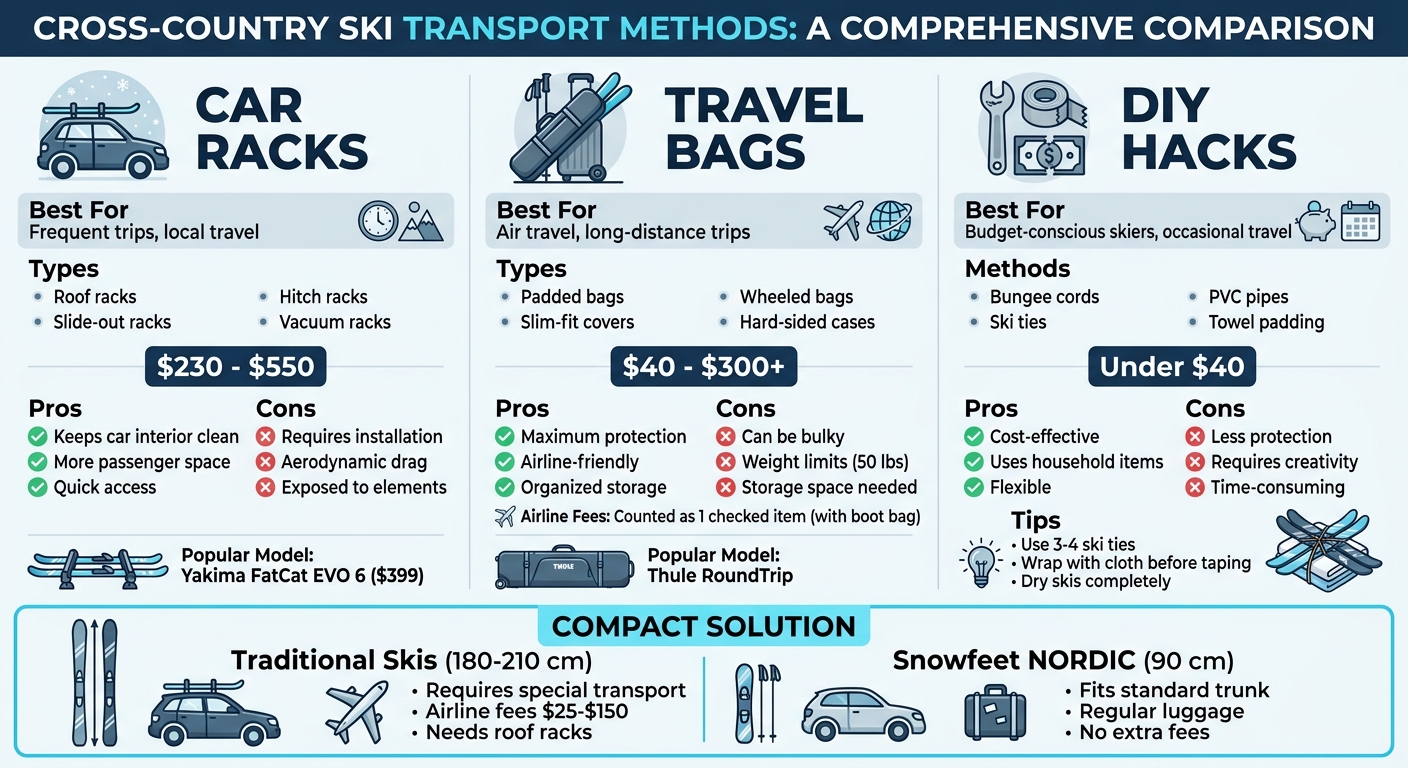
- Car Racks: Ideal for frequent trips. Options include roof racks, hitch racks, slide-out racks, and vacuum racks. Prices range from $230 to $550.
- Travel Bags: Perfect for air travel or long-distance trips. Choose padded, wheeled, or hard-sided cases to protect your skis. Costs vary from $40 to $300+.
- DIY Hacks: Budget-friendly options like bungee cords, ski ties, and PVC pipes can save money while keeping your gear safe.
For a simpler solution, compact skis like Snowfeet* NORDIC (90 cm) eliminate many transport headaches - they fit in a car trunk, standard luggage, or public transport with ease.
Let’s dive into the details and find the best method for your next ski trip.
Cross-Country Ski Transport Options Comparison: Car Racks vs Travel Bags vs DIY Solutions
How to pack your cross country skis when travelling overseas. #crosscountryskiing #whattopack
Car Racks for Cross-Country Skis
Car racks are a game changer when it comes to keeping your car clean and clutter-free during ski trips. Instead of cramming wet, snowy skis into your backseat, you can mount them securely outside your vehicle. This not only protects your interior but also creates more room for passengers. As Ross Patton and Maddie Downie from Switchback Travel put it:
"If you're an avid skier or snowboarder, a functional rooftop rack can be well worth its weight in powder turns."
Roof racks are the most common option, featuring horizontal arms with rubber padding to hold skis firmly in place. Modern designs are compatible with most crossbars, making them suitable for a wide range of vehicles. For taller SUVs, slide-out racks extend about two feet beyond the car's side, making loading much easier. Hitch-mounted racks, on the other hand, attach to your hitch receiver, eliminating the need to lift skis overhead. If your car doesn’t have crossbars, vacuum-mount racks offer a clever solution by sticking directly to smooth surfaces like glass or metal. Prices start at around $230 for basic models, while high-end racks with advanced features can cost between $300 and $550.
Let’s break down the types of racks, how to choose the right one, and tips for installation and maintenance.
Types of Car Racks for Skis
The type of rack you pick depends on your vehicle and how you plan to use it. Here’s a quick overview:
- Roof Racks: These are lightweight, aerodynamic, and usually hold two to six pairs of skis. A standout option is the Yakima FatCat EVO 6, priced around $399, which has an adjustable hinge to handle bulkier gear.
- Hitch Racks: These are perfect for families or groups since they load at waist height, making them easier to use. Some models even double as bike racks for summer adventures. They do cost more and are heavier than roof racks, but the convenience is hard to beat.
-
Slide-Out Roof Racks: These are ideal for taller vehicles. They extend outward, so you don’t have to stretch or climb to load your skis. Eric Phillips from GearJunkie highlights their thoughtful design, saying:
"One-of-a-kind GripLock rubber lines the inside of the base and swinging arm, which is meant to pad and grab your bases and top sheets without damaging them."
- Vacuum Racks: These work on almost any vehicle with a smooth surface, from sports cars to campers. They’re versatile but often lack built-in locks, which is something to keep in mind.
How to Pick the Right Car Rack
Start by considering what your car can handle. If your vehicle has crossbars, most roof racks will fit using universal mounting hardware. If not, a vacuum-mount rack can attach directly to your roof, windshield, or hatch.
Ski length is another factor to think about. Cross-country skis are typically 6 to 7 feet long, so make sure the rack can accommodate them. Adjustable-height racks are great for preventing tall bindings from scratching your roof.
Finally, think about your budget and how much convenience matters to you. Entry-level racks cost around $230, while premium models with extra features run closer to $300 or more. If you have a hitch receiver, hitch racks are the easiest to load but come with a higher price tag.
Installing and Maintaining Your Car Rack
Getting your rack installed correctly is key to keeping your skis safe and your car damage-free. Roof racks usually offer two mounting options:
- T-slot mounting: Slides into a channel on aero bars for a sleek, low-profile look.
- Universal mounting: Wraps around any crossbar and raises the skis higher, which helps with binding clearance.
Most modern racks support both methods.
When loading your skis, make sure they’re clean and that the bindings are secured. Center the skis on the rack to balance the weight, and tightly thread the straps through the bindings. Long trips require extra caution. As RoofPax warns:
"Incorrect fastening can lead to accidents on the road... Check the security of your skis frequently throughout your trip to check they stay in place."
After your trip, take a few minutes to wipe down the rack and skis to remove dirt and moisture. For hitch racks, inspect the hitch pin and swing-away mechanism regularly, especially before the start of a new season. Adding these small steps to your routine ensures your rack stays in top shape for every adventure.
Travel Bags for Cross-Country Skis
Traveling with cross-country skis can be tricky, whether you're flying or taking a bus. A solid travel bag is your best friend here. Unlike car racks that leave your skis exposed, these bags shield your gear from rough handling and keep everything organized.
A good bag protects your skis from scratches, dents, and moisture while making transport easier. Since cross-country skis are about 6½ to 7 feet long, you'll need a bag that fits their length without letting them sag or drag on the ground. Airlines usually count a ski bag and a boot bag as one checked item, as long as the combined weight stays under 50 lbs. So, pack smart to avoid extra fees. While car racks are great for short trips, travel bags are the way to go for serious protection during long journeys.
Types of Ski Travel Bags
Ski travel bags come in a variety of styles, each offering different levels of protection and convenience:
Padded Bags
If you're flying, padded bags are a lifesaver. They cushion your skis against bumps and impacts, and many come with straps to keep your gear secure. These bags range in price depending on features, but they’re worth it for peace of mind.
Wheeled Bags
Dragging a heavy bag across an airport is no fun. That’s where wheeled bags shine. Look for models with sturdy, all-terrain wheels that can handle snow, gravel, and slush. The Thule RoundTrip, for example, is a standout. Ski Mag put it best:
"If we were racing bags through an airport obstacle course, the smart money would bet on the RoundTrip."
Premium options like the Db Snow Roller Pro even offer adjustable lengths for a snug fit and compact storage.
Slim-Fit Covers
These lightweight options are perfect for car trips when you just want to keep your skis clean and dry. They're usually priced between $40 and $90 and fold up easily for storage. Just note - they don’t have the padding needed for air travel.
Hard-Sided Cases
For maximum protection, hard-sided cases are the way to go. Made from tough materials like high-density polyethylene, they can withstand serious impacts. Airlines are also more likely to honor damage claims with these cases. However, they’re heavy (about 14 lbs) and bulky, making them better suited for frequent flyers.
| Feature | Soft-Sided Bags | Hard-Sided Cases |
|---|---|---|
| Protection | Good if padded; relies on cushioning | Top-notch; crush-resistant shell |
| Weight | Lightweight (6–9 lbs) | Heavy (approx. 14 lbs) |
| Storage | Easy to fold or roll up | Bulky and hard to store |
| Maneuverability | May sag if not fully packed | Rigid frame makes wheeling easier |
Selecting the Right Travel Bag
Start by checking the length of your skis. Most cross-country skis fall between 195 cm (6½ ft) and 210 cm (7 ft), so look for a bag that fits these dimensions. Adjustable-length bags are a smart choice - they prevent your gear from shifting and keep the bag compact.
Durability matters too. Materials like 600D–840D polyester or TPU-coated fabrics resist water and tears. For air travel, go for full padding to protect against impacts. If you’re just driving, partially padded bags might work fine to prevent scratches. Internal straps are key for keeping your skis secure during transit.
Extra features like accessory pockets, compression straps, and pole sleeves can make packing easier. Compression straps, for instance, help keep your load tight and prevent shifting. Some advanced bags even include PVC or cardboard tubes to protect poles from damage.
If you’re flying, consider a double ski bag. Even if you only have one pair of skis, the extra space lets you pack clothes around your gear for added protection. It might even save you from bringing an extra suitcase. This setup pairs perfectly with the travel-friendly design of Snowfeet* NORDIC Cross-Country Skate Skis.
How to Pack Skis in Travel Bags
Packing your skis right can save you a lot of headaches. Here are some tips to keep your gear safe:
- Secure Your Skis: Use the bag’s internal straps to hold everything in place. If your bag doesn’t have straps, tape your skis together with a soft cloth between them to avoid residue.
- Use Clothing for Padding: Wrap your skis in clothes to add cushioning. Long socks over the tips can help prevent scratches or dull edges.
- Protect Bindings: Use thick rubber bands to keep binding brakes in place. This saves space and prevents damage.
- Handle Poles Carefully: For air travel, slide your poles into a lightweight PVC pipe before packing them. This keeps them from snapping under pressure.
- Watch the Weight: Use a luggage scale to ensure your bag stays under 50 lbs. Overweight bags can lead to extra fees.
And don’t forget - always carry your ski boots with you. Replacing them can be expensive, and they’re a pain to break in again. Follow these packing tips and take advantage of modern travel bag features for a hassle-free trip. Plus, Snowfeet* NORDIC skis make traveling with gear easier than ever.
sbb-itb-17ade95
Budget-Friendly Transport Hacks
Transporting your skis on a budget is easier than you think, especially with a few clever tricks and everyday household items.
DIY Transport Solutions
Bungee cords and ski ties are affordable and effective tools for keeping your skis secure. Use three or four ski ties spaced along the length of your skis to hold them together and stop them from rattling during transit. Just be careful not to overtighten, as it could warp your skis over time.
Before hitting the road, wipe your skis with a damp cloth to remove any road salt. If you’re not using a ski bag, applying hot wax can add an extra layer of protection. This simple step helps prevent edge corrosion and keeps the base in good shape.
For your poles, a lightweight PVC pipe or even a cardboard tube can work as an inexpensive protective sleeve. As xcskiworld suggests:
"For poles, a good lightweight PVC or cardboard pipe to protect the shafts is usually all you need".
If you’re bundling multiple ski pairs, wrap them in a piece of cloth before securing them with tape. This prevents sticky adhesive residue from getting on your skis. As xcskiworld notes:
"To avoid getting tape residue on the skis, wrap first with a piece of cloth".
For added cushioning, stuff items like jeans or a light jacket into the ends of your ski bundle. These simple DIY fixes not only protect your gear but also help you maximize space in your car’s interior.
Fitting Skis in Small Cars
If you don’t have specialized equipment, there are still ways to fit your skis into a small car. Cross-country skis can be surprisingly adaptable to compact interiors with a little creativity. Lower one or both rear seats and slide the skis lengthwise behind the driver or between the front seats. Align them from the rear parcel shelf to the dashboard for the best fit.
Secure your skis using rear seat belts or bungee cords to keep them from shifting during sudden stops. To protect your car’s interior, place a rubber mat or ski bag underneath to shield against sharp edges or melting snow.
Here’s a handy trick: curve a piece of PVC plumbing pipe between the front headrest supports to elevate and center your ski bag between the front seats. This keeps your gear safe and your cabin clear for conversation.
Transporting skis inside the car is a great option for budget-conscious skiers. It avoids the aerodynamic drag of roof racks, keeps your gear safe from road salt, and saves you the cost of specialized equipment. The only downside? Less room for passengers, so this method works best for solo travelers or pairs.
Protecting Skis from Damage
To keep your skis and car damage-free, wrap towels or bubble wrap around the metal edges and bindings. This prevents scratches on your skis and protects your car’s interior.
Make sure your skis are completely dry before transport. Even small amounts of moisture can lead to rust on the edges. Poles should be stored either perfectly flat or vertically to avoid bending or structural stress.
If you’re using an open rack, consider wrapping your skis in cling film or vacuum packing them to shield the bindings from exposure.
For other gear like helmets, goggles, and gloves, avoid using sealed plastic containers. These can trap moisture and damage sensitive equipment. Instead, opt for breathable bags. And one last tip: don’t leave ski boots in your car for too long, as heat can deform the plastic shells and liners.
If all of this sounds like too much work, there’s a simpler solution. Snowfeet* NORDIC Cross-Country Skate Skis, measuring just 90 cm (about 3 feet), are compact enough to fit in almost any car trunk. Their small size eliminates the need for most of these hacks, making transport a breeze while keeping your gear safe and sound.
Why Snowfeet* NORDIC Cross-Country Skate Skis Are Easier to Transport
Forget the hassle of lugging around oversized ski equipment. Snowfeet* NORDIC Cross-Country Skate Skis, with their compact 90 cm design, make travel and storage a breeze.
Compact 90 cm Design
Traditional cross-country skis typically measure between 180–210 cm in length, making them a challenge to transport. In contrast, Snowfeet* skis are only 90 cm long - less than half the size. This means you can toss them into any standard car trunk, no need for roof racks, folding seats, or protective mats.
Flying with skis? That’s usually a headache. Airlines often charge $25 to $150 each way for oversized sports gear, and traditional ski bags, accommodating skis up to 230 cm, can be unwieldy. Snowfeet* NORDIC skis, thanks to their compact size, fit within standard checked luggage dimensions, saving you from those extra fees.
Public transportation? No problem. Long skis often require special storage space on buses, trains, or shuttles. But with Snowfeet* skis, their size makes them as manageable as regular luggage. Whether you’re hopping on a regional bus or navigating a crowded train, these skis simplify every leg of your journey.
Lightweight and Easy to Use
It’s not just about size - these skis are lightweight too. Snowfeet* NORDIC skis are easy to carry, whether you’re switching between transit modes or walking to your trailhead. Their lighter build reduces strain and helps you stay mobile, even on hectic travel days.
At your destination, storage is a non-issue. Unlike traditional skis, which often require bulky wall racks or large storage spaces, Snowfeet* NORDIC skis can slide under a bed, fit neatly into a closet, or tuck into a standard gear locker. No extra hardware or complicated setups needed.
Snowfeet* NORDIC vs. Traditional Cross-Country Skis
Here’s a quick side-by-side look at how Snowfeet* skis compare to traditional cross-country skis when it comes to transport:
| Feature | Snowfeet* NORDIC (90 cm) | Traditional Skis (180–210 cm) |
|---|---|---|
| Car Transport | Fits in any standard trunk | Requires roof racks or seat adjustments |
| Airline Check | Fits standard baggage dimensions | Often classified as "Oversized" |
| Airline Fees | Standard baggage rates | Extra fees: $25–$150 per trip |
| Public Transit | Easy to handle like regular luggage | Needs special storage compartments |
| Storage Space | Minimal space required | Needs large storage solutions like vertical racks |
| Packing Protection | Fits securely in padded cases | Often requires additional DIY padding (e.g., foam blocks) |
Source:
For electric vehicle owners, there’s even more to love. Storing these shorter skis inside your car, instead of on a roof rack, reduces aerodynamic drag. That means better range for your EV on those longer drives to the trailhead.
Lastly, their compact size helps protect them during transport. Shorter skis are easier to pack securely in padded cases, reducing the risk of damage. No more worrying about tips getting dinged or tails sticking out of your car trunk. With Snowfeet* NORDIC skis, transporting your gear is simple, safe, and stress-free.
Conclusion
Transporting cross-country skis doesn’t have to be complicated. Whether you opt for car racks for frequent trips, travel bags for air travel, or DIY options to save money, the key is finding the solution that protects your gear and keeps your vehicle intact. As Modula Racks explains:
"Properly transporting your skis or snowboard ensures a smooth and stress-free journey... understanding how to transport your equipment safely can save you from damaging your gear - or worse, your car".
The best method depends on how often you travel and your destination. Ski racks are perfect for regular outings, offering quick and easy access, while travel bags provide extra protection for longer trips or air travel.
Compact gear can also make a world of difference. Traditional cross-country skis, measuring 200–230 cm, often require roof racks, oversized luggage fees (ranging from $25 to $150 per trip), and special accommodations on public transportation. On the other hand, the Snowfeet NORDIC Cross-Country Skate Skis, with their 90 cm design, fit comfortably in a standard trunk, regular checked luggage, or even a bus or train's luggage compartment. This design eliminates many of the usual hassles, making them a game-changer for winter sports enthusiasts.
Don’t forget to inspect your racks and carriers regularly to ensure everything stays secure during your travels. Compact, well-designed gear doesn’t just simplify transportation - it transforms the entire experience. With the right setup, you’ll spend less time worrying about logistics and more time enjoying the trails. As Modula Racks wisely puts it:
"With the right gear... you can make your trips to the slopes more accessible and more enjoyable. That way, you'll focus on enjoying the fresh powder instead of worrying about your gear!".
Ultimately, choose equipment and methods that make your winter adventures easier and more enjoyable. Your wallet, comfort, and peace of mind will thank you.
FAQs
Can I transport skis safely without a roof rack?
Yes, it’s absolutely possible to transport skis safely without a roof rack, as long as you plan ahead. Avoid strapping your skis directly onto your car roof - this can damage both your skis and your vehicle. Instead, opt for padded ski bags or travel cases to keep your gear protected. Inside your car, secure the skis using straps or seat belts to keep them from shifting around while you drive. If you’re looking for a simpler option, Snowfeet’s compact skis are a great choice. They’re much easier to transport compared to traditional skis and provide a safer, hassle-free alternative.
How do I avoid airline ski-bag fees?
To steer clear of those pesky airline ski-bag fees, it's all about knowing the rules. Most U.S. airlines will count a ski bag and a boot bag as a single checked item - as long as your skis are under 182 cm. If your skis are longer, you might be looking at extra charges, typically around $75.
Your best bet? Go for a compact, airline-approved ski bag. Options like padded or wheeled bags not only protect your gear but also help you stay within size restrictions. Alternatively, consider Snowfeet products - they're much easier to travel with and can save you from dealing with all this hassle.
Will short skis like Snowfeet* NORDIC fit in a carry-on?
Yes, short skis like Snowfeet NORDIC (90 cm) are small and light enough to fit in a carry-on bag. Designed with portability in mind, some users even stash them in a backpack. Their compact size makes traveling with them super easy and convenient.













Leave a comment
This site is protected by hCaptcha and the hCaptcha Privacy Policy and Terms of Service apply.