




















Cross-country skiing in extreme cold can be risky. When temperatures drop below -4°F (-20°C), frostbite, hypothermia, and even lung damage become real threats. The key to staying safe? Proper gear, smart layering, and knowing your limits. Here's what you need to know:
- Frostbite Risk: At -18°F, exposed skin can freeze in 30-40 minutes. Wind chill makes it worse.
- Hypothermia: Starts when your core temperature drops below 95°F. Early signs include shivering and clumsiness.
- Breathing Cold Air: Can damage lungs, especially during intense activity.
- Competition Rules: Races are canceled if temps fall below -4°F for adults or 10.4°F for kids.
Gear Tip: Snowfeet NORDIC skis pair with insulated winter boots, keeping your feet warmer than traditional ski setups. They're lightweight and easy to maneuver, making them great for extreme cold.
Safety Basics:
- Use a three-layer clothing system (base, mid, outer).
- Avoid cotton - it traps moisture.
- Protect extremities with mittens, warm socks, and neck gaiters.
- Stay hydrated and bring a hot drink.
- Monitor conditions like wind chill and adjust plans accordingly.
Extreme cold demands preparation. With the right approach, you can enjoy the snow while staying safe and warm.
How to Cross Country Skate Ski on Icy Conditions
Temperature Limits for Cross-Country Skiing
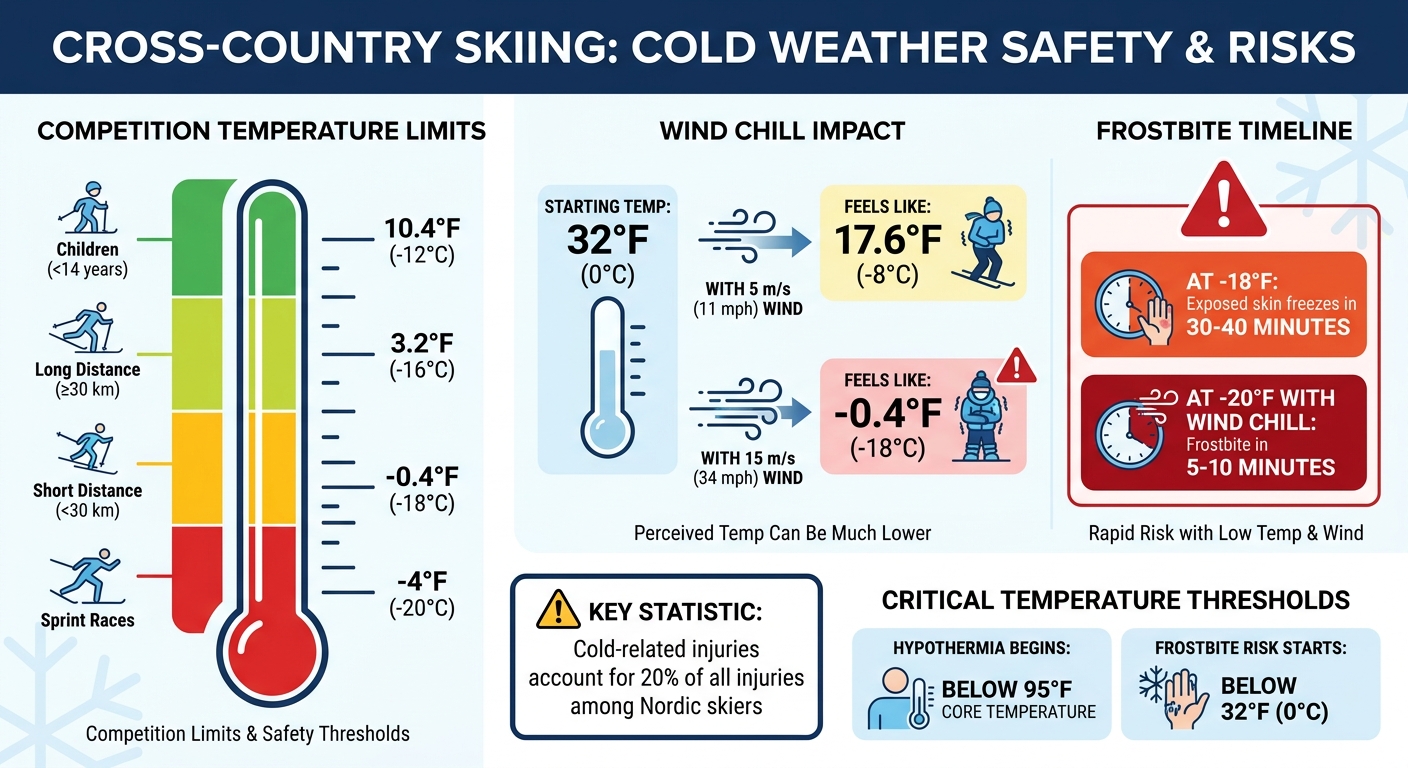
Cross-Country Skiing Temperature Safety Limits and Frostbite Risk Chart
Competition Temperature Rules and Standards
Cross-country skiing competitions have strict temperature guidelines to protect athletes from cold-related injuries. The FIS Medical Committee has set specific thresholds based on race type and distance. For sprint races, events can continue until temperatures hit -4°F (-20°C). Shorter races under 30 km have a limit of -0.4°F (-18°C), while long-distance races (30 km or more) must be canceled if it gets colder than 3.2°F (-16°C).
For children under 14, the temperature limit is higher at 10.4°F (-12°C) due to their increased vulnerability to heat loss.
| Competition Type | Temperature Limit (°F) | Temperature Limit (°C) |
|---|---|---|
| Sprint Races | -4°F | -20°C |
| Short Distance (<30 km) | -0.4°F | -18°C |
| Long Distance (≥30 km) | 3.2°F | -16°C |
| Children (<14 years) | 10.4°F | -12°C |
These limits highlight the importance of proper gear when skiing in extreme conditions. Cold-related injuries account for 20% of all injuries among Nordic skiers. Inggard Lereim, Vice-Chairman of the FIS Medical Committee, stresses the dangers of ignoring weather conditions:
"Tragedies caused by cold result from failure to respect prevailing weather conditions".
Following these guidelines, along with using reliable equipment like Snowfeet* skis, can make a significant difference in staying safe during extreme cold.
How Wind Chill and Personal Factors Change the Limits
Wind chill can make cold temperatures feel much worse. For example, a 5 m/s (11 mph) wind can drop the perceived temperature from 32°F (0°C) to 17.6°F (-8°C). At 15 m/s (34 mph), it feels like -0.4°F (-18°C). When the wind chill hits -18°F, exposed skin can freeze in just 30 minutes.
Skiing speed also amplifies the cooling effect. Wind chill charts are based on walking speeds, so skiing - especially at high speeds - exposes you to even colder conditions. Because of this, recreational skiers should treat competition limits as the upper boundary, not a guaranteed safe range.
Personal factors also play a big role in cold tolerance. Age, fitness level, and circulation all influence how well someone handles the cold. Certain health conditions can reduce the body’s ability to stay warm, and low blood sugar can interfere with shivering, which is crucial for generating heat. Beginners or those using traditional long skis with thin boots face greater risks compared to skiers equipped with Snowfeet* NORDIC skis and insulated winter boots.
Recognizing these variables reinforces why Snowfeet* NORDIC skis and proper gear are essential for safely skiing in harsh winter conditions. They provide better insulation and performance, reducing the risk of cold-related injuries.
Health Dangers of Skiing in Extreme Cold
Frostbite and Hypothermia: Signs and Symptoms
Skiing in freezing temperatures comes with serious risks, with frostbite and hypothermia topping the list. Frostbite can occur when temperatures drop below 32°F (0°C). Since the skin is mostly water, ice crystals form quickly, damaging cells in the process. Frostbite develops in stages. The first stage, frostnip, causes the skin to turn red or purple and feel cold, firm, and stingy. As it worsens, superficial frostbite brings on a "pins and needles" feeling, along with pale or grayish-yellow skin. In severe cases, known as deep frostbite, the skin becomes completely numb, hard, and frozen, often turning white or blue. Blisters can also form when the affected area is rewarmed.
Hypothermia, on the other hand, affects the entire body when the core temperature dips below 95°F (35°C). Early signs include shivering, fatigue, confusion, clumsiness, memory issues, slurred speech, and drowsiness. According to the CDC, many skiers might not even realize they have frostbite because the affected areas go numb, making it easy to miss until someone else notices. If frostbite is present, it’s essential to check for hypothermia, as it poses an even greater risk. Beyond skin and core temperature concerns, the cold can also impact your lungs.
Breathing Problems in Sub-Zero Temperatures
Cold air presents another danger: it can harm your lungs, especially during intense activities like cross-country skiing. The Carlton Trail Ski Club warns:
You can actually burn your lungs with very cold air – particularly if you are working hard and breathing large amounts of air. You can cause permanent damage to lungs if you don't protect yourself.
Skiers with asthma are particularly vulnerable to cold air. Hypothermia also affects breathing. In its early stages, when body temperatures range from 95°F to 89.6°F, breathing tends to be rapid and shallow. As hypothermia progresses, breathing slows down significantly and may even lead to fluid buildup in the lungs. Tragically, hypothermia claims between 700 and 1,500 lives in the United States each year.
To protect your lungs, always use a ski buff or neck tube to warm the air before it reaches your lungs. Additionally, investing in quality cold-weather gear, like Snowfeet* NORDIC skis, can help limit your exposure to these harsh conditions.
sbb-itb-17ade95
How to Stay Safe While Skiing in Extreme Cold
Proper Layering and Clothing Selection
Staying warm in bitter cold starts with smart layering. Use a three-layer system for the best protection. Start with a snug, moisture-wicking base layer made from merino wool, polyester, or silk. This pulls sweat away from your skin before it can freeze. Next, add a mid-layer like a fleece, wool sweater, or lightweight synthetic vest to trap heat close to your body. Pick full-zip options for easy temperature control. Finally, finish with a wind-proof outer layer. Look for materials like Windstopper® that block wind while staying breathable.
Skip cotton - it soaks up moisture and loses all insulating power when wet. Similarly, avoid non-breathable materials like traditional Gore-Tex for high-intensity skiing, as they can trap sweat. For your hands, mittens are warmer than gloves since your fingers share heat. On your feet, stick to one pair of midweight wool-blend socks; doubling up can cut off circulation. To protect your core, consider wind-resistant underwear.
If you're using Snowfeet* NORDIC skis, you're in luck - they pair with your warmest winter boots, keeping your feet toasty. This setup, combined with proper layering, helps reduce the risk of frostbite and hypothermia. But don’t stop at clothing - extra gear is crucial in extreme cold.
Cold-Weather Gear and Protective Equipment
When temperatures plummet, extra gear can make all the difference. A neck gaiter or buff is a must - it warms the air you breathe, protecting your lungs from the shock of icy temperatures. At -20°F (-29°C) or lower with wind chill, frostbite can hit exposed skin in just 5 to 10 minutes.
Battery-powered hand warmers or heat packs are lifesavers for quick warmth. If your feet get cold easily, heated insoles or socks are a great option. Neoprene or fleece-lined overboots add an extra wind-proof, insulated layer over your ski boots without the hassle of wearing extra socks. And don’t grip ski poles too tightly - harness-style straps can keep your hands warmer by improving circulation.
Here’s a quick guide to layering and accessories:
| Layer Type | Recommended Materials | Purpose |
|---|---|---|
| Base | Merino wool, polyester, silk | Wicks sweat away; should fit snugly |
| Mid-Layer | Fleece, tightly knit wool | Traps body heat and provides insulation |
| Outer | Windstopper, softshell, nylon | Blocks wind while allowing moisture to escape |
| Accessories | Neck gaiters, overboots | Protects extremities and keeps you warm |
Once you’ve got the right gear, managing sweat and body temperature becomes the next priority.
Temperature Management and Sweat Control
Even with the best gear, sweat can be your worst enemy in extreme cold. Start your ski session slowly to let your body warm up without sweating too much. If you feel yourself overheating, remove a layer before you get drenched. And don’t overlook the basics: make sure your socks and base layers are completely dry before heading out, even if that means changing after the car ride.
Pre-warming your boots, socks, and gloves near a heat source can give you a head start. Bring a hot drink to sip on and stay hydrated - cold, dry air can dehydrate you quickly. Experts recommend drinking small amounts frequently, aiming for six to eight 8-ounce glasses of water daily during winter activities.
After skiing, swap out damp clothes immediately, including socks and underwear, to avoid a sudden chill. Since your body burns more calories in extreme cold to stay warm, keep a sugary snack or energy bar on hand for a quick energy boost. And remember, official ski races are usually canceled at -4°F (-20°C) for adults and 5°F (-15°C) for kids to minimize the risks of frostbite and lung damage.
Why Snowfeet* NORDIC Skis Work Better in Extreme Cold
Better Control and Easy Transport
When the temperature plummets, every piece of gear matters. At just 90 cm, Snowfeet* NORDIC skis are incredibly lightweight compared to traditional long skis, meaning less effort is needed to move through the snow. This is key in extreme conditions, where staying warm and conserving energy is critical. The Carlton Trail Ski Club explains:
Cold weather forces us to work harder – we have more layers which is a hindrance to movement... and the cold (drier) air makes the snow produce less glide on our skis which makes us work harder to ski the same distances.
Their compact size also means less wind resistance, which is a big deal when you're battling freezing gusts. While long skis can catch the wind like sails, these shorter skis cut through it, keeping you more stable and conserving heat. Plus, they’re small enough to fit in a backpack, making them easy to carry to those far-off trails.
Compatible with Your Winter Boots
One of the standout features of Snowfeet* NORDIC skis is their compatibility with regular winter or snowboard boots. Unlike traditional cross-country skis that require stiff, plastic boots, these skis let you wear insulated boots paired with thick wool socks. This keeps your feet warm and your blood circulating properly. Snowfeet* highlights this benefit:
Snowboard bindings give you more flexibility... they're super comfortable and you can walk with them anywhere without a problem, which makes the ski trip much more pleasant experience.
This flexibility makes a huge difference in cold conditions, reducing the risk of frozen toes - a common issue with rigid ski boots. It's a simple yet effective way to stay comfortable and safe during your outdoor adventures.
Snowfeet* NORDIC vs. Traditional Long Skis
When it comes to extreme cold, conserving energy and staying warm are non-negotiable. Snowfeet* NORDIC skis shine in these areas compared to traditional long skis. Here’s how they stack up:
| Feature | Snowfeet* NORDIC (90 cm) | Traditional Long Skis |
|---|---|---|
| Portability | Easy to pack in a backpack | Requires roof racks or large bags |
| Boot Compatibility | Works with regular winter boots | Needs stiff, specialized ski boots |
| Weight | Lightweight | Heavier |
| Maneuverability | Highly agile | Bulky and harder to control in tight spots |
| Wind Resistance | Minimal wind drag due to smaller size | Larger surface catches more wind |
| Cold Performance | Warmer feet with flexible boot options | Rigid boots increase the risk of cold feet |
With over 50,000 users worldwide and a stellar 4.9/5 rating from more than 5,500 reviews, Snowfeet* NORDIC skis prove that smaller skis can pack a punch. Their lightweight build helps you conserve energy and stay warm, while their boot compatibility ensures your feet remain cozy. It’s a clear win over traditional long skis, especially when the weather is at its harshest.
Conclusion
Staying safe while cross-country skiing in extreme cold boils down to understanding the risks and gearing up smartly.
Extreme cold isn’t just uncomfortable - it can be dangerous. Breathing icy air can lead to lasting lung damage, and exposed skin can freeze in minutes. Frostbite and hypothermia are real threats, especially when moisture or poor circulation come into play. Even race organizers cancel events when the cold reaches a level where safety is compromised.
The right clothing is your first line of defense. A solid three-layer system keeps you warm without overheating. Add to that dry, moisture-wicking gear and protective accessories like buffs, and you’re better equipped to avoid cold-related injuries. Ditch cotton, choose mittens over gloves, carry a thermos of hot drinks, take frequent warm-up breaks, and - most importantly - don’t ski alone in dangerously low temperatures.
One standout option for extreme cold is Snowfeet* NORDIC Cross-Country Skate Skis. These skis are compatible with regular winter boots, so you can wear thick, insulated footwear instead of the thin, specialized boots traditional long skis require. This keeps your feet warm and blood circulating - essential when frostbite can develop in as little as 5–10 minutes in extreme conditions. At just 90 cm long, these skis are lightweight and easy to handle, helping you conserve energy when the snow slows you down in freezing, dry air. They’re designed to boost both performance and safety, making them a smart choice for harsh winter outings.
When venturing into extreme cold, preparation and the right gear can mean the difference between a fun adventure and a serious health risk. Stay aware, dress wisely, and choose equipment that keeps you safe while enhancing your experience.
FAQs
How do I decide if it’s too cold for me to ski today?
When deciding if it’s too cold to ski, think about how your body handles cold weather and take proper precautions. Once temperatures dip below 5°F - especially with wind chill - the risks of frostbite and hypothermia go up significantly. To stay safe, layer your clothing, opt for insulated gear, and keep an eye out for warning signs like numbness or redness on your skin. While gear like the Snowfeet NORDIC Cross-Country Skate Skis is designed to perform even in harsh conditions, your safety comes first. Always check local weather advisories before heading out.
What should I do if I suspect frostbite or hypothermia on the trail?
If you think someone has frostbite, check for signs like numbness or skin that looks pale, waxy, or discolored. Get to a warmer spot right away, use body heat or warm water to gently rewarm the area, but don’t rub the skin - it can cause more damage.
For hypothermia, symptoms include shivering, confusion, or slurred speech. Move the person to a warm, dry place, replace any wet clothing with dry layers, and wrap them in blankets. In both situations, it’s crucial to get emergency medical help immediately.
How can I protect my lungs when skiing in sub-zero temperatures?
To protect your lungs in freezing weather, it’s important to avoid breathing in extremely cold air directly. Using a face mask, balaclava, or neck gaiter can help warm the air before it enters your lungs. Make sure to wear dry, insulating layers to keep your body warm, which can also help reduce stress on your respiratory system. Staying active with gear like Snowfeet NORDIC Cross-Country Skate Skis can improve mobility and keep you warm, supporting easier breathing even in harsh cold.













Leave a comment
This site is protected by hCaptcha and the hCaptcha Privacy Policy and Terms of Service apply.