




















Cross-country skiing is all about staying warm without overheating. The trick? Smart layering. Here's the quick rundown:
- Base Layer: Skip cotton. Go for merino wool or synthetic fabrics to stay dry and warm. A snug fit is key.
- Mid Layer: Add insulation like fleece or a lightweight synthetic jacket for colder days.
- Outer Layer: Use windproof softshells that breathe well. Avoid bulky alpine ski jackets.
- Start Cold: Begin your session slightly chilly - you’ll warm up fast.
The goal? Stay warm, dry, and comfortable while keeping full freedom of movement. Whether you’re gliding through trails or trying compact Snowfeet skis, layering makes all the difference.
How to dress for Cross Country Skiing
Base Layers: Moisture Control and Warmth
Your base layer is like your secret weapon against the cold - it keeps you dry by wicking sweat away and helps you stay warm. Kelly Steinauer, Head of Apparel Design at Columbia Sportswear, sums it up perfectly:
"Once you ski with a cotton tee under your layers and you spend the day freezing and shivering, you will learn the importance of a good baselayer."
Here’s the deal: avoid cotton at all costs. It traps moisture and can leave you cold and miserable. Instead, go for materials like merino wool, polyester, or nylon. These fabrics are designed to pull moisture away from your skin, keeping you dry and comfortable.
Fit Matters
A good base layer should fit snugly, almost like a second skin. This ensures it wicks moisture effectively and doesn’t bunch up under your other layers. Look for flat-lock seams to avoid chafing, especially if you’re moving around a lot.
A midweight base layer is a versatile choice. On warmer days, you can wear it under just a shell jacket. When it gets colder, it works well with additional layers. Budget options like the REI Co-op Midweight Base Layer Crew cost around $55–$60, while premium picks like the Smartwool Classic Thermal Merino 1/4 Zip can run between $120–$130. Pro tip: start your day with fresh, dry base layers to avoid locking in moisture from the get-go.
Merino Wool vs. Synthetic Fabrics
Both merino wool and synthetic fabrics have their strengths. Which one you choose depends on your activity level and the weather.
- Merino Wool: A champion of temperature regulation, merino can absorb up to 30% of its weight in moisture without feeling wet. It also stays warm even when damp and has natural odor resistance, so you can wear it for days without worrying about smell. Downsides? It’s more delicate, prone to holes, and dries slower than synthetic options.
- Synthetic Fabrics: Polyester and nylon are great for high-intensity activities. They don’t absorb moisture but instead move it to the surface, where it evaporates quickly. These fabrics are also more durable and generally more affordable, costing around $40–$60 compared to $80–$120 for merino. However, they can trap odors over time.
Here’s a quick comparison:
| Feature | Merino Wool | Synthetic (Polyester/Nylon) |
|---|---|---|
| Warmth | Excellent (even when wet) | Moderate |
| Drying Speed | Slow | Very fast |
| Odor Control | Naturally great | Not so great |
| Durability | Lower (prone to wear) | Higher (tougher) |
| Best For | Multi-day trips, very cold weather | High-output activities, budget-friendly |
For intense activities like skate skiing, synthetic layers shine with their quick-drying ability. On longer trips or extremely cold days, merino’s warmth and odor resistance make it a solid pick. Some brands even offer blended fabrics, combining the best of both worlds.
Base Layer Tops and Bottoms to Consider
Now that you know what to look for, let’s talk about some solid options for tops and bottoms.
-
Tops: Go for a long-sleeve crew or quarter-zip. A quarter-zip is especially handy for venting heat during uphill climbs. Features like thumb loops can also help keep sleeves in place during vigorous activity.
-
The Smartwool Classic Thermal Merino 1/4 Zip (around $120) is a favorite for its warmth, breathability, and softness. Lead tester Justin Simoni explains:
"The Smartwool offers just the right balance - it's a top I grab not only because it's comfortable, but because I know it'll do the job right every time."
- For a more affordable synthetic option, check out the REI Co-op Midweight Half-Zip (about $55–$60).
- Women’s options include the Icebreaker Merino 200 Oasis Crewe, loved for its slim fit and odor control, and the Stio Trax Power Grid Hoodie, which stands out for its breathability thanks to a grid fleece design.
-
The Smartwool Classic Thermal Merino 1/4 Zip (around $120) is a favorite for its warmth, breathability, and softness. Lead tester Justin Simoni explains:
- Bottoms: A single pair of thermal leggings is usually enough since you’ll wear windproof pants over them. For extra warmth, go with merino options like the Ortovox Rock'N'Wool Long Base Layer Pants. For high-output days, synthetic choices like the Patagonia Capilene Midweight are a better fit. Just make sure they’re snug to avoid bunching under your outer layers.
With these base layer tips, you’ll be ready to tackle the slopes or trails comfortably - whether you stick to traditional gear or try something new like Snowfeet*.
Mid Layers: Adding Insulation
Mid-layers are what you wear between your base layer and outerwear. Their job? To trap body heat on chilly days while still managing sweat. The best ones strike a balance between insulation and moisture control. As Nordic Ski Lab explains:
"Look for fabrics that offer good insulation without bulk, like a tightly knit merino wool"
Keep in mind that down jackets usually aren’t ideal - they can feel too warm for the aerobic nature of skiing and lose their insulating ability when damp. Similarly, traditional fleece might feel a bit bulky when you're constantly on the move.
Here’s a quick breakdown of mid-layer options based on different conditions and activity levels.
Fleece, Insulated Jackets, and Vests
The right mid-layer depends on both the weather and how hard you’re working. For high-intensity days, a vest can be a great choice. It keeps your core warm while leaving your arms free - perfect for activities like pole work or using Snowfeet*, where lightweight and agile gear is key.
When it gets colder, a full-zip jacket can be a lifesaver. Why? It’s easy to adjust on the go. Nordic Ski Lab makes a strong case:
"I prefer a full zip so it's easy to take off if I overheat"
For extreme cold, lightweight synthetic jackets like the Patagonia Nano Air or Arc'teryx Atom are great picks. They’re designed to breathe, even when you’re working up a sweat.
As for your legs, a solid base layer combined with windproof pants should do the trick. And if you’re new to cross-country skiing, here’s a tip: start your session feeling slightly chilly. You’ll warm up quickly once you get moving!
Outer Layers: Wind and Snow Protection
Your outer layer is the final barrier between you and the elements. Unlike alpine skiing, where you might spend time sitting still on a chairlift, cross-country skiing keeps you constantly moving. This creates a unique challenge: you need protection from wind and snow while allowing sweat to escape. If your outer layer traps too much moisture, it can seriously impact your comfort and performance.
Softshell jackets and pants strike the perfect balance between wind resistance and breathability, making them ideal for cross-country skiing. These lightweight outer layers are better suited for this activity than heavier hardshells like traditional Gore-Tex. As Nordic Ski Lab puts it:
"Gore-Tex is breathable, but not breathable enough for cross-country skiing."
The right outer layer works in harmony with your base and mid-layers, blocking wind while still letting excess moisture escape.
Selecting Windproof and Waterproof Jackets and Pants
The best outerwear for cross-country skiing uses a hybrid design. This means the front panels of your jacket and pants are windproof to block the cold air you generate when moving forward, particularly during downhill stretches. Meanwhile, the back and side panels are made from stretchy, breathable fabrics that effectively release heat and moisture. Nordic Ski Lab explains:
"Ideally your jacket and pants are windproof on the front but not the back of the body."
For materials, look for options like Windstopper or Stormwall® for excellent wind protection on the front, paired with Lycra or breathable mesh for the back panels to prevent sweat buildup.
Key features to look for include:
- Pit zips or thigh vents for manual temperature control
- Elasticized cuffs or ankle zips to keep snow out
- A tailored fit that accommodates your base layer and a light mid-layer
- Reflective details for safety during low-light conditions
Save fully waterproof hardshells for extreme weather, such as heavy rain or wet, melting snow. For most cross-country skiing conditions, a quality softshell will keep you comfortable without overheating. Think of cross-country gear as closer to winter running apparel than the bulky jackets used for alpine skiing. You want mobility and breathability, not excessive insulation.
This technical outerwear pairs seamlessly with Snowfeet* gear, offering unmatched freedom of movement and protection compared to traditional ski and snowboard brands.
sbb-itb-17ade95
How to Layer for Different Temperatures
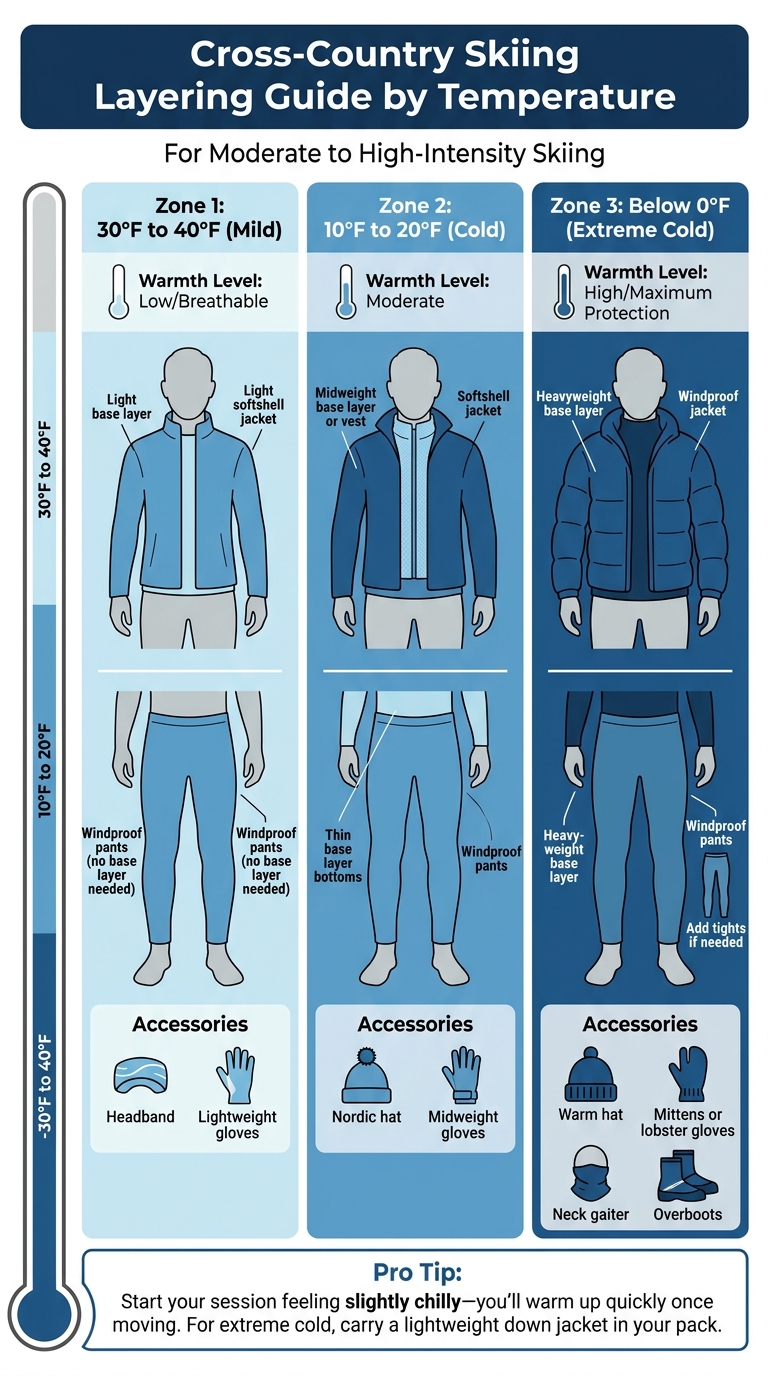
Cross-Country Skiing Layering Guide by Temperature Range
Cross-country skiing generates a lot of heat, so your clothing needs to balance warmth and breathability. Overdressing is a common mistake - starting out a little chilly is actually ideal. As Nordic Ski Lab explains:
"Plan to be a little chilly as you start out. If you're toasty warm as you step onto the trail, you'll likely be too hot very soon, especially if you have to climb a hill right away."
Your layering strategy should match the temperature and how hard you're skiing. If you're tackling flat terrain in mild weather, you'll need fewer layers. On steeper climbs or colder days, you'll want more insulation. Keep in mind that your legs naturally stay warmer due to all the movement, so adding extra layers to your lower half usually isn’t necessary unless it’s seriously cold. Check out the table below for a quick guide to layering.
Layering Guide by Temperature Range
This guide is tailored for moderate to high-intensity skiing. If you're taking it slow or stopping often, consider adding an extra layer for warmth.
| Temperature Range | Upper Body Layers | Lower Body Layers | Extras | Warmth Level |
|---|---|---|---|---|
| 30°F to 40°F | Light base layer + light softshell jacket | Windproof pants (no base layer) | Headband, lightweight gloves | Low/Breathable |
| 10°F to 20°F | Midweight base layer + light fleece or vest + softshell jacket | Windproof pants + thin base layer bottoms | Nordic hat, midweight gloves | Moderate |
| Below 0°F | Heavyweight base layer + insulated midlayer + windproof jacket | Heavyweight base layer + windproof pants (add tights if needed) | Warm hat, mittens or lobster gloves, neck gaiter, overboots | High/Maximum Protection |
For extremely cold conditions, it’s smart to carry a lightweight down jacket in your pack. It can be a lifesaver if you have to stop unexpectedly and need extra insulation.
One last tip: always start with dry socks. If your socks are even slightly damp from a previous activity or stop, they’ll quickly turn icy once you hit the trail. Swapping them out before putting on your ski boots can make a world of difference.
Layering for Snowfeet* NORDIC Cross-Country Skate Skis

Why Snowfeet* Beats Traditional Long Skis
Snowfeet* NORDIC Cross-Country Skate Skis (90 cm / 35 in) are all about convenience and flexibility. Unlike traditional long skis that require specialized boots, roof racks, and plenty of storage space, Snowfeet* are compact enough to fit in a backpack and work with your regular winter shoes.
Their lightweight design means you’re not lugging around bulky gear. Plus, while long skis often limit you to groomed tracks and demand more technical skill, Snowfeet* let you venture across a variety of terrains. This adaptability calls for a layering system that can handle changing conditions and spontaneous adventures.
Let’s dive into the best layering strategies to get the most out of your Snowfeet* experience.
Best Layering Practices for Snowfeet* Users
When layering for Snowfeet*, think about how you’d dress for a high-energy winter sport like running. According to Nordic Ski Lab:
"The best clothing strategy for cross-country skiing is the same as for other highly aerobic winter sports."
Start with a solid base layer - merino wool or a synthetic blend works best to keep you warm and wick away sweat. For pants, go for options with ankle zips to fit snugly over your winter shoes.
For your outer layers, look for jackets and pants with windproof panels on the front to shield you from the chill while moving forward. At the same time, breathable and stretchy fabric on the back ensures you don’t overheat. A lightweight, full-zip fleece or vest is perfect for quick adjustments when you need to cool down or warm up.
Since moisture can make you feel cold fast - it conducts heat 25 times faster than dry air - sweat-wicking fabrics are a must. Make sure your outfit transitions easily from your car to the trail, so you’re comfortable from the start.
Conclusion
Nailing your layering can completely change your experience out on the trails. The three-layer system - a moisture-wicking base, an insulating mid-layer (when needed), and a windproof outer shell - keeps you comfortable whether you're powering up a climb or cruising through fresh snow. Since cross-country skiing is a high-energy activity, breathability always beats heavy insulation. As Nordic Ski Lab explains:
"The best clothing strategy for cross-country skiing is the same as for other highly aerobic winter sports."
Stick to merino wool or synthetic fabrics that wick sweat away from your skin, add windproof panels for protection, and stay stretchy enough to allow full movement. And seriously, steer clear of cotton - it traps moisture and will leave you shivering the moment you stop moving.
When you're using gear like Snowfeet* NORDIC Cross-Country Skate Skis, your clothing choices become even more critical. These 90 cm skis are compact enough to fit in your backpack and work with regular winter shoes, opening up opportunities to tackle all kinds of terrain. But with that freedom comes the need for adaptable clothing - something light, packable, and ready to handle everything from groomed trails to off-the-beaten-path adventures.
Think of it like dressing for a winter run: start out slightly cold, knowing you'll warm up quickly once you're moving. Your gear should work with you, not against you - breathing, flexing, and keeping you comfortable no matter how far or fast you go.
FAQs
How do I choose between merino and synthetic base layers?
When deciding between merino wool and synthetic base layers, it really comes down to what you need for your activity. Merino wool is known for its natural ability to keep you warm, resist odors, and feel soft against the skin, making it a solid choice for cold-weather endurance adventures. On the flip side, synthetic layers are champs at pulling moisture away from your skin, drying quickly, and standing up to wear and tear, which makes them perfect for high-intensity sports.
For cross-country skiing, a lot of people either go with a blend of both materials or pick one based on how long and demanding their outing will be. The goal? Finding the right mix of warmth, breathability, and performance to keep you comfortable out there.
What should I do if I start sweating or overheating on the trail?
If you start to feel too warm or begin sweating while cross-country skiing, it’s time to adjust your clothing. You can remove or unzip your outer layer to let out some of that extra heat. Loosening your mid-layers will also help improve airflow and keep you comfortable. However, make sure to keep your moisture-wicking base layer on - that’s key to staying dry and avoiding a sudden chill. And don’t forget, if you stop for a break or start heading downhill, you might need to layer back up to stay warm.
Do I need different layers when using Snowfeet* with winter shoes?
When using Snowfeet* with your winter shoes, there's no need to switch up your layering game compared to traditional cross-country skiing. Stick with the basics:
- A moisture-wicking base layer to keep sweat off your skin.
- An insulating mid-layer to trap heat.
- A windproof outer layer to shield you from the elements.
The lightweight design of Snowfeet* pairs perfectly with regular winter shoes, so you don’t need any fancy ski clothing. Just follow these layering principles to stay warm, dry, and comfortable while managing moisture and wind effectively.













Leave a comment
This site is protected by hCaptcha and the hCaptcha Privacy Policy and Terms of Service apply.