



















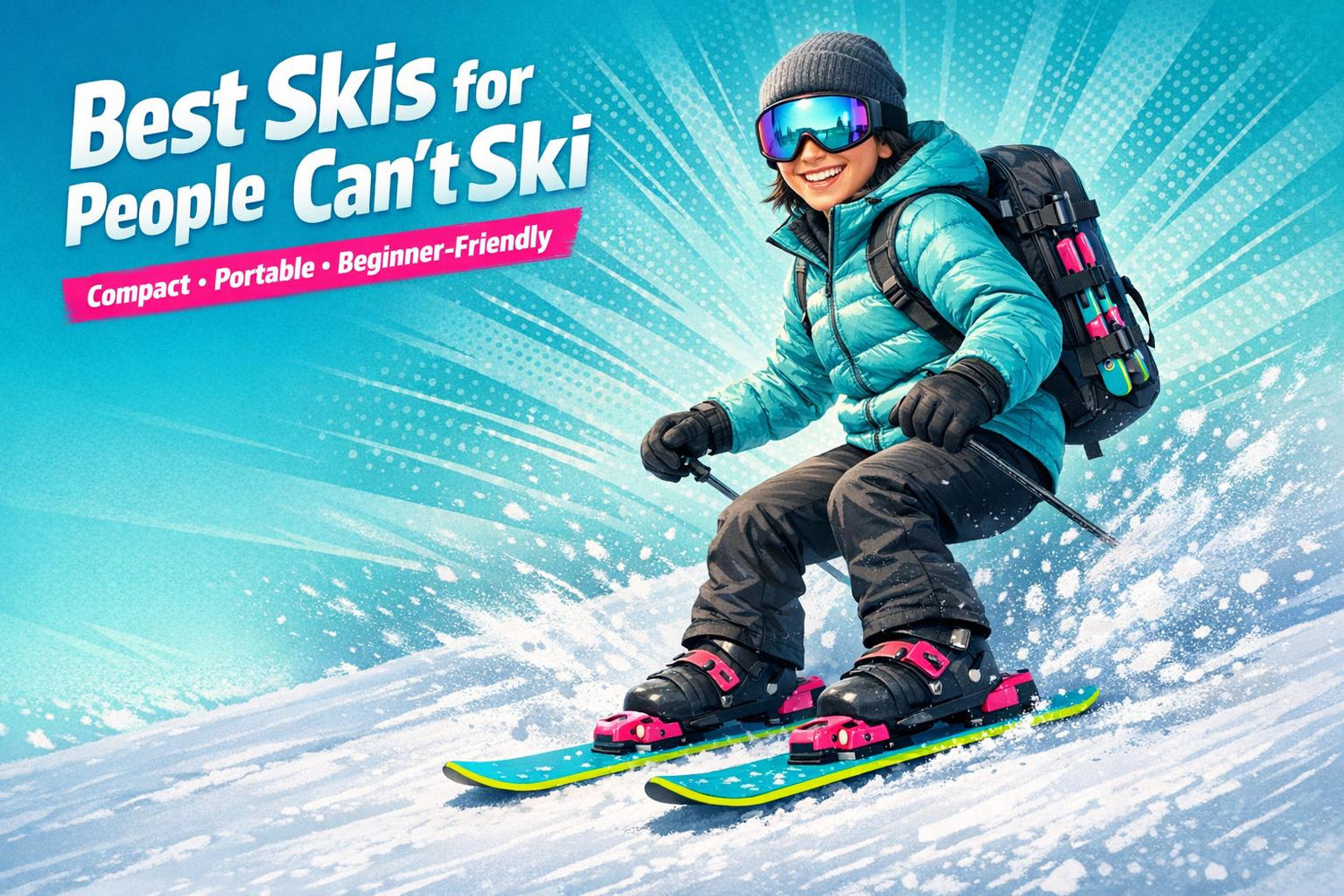
Skiing feels too complicated? Snowfeet has you covered. These short skis are designed for anyone who struggles with long, heavy skis or just wants an easier way to enjoy the slopes. Forget the steep learning curve and expensive gear - Snowfeet offers compact options that feel more like skating than skiing.
Here’s the deal:
- Shorter skis (15–47 inches) mean less bulk, easier control, and no more crossed tips.
- Most models fit in a backpack and work with regular winter or snowboard boots.
- Prices range from $250 to $775, making them a budget-friendly way to hit the slopes.
- Perfect for groomed trails and light powder (up to 4 inches).
Whether you’re a beginner or just looking for a simpler, fun way to ski, there’s a Snowfeet model for you. Let’s break it down.
Are Short Skis Better for Beginners?
1. Snowfeet* Skiskates (44 cm)
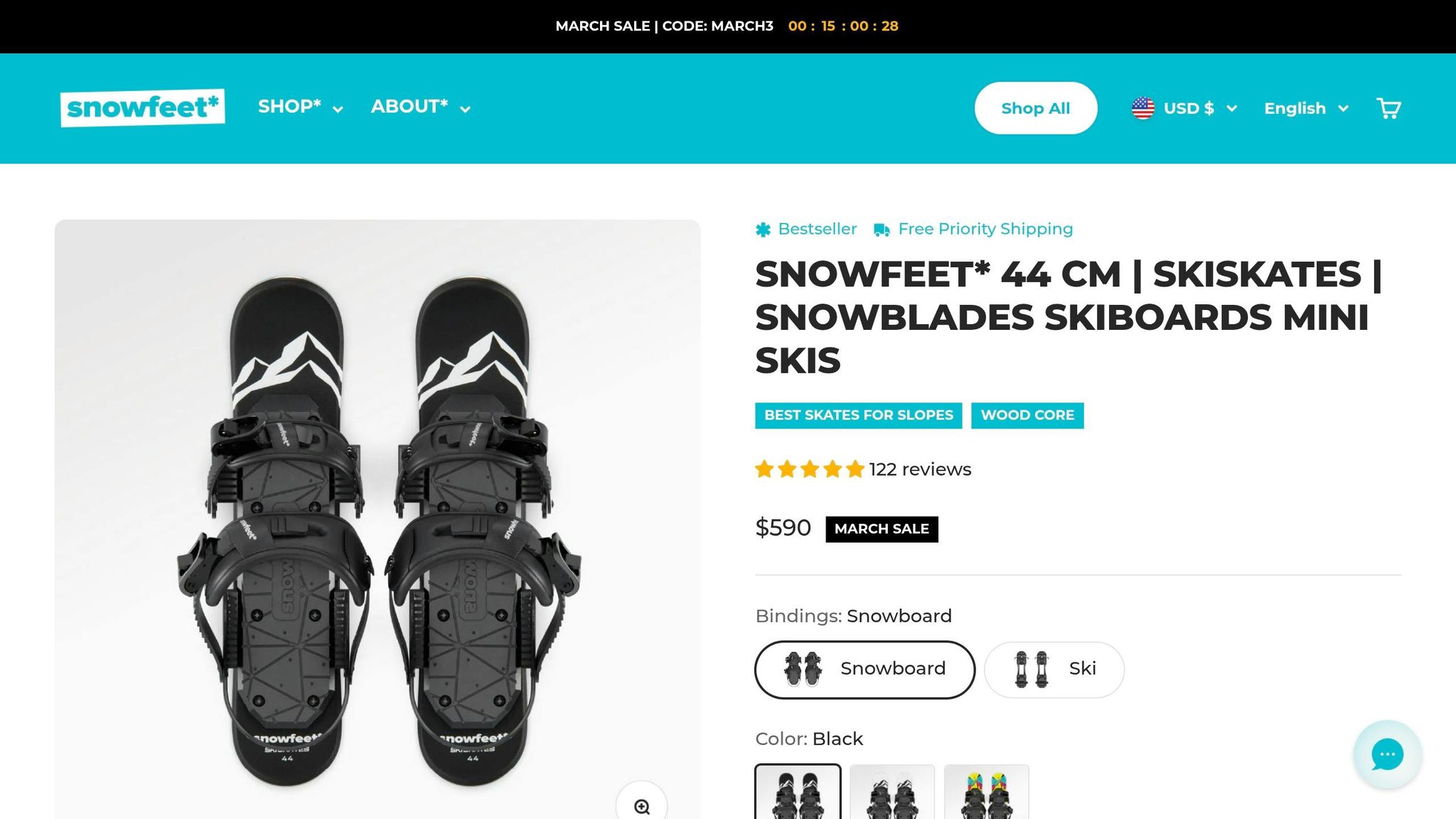
At just 17 inches (44 cm) long, Snowfeet* Skiskates hold the title of the world's shortest skis, making them a great choice for beginners. Founder Zbyněk shares his enthusiasm:
"In my opinion, Skiskates is the best product for slopes we developed so far. I love how easy they are to ski and skate and how many different kinds of tricks I can perform without much effort."
Compact and Easy to Carry
These little skis are so small they can fit into a regular backpack. Say goodbye to roof racks or oversized gear bags! Whether you're heading to a local slope or trekking up a mountain, their portability makes them super convenient.
Easy to Learn
If you've ever ice skated or rollerbladed, you'll probably feel right at home with Skiskates. Their short length (under 50 cm) gives them a skating-like feel, unlike the heavier carving motion of traditional skis. Plus, the adjustable bindings don’t require any tools and work with your regular ski or snowboard boots, making them easy to use and adaptable to different terrains.
Great for Various Terrains
Snowfeet* Skiskates shine on groomed slopes, in snow parks, and even along forest trails. They can handle powder up to around 4 inches (10 cm), but they’re not ideal for deep snow, steep slopes, or rough, uneven terrain. Built with high-quality materials like a cap, sustainable wood core, and graphite base, they’re designed to perform well for all levels of skiers.
Affordable Option
At $575, Snowfeet* Skiskates are a budget-friendly alternative to traditional ski setups, which often come with hefty costs for boots, bindings, and lessons. For anyone new to skiing, they offer an affordable way to hit the slopes without breaking the bank.
2. Snowfeet* Mini Ski Skates (38 cm)
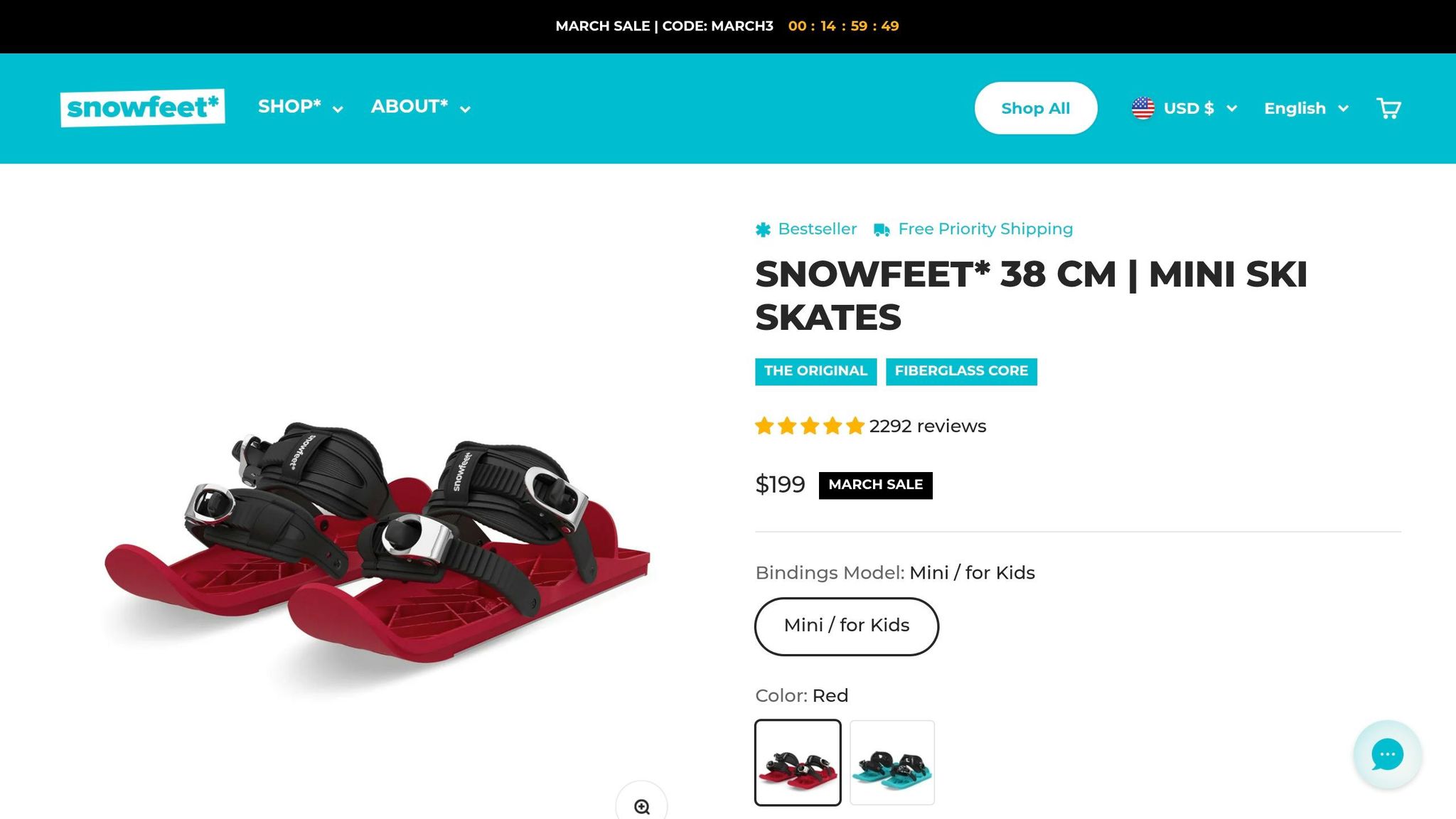
The Snowfeet* Mini Ski Skates take portability and simplicity to the next level. At just 15 inches (38 cm) long, they’re the smallest option in the Snowfeet* lineup - perfect for those new to skiing who might feel overwhelmed by traditional gear.
Compact and Portable
With a length of 38 cm, these mini skis can easily fit into a regular backpack. No need for bulky ski bags or roof racks! Plus, their bindings are designed to work with your everyday winter boots or snowboard boots, so there’s no need for specialized footwear.
Easy to Learn
Unlike traditional skis that require mastering sliding techniques, these skates rely on natural movements like skating or walking. Since they’re so short, there’s no risk of crossing your tips - a common issue for beginners. While traditional skis (140–160 cm) can take weeks or months to get the hang of, most users get comfortable with the Mini Ski Skates in just a few hours or days.
Best for Groomed Slopes
These skates shine on groomed slopes, snow parks, and forest trails. They can handle up to 4 inches (10 cm) of powder but aren’t suitable for deep powder or steep, ungroomed terrain. If you’re looking for a fun way to explore a variety of winter landscapes, these are a great choice.
Affordable Option
Priced at around $250, the Snowfeet* Mini Ski Skates are a budget-friendly alternative to traditional ski setups. Considering that standard skiing often involves buying skis, bindings, boots, and lessons, these skates offer a cost-effective way for beginners to try out winter sports without breaking the bank.
3. Snowfeet* PRO Mini Ski Skates (50 cm)
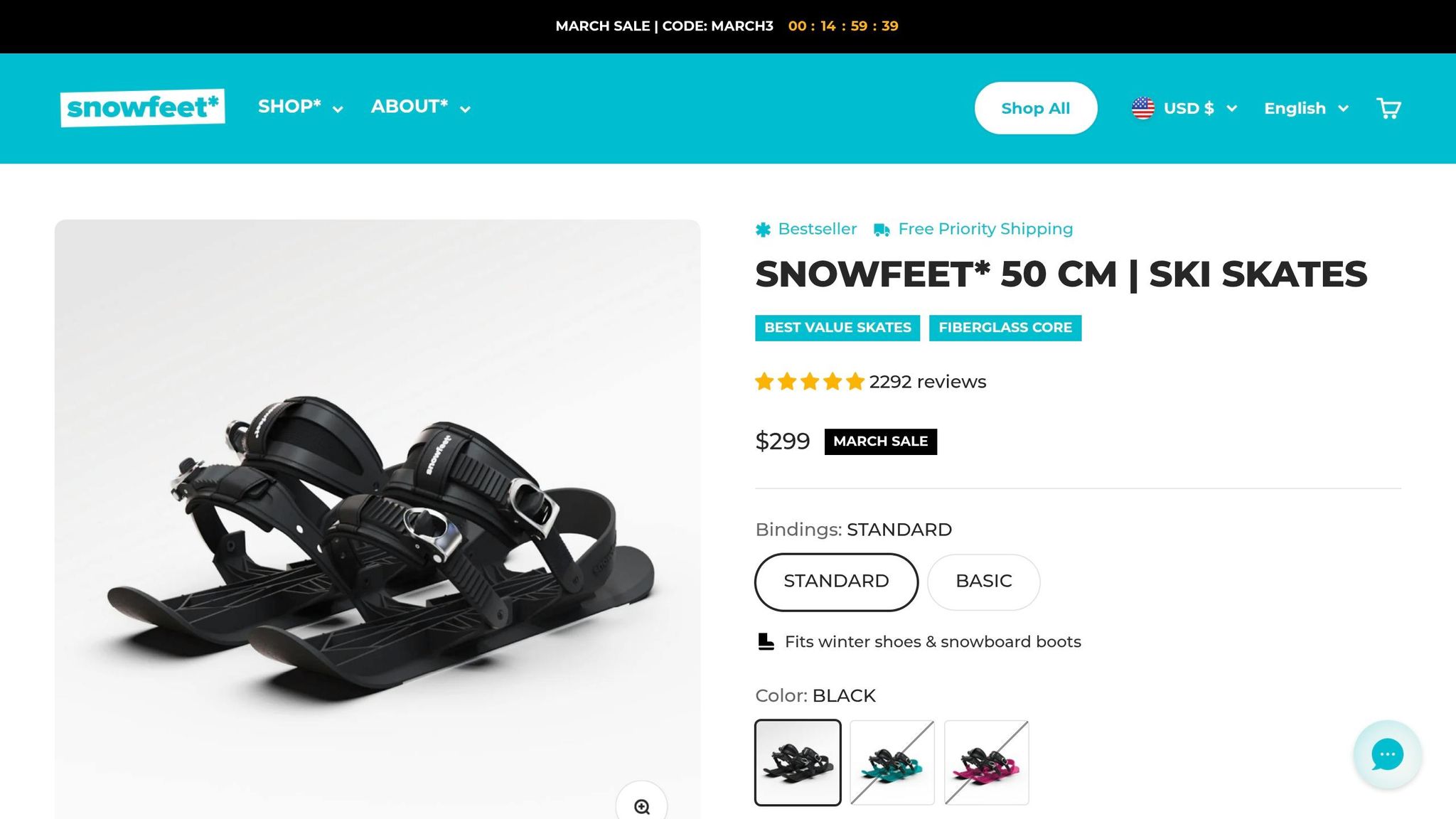
The Snowfeet* PRO Mini Ski Skates strike a great balance - they’re longer than the 38 cm version but still manageable for those new to skiing. Measuring just under 20 inches (50 cm), they provide better stability while keeping the portability and simplicity that make Snowfeet* products a favorite for anyone who finds traditional skis overwhelming. The PRO model builds on the original Mini Ski Skates with extra stability, all without adding bulk.
Length and Portability
At 50 cm, these skates are small enough to fit in a regular backpack. That’s a huge advantage compared to lugging around traditional skis that are 140–170 cm long. Plus, no need for roof racks, oversized bags, or extra airline fees - these are as travel-friendly as it gets.
Learning Curve
Using these skates feels similar to ice skating or inline skating, which many people find easier to pick up compared to the sliding motion required with long skis. The fiberglass flex core keeps them lightweight and forgiving, making it easier to find your balance. With a 4.9 out of 5-star customer rating, many users say they felt confident within just a few hours - way faster than the weeks or months it can take to get comfortable with traditional skiing. This ease of use makes them perfect for beginners looking to hit the slopes quickly.
Terrain Versatility
The PRO Mini Ski Skates are designed for groomed slopes and snow parks, which are exactly the kind of terrain most beginners start with. Thanks to their slightly longer length compared to the 38 cm model, they offer a bit more stability and flexibility, making them a great choice for navigating beginner-friendly conditions.
Price
You don’t need to spend a fortune to enjoy skiing. Currently priced at $207 (down from $250), the Snowfeet* PRO Mini Ski Skates are considered the "Best Value Skates" in the lineup. Compare that to traditional ski setups - which can cost hundreds of dollars for skis, bindings, boots, and lessons - and these skates are a much more affordable option. The fiberglass construction helps keep costs lower than premium wood core models while still delivering solid performance for those just starting out.
4. Snowfeet* Skiblades (65 cm)
The Snowfeet* Skiblades, measuring 65 cm (around 26 inches), strike a great balance for beginners who want stability without the bulk of traditional skis. Their length provides solid front-to-back balance, making them easy to learn on, while their shorter size avoids the overwhelming feel of longer skis. With a 7.8 cm waist width and a parabolic shape, they’re designed for smooth carving and precise turns, all without feeling clunky or hard to handle.
Length and Portability
At just 65 cm, these skiblades fit conveniently into a standard backpack - no need for roof racks or oversized ski bags. That means you can toss them in your bag and head out to the slopes, snowparks, or even hiking trails with ease. The fiberglass-reinforced construction adds durability while keeping them lightweight. Plus, they come equipped with metal ski edges, similar to what you’d find on full-length skis or snowboards. Another bonus? Like other Snowfeet* models, these skiblades work with regular winter shoes or snowboard boots, making them a hassle-free and portable alternative to traditional ski setups.
Learning Curve
Snowfeet* Skiblades are designed to make learning a breeze. For beginners, one of the biggest challenges with traditional skis is crossing the tips, which often leads to an awkward tumble. With these shorter skiblades, that’s not a concern. Their compact size allows for a natural, narrow stance - more like walking or running - compared to the wide stance required by longer skis. This makes it easier to pick up stopping techniques like the "snowplow" or "pizza" stop. Most people feel comfortable using these skiblades in just a single day, a stark contrast to the weeks or months it can take to master traditional skis. For those moving up from mini skiskates, these are a natural next step.
Terrain Versatility
These skiblades are perfect for groomed snow, ski slopes, snowparks, and sliding hills. They can handle moderate powder up to about 4 inches (10 cm) and manage moguls and uneven terrain with ease. Thanks to their metal edges, you’ll have reliable stopping power and control on packed snow. That said, they aren’t built for deep powder, very steep slopes, or rugged backcountry terrain. Their design focuses on playful, all-mountain fun rather than high-speed downhill racing, making them ideal for beginners who want to enjoy the slopes without getting into extreme conditions.
Price
At $635, the Snowfeet* Skiblades (65 cm) offer a compelling option for beginners seeking stability without the full length of traditional skis. When you consider that traditional ski setups (just skis and bindings) often cost $500–$800 - and that doesn’t include boots, poles, or lessons - these skiblades provide a cost-effective alternative. With durable fiberglass construction, metal edges, and the ability to use your own winter boots, they deliver a fun, beginner-friendly experience at a reasonable price point.
sbb-itb-17ade95
5. Snowfeet* Skiblades (99 cm)
The Snowfeet* Skiblades, measuring 99 cm, are an excellent choice for beginners looking for stability without the challenges of traditional long skis. Their compact design offers a secure and balanced feel, making it easier to build confidence on the slopes without the awkwardness of handling skis over 160 cm long.
Length and Portability
At just 99 cm, these skiblades are incredibly easy to transport and store. They fit neatly into a car trunk, closet, or garage - no need for cumbersome roof racks or oversized ski bags. Plus, their lightweight design means you won’t be lugging around heavy gear.
Learning Curve
These skiblades are designed to make skiing approachable for newcomers. Their shorter length minimizes the risk of crossed tips and provides excellent stability, helping beginners gain confidence in days rather than weeks. The combination of balance and maneuverability allows you to focus on having fun rather than worrying about technique.
Terrain Versatility
Whether you're cruising groomed trails, hitting the snowpark, or navigating light powder, these skiblades have you covered. The metal edges grip well on packed snow and moderate ice, giving you reliable control for turns and stops. While they’re not built for deep powder or extreme backcountry skiing, they’re perfect for all-mountain use. This versatility makes them a great option for a variety of conditions.
Price
Priced at $675, the Snowfeet* Skiblades offer solid value for beginners. A traditional ski setup, including skis and bindings, often costs $500 to $800 - and that’s before factoring in boots, poles, and lessons. With these skiblades, you can use your existing winter or snowboard boots, saving you money on extra gear. It’s a complete, beginner-friendly package that delivers performance without the high cost or steep learning curve of traditional skiing.
6. Snowfeet* Short Skis (120 cm)
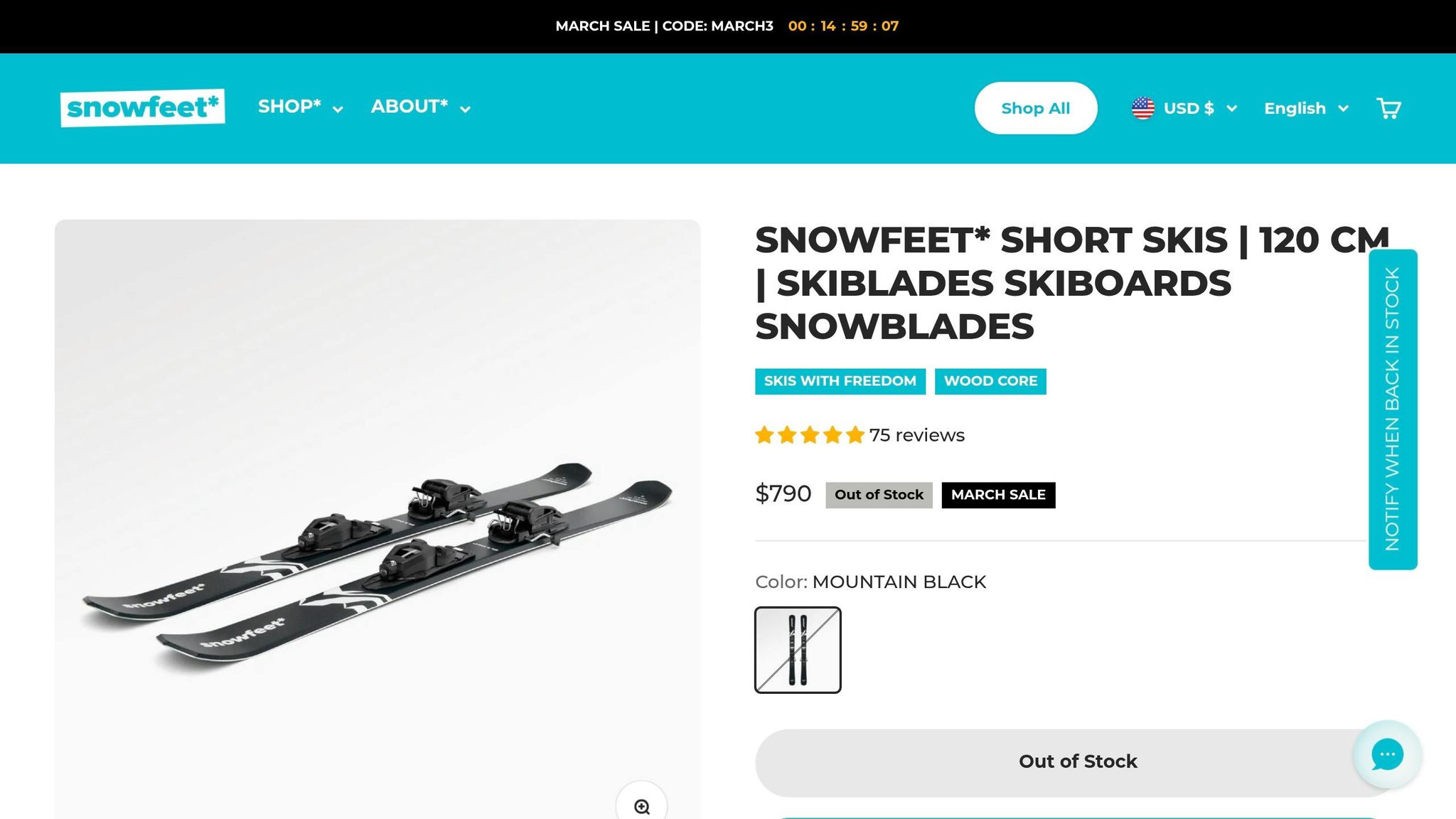
The 120 cm Short Skis from Snowfeet* strike a balance between the playful feel of shorter skis and the stability of traditional ones. At 48 inches, these are the longest in the Snowfeet lineup, offering front and back support for balance while maintaining a more approachable size compared to full-length skis that typically measure 160-180 cm.
Length and Portability
Even at 120 cm, these skis are far easier to transport than standard ones. You won’t need roof racks or bulky ski bags, and their compact size makes them ideal for storage in tight spaces, like small apartments. They’re the longest Snowfeet option, but they still feel refreshingly portable compared to traditional skis.
Learning Curve
These skis are designed to make learning smooth and enjoyable. The 120 cm length provides a stable platform for carving and turning while staying manageable for beginners. The 7.8 cm waist and parabolic shape encourage easy, responsive turns, giving you the feel of traditional skis but with added control and confidence. The extra length compared to shorter models improves balance by increasing surface contact with the snow, making it easier to find your stance and maintain control. Whether you’re new to skiing or looking to refine your skills, these skis make the process quicker and less intimidating.
Terrain Versatility
The Snowfeet* Short Skis shine on groomed trails, snowparks, and moguls, and they handle powder up to 4 inches deep better than shorter models. Their metal edges provide solid grip on packed snow, giving you confidence while carving. While they’re not built for steep backcountry terrain or deep powder, they’re an excellent choice for most beginner-friendly slopes. These skis are all about accessibility, offering a fun and forgiving ride for learners and casual skiers alike.
Price
At $775, the Snowfeet* Short Skis (120 cm) are a smart investment for beginners who want a traditional skiing experience without the hassle of full-length gear. For comparison, traditional ski setups can cost $500-$800 just for the skis and bindings, not including boots, poles, or lessons. These short skis work with your existing winter or snowboard boots, saving you the expense and discomfort of specialized ski boots. They’re lighter, more affordable, and easier to master, making them a great alternative to conventional long skis.
Pros and Cons
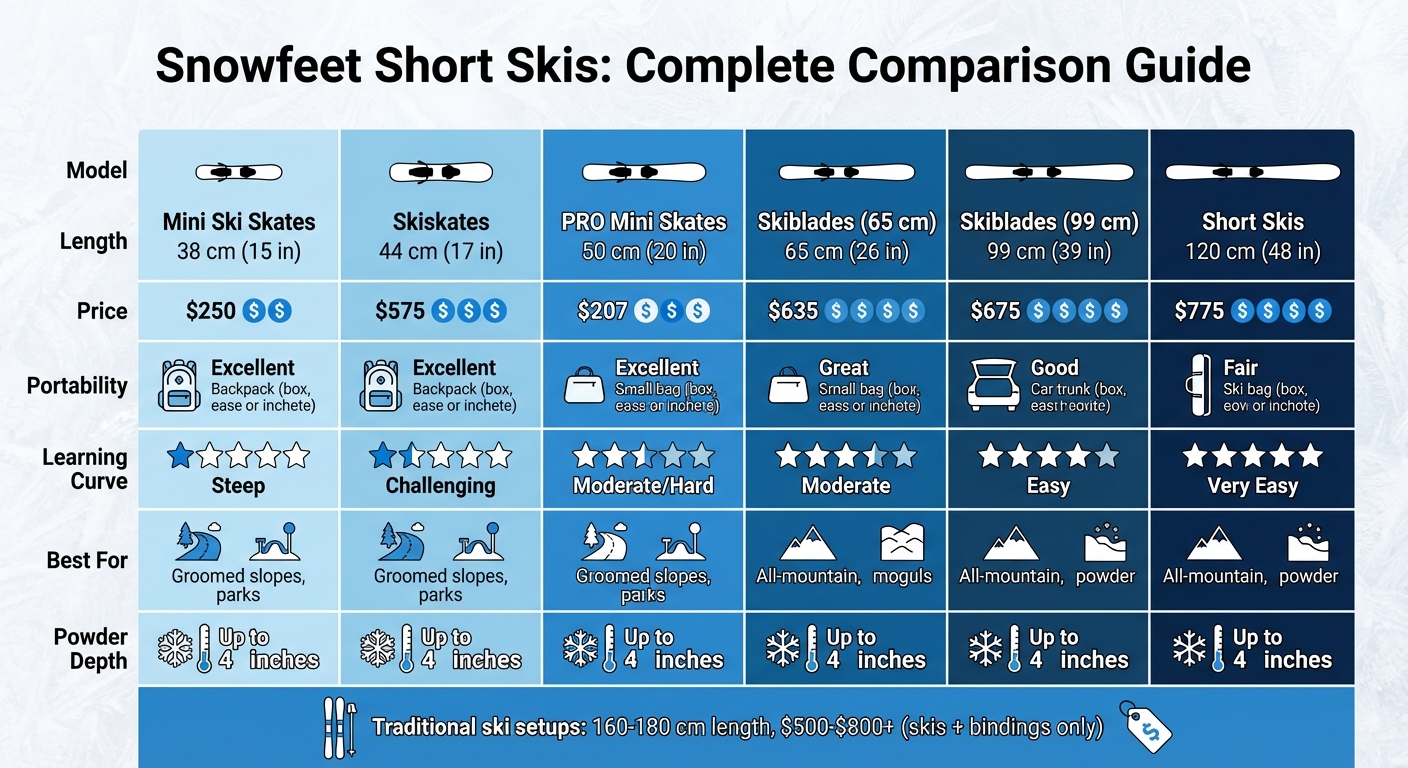
Snowfeet Short Skis Comparison: Length, Price, and Terrain Guide
Here’s a quick rundown of the strengths and drawbacks for each model, based on the detailed reviews above.
The 38 cm Mini Ski Skates are super portable - small enough to fit in a regular backpack - and work with any winter footwear. They’re budget-friendly and great for beginners. On the flip side, their compact size means you’ll need solid balance, and they’re best suited for powder no deeper than 4 inches (10 cm).
The 44 cm Skiskates share the same portability perks and versatility but are better suited for those comfortable with inline skating-style movements. They can be tricky to master and aren’t ideal for deeper powder.
The 50 cm PRO Mini Ski Skates step it up with durable, professional-grade bindings. They’re built for performance and durability but still require some skating skills to handle effectively.
The 65 cm Skiblades shine with easy turning thanks to their narrower 7.8 cm waist and solid performance across various terrains. However, they’re less stable at higher speeds and don’t handle deep snow well.
The 99 cm Skiblades strike a middle ground, offering a carving experience similar to traditional skis but in a more compact size. They’re less playful and require good balance but provide a controlled ride.
Finally, the 120 cm Short Skis deliver the closest feel to classic skiing. They’re stable for carving and work well in powder up to 4 inches deep. The downside? Their longer length makes them less portable and demands more ski-specific technique.
Here’s a quick comparison table to break it all down:
| Model | Length | Portability | Learning Curve | Terrain Versatility | Price |
|---|---|---|---|---|---|
| Mini Ski Skates | 38 cm (15 in) | Excellent (backpack) | Steep | Groomed slopes, parks | $250 |
| Skiskates | 44 cm (17 in) | Excellent (backpack) | Challenging | Groomed slopes, parks | $575 |
| PRO Mini Skates | 50 cm (20 in) | Excellent (small bag) | Moderate/Hard | Groomed slopes, parks | $207 |
| Skiblades | 65 cm (26 in) | Great (small bag) | Moderate | All-mountain, moguls | $635 |
| Skiblades | 99 cm (39 in) | Good (car trunk) | Easy | All-mountain, powder | $675 |
| Short Skis | 120 cm (48 in) | Fair (ski bag) | Very Easy | All-mountain, powder | $775 |
Compared to traditional skis and snowboards, Snowfeet* products are an affordable, beginner-friendly option that skips the steep learning curve and hefty price tag.
Conclusion
Traditional skiing often involves dealing with long, heavy skis that can be tricky to manage. Snowfeet* short skis change the game by addressing these challenges. Their compact design makes balancing easier and reduces strain on your legs, so you can ski longer and with less effort.
Snowfeet* offers options tailored to different skill levels and needs. If you're just starting out, the 99 cm Skiblades are a fantastic choice. They provide stability and are easy to control, helping beginners pick up skiing much faster compared to traditional gear. Got experience with ice hockey or inline skating? The 44 cm Skiskates or 50 cm PRO Mini Ski Skates will feel natural, as their movement mimics skating, making them easy to adapt to.
For skiers looking to level up, intermediate options include the 65 cm or 99 cm Skiblades, which are great for carving, or the 120 cm Short Skis, which offer a more traditional skiing experience without the usual bulk. And if portability is your top priority, the 38 cm Mini Ski Skates are the way to go.
With prices ranging from $250 to $775, Snowfeet* short skis are a budget-friendly and easier-to-learn alternative to high-end traditional ski setups. They're best suited for groomed slopes and can handle powder up to 4 inches deep, making them perfect for most resort conditions in the U.S. Ready to hit the slopes? Snowfeet* makes skiing simpler and more accessible from the start.
FAQs
Which Snowfeet* model is best if I’ve never skied before?
The _Snowfeet Mini Skis (38 cm)_* are a fantastic option for beginners. Thanks to their small size and user-friendly design, they’re super easy to handle, making it simple to pick up the basics and enjoy the slopes. If you’re looking for a fun way to dive into winter sports without the hassle of managing long, traditional skis, these mini skis are a great fit.
Do I need special ski boots or bindings to use Snowfeet*?
Snowfeet* products are made to be used with your regular footwear - no need for traditional ski bindings or specialized ski boots. This makes them super easy to use and way more convenient than the usual ski gear setup.
Are Snowfeet* short skis allowed at U.S. ski resorts?
Snowfeet* short skis, much like Skiblades and mini skis, are compact and easy to use, making them a great option for beginners. That said, their use at U.S. ski resorts varies based on individual resort rules. To avoid any surprises, it’s a good idea to contact the resort ahead of your trip to confirm their policy.












Leave a comment
This site is protected by hCaptcha and the hCaptcha Privacy Policy and Terms of Service apply.