




















Learning to ski can be tough, especially when you're stuck with long, heavy skis. They’re harder to control, take more effort to turn, and can leave you feeling frustrated instead of confident. Plus, they’re expensive and a pain to carry around. That’s why shorter skis, like those from Snowfeet*, are a game-changer for beginners.
Here’s the deal:
- Long skis: Hard to maneuver, tiring, and require more skill.
- Short skis: Easier to control, lighter, and help you learn faster.
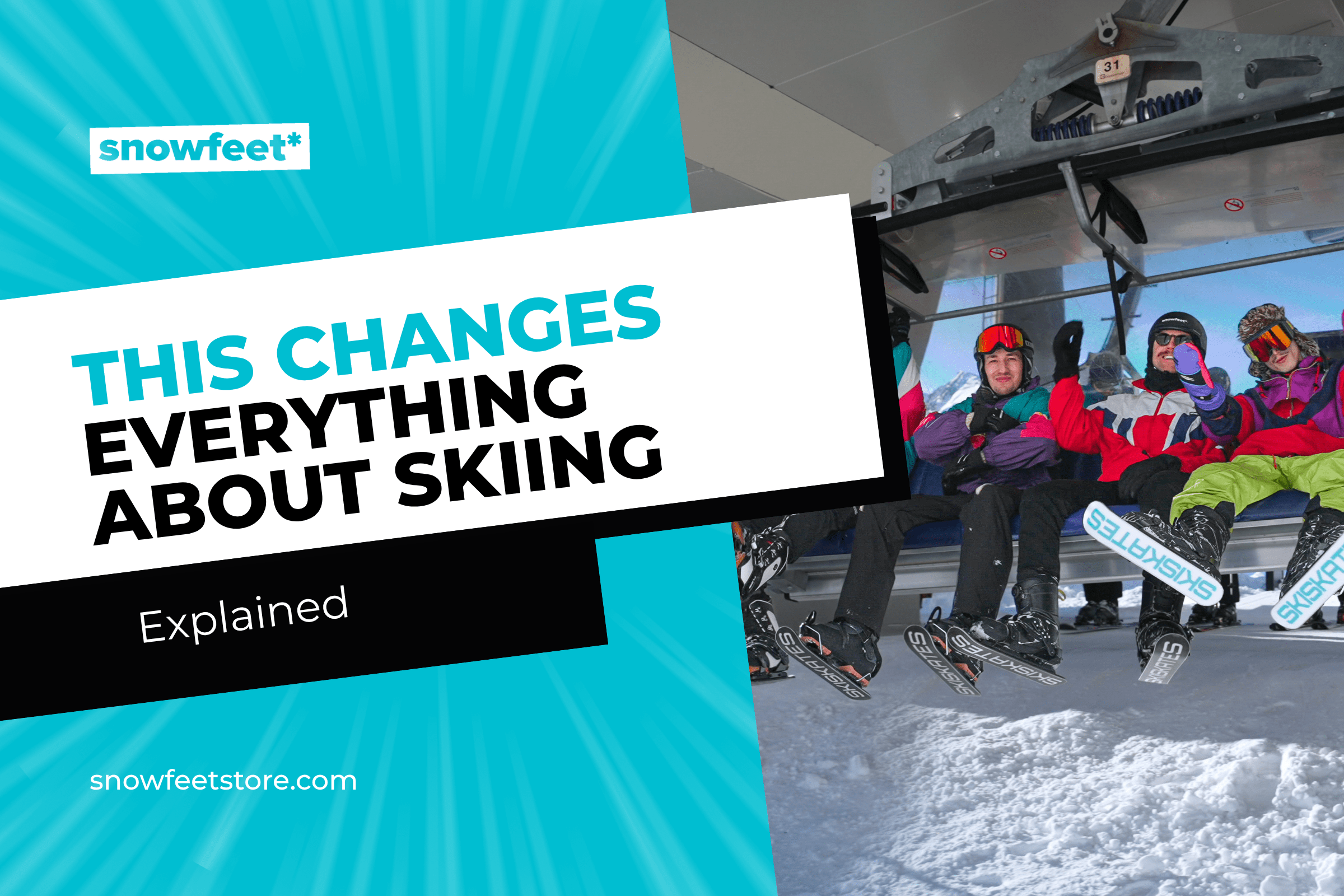
Snowfeet* offers compact options like Skiskates (44 cm) and Skiblades (65 cm), designed specifically for beginners. They’re lightweight, easy to handle, and make skiing way more fun. Whether you’re tackling your first slope or trying to improve your skills, shorter skis can help you gain confidence and enjoy the ride.
Skip the struggle and start skiing smarter with gear that works for you.
How to Ski in a Day | 20 Tips
Why Beginners Struggle With Long Skis
Long skis can make learning to ski a frustrating experience for beginners. Their extra length and weight don’t just slow you down - they also make it much harder to control your movements and build confidence on the slopes.
Difficulty Controlling and Turning
One of the biggest challenges with long skis is how tough they are to maneuver. The extra surface area extending from the center makes it harder to pivot or rotate them on the snow. This means turning takes a lot more effort.
"155cm skis will be harder to pivot than 120cm skis... [and] will be heavier to step with than 120cm skis." - A snowHead, Forum Contributor
Weight is another hurdle. Beginners often need to lift their inside ski to start a turn, but the heft of longer skis makes this movement feel awkward and unnatural. On top of that, keeping proper tip pressure - essential for engaging the ski edges - becomes much harder. Without this control, the skis won’t respond the way you want them to. Add in narrow trails or crowded beginner zones, and the extra length becomes even more of a liability. It’s easy to see why many beginners feel overwhelmed and lose confidence.
Slow Skill Development and More Falls
Struggling with control doesn’t just make skiing harder - it slows down your learning. Longer skis often force beginners back into inefficient techniques, like relying on snowplough turns, even after some progress has been made.
Long skis also require a bigger range of motion to complete turns. Without proper shin pressure against the boot tongues, the ski tips lose guidance and fail to follow the skier’s intended path. This technical difficulty often pushes beginners into "survival mode." Instead of focusing on improving, they lean back into what’s jokingly called the "back chair" position. This posture reduces control, increases tip crossing, and leads to frequent falls. Many beginners spend over 12 days on the slopes before they finally feel like they’re getting the hang of it.
Poor Performance on Different Terrains
Long skis are built for speed and stability on wide, groomed runs, but these conditions aren’t ideal for beginners. Their heavier weight and longer turning arcs can quickly wear out your legs. And when you’re already struggling with technique, fatigue only adds to the frustration.
The longer turn duration forces you into wider arcs, which are harder to manage on steeper terrain. Plus, when snow conditions vary - like transitioning from packed powder to icy patches - long skis demand a level of precision that beginners just haven’t developed yet. This limits you to the easiest runs, which can feel discouraging.
Short skis, like Snowfeet* designs, offer a lighter, more responsive alternative that eliminates many of these challenges, helping beginners focus on improving their skills instead of battling their equipment.
How Snowfeet* Short Skis Fix These Problems
Snowfeet* takes the hassle out of skiing for beginners by addressing common issues like control, agility, and fatigue that come with traditional long skis.
Easy Control and Quick Turns
With their shorter length, Snowfeet* makes turning a breeze. Their compact size - 44 cm Skiskates and 65 cm Skiblades - lets you pivot quickly without the effort needed for longer skis. This means you can handle tight spots and narrow trails without breaking a sweat.
The lightweight design is another game-changer. Snowfeet* products are much lighter than standard skis, so you won’t feel as tired after a day on the slopes. The reduced weight also makes it easier to adjust your position during turns, helping you keep good form for longer. More energy means more runs and faster progress on the mountain.
Faster Learning and More Confidence
Short skis like these help you learn quicker because they’re easier to handle and don’t require as much strength or stamina. Instead of fighting with heavy, unwieldy gear, you can focus on refining your technique.
Getting the hang of turns and stops feels more natural with Snowfeet*. This early success builds confidence, which in turn improves your posture and reduces common beginner mistakes like leaning back or stiffening up. With this added confidence, you’ll feel ready to explore more challenging terrain sooner than you might expect.
Lightweight and Easy to Carry
One of the biggest headaches with traditional skis is lugging them around. Snowfeet* solves this problem. The 44 cm Skiskates can fit right into a backpack, and even the 120 cm Skiblades are far easier to transport than full-length skis. No need for roof racks on your car, and they’re easy to store even in small spaces.
This portability means you’re more likely to hit the slopes often, which is key to improving your skills. With less hassle, you can focus on enjoying your time on the mountain and becoming a better skier, one run at a time.
sbb-itb-17ade95
Snowfeet* vs. Long Skis: Direct Comparison
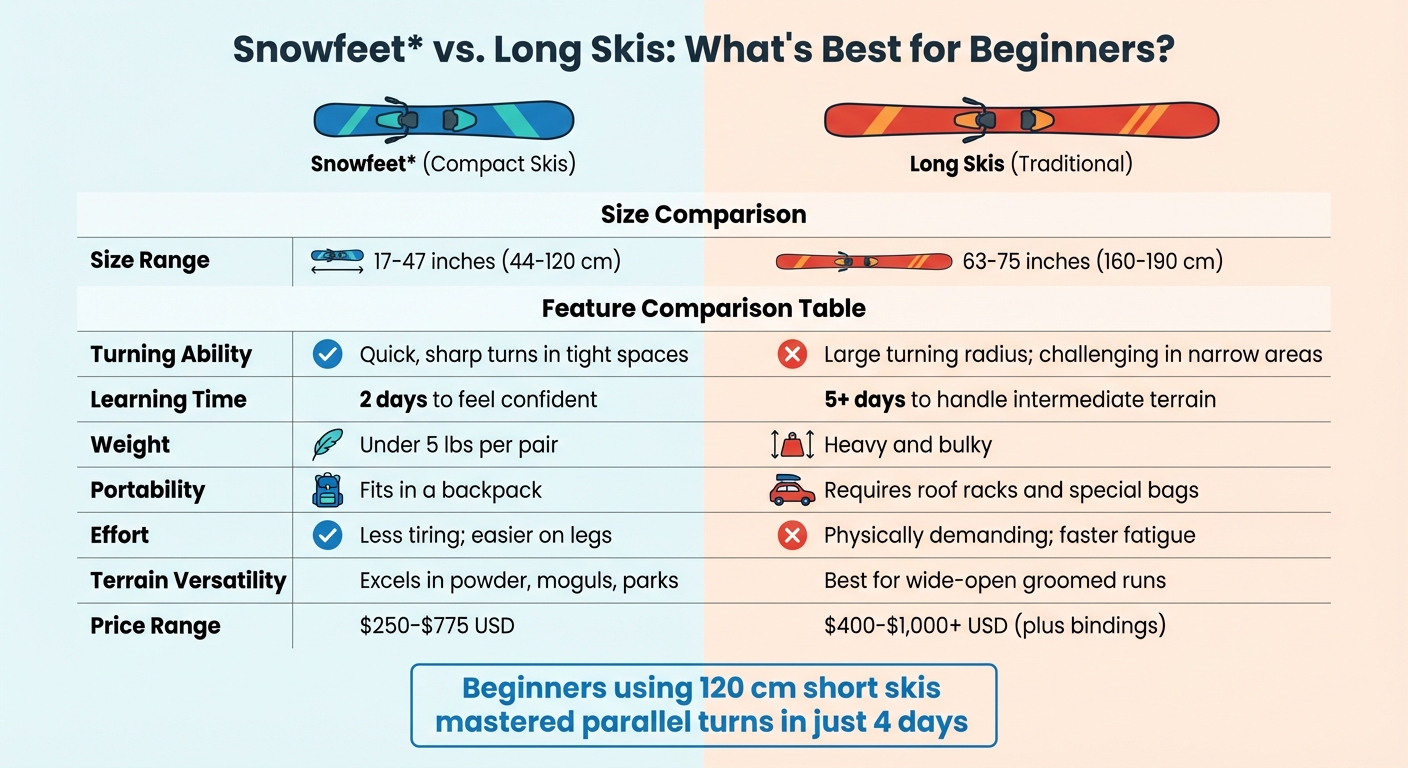
Snowfeet Short Skis vs Long Skis Comparison for Beginners
Snowfeet* offers a completely different experience for beginners compared to traditional long skis. The size difference alone is a game-changer. While long skis are typically 5 to over 6 feet (160-190 cm) in length, Snowfeet* products are much shorter, ranging from 17 inches to 47 inches (44-120 cm). This compact size makes them incredibly convenient. Forget about roof racks or oversized ski bags - Snowfeet* can easily fit into a backpack or your car’s trunk, making them ideal for quick getaways or hopping between resorts.
When it comes to learning, traditional skis can feel like a steep hill to climb - literally and figuratively. Beginners often need 5+ days to feel comfortable, while Snowfeet* can get you up and running in just 2 days. That means more time enjoying the slopes and less time struggling to find your balance.
Comparison Table: Snowfeet* vs. Long Skis
| Feature | Snowfeet* (44-120 cm) | Long Skis (160-190 cm) |
|---|---|---|
| Turning Ability | Quick, sharp turns in tight spaces | Large turning radius; challenging in narrow areas |
| Learning Time | 2 days to feel confident | 5+ days to handle intermediate terrain |
| Weight | Under 5 lbs per pair | Heavy and bulky |
| Portability | Fits in a backpack or daypack | Requires roof racks and special bags |
| Effort | Less tiring; easier on legs | Physically demanding; faster fatigue |
| Terrain Versatility | Excels in powder, moguls, parks | Best for wide-open groomed runs |
| Price Range | $250-$775 USD | $400-$1,000+ USD (plus bindings) |
Snowfeet* makes learning smoother by helping you develop an athletic stance and build confidence naturally. You’ll spend less time wiping out and more time actually enjoying the slopes. For beginners, that’s exactly how skiing should feel.
Best Snowfeet* Products for Beginners
If you're new to skiing, shorter skis can make the learning process much easier. Snowfeet* has two excellent options designed to simplify skiing for beginners.
Snowfeet* Skiskates (44 cm): Perfect for Quick Learning
Priced at $575, the Snowfeet* Skiskates are a fantastic choice for mastering the basics. Measuring just 17 inches (44 cm), these are the shortest skis Snowfeet* offers, making them super easy to control. Their compact size allows for sharp, quick turns without requiring flawless technique - a big plus when you're still working on balance and form.
The shorter turning radius means you can ski at slower speeds while staying in full control. This makes the learning curve much less intimidating, allowing you to focus on improving without feeling overwhelmed by your equipment.
If you're looking for more versatility as your skills grow, you might want to check out Snowfeet* Skiblades.
Snowfeet* Skiblades (65 cm): Versatile and Beginner-Friendly
Starting at $635, Snowfeet* Skiblades are a great option for those ready to explore a variety of terrains. At 26 inches (65 cm), they’re still short enough for easy handling but offer added stability for more adventurous skiing. Whether you're on groomed runs, tackling park features, or enjoying fresh powder, these Skiblades have you covered.
Built with durable materials and available in different designs, they’re perfect for beginners who want gear that grows with them. With Skiblades, you'll spend less time struggling with your equipment and more time refining your skills in diverse conditions.
Conclusion
Learning to ski doesn’t have to feel like a wrestling match with your gear. Traditional long skis often weigh beginners down, making turns harder and progress slower. Snowfeet* products change the game by offering shorter, lighter options that move with you effortlessly.
With Snowfeet* Skiskates (17 inches) and Skiblades (26 inches), you get the freedom to build confidence through better control. Their shorter size allows for easier turning, smoother pivots, and more control at slower speeds. In fact, beginners using 120 cm short skis managed to master parallel turns in just four days. The right gear truly makes a difference.
This added control means fewer wipeouts and more fun on the slopes. Whether you go for Skiskates or Skiblades, you’re choosing equipment that adapts to your growing skills, helping you enjoy skiing instead of battling it. Spend less time falling and more time carving up the mountain.
The choice is clear: stick with traditional skis and a tough learning curve, or switch to Snowfeet* and discover how skiing should feel right from the start. Short skis aren’t just easier - they’re the smarter way to begin your skiing adventure. Snowfeet* has made beginner skiing simpler and more enjoyable with thoughtful, user-focused design.
FAQs
What size Snowfeet* should a beginner choose?
For those just starting out, shorter options like the 44 cm Snowfeet* Skiskates or the 65 cm Snowfeet* Skiblades are a great choice. Their compact size makes them easier to control and quicker to get the hang of, which is perfect for beginners.
Do Snowfeet* work with regular ski boots?
The current information doesn't clarify if Snowfeet* work with regular ski boots. To get the most accurate details, check the product specifications or reach out to the manufacturer directly to confirm fit and compatibility.
Are short skis stable enough at higher speeds?
Short skis, like Snowfeet Skiblades and Skiskates, are all about easy handling and quick learning - perfect for beginners. While longer skis are often associated with better stability at high speeds, Snowfeet products strike a balance between stability and agility, making them ideal for casual skiing. With lengths ranging from 44 cm to 120 cm, these shorter skis are easier to control and safer to use, even when picking up speed. They're a great option for those just starting out!











Leave a comment
This site is protected by hCaptcha and the hCaptcha Privacy Policy and Terms of Service apply.