



















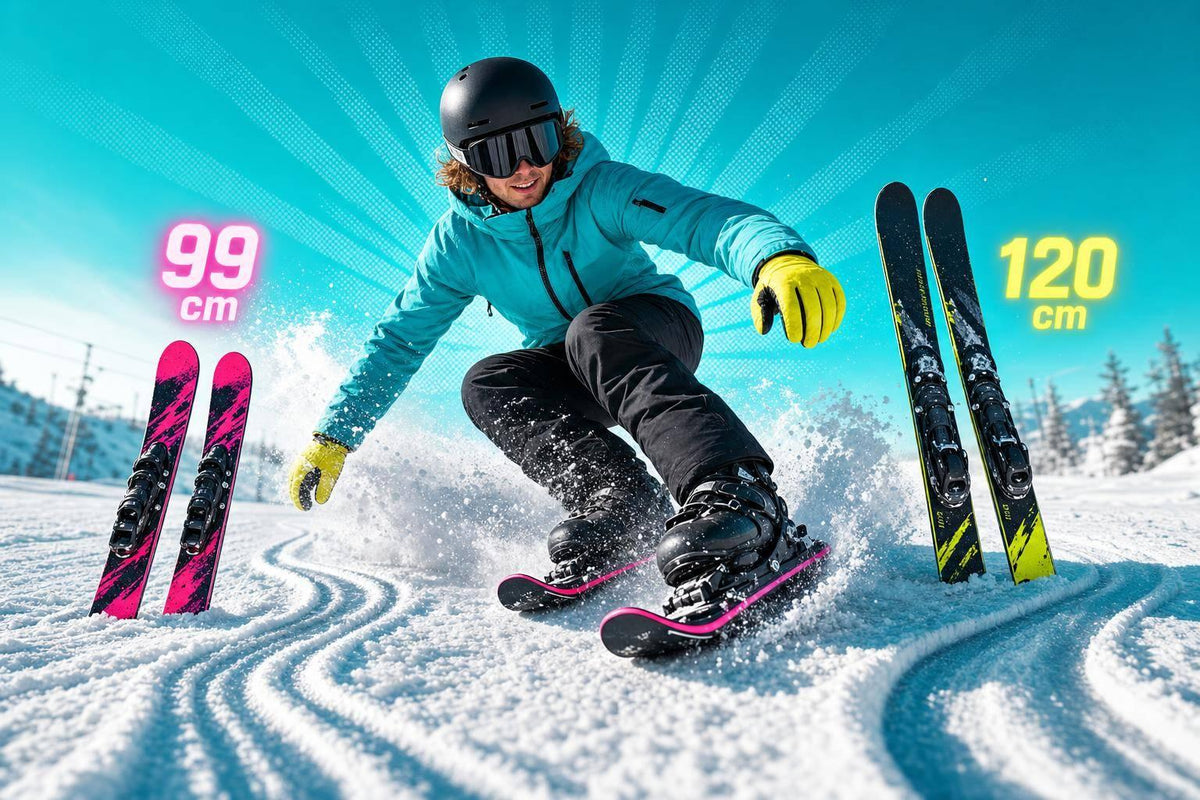
If you want easy turns and a short learning curve, pick 99 cm. If you want more grip and a calmer ride at higher speed, pick 120 cm.
That’s the whole call in one line.
I’d put it like this:
- 99 cm = better for beginners, park laps, tight runs, and travel
- 120 cm = better for groomers, smoother turns, and stronger skiers
- Both are far shorter than standard adult skis, which often run 160 to 180 cm
- Price gap: $690 vs. $950, or $260 more for the 120 cm model
So, you’re not picking good vs. bad. You’re picking playful and easy vs. more stable and planted. That’s it.
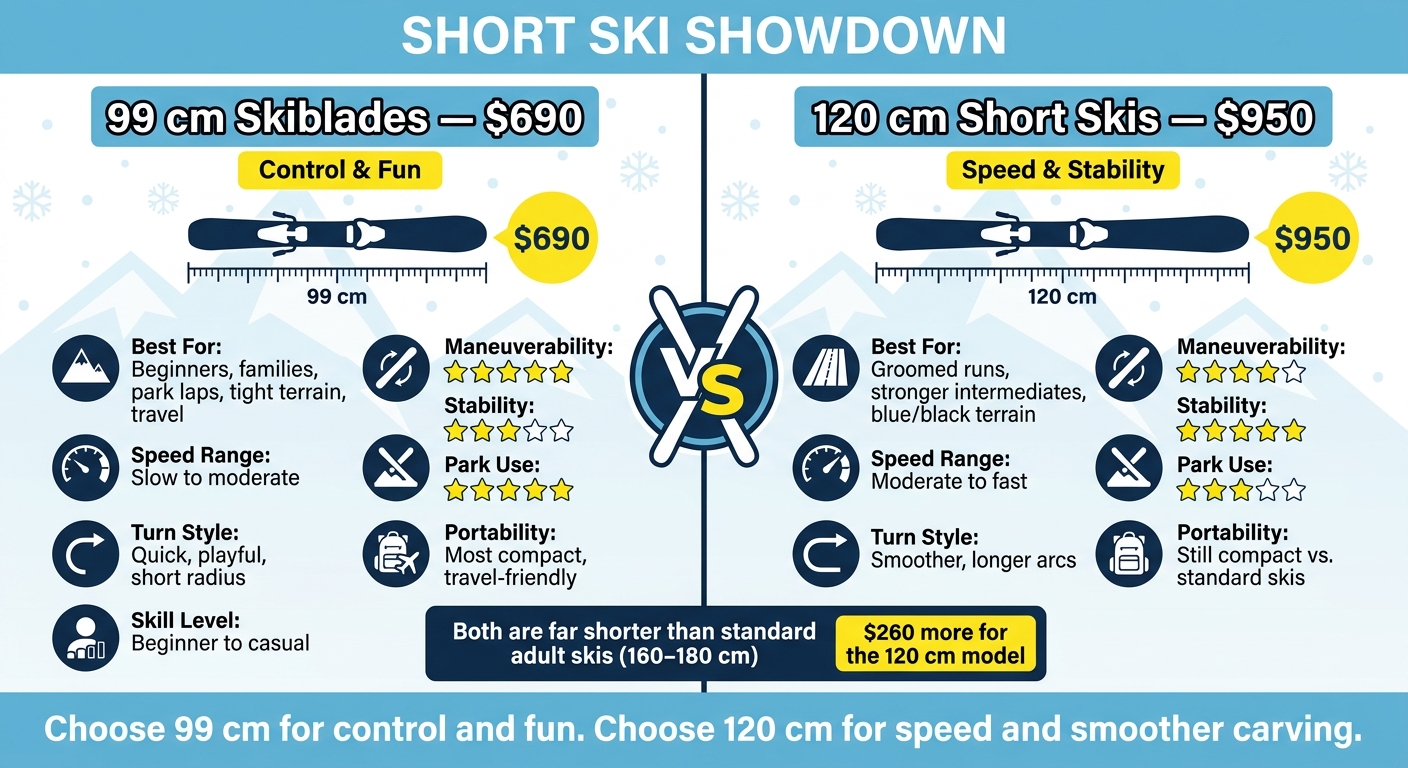
99 cm vs 120 cm Short Skis: Side-by-Side Comparison
ULTIMATE SHORT SKIS 🔥 Snowfeet Skiblades 99 cm | Unboxing & First Look
Quick Comparison
| Ski length | Best for | Speed feel | Turn feel | Skill level | Price |
|---|---|---|---|---|---|
| 99 cm | Beginners, families, park, travel | Slow to moderate | Short, fast, playful | Beginner to casual | $690 |
| 120 cm | Groomed runs, stronger intermediates | Moderate to fast | Smoother, calmer | Intermediate and up | $950 |
A few things stood out to me from this comparison:
- The 99 cm ski is the easier pick if you want less effort in tight spots
- The 120 cm ski gives you more edge contact, which helps on blue and black groomers
- The 120 cm pair weighs about 3.5 to 4 lb, so it’s still light for resort use
- If you ski like most casual riders in the U.S., either size will feel less bulky than full-length skis
My short take?
Buy 99 cm for control and fun. Buy 120 cm for speed and smoother carving. Simple, clean, done :)
If you’re stuck between the two, think about where you ski most: tight and mellow terrain or open groomed runs. That answer usually points to the right length fast.
Helpful ski videos:
Snowfeet* 99 cm vs 120 cm: side-by-side comparison
Use this comparison to match ski length to your terrain, speed, and confidence level. Here’s the quick read on where each length comes out ahead:
| Factor | 99 cm (Skiblades) | 120 cm (Short Skis) | Best for |
|---|---|---|---|
| Maneuverability | ⭐⭐⭐⭐⭐ Quick turns | ⭐⭐⭐⭐ Smooth, composed turns | Tight terrain, park laps, travel, beginners → 99 cm |
| Stability | ⭐⭐⭐ Playful, compact feel | ⭐⭐⭐⭐⭐ More stable at speed | Groomers, speed, more planted feel → 120 cm |
| Speed comfort | Moderate speeds | Higher speeds, groomed runs | Groomers at pace → 120 cm |
| Carving feel | Short, snappy arcs | Longer, smoother arcs | Flowing carves → 120 cm |
| Park use | ⭐⭐⭐⭐⭐ Easier spins and jumps | ⭐⭐⭐ Usable in park, but less park-friendly than 99 cm | Freestyle → 99 cm |
| Learning curve | Easier entry, very forgiving | Slightly more stable for faster beginners | First-timers → 99 cm |
| Portability | Most compact, travel-friendly | Still compact vs. standard skis | Travel days → 99 cm |
Maneuverability, turning, and low-speed control
The 99 cm Skiblades turn almost right away. It doesn’t take much effort to point them somewhere else, which is a big plus on tight groomer turns, crowded lift lines, narrow runs, and moguls where fast reactions matter most.
The 120 cm Short Skis still turn much more easily than standard skis. The big difference is feel. They’re calmer underfoot - less twitchy, more deliberate. If the 99 cm feels a little too eager for your taste, the 120 cm gives you a more settled ride without losing the perks of a short ski.
Stability, carving feel, and speed confidence
The 120 cm ski has more edge contact, so it feels steadier on groomed runs. Longer carving arcs feel more predictable, and the ski doesn’t seem like it wants to dart around under you. That added stability is a big reason intermediate skiers who like more speed often lean this way.
At moderate speeds, the 99 cm’s short, snappy arcs feel fun and playful. Open it up on faster descents, though, and the 120 cm starts to feel more planted and easier to trust.
Park use, learning curve, and portability
The 99 cm is easier to toss around. Spins feel more natural on a shorter platform, small jumps feel less intimidating, and hauling them through a parking lot or sliding them into a compact car is just plain easier.
The 120 cm Short Skis weigh about 3.5–4 lb per pair - still very light, just a bit less compact than the 99 cm.
With the tradeoffs clear, the next sections break down which rider should choose each length.
sbb-itb-17ade95
Why choose Snowfeet* 99 cm short skis
The Snowfeet* Skiblades 99 cm ($690) make more sense if you care most about control, quick turns, and easy handling. In this matchup, that makes them the control-first pick.
Best for beginners, casual riders, and families
The 99 cm length reacts to small movements, so beginners can spend less time fighting the skis and more time just skiing. That shorter size also means less lag between what you do and how the skis respond. For newer riders, that can feel a lot less stressful.
Families and groups with mixed skill levels also tend to like the more forgiving feel. It’s easier to manage, easier to turn, and, well, just less work.
Best for tight terrain, park laps, and travel
Tighter East Coast runs and many Midwest resorts reward fast direction changes, and that’s where the 99 cm shines. It feels at home in spots where a longer ski can seem like a bit much.
In the terrain park, the shorter platform works well for lap after lap and a more playful ride. And once the day’s done, the compact size makes the 99 cm Skiblades much easier to pack, carry, and travel with.
Pick the 99 cm if quick handling matters more than a calmer, more planted ride.
If you want more speed confidence and a steadier ride, compare it with the 120 cm option next.
Why choose Snowfeet* 120 cm short skis
If the 99 cm is the quick-turn pick, the 120 cm is the calmer one. The Snowfeet* Short Skis 120 cm are a good match for riders who want the easy-to-carry feel of short skis, but with more grip and calm on groomers. Compared with the 99 cm, you give up some snap in tight turns and get more stability in return.
Best for faster groomer runs and stronger intermediates
If you can already turn with ease and want to ski faster on blue or black runs, the 120 cm makes more sense. The longer platform gives you more support as speed picks up, and it feels steadier underfoot.
Best for riders who want more control in a short ski
It still stays compact for travel, but it feels more planted than the 99 cm, most of all on steeper groomers. So if you want more confidence at speed without jumping to full-length skis, the 120 cm is the better fit.
That’s the tradeoff the final verdict comes down to: control or speed confidence.
Final verdict: which size should you buy
After looking at maneuverability, stability, and park use, this choice is pretty simple: control-first or speed-first skiing.
Go with 99 cm if you want easy handling and quick control. Go with 120 cm if you want more stability and feel better skiing faster.
Choose 99 cm if control and convenience matter most
The Snowfeet* Skiblades 99 cm ($690) are the better fit if you ski at slow to moderate speeds, ride at smaller resorts, or like to mix in some park laps. They’re a good match for beginners, casual riders, and families because they feel forgiving and make speed control much easier.
If you want a short ski that feels simple from the first run, this is the one :) It’s easier to turn, easier to slow down, and less work in tight spots.
Choose 120 cm if speed and stability matter more
The Snowfeet* Short Skis 120 cm ($950) make more sense if you’re a stronger intermediate skier who spends most of the day on groomed blue and black runs and likes to keep speed up. The extra length gives you more edge contact and a calmer, less twitchy feel on groomed snow.
So, if your idea of a good day is laying down smoother turns on open runs, the 120 cm model will likely feel better underfoot.
Here’s the fastest way to pick:
| 99 cm | 120 cm | |
|---|---|---|
| Best speed range | Slow to moderate | Moderate to fast |
| Best terrain | Small resorts, parks, tight runs | Wide groomed runs, blue/black |
| Skill level | Beginner to casual | Intermediate and up |
| Turn style | Quick, playful, short radius | Smoother, longer turns |
If you want the easiest short ski to live with, pick 99 cm. If you want the short ski that feels more planted at speed, pick 120 cm.
For most casual riders in the U.S., Snowfeet* short skis are easier to manage and a better match for normal resort speeds than full-length skis.
FAQs
How do I choose between 99 cm and 120 cm if I’m still progressing?
It comes down to what kind of ride you want.
The 99 cm Snowfeet Skiblades are a strong all-around pick if you're moving from beginner to intermediate. They hit a nice sweet spot between easy turning and solid stability.
Go with the 120 cm Short Skis if you want more speed, cleaner carving, and a steadier feel on mixed terrain. They give you more edge control and stability than the 99 cm option, but they’re still easier to handle and carry than full-length skis.
Will 120 cm short skis feel too demanding for a beginner?
No. While 120 cm short skis are the longest option in the Snowfeet lineup, they still feel much easier to turn and handle than standard long skis.
That bit of extra length gives you more stability and a bit more speed, but the skis still keep that easy, user-friendly feel. So if you're new to skiing, you can build confidence and stay in control without dealing with big, clunky gear.
Are 99 cm short skis stable enough for groomed resort runs?
Yes. 99 cm short skis are stable enough for groomed resort runs and are a strong all-around pick.
They hit a nice middle ground between easy turning and the steady feel you want for cruising and carving. Compared with shorter models, they give you more edge contact for steering and braking, which helps a lot on packed resort snow.
Snowfeet 99 cm skis also stay light and responsive, so intermediate riders often feel more in control as speed builds on typical resort terrain.











Leave a comment
This site is protected by hCaptcha and the hCaptcha Privacy Policy and Terms of Service apply.