



















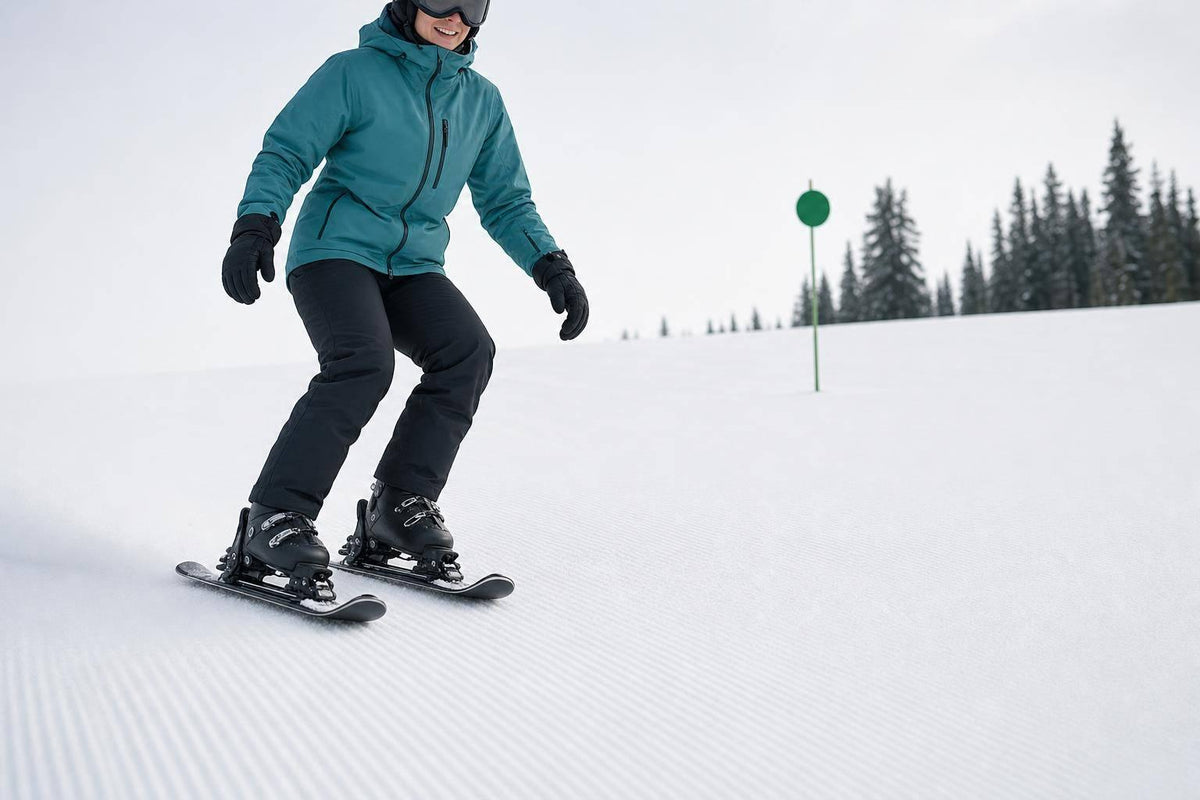
Yes - for many first-timers, 65 cm skiblades are a smart first buy. If you want easy turns, simple stops, and fun laps on groomed green runs, they make a lot of sense. At 65 cm (25.6 in.), they sit in the middle: more steady than 44 cm skiskates, but less work than 99 cm skiblades.
Here’s the short version:
- Best for: total beginners, casual resort riders, skaters, hockey players, teens, and adults
- Works best on: groomed green runs, bunny hills, short blue runs
- Less ideal for: steep terrain, powder, icy days, and higher speeds
- Boots: ski boots for 65 cm and 99 cm; 44 cm can work with winter boots or snowboard boots
- Price: about $590, which is close to 9 to 15 U.S. rental days
If I had to sum it up in one line: 65 cm is the middle-ground pick for beginners who want fun first, not a fight with long skis. The trade-off is simple - as speed goes up, that short platform can feel a bit loose.
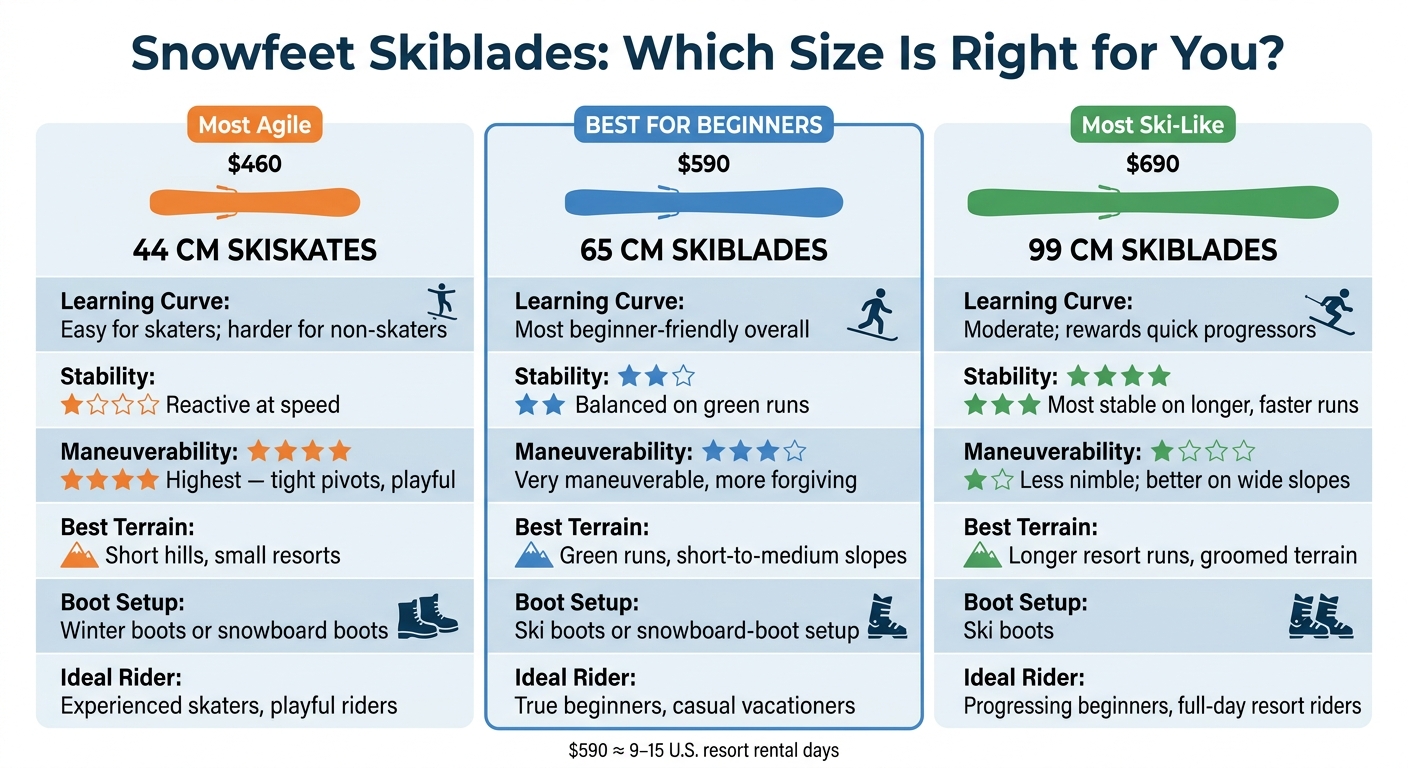
Snowfeet Skiblades Size Comparison: 44cm vs 65cm vs 99cm
Snowboarder tries Snowfeet* | Which Snowfeet* Short Ski is the Best? | Snowblades 44, 65, 99 Review
Quick Comparison
| Option | Best For | Feel | Best Terrain | Boot Setup | Starting Price |
|---|---|---|---|---|---|
| 44 cm Skiskates | Skaters, hockey players, playful riders | Very nimble, less planted | Small hills, short laps | Winter boots or snowboard boots | $460 |
| 65 cm Skiblades | Total beginners, casual resort riders | Easy to turn, easy to stop | Green runs, bunny hills, short blue runs | Ski boots or snowboard-boot setup | $590 |
| 99 cm Skiblades | Fast learners, longer resort laps | More planted, more ski-like | Longer groomed runs, easy blues | Ski boots | $690 |
So, if you’re picking your first setup and want the shortest path to smiling on snow :) 65 cm is the safer bet for most beginners. Go shorter if you skate a lot. Go longer if you want more control as speed builds.
How 65 cm Snowfeet* Skiblades Feel for Total Beginners
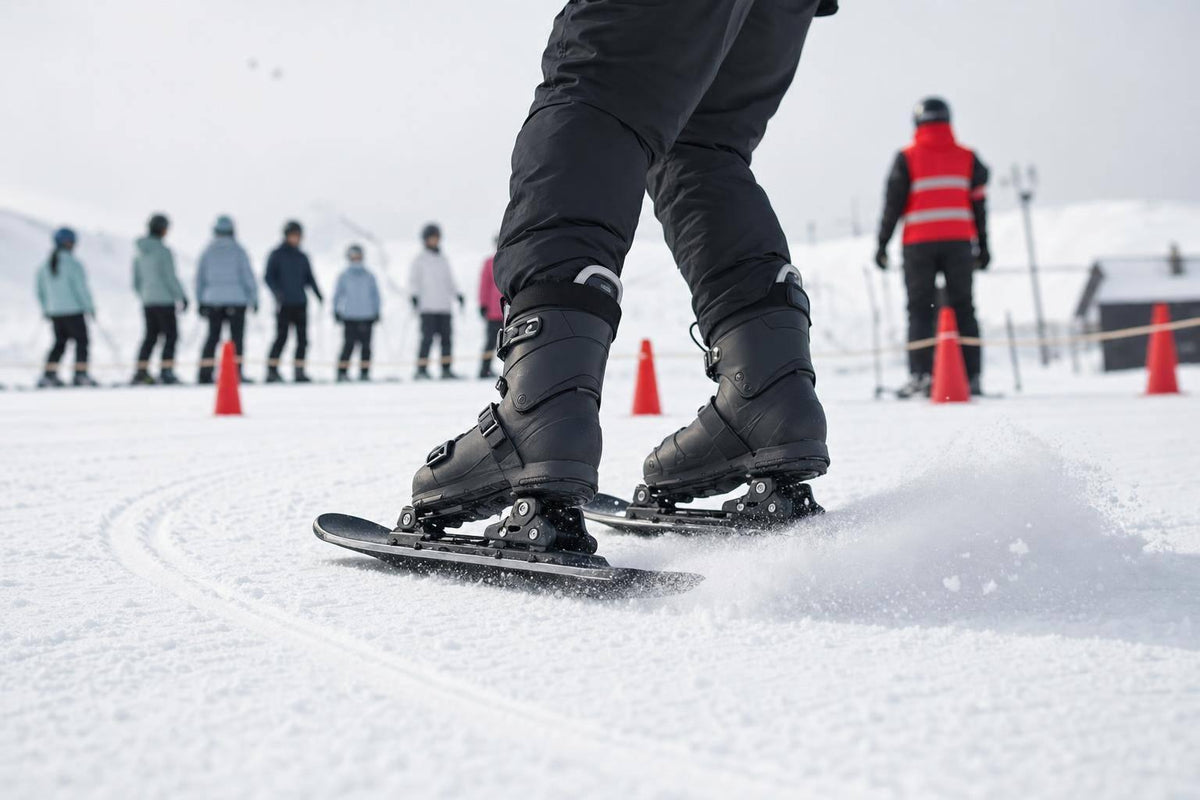
On mellow groomed runs, 65 cm Skiblades tend to feel easy to pick up and simple to steer for first-time riders. You can feel that fast learning curve most when you start turning and stopping.
Why turning and stopping tend to feel easier
Compared with full-length skis, a shorter blade responds to small foot movements instead of big whole-body shifts. A slight move at the ankle or knee can point the blade in a new direction fast, so early turns often feel less intimidating.
Stopping tends to feel simpler too. A basic snowplow or hockey-style stop usually takes less effort, which helps you slow down with more control. The short length also makes tip catches less likely, and that can save beginners from those awkward “whoa, not like that” moments :). Still, that same fast response affects how the blades feel once you start going faster.
Balance and confidence: easier to manage, less stable at speed
At slow speeds and in gentle turns, the blades support a centered stance, with your feet under your hips. They’re also light, so they feel easy to adjust and less tiring on short runs.
There’s a catch, though. Fast weight shifts can lead to sharper turns than you meant to make. And when speed picks up on steeper or icier terrain, the short edge feels less planted. That’s why 65 cm works best on groomed green runs and bunny hills at slow to moderate speeds.
That tradeoff matters a lot when you’re picking a length, especially if you’re weighing 44 cm against 99 cm.
sbb-itb-17ade95
65 cm vs. 44 cm vs. 99 cm: Which Snowfeet* Length Fits You Best?
The 65 cm model lands right between the ultra-short 44 cm Skiskates and the longer 99 cm Skiblades. For most first-timers, that makes it the safest bet. You get a nice middle ground: more support than 44 cm, but less bulk than 99 cm.
Once you line the three sizes up side by side, the tradeoff is pretty clear.
When 44 cm Skiskates are the better pick
The Snowfeet* Skiskates 44 cm start at $460 and fit best for riders who already have skating or hockey experience. They react fast and reward good edge control. Out of the three, 44 cm is the most agile. That makes it fun for tight pivots, small hills, and playful laps.
A nice perk: they work with regular winter boots or snowboard boots. So if you want to skip ski boot rentals, that’s a big plus.
The downside is simple. If you don’t have a skating background, the short platform feels less planted at speed. For a beginner, that can get a little sketchy, fast.
When 65 cm is the best first choice
Go with 65 cm if you want the smoothest learning curve without giving up too much control or mobility. The added length gives you more edge contact on the snow, which helps a lot when you’re learning snowplow stops, sideslips, and easy turns.
It also feels easier to manage than the 99 cm in crowded beginner zones. If you’ve ever tried to turn long gear in a busy learning area, you know the deal - shorter can feel a lot less awkward.
At $590, the 65 cm option sits right between the 44 cm and 99 cm models on price too.
When 99 cm is worth choosing instead
The Snowfeet* Skiblades 99 cm start at $690. They make more sense if you think you’ll improve fast, want to cruise longer resort runs, or like a feel that’s closer to standard skis.
That extra length helps smooth out rougher snow, track straighter at moderate speed, and feel more comfortable on easy blue runs than the shorter models. The tradeoff is that they take a bit more work at the start and feel less quick in tight spaces.
Pick 99 cm if you want a more ski-like ride, longer runs, and gear you can stick with as your skills build.
| 44 cm Skiskates | 65 cm Skiblades | 99 cm Skiblades | |
|---|---|---|---|
| Learning curve | Easy for skaters; harder for non-skaters | Most beginner-friendly overall | Moderate; rewards quick progressors |
| Stability | Reactive at speed | Balanced on green runs | Most stable on longer, faster runs |
| Maneuverability | Highest - tight pivots, playful | Very maneuverable, more forgiving | Less nimble; better on wide slopes |
| Best terrain | Short hills, small resorts | Green runs, short-to-medium slopes | Longer resort runs, groomed terrain |
| Boot setup | Winter boots or snowboard boots | Ski boots | Ski boots |
| Ideal rider | Experienced skaters, playful riders | True beginners, casual vacationers | Progressing beginners, full-day resort riders |
So, boot setup, terrain, and price are what tip the scale here. That’s what decides if the 65 cm middle option makes sense for your first day on snow.
Boots, Terrain, and Price: What U.S. Buyers Need to Know
Once you’ve looked at 65 cm skiblades next to shorter and longer options, three things matter most: boots, terrain, and price.
Best boots and setup for beginners
65 cm Skiblades come with either ski-boot bindings or snowboard-boot bindings. For most first-time resort riders, ski-boot bindings are the easiest and safest pick. Many U.S. resort rental shops carry ski boots, so you can grab a pair on-site and skip hauling extra gear.
Already own snowboard boots? Then the snowboard-boot setup can work well too. The softer flex can feel a bit easier on your ankles during long practice sessions. But here’s the big thing: don’t use boots with weak ankle support. On short skiblades, that support matters a lot when you’re trying to stay in control at beginner speeds.
Best terrain for 65 cm skiblades and where they fall short
These skiblades are made for groomed green runs, short blue runs, and small resort hills. Their short length makes turning feel simple, which is a big plus on learning terrain. They also fit smaller Midwest and East Coast hills well, where groomed corduroy and short laps are common.
They’re not the best pick for:
- Powder
- Steep descents
- Icy runs
On that kind of terrain, longer skis usually hold better and feel more steady. That’s the main trade-off. 65 cm works well for beginner resort laps, but not for every kind of snow day.
Is $590 worth it for a first-time rider?
At $590, 65 cm Skiblades cost about the same as 9 to 15 days of beginner rentals at a U.S. resort. So, if you plan to ride more than a few days each season, the math starts to make sense.
There’s also the convenience factor. These skiblades fit in a car trunk, take up very little room at home, and are easy to carry. That may sound small, but after a long day on the hill, small wins count :)
Best for: casual riders who expect a handful of trips each winter and want gear that’s easy to carry, fun to use, and beginner-friendly.
Skip it if: you’ll only ride once, or you want the feel of long skis right away. In that case, renting makes more sense.
Those trade-offs set up the final call on who should buy 65 cm first.
Conclusion: Who Should Buy 65 cm Skiblades First
After looking at length, boots, and terrain, the choice comes down to one simple thing: how you want your first day on snow to feel.
Rider profiles that fit 65 cm best
65 cm Skiblades suit beginners who want an easy, playful first ride instead of a classic ski-learning path.
| Rider Type | Why 65 cm Works |
|---|---|
| Beginner resort riders | Easy to turn, easy to stop, great for short groomed runs |
| Teens and adults with skating or hockey experience | Skating-style movement makes 65 cm feel natural right away |
| Anyone who values portability | Compact and easy to carry and transport |
If you come from skating or hockey, this length tends to click fast. The movement feels familiar, which can take a lot of stress out of day one.
When to skip 65 cm and choose a different setup
If your goals don’t match that profile, a different length will make more sense.
65 cm isn’t the best pick for every beginner. If your main goal is speed, steep runs, or learning classic downhill skiing mechanics, this length can start to feel limiting pretty fast.
Snowfeet* Skiblades 99 cm are a better pick if you want:
- More stable control
- More confidence at higher speeds
- A smoother path toward conventional skiing
If you want the most compact, skate-like setup, Snowfeet* Skiskates 44 cm are the better option. They’re the most nimble choice and make the most sense if portability, quick tricks, or a stronger skating background matter more than a ski-like feel.
Buy 65 cm for easy, playful laps on short groomed runs. Choose 99 cm or traditional skis for speed, steeper terrain, or a more classic ski feel.
FAQs
Do 65 cm skiblades need lessons?
No. 65 cm Snowfeet Skiblades don’t call for old-school ski lessons.
Their short, light, quick-to-respond design helps most beginners pick up the basics of balance, stopping, and turning in as little as five minutes to two hours.
Compared with longer skis, they usually feel easier to control and less punishing. That means a faster, more natural learning curve and a nice confidence boost for first-timers.
Can I use 65 cm skiblades all day?
Yes. 65 cm Snowfeet Skiblades are light, responsive, and comfy enough for a full day on packed snow, groomers, moguls, and terrain parks.
Because they’re so light, your legs don’t get worn out as fast. And since they turn so easily, it’s much simpler to make quick, controlled moves and slip through busy resort traffic than it is with long, heavy skis.
How fast can beginners safely go on 65 cm skiblades?
For beginners, Snowfeet 65 cm Skiblades* are built for low-speed control and confidence on easy terrain. They feel quick underfoot and are easy to turn when you're moving at a mellow pace.
That short length is great at first. It helps new riders make simple turns without fighting the skis. Think of them like a small car in a parking lot: easy to steer, easy to manage, and not intimidating.
As speed picks up, though, that same short size starts to work against you. They become less stable, and many riders will notice some chatter once they get above about 20–25 mph. So, yes, they can be a solid pick for learning, but they’re happiest when you keep things calm and controlled.











Leave a comment
This site is protected by hCaptcha and the hCaptcha Privacy Policy and Terms of Service apply.