




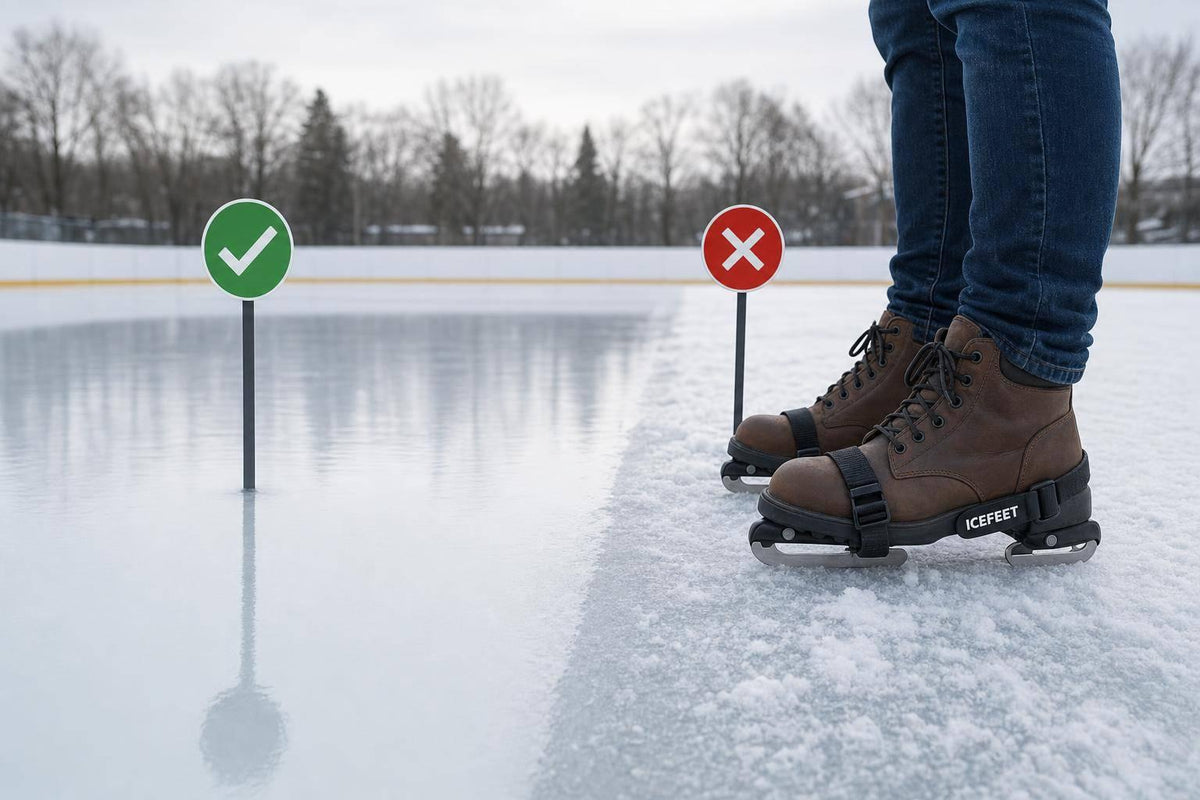
Yes - but only on a smooth, open, maintained rink that allows them. If the ice is rough, snowy, cracked, slushy, or crowded, I’d skip Icefeet and use regular skates instead.
Here’s the short version:
- Use Icefeet on: cleared outdoor rinks with flat, solid ice
- Don’t use Icefeet on: ponds, lakes, rough backyard ice, or messy public sessions
- Check first: rink rules, boot fit, straps, blade condition, and surface quality
- Best for: slow glides, easy turns, and casual fun
- Not for: hockey stops, fast skating, spins, jumps, or weaving through people
Icefeet have short double blades, so they can feel steady at low speed. But they also give you less control than hockey or figure skates. That trade-off matters more outdoors, where ice can change from one patch to the next.
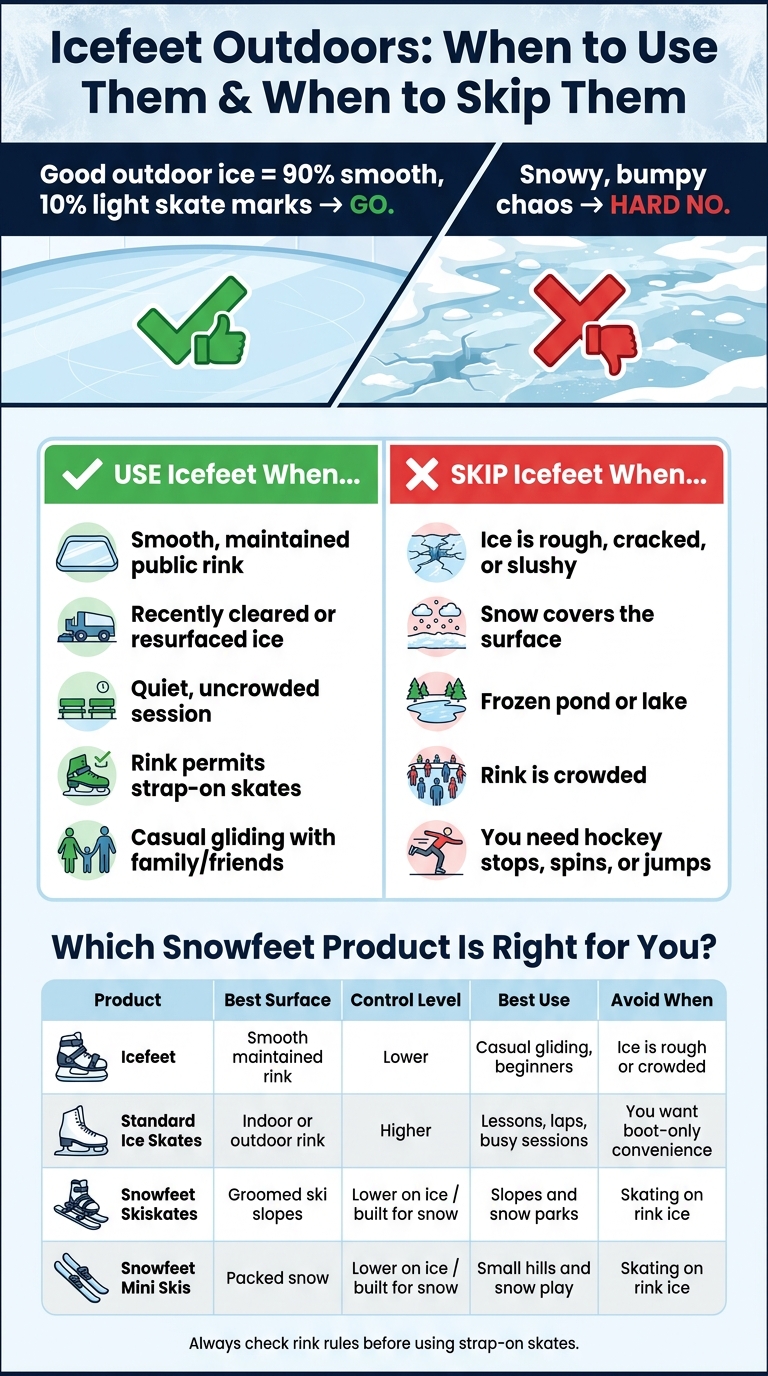
A good rule? If the rink looks like 90% smooth ice and 10% light skate marks, you’re probably fine. If it looks like snowy, bumpy chaos, it’s a hard no. Outdoor ice is already less forgiving, and short blades don’t hide mistakes. They put them on display :)
If I were advising a friend at the rink, I’d say this: Icefeet are fine for casual gliding on clean outdoor ice, but they’re not a fix for bad conditions. Smooth surface first. Tight boot fit second. Common sense all the time.
For a quick visual guide:
| Option | Best surface | Control level | Best use | Skip when |
|---|---|---|---|---|
| Icefeet | Maintained outdoor rink | Lower | Casual gliding | Ice is rough, crowded, or not allowed |
| Standard ice skates | Indoor or outdoor rink | Higher | Lessons, laps, busy sessions | You want boot-only convenience |
| Snowfeet* Skiskates | Groomed snow | Lower on ice / made for snow | Slopes and snow parks | You’re skating on rink ice |
| Snowfeet* mini skis | Packed snow | Lower on ice / made for snow | Small hills and snow play | You’re skating on rink ice |
If you want the cleanest answer possible, it’s this: Icefeet can work outdoors, but only when the rink is smooth, open, and approved for that kind of skate.
Icefeet vs. Other Skates: Which Should You Use Outdoors?
Finally… Ice Skates Anyone Can Use!
Best Outdoor Rink Conditions for Icefeet
Icefeet work best on a smooth, level, maintained public rink. The big thing isn’t that the rink is outdoors. It’s that the ice is consistent. If the rink gets cleared after snowfall and resurfaced often, short blades are much easier to control. Still, check the ice before you step on. That quick look can save you a hard fall.
Surfaces That Work Well
A recently cleared or resurfaced outdoor rink is your best bet. Smooth, level ice helps short blades feel more steady and easier to predict. Light skate marks or a little surface grain are usually okay, as long as there’s nothing that might grab the blade out of nowhere.
Here’s what to look for:
- A level skating area
- No ridges
- No cracks
- No loose debris
Regular shoveling and flooding make a huge difference. That’s what keeps outdoor ice usable for short blades. If that upkeep slips, the surface can go from fun to sketchy fast.
Surfaces to Avoid
Rough, cracked, snowy, slushy, or debris-covered ice is not a good match for Icefeet. Snow is one of the biggest problems because it can hide holes, ridges, and cracks. And with short blades, hidden bumps can trip you up fast.
If the ice looks messy, uneven, or soft, don’t push it. Wait until the rink is cleared and fixed.
Outdoor Ice Surface Comparison Table
Use this quick comparison before you step on.
| Outdoor surface | Icefeet suitability | Reason | Recommended action |
|---|---|---|---|
| Smooth, maintained public rink | ✅ Best choice | Level, cleared ice keeps short blades stable. | Use Icefeet cautiously after confirming the rink is open and the surface is solid. |
| Lightly textured outdoor ice | ⚠️ Possible with caution | Shallow marks are manageable, but control is less predictable. | Start slowly near the edge; stop if the blades catch or vibrate. |
| Rough, cracked, snowy, or slushy ice | ❌ Not suitable | Surface defects catch short blades; snow hides hazards. | Wait until the rink is cleared, repaired, and resurfaced. |
| Frozen pond or lake | ❌ Avoid | Natural ice thickness varies; cracks and weak spots may be hidden under snow. | Choose a maintained rink instead. |
How to Set Up Icefeet Safely With Winter Boots
Once you know the ice is smooth enough, the next risk is a loose boot. Boot fit matters. It affects control and safety. And with short blades, small setup mistakes show up fast on outdoor ice. If your boot shifts inside the binding, things can get twitchy in a hurry.
Use a waterproof winter boot with firm ankle support. Skip soft, oversized, or heavily cushioned boots. If your foot can slosh around inside the binding, that’s bad news on ice.
Boot Fit and Binding Check Before You Step on Ice
Attach Icefeet on dry ground. Center each boot in the binding. Set the heel firmly against the rear support. Then press the toe snug against the front strap. Tighten the toe and ankle straps until the boot can’t slide in any direction. The goal is snug, not painfully tight.
Before you head onto the rink, do this quick check:
- Boot centered and heel seated - no gap between the heel and the rear support.
- Straps locked - all buckles and adjustment points fully closed.
- Blades checked - look for bends, cracks, or loose hardware.
- Balance tested on dry ground - shift your weight side to side and lift each foot for a moment; if the binding rocks or the boot twists, adjust it before you go near the ice.
A solid fit gives you the best shot at staying in control once you step onto the ice.
Also, check rink rules before you go. Some places allow only standard skates. If the rink can’t confirm that Icefeet are allowed, use rental skates instead.
With the fit locked in, the next question is what Icefeet can actually do on outdoor ice.
sbb-itb-17ade95
What Icefeet Can and Cannot Do on an Outdoor Rink
Icefeet are recreational strap-on mini skates. They are not a substitute for standard ice skates.
On a maintained outdoor rink, they can handle:
- standing
- short glides
- gentle forward movement
- wide turns
That said, short blades give you less edge control and less stopping power than figure skates or hockey skates. So, they’re best for slow, easy movement. On outdoor ice, the big issue is control, not just the rink surface.
Protective gear is strongly recommended on rougher outdoor ice. Wear a helmet and insulated gloves. For kids and first-timers, add wrist, knee, and elbow pads. Children should stay under the watch of a responsible adult who remains close enough to help during the whole session.
Basic Skills to Practice First
Outdoor ice can change fast. So start small.
Practice standing, gliding, wide turns, and gentle stops first. When you step onto the ice, use the rink barrier or another stable support. Step on one foot at a time. Stand with your feet about shoulder-width apart, keep your knees slightly bent, hold your torso upright, and look ahead, not down at your feet.
Then shift your weight from one foot to the other. Do it slowly. Don’t try to build speed yet.
When that feels steady, try a short glide. Give a light push, move a few feet, then come back to a balanced stance. Once straight glides feel under control, move on to wide turns.
Avoid sharp direction changes.
To stop, ease off pressure, take small steps, and widen your stance. Think of it like slowing down on a slick parking lot, not slamming the brakes on a bike. Use gradual deceleration. Icefeet do not stop like hockey or figure skates.
Once those basics feel steady, the next thing that matters is avoiding outdoor ice that shifts under your blades.
What to Avoid on Outdoor Ice
Outdoor ice can form cracks, ridges, and soft spots between maintenance sessions, and short blades feel those changes right away. Do not skate over cracks, ridges, snow, slush, standing water, or debris. MyHealth Alberta specifically flags pebbles, rocks, branches, bumps, and slushy ice as hazards that need to be cleared before skating.
Surface issues aren’t the only problem. Skip backward skating, weaving through crowds, jumps, spins, hockey stops, and tight turns. These moves need predictable edges, longer blades, and stopping control that Icefeet just don’t have.
If the rink gets crowded, the ice gets rough during your session, or a binding loosens, step off the ice. If that starts to feel too limiting, the next section shows when Snowfeet* Skiskates or mini skis make more sense.
Who Should Use Icefeet and When Other Snowfeet* Products Make More Sense
When Icefeet Are a Good Fit
Icefeet make sense for casual skaters who want a simple, low-commitment way to glide on a smooth, permitted rink. You strap them onto stiff winter boots, which means you don't need to carry or rent a second pair of shoes. That's a nice little win, especially if you're just out for fun with family or friends.
They work best on a quiet community rink or a private backyard rink where the ice is well maintained and the session isn't packed. Think easy laps, light fun, and no pressure.
If you're heading out for hockey, figure skating, speed skating, or a busy public session, go with standard ice skates instead. They give you longer blades, better ankle support, and the kind of edge control Icefeet just can't match.
When to Choose Snowfeet* Skiskates or Mini Skis Instead
If your day is on snow, not ice, switch gear.
Snowfeet* Skiskates 44 cm are built for ski slopes and work with ski boots or snowboard boots.
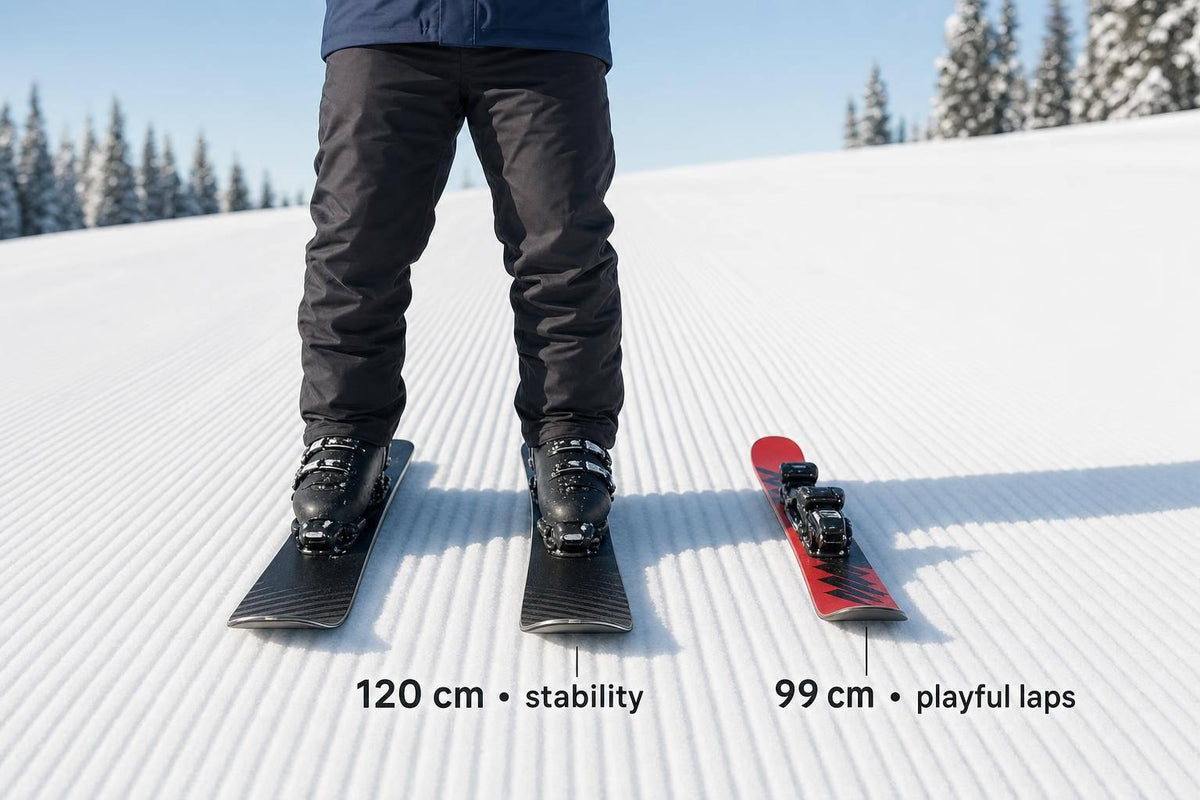
Snowfeet* mini skis are made for packed snow and casual downhill runs.
Pretty simple: ice calls for Icefeet, snow calls for Snowfeet* gear.
Product Comparison Table and Final Recommendation
| Product | Surface | Boot setup | Best use | Main limitation |
|---|---|---|---|---|
| Icefeet | Smooth, maintained ice rink | Stiff winter boots with strap-on bindings | Casual gliding, beginners, families | Less control than standard ice skates; rink permission required |
| Standard ice skates | Indoor or approved outdoor ice | Dedicated skating boots | Hockey, figure skating, lessons, crowded sessions | Less portable; requires dedicated footwear |
| Snowfeet* Skiskates | Groomed snow and ski slopes | Ski boots or snowboard boots | Compact slope riding, snow parks | Not for ice; requires ski or snowboard boots |
| Snowfeet* mini skis | Packed snow, local hills, and winter terrain | Compatible winter shoes or snowboard boots | Casual snow play and short downhill runs | Not designed for ice and less stable than full-length skis |
Here's the quick version:
- Choose Icefeet for a smooth, permitted outdoor rink
- Choose standard ice skates when you want more control or expect a crowded session
- Choose Snowfeet* Skiskates for ski slopes
- Choose Snowfeet* mini skis for packed snow and short downhill runs
FAQs
Are Icefeet good for beginners outdoors?
Yes - Icefeet can be a good outdoor pick for beginners if you want stability and ease of use, not high-speed skating.
Their double-blade design tends to feel steadier than standard skates. And because they strap onto your own winter boots, setup is faster and often more comfortable. That’s a big plus for first-timers who don’t want to mess with stiff skate boots right away.
They work best for casual, low-speed use on smooth, maintained ice. Think relaxed laps, not sharp turns and flashy moves.
They’re not a good fit for:
- Hockey
- Figure skating
- High-speed skating
- Rough ice
- Snowy surfaces
- Slushy surfaces
So, if your goal is simple outdoor fun and a steadier feel, Icefeet make sense. If you want more control, speed, or sport-specific performance, they’ll feel pretty limited.
How do I know if a rink allows Icefeet?
Check with the rink’s management or guest services before you go. Rules for Icefeet and other strap-on skates can change from one place to the next, even when they’re made for casual use on maintained outdoor rinks, community rinks, and frozen ponds.
If you want more flexibility, Snowfeet products are allowed at many ski resorts and outdoor areas. Still, it’s smart to confirm local rules before you head out, mainly for leashes or insurance.
What boots work best with Icefeet?
Icefeet work best with stiff, waterproof winter boots that have a flat sole and good ankle support. The adjustable bindings fit U.S. sizes 4.5 to 14.5, but fit alone isn’t the whole story. A firmer boot keeps your foot locked in better, which helps with steering and edge control.
Skip soft or bulky boots. They can let your foot move around inside the binding, and that makes control feel loose fast. If you want more support and stability - especially if you might head onto slopes later - snowboard boots are a smarter step up than standard winter boots.











コメントを残す
このサイトはhCaptchaによって保護されており、hCaptchaプライバシーポリシーおよび利用規約が適用されます。