




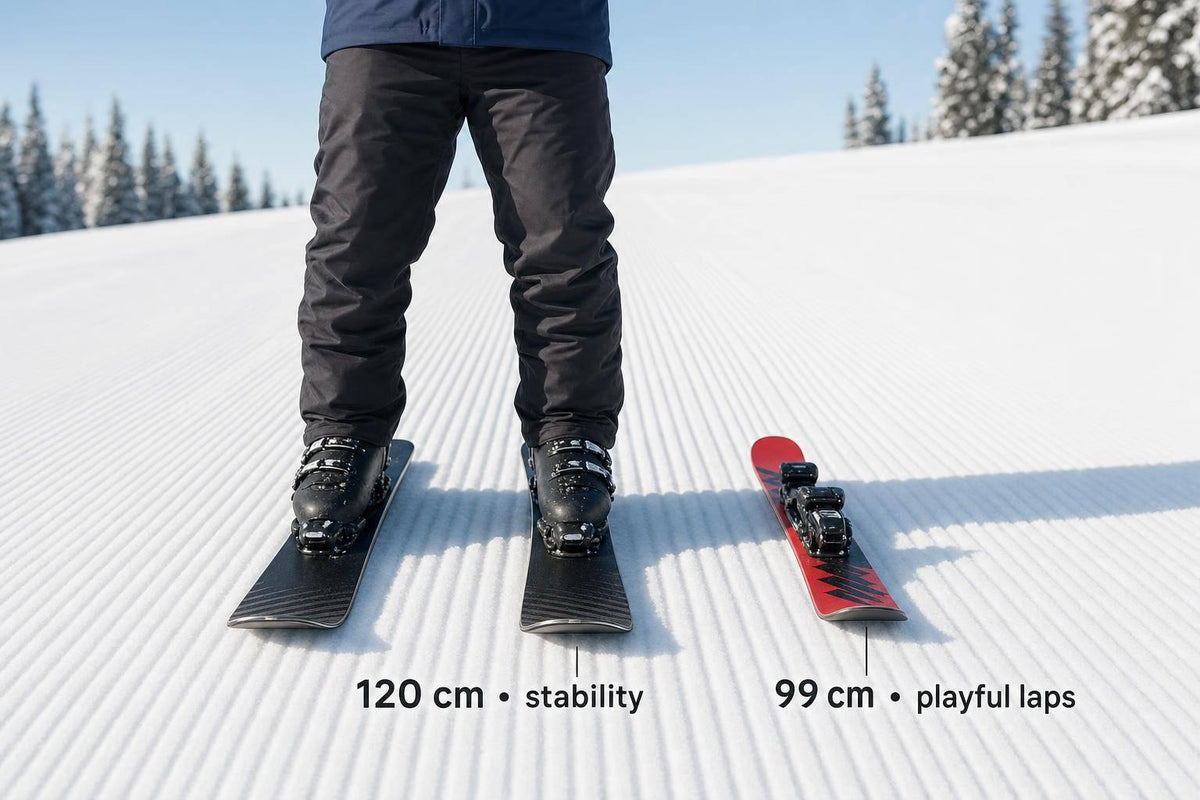
Yes - they can, but only in the right lane.
If I weigh 220+ lbs, short skis tend to work best when I stay on groomers, packed snow, park laps, and mellow resort runs. The best fit usually comes down to 3 things:
- Length: more ski usually means more support
- Flex: soft skis can feel shaky under a heavier load
- Snow type: firm snow is much easier than deep or chopped-up snow
Here’s the plain answer:
- 99 cm short skis are often the starting point for all-around resort use
- 120 cm short skis usually give heavier riders more calm and more grip
- Powder-focused short skis help in soft snow, but they still won’t float like long powder skis
- For fast carving, rough snow, or deep powder, long skis still win
So, if I want a compact setup for moderate speed and fun, short turns, short skis can do the job. If I want to bomb steep runs at speed or surf deep powder, I’d skip the tiny planks and grab more ski :)
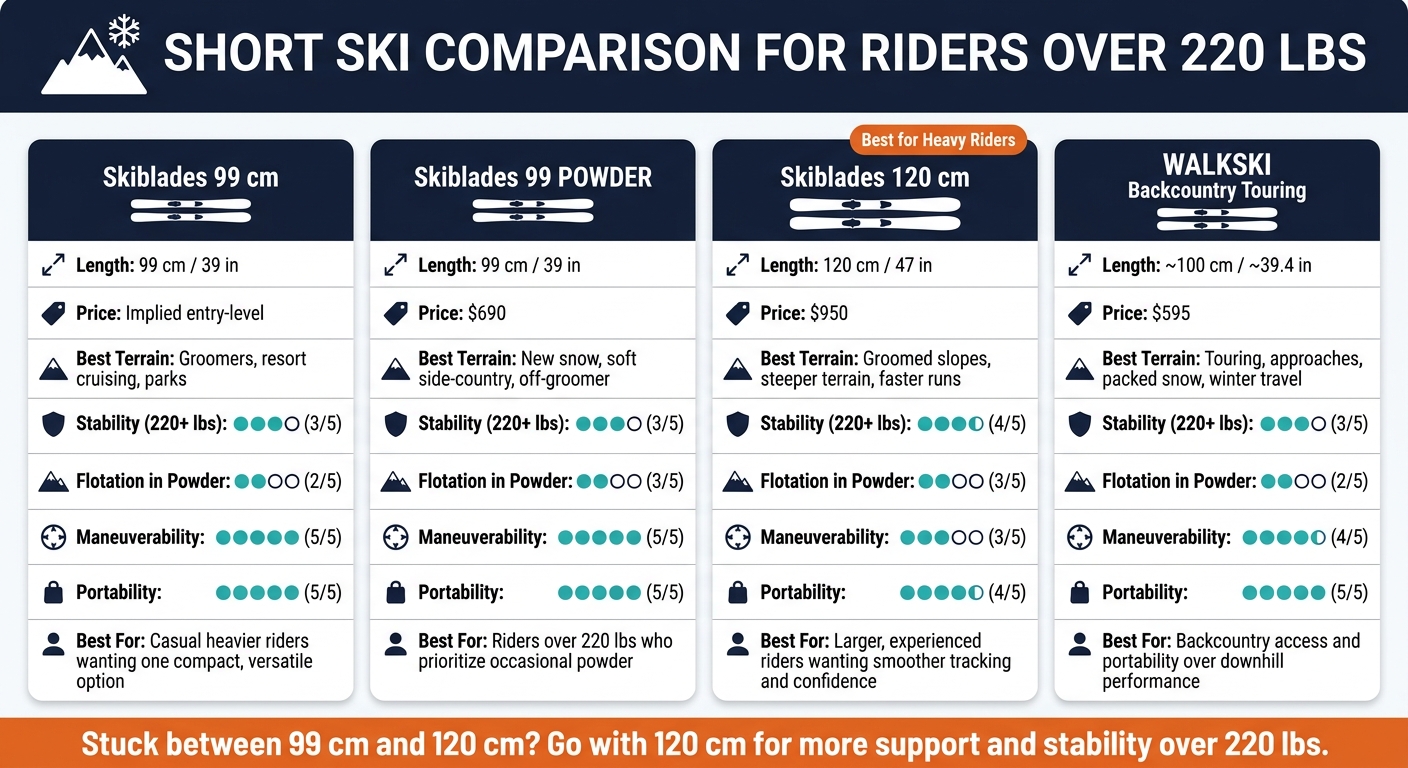
Short Ski Comparison for Riders Over 220 lbs: Which Model Fits Your Ride?
Ultimate Short Skis 🎿 Snowfeet* Skiblades 99 CM
Quick Comparison
| Option | Best Use | Stability for 220+ lbs | Soft Snow | Speed Comfort |
|---|---|---|---|---|
| Snowfeet* Skiblades 99 cm | Groomers, resort laps, park | Medium | Medium-low | Medium-low |
| Snowfeet* Skiblades 99 POWDER | Soft snow, side trails | Medium | Medium | Medium-low |
| Snowfeet* Skiblades 120 cm | Groomers, steeper resort runs | Medium-high | Medium | Medium |
| WALKSKI 100 cm | Touring, approaches | Medium | Medium-low | Low for resort carving |
| Long skis | Fast runs, carving, deep powder | High | High | High |
A good rule of thumb: if I’m over 220 lbs and stuck between sizes, I’d lean longer, not shorter.
How Rider Weight Changes Short Ski Performance
At 220+ lbs, a short ski needs enough stiffness to stay calm when you load it up. That shows up fast when you compare 99 cm, 120 cm, and powder-focused Snowfeet* options.
Stability, Flex, and Edge Grip Over 220 lbs
If a ski is too soft or too short, it can fold more under pressure, chatter, and lose edge hold. A slightly longer short ski usually feels more planted.
That’s the big reason 99 cm and 120 cm don’t feel the same once rider weight moves past 220 lbs. For heavier riders, length and stiffness matter more than pure quick-turn feel. Short skis are still fun, but there’s a point where extra support makes a big difference.
Control at Slower Speeds vs. Confidence at Higher Speeds
Short skis are easiest to control at lower speeds. But as speed picks up, or the terrain gets rougher, heavier riders often need more length or width to keep things calm.
Think of it like this: at mellow speeds, short skis can feel playful and easy. Start pushing harder, though, and a bit more ski underfoot helps keep the ride from feeling twitchy.
Why Snow Conditions Matter as Much as Body Weight
Body weight is only part of the story. Snow conditions matter just as much.
Firm groomed snow gives a short ski a solid platform to push against. Deep powder, heavy wet snow, and chopped-up snow ask for more surface area so the ski doesn’t sink and the rider can stay balanced.
Here’s how that plays out on snow:
| Snow Condition | Stability | Flotation | Edge Hold | Stability at Speed |
|---|---|---|---|---|
| Firm groomed / hardpack | Stable at moderate speeds; slightly longer short skis feel more planted | Usually adequate | Predictable; keep speed moderate on ice | Controlled carving is possible, but avoid high speeds |
| Deep or wet powder | Higher risk of sinking and losing balance | Long, wide, or powder-oriented skis are strongly favored | Edge engagement is less predictable in loose snow | Maneuverable, but requires careful speed management |
| Chopped or tracked snow | Very short skis can be deflected by uneven snow | Moderate to poor compared with longer skis | Longer skis track more confidently | Lower speeds are easier; fast straight tracking is more demanding |
So, short skis tend to work best on firm snow. That’s why the right Snowfeet* length depends on where you ride most: groomers, mixed resort snow, or softer off-piste terrain. Next, we’ll narrow that down to the Snowfeet* models that match different terrain and riding goals.
sbb-itb-17ade95
Which Snowfeet* Models Work Best for Riders Over 220 lbs
With weight and snow conditions in the mix, the next step is simple: match the Snowfeet* model to the terrain you ride and the speed you like.
Snowfeet* Skiblades 99 cm: The Best All-Around Starting Point
For groomed resort riding, the Snowfeet* Skiblades 99 cm is the best all-around place to start. At 39 inches, it’s long enough to feel more planted on groomed runs, but still much easier to handle than a long carving ski.
It works well on blue runs and easy black runs, where quick turns matter more than all-out speed. Keep a centered stance and stick to moderate speeds. That’s the sweet spot. Just don’t expect the same calm, locked-in feel you’d get from full-length skis.
When to Choose the 99 POWDER, 120 cm, or WALKSKI 100 cm
Pick based on terrain and speed.
The Snowfeet* Skiblades 99 POWDER ($690) makes more sense if your main goal is new snow, soft side-country terrain, or off-groomer conditions. A 240-pound rider who cares more about soft snow than firm groomers will usually find it more forgiving than the standard 99 cm model. That said, it’s still not a replacement for a full-length powder ski in deep, loose snow. So if soft snow matters more than groomer carving, this is the better pick.
The Snowfeet* Skiblades 120 cm ($950) is the most planted option in the Skiblades lineup. Its 47-inch length gives heavier riders more edge contact and smoother tracking at moderate resort speeds. If you’re a 250-pound advanced resort skier who likes longer turns and steeper groomers, you’ll notice the difference right away compared with the 99 cm models.
The Snowfeet* WALKSKI Backcountry Touring 100 cm ($595) is made for touring, not resort carving. At about 39.4 inches, it’s built for approaches, touring, and mixed winter travel. Choose it for touring and winter travel, not for carving laps at the resort. And yeah, if you head into touring terrain, bring proper backcountry safety gear. For most downhill riders over 220 lbs, the Skiblades are still the better fit.
Matching Each Model to Your Riding Goal
For riders over 220 lbs, the main trade-offs are stability, flotation, and portability.
| Model | Length | Best Terrain | Stability (220+ lbs) | Flotation | Maneuverability | Portability | Best-Fit Rider |
|---|---|---|---|---|---|---|---|
| Skiblades 99 cm | 99 cm / 39 in | Groomers, resort cruising, light powder, parks | Medium to high for a short ski | Moderate | High | High | Heavier casual riders seeking one compact, versatile option |
| Skiblades 99 POWDER | 99 cm / 39 in | New snow, soft side-country terrain, side trails | Medium to high in soft snow | Better than the standard 99 cm model, but limited versus long powder skis | High | High | Riders over 220 lbs who prioritize occasional powder and playful resort use |
| Skiblades 120 cm | 120 cm / 47 in | Groomed slopes, steeper terrain, faster runs | Highest among the Skiblades options | Moderate to good, but not equivalent to long powder skis | Medium | Moderate to high | Larger, more experienced riders who want smoother tracking and added confidence |
| WALKSKI Backcountry Touring | ~100 cm / ~39.4 in | Touring, approaches, packed snow, mixed winter travel | Moderate, depending on surface and setup | Limited to moderate | High for travel and tight terrain | High | Riders prioritizing backcountry access and portability over downhill performance |
If you want the easiest all-around choice, start with the 99 cm Skiblades. Move to the 120 cm only if you want more speed and more stability. Next, compare these short-ski options with long skis for speed, carving, and deep snow.
Snowfeet* vs. Long Skis for Heavier Adults
Where Long Skis Still Have the Advantage
Long skis still come out on top for speed, edge hold, and powder. The reason is pretty simple: more length means more surface area and more support. And if you weigh over 220 lbs, that extra support matters even more when the ski is under load.
That’s why model choice isn’t some small detail. For heavier riders, it can change how the whole day feels on snow.
Where Snowfeet* Has the Edge for Most Casual Resort Riders
Here’s the trade-off: short skis are not the top pick for top-end speed or maximum stability.
But for heavier riders on groomed runs, Snowfeet Skiblades 99 cm* can feel easier to turn and a lot less intimidating than full-length skis. That’s a big deal if you want something fun without feeling like you’re wrestling your gear all day.
Snowfeet* skis also have a clear everyday upside:
- They’re compact
- They’re easier to carry
- They’re simpler to store than full-length skis
Stay on groomed terrain and keep your speed in check, and they can be a fun fit for heavier riders.
How Snowfeet* Compares to Other Short-Ski Options
Other short-ski types - Bigfoot-style mini skis, Figl, older Salomon snowblades, and generic off-brand short skis - have the same basic draw: they’re small and easy to pivot. But for a heavier rider, the small differences matter a lot.
| Option | High-Speed Stability | Deep-Snow Flotation | Portability | Best Use for 220+ lb Riders |
|---|---|---|---|---|
| Snowfeet Skiblades* | Moderate, especially at 120 cm | Limited; the 99 POWDER is better in occasional soft snow | Very good | Groomed runs, parks, casual sessions |
| Traditional long skis | Strongest | Best, especially when width is matched well | Bulky | Fast skiing, powder, long carving runs |
| Bigfoot-style mini skis | Low to moderate | Limited for heavier riders | Very good | Low-speed novelty, tight terrain |
Bigfoot-style mini skis can be a blast at slow speeds. Once things speed up, though, riders over 220 lbs may find them less confidence-inspiring.
Older snowblades can look tempting on the used market, often because of the low price. But there’s a catch: binding condition and limited adjustability can be real issues, so check those before you ride.
Snowfeet* makes this a bit simpler. The brand offers clear lengths and clear use cases, which helps you match the ski to what you’ll do on the mountain instead of guessing.
Use those differences to pick the right length, terrain, and speed range. From here, the real question is which Snowfeet* length fits your weight, terrain, and speed.
How to Pick the Right Short Ski When You Weigh Over 220 lbs
A Simple Decision Guide by Terrain, Skill, and Riding Style
If you weigh over 220 lbs, support and edge hold matter more than fast, snappy turns. That’s the big idea here. So, pick based on where and how you ski most. Then use your weight as the tie-breaker and lean toward the longer, stiffer option.
| Your primary goal | Best model | Why |
|---|---|---|
| Groomed runs, casual resort days | Skiblades 99 cm | Best for groomed runs and casual resort days |
| Soft snow, occasional ungroomed sections | Skiblades 99 POWDER | More flotation than the standard 99 cm in softer conditions |
| More stability, moderate-speed resort riding | Skiblades 120 cm (~47 in.) | Best when you want more stability at moderate speed |
| Touring, approaches, backcountry travel | WALKSKI 100 cm | Best for touring and approaches |
| Frequent high-speed carving or deep powder | Traditional long skis | Traditional long skis suit speed and deep snow better |
If you’re stuck between 99 cm and 120 cm, go with 120 cm for more support and stability.
How to Test Safely on Your First Day
Once you’ve picked a model, keep your first test day simple. Start on easy terrain before you add speed. A wide groomed run is your best friend here.
Work through the basics in order:
- Straight glides
- Stops in both directions
- Linked, gradual turns
Only move to a slightly steeper pitch when stopping and turning feel steady and easy to predict.
A few warning signs can tell you the ski may not match your weight or riding style. Watch for persistent chatter at moderate speed, edge washout mid-turn, or the ski collapses under pressure. If that keeps happening on a groomed slope with controlled technique, try the 120 cm model before blaming yourself. Sometimes it’s not you. It’s the setup. Construction, flex, binding setup, and the recommended user range all play a part.
Conclusion: The Best Short-Ski Choice for Most Riders Over 220 lbs
For riders over 220 lbs, the best short ski match comes down to terrain and speed first, weight second. Snowfeet Skiblades 99 cm* fits most riders who stick to groomed runs. Move to the 99 POWDER for softer snow, the 120 cm for more support, and the WALKSKI 100 cm for touring.
Long skis still beat short skis for speed and deep powder. That’s the plain truth, and it’s worth keeping in mind before you buy. Always check manufacturer specs, binding compatibility, and intended terrain on the Snowfeet* product page before purchasing. Manufacturer specs should override general length rules.
FAQs
Are short skis safe for heavier riders?
Yes - short skis can be safe for riders over 220 lbs if you pick the right model.
For heavier riders, Snowfeet Short Skis 120 cm* are the safest, most stable pick. The extra length gives you more surface area, better edge control, and helps keep the tips from diving in soft snow. That matters a lot when conditions get choppy or a bit loose.
The 99 cm Skiblades are a blast on groomed runs at moderate speeds. But as you go faster, they can start to feel twitchy and less forgiving. If you want the most planted, steady feel, go with the 120 cm model.
Should I choose 99 cm or 120 cm skis?
If you weigh 220 lbs or more, go with the 120 cm short skis in most cases. They’re the safer bet and usually feel more planted.
The 99 cm models are more playful and easier to whip around for casual groomer laps. But there’s a catch: they can feel twitchy once your speed picks up or when the snow gets rough and chopped up.
With the 120 cm model, you get more surface area, better support, and a calmer feel underfoot. That matters a lot in soft snow and on firmer, steeper terrain.
So the simple version is this:
- Choose 120 cm if you want more control and stability
- Choose 99 cm if you want a more pivoty feel at moderate speeds
Can short skis handle powder over 220 lbs?
Yes - if you choose the right model.
Riders over 220 lbs need more width and surface area. That’s where a few Snowfeet* models make a big difference.
For powder, the Snowfeet Skiblades POWDER 99 cm* is the best pick if you want a playful feel in 4 to 8 inches of snow. It’s the kind of setup that feels loose and fun, not like you’re fighting the slope.
If you want more stability and more speed in 6 to 12 inches of resort powder, go with the Snowfeet Short Skis 120 cm*. That extra length gives you a steadier ride when the snow gets deeper and the pace picks up.











コメントを残す
このサイトはhCaptchaによって保護されており、hCaptchaプライバシーポリシーおよび利用規約が適用されます。