



















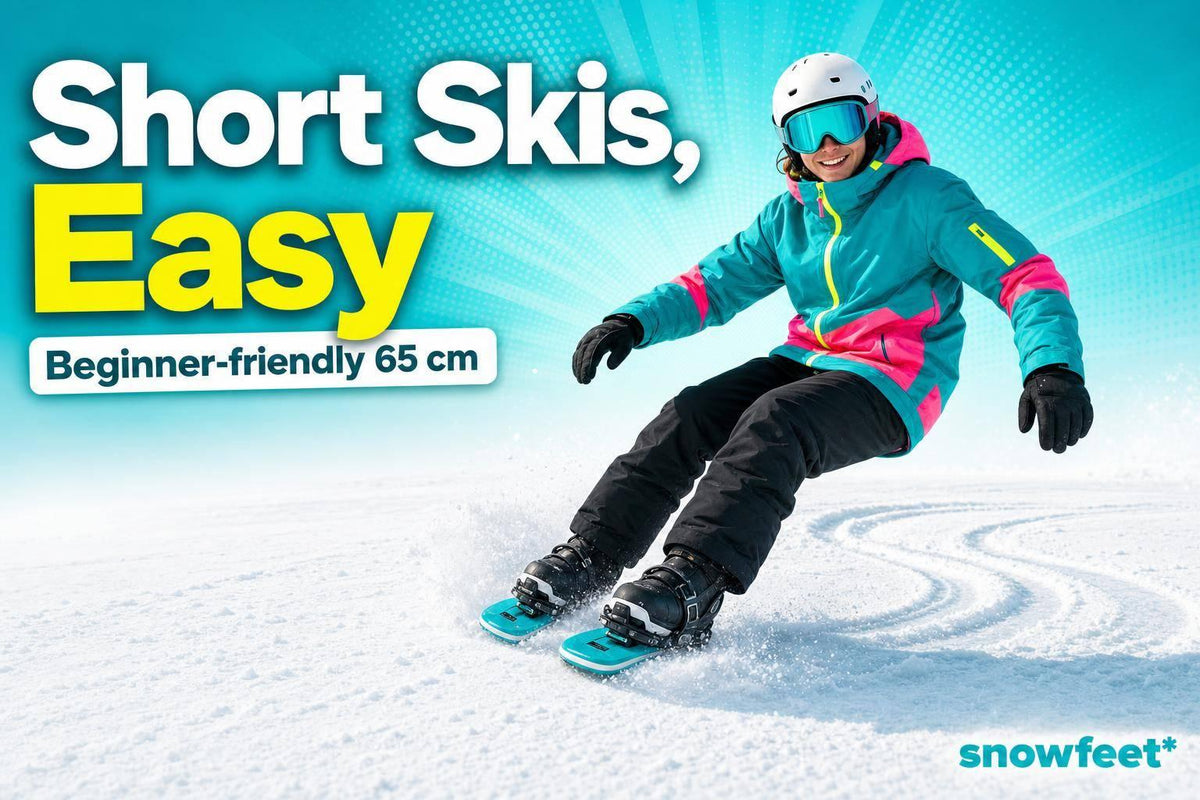
Si vous débutez en ski, les skis plus courts vous sembleront généralement moins intimidants, car ils sont plus faciles à diriger, à arrêter et moins encombrants à faible vitesse. C’est l’idée principale.
Quand j’examine les skis courts pour débutants, je me concentre sur une seule chose : la rapidité avec laquelle le ski réagit à ce que vous lui demandez. Pour les débutants sur les pistes vertes, c’est plus important que la stabilité à grande vitesse. Un équipement plus court peut aider à :
- Équilibre
- Contrôle des virages
- Apprendre à s’arrêter
- Croisement des pointes
- Confiance à faible vitesse
Voici la version courte : 44 cm offre la direction la plus facile, 65 cm constitue le meilleur compromis pour la plupart des gens, et 99 cm offre davantage de soutien si vous recherchez les sensations d’un ski sans passer à une longueur classique.
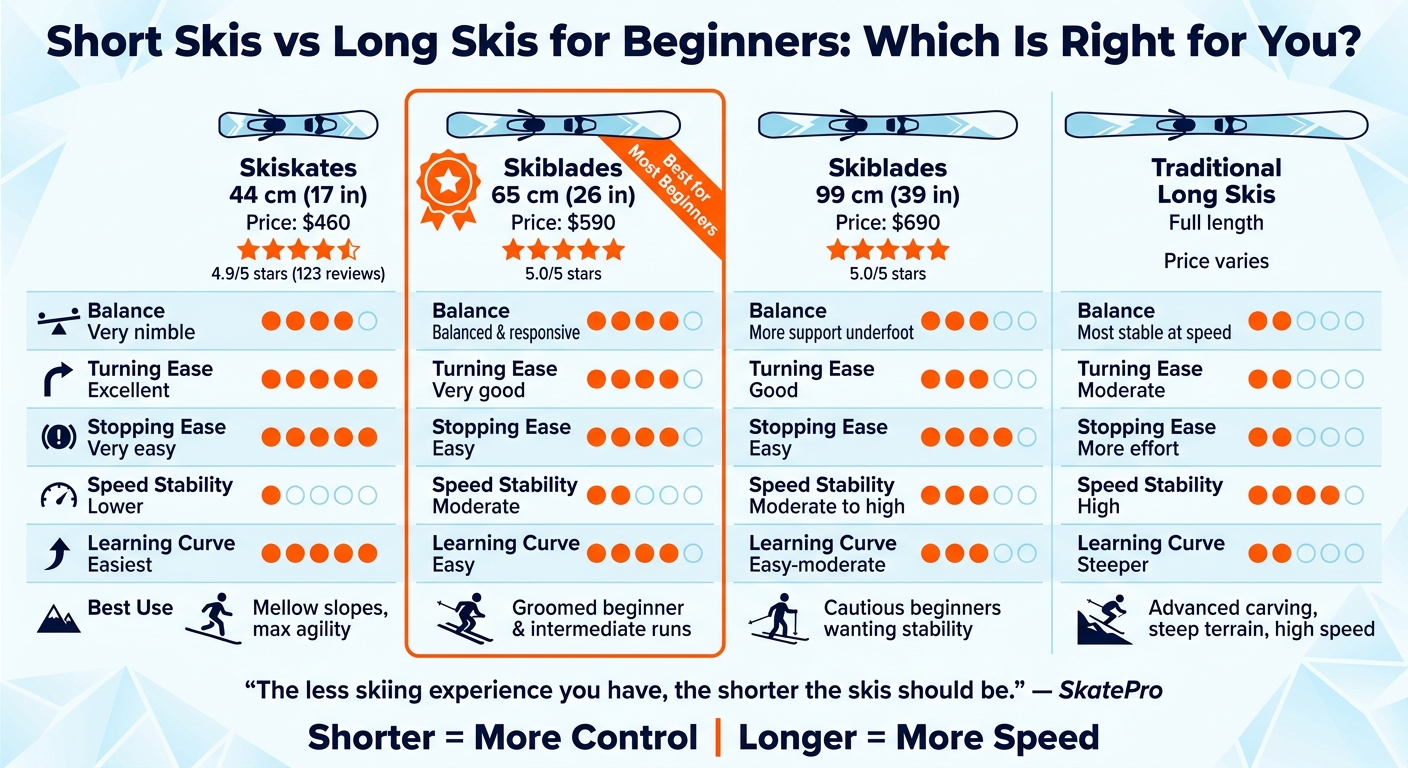
Skis courts ou skis longs pour débutants : lesquels vous conviennent ?
Un snowboarder essaie les Snowfeet* | Quel ski court Snowfeet* est le meilleur ? | Test des snowblades 44, 65 et 99
sbb-itb-17ade95
Comparaison rapide
| Option | Longueur | Prix de départ | Profil idéal |
|---|---|---|---|
| Skiskates Snowfeet* | 44 cm / 17 po | $460 | Débutants qui veulent l’équipement le plus compact et le plus facile à manœuvrer |
| Skiblades Snowfeet* | 65 cm / 26 po | $590 | La plupart des débutants sur pistes vertes et pistes bleues faciles |
| Skiblades Snowfeet* | 99 cm / 39 po | $690 | Débutants prudents qui souhaitent davantage de soutien |
| Skis longs | Longueur classique | Variable | Skieurs qui privilégient davantage la vitesse et la stabilité |
Une statistique simple tirée de l’article source indique que le modèle de 44 cm obtient une note de 4,9/5 sur 123 avis, tandis que les modèles de 65 cm et de 99 cm affichent tous deux une note de 5,0/5. Cela ne raconte évidemment pas toute l’histoire, mais montre que les utilisateurs apprécient généralement ces options plus courtes.
Donc, si je devais donner une réponse simple, ce serait celle-ci : la plupart des débutants se sentiront le plus à l’aise avec des skiblades de 65 cm, tandis que les modèles de 44 cm sont idéaux si vous voulez vous sentir le moins intimidé possible le premier jour. Si vous cherchez un ski qui se rapproche un peu plus des sensations d’un ski classique, 99 cm est le choix le plus sûr.
Pour découvrir rapidement les skis courts et les skiblades en images, ces vidéos peuvent vous aider :
- Bases des skiboards / skiblades Elan sur YouTube
- Skis courts ou skis longs pour débutants sur YouTube
En résumé : les skis plus courts ne corrigent pas une mauvaise technique, mais ils peuvent rendre les premières heures moins difficiles et davantage axées sur le ski :)
Les difficultés des débutants que les skis plus courts peuvent résoudre
Garder l’équilibre est plus facile quand le ski est plus léger et plus proche de vos pieds
Les skis plus courts restent plus près de vos pieds, ce qui rend vos mouvements plus directs. Si vous vacillez, il est souvent plus facile de vous rattraper avant que la situation ne se complique. Cela peut rendre le fait de rester immobile sur une pente, de rattraper un petit faux pas ou de se relever après une chute beaucoup moins maladroit.
C’est très important le premier jour. À faible vitesse — là où la plupart des débutants se retrouvent en difficulté — une minuscule erreur d’équilibre peut sembler énorme. Moins de ski signifie moins de résistance, ce qui peut vous aider à rester plus calme.
Tourner, s’arrêter et contrôler sa vitesse demandent moins d’efforts
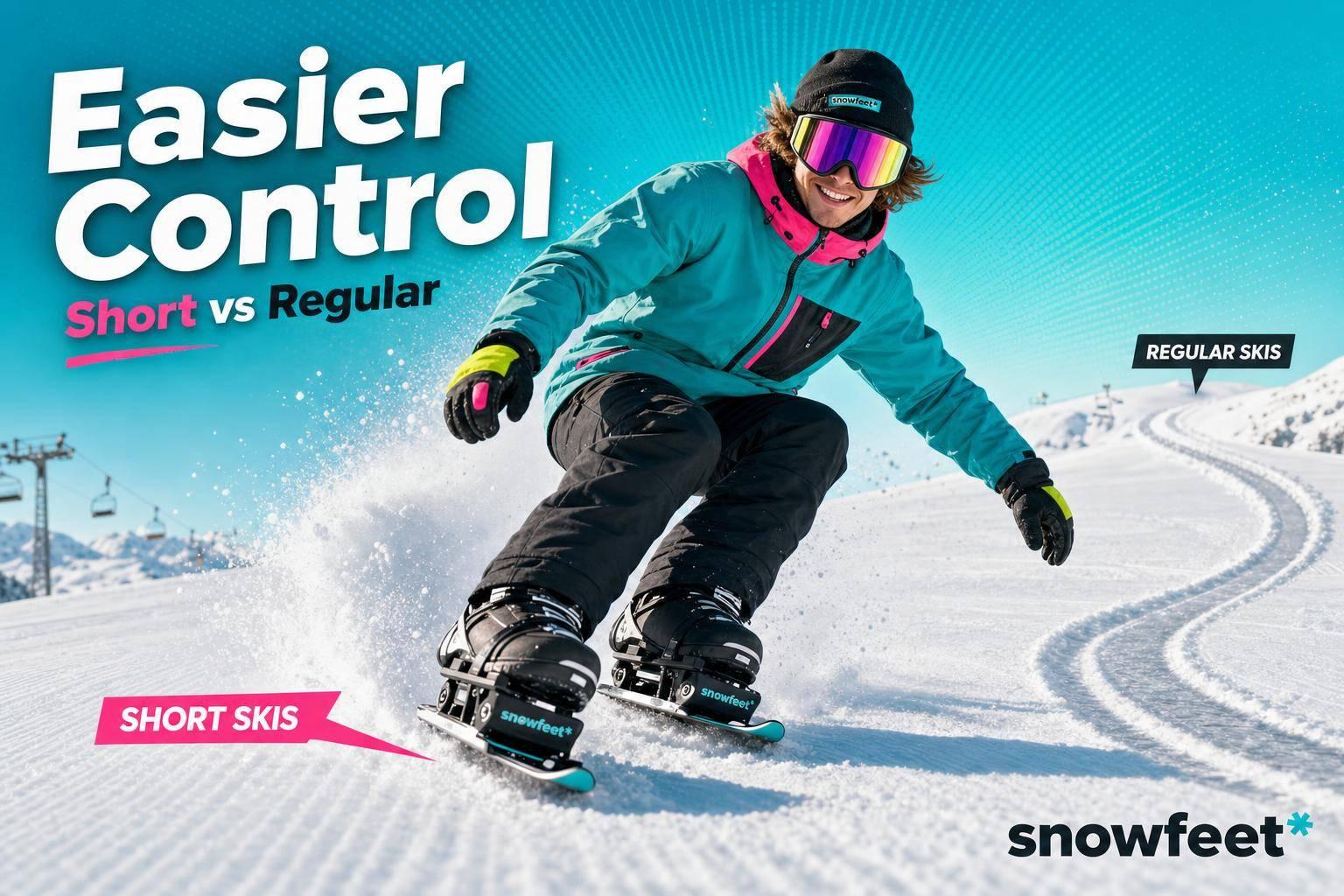
Les skis plus courts comme les skiblades ou les snowblades sont plus faciles à faire pivoter et déraper. Les débutants peuvent donc tourner, ralentir et s’arrêter sans fournir autant d’efforts. Et honnêtement, c’est là que la magie commence :)
Le principal avantage, c’est la prévisibilité. À vitesse de débutant, vous pouvez amorcer un virage plus tôt, réduire votre vitesse avant qu’elle ne vous échappe et vous arrêter avant que la situation ne devienne inquiétante. Apprendre à contrôler votre vitesse est bien plus simple lorsque l’équipement ne vous met pas de bâtons dans les roues. Quand l’arrêt commence à devenir fiable, on se détend rapidement. Et une fois détendu, on skie généralement mieux, tant dans l’apparence que dans les sensations.
Les carres plus courtes peuvent sembler plus tolérantes en cas d’erreur
Avec moins de carres en contact avec la neige, les skis plus courts ont tendance à se libérer puis à reprendre l’accroche plus facilement. Sur neige dure, les pistes débutants damées ou les passages étroits d’une station, cela peut aider à éviter qu’une petite erreur ne se transforme en chute étrange ou en arrêt brutal.
Ces corrections rapides et légères comptent plus qu’on ne le pense. Vous en faites constamment dans les files d’attente des remontées, les zones vertes très fréquentées et les espaces réservés aux débutants très animés. Les skis plus courts rendent ces moments moins tendus et plus faciles à gérer.
Cette sensation plus fluide et moins stressante explique en grande partie pourquoi les modèles plus courts de Snowfeet* peuvent aider les débutants à passer de premiers virages hésitants à des descentes plus maîtrisées. La suite de l’article devrait montrer quelle longueur Snowfeet* répond le mieux à ce besoin.
Les options Snowfeet* qui rendent l’apprentissage moins intimidant
Snowfeet* propose trois longueurs adaptées aux débutants. Chacune offre un équilibre différent entre facilité de virage et stabilité. Votre choix dépend donc d’une seule question : voulez-vous une direction plus facile, ou davantage de stabilité dès le premier jour ?
Si vous voulez une sensation plus rapide et plus réactive, choisissez plus court. Si vous préférez davantage de soutien sous les pieds, choisissez plus long. Tout simplement.
Skiskates Snowfeet* de 44 cm : l’option la plus agile
Avec seulement 17 pouces de longueur, les Skiskates Snowfeet* sont l’option la plus petite — et la plus facile à faire pivoter sur la neige. La sensation se rapproche du patinage, ce qui peut rendre les premiers virages plus naturels pour les nouveaux pratiquants.
Ils sont particulièrement adaptés aux pentes douces et aux zones pour débutants, où des mouvements rapides et faciles sont très utiles.
À partir de 460 $, ils affichent une note de 4,9/5 sur 123 avis.
Skiblades Snowfeet* de 65 cm : le meilleur choix polyvalent pour débuter
Les Skiblades de 65 cm offrent le juste équilibre entre virages faciles et glisse plus stable. Ils sont assez courts pour être dirigés sans effort, mais assez longs pour procurer une sensation plus ancrée que l’option de 44 cm.
Cette longueur supplémentaire vous offre plus d’équilibre sans rendre la glisse pesante. Pour la plupart des débutants, c’est un excellent point de départ.
À partir de 590 $ et notés 5,0/5 étoiles, ils constituent le meilleur choix polyvalent pour la plupart des débutants.
Skiblades Snowfeet* de 99 cm : l’option courte la plus stable
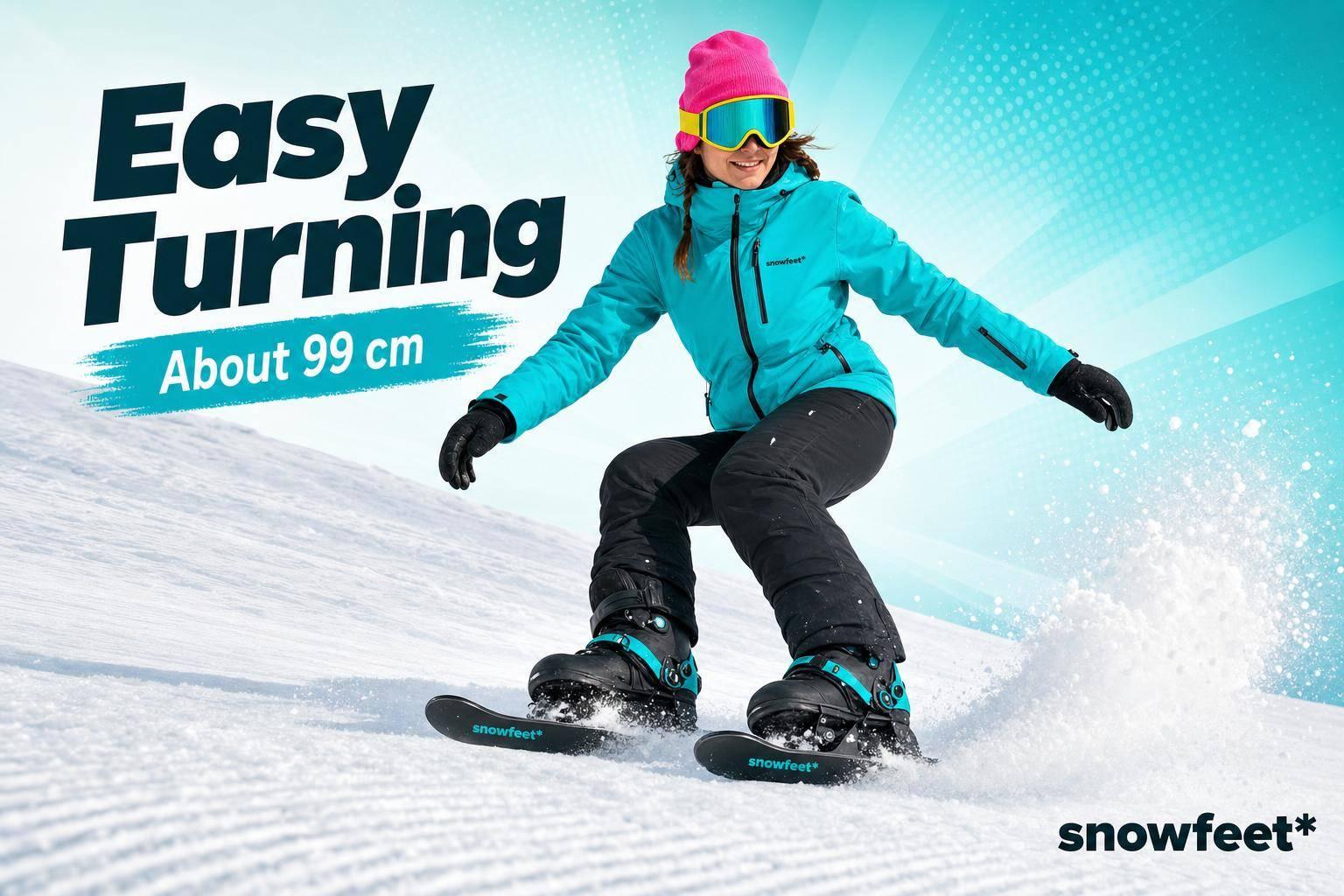
Si l’idée de passer à une longueur très courte vous inquiète un peu, les Skiblades de 99 cm peuvent sembler être une étape plus rassurante. Ils conservent davantage la sensation de ski, sans le volume ni les contraintes des skis classiques.
En clair : vous bénéficiez d’un équipement plus familier, tout en restant plus facile à manier que des skis longs. C’est donc un choix judicieux pour les débutants prudents qui veulent davantage de stabilité dès le départ.
À partir de 690 $ et notés 5,0/5 étoiles, ils conviennent parfaitement aux pratiquants qui recherchent une plateforme plus stable.
| Modèle | Longueur | Prix de départ | Idéal pour |
|---|---|---|---|
| Skiskates 44 cm | 44 cm (17 po) | $460 | Pentes douces, agilité maximale, sensation proche du patinage |
| Skiblades 65 cm | 65 cm (26 po) | $590 | Pistes vertes/bleues damées, le choix le plus polyvalent |
| Skiblades 99 cm | 99 cm (39 po) | $690 | Débutants prudents qui recherchent davantage de stabilité |
Skis Snowfeet* plus courts vs skis longs : comparaison directe
Maintenant que les trois longueurs Snowfeet* sont claires, comparons-les aux skis classiques sur la montagne.
Les situations où les skis longs gardent l’avantage
Les skis longs sont plus performants lorsque le rythme s’accélère. Sur les pistes raides et damées, dans la poudreuse profonde et sur les terrains plus accidentés, ils accrochent bien et donnent une sensation de stabilité accrue. Cela compte surtout pour les skieurs expérimentés qui recherchent vitesse et maintien.
Les débutants recherchent généralement autre chose. Ils accordent plus d’importance à l’équilibre, aux virages faciles et aux arrêts maîtrisés. Le principal enjeu le premier jour n’est pas la vitesse maximale. C’est de savoir si vos skis réagissent rapidement lorsque vous devez ralentir, éviter un obstacle ou vous rattraper après un mouvement hésitant. Pour les nouveaux pratiquants, le contrôle prime toujours sur la vitesse.
Pourquoi Snowfeet* convient mieux aux pratiquants occasionnels des stations américaines
Pour de nombreux pratiquants occasionnels des stations américaines, les skis Snowfeet* plus courts sont plus adaptés aux pistes damées pour débutants et skieurs intermédiaires. Ils sont plus faciles à manier, moins intimidants et demandent tout simplement moins d’effort.
Un guide d’achat de SkatePro indique : « moins vous avez d’expérience en ski, plus vos skis devraient être courts, car les skis courts sont plus faciles à contrôler ».
| Configuration | Équilibre | Facilité des virages | Facilité d’arrêt | Stabilité à grande vitesse | Courbe d’apprentissage | Utilisation idéale |
|---|---|---|---|---|---|---|
| Skiskates 44 cm | Très agiles | Excellente | Très facile | Plus faible | Les plus faciles | Pentes tranquilles, maniabilité maximale |
| Skiblades 65 cm | Équilibrés et réactifs | Très bonne | Facile | Modérée | Facile | Pistes damées pour débutants et skieurs intermédiaires |
| Skiblades 99 cm | Davantage de soutien sous le pied | Bonne | Facile | Modérée à élevée | Facile à modérée | Débutants prudents qui recherchent une stabilité supplémentaire |
| Skis longs traditionnels | La plus stable à grande vitesse | Modérée | Plus d’effort | Élevée | Courbe d’apprentissage plus raide | Virages coupés avancés, terrain escarpé, vitesse élevée |
En résumé : l’équipement Snowfeet* privilégie un contrôle rapide et un apprentissage facilité, tandis que les skis longs favorisent la vitesse et le maintien. Sur les pistes tranquilles d’une station, cette configuration plus courte peut sembler bien plus conviviale — un peu comme conduire une petite voiture sur un parking plutôt qu’un pick-up :)
Conclusion : quel ski court vous aide à prendre confiance le plus rapidement
Les skis plus courts semblent moins intimidants, car ils offrent aux débutants un meilleur contrôle, plus rapidement, sur les pistes vertes et les pistes bleues faciles.
Ainsi, le meilleur choix dépend d’une seule chose : quel style de ski court vous convient et vous aide à vous sentir à l’aise dès le premier jour.
- Snowfeet* Skiskates 44 cm - Avec 44 cm, c’est l’option la plus compacte et la plus facile à diriger. Elle convient aux pratiquants qui recherchent un équipement le moins intimidant possible.
- Snowfeet* Skiblades 65 cm - Le choix polyvalent le plus facile pour la plupart des débutants. Il offre un bon équilibre entre facilité de virage et stabilité.
- Snowfeet* Skiblades 99 cm - Un choix judicieux si vous êtes plutôt prudent. Vous bénéficiez d’un peu plus de stabilité, tout en profitant d’une maniabilité bien plus facile qu’avec un ski adulte standard.
Les compétences acquises avec chacune de ces longueurs vous serviront lorsque vous passerez plus tard à des skis plus longs.
Pour la plupart des débutants, les Snowfeet* 65 cm sont le point de départ le plus simple.
FAQ
Les skis courts rendent-ils plus difficile l’apprentissage d’une bonne technique ?
Non. Les skis courts sont souvent plus faciles à apprendre que les skis longs traditionnels. Des options comme les Skiblades Snowfeet et les Skiskates sont légères, réactives et beaucoup plus faciles à faire tourner.
Leur petite taille aide également à réduire les problèmes courants des débutants, comme les spatules qui se croisent et les jambes fatiguées. Vous passez ainsi moins de temps à lutter contre votre équipement et davantage à apprendre les bases et à prendre confiance :)
Comment choisir entre 44 cm, 65 cm et 99 cm ?
Choisissez en fonction de votre expérience, de vos objectifs et de votre poids :
- 44 cm : ultra-léger. Idéal si vous recherchez des sensations proches du skateboard, des rotations rapides et la possibilité de réaliser des figures.
- 65 cm : idéal pour les débutants complets, surtout si vous pesez moins de 150 lbs. C’est facile à contrôler et cela ne vous fatiguera pas rapidement.
- 99 cm : l’option la plus polyvalente pour la plupart des pratiquants. Elle offre davantage de stabilité, des virages coupés plus fluides et convient aussi à un peu de poudreuse.
Quand un débutant doit-il passer à des skis plus longs ?
Les nouveaux skieurs passent souvent à des skis plus longs une fois qu’ils maîtrisent les bases et recherchent davantage de stabilité, de meilleures performances à vitesse élevée ou de grands virages coupés amples.
Les skis longs traditionnels (160–205 cm) conviennent mieux aux pratiquants confirmés, mais au début, ils peuvent être difficiles à manier. Ils demandent plus de force, davantage de contrôle et une meilleure technique en raison de leur rayon de virage plus important. Une fois que le pratiquant maîtrise cela, les skis plus longs peuvent mieux correspondre à ses attentes sur la montagne.
Pour la plupart des pratiquants occasionnels, les Skiblades Snowfeet* restent le choix le plus polyvalent.











Laisser un commentaire
Ce site est protégé par hCaptcha, et la Politique de confidentialité et les Conditions de service de hCaptcha s’appliquent.