



















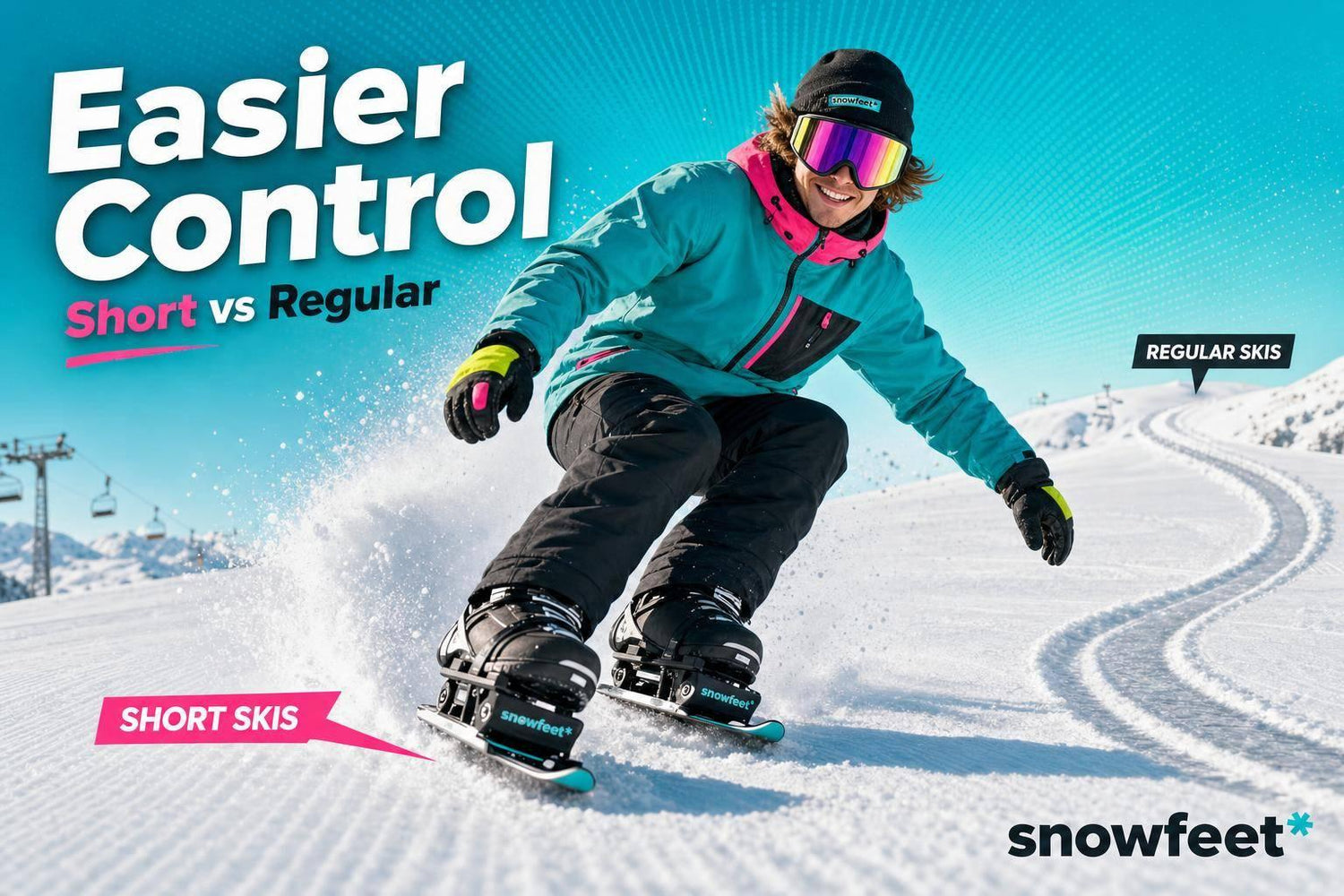
Si vous voulez la réponse courte : les skis courts sont plus faciles à contrôler pour la plupart des gens. Ils tournent avec moins d’effort, semblent moins maladroits à faible vitesse et conviennent parfaitement aux pistes vertes et bleues, aux bosses, aux passages étroits et aux journées très fréquentées en station.
Voici la distinction en termes simples :
-
Les skis courts (environ 15–47 po) sont plus faciles pour :
- les débutants
- les pratiquants occasionnels
- les snowboardeurs qui passent au ski
- les familles
- les espaces restreints et le ski à vitesse lente ou modérée
-
Les skis classiques (environ 63–73 po) sont plus faciles pour :
- virages coupés à grande vitesse
- pistes raides
- pistes damées glacées
- terrain long et dégagé
La raison principale est simple. Les skis courts pivotent plus rapidement. Les skis longs suivent une trajectoire plus rectiligne. L’un est donc plus facile à manier dans la circulation, tandis que l’autre semble plus stable quand on file à toute vitesse.
Quelques repères de taille tirés de l’article permettent de mieux se représenter les choses :
- 44 cm / 17 po : presque comme des patins, très faciles à faire pivoter
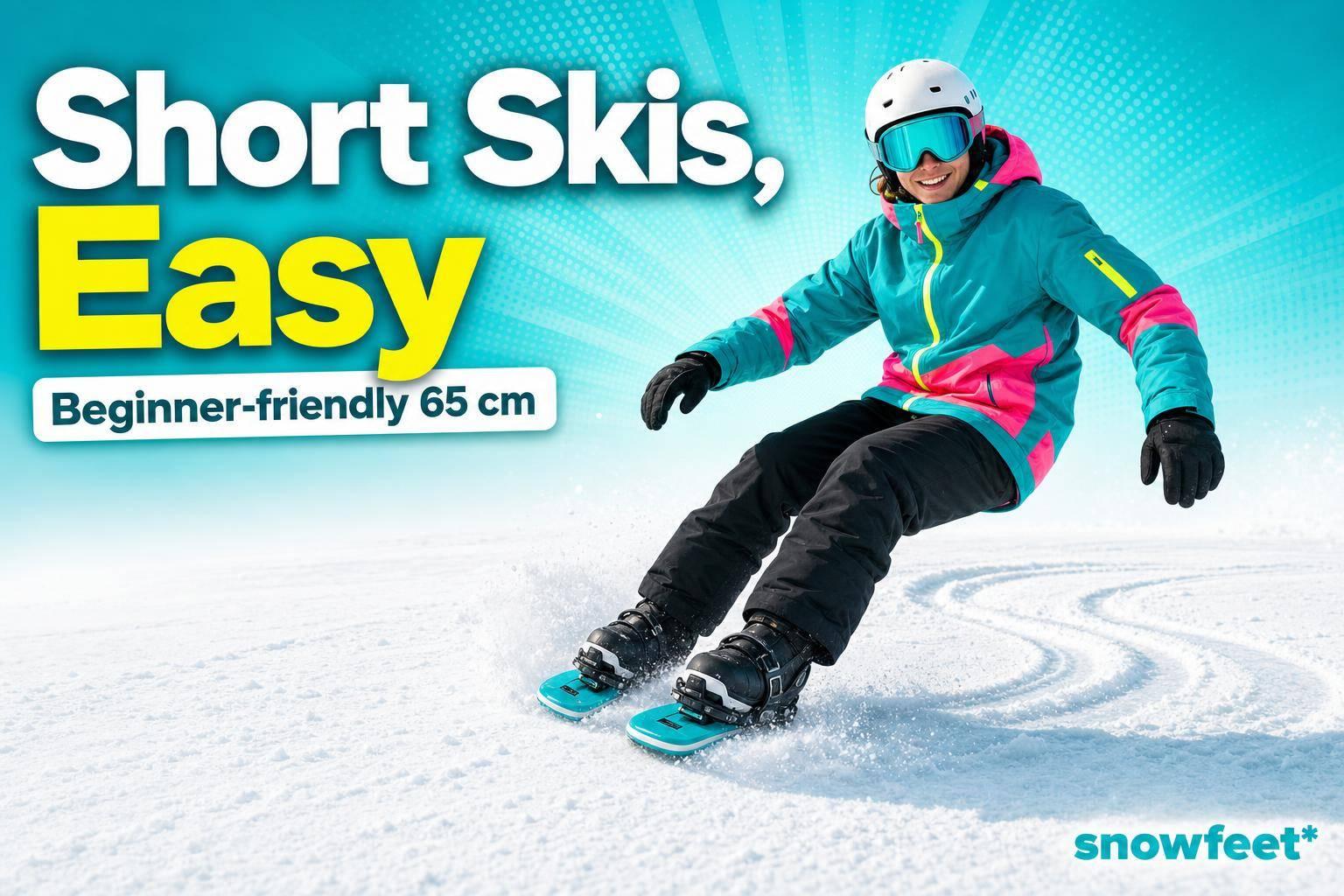
- 65 cm / 26 po : idéal pour les nouveaux pratiquants
- 99 cm / 39 po : un excellent compromis
- 120 cm / 47 po : sensation plus proche de celle d’un ski classique
- 160–185 cm / 63–73 po : taille courante des skis classiques pour adultes
Skis courts contre skis longs
Comparaison rapide
| Point | Skis courts | Skis classiques |
|---|---|---|
| Contrôle à basse vitesse | Meilleur | Bon |
| Virages serrés | Meilleur | Nécessitent plus d’espace |
| Sensation pour débutants | Moins intimidants | Peuvent sembler longs au début |
| Bosses et passages étroits | Meilleur | Plus exigeant |
| Stabilité à grande vitesse | Limitée | Meilleur |
| Accroche sur glace | Moins rassurant | Meilleur |
| Longs virages coupés | Courbes courtes | Meilleur |
| Transport et rangement | Beaucoup plus facile | Plus encombrants |
Ainsi, si vous skiez comme la plupart des pratiquants des stations américaines — vitesse modérée, pistes damées, sorties en famille et week-ends bondés — les skis courts sembleront généralement plus faciles à contrôler. Si vous préférez les virages coupés à grande vitesse sur une neige dure et dégagée, les skis classiques restent plus performants.
Si vous voulez voir rapidement les skis courts en action, ces recherches YouTube peuvent vous aider :
Le comportement des skis courts et des skis classiques sur la piste
Virages, arrêts et gestion de la vitesse
Vous sentez immédiatement la différence lorsque vous tournez, vous arrêtez ou essayez de contrôler votre vitesse.
Les skis courts amorcent les virages rapidement et permettent des courbes beaucoup plus serrées. Les Snowfeet* Skiskates de 44 cm (~17 po) et les Skiblades de 65 cm (~26 po) peuvent pivoter presque sur place. Ils conviennent donc parfaitement aux pistes bondées, aux changements de direction rapides et aux contrôles de vitesse lorsque la circulation devient chaotique. Ils permettent aussi de réduire rapidement la vitesse avec un dérapage contrôlé dans un espace restreint. Pratique quand la piste ressemble à l’heure de pointe sur neige.
Les Skiblades de 99 cm (~39 po) et de 120 cm (~47 po) offrent un excellent compromis. Ils tournent toujours plus rapidement que les skis pleine longueur, mais semblent plus stables dès qu’on accélère sur des pistes damées dégagées. Vous profitez d’une partie de cette sensation vive et ludique sans renoncer à autant de contrôle.
Les skis classiques, généralement d’environ 160 à 185 cm (63 à 73 po) pour les adultes, nécessitent davantage d’espace et un peu plus de temps pour pivoter. Mais une fois placés sur la carre, ils suivent une courbe plus longue et plus fluide. La glisse est stable, mais les réactions sont moins rapides.
Équilibre, bosses, pistes étroites et pistes pour débutants
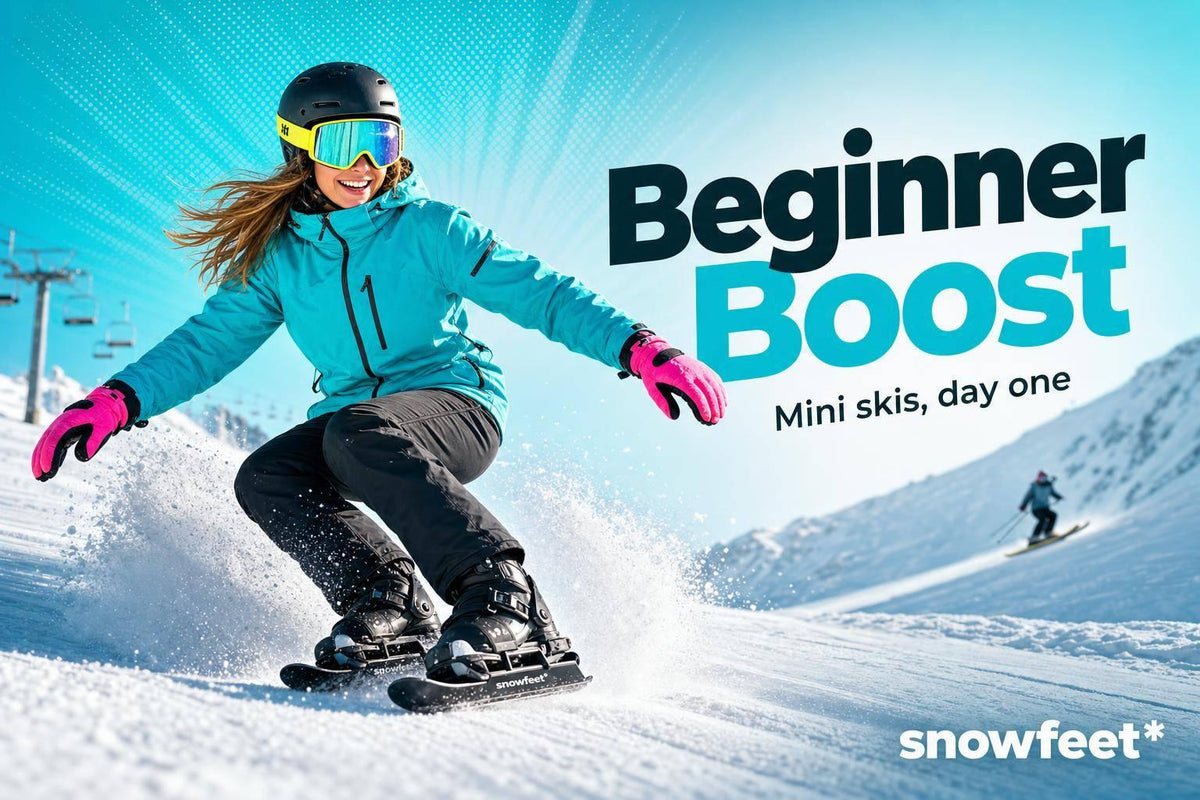
Pour les skieurs débutants, les Skiblades de 65 à 99 cm peuvent sembler moins intimidants. Vous pouvez vous entraîner à tourner et à vous arrêter à basse vitesse sans avoir l’impression que le ski vous entraîne vers le bas de la pente. Ils sont plus légers, plus faciles à maintenir parallèles et moins susceptibles d’accrocher une carre si votre position manque légèrement de précision. Et soyons honnêtes, au début, la position de chacun manque un peu de précision.
Cette taille plus réduite facilite également la glisse dans les bosses et les passages étroits.
Dans les bosses, les skis plus courts se déplacent avec moins de difficulté. Leur longueur compacte s’adapte plus naturellement aux creux, et les changements de direction rapides ne demandent ni le même timing ni la même puissance dans les jambes que les skis longs. Il en va de même sur les pistes étroites et dans les passages entre les arbres. Les Skiskates de 44 cm et les Skiblades de 65 cm peuvent pivoter sur place et se glisser dans des espaces étroits où les skis longs mettent davantage de temps à changer de direction.
Situations où les skis classiques sont plus faciles à contrôler
Les skis courts misent entièrement sur la vivacité, mais les skis classiques restent supérieurs dans quelques situations.
Ils sont plus performants sur les pistes damées verglacées, les fortes pentes et les descentes rapides et dégagées. Une carre plus longue accroche mieux la neige dure lorsque vous inclinez le ski. À vitesse élevée, cette longueur supplémentaire contribue également à atténuer les vibrations et à maintenir une trajectoire plus rectiligne.
Cela compte surtout pour les skieurs expérimentés qui aiment les virages rapides et carvés sur neige damée dure, ou qui évoluent sur des terrains pentus. Pour ce type de glisse, les skis classiques sont le meilleur outil. Les skis longs gèrent mieux la vitesse et les virages carvés sur terrain dégagé, tandis que Snowfeet* est plus facile à contrôler dans les endroits étroits, lents ou fréquentés.
sbb-itb-17ade95
Skis courts contre skis classiques : comparaison directe
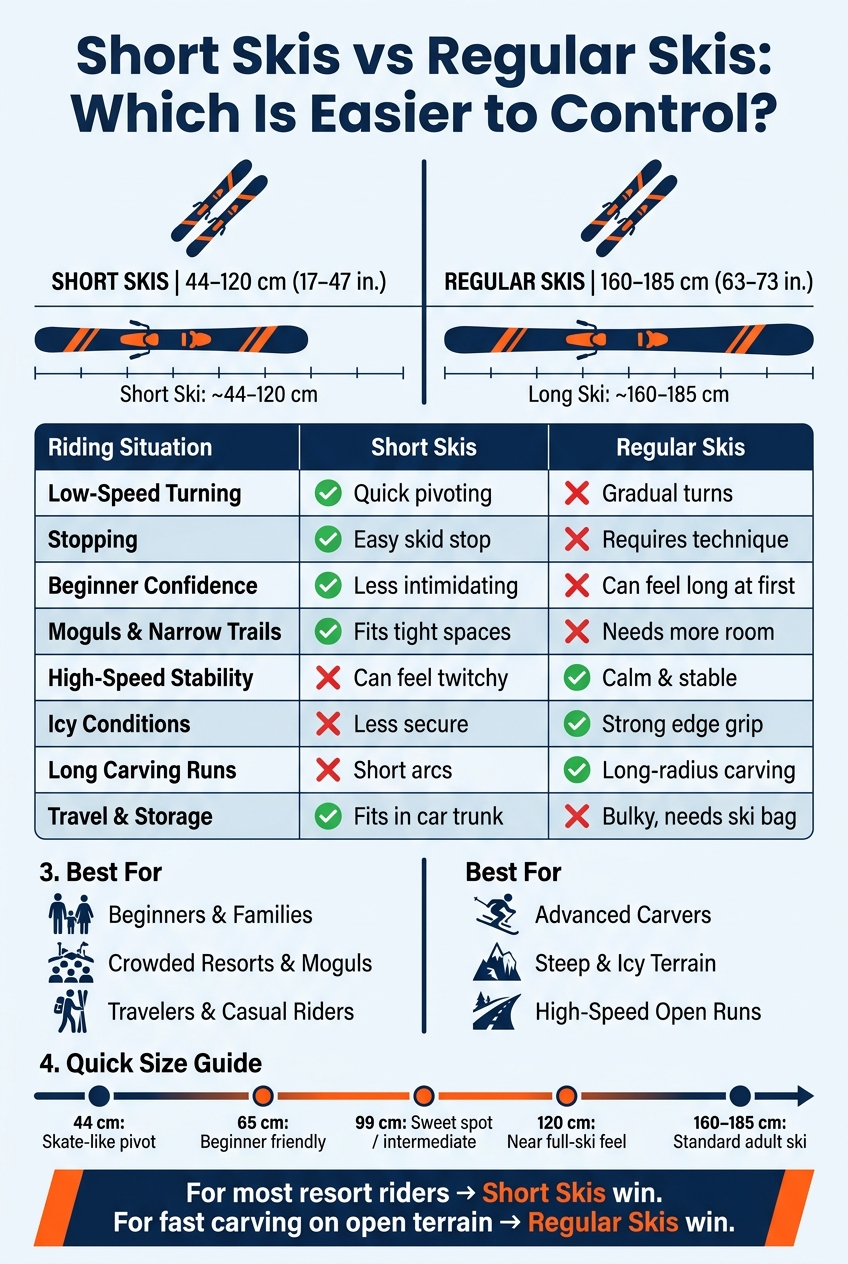
Skis courts contre skis classiques : comparaison du contrôle et des performances
Voici la version simple : les skis courts sont plus faciles à contrôler à basse vitesse, tandis que les skis classiques semblent plus stables et mieux ancrés dès que vous accélérez.
Cette différence apparaît rapidement quand on examine le terrain et le style de glisse.
Tableau comparatif : contrôle selon la situation de glisse
| Situation de glisse | Skis courts (Snowfeet*) | Skis classiques |
|---|---|---|
| Virages à basse vitesse | Pivotement rapide et virages serrés | Virages plus fluides et plus progressifs |
| Arrêt | Dérapage d’arrêt facile à vitesse faible à modérée | Arrêt fiable une fois la technique maîtrisée |
| Confiance des débutants | Moins intimidants ; plus faciles à récupérer après une erreur | Plus stables une fois en mouvement, mais peuvent sembler longs et encombrants au début |
| Bosses | Changements de direction rapides dans les espaces étroits | Plus adaptés lorsque vous prévoyez votre trajectoire à l’avance |
| Pistes étroites | Pivots faciles dans les passages étroits | Plus lents à changer de direction ; nécessitent davantage d’espace |
| Stabilité à grande vitesse | Peuvent sembler instables à grande vitesse | Trajectoire stable ; restent rassurants à grande vitesse |
| Conditions verglacées | Moins sûrs sur la glace ; idéaux à vitesse prudente | Excellente accroche des carres sur neige dure et sur glace |
| Longues descentes carving | Courbes courtes et ludiques ; accroche des carres limitée | Carving assuré sur de longues courbes, avec un meilleur soutien |
Si vous aimez les virages serrés, les vitesses modérées et un équipement qui ne donne pas l’impression de lutter avec deux longues planches, les skis courts sont tout indiqués. Si vous recherchez la vitesse, l’accroche des carres et un carving fluide sur les pistes ouvertes, les skis classiques gardent l’avantage.
Avantages et inconvénients des skis courts
Les Skiskates Snowfeet* (44 cm / environ 17 po) et les Skiblades (65 cm / environ 26 po, 99 cm / environ 39 po et 120 cm / environ 47 po) privilégient la facilité d’utilisation. Ils sont plus légers, plus faciles à manier et bien plus accessibles lorsque vous êtes encore en train d’apprendre.
| Avantages | Inconvénients |
|---|---|
| Virages rapides et faciles à faible vitesse | Moins stables au-delà des vitesses modérées |
| Arrêts faciles en dérapage pour les débutants | Une carre effective plus courte signifie moins d’accroche sur la glace |
| Moins intimidants | Moins adaptés aux terrains raides et verglacés |
| Plus légers et plus faciles à transporter | Ne sont pas conçus pour les grandes courbes de carving |
| Se rangent dans le coffre d’une voiture ou un bagage standard | Moins stables lors des réceptions importantes |
| Certains modèles s’utilisent avec des chaussures d’hiver ou des boots de snowboard | Peuvent sembler instables lors de longues journées rapides sur pistes damées |
Beaucoup de débutants apprécient les skis courts pour une raison toute simple : ils semblent tout de suite moins encombrants. Vous pouvez tourner rapidement, vous arrêter en dérapant et rattraper de petites erreurs sans cette sensation de « oh là là ».
Avantages et inconvénients des skis classiques
Les skis classiques privilégient la vitesse, le carving et les terrains ouverts. Le revers de la médaille ? Ils vous demandent davantage d’efforts au début, aussi bien sur la neige que sur le parking.
| Avantages | Inconvénients |
|---|---|
| Stables et rassurants à grande vitesse | Plus difficiles à faire pivoter pour les débutants |
| Excellente accroche des carres sur neige dure et sur glace | Plus lourds et plus fatigants à transporter |
| Plus adaptés aux longues descentes carving | Nécessitent des housses de ski spécialisées pour le transport |
| Davantage de soutien sur les pentes raides et les grands sauts | Peuvent sembler encombrants dans les espaces étroits ou bondés |
| Facteur d’intimidation plus élevé pour les nouveaux pratiquants |
Les skis classiques ont tendance à exceller lorsque la piste s’élargit et que le rythme s’accélère. Ils suivent une trajectoire plus nette, accrochent mieux sur neige ferme et offrent davantage de soutien sur les pentes raides ou les grands sauts.
Ces compromis comptent surtout lorsque vous adaptez le ski à votre niveau et au terrain sur lequel vous évoluez.
Quel ski est le plus facile à contrôler selon votre profil
Le meilleur choix dépend moins de la culture du ski que de votre façon de glisser sur la neige.
Débutants, skieurs occasionnels, snowboardeurs et familles
Pour les débutants, les skieurs occasionnels et la plupart des familles, les skis courts sont plus faciles à contrôler. Ils tournent plus rapidement, paraissent plus légers et pardonnent davantage les erreurs.
Les Snowfeet* Skiskates (44 cm / environ 17 po) ressemblent beaucoup à des patins, ce qui permet de prendre rapidement en main la direction et le freinage si vous pratiquez déjà le patinage en ligne. Les Skiblades 65 cm (environ 26 po) offrent davantage de soutien sous le pied et conviennent bien aux débutants qui souhaitent un peu plus d’équilibre. Les Skiblades 99 cm (environ 39 po) conviennent aux skieurs intermédiaires en progression et aux snowboarders qui passent au ski. Ils restent faciles à faire tourner, mais se rapprochent davantage d’un ski classique et offrent un peu plus d’accroche sur la carre.
Les snowboarders s’adaptent généralement plus vite à la plage de 65–99 cm, car elle leur semble plus familière que les skis pleine longueur.
Pour les familles, les skis plus courts présentent également des avantages pratiques :
- Ils sont plus légers
- Ils sont plus faciles à transporter
- Ils sont plus faciles à manier pour les enfants
Un point est particulièrement important ici : assurez-vous que les fixations et les chaussures sont bien adaptées, surtout pour les skieurs de petite taille.
Voyageurs et skieurs qui veulent un équipement compact
Les produits Snowfeet* sont beaucoup plus faciles à transporter que des skis pleine longueur. Ils tiennent dans le coffre d’une voiture, se rangent sans difficulté et vous évitent les tracas liés aux housses surdimensionnées, souvent nécessaires avec des skis classiques.
Il y a aussi un avantage appréciable : si vous emportez le même équipement compact à chaque voyage, les sensations de contrôle restent plus familières d’un week-end à l’autre. Cela peut faire une plus grande différence qu’on ne le pense.
Skieurs intermédiaires solides et skieurs confirmés
Si vous êtes un skieur confirmé qui passe la majeure partie de la journée sur des pistes damées, larges et rapides, les skis classiques restent plus faciles à contrôler à grande vitesse. Les matins verglacés ou sur les fortes pentes en bord de domaine, cette stabilité supplémentaire est loin d’être négligeable.
Cela dit, le Snowfeet* 99 cm et le POWDER 99 cm pivotent rapidement, demandent moins d’effort pour passer d’un côté à l’autre et réduisent le risque d’accrocher une spatule sur un terrain accidenté ou irrégulier. L’option de 120 cm offre davantage de longueur de carre si vous recherchez plus de stabilité tout en conservant la maniabilité des skis courts.
Dans la plupart des autres situations, notamment sur un terrain varié, les skis courts sont généralement plus faciles à maîtriser.
Voici la façon la plus rapide de faire correspondre la longueur des skis au profil du skieur et au terrain.
| Type de skieur | Type de ski recommandé | Longueur habituelle | Modèle Snowfeet* | Quand les skis classiques peuvent encore être préférables |
|---|---|---|---|---|
| Débutant anxieux / skieur occasionnel sur pistes vertes et bleues | Skis courts | 44–65 cm | Skiskates 44 cm ou Skiblades 65 cm | Si vous voulez davantage de stabilité sur des pistes damées, larges et rapides |
| Snowboarder passant au ski | Skis courts | 65–99 cm | Skiblades 99 cm | Si votre objectif principal est d’effectuer de longs virages coupés rapides |
| Famille / enfants | Skis courts | 44–65 cm | Skiskates 44 cm ou Skiblades 65 cm | Pour les très jeunes enfants, le bon ajustement des chaussures et des fixations est primordial |
| Voyageur fréquent / skieur du week-end | Skis courts | 65–99 cm | Skiblades 99 cm | Pour de longues journées à grande vitesse sur pistes damées |
| Skieur polyvalent et joueur / skieur en forêt | Skis courts | 99–120 cm | POWDER 99 cm ou Short Skis 120 cm | Les matins verglacés, à grande vitesse |
| Skieur axé sur la vitesse | Skis classiques | 160–180+ cm | Short Skis 120 cm comme compromis | Pour des virages coupés de type slalom géant |
Utilisez le tableau pour faire correspondre la longueur des skis à votre style de glisse.
Conclusion : choisissez le ski adapté à votre façon de skier
Après avoir comparé les virages, les arrêts, l’équilibre et le contrôle de la vitesse, la réponse est assez simple. Pour la plupart des skieurs occasionnels des stations américaines, les skis courts sont plus faciles à contrôler. Ils pivotent plus rapidement et sont plus faciles à manier sur les pistes damées bondées des week-ends, les pistes pour débutants et les journées de ski en famille.
Les skis classiques restent supérieurs pour les virages coupés à grande vitesse, les terrains escarpés et les longues pistes dégagées.
Voici l’essentiel :
- Choisissez des skis courts si vous skiez principalement sur des pistes vertes et bleues damées, à vitesse modérée.
- Choisissez des skis courts si vous voulez un équipement compact qui se range facilement dans le coffre de votre voiture.
- Choisissez des skis classiques si vous passez la plupart de votre temps à effectuer des virages coupés rapides ou à skier intensément sur des pentes raides.
Si les skis courts vous semblent mieux adaptés, choisissez la longueur en fonction de votre façon de skier, et non de ce qui paraît le plus agressif. Snowfeet* simplifie les choses : les Skiblades 65 cm conviennent parfaitement aux débutants, les Skiblades 99 cm sont adaptés aux skieurs qui progressent et aux snowboardeurs qui passent au ski, tandis que les Short Skis 120 cm offrent davantage de stabilité sans renoncer à cette sensation de légèreté et de réactivité.
Pour la plupart des skieurs, les skis courts rendent la journée plus facile et beaucoup plus amusante.
FAQ
Quelle doit être la longueur de mes skis ?
La bonne longueur de skis dépend de votre niveau et de l’endroit où vous skiez. Pour la plupart des pratiquants occasionnels, les skis courts Snowfeet* sont plus faciles à manier que les skis classiques.
- 38–50 cm : idéaux pour les débutants
- 44–65 cm : un bon choix pour les skieurs intermédiaires
- 99–120 cm : mieux adaptés aux skieurs expérimentés, aux terrains variés et à la poudreuse
Les skis courts sont-ils sûrs pour les débutants ?
Oui. Les skis courts sont généralement très sûrs et conviennent parfaitement aux débutants. Comparés aux skis classiques plus longs, les skis courts Snowfeet sont plus faciles à tourner et à arrêter. Ainsi, de nombreux débutants peuvent assimiler les bases en quelques heures seulement, voire dès le premier jour.
Leur forme compacte et réactive les rend également plus faciles à manier et moins fatigants que le matériel de ski encombrant. Et cela compte beaucoup quand on débute. Vous passez moins de temps à lutter avec votre équipement et davantage à vous familiariser avec l’équilibre, les virages et les arrêts en toute confiance.
Les skis courts conviennent-ils à une pratique sur tout le domaine skiable ?
Oui. Les skis courts peuvent convenir à une pratique sur tout le domaine skiable, mais cela dépend du terrain.
Les modèles Snowfeet* de 99 cm et 120 cm sont efficaces sur les pistes damées, les bosses et les snowparks. Ils offrent une grande agilité et un excellent contrôle. Ils sont également très performants dans les passages étroits, comme les pistes entre les arbres, où il est essentiel de pouvoir tourner rapidement.
Les skis longs traditionnels gardent l’avantage dans la poudreuse très profonde, les virages coupés à grande vitesse et pour une stabilité maximale.











Laisser un commentaire
Ce site est protégé par hCaptcha, et la Politique de confidentialité et les Conditions de service de hCaptcha s’appliquent.